
Translated material
The health of vacationers near the Black Sea is under threat
As a result of the crash of two Russian tankers in the Kerch Strait on December 15, more than three thousand tons of fuel oil spilled into the Black Sea - now tens of kilometers of Anapa beaches are covered with oil products. Because of them, Red List animals are dying, and the swimming season may be in jeopardy due to the risk of chemical poisoning. Volunteers and regional authorities are working at the scene of the disaster, but environmentalists are confident that this is not enough - it is necessary to declare a state of emergency at the federal level and pull in forces from all over the country. The Kremlin, however, does not want to do this. “Cold” talks about the consequences of one of the largest environmental disasters in Russian history.
A fuel oil spill off the coast of Anapa could disrupt the tourist season and destroy the local ecosystem. The authorities are doing nothing

Help Kholod tell human stories
We put people at the center of our journalism and talk about people who face injustice, but do not lose spirit and continue to fight for their rights and freedoms. To continue covering people's stories, we need the support of readers - thanks to your donations, we continue to work, despite government pressure.
- Foreign card
- Map of the Russian Federation ↘︎
- Patreon ↘︎
- Translation
- Crypt
Monthly
One-time
5 €
- 10 €
- 20 €
30 €
5 €
- 10 €
- 20 €
- Other
- Bank of the Russian Federation
- Foreign bank
Card number:
5536 9138 6472 8742
Copied!
Recipient:
Taisiya Bekbulatova
Copied!
Recipient:
Projektas Šaltis
Copied!
Account number:
LT613500010016198323
Copied!
SWIFT BIC:
EVIULT2VXXX
Copied!
Bank:
Lietuvos Bankas (Bank of Lithuania)
Copied!
Comment - purpose of payment:
Parama įstatymų numatytais tikslais (be konkretaus tikslo)
Copied!
We ask you to provide a comment so that we can accurately determine the receipt of funds. The phrase is translated as follows: “Support for statutory purposes (without a specific purpose).”
Amount: €
Donate
By making a donation, you accept the privacy policy
On December 15, two tankers carrying oil products crashed in the Kerch Strait. Early in the morning, Volgoneft-212 broke into two parts and went under water. One crew member died due to hypothermia. An hour and a half later, in the same area, a second accident occurred with the Volgoneft-239 tanker. The ship ran aground 80 meters from the coast near the port of Taman. The crew members were not injured.
In total, the tankers transported 9.2 thousand tons of petroleum products. According to preliminary data, almost four thousand tons spilled into the sea, polluting 54 kilometers of the Black Sea coastline - from the Temryuk region to Anapa. As a result, up to 200 thousand tons of soil may become contaminated.
The creator of successful video games in the West was accused of violence. His wife said he kidnapped a child and beat her father, and former students say he molested minors. Society 6 min read
After December 15, a state of emergency was introduced in Kerch , Anapa and the Temryuk district of the Krasnodar Territory. The most extensive contamination zone is in Anapa, and the “White Beach” in the area of Dzhemetinsky Proezd was hit the hardest. Local bloggers also published videos of fuel oil on the beach near the Grand Hotel next to the city’s Central Beach and on the Cote d’Azur beach . In the emergency zone, 210 birds and 19 Azov dolphins have already died.
Environmentalists call the spill a disaster that threatens the entire ecosystem of the region. At the same time, it is still difficult to assess the real scale, says Evgeny Simonov, leading expert of the international public foundation “Rivers Without Borders”. There are no official reports that would qualitatively describe the consequences of the spill, on the basis of which forecasts could be made.
“You can only judge what will happen next by having a complete picture. And even those who make decisions don’t seem to have this picture,” says Simonov.
Soviet quality
Environmentalists interviewed by Kholod cite the cause of the disaster as the age of the ships and their inability to operate at sea in high waves. Both tankers are old. Volgoneft-212 was built in 1969, and Volgoneft-239 in 1973, while the average safe operating age for such ships is 25 years, and the maximum is 40.
“Now these are ships of retirement age,” says Simonov.
At the same time, tankers of the Volgoneft series were initially designed as river vessels, and in the 1990s they were converted into river-sea class vessels, removing the middle part of the ship. It is this modification that is the reason why they break in half, explains Simonov.
Dirty place A schoolgirl said that she was kept in sex slavery by her classmates for six months. During this time, more than 200 men used it Crime 28 min read
In 2007, under the same circumstances - as a result of a strong storm in the Kerch Strait - the Volgoneft-139 tanker sank , and about two thousand tons of fuel oil fell into the sea. At that time, the damage caused to the environment due to the oil and sulfur spill was estimated at approximately 20 billion rubles ( more than 70 billion in 2024).
“That incident showed that these tankers cannot be allowed into the sea. What is happening now shows that no lessons have been learned from this,” says Simonov.
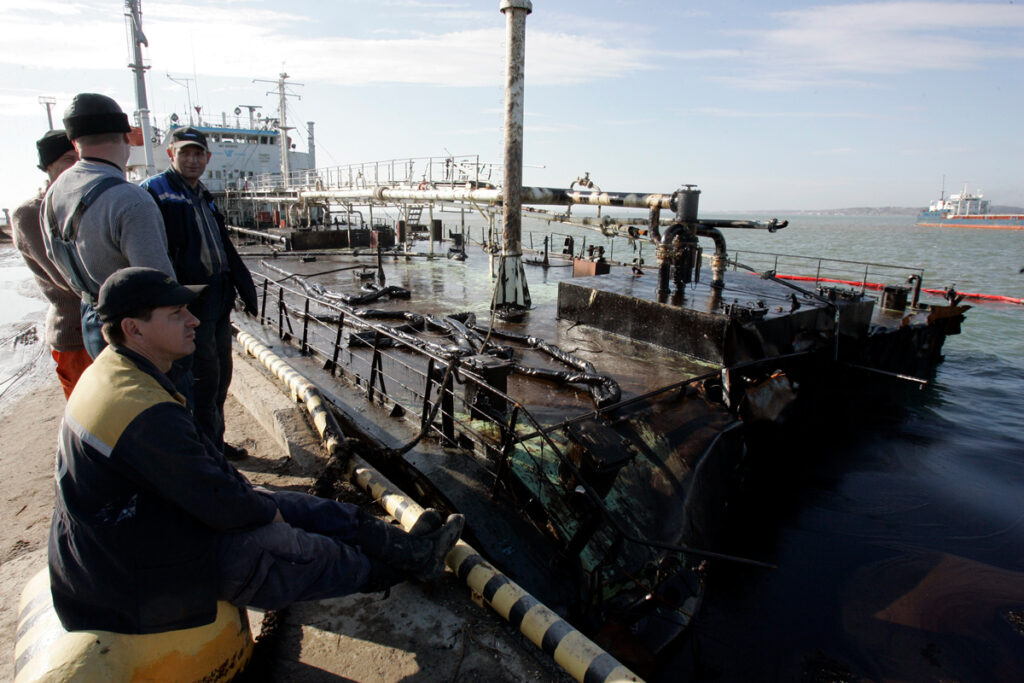
Currently, about 50 Volgoneft vessels are operating in Russia. At least two of them, more than 40 years old, were spotted in the Black and Azov Seas after the crash on December 15.
No resources
On the morning of December 19, the Ministry of Emergency Situations reported that about five thousand rescuers and volunteers were involved in cleaning the beaches of the Krasnodar Territory. In addition, 300 military personnel and employees of more than 120 sanatoriums are involved . They manually remove fuel oil using shovels.
Despite the efforts of volunteers, cleanup is progressing slowly, bags of collected fuel oil lie on the beaches for several days and leak, and on the night of December 23, several bags that were not removed from the shore were washed back into the sea. All this can lead to re-contamination.
“So much work down the drain! And so the consequences of this disaster cannot be avoided, but it is also aggravated by negligence and carelessness,” wrote an activist who filmed the bags being carried back to the sea.
Residents of Anapa are not satisfied with the situation - on December 23, they demanded that Putin send “professional resources” and technical means to the city that will help eliminate the consequences of the spill.
Is Ukraine preparing a counteroffensive? There is no direct evidence of this, but Z-bloggers are sure: the Ukrainian Armed Forces will soon go on the attack Politics 4 minute read
“It was recently announced that five thousand volunteers and rescuers are working to eliminate the consequences. We believe that in such a vast disaster area, even a conditional 50 thousand people with shovels are not able to solve the problem and save the situation. The vast majority of people work without the necessary protective equipment, and many unknowingly use dust respirators, which cause even greater harm to health, making it difficult to breathe, but not saving people from toxic toxic fumes,” the residents’ appeal says.
The Greenpeace office in Central and Eastern Europe is also dissatisfied with the authorities' response to the incident, in particular with the fact that responsibility for cleaning up the area was transferred to regional authorities, who do not have sufficient resources and skills to deal with accidents of this scale. For cleaning it is necessary to involve the forces of the federal Ministry of Emergency Situations, the organization is confident.
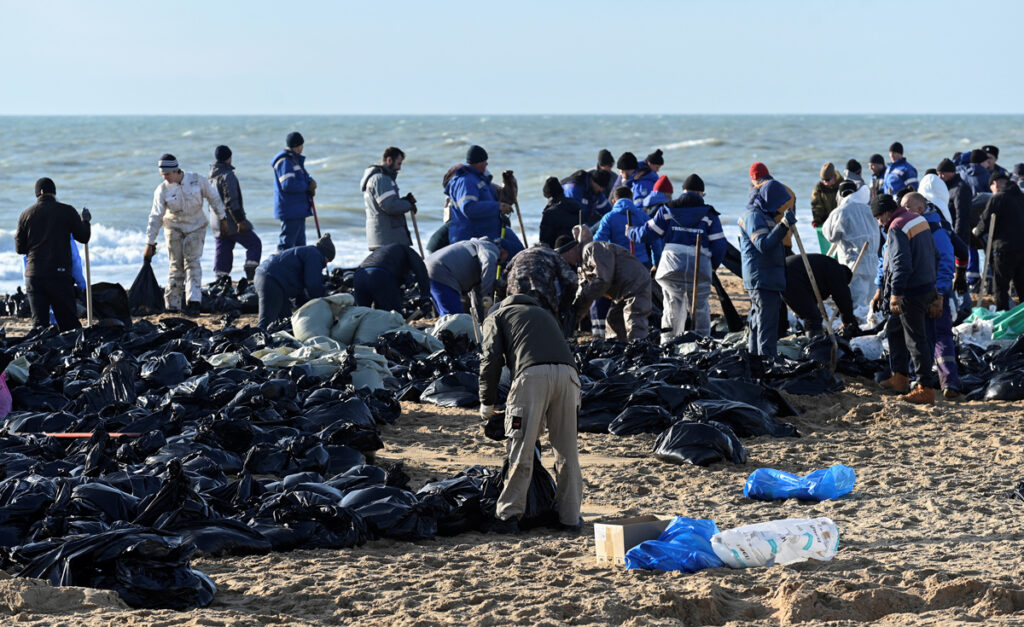
To report to their superiors, local officials can only clean up the most visited and visible places, and the fuel oil will be buried near the coast, Greenpeace suggests.
Simonov also calls the authorities’ reaction “inadequate”: according to the expert, this is a catastrophic phenomenon of rare recurrence, to eliminate the consequences of which it is necessary to mobilize forces from all over the country. “Municipalities that have one and a half tractors are forced to devote all their efforts to something that they cannot eliminate as a whole,” he says.
According to Simonov, it is also necessary to involve companies that have resources capable of dealing with spills - for example, Rosneft, which has not yet done anything to help.
I moved from a Bashkir village to Finland. My family had to borrow money for my move, and I had to work two jobs as a maid. Society 9 minute read
In response to complaints on the morning of December 24, the Investigative Committee decided to open a criminal case due to the fact that measures had not been taken to eliminate the consequences of the spill. Press Secretary of the Russian President Dmitry Peskov said that the oil spill is a “major environmental disaster,” but the authorities, according to him, do not plan to introduce a federal emergency.
Feathers in fuel oil
The pumping of fuel oil has not yet begun, so it is difficult to predict the scale of the disaster and its possible consequences, says Simonov. However, it is clear that it will lead to significant pollution of the coasts and will affect the numbers of fish, birds and cetaceans.
Fuel oil covers the feathers of birds, preventing them from flying, swimming and staying warm, which leads to their death, the Russian office of Greenpeace says. Volunteers in Anapa and Taman have launched a campaign to save the birds, but many of them will still die from the toxic effects of oil products. After the 2007 disaster, about 30 thousand waterfowl died, Simonov recalls.

Also at risk are two species of dolphins, porpoises (which include the Black Sea porpoise or Azov dolphin) and seven species of fish listed in the Russian Red Book. From the moment the tankers crashed to December 24, environmentalists have already recorded 19 dead Azov women.
The inhabitants of the sea will suffer from the disaster in the long term: high concentrations of toxic hydrocarbons will reduce their level of reproduction and lead to a decline in populations. Marine flora—underwater plants that create an environment for fish to live and reproduce—will also be affected. Exposure to petroleum products will lead to poisoning, illness and possible death.
Unsuitable beaches
Tour operators believe that the tourist season will not be in jeopardy, because the beaches will be cleared of fuel oil before then. “Judging by past incidents, we do not yet see a threat to the summer swimming season in Anapa. There’s still six months until summer, the beaches and water areas will undoubtedly be cleaned, and it will be safe to swim,” says Alexey Vysokanov, general director of the Atelika Hotel Group tourism holding.
It will be even easier to condemn a person to a life without rights. It will be possible to be included on the list of extremists without a court decision for almost anything that the authorities consider a crime. This will affect both those who stayed and those who left Society 6 min read
However, environmentalists warn of risks if it is not possible to quickly collect fuel oil from the surface of the beaches. “In the first storm it will go deep into the sand. And then it will be impossible to remove it. In this case, the beaches will be unsuitable for recreation for a long time - when heated by the sun, buried fuel oil will actively release light fractions, the most toxic and smelly. When it’s rough, it will also constantly pollute the water near the shore, making it unsuitable for swimming,” writes independent ecologist Dmitry Lisitsyn on Facebook.
Contact with fuel oil increases the risk of developing cancer, respiratory and skin diseases. For example, inhaling its vapors can lead to the development of bronchitis and pneumonia, and contact with the skin can lead to dermatitis or eczema. Dozens of volunteers who remove fuel oil have already contacted doctors with symptoms of oil poisoning.
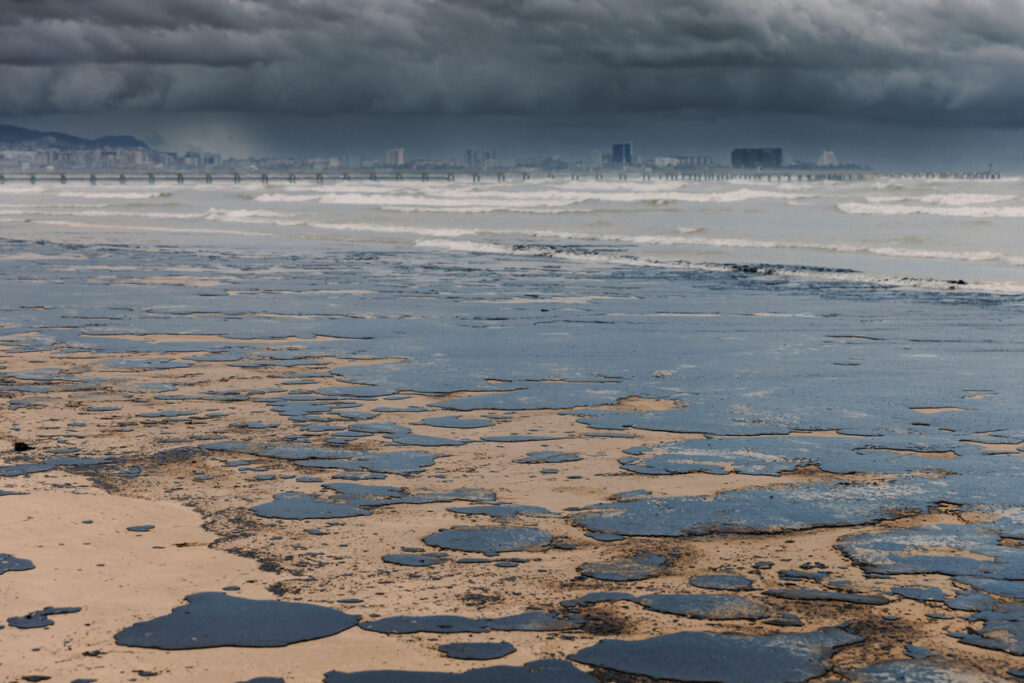
Even if it is possible to clean the beaches, it is impossible to collect all the fuel oil: as Lisitsyn writes, it is usually possible to remove no more than 10–15% of the spill volume, and the rest remains in the marine environment. It is also very difficult to remove oil from contaminated rocky shores, Greenpeace adds. Because of this, oil residues can remain there for several years - as was the case after the 2007 accident.
As of December 23, fuel oil from the Volgoneft-212 tanker, the wreckage of which lies at the bottom of the Kerch Strait, continues to leak .
In order not to miss the main materials of “Cold”, subscribe to our social networks!


Kholod needs your help to continue working
We continue to work, resisting bans and repression, to preserve independent journalism for the Russia of the future. How do we do this? Thanks to the support of thousands of caring people.
What do we dream about?
About the simple and at the same time complex - the opportunity to work further. Life will change beyond recognition many times, but we, the editors of Kholod, want to stay close to you, our readers.
Support Kholod today so we can continue to do what we do best - be independent media. Thank you!
Author: Raya Khachatryan