
Translated material
“The guns finally defeated the butter.” Economic results for 2024 and forecasts for 2025 from the point of view of leading Russian experts
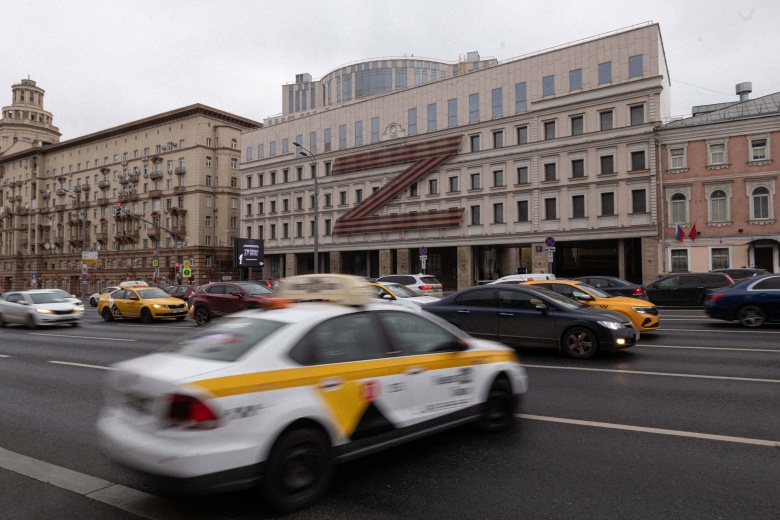
Moscow
Victor Berezkin/Keystone Press Agency
The end of the year is a time for summing up and trying to predict the coming year. So we traditionally asked economists about this, who have been telling us about what is happening all this year. Economists Andrei Movchan, Sergei Aleksashenko, Oleg Buklemishev and Sergei Petrov answer Republic’s questions.
The most important economic result of this year for Russia?
Andrey Movchan:
It is difficult to talk about “the most important things” in a large economic organism, especially during periods of great change. Perhaps most importantly, 2024 proved once again that Russia is not a “unique country” and the laws of the world economy work for it the same way as for everyone else. The most important evidence of this is the rise in inflation and the even faster growth of the GDP deflator as a result of the injection of a lot of money into the economy, which is not backed by the appearance of produced goods and services that sterilize it. Formally, the well-performing (and even growing) economy of the Russian Federation rests on huge revenues from the export of minerals, a sharp (thanks to the West) reduction in capital outflow and shows a (temporary) increase in household incomes due to massive payments to the military and military-industrial complex. At the same time, these payments, which ensure the creation of non-consumer goods and services, place an inflationary burden on the market. And now the Central Bank is forced to keep the refinancing rate at a level prohibitive for borrowing by almost all industries (except for the same resource and military-industrial complex, which is financed on preferential terms). Combined with a labor shortage (about 1 million able-bodied people emigrated, about 1.5 million dropped out due to mobilization/contract, and about 2 million more people were involved in supporting the military campaign and the development of the military-industrial complex) and the natural increase in wages due to the shortage these circumstances are strangling the “civilian economy” and creating the preconditions for its reduction (in principle, its reduction is already underway and will continue), that is, if we do not take into account the purely military sector of the Russian economy, then we can already say about mild stagflation.
Sergey Aleksashenko:
Guns have finally conquered butter: Putin is ready to cut any expenses to increase spending on the war.
Oleg Buklemishev:
The most important result for Russia is that it turned out that there is a limit to the economic model in which we live. This model is now in crisis, which is expressed in the inflationary aspect. Previously, it seemed that everything was going well, but here for the first time there was such a serious disruption - inflation, which we could not cope with. This is a symptom that the model is beginning to fail seriously.
Sergey Petrov:
For Russia, inflation will accelerate. Starting from the end of spring of this year, this is probably the dominant macroeconomic factor that is driving many of the decisions of our regulators. Moreover, the picture looks quite dramatic, because, even despite the rather high key rate of the Central Bank, it is not possible to ensure that inflation begins to decline steadily at least at a moderate pace. If during the rise in inflation at the beginning of 2022, which, by the way, was stronger, literally three months after the Central Bank raised the rate, inflation went down, now, despite the rate being even higher, it is possible to achieve a sustainable reduction, at least moderate , failed.
The most important economic outcome of this year for the world?
Subscribe to read in full
Subscribe to Redefine.Media to read Republic
Subscribe [You can pay with a Russian or foreign card. The subscription is renewed automatically. You can unsubscribe at any time.]
Where does the subscribers' money go?