
Translated material
Hilarion was punished in the form of an award
The Synod of the Russian Orthodox Church released the metropolitan from the administration of the Budapest-Hungarian diocese. Earlier, New Europe found his property in France
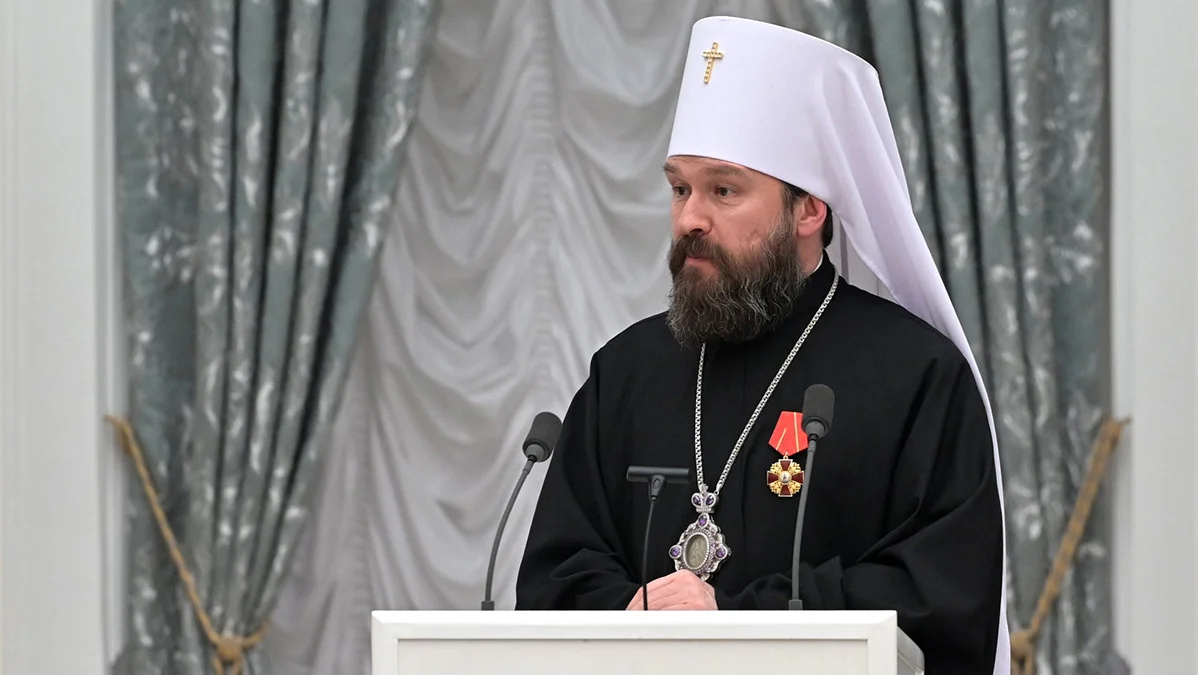
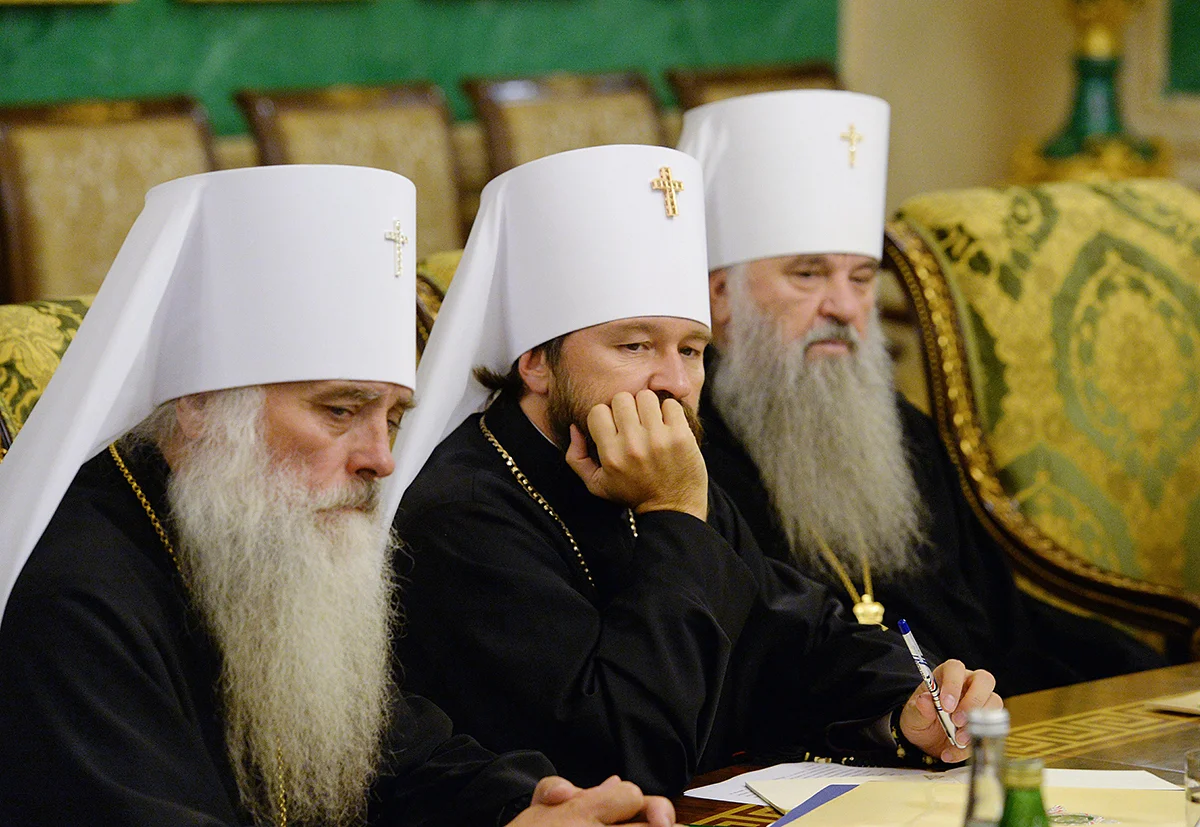
State awards ceremony. Awarding the Order of Alexander Nevsky to Grigory Alfeev. Photo: kremlin.ru
For the first time in recent decades, the Synod of the Russian Orthodox Church is making an important personnel decision in the wake of a journalistic investigation - the article “The Works and Days of Metropolitan Hilarion” published by New Europe. The transfer of the hero of this investigation, the former “Minister of Foreign Affairs” of the Russian Orthodox Church Hilarion (Alfeev), from Budapest to Karlovy Vary is presented by the synod as punishment. But even if you agree with this interpretation, the decision is striking in its softness.
How did the disgraced metropolitan, officially accused of harassment, manage to get away with it?
Resort link
The Holy Synod - de facto the highest governing body of the Russian Orthodox Church during the inter-council period (and councils in the Russian Orthodox Church have not been held since 2017) - put an end to the case of Metropolitan Hilarion (Alfeev), which appeared in July of this year, after the publication of “New Europe”. The former permanent member of the synod, the former chairman of the Department for External Church Relations (DECR) and now the former administrator of the Budapest-Hungarian diocese was sent to “retire” - to serve in the Russian Church of Saints Peter and Paul in the Czech resort of Karlovy Vary.
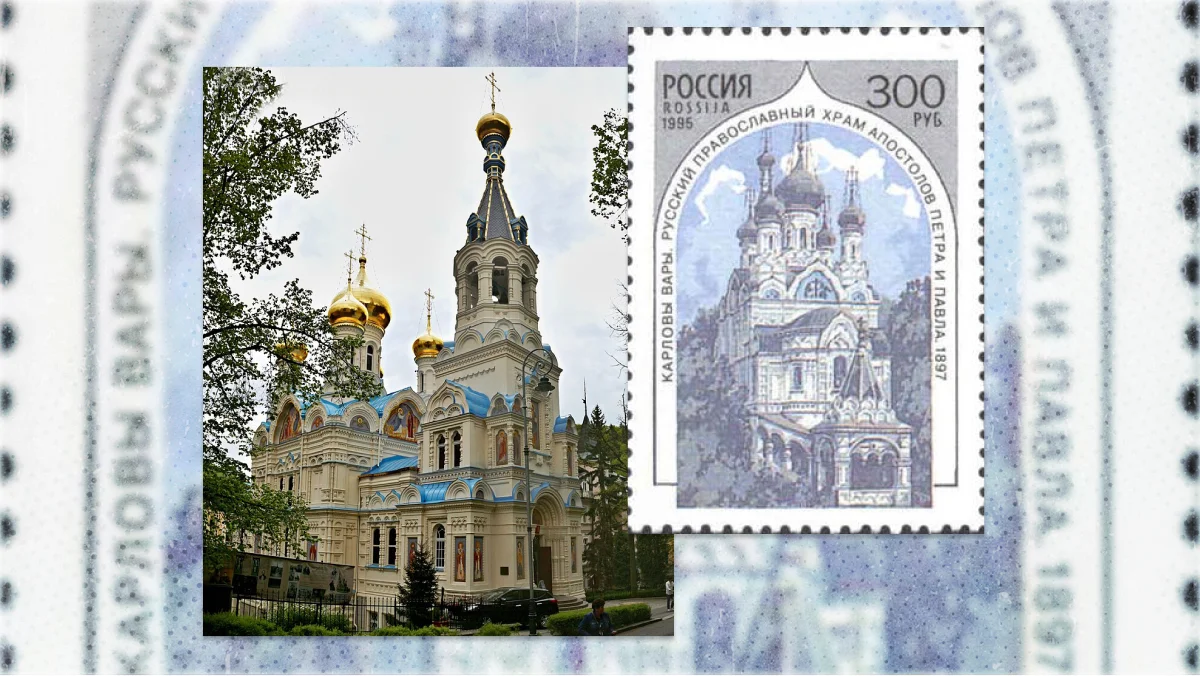
This architectural gem, built in the 19th century in pseudo-Russian style in the center of a favorite resort of the Russian aristocracy, has been under the jurisdiction of the Moscow Patriarchate since 1945. Unlike the Hungarian diocese, where Hilarion was the first administrator with a residence in Budapest, the church in Karlovy Vary already had a rector in the rank of bishop: in the 1980s Bishop Vladimir (Ikim), who later became the Metropolitan of Omsk, served there. Five months ago, the Czech Republic expelled the rector of the church, Archpriest Nikolai Lischenyuk, from the country, who “could threaten the security of the state.” Hilarion has a Hungarian passport and has good connections among European politicians and religious leaders.
The parish in Karlovy Vary has a reputation for being rich: about half of all real estate in the city belongs to citizens of the Russian Federation and other post-Soviet states,
and among them there are many parishioners of the Peter and Paul Church. The temple's board of trustees is headed by Georgy Krasnyansky, the founder of the mining company Karakan Invest, who headed the companies Rosuglesbyt and Investtek. A number of other large Russian companies were involved in the restoration of the temple in the mid-2010s. There was nothing like this in the history of the modest Assumption Cathedral in Budapest, where Hilarion served until July of this year. This is the “punishment”.
Why is he worse?
The diplomatic softness of the wording of the synodal definition is striking, which has no precedent in the history of this body if it makes a decision to punish a bishop. The synod itself refrained from assessing Hilarion’s canonical and moral sins, asking the Patriarch, its chairman, to talk with Hilarion about the conformity of his habits with “the image of a monk and clergyman.” Honestly, it would make sense to talk about this topic with the absolute majority of the hierarchs of the Russian Orthodox Church, starting with the patriarch himself, whose fortune is estimated at billions of dollars.
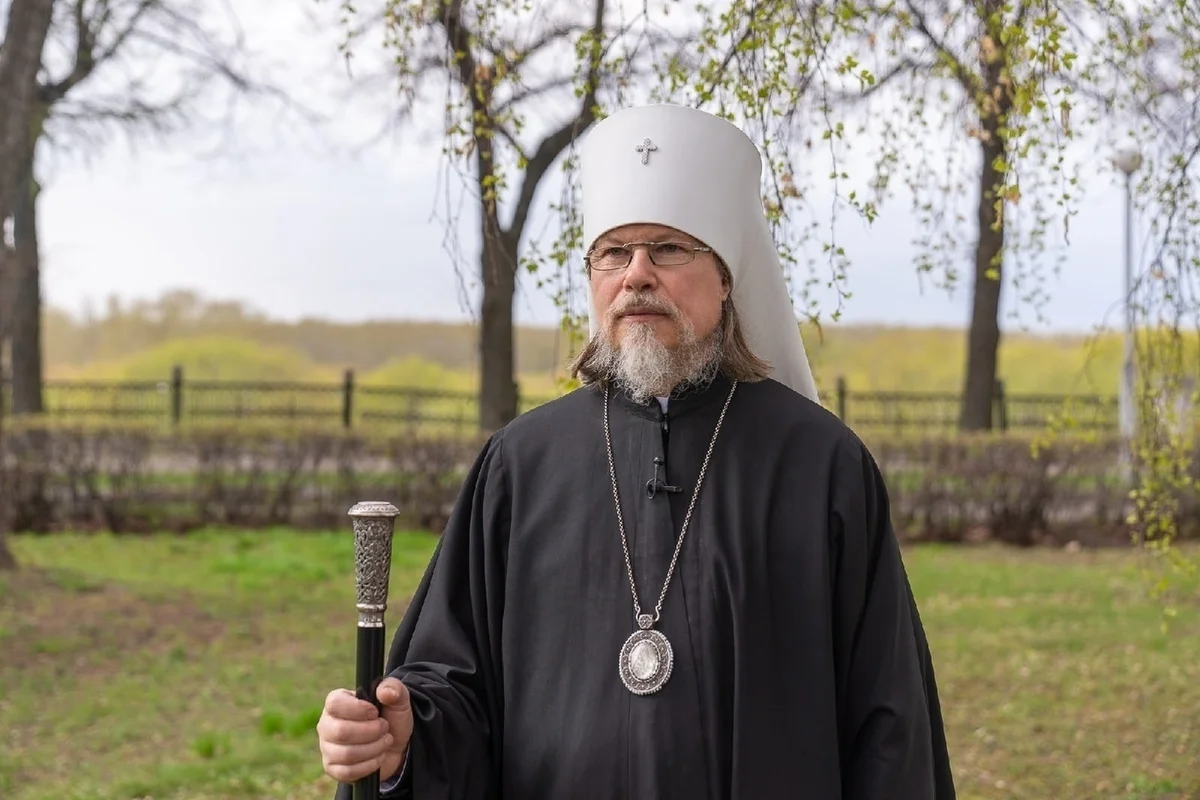
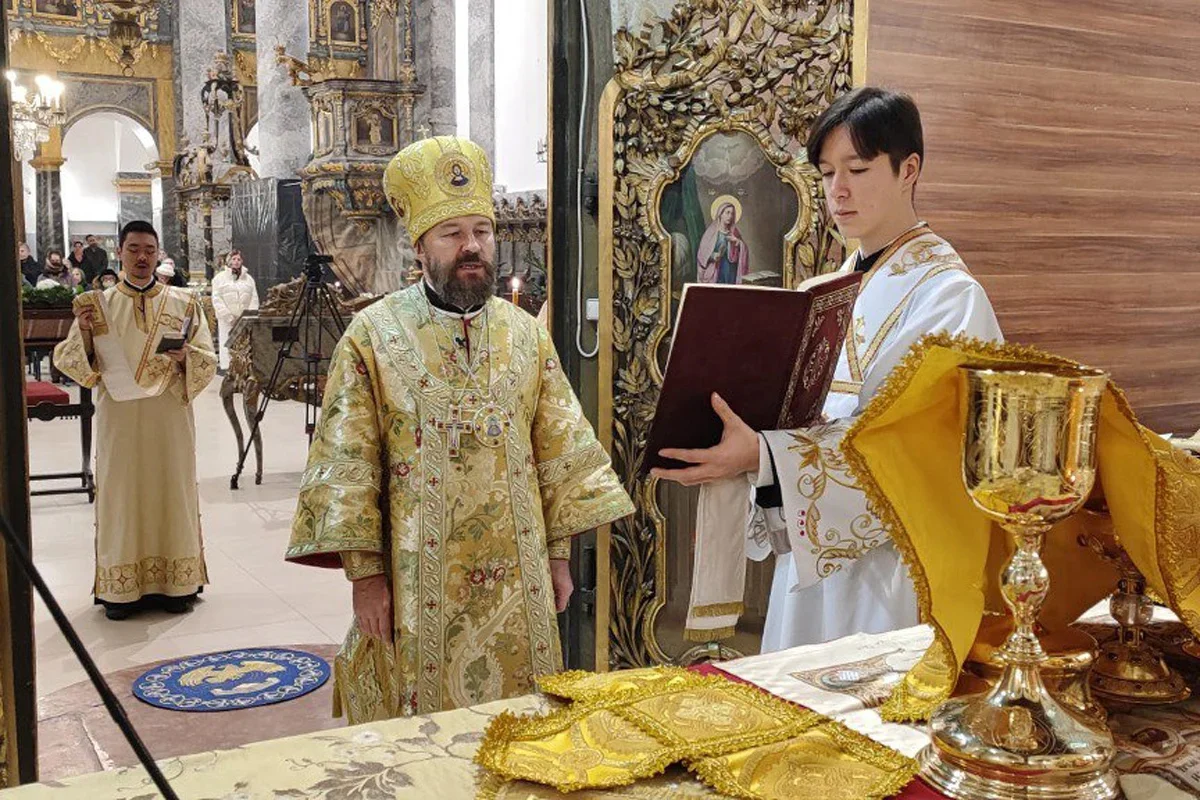
Formally, 58-year-old Hilarion will now be considered “retired” (according to the Charter of the Russian Orthodox Church, a bishop is considered retired only upon reaching 75 years of age or in case of serious illness). In fact, he will be the rector of the temple in Karlovy Vary, since after the expulsion of Lischenyuk this position is vacant. The management of the Budapest-Hungarian diocese returns to the Ryazan Metropolitan Mark (Golovkov), who had already governed it before Hilarion’s appointment. Mark, as a former deputy chairman of the DECR, has a diplomatic passport. The mysterious commission to study the state of affairs in the Budapest-Hungarian diocese, the composition of which was never announced by the synod, ceases its work. But just in case, the synod allowed for the possibility of its resumption at the discretion of the patriarch if any new accusations were made against Hilarion (which means there is reason to expect this).
Hilarion's resource
On the eve of the previous meeting of the synod at the end of October, Hilarion managed to mobilize his lobbyists/patrons and delay the “work of the commission,” which, as is now obvious, was in his interests. The Russian Agency for Legal and Judicial Information (RAPSI), which cooperates with the security forces, ordered a technical examination of video and audio materials published by Novaya-Europa from experts associated with the same security forces. As one would expect, the examination revealed “the presence of signs of intra-frame editing” and “signs of recoding and editing” in those fragments recorded by Georgy Suzuki, a 19-year-old Japanese citizen who served as Hilarion’s cell attendant in 2022–2023 and accused him of harassment.
Georgy Suzuki himself refutes any suspicions of falsifying the recordings, but admits that he tried to improve their quality on his own (it is clear that he made the recordings unprofessionally and they are of poor quality).
The materials of Suzuki and some pro-Kremlin bloggers, including the popular Dmitry Puchkov, better known as Goblin, were called a “project of Western intelligence services” fighting with Russia and the Russian Orthodox Church. The state agency RIA Novosti also came out in defense of Hilarion.
The young man, who managed to return to Japan from Hungary after Hilarion accused him of stealing valuables from his safe, is on the international wanted list and shares a sense of threat: “The police are ignoring my lawyer’s statement about lifting this illegal search against me and are protecting the criminal.” The Metropolitan also achieved the excommunication of Suzuki from the Japanese Orthodox Church, in whose churches he served from the age of three.
“There was no sex!” Is it possible to do the rest?
George Suzuki wrote in his Telegram channel that a few days before today’s meeting of the synod, members of the Russian Orthodox Church commission contacted him, asking a very strange question: “What canonical rule was violated by the actions of Metropolitan Hilarion?” It would seem that the question of the chaste behavior of a monk is self-evident and does not require detailed interpretation in canon law. The monk does not marry and, accordingly, does not allow himself any actions of an erotic nature. This is the classical understanding of the vow of chastity, which, along with the vows of non-covetousness and obedience, is taken by every monk at the time of tonsure.
But Metropolitan Hilarion, from the very beginning of this story, took a formal legalistic position, which sounded like a slogan:
“There was no sex!” This means that we should bring him under the 25th Apostolic Canon - about “a bishop convicted of fornication”
- impossible. But is it possible to reduce such a broad concept as “fornication” to a specific physiological act of sex? In the most scandalous video that George Suzuki managed to record, the Metropolitan undresses, goes into bed with a handsome 18-year-old boy and hugs him. Does all this have nothing to do with the topic of “fornication”?
George Suzuki is not a specialist in canon law; he constantly emphasizes that his accusations against the Metropolitan are of a criminal and, so to speak, universal nature. But it turns out that what is unacceptable in a modern civilized society may well “not fall under the canons” and not lead to any canonical punishment in the Russian Orthodox Church.
Blackmail and security levels
Obviously, the patriarch and the synod were forced to yield to the powerful connections of Hilarion, who, as the very informed deacon Andrei Kuraev wrote at the end of October, threatened the patriarch and members of the synod with the presence of incriminating evidence on them. For people familiar with the realities of the Russian Orthodox Church, it is no secret that love for beautiful young men, glorified by Plato, is very widespread among bishops. True, unlike the platonic one, it is heavily involved in crime, psychological violence and “building hierarchies” like those in prison. Kuraev then predicted the following scenario for the development of events: “1. The Patriarch offers Hilarion a deal. 2. Hilarion accepts her and promises to remain silent. 3. The Patriarch logically strives for a final solution to this issue. 4. Hilarion understands this and puts himself under the protection of Western intelligence services. 5. Thus, becoming interesting for domestic lovers of “looking at the Solbertsy Cathedral.” From this point of view, moving from Hungary, which is quite heavily infiltrated by Russian agents, to the “Russophobic” Czech Republic, where, by the way, Kuraev now lives, looks like a way to strengthen Hilarion’s protection.
As New Europe recently reported , Patriarch Kirill really needs a long-time (since the early 90s) and trusted ally to preserve his assets in Europe. Hungary has already sought the exclusion of the patriarch from the next package of EU sanctions three times - the last time this happened at the EU summit in mid-December. Hilarion has a particularly trusting relationship with the Prime Minister of Hungary, who, bypassing all legal procedures, granted the Metropolitan and people close to him Hungarian citizenship just three months after his arrival in the country - in September 2022!
New-Europe found that Orban and Hilarion studied at the same Pembroke College in Oxford, whose graduates are famous for their spirit of informal brotherhood that lasts for life. The names of the Metropolitan’s influential sponsors appear on the “Suzuki tapes” - Russian billionaires Dmitry Pumpyansky, God Nisanov, Pyotr Aven and Valery Kogan. Some of them could well put in a good word for their friend, and now, to some extent, a business partner in the EU. Hilarion himself is a millionaire, owning luxury real estate in Russia, France, Hungary and Spain.
Although the Russian Orthodox Church commission to investigate the situation in the Budapest-Hungarian diocese has completed its work, it is too early to close this case. Hilarion continues to demand exemplary punishment for his offender, who continues to demand punishment for the Metropolitan for harassment. The incriminating evidence with which Hilarion threatened the synod continues to wait in the wings in reliable caches. And the special services, with which both Hilarion himself and his opponents are suspected of having connections, should not be discounted either. Hilarion Gate has great development potential.