
Translated material
Seven “crimes” and 10 thousand registrations
Obninsk human rights activist Tatyana Kotlyar has been helping people for thirty years, despite state persecution and criticism of propaganda.
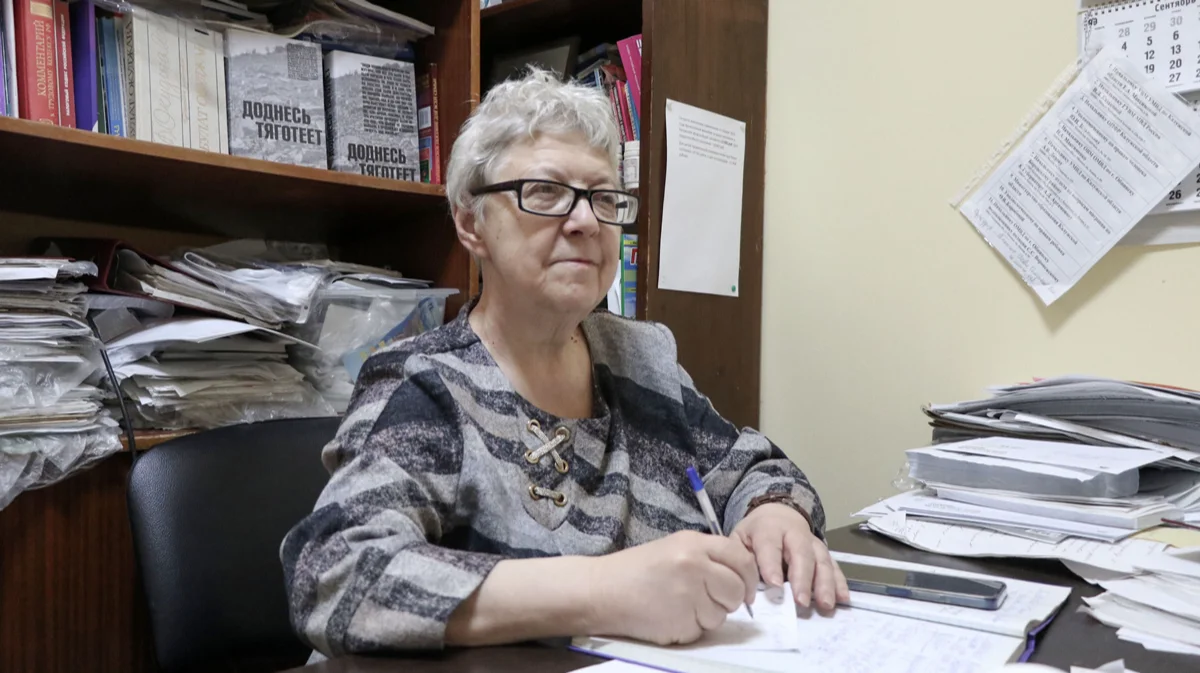
Tatiana Kotlyar
Human rights activist from the Kaluga region Tatyana Mikhailovna Kotlyar is 73 years old. More than thirty of them she protects the rights of people - veterans, conscripts, refugees, displaced persons, migrants. For this, seven criminal cases were brought against her, but Kotlyar continues to work. "The Wind" tells her story.
The text was first published on the Vetra website.
Dissidence and perestroika
Tatyana Kotlyar first encountered government opposition in the 1980s. With their husband, programmer and philosopher Anton Neverovsky, they collected samizdat books and helped political prisoners: they organized money collections, and sent parcels with food and literature. For this, in May 1982, KGB officers came to her house with a search and seized her husband’s manuscripts. Kotlyar herself was fired from the hydrometeorological institute “on demand”. Before the start of perestroika, she was forced to work as a teacher in a rural school, which was located several tens of kilometers from Obninsk.
In the late 1980s, Kotlyar organized rallies for perestroika and in support of Boris Yeltsin, who was fired from his post as first secretary of the Moscow City Committee. This is how she met human rights activist Lev Ponomarev and took part in the creation of the Democratic Russia movement. In 1994, Tatyana Kotlyar won elections for the first time - to the Obninsk city assembly.
Help for conscripts in the 1990s
She used her position to help people: she helped veterans receive benefits, told conscripts how to avoid being sent to the first Chechen war by applying for alternative civilian service. The object of revenge from the state was Kotlyar’s son, Dmitry Neverovsky. He studied at the Obninsk Institute of Atomic Energy (IATE), was enrolled in the military department, but in 1995 he left it in protest against the war in Chechnya. After graduating in 1997, Dmitry received a summons and applied for alternative civil service. However, the draft commission ignored the request. Neverovsky filed a complaint, which was not satisfied.
In October 1999, a criminal case was opened against Dmitry for “evading military and alternative civil service.” On November 25, 1999, a guilty verdict was handed down with a maximum penalty under the article - imprisonment for two years. The court's decision was criticized. Yegor Gaidar said : “Both the verdict itself and the circumstances in which it was pronounced are a threat to fundamental individual rights, such as freedom of thought and belief, a threat to the basic principles of democracy, and the circumstances of the case provide the most serious reasons to question the independence of the court in making decisions.” this decision." The European Parliament adopted a resolution calling for a review of the Neverovsky case.
On February 8, 2000, the Kaluga Regional Court overturned the verdict - Neverovsky was released from the pre-trial detention center. And in April 2001, a fire occurred in the Kotlyar house, in which Dmitry Neverovsky died. Tatyana Kotlyar and her husband managed to escape: she and her son lived in different rooms. The human rights activist admits that it could have been arson, but the insurance company concluded that the fire occurred due to a short circuit.
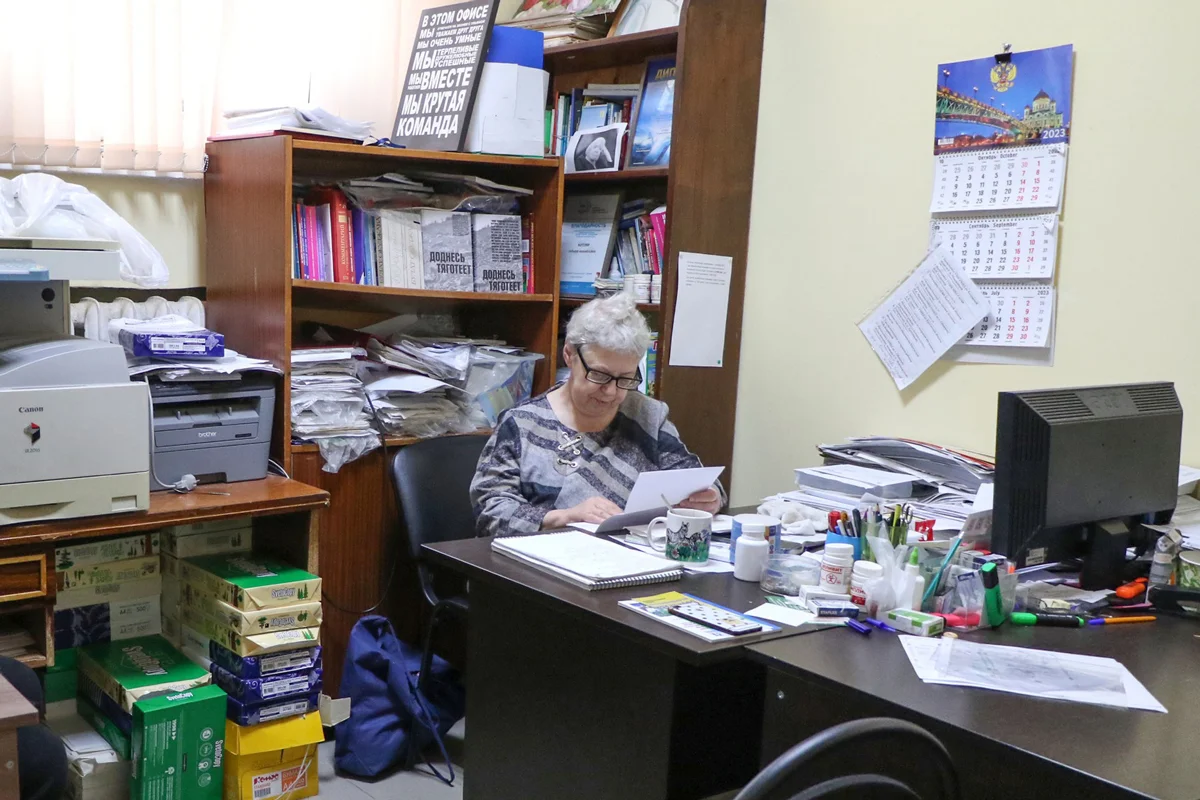
Tatyana Kotlyar and displaced people
In the 2000s, Tatyana Kotlyar gained citywide fame. In a comment to the Bereg publication, she said : “Obninsk is a fairly compact city, and, roughly speaking, every dog knew who to go to for help if something happened. Residents voted for me in any case, despite all the campaigning against.” Kotlyar regularly won elections: first to the Obninsk City Assembly, then to the Legislative Assembly of the Kaluga Region. In her new position, the human rights activist took up the issue of migration. She suggested that Governor Anatoly Artamonov implement a program in the region for the return of compatriots to Russia. This term in Russian legislation refers to people who were born or lived in Russia, the USSR or the Russian Empire, as well as their descendants. They must have “signs of a common language, history, cultural heritage, traditions and customs.”
It was Kotlyar who put forward the initiative according to which former citizens of the USSR who came to Russia before 2006 could take part in the resettlement program for compatriots. This amendment was adopted in 2010.
In 2009, Tatyana Kotlyar ended her second term as deputy in the Legislative Assembly of the Kaluga Region. She tried to be re-elected to the Obninsk city assembly and lost the election. She explained to the Bereg publication: “My popularity [in Obninsk] was supported by the fact that I helped all the townspeople. When their life became better by the end of the 2000s, I began to protect representatives of the most disadvantaged sections of the population - migrants, gypsies, former prisoners [and helped them with registration and employment]. It started to irritate former voters.”
Tatyana Kotlyar helps those who come to Russia in two ways: she writes complaints with reference to the laws or registers them in her own apartment. She noted : “I register people to help them. Without registration, there are difficulties in realizing rights even for Russian citizens. I'm being judged for this. For example, a homeless man with an open HIV status approached me. He lost his old passport, and he was given a new one without registration, without which he could not receive pills for therapy.”
The human rights activist has been registering both migrants and Russians in her home since the early 2010s.
Criminal cases of human rights activists
In 2013, its activities were made illegal: an article was introduced into the Criminal Code of the Russian Federation on “fictitious registration of a foreign citizen or stateless person at the place of stay in the Russian Federation.” According to it, seven criminal cases were initiated against Kotlyar.
In 2015 - a fine of 150 thousand rubles. Amnestied in the courtroom in honor of the 70th anniversary of the victory in the Great Patriotic War.
In 2017 - a fine of 150 thousand rubles. Exempted from execution due to the expiration of the statute of limitations.
In 2019, the case was dropped on the grounds that Kotlyar contributed to the investigation.
In 2020, the fine was 150 thousand rubles; during the consideration of the appeal, it was reduced by 10 thousand rubles.
In 2022 - a fine of 340 thousand rubles.
In 2023 - a fine of 600 thousand rubles.
In 2024 - a fine of 680 thousand rubles.
In July 2022, the ECHR awarded Kotlyar compensation of six thousand euros. In the ruling, the European Court stated that in considering the Kotlyar cases, Russian courts violated Article 7 of the European Convention for the Protection of Human Rights and Fundamental Freedoms, which states that punishment must be based solely on the law.

Intensifying repression in 2024
Tatyana Kotlyar takes the seventh criminal case calmly. “This time it was different in that I mainly registered citizens of the Russian Federation,” explains the human rights activist. — Because if a person has Russian citizenship and a passport, this does not mean at all that he has his own housing, where he can legally register and reside. This does not mean that the person is a homeless person who lives in a landfill. It’s just that most often they rent housing. So I help them. The prosecutor demanded a real sentence this time, but, obviously, the judge did not want to be the villain who would impose such a sentence. The fine is gigantic, 680 thousand rubles. I’ve been collecting donations for many months to pay for it.”
In addition to the seventh criminal case in 2024, Tatyana Kotlyar was prohibited through the court from registering more than six people in one of her apartments, and more than five in the second. The prosecutor’s office explained this requirement by saying that Kotlyar’s “criminal activities” violated Russia’s interests in the field of national security: during her work, she registered 10,593 people in her two apartments, which led to the fact that security forces were allegedly unable to track the movements of migrants.
The human rights activist comments on this decision as follows: “The prosecutor needs to do something with me, stop my activities, which consist of helping people. We lost the court in two instances, although this decision is not based on the law, because it does not have such a restriction. The owner has the right to register as much as he wants and who he wants. I think it will all end in the Supreme Court.” The decision of the regional court came into force in February 2024 - the migration service uses it as a basis for Kotlyar’s refusal to register new people.
How Tatyana Kotlyar helps people
Despite this, Tatyana Kotlyar continues to provide legal assistance: she writes complaints and statements, explains the laws to visitors.
The standard problem that Kotlyar works with looks like this. In Obninsk, the owner of the apartment, a citizen of Russia, came to the Office of Migration Issues (OVM OMVD) to renew the registration of her relative Shakhnoza, a citizen of Tajikistan, a 19-year-old girl. That one's temporary registration period has expired. According to the law “On Migration Registration”, the owner of the property is the receiving party. Accordingly, the owner of the apartment must extend Shakhnoza’s migration registration on the basis that her mother permanently lives in Russia.
Tatyana Kotlyar says: “On October 14, 2024, the owner of the apartment came to the Department of Internal Affairs of Obninsk in order to extend the migration registration of Shakhnoze. She had to submit a Notification of Shakhnoza's arrival at her apartment. The OMVD inspector refused to accept notification of Shakhnoza’s arrival, but took away her Tajik passport. I consider the retention of a foreign citizen’s passport by an inspector of the Department of Internal Affairs of the Department of Internal Affairs to be an illegal action. The passport of a citizen of Tajikistan Shakhnoza was issued at the Embassy of Tajikistan in Moscow and is the property of the Republic of Tajikistan. The inspector had no right to take him away. Complaints were written to the Department of Internal Affairs of the city of Obninsk, the Department of the Ministry of Internal Affairs of the Kaluga Region and the Commissioner for Human Rights in the Kaluga Region, Yuri Zelnikov. There are no answers yet."
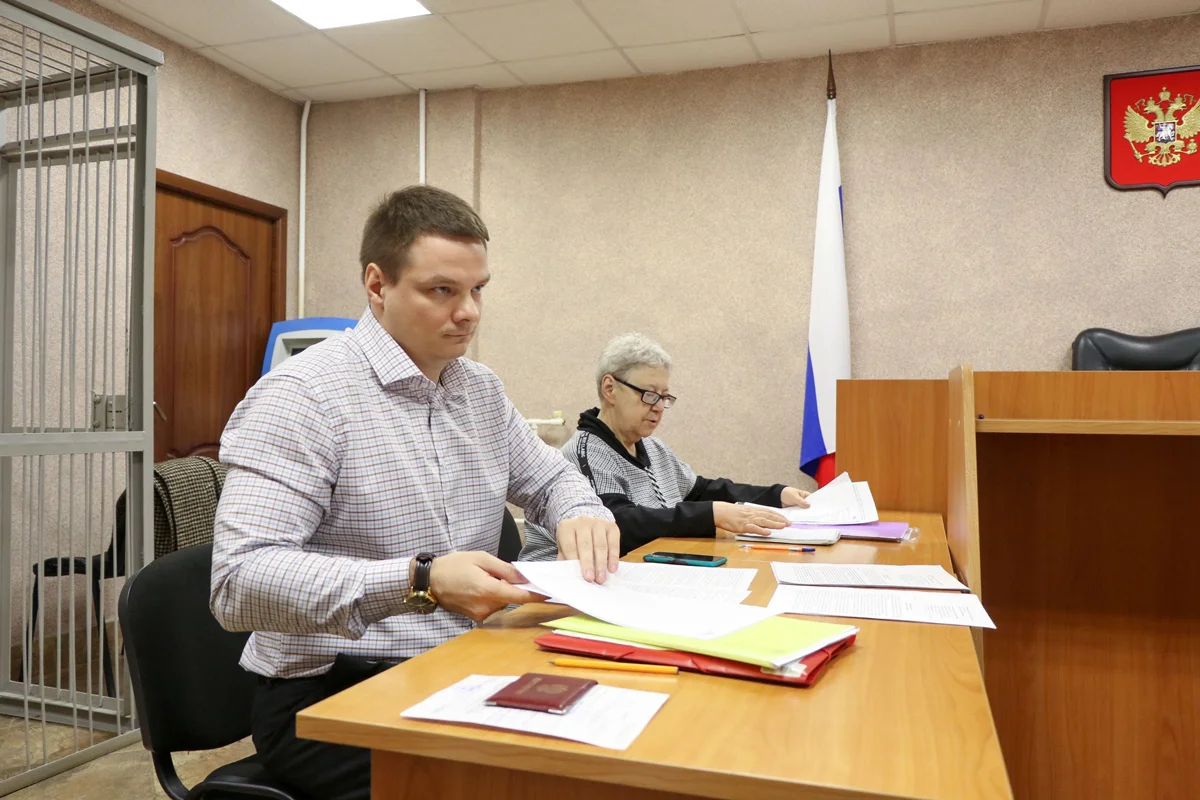
Tatyana Kotlyar on Besogon
In July 2024, the name Kotlyar appeared on federal television. Director and propagandist Nikita Mikhalkov said on his Besogon TV program: “There are real human rights activists, and there are those who hide behind this. She was among the 1000 outstanding women on the planet. For what? For fictitious registration of migrants. <…> It turns out that we create problems ourselves, and not someone else.”
By “outstanding women of the planet,” Mikhalkov is referring to the organization PeaceWomen Across the Globe, which was created in 2005 to nominate 1,000 women from 150 countries for the Nobel Peace Prize. Tatyana Kotlyar is included in this list. Although the winner was the International Atomic Energy Agency, the initiative drew attention to the planet's human rights defenders.
Tatyana Kotlyar answers Mikhalkov like this: “Any news, except the obituary, of course, helps. This is a resource. But this was unprofessional behavior. He's supposedly a journalist.
You could contact me and find out my position. I would explain to him that 90% of those I register are ordinary Russian citizens who do not have their own housing.
Why are the rights of citizens living in rented apartments violated? Here's the question. I don't want to defend bogus registration at all. This is quite an ugly phenomenon. Why, in fact, is a person forced to register where he does not live? Many people have suggested changing this a hundred times. They wrote to both the presidential administration and the State Duma. Everywhere they say: “Yes, you are absolutely right, we will look into it. And they don’t do anything.”
Fighting xenophobia
While Nikita Mikhalkov is indignant, Tatyana Kotlyar continues to defend people's rights. In September 2024, she helped draft a letter to the head of the Main Directorate for Migration of the Russian Ministry of Internal Affairs, Fatima Stepanova, a representative of the Roma people, who was born in the Rostov region as a stateless person and has never traveled outside the country. The law on citizenship of the Russian Federation states : “A child born on the territory of the Russian Federation from stateless persons is a citizen of the Russian Federation.” Despite this, Stepanova was not issued a passport and her child, who was born in August 2023, was not registered. In her appeal, Fatima directly wrote: “I believe that my child and I are simply discriminated against as Roma. If we were Russians, the child would have been stamped with Russian citizenship on his birth certificate, and I would have been given a Russian passport long ago. Help, please."
Thanks to Kotlyar’s help, Fatima Stepanova will receive a Russian passport in January 2025 and will be able to get a job. She says: “I’m glad that there are people on earth like Tatyana Mikhailovna. She is a very good person. Holy man. I think everyone in power is simply jealous of her, so they attack her. There are very few such people now. She helps everyone, I don’t know what I would do without her.”
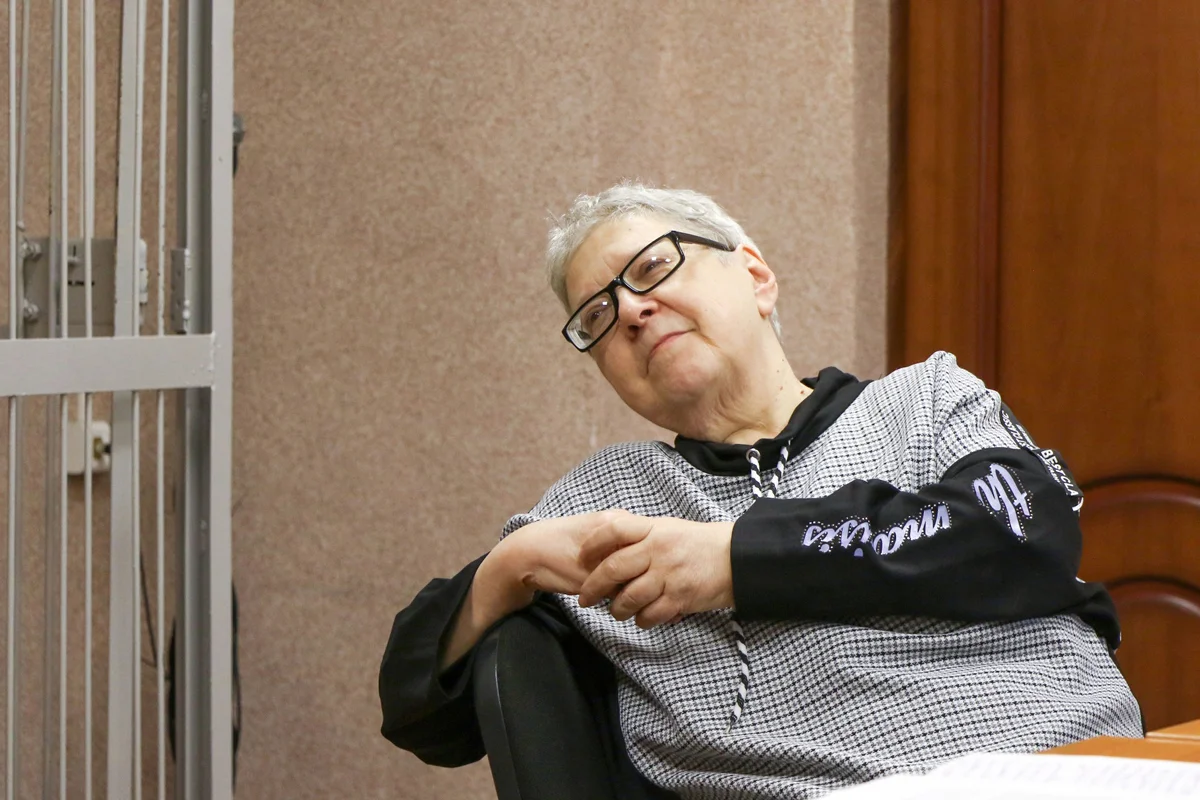
“You can’t accept anything more stupid”
After the terrorist attack at Crocus City Hall in Russia, the level of domestic xenophobia increased . Tatyana Kotlyar characterizes it this way: “For some reason the state decided to take advantage of chauvinistic sentiments. This reminds me of the Soviet period of anti-Semitism. This is a mistake by officials. Xenophobia is a little dragon that is easy to let out, but impossible to put back. It is impossible to manage and control somehow. Roughly speaking, they can wait for pogroms. I don't see anything good in this prospect. But there were still no institutions for integration and assimilation of newcomers. This needs to be done."
On December 11, 2024, the State Duma adopted a law that prohibits the admission of migrant children to schools without knowledge of the Russian language. “Since the beginning of the year, the State Duma, at the initiative of deputies, has adopted 14 federal laws aimed at improving migration policy and combating illegal migration,” said Speaker Vyacheslav Volodin.
Tatyana Kotlyar states: “Of course, nothing more stupid can be accepted. This is called “let’s violate our own Constitution with a nasty grin.” In fact, it says that school education in our country is not only universal and free, but also compulsory. And this applies to Russian citizens, foreign citizens, and stateless persons. They were simply left without any enlightenment. They're not going anywhere. The lives of thousands of children will simply be ruined.”
Sergey Adamov