
Translated material
Laughter through war
What distinguishes emigrant stand-up comedy from domestic Russian comedy? Review of stand-up trends from “New-Europe”
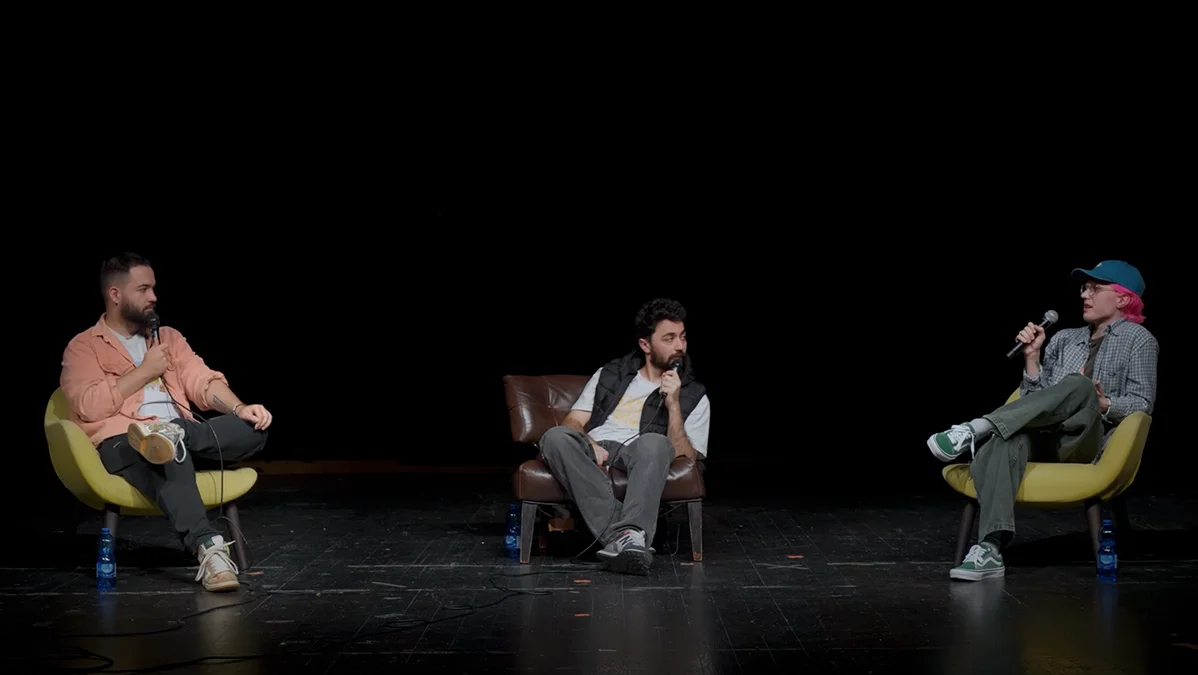
Garik Hovhannisyan, Idrak Mirzalizade, Sasha Dolgopolov (Sasha Kapadya). Photo: screenshot from Idrak Mirzalizadeh’s video
During the three years of war in Ukraine, the importance of comedians in Russian society has increased: this is not only one of the most accessible entertainments - both in Russia and abroad, but also an opportunity to think about your feelings and reflect.
Russians who left have a lot of problems associated with living in a new place, including difficulties with socialization. The citizens who remain in the country also need support and attention in unstable times. Especially considering the fact that both on TV and live, the share of the entertainment segment has sharply decreased, and external factors causing anxiety have become much more numerous. For stand-up artists themselves, the opportunity to perform and speak out about painful issues also provides a therapeutic effect. The comedians who left and those who stayed have different tools, opportunities, and often audiences. But most of them cannot ignore modern reality - even among those who remained in Russia, conversations about war and repression appear in their material every now and then. About the transformation of Russian-language stand-up after the start of the war and about the main trends in comedy - in the material “New Europe”.
Comedy in exile
After February 24, 2022, many talented stand-up comedians left Russia: Mikhail Shats, Vasya Medvedev, Dmitry Romanov, Semyon Slepakov, Arthur Chaparyan, Denis Chuzhoy and others. Some of them returned back after a while, but most began to build their careers in exile.
One of the first high-profile events for comedy in exile was the creation of a stand-up club in Tbilisi at the Villa Stage in the spring of 2022. It was a house where experienced and aspiring comedians lived and performed almost daily. The formats were very different: solo concerts, “dispersal” of material, live podcasts, quizzes, psychotherapy shows, stand-up in English. The comedians told their old jokes and also shared new ones - about war and life in a foreign land.
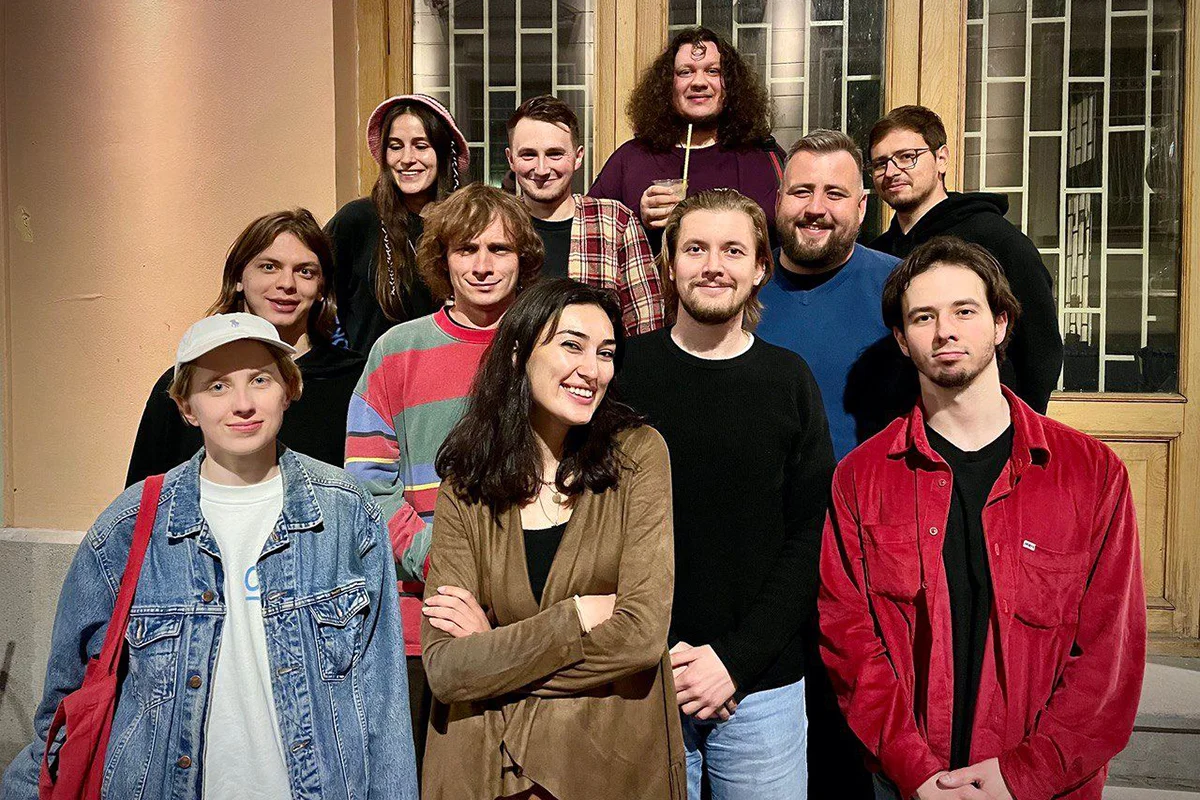
This project lasted only a few months. Later, stand-up artists moved to a new venue - Buhari Stand-Up Club, where they continue to perform today. The calling card of the comedians who left for Georgia was Comedy Table - a show in which three permanent hosts (Ilya Ovechkin, Kostya Shirokov, Dima Kolybelkin) and an invited guest communicate at the table, tell stories and try to make a joke out of every phrase.
Viewers in the comments on YouTube note that the atmosphere of what is happening is very reminiscent of the show “Porarazbirazza” that appeared in the pre-war period: in it, four comedians, sitting in chairs on stage, discussed the news in a humorous manner.
“Porarazbirazza” stopped airing in 2021 - then one of the show’s participants, Idrak Mirzalizadeh, was deported from Russia for a joke about Russians and a pissed mattress. But after the start of the war, two more participants in the show went abroad - Garik Oganisyan and Sasha Kapadeya (Dolgopolov). Then they resumed production of the program with a new name (“Porarazbi”) and with an updated cast (without Lekha Kvashonkin, the only one from the team who remained in Russia). They began to give joint performances in different countries, one of them attracted the attention of the Investigative Committee: Hovhannisyan and Kapadya acted out a scene where one handed a figurine to the other, referring to the murder of Z-military correspondent Vladlen Tatarsky. Alexander Bastrykin ordered to check the actions of comedians.
Garik Hovhannisyan himself, in the summer of 2022, together with colleagues Edo Hovsepyan and Andrei Sharapov, opened his stand-up platform in Yerevan - Ari Stand-Up Club. Idrak Mirzalizadeh, together with Slava Komissarenko and other comedians, took part in the creation of the Lokal stand-up club in Warsaw; the team began to focus on viewers from Belarus - many performances there are held in the Belarusian language. Sasha Kapadya began to tour Europe and the world solo, one of her main achievements was the release of a concert in English . Denis Chuzhoy tried to follow the same path in emigration.
Another iconic YouTube project that comedians made in exile was “Let’s do a show together.” Slava Komissarenko, Ruslan Bely and Sergei Detkov gather on stage to discuss the latest events in their lives, as well as crack down on jokes. In the comments under the first issue they noted that this is a rare occurrence when a Russian, a Ukrainian and a Belarusian can perform on the same stage.
Local communities of Russian-speaking comedians also appeared in Belgrade, Almaty, Tel Aviv, Berlin, Vilnius and other large cities where Russians were able to travel.
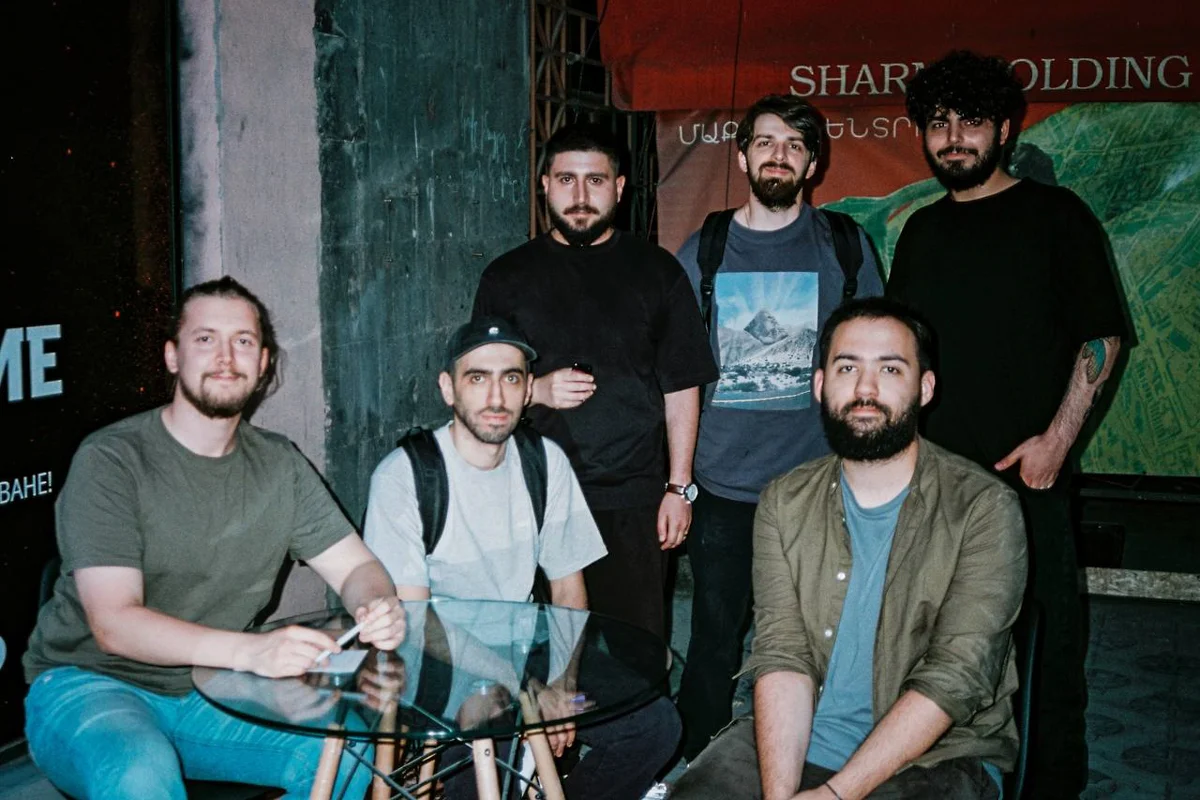
And if in the first year of the war and emigration, viewers abroad could be made to laugh with jokes lying on the surface about Verkhniy Lars, Yevgeny Prigozhin, mobilization, the absence of “VkusVill” and Armenian taxi drivers, but now comedians have begun to adapt to new conditions: their delivery has become calmer, and the themes are deeper.
Nevertheless, the events taking place in Russia and Ukraine continue to set the context for comedians. The most uncompromising in this regard is comedian Kirill Selegei, who left for Israel after the start of the war. In his latest stand-up concert, “AAAAAA 2/2,” he discusses the political situation as straightforwardly as possible, and comedy is born from this technique.
“Throughout my life I’ve often wondered: am I Russian? Am I Jewish? I didn't understand. But now, thank God, they explained to me: I am 100% an occupier,”
- Selegey declares at the very beginning.
The lack of censorship is a key factor that distinguishes emigrant stand-up comedy from domestic Russian comedy. And perhaps if Russia had not launched full-scale hostilities in Ukraine, most comedians would have remained in the country and would not have made such strong political statements.
“In Russia there are still comedians who even touch on politics and SVO. Just not from TV or YouTube screens, but in small clubs. I want to believe it. In exile, it’s easier to breathe on stage. Jokes about politics evoke more reaction from viewers who are outside Russia,” said comic artist Kristina Bitkulova in an interview with Moskvich Mag in 2023.
Comedy in Russia after the start of the war
Despite the mass exodus of comedians, a significant part of comedians remained in Russia. Stand-Up Club #1 still continues to operate in Moscow; in the summer of 2022 it moved from Arbat to Trubnaya. Comedians from the YouTube channel Labelcom continued to produce the show “What Happened Next?” and other projects. Comedy Club, whose creators announced the closure of the project, was eventually restarted . After the death of Alexander Maslyakov, KVN began to be hosted by Ivan Urgant’s former partner Mitya Khrustalev.
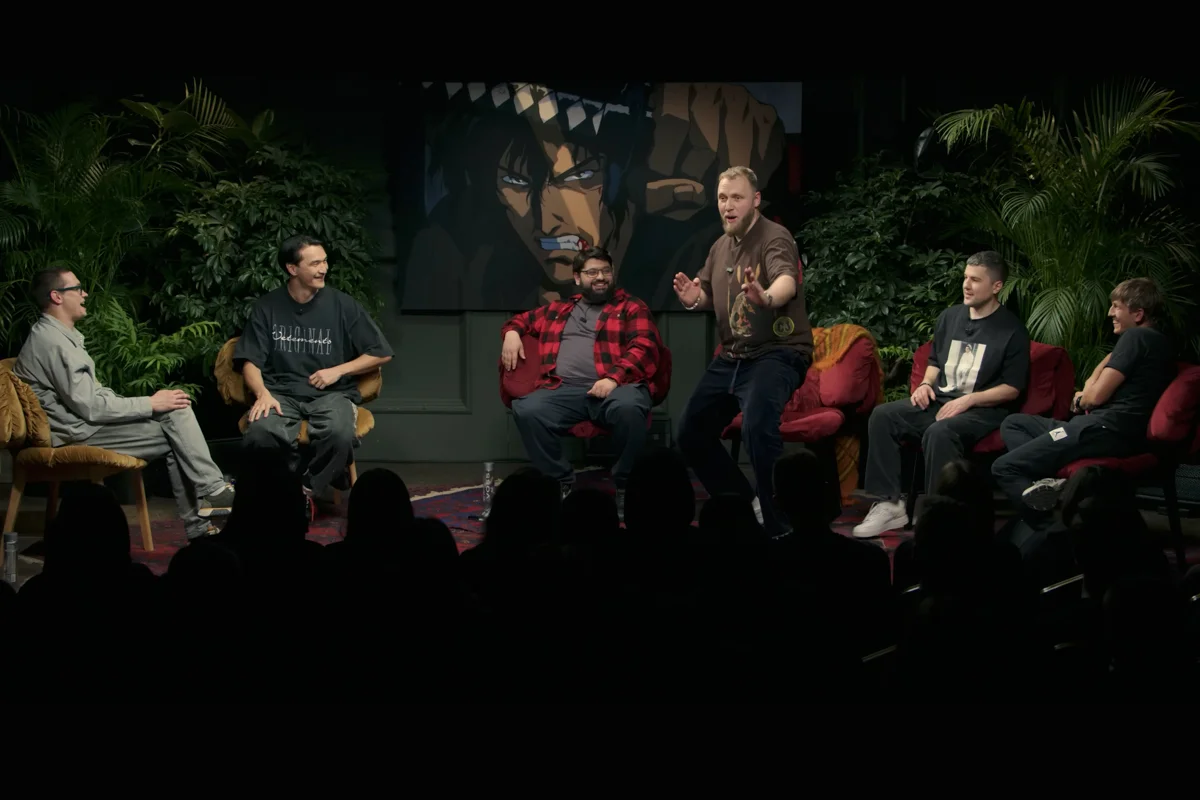
Stand-up artists remaining in Russia can be divided into several categories. The first is those who continued to speak as before, practically without touching on the topic of war and repression. They focus on so-called eternal themes. Such artists include Phil Voronin or Lisa-Varvara Aranova. The latter released a stand-up concert, “Ups and Downs,” in November 2024, in which she joked about periods, the Russian language, and atheists. At the same time, she touched on more complex personal stories, such as her grandmother's dementia and a doctor's attempted rape. At the same time, Aranova deliberately avoids jokes about politics and related topics, which is why a new viewer might think that her concert was recorded in pre-war times. This is both a plus and a minus of Aranova’s comedy: she invites the viewer to take a break from global disasters and laugh at the little things in life, but her jokes risk being forgotten the very next day.
Another type of comedian includes those who, while remaining in Russia, could not remain silent about global problems. These include such veterans of humor as Kostya Pushkin or Kolya Andreev. In his concert “It’s all a joke,” Pushkin used Aesopian language, avoided proper names and specific events, but his performance can rightfully be called one of the best in 2024:
speaking about the heaviness and injustice of time, ridiculing the helplessness of people, and first of all his own, the comedian creates a unique humor - topical and at the same time universal.
Some jokes from his solo album can be applied to other events, they are timeless. Indeed, before us is Pushkin.
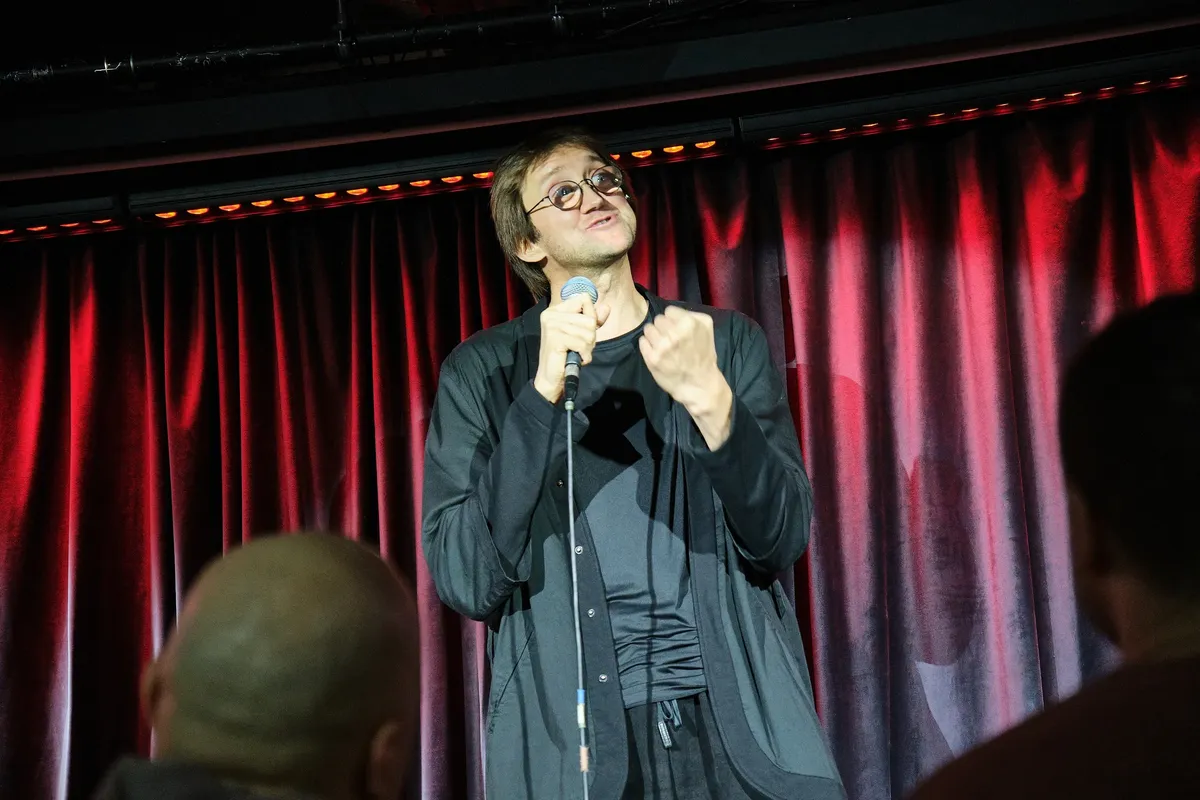
“And those who don’t swear, how are they now? How can they synchronize with reality? What is this if not fucked up? A mess? Trouble? Confusion? They have already spent these words on the pandemic, how should they express themselves now? And those who don’t smoke or drink—what’s all this for them? They would have gone to heaven anyway; they don’t have to be martyrs. What about those who were released from prison? How can they feel the difference? There are no brands here or there; the market needs to be monitored even more seriously. How can they assimilate? - asks Pushkin.
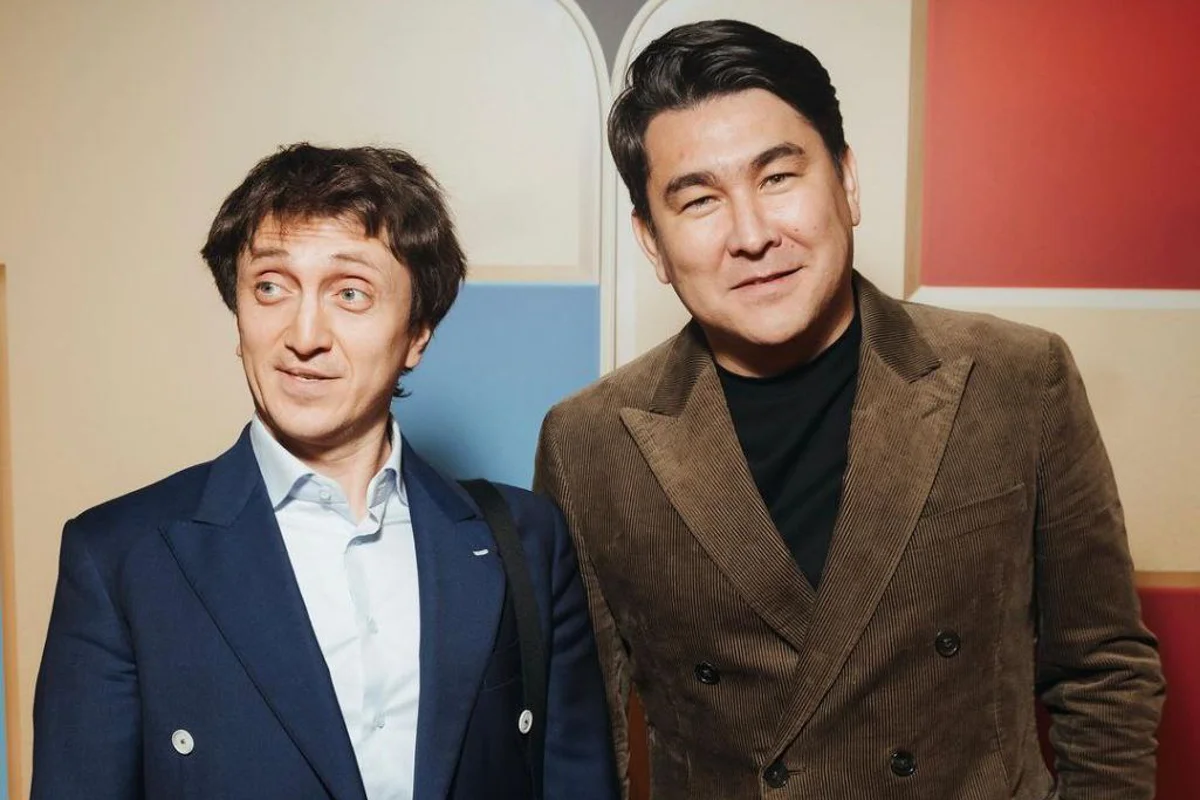
At the same time, there are still some comedians in Russia who publicly supported the actions of the authorities and the “special operation,” although there are few of them, and most of them are associated with the TNT television channel owned by Gazprom. For example, former members of the KVN team “Team of the Kamyzyak Territory” and the hosts of the show “Once Upon a Time in Russia” Azamat Musagaliev and Denis Dorokhov in 2023 traveled to the occupied territories and performed in front of the Russian military - the event was timed to coincide with the 80th anniversary of the Day of Liberation of Donbass from German troops.
“We had communication directly with the military personnel who protect this land. And I want to say about the main feature: they speak from the heart, very sincere people. It’s very nice to hear that even in the dugouts there is a TV, and they watch our concerts,”
- Dorokhov said after the speech.
In their stand-up performances, former “Kamyzyaks” do not speak out about the war in any way. At the same time, in one of his interviews, Musagaliev made an “injection” at the Russians who had left: according to him, after the Russian invasion of Ukraine, he had a large number of projects, “because there were fewer colleagues.”
The invasion of Russian troops into Ukraine was also supported by Stas Starovoitov. Immediately after the start of full-scale hostilities, he began to actively criticize Kiev and express unconditional support for the Russian authorities. The comedian also traveled to the occupied Donbass, where he performed an acoustic concert. In addition, he condemned the comedians who left Russia and called it right to introduce penalties for military “fakes.” Perhaps the latter was reflected in Starovoytov’s speeches - in them he does not directly raise the topic of war.
“After the law on punishment for fakes was adopted by the State Duma, any information work becomes similar to the work of a sapper - you can be blown up at any moment. I assume that in the very near future we will see a couple of show trials of “fake throwers”, this would be logical and would allow us to consolidate the correct conditioned reflex,” the comedian wrote in his Telegram channel in March 2022.
In turn, Comedy Club residents Garik Kharlamov and Demis Karibidis in the fall of 2022 began to make fun of all current geopolitical events:
there were jokes about the imminent reunification of the republics of the Soviet Union, and about Europe freezing without Russian gas, and about sanctions, which supposedly no one in Russia cares about.
Perhaps this was done in an ironic way.
At the same time, comedians who left Russia have said more than once that in fact TNT does not require publicly taking any political position: it is much more profitable for the management when comedians do not speak out on current events. So, for example, it happened immediately after February 24, 2022, when the channel’s employees were asked not to comment on the war in any way.
"What happened to you"
The most important discovery in Russian-language comedy after the start of the war was the emergence of the “What Happened to You” (CHUVS) format. The essence of the show is that several comedians ask the audience in the audience what problems bother them and try to solve them. They themselves emphasize that they are not psychologists and the program is purely entertaining.
The first episode of CHUVS was released on the Stand-Up Club #1 channel in 2022. Already at the start, each new episode received hundreds of thousands of views, and tickets for offline events quickly sold out. The main persons of the project and the most beloved presenters in this format were Lisa-Varvara Aranova, Kostya Pushkin and Bogdan Lisevsky.
An indicator of the audience's trust in the comedians was that they shared personal, sometimes terrible, problems with them. Stories about inferiority complexes or difficulties in relationships with a lover were interspersed with stories of domestic violence, miscarriages and health problems that would require a person to wear a urine bag for the rest of his life. Comedians do not always manage to solve the problem of the person who asks, but they at least try to cheer him up.
For example, one of the CHUVS heroes said that when he was seven years old, his 14-year-old aunt showed him intimate parts of her body. This caused trauma to the young man, which remains 15 years later, because of which he cannot have sex with the girl. The comedians advised him to discuss the problem with his relative without aggression or attack, since she herself could forget about what was happening and not take it seriously. Stories like this come up frequently on the show.
The CHUVS format itself has become popular among comedians in exile - the same shows are held in Tbilisi, Yerevan, Warsaw and other cities. We also attract a large number of spectators who want to talk about their problems and experiences.
Censorship and repression
Representatives of various professions have felt the presence of military censorship in Russia, and comedians are no exception. As of December 15, 2024, the Ministry of Justice added seven comedy actors to the list of “foreign agents”: Maxim Galkin, Mikhail Shats, Semyon Slepakov, Danila Poperechny, Denis Chuzhoy, Ruslan Bely and Anton Pikuli. The reason for this in most cases was their anti-war statements.
In addition, a protocol was drawn up against Poperechny under the article of “discrediting” the Russian army for his post on Instagram, in which he wrote “no war” and “no need for war.” The comedian was fined 50 thousand rubles.
Also, the Investigative Committee, on behalf of Bastrykin, organized an inspection against comedians Garik Oganisyan and Sasha Kapadi - pro-government bloggers and deputies demanded that a criminal case be opened against them under the article on justifying terrorism for the act in which they staged a terrorist attack against Z-military correspondent Vladlen Tatarsky. What the audit showed is unknown, but at the end of 2024, both comedians’ accounts in Russia were blocked .
Repressions also affected comedians in Russia. In 2024, two protocols were drawn up against Dima Gavrilov under articles of inciting hatred and “discrediting” the Russian army.
Before this, Z-bloggers demanded that Gavrilov be held accountable for the jokes he told at a concert in Tbilisi during the period of emigration (he left for Georgia in 2022, and returned back the following year). In an excerpt from the speech, which was distributed on the Internet, the comedian jokes about the military department, his departure from Russia and the inscriptions “Russian go home” on the walls of houses. The artist was arrested for 13 days, and then fined 30 thousand rubles. Despite this, he decided to stay in the Russian Federation.
“I, Dmitry Valerievich Gavrilov, in my stand-up video allowed myself offensive statements aimed at Russian citizens or discrediting the RF Armed Forces. I fully admit my mistake, I repent of the words I said, I changed my position, I hope I didn’t harm anyone,” Gavrilov apologized in the video for the jokes.
At the end of 2024, comedian Guram Demidov became the object of criticism from pro-government telegram channels: during one of his performances, he joked about the fact that Jesus Christ opened the Red & White chain of stores. Z-activists from the “Forty Forty” movement began to write denunciations against him en masse, accusing him of humiliating people of Russian nationality and publicly mocking the Lord. Soon after this, Demidov’s concert in Samara was canceled . The comedian also had to record a video apologizing for the joke, after which Z activists “forgave” him.
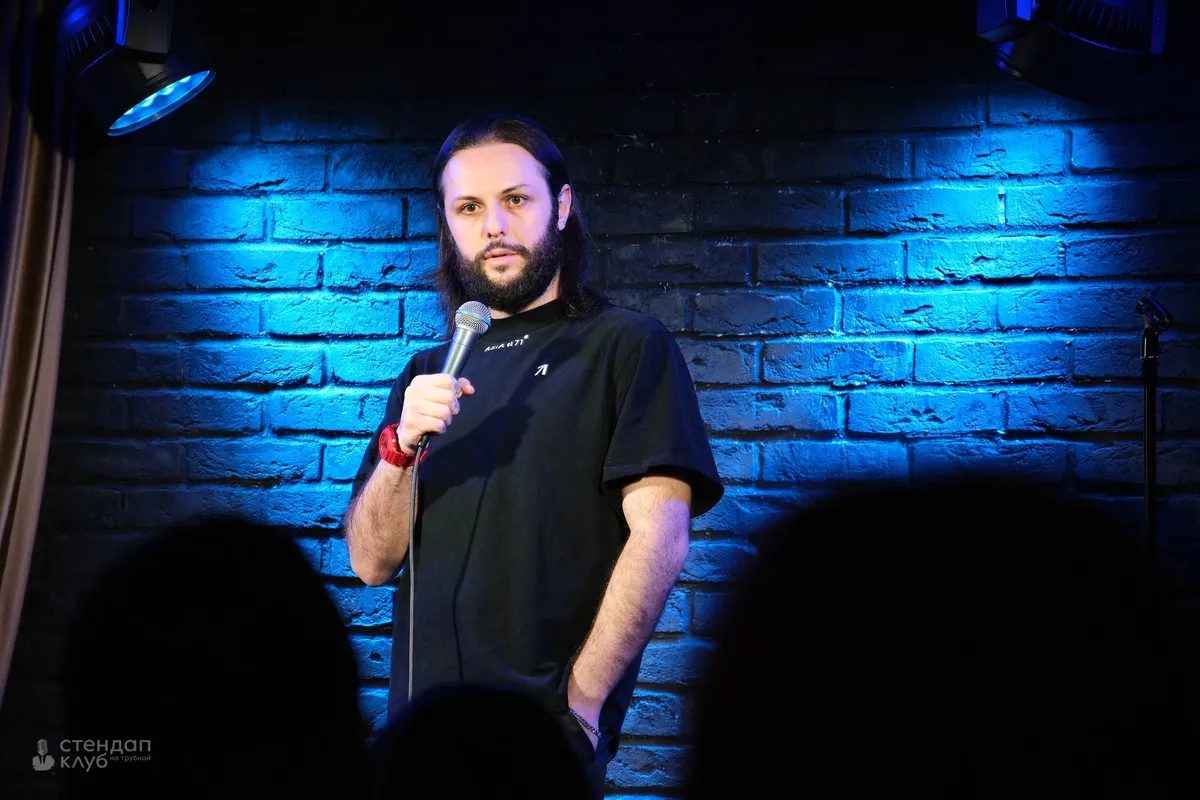
It was denunciations that became the main tool in the fight against anti-war comedians. Pro-government activists and officials tried in the same way to cancel Alexander Gudkov for a parody of Shaman’s video “I am Russian,” Semyon Slepakov for a song about a dead Russian soldier, Ruslan Bely for thinking about the war, Evgeniy Trikoz for jokes about propagandists and Putin.
Sometimes censorship in Russia takes on a completely unexpected character: in 2024, Ruslan Bely said that his lines were cut from Comedy Battle, and footage of him was blurred. They did the same with Semyon Slepakov. Old episodes of the show were shown on TNT4.
From YouTube to VK and other platforms
The main platform for publishing stand-up shows has always been and remains YouTube, which brought views and monetization income to artists. But in recent years, comedians began to move smoothly to other resources to promote their content. So, in 2021, Arthur Chaparyan created his own website Specials Comedy , at which he posted his concert “199”. The name is the price that the viewer must pay in order to see the concert. A year later, the comedian said that 47 thousand people bought his stand. Thus, he received more than 9.3 million rubles.
Since then, the SPECials Comedy website began to appear recording concerts of other comedians, including Sergey Orlov, Vasya Medvedev, Idrak Mirzizade, Zhenya Sidorov, Kolya Andreev and others. In 2024, against the backdrop of YouTube slowdown in Russia, SPECials Comedy also began to publish the Stand-up Club #1 show. The main drawback of the project is that you can’t draw up a monthly subscription on the site to see the performances of all comedians. The viewer can pay only each show separately - and access to him remains forever.
In recent years, the VKontakte social network has become a sign platform for comedians. In 2022, the VKontakte management acquired a controlling stake in Medium Quality, a manufacturer of popular comedic shows “What happened next?”, “Inside Lapenko”, “Show of the Big Russian Boss”, “I know you” and others. From that moment on, these programs began to be published exclusively in VK videos.
In addition to interactive shows, solo concerts of Ilya Sobolev, Paul will, Roman Kositsyn and other comedians, familiar to many from participation in projects from TNT, began to appear in the VK video.
According to the media, negotiations on the purchase of Medium Quality were carried out before the start of the war in Ukraine, but the transaction itself took place against the background of the authorities about the need to import YouTube. In addition, users drew attention to the fact that many exclusives in VK video artificially twisted views. This was probably done with the aim of blocking YouTube due to its objectionability. In 2024, in Russia, the service began to be artificially slowing.
Another streaming service, on which comedian performances began to be published, is Nuum from MTS. It was on this site that Sergei Orlov posted his last concert “Good intentions”. The cost of subscription is 199 rubles per month.
No less important sites for promoting comedians are Instagram and Tiktok: the format of short videos allows artists to expand the audience and recognition due to people who had previously been not at all interested in stand -up. Submering in a clock is much more difficult than viewing a minute highlight from it.
Instagram accounts of Dima Gavrilov , Seva Lovkacheva , Fila Voronina and other well-known stand-up actors are almost completely consisted of real-on the cover the face of the comedian and a clinging signature. And if scanty views will turn out to be under nine such videos, then the tenth can shoot and gain more than the complete record of the performance. Cyril Selege went on and performed with Reels Special: during the concert, he told jokes, which, in his opinion, could crawl into the trends on Instagrame. Indeed, one of these realas gained more than 100 thousand views. At the same time, an excerpt from his podcast, in which he reflects on the length of the penis, was able to collect more than a million.
What is and what will happen
After February 2022, the Russian stand-up scene was greatly transformed. Previously, all the artists of the comedy actively interacted with each other-they could meet the TNT show “22 comedians” or on “Accelerations” from Stand-up Club #1. Now the community has been shared by those who remained, and those who left. The second group is also divided into many communities, depending on the country in which they live. There is no longer a common center of attraction in the form of Moscow, where, for example, the Punchline humor festival was held (and still held), which professional and beginner comedians from all over the country gather.
This factor also greatly affects the experiences of the comedian and the audience, as well as on performances. Many artists of the comedy in Russia are concerned about the lack of freedom and connections with the outside world. The comedians have no such problems in emigration: they can safely speak out about things that are exciting them, since they are not responsible to the state for words - only to the viewer. A striking example of this is the statement of Nurlan Saburov during a concert in the United States, when a Ukrainian in a white dress in red paint ran out onto his stage, and he aloud suggest that she had started menstruation. The audience for a long time tried to “cancel” the comedian.
The artist in exile does not care about censorship, he has his own experiences - about the process of moving, adaptation in a new place, plans for the future. At the same time, the stand-up viewer Ilya Yakamsev considers this a bad indicator, because of which the unifying people's comedian cannot appear in Russia, which became the glory of Komissarenko for Belarus.
“There is no reaction from the authorities to the Russian comedians who left because they have vanished. <...> The whole Russian comedy, which is now in exile, is about how I could not think about what is happening in Russia. How can I do so that this is there, and I begin my new life here. In this sense, the modern Russian comedy in exile is no different from the Moscow comedy. <...> This is just a comedy about the trip, and that’s it, ”he says.
Nevertheless, segmenting of the Russian comedy plays a plus for the viewer, because he has more choice, what to watch.
Beginning artists also won: both in Russia and abroad they had fewer competitors compared to past times.
This is a great opportunity to establish yourself.
As for the comedians of the “first echelon”, their speeches continue to collect millions of views on the Internet, and interviewers, such as Yuri Dud and Katerina Gordeeva , continue to call them on the show. Their audience has not gone anywhere, rather, it only expanded. The reason for this was also a reduction in competition: outside Russia, there is no large number of entertainment events in Russian. Inside the country, the situation is the same: on television and offline, the share of the entertainment segment has declined from the beginning of the war.
The key factor that unites artists on both sides of the border is a misunderstanding of what the future will be. This is partly why the Russian-speaking stand-up comedy is now experiencing their peak: Russians turn to comedians to understand what will happen next. But most are trying to survive what is here and now.