
Translated material
"Scare everyone." How “justification of terrorism” became the most repressive article

In Russia, during the full-scale invasion of Ukraine, hundreds of criminal cases were opened under the article on “justification of terrorism” - mainly for words on the Internet. And the longer the war goes on, the more sentences there are for anti-war statements, which the state equates to terrorist actions. The website Sever.Realii analyzed judicial practice under Article 205.2 of the Criminal Code over the past ten years and tells how it became one of the main instruments of repression in the country.
- Under this article, people are judged mainly for statements on the Internet - for this, security forces simply need to monitor social networks.
- During the war, more people were convicted for “justifying terrorism” than in the previous 8 years.
- Most convicts receive real sentences, although at first the courts preferred to impose fines under this article.
- Articles about “treason” and “confidential cooperation” have now begun to be added to the “justification of terrorism.”
- The number of "terrorist" cases has been rising since Putin returned to the Kremlin in 2012.
“We already have a ‘clap’, a ‘negative growth’, a ‘gesture of goodwill’, a ‘regrouping’. Now there’s also an ‘incident’. This is when an explosion destroys the most important strategic facility - the most expensive and most guarded bridge on the planet.”
In October 2022, sociologist Boris Kagarlitsky wrote this phrase in his Telegram channel. This is how he reacted to reports of the explosion of the Crimean Bridge. Ten months later, based on a denunciation, a criminal case was opened against him for justifying terrorism, he was arrested and fined 600 thousand rubles. But then the fine was changed to 5 years in prison.
"A birthday present for Putler. Grandfather turned 70. The last anniversary, the last *****. PS The Crimean bridge was blown up today. De jure the Ukrainians destroyed their own bridge, what crazy people..."
And this was written by a teacher from Komi Nikita Tushkanov . He, too, was accused of justifying terrorism and “discrediting” the army. Tushkanov was sent to a pre-trial detention center and later sentenced to 5.5 years in prison.
“Tracking my feelings every day, I came to the conclusion that this, of course, is terrible, but I am happy.”
TV presenter Tatyana Lazareva said this phrase about drone attacks on Russian cities. It was taken out of context. And on December 25, Lazareva was sentenced in absentia to 6.5 years in prison, having considered the case of justifying terrorism in one day.
Russian courts have been passing sentences for speech that they consider justification for terrorism for almost a decade, but since the start of Russia's full-scale invasion of Ukraine, the number of such cases for speech has increased significantly.
From a few to hundreds of cases per year
The article on public justification of terrorism (205.2) appeared in the Russian Criminal Code in 2006 after Russia signed the Council of Europe Convention on the Prevention of Terrorism.
It implied imprisonment of up to five years for publicly recognizing “the ideology and practice of terrorism as correct, in need of support and imitation.” In 2016, the second part was added to the article: the same actions, but carried out using the media and the Internet. And in 2018, propaganda was added to the “calls to justify terrorism” - a part that implies a sanction of up to seven years in prison.
– The authorities explained the introduction of this article by the need to strengthen the fight against extremism and terrorism, especially in the information space. Legislators found it necessary to tighten responsibility for actions that could contribute to the popularization or justification of terrorist activities. I evaluate this article negatively, because, in my opinion, this article had no effect on the prevention of terrorist attacks, but instead became a repressive instrument,” explains lawyer Valeria Vetoshkina .
You cannot receive a suspended sentence under the article on justification of terrorism. And those accused of it immediately end up on the list of extremists and terrorists, which means their accounts are blocked and they live on 10 thousand rubles a month. As human rights activists emphasize , one can be released on parole under this article only after serving three-quarters of the term, and there is no amnesty under it. That is, people convicted of statements experience the same loss of rights as those convicted under other terrorist articles.
For almost ten years, the article on justification of terrorism was used extremely rarely - there were several cases a year. But since 2014, their number began to grow. There are no judicial statistics for these years, but Sever.Realii found at least 13 cases on court websites that were filed in 2014–2015. Moreover, only three of them were initiated exclusively under Article 205.2; the remaining cases consisted of charges under several articles, for example, calls for extremism and inciting hatred or enmity. 14 people were convicted in these cases.
In 2016, the number of people convicted under the article on justification of terrorism increased sharply - to 47 people convicted per year - and increased every subsequent year .
One of the first high-profile cases of justification of terrorism was the case of Pskov journalist Svetlana Prokopyeva . Back in 2018, Prokopieva, on the air of the program “A Minute of Enlightenment” on the radio station “Echo of Moscow in Pskov,” talked about the terrorist attack in the FSB building in Arkhangelsk - in which 17-year-old Mikhail Zhlobitsky blew himself up.
Prokopyeva said that Zhlobitsky’s actions are a consequence of the repressive policy of the state, which “limits the possibilities for civilized political struggle and shows cruelty towards citizens.” Svetlana Prokopyeva became a defendant in the case in 2019, and in 2020 she was sentenced to a fine of 500 thousand rubles.
After this, the initiation of cases for statements about Zhlobitsky’s self-detonation became widespread. According to OVD-Info , more than 50 criminal cases have appeared in Russia on the justification of terrorism in the wake of the explosion in the Arkhangelsk FSB.
In total, from 2016 until the start of the war in Russia, 667 people were convicted for justifying terrorism, and most of all under the second part, for statements on the Internet - 395 people or 59% .
During the war, from 2022 to July 2024, the number of people convicted for justifying terrorism has already reached 722 people . During this time, the share of convicts who received sentences for words on the Internet increased to 642 people, or 88.9% .
Thus, according to official statistics alone (with incomplete information for 2024), during the war years , 55 more people were convicted under the article for justifying terrorism than in the entire previous eight years.
Lawyer Valery Vetoshkina notes that security forces have begun to initiate more cases specifically under the second part of this article, because it is easy to track them - just monitor publications on the Internet.
The Supreme Court has not yet published statistics on prisoners for the entire year 2024. According to Sever.Realii estimates, in 2024, 294 criminal cases involving Article 205.2 of the Criminal Code of the Russian Federation were considered in courts. That is, these cases are considered in conjunction with other articles of the Criminal Code. Of this number, 230 cases were brought for justification of terrorism alone . Under the second part of this article , 208 cases, or 90%, were initiated.
It is impossible to say exactly how many people have become accused in these cases, since several people can be involved in one case, that is, the number of cases is not equal to the number of people, and the names in such cases are often hidden. But based on the data for the first half of the year - no less than 167.
The human rights project OVD-Info found that in 2024, the majority of cases under Article 205.2 were initiated due to anti-war statements. For example, for comments about attacks on the Crimean Bridge, about drone attacks on Moscow and other regions, as well as approval of the activities of the Freedom of Russia Legion. There will be at least 70 such anti-war cases in 2024.
Sentences
Punishment under the article on justification of terrorism provides for both fines of up to one million rubles and imprisonment of up to seven years.
According to Sever.Realii’s calculations, in 2014–2015, 14 sentences were passed, the texts of which were not published on the courts’ websites, so the punishment for them is unknown. One person was sentenced to compulsory treatment.
From 2016 to 2022 , 417 people received actual imprisonment , 231 convicts received a fine and 16 people were sent to compulsory treatment. During all this time, only one convict received a suspended sentence.
During the first two years of the war, 217 people were imprisoned in cases of justification of terrorism, 330 were fined, 34 were sent for compulsory treatment. There were no suspended sentences.
It turns out that in 2022 and 2023, half of those who were sentenced to the same punishment in the previous six years were sentenced to actual imprisonment for justifying terrorism.
In 2021 and 2022, fines accounted for about 60% of all penalties, but since 2023 the share of fines has dropped to 45%. Over the six months of 2024, 57 people were imprisoned (14 of them were sent for compulsory treatment) and 109 were fined.
– Fines were initially considered as a means of prevention. Their purpose is to show the seriousness of the violation without resorting to strict measures. In many cases, justification for terrorism was expressed in the form of social media posts or statements that were not related to the actual actions or organization of terrorist activities. Judges may have considered such cases less dangerous to society. Fines are also a source of revenue for the state. This can be a convenient measure of influence, which simultaneously performs a punitive function and brings material benefits, explains lawyer Vetoshkina.
But the courts' approach has become tougher. Imprisonment has become more common, especially in cases of repeated violations. “This is due to a change in the political context and increased control over public discourse,” says Vetoshkina. She assumes that the number of actual convictions will continue to increase.
Sever.Realii was unable to calculate statistics on the types of punishments for the remaining six months, since judicial acts in criminal cases on the websites of the courts that the editors found have not yet been published.
But Sever.Realiya knows that the courts handed down at least 356 sentences. This number is higher than the number of criminal cases for the same year (294 cases), since some of the cases were started back in 2023, and the verdict was passed already in 2024. In at least 18 cases, people were sentenced to forced treatment, and one case was dropped due to the death of a suspect whose name was suppressed. He was accused of calling for extremism and justifying terrorism.
It is also difficult to determine the range of terms to which those convicted for justifying terrorism were sentenced. The statistics of the Supreme Court are closed, and on the websites of the courts Sever.Realii did not find a single case in which the decision was published.
– The non-publication of court decisions in cases of justification of terrorism and other “sensitive” articles is rather the result of a systemic tendency towards secrecy. This is due to both the objective difficulties of the courts and political reasons, including increased secrecy and attempts to limit public control, says Vetoshkina.
Justification of terrorism and treason
In 2023 and 2024, defendants in cases of justification of terrorism began to be additionally charged with articles of treason, public calls for unleashing an aggressive war, vandalism and confidential cooperation with foreigners. Moreover, before wartime, the most common additional articles were calls for extremism and other terrorist articles (for example, assistance in terrorist activities or organizing a terrorist community and participation in it).
On the website of the Saratov Regional Court, Sever.Realii found a card from the case of the arrest of Nikita Vasilenko . In October 2023, he was accused of justifying terrorism and confidential cooperation with a foreign state and was arrested. He appealed the preventive measure, but the court left him in custody. The text of the appeal states that Vasilenko lived in Saratov with his mother, and in 2019 and 20120 he had a residence permit in Finland, which was then revoked. It is unknown what exactly Vasilenko is accused of. But the case file says that he admitted guilt and repented. Vasilenko is included in the list of terrorists and extremists.
Another person accused of justifying terrorism and contacts with foreigners is Vladlen Menshikov, a resident of the city of Rezha, Sverdlovsk Region. The FSB detained Menshikov at the St. Petersburg airport while trying to fly to Belarus in September 2022. He was arrested on charges of sabotage. According to the investigation, 29-year-old Menshikov installed jumpers on the railway section that could lead to the derailment of trains with military equipment.
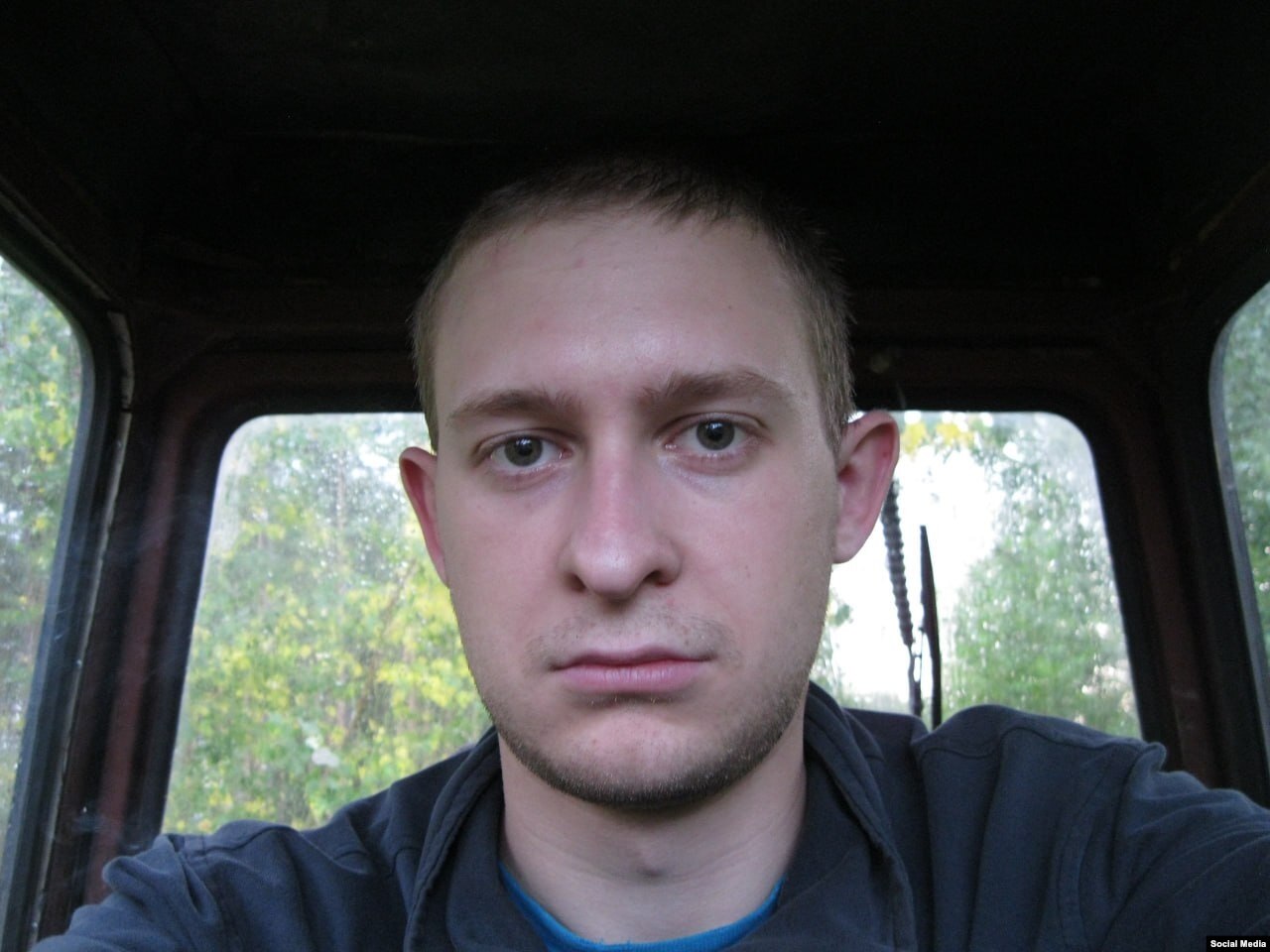
Later, Menshikov was charged with two more articles: justifying terrorism and confidential cooperation with a foreign organization (the investigation believes that Menshikov received assignments from the Freedom of Russia legion, fighting on the side of Ukraine). When the case went to court, the charge of sabotage disappeared from it. It is not reported whether Menshikov admitted guilt, but human rights activist Daria Belyaeva wrote that during the trial the lawyer spoke “about torture and threats from the FSB in order to force Menshikov to confess to something he did not commit.”
Menshikov was sentenced to 14 years in prison.
A resident of the Krasnoyarsk Territory, Artem Sanzharaev, was sentenced to the same term. He was also charged with railway sabotage, justification of terrorism and confidential cooperation.
The Sever.Realii website has discovered at least six cases over the past two years where the justification of terrorism was combined with charges of treason and sabotage. The names of all the accused are hidden; what exactly they are accused of is unknown. Sentences have already been passed on them: one person was sentenced to compulsory treatment, the rest were also convicted, but it is unknown to what terms they were sentenced.
Gender and age
Complete statistics from the Supreme Department of Courts are currently unavailable; Sever.Realii has data on exactly who was convicted for justifying terrorism only for the first half of 2024.
In 2024, of the 167 people convicted under the article on justification of terrorism, almost a third were people aged 30 to 39 years, almost 17% were minors, and 16% were over 50 years old. Among those convicted, one man and two women are over 65 years old. During this time, a total of 19 women were convicted for justifying terrorism.
The majority of those convicted were workers or people without a regular income - 37 and 89 people, respectively. Students (10 people), employees of commercial organizations (7), already convicted (6), businessmen, individual entrepreneurs (7) and civil servants (2) were also tried for justifying terrorism.
Other terrorist articles
A sharp increase in the number of people convicted on all terrorist charges began immediately after Vladimir Putin returned to the presidency in 2012, the Re:Russia project reported .
In 2009–2011, an average of 16 people per year were convicted under the article of a terrorist act. Over the next two years, the number of convictions increased to 28.
In 2013, new articles and clauses were introduced into the Criminal Code: undergoing training for the purpose of engaging in terrorist activities, organizing a terrorist community and participating in it, organizing the activities of a terrorist organization and participating in the activities of such an organization.
– These articles were introduced into the Criminal Code in connection with international obligations in the fight against terrorism. Moreover, amendments were made especially actively in the context of the fight against ISIS. These norms cannot be called bad. Another thing is that they are often used for the purposes of political repression, says lawyer Dmitry Zakhvatov .
Initially, the range of terrorist articles was expanded to combat ISIS recruiters and the financing of real terrorist organizations. This was an international practice and did not have a political aspect, agrees human rights activist Anastasia Burakova. But later the situation changed. After the annexation of Crimea, the number of terrorist cases began to double, and by 2016 it exceeded the average figures of 2009–2011 by 10 times.
What kind of terrorist articles?
There are now seven articles in the Russian Criminal Code that punish terrorist activity, at least as the state understands it:
Article 205. Terrorist act
Article 205.1. Promotion of terrorist activities
Article 205.2. Justification for terrorism
Article 205.3. Completing training for the purpose of carrying out terrorist activities
Article 205.4. Organization of a terrorist community and participation in it
Article 205.5. Organizing the activities of a terrorist organization and participating in the activities of such an organization
Article 205.6. Failure to report a crime
According to Sever.Realii’s calculations, from 2016 to 2022, 2,074 people were convicted on all terrorist charges, and from 2022 to 2024 (the first half of the year) – 1,851. A sharp jump in the number of those convicted on terrorist charges occurred in 2022, since then the Russian authorities have convicted an average of 740 people per year .
Burakova explains the increase in the number of cases on terrorism charges by the fact that law enforcement practice has changed.
– Quite a large number of cases began to be classified as terrorist offenses, for example those related to the arson of military registration and enlistment offices - on ideological grounds or under the influence of fraudsters. Investigators classify as justification of terrorism, for example, comments about the explosion of the Crimean Bridge or about hits on military targets on Russian territory. “Terrorism articles have become more widely used for various actions that are not directly associated with terrorism in the mind of an ordinary person,” she says.
Lawyer Dmitry Zakhvatov believes that the wave of terrorist cases is due to the fact that “the popularity of the regime is falling from year to year.”
– Accordingly, the regime needed to somehow compensate for this unpopularity. The easiest way is repression. The regime needs to frighten everyone who wanted to raise their voice against it, and even more so, to commit acts against this regime,” he explains.
In 2023, the number of terrorism cases increased significantly. According to official data alone, 43 people were convicted that year (in 2022, for example, 14, in 2021 – 34). In Russia, massive arson attacks occurred on military registration and enlistment offices, administrative buildings, United Russia offices, and railway infrastructure.
How many arson incidents?
From the beginning of the war until January 2024 (there are no later data), at least 220 cases of attacks and arson of government agencies and military registration and enlistment offices and more than 180 cases of sabotage on railways were recorded in Russia.
At first, these arson attacks were classified as destruction of property, but then articles about a terrorist attack appeared, and the sentences for them increased from 5 to 25 years.
– The explanation here is simple. Terrorist offenses are more serious and, accordingly, entail more severe punishment. This is done to intimidate others. This is the repressive practice of recent times - to show others that if you do this, then you will face a very severe punishment, long sentences, and subsequently serious restrictions that are imposed on those convicted of terrorism, says lawyer Anastasia Burakova.
More cases - more courts
Until 2015, “terrorist” cases could be considered by different courts, but then the Russian authorities changed their jurisdiction, and from that time such cases began to be submitted only to military courts. And not all of them, but exclusively the Moscow District Military Court and the North Caucasus Military Court (now they are called the 2nd Western and Southern District Military Courts).
But since the number of terrorist cases grew all the time, the number of military courts that considered them also became larger. By 2017, there were already four of them - the 1st Eastern and 2nd Western military courts were added. Their judges were increasingly required to travel to the regions to hear cases there. As a result, in 2023, when the number of terrorism cases increased significantly, all military and naval courts received the authority to consider terrorism cases - now there are nine of them.
On December 9, 2024, case files for terrorism cases disappeared from the website of at least one military court – the 2nd Western. As Mediazona found out , 236 case cards that were submitted to the court after November 30, 2023 or were transferred from the previous year disappeared from the site. Among them, for example, was a card of the case brought against director Zhenya Berkovich and playwright Svetlana Petriychuk , who are accused of justifying terrorism for the play “Finist the Clear Falcon.” Three days later, the cards were returned to the site, but without the names of the accused.
“The website is the only platform where the court regularly published cards of received cases; the paper schedule of hearings in the building of the 2nd Western District Military Court is not posted. This means that now it will be extremely difficult for journalists to find out anything about trials on charges of “justifying terrorism”, attempts to join the Legion “Freedom of Russia” or the Russian Volunteer Corps, as well as about hearings in absentia on “terrorist” articles,” she wrote "Mediazone".
What happens next
Human rights activists and lawyers interviewed by Sever.Realii agree that the number of cases under terrorism offenses will increase.
– The repressiveness of the regime is directly proportional to its unpopularity. Popularity is falling, therefore, the number of repressions will increase. Unfortunately, this only works in one direction, and this repressive skating rink will continue to roll until it falls apart, says lawyer Dmitry Zakhvatov.
– It all depends on law enforcement practice, on its use for political purposes and for intimidation purposes. Yes, there are more terrorist articles, more acts are being classified as terrorist offenses of one kind or another. The goal is to intimidate others, so that, as they say, they are disobedient,” says Anastasia Burakova.