
Translated material
“If we win, they’ll varnish it”
The main thing in historical politics over the past year: security forces deny repression, historians are being prepared to complete the “SVO”, Medinsky opens a bookshelf
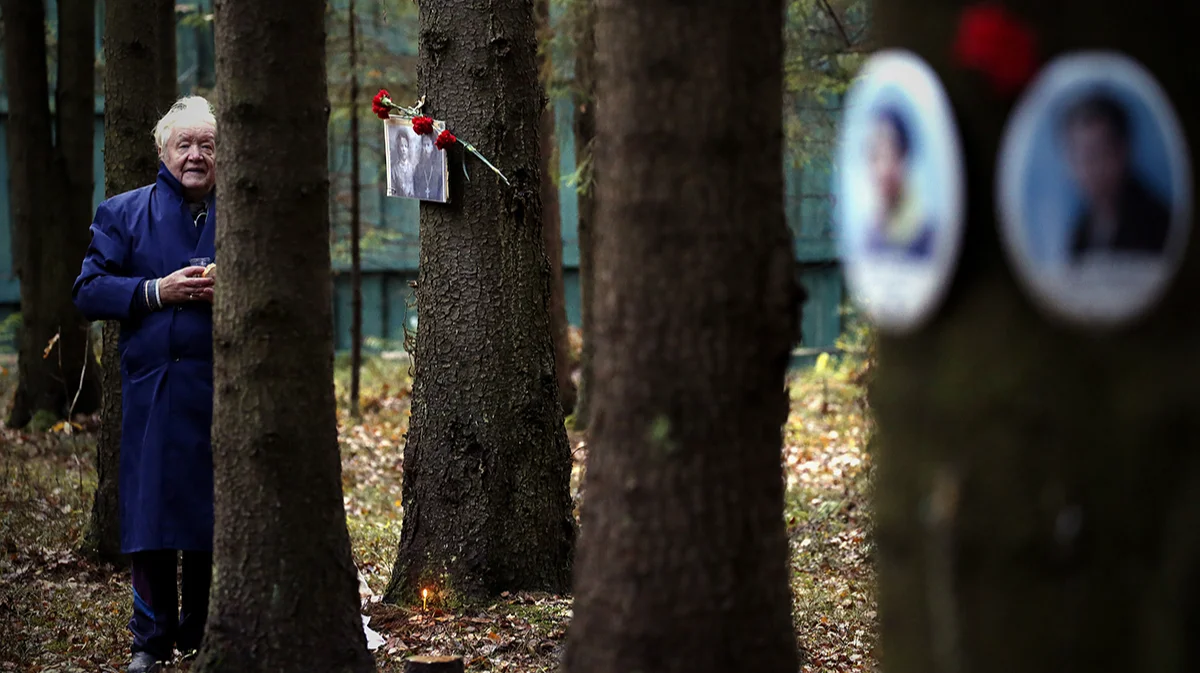
At the Levashovsky Memorial Cemetery, near St. Petersburg, Russia, October 30, 2015. Photo: Anatoly Maltsev / EPA-EFE
In an interview with Tucker Carlson in February 2024, Putin answered a question about the reasons for the attack on Ukraine with a long historical lecture. One can be sarcastic about his detachment from reality or note that history here is intended not to explain, but to hide motives. Someone even noticed that the president de facto justified Nazi Germany for attacking Poland in 1939 (they say it provoked Hitler the same way Ukraine provoked Putin).
But the main thing is that the intense experience of “sublime” historical and geopolitical images has become part of a system designed to generate among supporters of aggression a sense of involvement in epoch-making events. Everyone is invited to participate: it’s just that for the Z-radicals “historical crutches” are secondary, while for the rear “everything is not so-unambiguous” the thesis “we have always fought against external enemies” has a calming effect: if always, then there is nothing new is happening. Thus, talking about the past turned into a new opiate for the people, designed to soften the pain of change and create a feeling that the “new normal” is not so new after all. Russian historical politics is at the same time active, abundant and active, but at the same time tautological, boring and unprincipled. However, from the point of view of customers, this is its advantage. After all, the pragmatics of turning to history is not to start a discussion, but the opposite - there should be no critical judgment about politics.
Three pillars of a new history
Despite the omnivorous and chaotic nature of Russian historical policy, it nevertheless contains certain dominants.
First: the key role continues to be played by the “cult of Victory” and the habit of modeling the current war according to its patterns. Logically absurd, but it gives rise to hopes among new front-line soldiers that they will be treated as veterans of that war (forgetting that the reality was different from the words of officials).
A consistent description of aggression as a repetition of the Great Patriotic War, imagined as absolutely fair and defensive, in the future will deal a crushing blow to the entire memorial culture as a whole. Without a convincing victory at the front, the structure collapses, regardless of the shared attitudes: “We were liberators, but turned out to be aggressors,” “We defeated Nazism then, but we couldn’t now.” On the other hand, it creates potentially favorable conditions for stimulating conversation about foreign policy, violence and the right of the state to control the lives of citizens.
Second: state-centrism is shifting towards imperialism (the right to seize territories and organize someone else’s life according to one’s own understanding) and Russian nationalism. Moreover, the tilt is expected to be in the latter direction. Putin is increasingly flirting with him, “protection of Russians” is one of the key theses of the Z-radicals , some go even further along the path of discussing the practices of de-Ukrainization of the “liberated” population, offering recipes for ethnic cleansing.
Konstantin Malofeev, his “Tsargrad” and some structures close to the Russian Orthodox Church are activelyplaying on the topic of building a “Russian empire”. There is not only the war itself, but also the exploitation of fears of migration and the demographic crisis. Also noteworthy is the development, under state control, of a network of “Russian communities” - grassroots structures of nationalists who are trying to solve “Russian problems” locally and conceptually (as a rule, we are talking about “oppression” by Muslim migrants). However, the Putin state does not have a consistent request for a certain “Russian ideology,” and where can it come from if “Russian” is still conceptualized not so much as a bearer of a certain cultural identity, but as an adjective to power and its institutions.
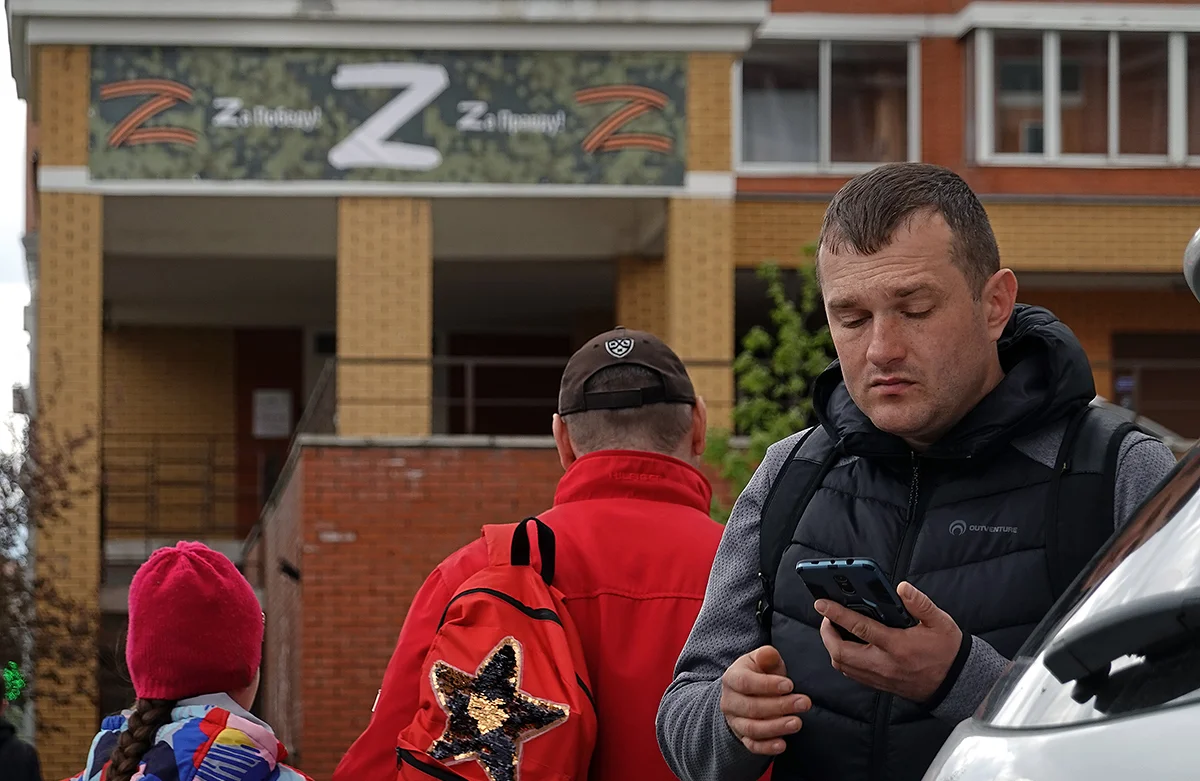
And the more they talk about the Romanov and Soviet empires, the stronger the vague feeling that both Kyiv and Kherson are “historically ours.”
Third: the glorification of victories is combined with the formation of a victim consciousness among citizens. Russians have always experienced injustice, and therefore they can only rely on the state, no matter how bad it may be. In addition to the general rhetoric of “Russophobia” and “external enemies,” two general “places of memory” have emerged that claim to symbolically consolidate this idea.
One goes back to the history of World War II and consists of a large-scale commemoration of the “genocide of the Soviet people” (we wrote about this here ). The second is related to the events of the undeclared war of 2014–2021. Two topics came to the fore: the murdered children of Donbass and the fire in the House of Trade Unions in Odessa on May 2, 2014. However, we are talking more about propaganda discourse than about more stable practices of consolidating these events in the memorial space.
Security officers for their own: repressions have no executors
The memory of Soviet repression quickly came under attack. In 2022, the international Memorial was closed. In October 2023, a bust of Stalin was erected in the Medny Museum near Tver, perpetuating the memory of Polish prisoners of war executed by his decision in 1940. Not long before this, “uniform textbooks” on the history of Medinsky were published , convincing the schoolchild that Soviet political repressions were not large-scale, and their organizers pursued significant goals and had good reasons for oppressing citizens. That is, the end justifies the means if it is set by a big boss.
In 2024, this trend continued. The authorities flirted with Katyn revisionism earlier, but in April of this year, for the first time, the Russian Military Historical Society (headed by presidential aide Medinsky), at the instigation of the FSB, officially repeated the “arguments” of deniers who claim that the NKVD did not shoot Polish prisoners of war in 1940.
Following this, in June 2024, the Russian government made changes to the Concept of State Policy for Perpetuating the Memory of Victims of Political Repression, removing from it the mention of their widespread nature and the inadmissibility of justification, as well as all the specifics that would allow us to understand who the criminal was. In September, Prosecutor General Igor Krasnov published a draft order on the inadmissibility of the rehabilitation of those involved in mass crimes (de facto: those who can be accused of collaboration during the Second World War). However, the audit of individual cases began at the beginning of the decade.
The key attack was on key places of memory and public events with the participation of diplomatic representatives of “hostile” states.
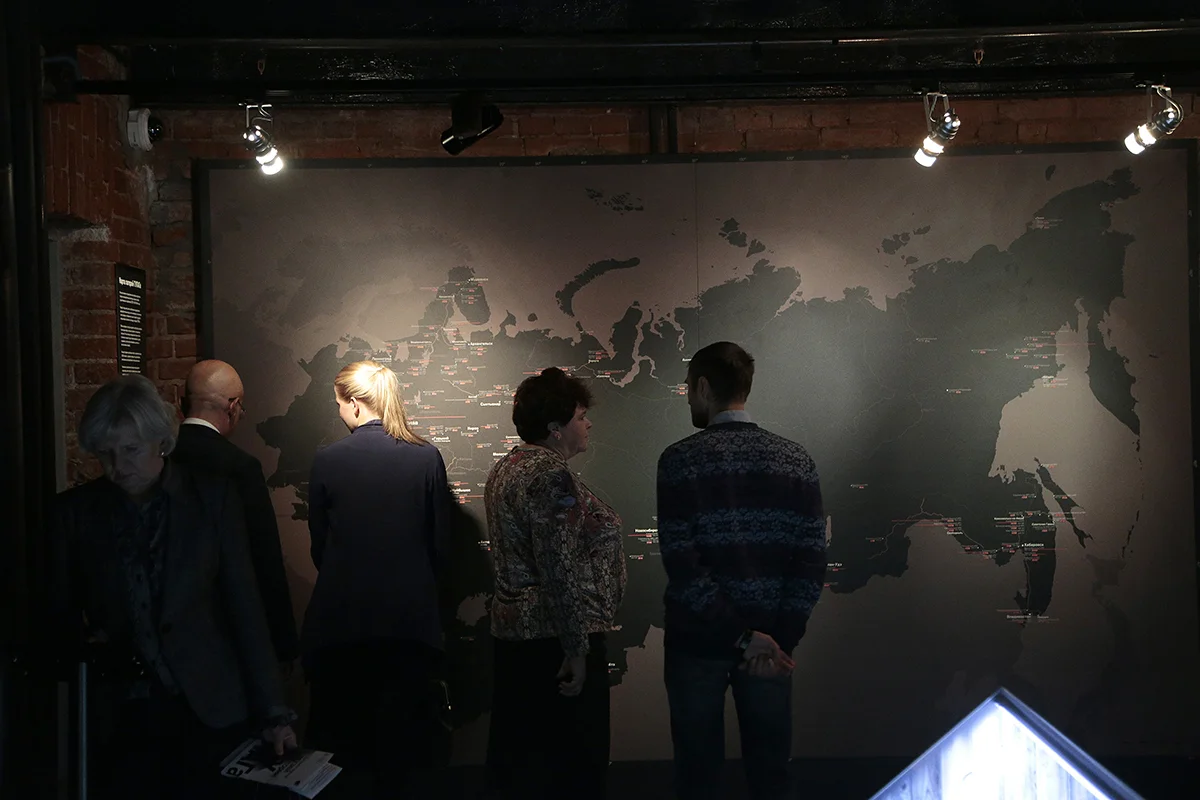
So, when on July 20, representatives of Memorial and the Consul General of Poland came to the Levashovskoye cemetery near St. Petersburg to honor the memory of Polish soldiers, social activists from the Volunteer Company staged a provocation, which ended in a brawl. A few weeks later, Cossacks and veterans tried to disrupt the annual commemorative events in Sandarmokh. Since mid-November, the Moscow Gulag Museum has ceased to function, formally due to fire safety violations. In early December, the head of the Human Rights Council, Valery Fadeev, called for the Solovetsky Stone to be moved from Lubyanka.
It cannot be said that the authorities have completely banned the memory of repressions. No, if it is a quiet commemoration addressed only to the victims, but without criticism of the criminal, then it is possible. No one, of course, will prevent the same Kadyrov from condemning Stalin for the deportation of Chechens in 1944. Or prevent the Russian Orthodox Church from talking about the murdered priests, as well as holding memorial services. For example, back in 2023, near Tula, the Tesnitsky execution site was recognized as a cultural heritage site of regional significance. Priests and monks are one of the key groups of victims here. In 2024, monuments were erected in Usolye (Perm Territory) and Shuya (Ivanovo Region) in honor of the priests who died during the years of the Red Terror. Moreover, a full-fledged monument to the victims of political repression was opened in Nizhnevartovsk.
Old players in the historical market
When talking about historical politics in Russia, one must always remember: it is not only about meanings or ideology, but also about a bureaucracy living by its own interests. Considerations of control, power and money are central.
The network of pro-state memory policy institutions has not gone away, although it functions as if the current war is just another, passing event.
The Russian Historical Society (RIS) and the History of the Fatherland Foundation are engaging the scientific historical community and are still trying in every possible way to show that they are primarily engaged in historical education. At the end of 2022, RIO began creating a unified program for teaching the history of the Fatherland at universities in non-historical specialties, and in the summer of 2024 a “basic” textbook was published , edited by the director of the Institute of Russian History of the Russian Academy of Sciences, Yuri Petrov.
If in the 2010s it was also related to school history education, then since 2022 this blanket has been taken over by presidential aide Vladimir Medinsky, whose assets include the Russian Military Historical Society (RVIO) and part of the Department of Public Projects of the Presidential Administration. His close associate Nikolai Ovsienko became deputy head of this unit.
In 2023, under the leadership of Medinsky, “unified textbooks” of history were written for grades 10–11, and this year the entire series was published. Putin's May decree on approving the foundations of historical education strengthened the institutional positions of the presidential assistant, although it gave few new powers. A more detailed study of this document indicates that systematization of regional history textbooks is on the agenda. Since there are still many regions in Russia and the Russian army is trying to increase their number, this is potentially a very profitable market. Judging by the news from the RVIO website, active work is underway in this direction.
Otherwise, the RVIO continues to work as usual: it installs or restores all kinds of monuments (to the heroes of World War II or other characters), holds forums, organizes cadet balls, paints all kinds of graffiti on the facades, and together with United Russia promotes a little-known the general public the book series “Gatherers of the Russian Land” (from Vladimir the Holy to Vladimir the Bloody), opens the steles of labor cities valor.
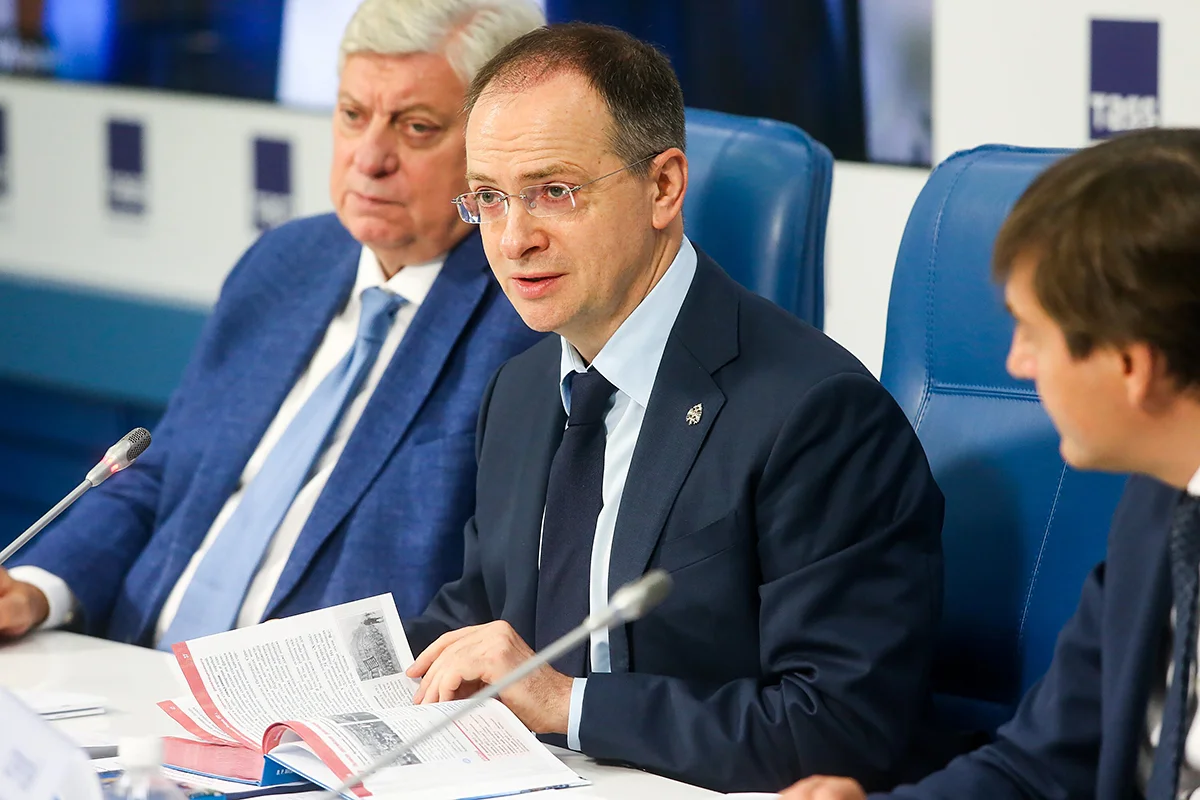
As before, a lot of effort goes into serving the personal interests of the chairman. Thus, chess clubs are opening across the country, Medinsky himself launched another series of lectures on the history of the country on the Kultura TV channel, and recently in his wife’s personal bookstore “Dostoevsky” (in a protected area of the FSO near the Kremlin) in front of the cameras of many media outlets he opened ... a bookshelf with war memoirs.
New projects: Belarus and genocide
If we talk about the main changes in the institutional network, there are two of them.
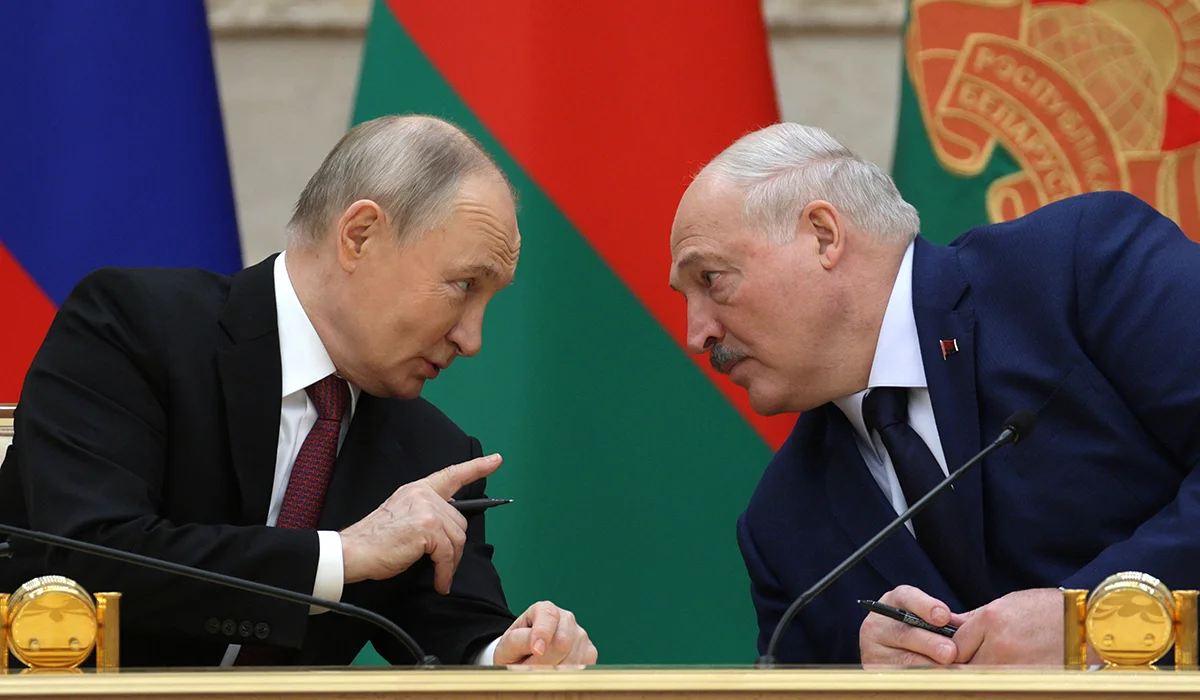
The first is the strengthening of “historical” integration with Belarus, which began in 2021. From individual events, the matter moved to the creation at the beginning of 2024 of a Russian-Belarusian commission of historians, which is supervised by the same Medinsky on behalf of Russia. At a meeting in May, the “synchronization” of history textbooks was discussed , and participants reported on the publication of books and teaching aids. Naturally, the topic of Belarusian-Russian cooperation is not limited to this. For example, a monument to the Belarusian educator Francis Skaryna was erected in Kaliningrad. And the “Historical Memory” Foundation, which is close to the AP, or rather its director Alexander Dyukov, has been continuing for many years to write a study proving that in fact the Belarusian national hero Kastus Kalinovsky (participant in the Polish uprising of 1863–1864) was not Belarusian, but Polish patriot.
Since Lukashenko is loyal to Putin, they have not yet begun to explain to Belarusians that “in fact” they are Russians. Although experience has been accumulated, the same Dyukov this fall openly called for ethnic cleansing of Ukrainians.
Secondly , all efforts are being devoted to perpetuating the “genocide of the Soviet people” in order to convince Russians that they are the most important victims in history, which means there can be no moral doubts about their own (wrong)ness.
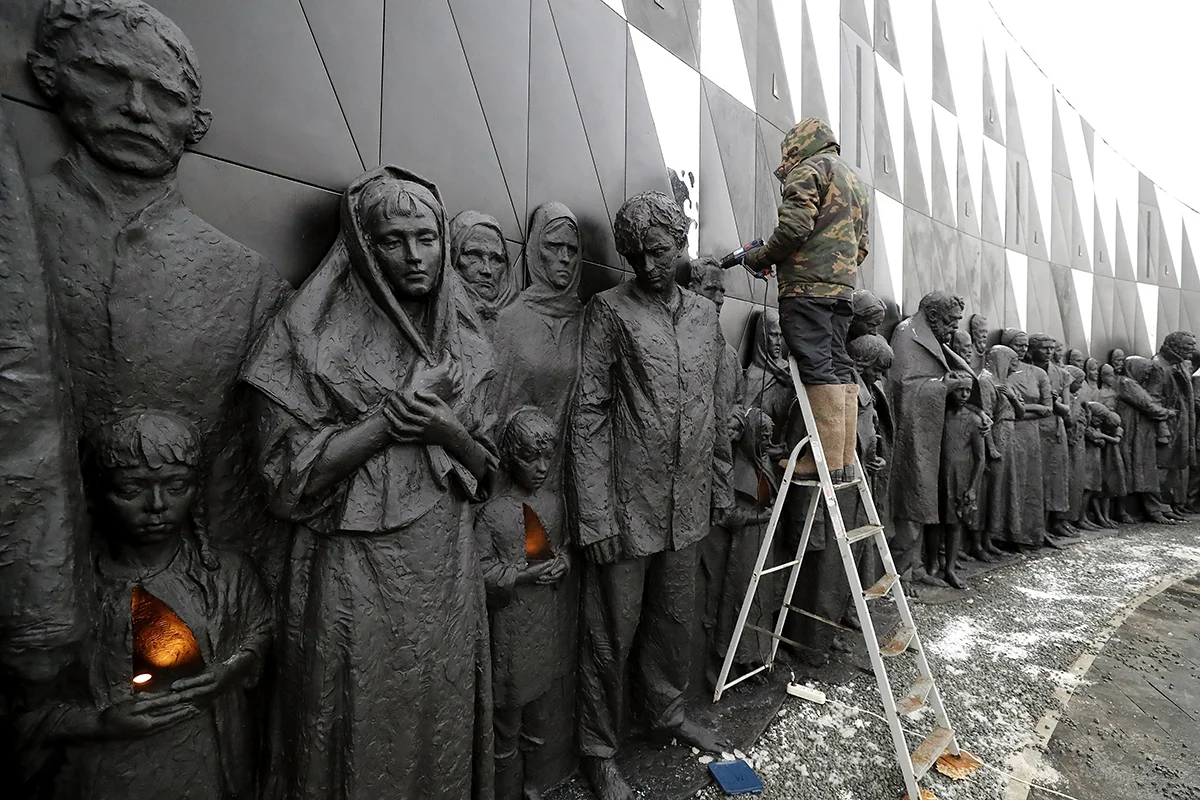
This topic has been actively developing since the end of 2019 (under the guise of “No statute of limitations”), and all previous terminological doubts have already been discarded. Since 2022, schools have been holding thematic lessons on the new date of April 19, and universities have introduced a thematic elective. In 2023, “genocide” appeared in the “unified history textbook” for schools, and at the beginning of 2024, Putin opened a large-scale memorial erected in Gatchina.
Let us also note some semantic changes. Thus, for the internal public, the Nazi occupation is the genocide of the Soviet people, in which the Holocaust dissolves, but for the external public, on the contrary, in the summer of 2023, Maria Zakharova stated that now the concept of “Holocaust” should be interpreted not as the tragedy of the Jews, but all victims of Nazism together . In March 2024, the Foreign Ministry officially demanded that Germany recognize the blockade of Leningrad as “genocide of the Soviet people” - strangely, not an act of the Holocaust.
Moreover, in November 2023, by Putin’s decree, a special unit was created focused on this agenda - the National Center of Historical Memory under the President (we suggest the abbreviation - Nazist). It was headed by Elena Malysheva, who supervised this topic in the Office of Public Projects. There is a structure, there are budgets - you can gradually start working: organizing seminars, forums and public lectures. In October, rallies were held throughout the country in memory of the “genocide of children,” tied to the execution of 218 children from an orphanage in Yeisk.
They kept silent about the main thing: the Nazis killed them as people with disabilities, not Soviet children. And by definition, “genocide” is the extermination of peoples, not age groups.
Nazist also provides “expert” services to ongoing trials in regions that were once under occupation. The Search Movement of Russia (SMR), supervised by deputy Elena Tsunaeva, conducts search activities, then the Investigative Committee opens a criminal case, and the court decides based on the results that there was genocide and not something else.
However, court decisions recognizing a “fact” are no longer enough. In February 2024, A Just Russia proposed introducing criminal penalties for denying the “genocide of the Soviet people,” but the issue came down to the fact that this concept is not in the legislation. Therefore, a bill was developed that should fix it, as well as create a legal basis for perpetuating its victims, including the obligations of regional and local authorities to allocate funds for this cause. This is exactly what Nazist, Tsunaeva and a number of other deputies did. Summer and autumn were spent pushing it through with resistance from the Accounts Chamber. Only in early December the State Duma adopted the bill in the first reading.
In addition to the financial side, there is another circumstance here. The PDR has been digging the graves of civilians for five years now, although according to the law, search engines have the right to carry out such work only in relation to military personnel. That is, there is a violation of the law, which is openly admitted in one of the explanatory notes on why the law on “genocide” needs to be adopted.
"SVO" as a historical reconstruction
There is an internal contradiction in the way “SVO” is perpetuated in Russia: a lot of bronze - not enough meaning.
Urban and rural spaces are directly filled with numerous monuments, memorial plaques, alleys, museums, graffiti and billboards. In the masses, these are generalized images or local heroes. Additional thematic diversity is determined by propaganda plots: for example, monuments to pilots-victims of the American “Patriots” (as in Starodub and Klintsy) or “defenders of the children of Donbass” (as in Sochi or in one Tambov village). And in the Belgorod Zoo they immortalized a kangaroo that died during shelling.
A common theme was emphasizing the participation of SVO veterans in the restoration of World War II monuments. Linking both wars is a very common practice, and therefore one should not be surprised that the opening of a number of monuments to current “heroes” was timed to coincide with May 9. In the village of Sredny, Irkutsk region, the continuity of generations received an object-animal character in the form of a monument to front-line dogs “Four-legged hero of a special military operation and the Great Patriotic War.” In some cases, new monuments were inserted into another context - Soviet / Russian participation in local wars (for example, in one of the villages of Bashkiria or in the polar Murmansk region).
In other words, the current war does not so much acquire its own face as it comes down to existing commemorative traditions.
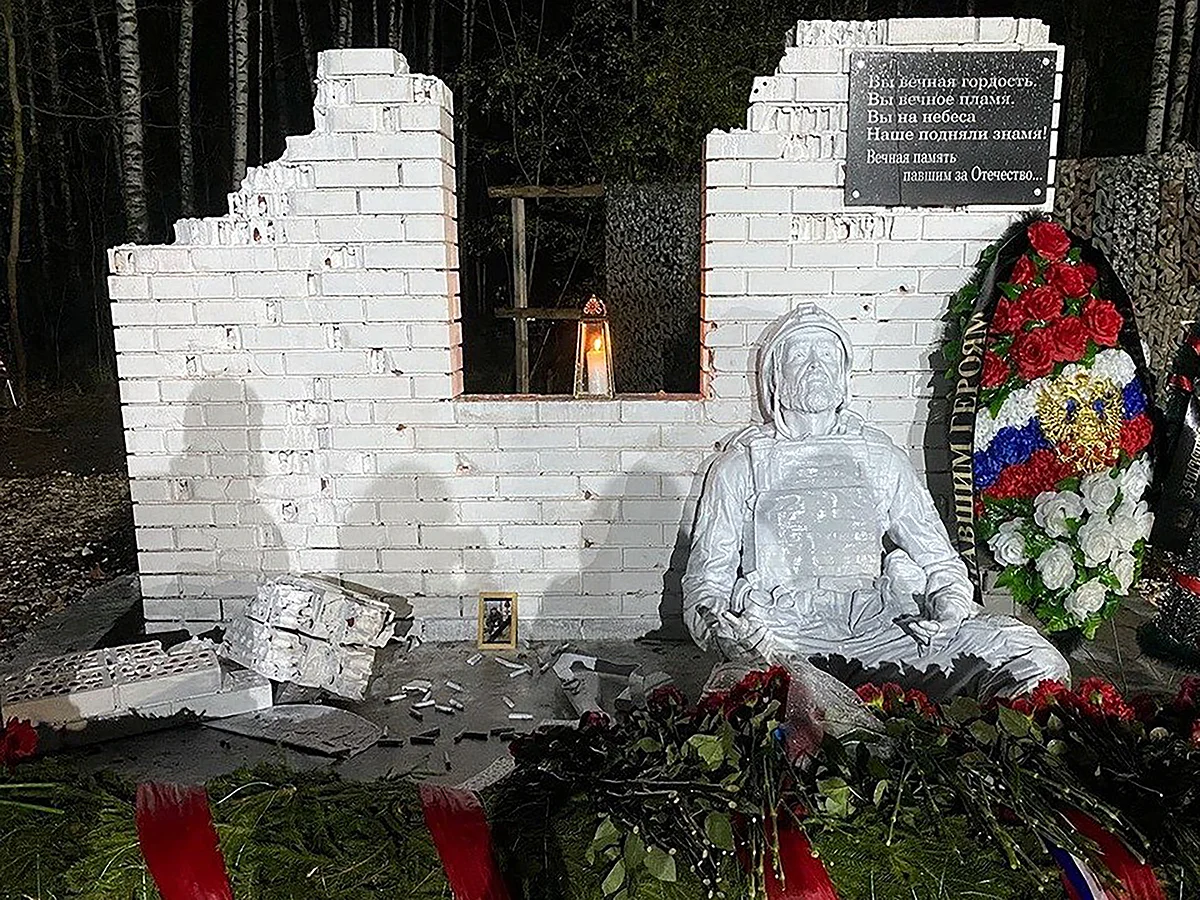
However, sometimes the monuments record not heroic, but a mournful reading of current events. The historian Sergei Erlich noted : “We see that mournful monuments to the victims of“ Svo ”arose, first of all, in small settlements on the initiative of relatives and friends of the dead at the expense of the public. The authorities were mainly engaged in the fact that they “correctly interpreted sorrow in a victorious spirit”. For example, in 2024, a memorial appeared in the village of Pushkino between Noginsky and Elektrostal, made in the form of a broken wall, where a candle burns in the window, and under it - a wounded soldier. A similar way in Orenburg on the monument to those who died on a “one” was knocked out in large font: “To return those who were taken away by heaven.”
True, this approach seems even stronger to us from the point of view of the legitimation of aggression, since critical reflection breaks about the straightforward indication of the suffering of those who were sent to battle by a “non -burnt hand”.
Given the significance of the topic of maternal sorrow, we cannot but note work with it through the appeal to other eras. The state-commissioned approach, flirting with the images of the Middle Ages, was embodied in the form of the monument to the "Blessing of the Mother" in Pereslavl-Zalessky. The plot composition is simple: a mother with an icon blesses her son. The Governor of the Yaroslavl Region Mikhail Evraev interpreted him at the opening ceremony in militaristic tones - as a reminder “about those who made and continues to contribute to the development of our country and is on guard of its lines.”
In the North Ossetian village of Dur-Dura, not the state acted, but local social activists, and it turned out differently. The monument to those who died during the Great Patriotic War was supplemented with a sculpture of mourning mother: this image is not new, but the local context is noteworthy here - the story of a woman who came to a memorable boulder every day in memory of her son who died at the front.
Memory without meaning
We observe an unprecedented case of a large -scale “synchronous commune”, where the boundaries between memory and propaganda are finally erased. However, we cannot but pay attention to the other side - the absence of significant images. At the end of the third year of the First World War, the whole country knew about the Cossack Kozm Kryuchkov and pilot Peter Nesterov. In 1943, no one had to explain who Talalikhin or Zoya Kosmodemyanskaya were. If in Ukraine already in the first year, as Svetlana Yeremeeva wrote , a large -scale tradition of public commemoration of dead heroes, then in Russia it is the property of a local agenda.
This is not to say that the state is not trying to create a new Pantheon of Heroes, including Vladimir Zhogu, Olga Kachur, Canamat Botashev, Timofey Matveeva and a dozen names there. They are in the "Textbooks of Medinsky", they need to be known when passing the exam on history.
However, these names become symbols? Did they gain all -Russian fame? Do they express particularly significant meanings? No.
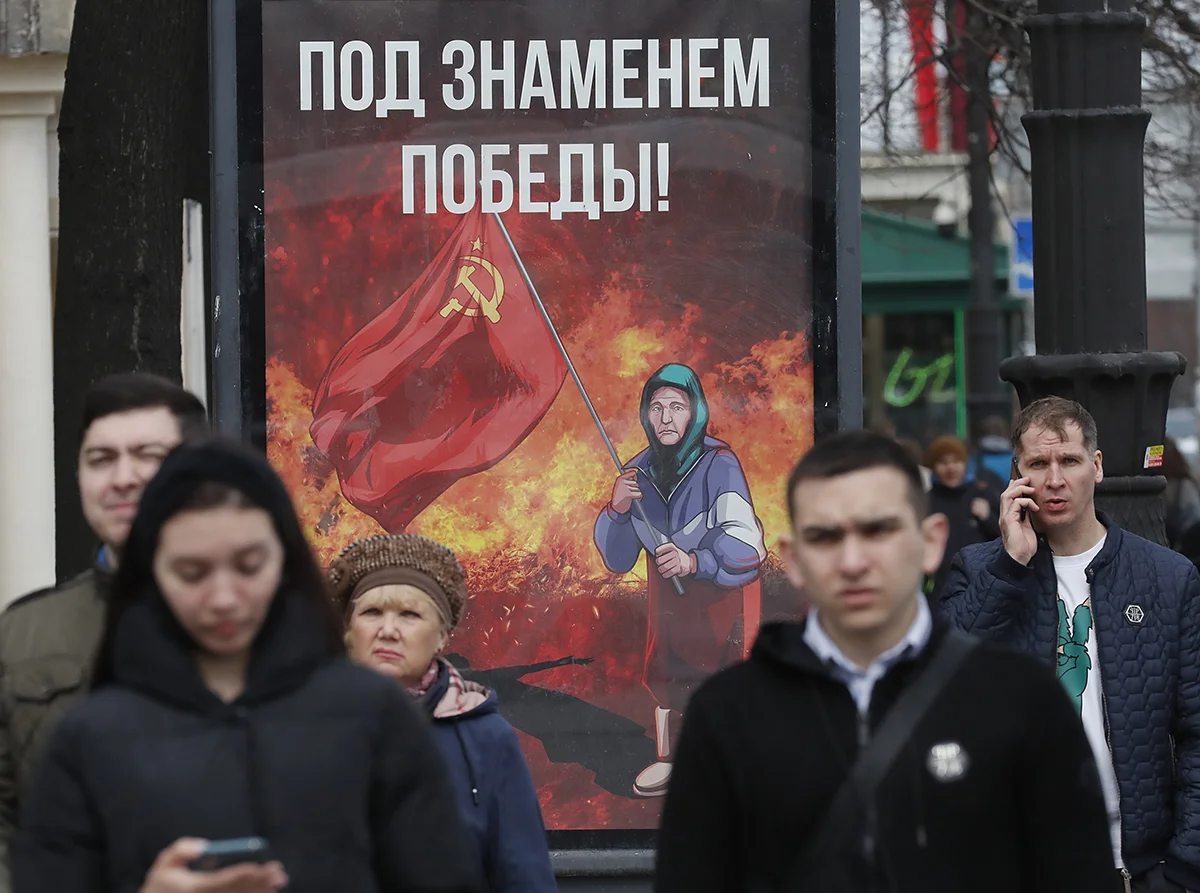
What a grandmother with a flag, that the boy at the tank columns are now forgotten images of the first months of full -scale aggression. Daria Dugina is relatively known: her youth, her face, a famous father and image of the victim plays in her favor - but she is little of itself. In the second half of the 2010s, Igor Strelkov formed the hero’s own cult, but now he is in prison-and a figure, clearly unpleasant to the authorities. Thanks to the murder, Vladlen Tatar, perhaps the only one who of the Z-radicals took off, took off the “military”, but his figure is interesting to activists, but not to the state.
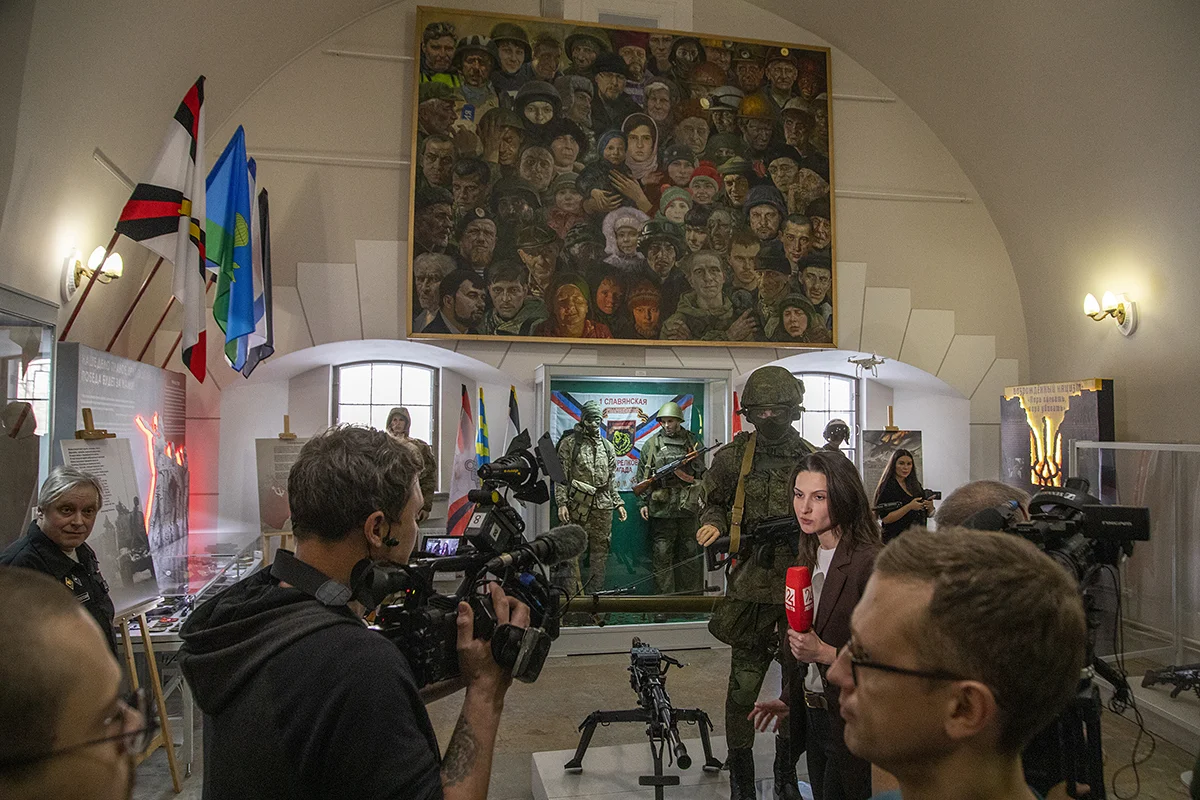
No less dangerous for the state and the "Wagnerians", which they chose to forget about. The death of Evgeny Prigozhin and Dmitry Utkin was accompanied in August 2023 by a wave of color laying of flowers almost throughout Russia to local military memorials. But there was nothing like this a year later. But the authorities do not interfere, for example, the publication of the memoirs of the "Wagnerians" or local acts of commemoration. For example, during the life of Prigozhin, the main “Wagner” memorial was created in the hot vein of the Krasnodar Territory, near their training base. In April 2024, a joint monument to Prigozhin and Utkin was erected here, which was later duplicated near Samara and in Novosibirsk. In addition, in August, the memorial to the dead employees of the company was opened in the Victory Park of the Vysokogorsky district of Tatarstan.
That is, the trend is the same: forms - yes, living activity - no.
For all the activity, his semantic and figurative void is striking in the eye. Indeed, through the History of the Fatherland Foundation (in fact - Rio), at the end of September, a large conference in Mariupol “History of Novorossia” was sponsored at the end of September, however, there are no full list of participants on the network, and leading Russian historians chose not to the occupied territories, but to the St. Petersburg historical historical historical Forum . In turn, the Nazi in November announced the project to collect the memoirs of participants in aggression, but this is far from the first such initiative.
Indeed, the RVIO is involved in the “Svo” commemoration: they have a tablet exhibition “Heroes and Features”, and individual monuments, and patriotic landings in the occupied territories, and the courses of young fighters of the information front with experts from among not real “military commissars”, and rear propagandists. The preparation of the "sofa forces" has become part of the state patriotic education.
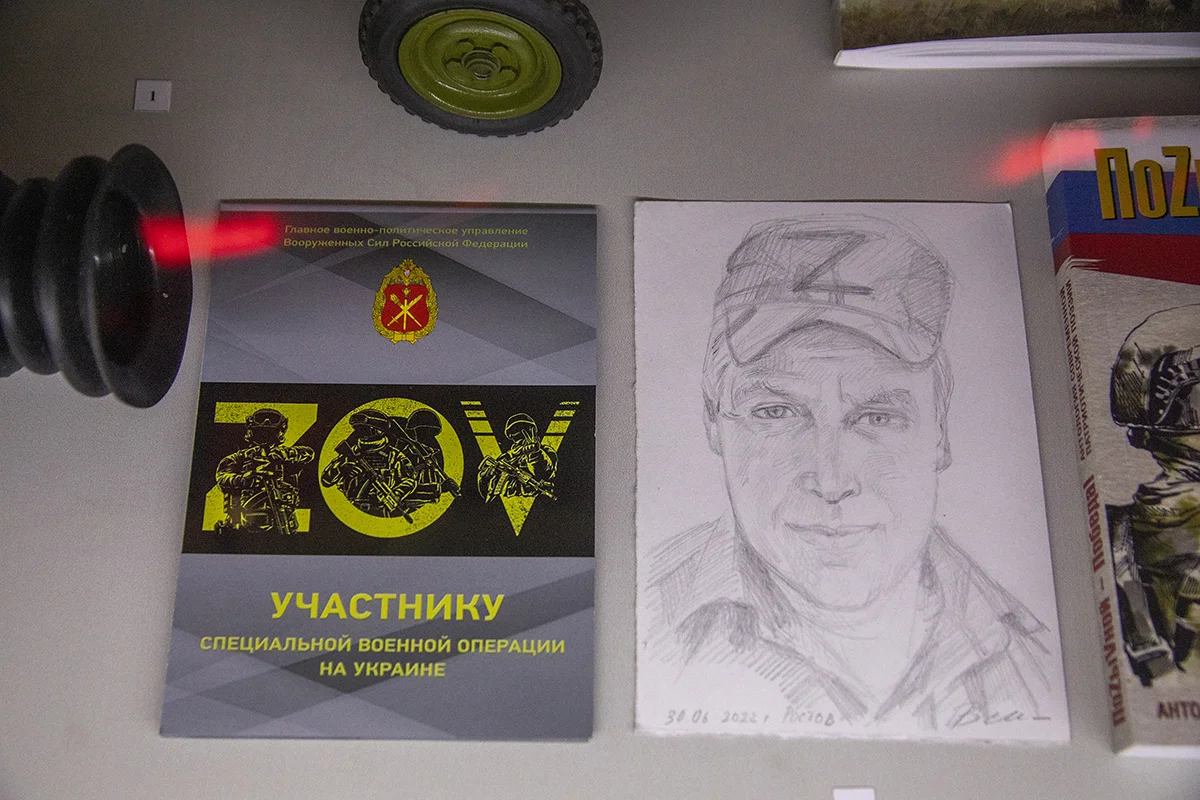
There is something to report. However, judging by the news feed, this topic is far from central either for RVIO or Medinsky. Of course, he invited the Z-ZEK-Veteran Tulenkov to sit at the opening of the book shelf, but also his book of memoirs, and others were published by private publishers (Yauza, Veche and AST are most active). In the shelter language, this is called “merge from the agenda” (which, however, we only welcome).
"Everyone is happy, everyone is feasting"
Undoubtedly, from the point of view of the authoritarian-militaristic state, such an approach to the glorification of “Heroes of Svo” is quite justified. History is the language of power, not the people. It is quite difficult not to see irritation among the Z-radicals, as well as not to notice the existence of anti-tuned Russians, who in 2023 actively used the prevailing memorial infrastructure to express solidarity with Ukrainians, and in February 2024-with Navalny, who died in prison. By the end of the year, the practice of “spontaneous memorials” was apparently crushed.
Russia, on the other hand, is conducting an offensive in the Donbass in the hope, apparently, to bargain a profitable world that will be declared a victory. At the end of the year, her image was already discussed at the seminar for vice-governors under the leadership of Sergei Kiriyenko. Apparently, this will also have a historical dimension. Here we cannot but pay attention to a curious document, which one employee of the State Historical Museum in Moscow posted in his anonymous account in X: in November, paper came from the Ministry of Culture with a request to select objects on “outstanding” and “convincing” victories of Russia. They begin with the ice battle of 1242, and end - “sucker”.
I recall an excerpt from the poem by Alexander Solzhenitsyn “Prussian Nights”, written in a Gulag based on the personal experience of battles in the East Prussia of 1945 and the criticizing wave of violence of soldiers' soldiers against civilian Germans:
*We will win - they will debug
Glue the buried sin! ..
Everyone is satisfied, everyone is feasting -
What do I need the most?*