
Translated material
The traffic light is de-energized
The Scholz government has resigned, new elections are due in February. We understand the situation and explain who will be the new Chancellor of Germany
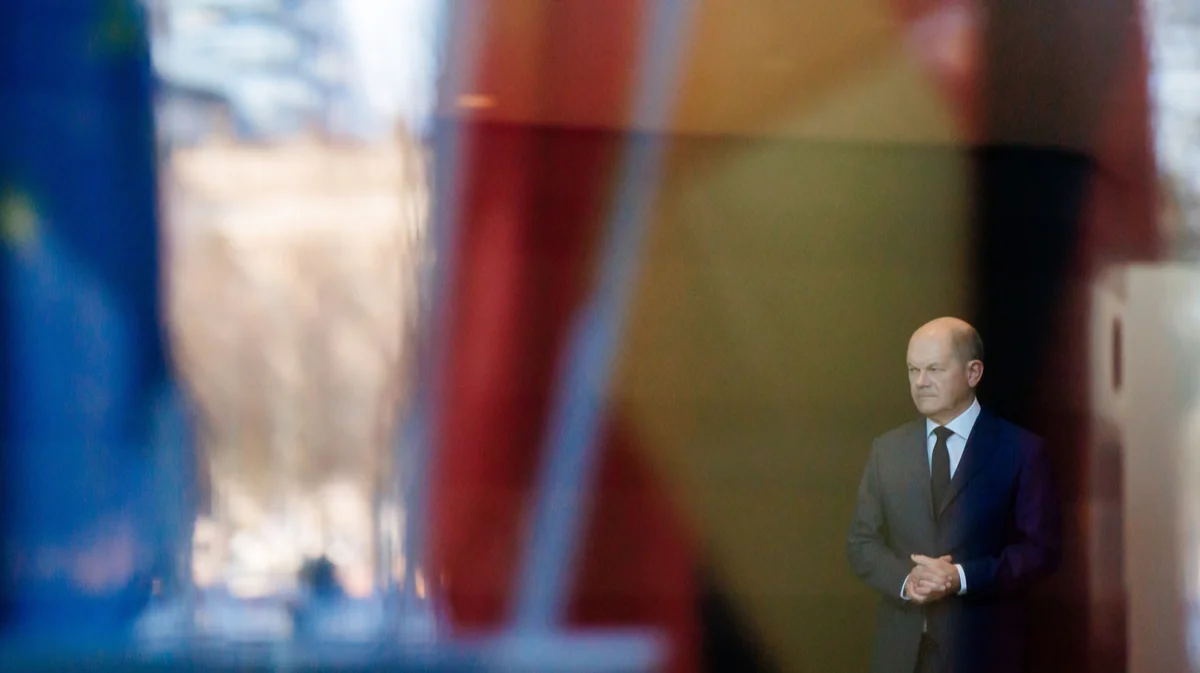
Olaf Scholz in the Chancellery building in Berlin, November 26, 2024. Photo: Clemens Bilan/EPA
The end of 2024 was marked for Germany by a series of events that would seem to have little to do with a stable political system.
On November 6, Prime Minister Olaf Scholz dismissed FDP party leader Christian Lindner from the position of Finance Minister. As a result, the ruling coalition collapsed, and on December 16, the Bundestag passed a vote of no confidence in Scholz himself. Parliament has been dissolved, and early federal elections are scheduled for February 23. The formal reason for the crisis was the inability to reach agreement within the government on the budget for the next year. However, in reality, this was only the last straw in the sea of difficulties that the coalition that came to power in 2021 had to endure. In addition to the initially poorly aligned goals of the members of the ruling bloc, German stability was undermined by the war in Ukraine, the fuel crisis, the economic recession, the Hamas attack on Israel, the activity of Islamic terrorists and the rise of the far right in the east of the country. Who will now come to power in Germany and whether the increasingly popular ultra-right has a chance to gain a majority at the federal level, independent journalist Pavel Kuznetsov examined specifically for New Europe.
In December, the German Language Society named Ampel-Aus, which can be translated as “end of the traffic light,” its word of the year. It was under the name “Traffic Light” that the ruling coalition was known in Germany, consisting of the Social Democrats (SPD), the Greens and the Liberals (FDP) and has now gone down in history along with 2024.
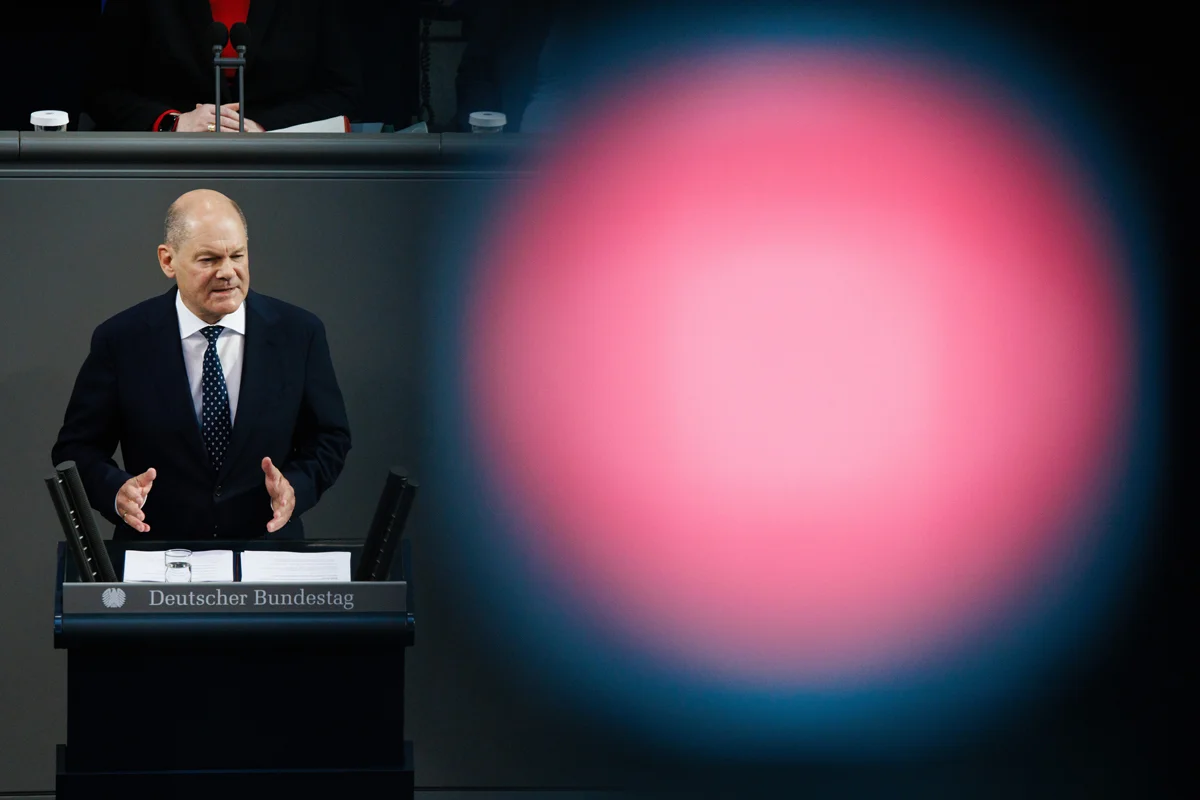
On December 16, the Bundestagpassed a vote of no confidence in German Chancellor Olaf Scholz: 394 deputies reported that they no longer wanted to see him as head of government, 207 supported his cabinet and 116 abstained. This means that early parliamentary elections will be held in Germany on February 23, as a result of which a new ruling coalition and a new government will be formed.
Such abrupt reversals do not often occur in parliamentary democracies in general, and are especially unusual in German political culture. The EU's first economy cannot particularly afford political turbulence right now, and high-profile resignations “due to loss of confidence” are rare here. The last time this happened in Germany was almost twenty years ago, in 2005, when Gerhard Schröder, rapidly losing popularity, himself asked parliament to remove him.
However, Scholz's failure did not become a sensation. The vote, obviously a losing one for the chancellor, was expected in November after the ruling coalition ceased to exist . Scholz's cabinet lost its majority in parliament, which meant it could no longer rule stably. In this sense, the decision of the Bundestag was a foregone conclusion.
As a result, Germany will face an intense election battle over the next couple of months. The Social Democrats (SPD) and the Greens, who were part of the previous coalition, will have to prove that their projects are still relevant for Germany. The liberals (FDP) and the left (Die Linke) are faced with the task of at least getting into parliament (polls currently give them about 3-4% with a 5% entry barrier). The CDU/CSU bloc, which found itself in opposition for three years and during which time seriously shifted to the right, is set for revenge. Meanwhile, in the east, the far-right Alternative for Germany and the far-left Sarah Wagenknecht Union party are gaining increasing popularity.
A motley partnership
The “traffic light” coalition has been plagued by problems from the very moment of its formation, since the center-left SPD and Greens included in it, in principle, cannot always find a common language with the liberals from the FDP, focused on economic growth and the interests of private business. The reason for the creation of such a motley coalition was the previously formed alliance of these parties at the land level - in Rhineland-Palatinate. “Traffic light” continues to rule there to this day.
Another option for the Social Democrats, who won the 2021 elections with a result of 25%, was a coalition with the CDU/CSU bloc, which lost ground greatly after the retirement of Angela Merkel, but lost to the SPD in those elections by only 1%. However, Scholz did not want to enter into a coalition with the “blacks,” partly because for the previous eight years he had already been in it as a “junior partner” and was not very happy with this alliance. In 2017, the SPD tried to go into opposition altogether, refusing the offer to join the ruling bloc with Merkel’s party, but was forced to make concessions after the admonitions of President Steinmeier.
The government headed by the Social Democrats, formed in 2021, had grandiose plans: digitalization, increasing the minimum wage, solving the housing issue with promises to build up to 100 thousand social apartments per year. In addition, one of the goals of the red-yellow-green union was the transition to “green” energy: the goal was to abandon coal by 2030 and increase the share of renewable energy sources to 80%. The partners also planned to make it easier for migrants to obtain citizenship, legalize cannabis and allow 16-year-olds to vote. Everything was fixed in a long coalition agreement.
As a result, of all the initiatives, the legalization of cannabis , the law on citizenship , voting from the age of 16 (though only in elections to the European Parliament) and a number of other projects, such as a general German travel card for 49 euros, passed, but the “green transition”, digitalization and the construction of social housing has stalled.
At the same time, the new government had to deal with the consequences of a full-scale Russian invasion of Ukraine. Environmental initiatives have begun to wind down across Europe. Due to the refusal of Russian gas and rising energy prices, the “green transition” turned out to be prohibitively expensive - millions of Germans felt the full costs. Thus, in the second half of 2022, taking into account subsidies, German households began to pay 16.2% more for gas than in the first half of the year, and 4.4% for electricity. The rise in prices also hit business: German companies' gas costs increased by 25.3%.
For the Greens, the fuel crisis has been a disaster. Their environmental initiatives were superseded by security considerations and also began to raise questions among coalition partners. In particular, a new heating law promoted by the Greens almost split the ruling alliance in 2023. According to the bill, from 2024 every heating system in the country must run on 65% clean energy. The end consumer, often the occupant of rented housing, will pay for innovation. The law was eventually passed, but implementation was postponed until 2028-2029, and the controversial initiative did not bring political points to either the Greens or the coalition.
As a result, voter sympathy for all three parties fell sharply. Scholz personally suffered the most: he was criticized either for “indecisiveness” in supporting Ukraine or for “inciting war.” Already in May 2022, 54% of respondents said they were dissatisfied with the work of the chancellor. Then the coalition was preserved and the energy crisis was avoided, but there was no talk of its former popularity. Regular Sunday polls have since shown a slow but steady decline in support for traffic light parties.
Budget split
The coalition entered 2024 with record low levels of support. The main reason is the economic recession and budget crisis in which the partners find themselves. The fact is that the Scholz government used funds borrowed and not spent during the COVID-19 pandemic to finance the green transition through a special fund. On November 15, the German Constitutional Court declared the government's decision illegal, leaving a €60 billion hole in the budget.
The court decision sowed turmoil in the coalition. The budget for next year had to be seriously revised, and this became a problem, since climate projects were important for the Greens, social programs for SPD, and the refusal of large loans and increasing business taxes remained fundamental for FDP. As a result, the partners managed to come to an agreement , and the budget for 2024 was belatedly adopted in February. But the chaos around him affected not only the relationships within the “traffic light” coalition, but also the sympathies of voters.
In December 2023, polls showed that only 14% of respondents would again like to vote for the Social Democrats, another 14% for the Greens, and 5% for the FDP. Only together they could compete with the CDU/CSU bloc, which theoretically had 32% at its disposal. In addition, Scholz also had problems personally: he was called the most unpopular chancellor, and only 20% of those surveyed were satisfied with his work.
A series of failures in the state elections completely undermined the reputation of the Scholz government. In the fall of 2024, the coalition was bursting at the seams. To agree on the budget for 2025, it turned out that much more significant concessions were needed than last time. While the Greens and Social Democrats insisted on investment and maintaining social programs, the FDP, led by party leader and Finance Minister Christian Lindner, called for austerity.
As a result, FDP's Lindner decided to take the initiative himself. On November 1, he presented his partners with a document called the “Economic Turnaround,” proposing to cut taxes on corporations, phase out the “solidarity tax” levied on the benefit of the economically backward eastern states, cut social spending and delay achieving “climate neutrality.”
All these measures, according to the minister, should revive the German economy and balance the budget so that there is no need to take on new debts.
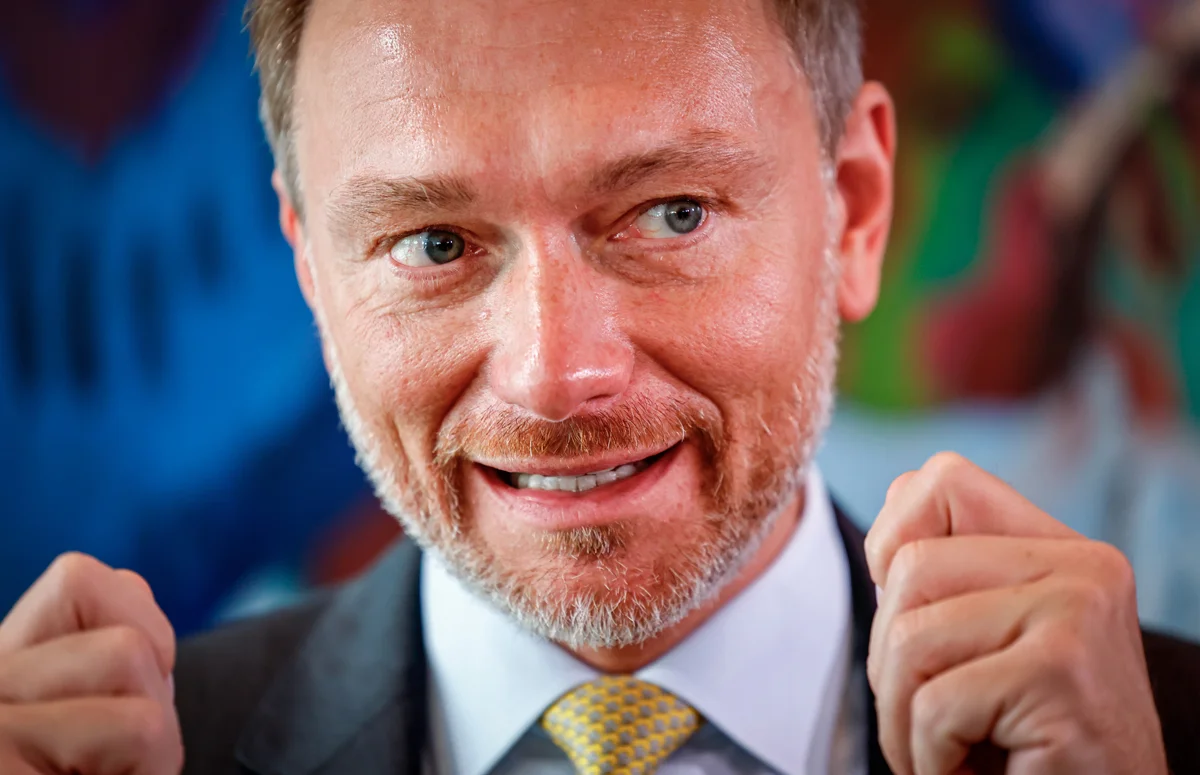
The document hit the press. Tense negotiations began within the government. Lindner's program was unacceptable to the Greens and SPD, as it did not contain even a hint of compromise with their goals. On November 6, Scholz offered Lindner a deal: a reduction in business taxes, but at the cost of increasing the budget debt by 12.5 billion euros. He refused and expressed his readiness to jointly declare the desire to hold new elections, after which Scholz retired to consult with fellow party members. When he returned, he was convinced that Lindner would not yield, and said : “In that case, dear Christian, I no longer want you to remain in my government. And tomorrow morning I will ask the federal president to fire you.”
And so the “traffic light” coalition, which was already holding on with difficulty, nevertheless disintegrated.
No longer chancellor?
Lindner's maneuver, however, was not impromptu and had a very specific purpose. As Alex Yusupov, an analyst at the Friedrich Ebert Foundation, the SPD party fund, told Novaya Gazeta Europe, something similar once happened in Germany. In 1982, FDP representatives already left the coalition with the Social Democrats. Then the Minister of Economics, Count Otto von Lambsdorff, criticized the Schmidt government and published his uncompromising program, after which he resigned.
“Lindner actually repeated this maneuver, with the only exception that Scholz fired him before Lindner had time to resign,” explains Yusupov. “Lindner understood that Scholz would refuse his proposals, and then it would be possible to leave the coalition, citing the fact that the FDP proposed its rescue plan, but was not heard.”
As it turned out later, the FDP leadership had been discussing and planning a loud exit from the coalition since the end of September. And Lindner himself had previously indirectly stated that the FDP could leave the government before the new year. It was assumed that the uncompromising manifesto of the Minister of Finance and Scholz’s natural refusal would provide a reason to leave the coalition with a scandal that would bring points for Lidner’s integrity. The fact that the plan was carefully thought out is confirmed by the hint from the head of the SPD parliamentary faction, Rolf Mützenich, that the opposition leader Friedrich Merz from the CDU/CSU bloc could have been informed about the imminent withdrawal of the FDP from the coalition.
According to Yusupov, the scandalousness of the liberals’ withdrawal from the “traffic light” coalition was added by the “militaristic” tone of the documents obtained by the press with Lidner’s maneuver plan. They talked about “torpedoes”, “strikes”, “offensive”. And the plan itself was called “D-Day,” referring to the Allied landings in Normandy.
However, despite the scandal, all coalition participants managed to avoid major reputational losses. “The coalition was so painful that everyone reacted with enthusiasm and relief when it ended,” Yusupov claims.
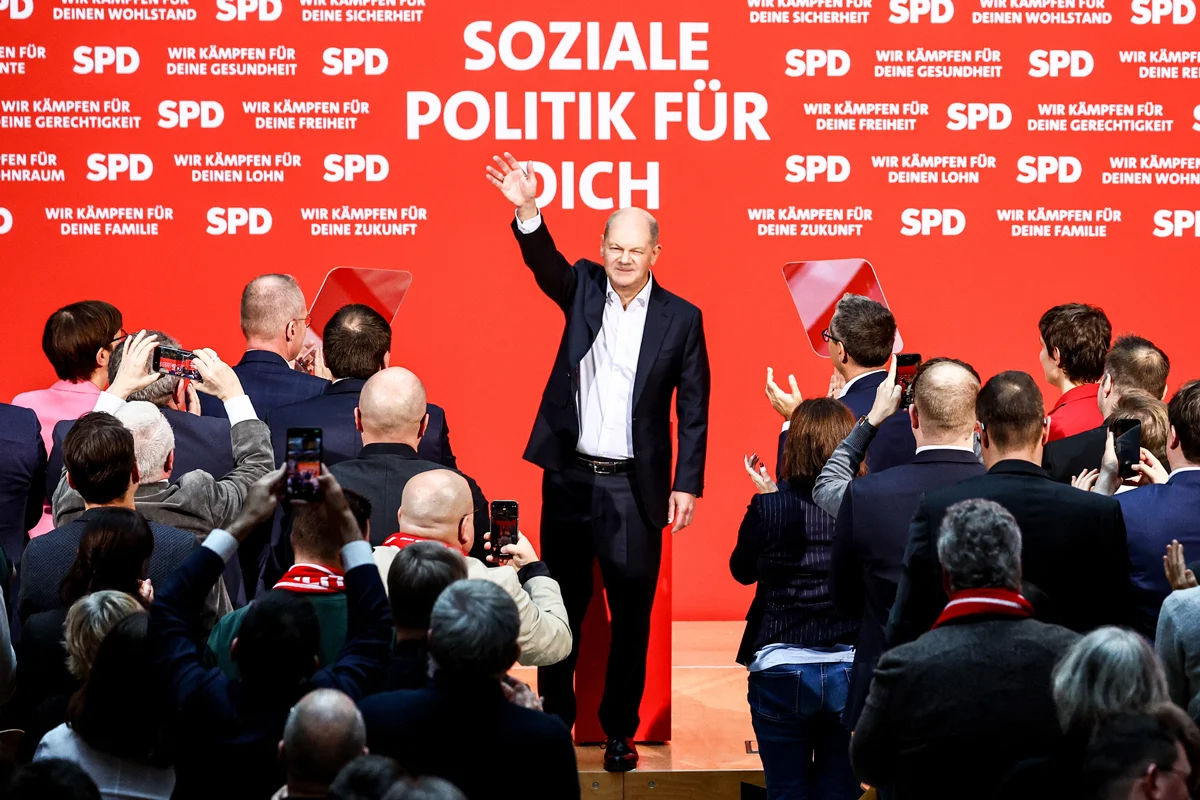
Current ratings show that the FDP core electorate - those same 3-5% - was not upset by the demarche. Scholz himself, who found himself at the center of a political crisis, still managed to consolidate the party around himself at that moment. At an emergency meeting of the SPD faction immediately after Lindner's dismissal, Scholz was greeted by party members with applause. And the next day, SPD co-chair Zaskia Esken, known as a representative of the left wing of the Social Democrats, reported that Scholz would likely again become a candidate for chancellor.
However, the fact that Scholz will be able to continue his political career is a big question. First of all, because his personal rating is not too high. Now the most popular , although not very experienced, politician in the country is Defense Minister Boris Pistorius (SPD). He himself did not declare his desire to become chancellor, but his candidacy was discussed with great interest in the press and among fellow party members. The intrigue around Pistorius continued for two weeks, until on November 21 he himself announced that he was not going to fight for the position of chancellor.
The latest election forecasts show that 33% of respondents are ready to vote for the CDU/CSU under the leadership of Merz, while 14% each for the Social Democrats and the Greens, 19% for the Alternative for Germany, and 19% for the Sarah Wagenknecht Union - 5%, and Die Linke and FDP risk not getting into parliament at all.
Therefore, if nothing changes, then it will be the CDU/CSU who will choose who to rule with, and Scholz’s political career will end.
Government without radicals
Now the German press is expecting the CDU/CSU to return to power and are actively speculating what the future government might look like.
Despite the growing popularity of the far right in Germany, it is known that the CDU/CSU does not cooperate with them in principle. So, even if the Alternative for Germany gets a good result in the elections, she will not receive ministerial portfolios - the notorious “firewall” is still in effect. The CDU/CSU has a similar position regarding the “Left”, even if they overcome the barrier in the elections and enter parliament.
The most likely option seems to be the so-called “Grand Coalition”, consisting of Christian and Social Democrats. It is this format of government that the period of Angela Merkel will be remembered for.
Polls indicate that many voters want this: in November 2024, 38% of respondents said they would like to see the CDU/CSU bloc at the head of the government, and 31% said they would prefer the SPD as a partner. But the Social Democrats may well refuse such an alliance, since the previous experience of partnership with the CDU/CSU was not pleasant for them. According to Yusupov, “Merkel took credit for all the successes and blamed all the problems on the Social Democrats.”
There was even a joke about this on social networks: the combination of the surnames Scholz + Merz gives the word Schmerz, which is translated into Russian as “pain.” It will clearly not be easy for these two in the same government, even if Scholz agrees to join it.
If the liberal FDP, which has always been a natural ally of the CDU/CSU, enters parliament, it could enter into an alliance with the Christian Democrats. But even this is unlikely to be enough for a stable majority. In addition, the CDU/CSU can create a bloc with the Greens. A similar government already exists in Baden-Württemberg and is still working. But this is clearly not what the CSU leader and Bavarian Prime Minister Markus Soeder wants , and his opinion will undoubtedly be taken into account, since the party he leads actually represents Bavaria, the richest German state, in the Bundestag.
Finally, it is also theoretically possible to imagine coalitions such as a new version of the Traffic Light, a broad left-green coalition (SPD, Sarah Wagenknecht Union, Left and Greens) or an alliance of the right (CDU/CSU, FDP and Alternative for Germany"). But all these collaborations are hardly possible in reality.
What is really possible is a sharp reduction in the number of parties in parliament. If the FDP, the Sarah Wagenknecht Union and the Left do not simultaneously enter the Bundestag, then only four parties will remain in it, which will bring the conservatives closer to an absolute majority.
But even if this does not happen, the shape of the future government will most likely be determined by Merz’s party members.
“We can say that it all depends on which reform will be more important for Merz. If he needs a further rollback of the green agenda, he will take the Greens as partners. If the cutting of a social state is more important to him, then he will offer the coalition to the Social Democrats. The rollback of any agenda is easier to carry out with the help of those who promote this agenda. And how they will negotiate about this is a matter of political technology, ”warns Yusupov.