Translated material
Return of Leviathan
The main thing in world cinema for the year: from the unexpected success of Russian actors in “Anora” to a new wave of politicization on screens
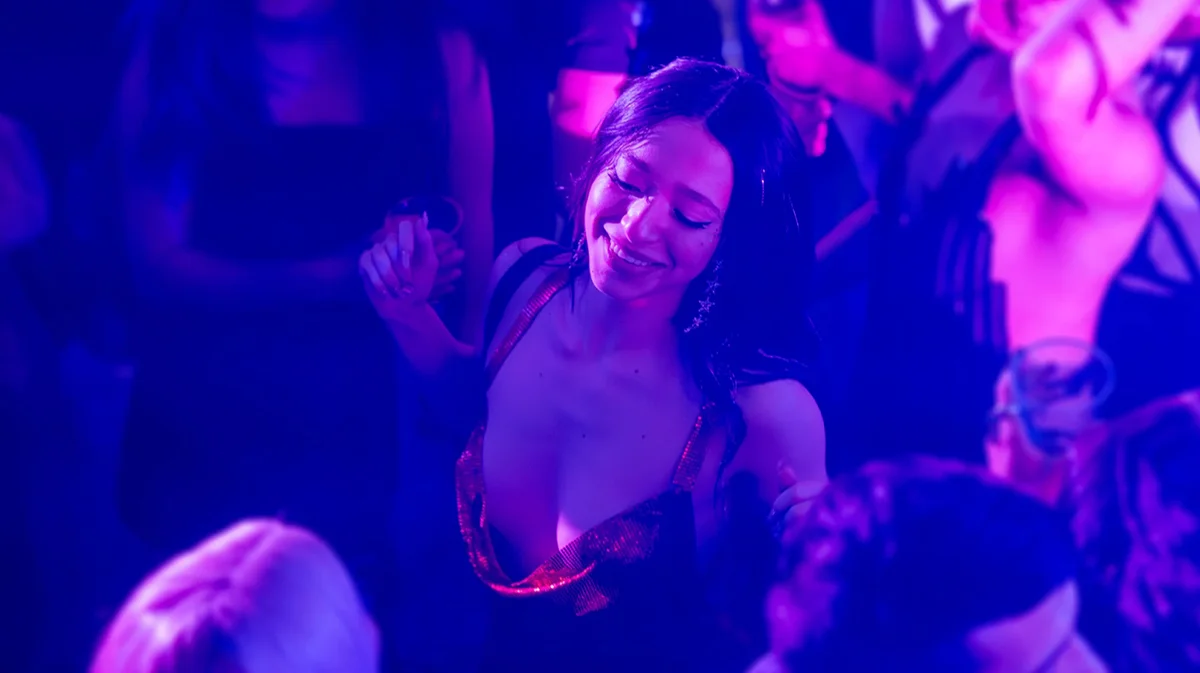
Still from the film “Anora”, 2024. Photo: Neon
Filled with premieres and audience hits, comebacks of legendary directors and poignant political cinema, 2024 brought many event films and phenomenon films. Film critic Oleg Tundra talks about the most exciting films of the year, reflecting important trends in the development of the industry and conveying the spirit of the times.
The global success of Sean Baker's Anora and the career breakthrough of Russian actors Yura Borisov and Mark Edelstein
The main Cannes prize for Sean Baker's film Anora resulted in a lively reaction from critics and audiences: it's not often that a film wins at Cannes that literally everyone will be talking about throughout the year. A tragicomedy about a sex worker with post-Soviet roots who believed in love with the infantile son of a Russian oligarch, won the hearts of viewers: “Anora” was called a realistic “Pretty Woman” and a modern “Cinderella”, where the fairy tale turns into broken hopes, and illusions are shattered by social and class differences. This sad, sometimes funny, dynamic and honest film resonates with the times when literally everyone, regardless of citizenship, income level and principles, is losing ground from under their feet.
For the first time since the films of Andrei Zvyagintsev, the natural post-Soviet space and Russia appeared on the world screen, and even in the lens of an American director, and even devoid of Hollywood package thinking. The main character, who forgot Russian, but spoke it with her grandmother, two comical Armenian supporting characters, a landing of Russian oligarchs - clichés with which Baker interacts through his characteristic empathy and humor. Russian-speaking people in “Anora” do not stick together into one “Russian” mess:
A second-generation American from the USSR, a “gopnik”, an Armenian-American priest and his friend-dealer, the son of an oligarch and the pair of oligarchs themselves share the same language, but embody completely different layers of the post-USSR - a view that was so lacking from the outside.
And, like any attentive outsider, he perceives both similarities and fundamental differences in these heroes.
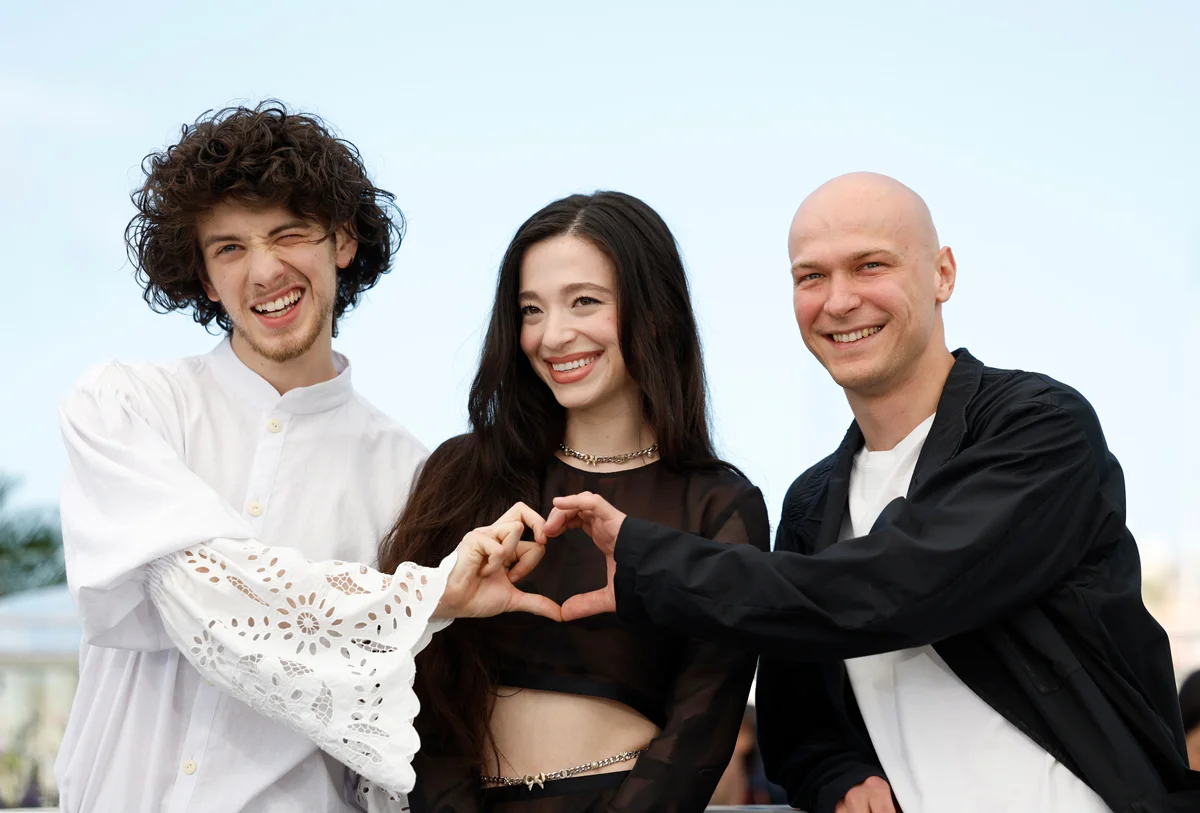
After numerous premieres and mentions in the press, the industrial fate of Yura Borisov and Mark Edelstein is developing as successfully as possible. Yura Borisov, who has already played in international festival films (for example, “Coupe Number Six” and “Captain Volkonogov Ran”), was nominated for a Golden Globe in the category “Best Supporting Actor” (and this is already an application for an Oscar), and Mark Edelstein received the leading role in the second season of the acclaimed Hollywood series Mr. and Mrs. Smith. Both events are a huge leap forward for actors who will be recognized and noticed by directors around the world and are likely to be offered challenging and interesting roles in world cinema. A rare case in 2024 when the success of compatriots causes genuine pride and real optimism (at the same time, they both continue to live and work in Russia).
Return to classic audience hits
2024 was a year of big comebacks. Coppola's ambitious magnum opus Megalopolis , which he was unable to complete for more than 20 years, became one of the films of the year and (for now) the final chord in Coppola's career, his grandfatherly message to a new generation. And although the expensive blockbuster with computer graphics was received by critics and viewers with mixed feelings, the very fact of the existence of an ambitious author’s long-term construction cannot but rejoice.
Three more Hollywood veterans returned to their past successes last year: Ridley Scott, George Miller and Tim Burton. Ridley Scott directed Gladiator 2 , the sequel to the film that brought him eternal recognition and several Oscars, piling on the story with all the special effects available to him 20 years later. Miller directed Furiosa , a Mad Max prequel about the early years of a warrior who must lead a rebellion against male despotism in the desert, and told the story of the capture, release and mutilation of Charlize Theron's future heroine. Burton returned to his beloved analog special effects and playful graphics, bringing the beloved bully Beetlejuice back to the screen 30+ years later in Beetlejuice Beetlejuice .
The authors of “Puzzle 2” made a continuation of the children's super hit about psycho-emotional development, moved the action to adolescence and added five more newcomers to the emotional heroes. In the continuation of “Puzzle,” Anxiety tries to control the situation, but does not control it, and Boredom, Envy and Shame, characteristic of a growing psyche, also arise, so that there is no place left for the old simple emotions.
The animated film was praised for its educational clarity and light humor in a difficult conversation about how adolescence is a time of mixed feelings and great vulnerability.
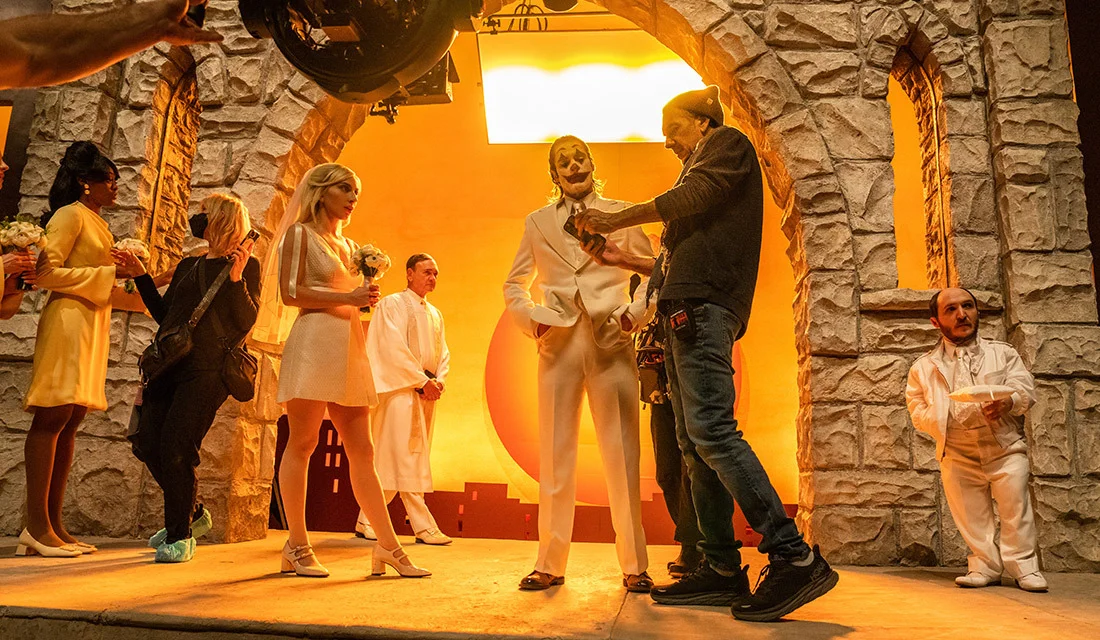
Todd Phillips is back with the risky Joker 2: in the second part, he chose the form of a melodramatic musical, and built the story of a magnetic antagonist around musical numbers by Joaquin Phoenix and Lady Gaga with classic songs from the middle of the last century. Despite the ovation at the Venice Festival, “Joker” in the form of a musical did not land well among the audience, but gave new breath to the genre of the musical film, which is experiencing a new birth before our eyes (“Annette”, “Wicked”, “Emilia Perez” - you need to get used to it, that now contemporary actors also sing).
Another return to the legend was the prequel from the Alien universe - Alien: Romulus , which reinvented Ridley Scott's fantastic universe in his absence. The film was entrusted to slasher director Fede Alvarez, and he mixed the cross-cutting theme of xenomorphs with the genre cliché of a group of abandoned teenagers in trouble. It turned out that lost teenagers belong in space with a gang of “strangers,” and fantastic action takes on a new breath when more young heroes appear in the story with whom you can identify. In any case, the transition of horror directors to the first league of big-budget cinema is another one of the trends of recent years. After all, if horror has begun to be watched en masse even by those who have never been interested in it, directors of this genre will sooner or later break through to major projects and big budgets. And they will probably surprise us very soon.
Horror for adults
Historically difficult times in society lead to a flourishing of mysticism and horror: from the first experiments in expressionism between the two world wars and the boom of zombie films in the early 70s - to the supernatural series of the early 90s and the popularity of local reality shows “Battle of the Psychics”. So the 2020s, filled with military conflicts, social contradictions and the threat of nuclear war, brought a new and alarming audience to the genre of horror, thrillers and true-crime podcasts.
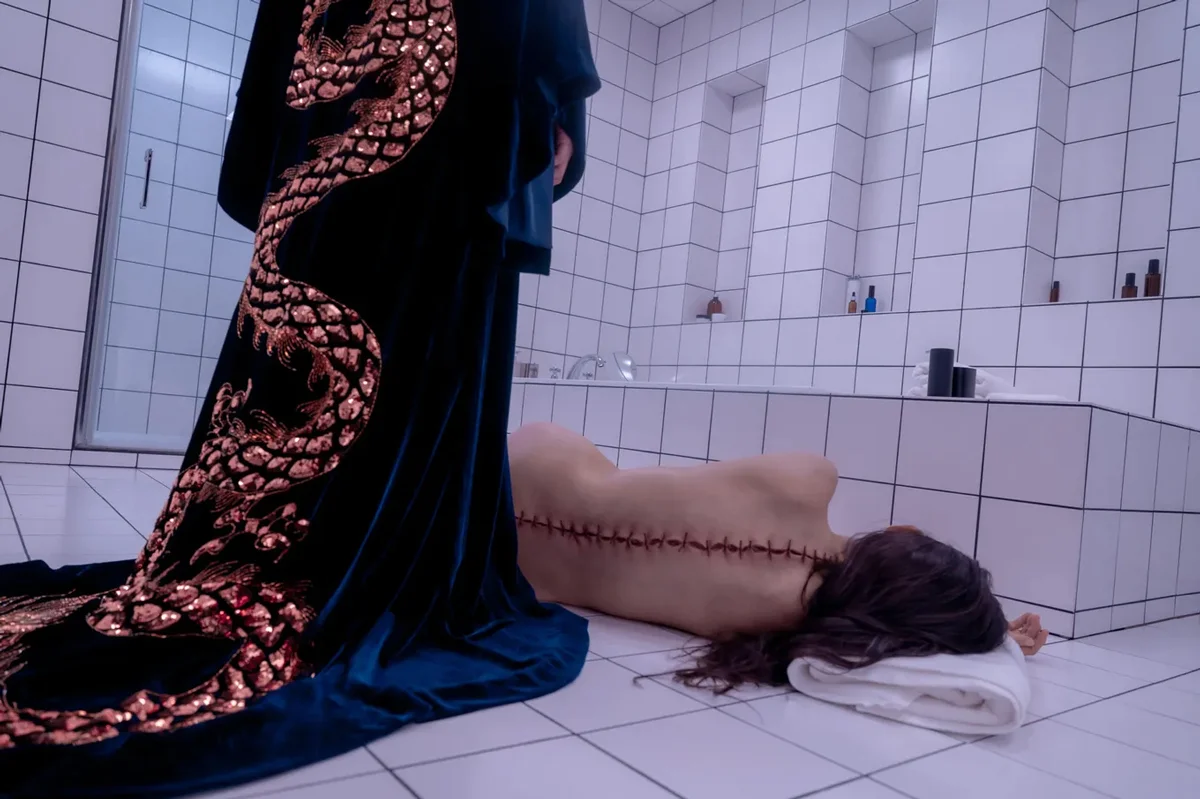
The main film of the year in the genre was, of course, “Substance” by Coralie Fargea, which first received the screenplay prize at the last Cannes (and then, like “Anora”, collected a huge box office). The reason for the success of “Substance” in its transgressive form is the deceptively glossy picture, outstanding female roles and a new round of social pressure on men and women with inadequate standards of slimness and “aging gracefully.” Fargea uses the entire legacy of film history (from The Shining to early Lynch and Cronenberg) to show the internal conflict of modern women who need to be beautiful, successful and at the same time maintain adequacy in a world where only youth and health are sold. The result is the most accessible propaganda against objectification with an abyss of black humor - from a cinephile director.
Another sensation of the year is the horror film “Longlegs” with the unforgettable make-up of Nicolas Cage, which transforms the story of “The Silence of the Lambs” into the context of the abduction and torture of teenagers, with film shooting and music by Marc Bolan and not without religious overtones (on the same topic - “The Heretic” with controversy about faith, religion and brainwashing). In general, the trend of shooting thrillers and horrors on film (and, in principle, increasingly shooting on film) is also a technique of recent years: Ti West is filming an analog metaphorical continuation of “Deep Throat” in the final part of the “X” trilogy ( “Maxine XXX” ), and actor Giovanni Ribisi suddenly takes the camera as a cameraman and creates a fantastically beautiful mise-en-scène in the horror film Stalker .
In all the cases mentioned, the authors move away from linear storytelling and fearlessly add the otherworldly mood of Mulholland Drive to horror or play with the reversal of the roles of stalker and victim.
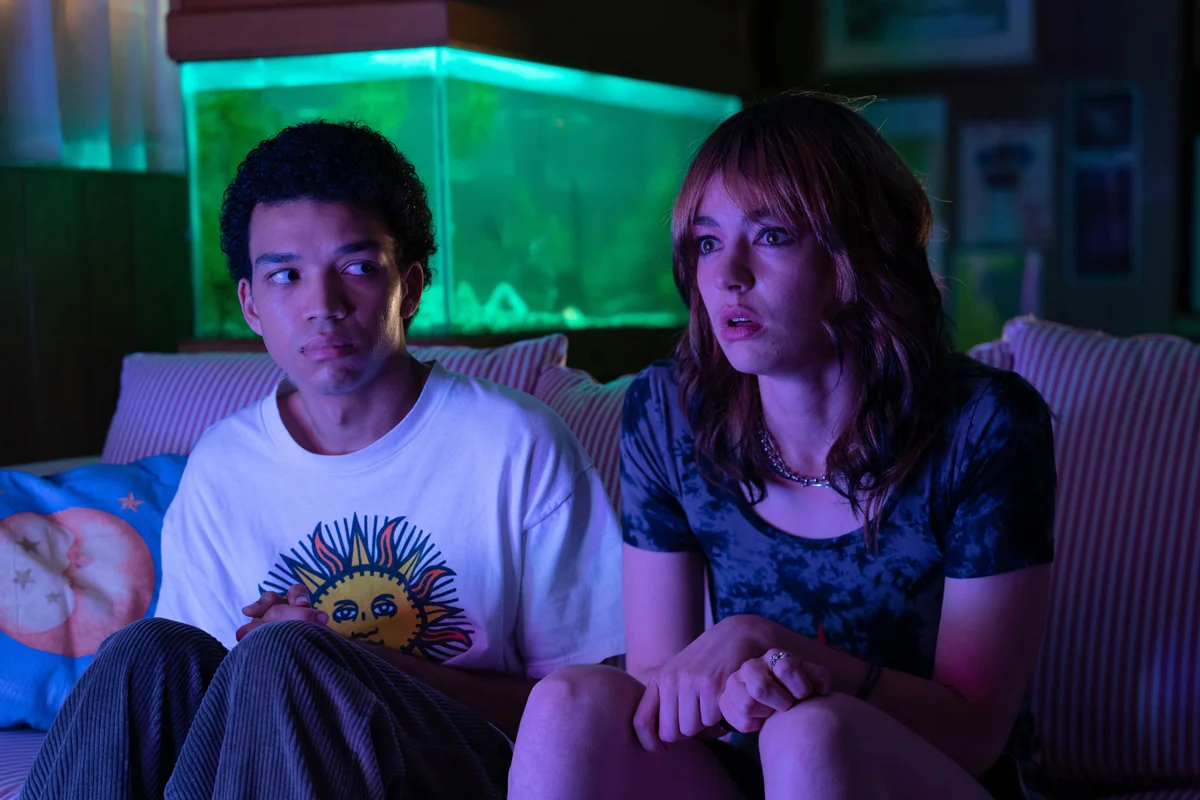
An audience hit about teenagers caught up in suspense is the neon I Saw the TV Glow , following on from Gregg Araki's earlier films and the more popular Euphoria. And Shyamalan’s “The Trap” and “Smile 2” place the action in the space of youth TikTok and the culture of worship of pop artists, who, unlike politicians, really accumulate the attention and energy of the new generation (remember Taylor Swift, Selena Gomez, Ariana Grande and Charlie XCX ). The mix of ultra-popularity, danger, collective worship and viral images is a new aspect of horror films. Now they are not about teenagers in forest huts, but about fear that consumes people like an instantly spreading virus: Covid, isolation and the pressure of social networks are clearly beginning to be conceptualized in allegories in the mass cinema about mortido.
Let’s not forget about one of the most anticipated films of the beginning of 2025 – “Nosferatu” by Roger Eggers, which has not yet reached cinemas around the world, but has already made a splash at festivals and Western special screenings. The idea of horror looming from the East clearly parallels the plot with the real fears of the golden billion of eastern countries with nuclear weapons (Russia, Iran, China, North Korea, Pakistan...) and the Middle East war, which caused an influx of new migrants to “prosperous countries” with their stalled economies and a sharp shift of the electorate to the right.
Women's stories are interesting to everyone
The increase in the number of female names in the credits among directors, screenwriters, cameramen and producers has led to qualitative changes: formulations implying “wow, women can also make interesting films!” have generally disappeared from progressive media, and films with female protagonists have taken up at least half of the information field. The already mentioned “Substance” not only demonstrates the increased presence of female directors and awards in prestigious competitions, but is also significant: actress Demi Moore first appeared on the Cannes red carpet as an individual, and not part of a celebrity couple. Women have truly been underrepresented and overlooked, especially on the creative side (it's hard to find an exact synonym for the industrial term overlooked - but it's very appropriate here), and major publications are finally focusing on films made by women in separate in-depth reviews and lists .
Despite the alarmists’ sighs that “now we will be fed boring, politically correct wok cinema,” films made by women and about women break expectations. This includes the super-successful production of the musical Wicked , which explores themes of rivalry, framing and female bonding, and the openly lesbian drama Love Bleeds , which directly states that the story of two open lesbians awaits you on the screen (and they are also played by open lesbians Katie O 'Brian and Kristen Stewart, not straight girls in a fictional lesbian form).
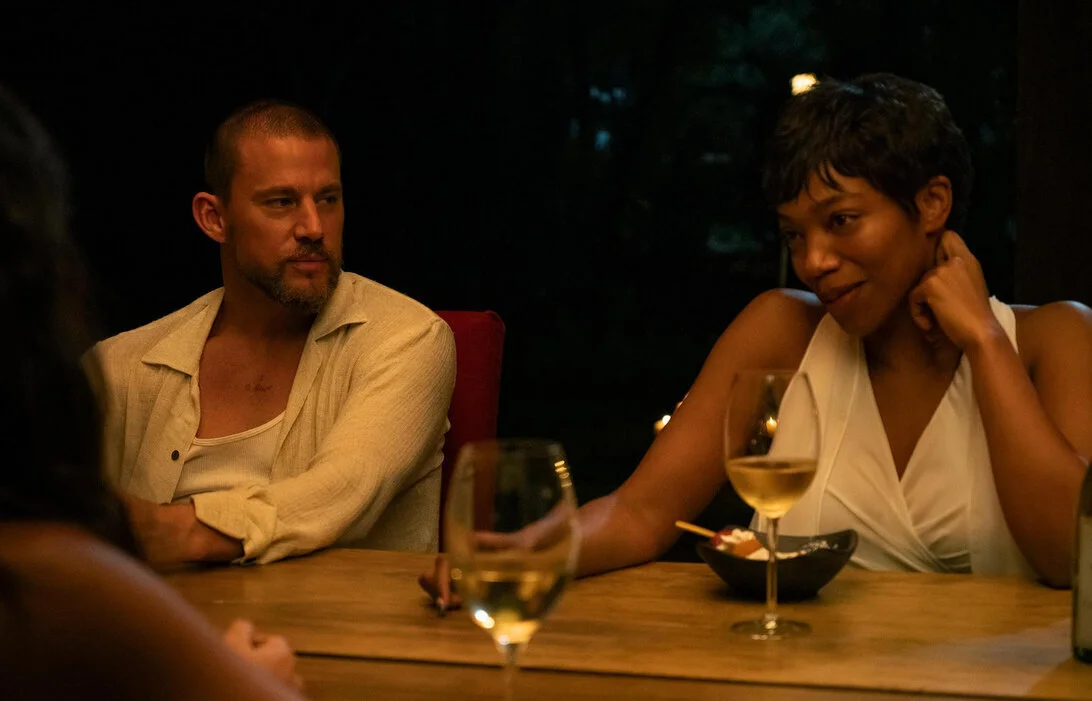
The satirical detective Blink Twice suddenly became the subject of the biggest scandal in America: the film was released in the midst of public revelations of victims from rapper P. Diddy's closed parties, where terrible things had been happening for years - grooming of teenagers, drugging guests with psychotropic substances until they passed out, hidden videotaping of rapes, blackmail and harassment.
“Blink Twice” is a fictional story about women drawn into these kinds of “parties” of a supposedly enlightened and repentant rich abuser, in which girls still lose their memories en masse (we can guess why).
In another violent mystery , "Date with a Monster," Anna Kendrick (in her directorial debut), tells the incredible story of a serial killer who, in the 1970s, won a competition on a local game show like "Love at First Sight" while systematically killing women - all because... because the police ignored the statements of witnesses and relatives of the victims and waited for direct evidence. These two films are an example of how the violence embedded in our sexist culture can be told in mainstream suspense genres with almost no fiction: just listen carefully to the stories of others.
A new wave of interest in politics in feature films
The years 2023 and 2024 caused unrest not only in countries at war, but also in the previously relatively serene American-European space. Along with the victories of the right and far-right forces in the European elections, the new term of Trump and the preparation of a new season of the hybrid Cold War, politics came to the big screen to millions of viewers. News can now be read in feature films.
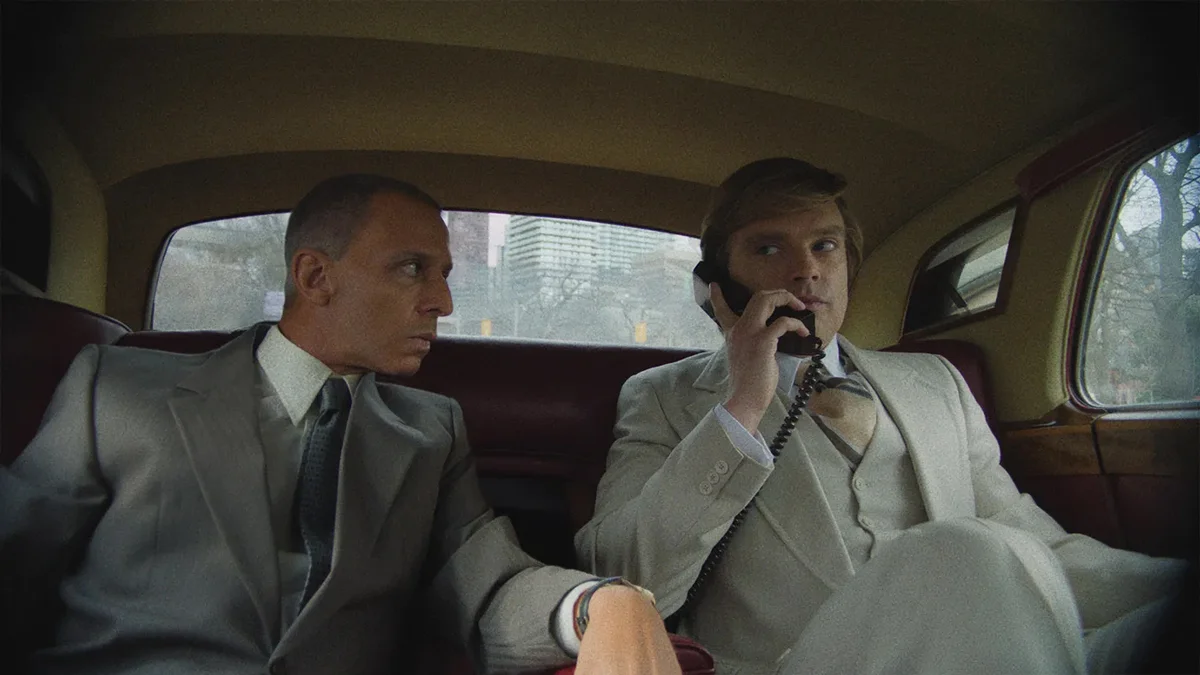
The most high-profile films about politics in 2024 are “The Apprentice” by Ali Abbasi, which paints a picture of the rise of Donald Trump (Trump himself cursed the film, and after his victory in the American elections, distribution was promptly curtailed in Russia), and “Civil War” by Alex Garland about the polarization of American society (which, again, was carefully softened in the Russian box office until “The Fall of the Empire”).
Of course, no fall of empires is expected: despotism did not come out of thin air and is strongly linked to the inability of people around the world to agree on basic civil rights and freedoms.
Iran, which has once again attracted Western attention due to the war in the Middle East, has infiltrated the world agenda through the figure of disgraced director Mohammad Rasoulof, who fled the country, and his Seed of the Sacred Fig , which tells the story of protests in the country after the police killing of a 22-year-old girl. . The film shows how government paranoia takes over an individual family if one of its members is closely connected with the government - a story that is relevant for at least half of the world's population. In addition to Jonathan Glazer, who dedicated “Zone of Interest” about a fascist concentration camp to mass casualties in Palestine, director Steve McQueen returned to World War II in “Blitz.” And the Polish director Agnieszka Holland, who watched the influx of refugees into Poland, first from the Middle East, and now from Ukraine and Belarus, shot a very difficult thriller based on real events , “Green Border,” where she shows how people who fled from the lawlessness of their native country and in the new places they become objects outside the law - without rights and documents.
Even the usually poetic and detached classic storyteller from Canada, Guy Maddin, analyzes the helplessness of power in his “Rumors.” In this magical satire, he tells the story of a summit of world leaders who, during negotiations, find themselves in a mystical puzzle and appear before the audience as ordinary, frightened children. From the disclosure it becomes clear:
Even by electing our rulers in a relatively democratic way, we in no way guarantee success - the leaders of countries and opinions are confused, intimidated and helpless, just like the lost ones in the forest.
And even at the micro level, people with opposing interests are unable to agree with each other - as in the environmental detective story “Evil Does Not Exist” by Japanese director Ryuseuke Hamaguchi. It pits the interests of developers who dream of profitable glamping against those of forest dwellers who protect nature and a fragile ecosystem. A small local conflict turns into a fundamental confrontation between civilization and nature - just like in the best animated films of Hayao Miyazaki. According to Hamaguchi, there are no small politics and small crimes against nature and man, and the slightest destruction will result in nightmarish consequences. Anyone who was once impressed by Zvyagintsev’s prophetic “Leviathan” will find Hamaguchi’s intonation relatable. Now no one can feel safe from Leviathan, which is approaching millions of people who have lived supposedly “outside politics” for decades (and it is no coincidence that one of the main Russian-language books about cinema of the past year was “Dislike” from the producer of “Leviathan” Alexander Rodnyansky).