
Translated material
Childhood traumas and relations with Putin
At the end of last year, the memoirs of former German Chancellor Angela Merkel, “Freedom. Memories 1954–2021.” Against the backdrop of the political crisis and Russia's full-scale invasion of Ukraine, many in Germany criticize Merkel and see the causes of the current problems in her decisions. At the request of Kholod, a member of the Council for Foreigners and Integration of the City of Dresden, Maxim Andreev, talks about Merkel’s book and what answers to criticism can be found in her memoirs .
The most interesting from the autobiography of Angela Merkel
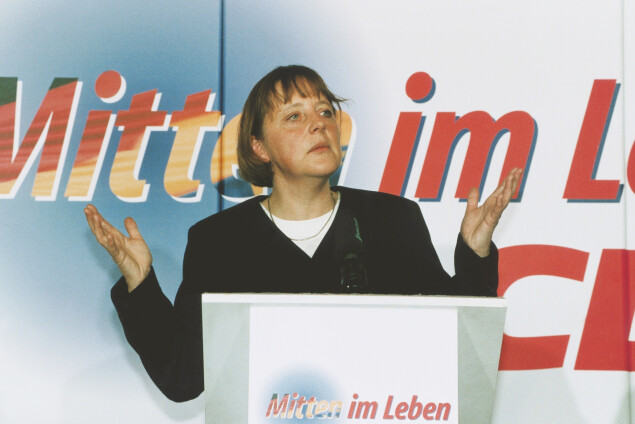
I moved to Germany from Russia at the end of 2015, just at the time when Angela Merkel, as Russian propagandists claimed, “opened the border” to refugees from the Middle East and thereby doomed the country to final “Islamization.” Nevertheless, Merkel’s Germany seemed to me a much less dangerous place to live than Russia, which was experiencing a patriotic frenzy after the invasion of Ukraine and the occupation of Crimea and every year more and more reminded me of Germany from a slightly different time. The full-scale war unleashed by Russia in February 2022 and its consequences for Germany have caused many, including me, to reconsider their views on the results of Merkel's 16 years in power.
Childhood and university
Merkel's memoirs begin with a promising and emotional prologue, and then you hit a wall of formal listing of all the details of her childhood that she could remember. For example, for some reason we learn that at the age of three, after a three-month stay with her grandmother in Hamburg, having returned to Templin to her mother, Angela suddenly addresses her as “you” and does not want to go into the house. At school, during a swimming lesson, she once couldn’t jump from a springboard for a long time, and in high school, during career guidance classes, she was very inspired by structures made of prestressed reinforced concrete.
The book itself is a little reminiscent of such a structure: throughout the course of the narrative, we make our way through the tightly compacted concrete of facts and periodically come across ringing metal rods of emotions, by which we can count a living person.
Growing up in the GDR in the family of a Protestant pastor who had no particular love for the socialist dictatorship, Angela learned to live in “two worlds” from her childhood. For example, her parents taught her to correctly answer tricky questions from Gdrov teachers (“What was on the sandman’s watch—dots or strokes?”), who thus tried to find out whether children watched Western or East German cartoons at home.
I am finishing school and want to leave Russia. Thoughts about the future in my homeland make me panic: I don’t understand what can be done here Society 7 minute read
Her father's advice helped the future chancellor avoid recruitment by the Stasi while enrolling in graduate school in Thuringia. The trick was that you had to agree to cooperate and say that you couldn’t stand it and would rather tell your whole family about this important socialist mission. Comrade Major, realizing that he was dealing with a pathological chatterbox, usually lost interest in such an agent.
Obtaining a higher education for a family member of an “unreliable element” in the GDR was not so easy. The path to almost all humanitarian specialties was closed, so the pastor’s daughter had to give up her dream of studying psychology and choose theoretical physics. While studying in Leipzig, a character begins to form that will become her calling card in German and international politics.
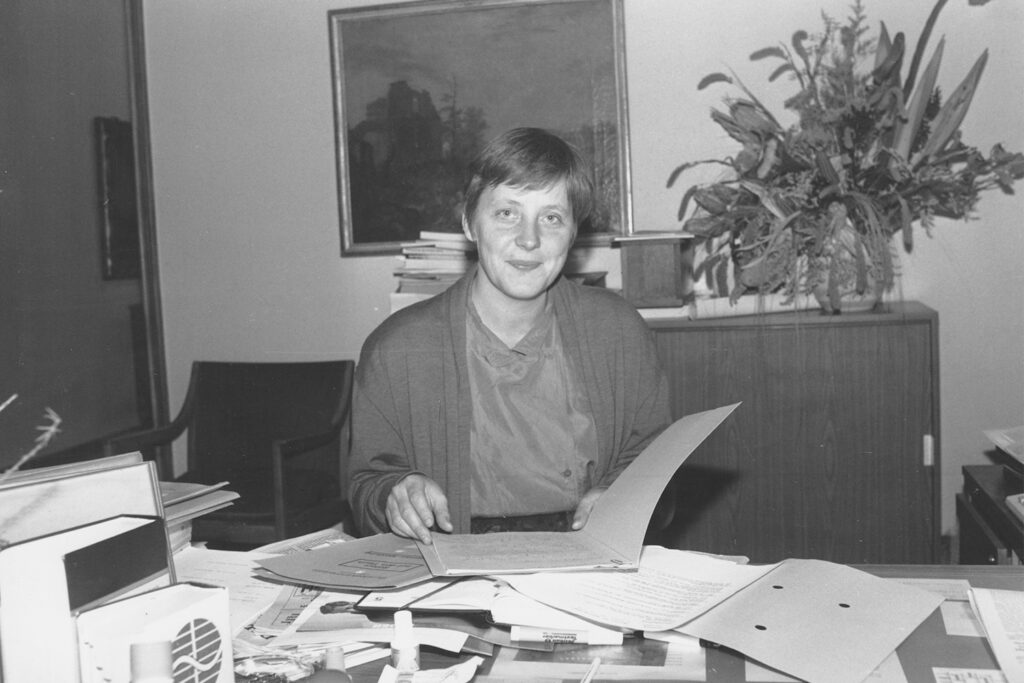
“When I think back to those early days, I always think of sitting at my Sprelacart desk in a room with four beds, doing calculus, algebra and theoretical physics exercises. I spent hours poring over problems until at some point a brilliant idea struck me. The feeling of finding a solution was great and liberating. During this time, I realized that you shouldn’t just leave everything to chance, but instead you need to persist, believe in your strength to make your way on your own. Unlike school, my time at university really pushed me to give it my all.”
After graduating from university, Angela and Ulrich Merkel (her first husband, whose surname she still bears to this day) still manage to find places in graduate school in Berlin. Thus begins her journey as a scientist at the Academy of Sciences. There she faces a moral dilemma: is it permissible to work for the GDR with full dedication, thereby strengthening the misanthropic regime? Discussions with those few close people in whom one could not suspect informers always revolved in the same circle and ended in nothing.
The path to politics
In November 1989, when the Berlin Wall falls, she is 35 years old. Her second husband and colleague in quantum chemistry, Joachim Sauer, is excited by the new prospects that open up for him as a scientist, and intends to continue his path in science. Merkel decides to take an active part in democratic reforms.
“I felt only one thing: I was electrified by what was happening. I was convinced: something new is being created here, I want to be a part of it, I am needed now, with my experience, my life, with what I can do and what is important to me.”
In discussions about how the unification of Germany should occur - smoothly, with the preservation of the previous structures and confederation, or through an immediate transition to a market economy and early entry into the Federal Republic of Germany, Merkel categorically states that it is impossible to reform the GDR from within.
“It’s like a cardigan: if the first button is not fastened correctly, you have to start all over again to button it correctly. And the first button of the GDR was buttoned incorrectly.”
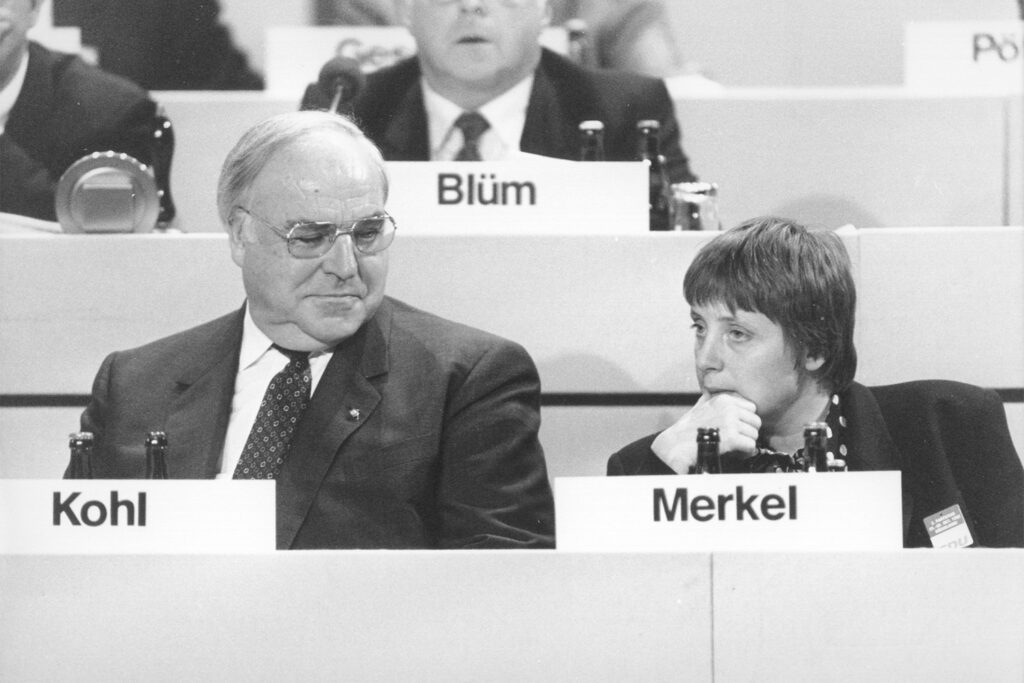
This radical position turns out to be close to the Christian Democratic Union (CDU), the party of Helmut Kohl, the then Chancellor of Germany. Merkel's background and views come in handy, and after the first elections, he gives her the leadership of the Ministry of Women and Youth Affairs (or, as he calls it, the “Ministry of Women and Other Stuff”).
The following years in Kohl's two governments are spent primarily in the struggle with the conservative wing of his own party. The internal party balance of power changes after the leadership of the CDU and Helmut Kohl personally become involved in a corruption scandal. A request for renewal arises in the party, and Merkel becomes its head:
““You have to do it!” - Georg Brunhuber tells me. He was my colleague in the Bundestag from Baden-Württemberg, whom everyone called exclusively “Schorsch”.
“Shorsh, you are much more conservative than me. “I’m not like that at all,” I answered.
“No, no,” Brunhuber objected, “we can handle conservatism ourselves.” And you must make sure that our daughters can vote for the CDU again. They won’t do this with us alone.”
After a series of defeats for the Social Democrats in the state elections, Gerhard Schröder decides to organize early elections in 2005. He considers Angela Merkel a simple opponent and wins against her in television debates.
When the first election results became known, which showed a slight majority of votes in favor of the CDU/CSU and the lack of a majority for the former coalition of Social Democrats and the Greens, Schröder sails towards a parallel reality:
Help Kholod tell human stories
We put people at the center of our journalism and talk about people who face injustice, but do not lose spirit and continue to fight for their rights and freedoms. To continue covering people's stories, we need the support of readers - thanks to your donations, we continue to work, despite government pressure.
- Foreign card
- Map of the Russian Federation ↘︎
- Patreon ↘︎
- Translation
- Crypt
Monthly
One-time
5 €
- 10 €
- 20 €
30 €
5 €
- 10 €
- 20 €
- Other
- Bank of the Russian Federation
- Foreign bank
Card number:
5536 9138 6472 8742
Copied!
Recipient:
Taisiya Bekbulatova
Copied!
Recipient:
Projektas Šaltis
Copied!
Account number:
LT613500010016198323
Copied!
SWIFT BIC:
EVIULT2VXXX
Copied!
Bank:
Lietuvos Bankas (Bank of Lithuania)
Copied!
Comment - purpose of payment:
Parama įstatymų numatytais tikslais (be konkretaus tikslo)
Copied!
We ask you to provide a comment so that we can accurately determine the receipt of funds. The phrase is translated as follows: “Support for statutory purposes (without a specific purpose).”
Amount: €
Donate
By making a donation, you accept the privacy policy
“Do you seriously think that my party will accept Mrs Merkel’s offer of negotiations under the current circumstances if she declares that she wants to become federal chancellor? In my opinion, we should still leave the church in the village (a German proverb that means “keep common sense” or “don’t go too far”, but which in context hints at Merkel’s provincial origins. - Kholod’s note). The Germans have clearly spoken out on the issue of candidates. This is simply impossible to seriously deny. “ Then, pointing to Merkel, he said: “She will not be able to create a coalition under her leadership with my Social Democratic Party, this is absolutely clear.” Don’t create illusions for yourself.”
On Friday November 18, 2005, a coalition agreement was signed between the CDU, CSU and the Social Democratic Party. The church remained in the village, and only those who could gather a majority could still get into the Chancellery. This person was Angela Merkel.
Chancellor
Merkel's 16 years in power are neither stagnant nor boring. At the very beginning, she will have to carry out unpopular economic reforms aimed at stabilizing the budget, including raising taxes, and immediately after this, in 2008, the European Union is overtaken first by a financial crisis and then by a debt crisis.
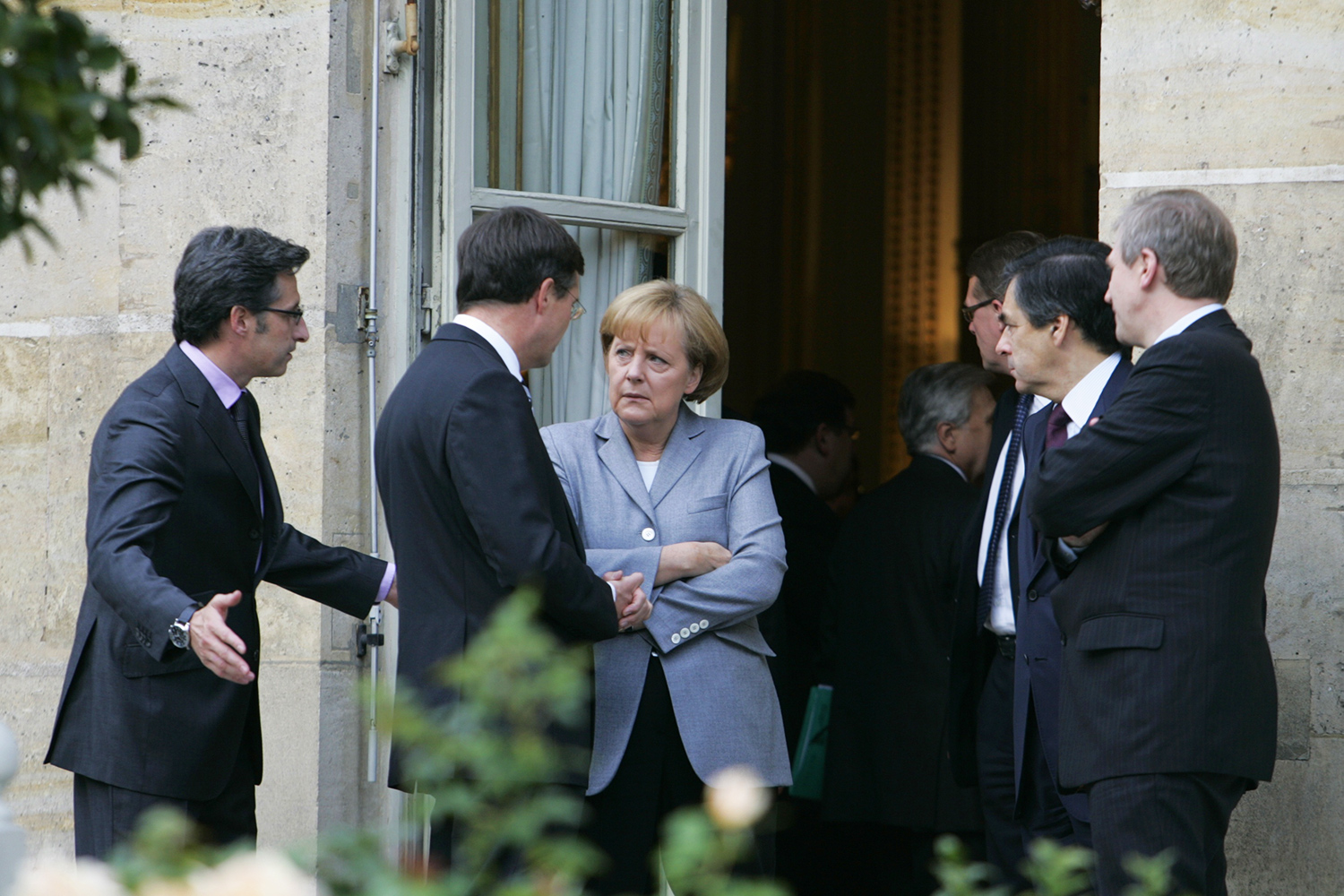
Initially, the proponent of a free economy wants to avoid massive government intervention by bailing out failing banks and advocates for Greece and other countries with too much debt to dig themselves out of their problems. However, she quickly realizes that she finds herself in a zugzwang that threatens the collapse of the European Union, which would be a real disaster for the German economy, which is completely dependent on exports. She chooses the lesser of two evils - saving Greece, subject to commitments to austerity.
Judging by the newspaper headlines, Merkel was then hated by everyone - from Eurosceptics to the Greeks themselves. The phrase taken out of context about the “lack of alternatives” to the measures taken gave the name to the new right-wing populist party “Alternative for Germany.” In her first elections, she failed to enter the Bundestag, gaining less than 5% of the vote, but began to gain popularity after another phrase from Merkel, which will forever remain in history, namely: “Wir schaffen das!” (“We will get through this!”), said regarding the reception of refugees from the Middle East.
I moved from Kazakhstan to Russia and began to earn three times more. I have never had such money. I used to save hard, but now I can afford whatever I want Society 7 minute read
Merkel considers the migration crisis of 2015 to be a solution to the problems laid down by previous governments:
“The euro was introduced first... However, the criteria associated with the monetary union were not actually binding on member states, and today we have to cope with the vulnerabilities that arose due to this decision. Of course, initially everyone was delighted with the Schengen Agreement, thanks to which controls on the internal borders of the member states of this agreement were actually abolished, with rare strictly justified exceptions. However, the Schengen Agreement is now under pressure like never before due to the large number of refugees.”
What propagandists call the “opening of borders” (already open) happened on September 4, 2015. In Hungary, refugees had been accumulating on the border with Austria for a long time: they passed along the so-called Balkan route, tried to get to Austria and Germany, but were detained by Hungarian police.
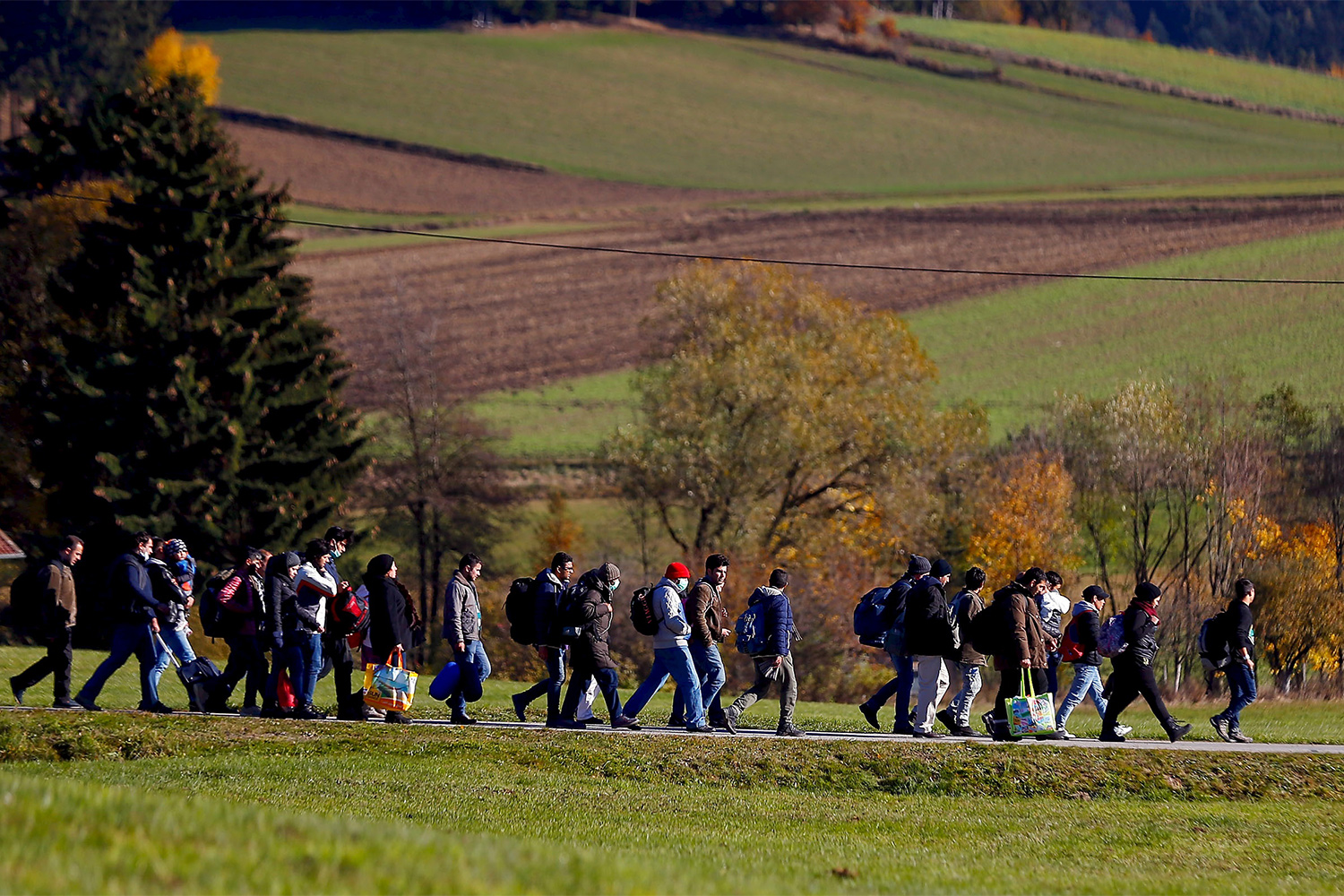
At some point, the situation began to take on the dimensions of a humanitarian catastrophe. The news increasingly reminded Angela Merkel of Prague in 1989, when thousands of East German refugees stormed the German embassy to leave the country of “advanced socialism.” She consulted with lawyers, coordinated actions with the heads of Hungary and Austria, and published a post on Facebook (refugees mainly received information there), in which she said that refugees could freely arrive in Austria and Germany to obtain asylum.
“The weekend was exciting. Hundreds of people greeted thousands of refugees arriving from Hungary via Austria to Germany at Munich Main Station and other German railway stations. Volunteers greeted people seeking protection with applause, and sometimes even jubilation, handed out sweets and offered food. These volunteers did not hesitate for a second when their help was needed, and “by their reception of refugees they painted an image of Germany that can definitely inspire pride in our country.”
Of course, Merkel had no plans to accept “all the world’s refugees” in Germany, so the next step was to reach agreements with Turkey on better border control, help in housing refugees on its territory and accepting illegal immigrants from Germany. Asylum application numbers went down quickly. Germany actually handled this crisis again. The same cannot be said about the other.
Merkel and Putin
In 2008, a NATO Summit was held in Bucharest, at which, according to Zelensky, spoken on April 3, 2022 (after the Bucha massacre became known), Merkel and Sarkozy, “out of absurd fear of Russia,” rejected the admission of Ukraine and Georgia to the NATO. This accusation finds her already in the status of a former chancellor on a trip to Italy. However, she takes the time to ask her bureau to release a statement:
“Former Federal Chancellor Dr. Angela Merkel considers her decisions related to the 2008 NATO Summit in Bucharest correct.”
On the one hand, the relationship between Merkel and Putin did not start from the very beginning. Unlike Schröder, Putin failed to find a comrade in Merkel whom he could sit on and sing songs about evil Americans. During Merkel’s visit to Tomsk in 2006, he took her on a tour of poor areas of the city lined with crumbling wooden houses and boasted: “The American government bribed exactly the same poor people in Ukraine and persuaded them to take part in the Orange Revolution in 2004. I will never allow this to happen in Russia.”
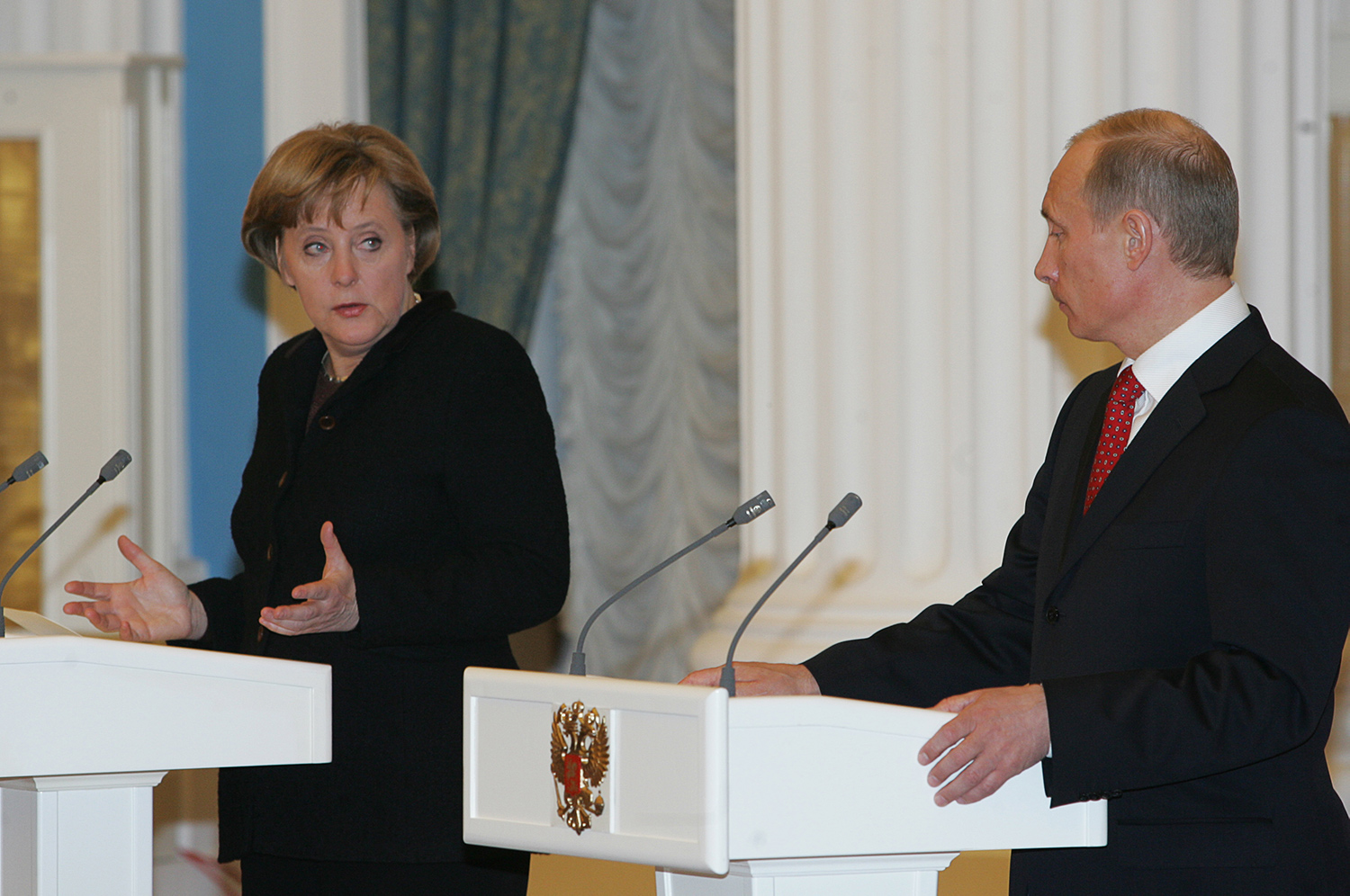
“But no one in the GDR seduced us into the Peaceful Revolution with American money,” she objected. “We wanted this ourselves, and it changed our lives for the better.” This is exactly what the people in Ukraine wanted.”
Putin was clearly not impressed by this answer, he changed the subject and for some reason hinted that he was not going to go anywhere after his two terms, since the Russian constitution, unlike the American one, prohibits only two consecutive presidential terms. In the following years, he no longer tried to “get into the soul” of his German colleague, but simply, whenever possible, spoiled little things like a difficult teenager: he brought a huge Labrador to meetings, knowing that Merkel was afraid of dogs, he was constantly late, explaining this by the fact that he could not hold on and just drink your favorite German beer in your room, and stuff like that.
Thus, Merkel was clear from the very beginning who she was dealing with. However, this did not make Russia disappear from the map, and as the head of state, she had to reckon with the consequences of her decisions.
“I considered it an illusion to suggest that NATO candidate status would provide Ukraine and Georgia with protection from Putin’s aggression, that this status would have such a deterrent effect that Putin would accept developments without doing anything. <…> During the last eastern expansions, in each case it took at least five years for countries to become members of the alliance after receiving candidate status. I believe that the assumption that Putin will simply let the time pass between the decision to sign the Membership Action Plan and the start of membership of Ukraine and Georgia is wishful thinking, a policy based on the principle of hope.”
They want to annex the largest island in the world to the United States. Seal hunters and representatives of the Chukotka people live here, and there are no roads between the cities. Why does Trump need him? World 10 minute read
Merkel lacked an overall strategy to contain Russia within NATO. Many countries neighboring Russia preferred to act on the principle “if you ignore it, it will disappear on its own.” And although the desire of countries that freed themselves from the Soviet dictatorship, but which were unlucky, like the former East Germany, to immediately fall under the protection of NATO, was completely understandable, Russia, from this desire alone, not only did not disappear from the map, but also continued to remain armed until teeth with nuclear weapons, and in addition to this, also a permanent member of the UN Security Council.
Is this the “absurd fear” that Zelensky spoke of? Merkel thinks not. In her opinion, this is just a reflection of different views on the deterrent effect of including Ukraine and Georgia in the NATO accession action plan.
In contrast to her desire to join NATO, Merkel strongly supported the desire of Ukraine, Georgia and other countries of the former USSR to establish cooperation with the European Union. This also applied to Russia, but here, too, a serious barrier was the ambitions of Putin, who did not want to be put together with “ordinary” countries, but instead longed to make Russia the new Eurasian center of power as opposed to the United States. He perceived any attempts at rapprochement with the EU on the part of his neighbors as an invasion of his “back yard” and tried in every possible way to prevent them.
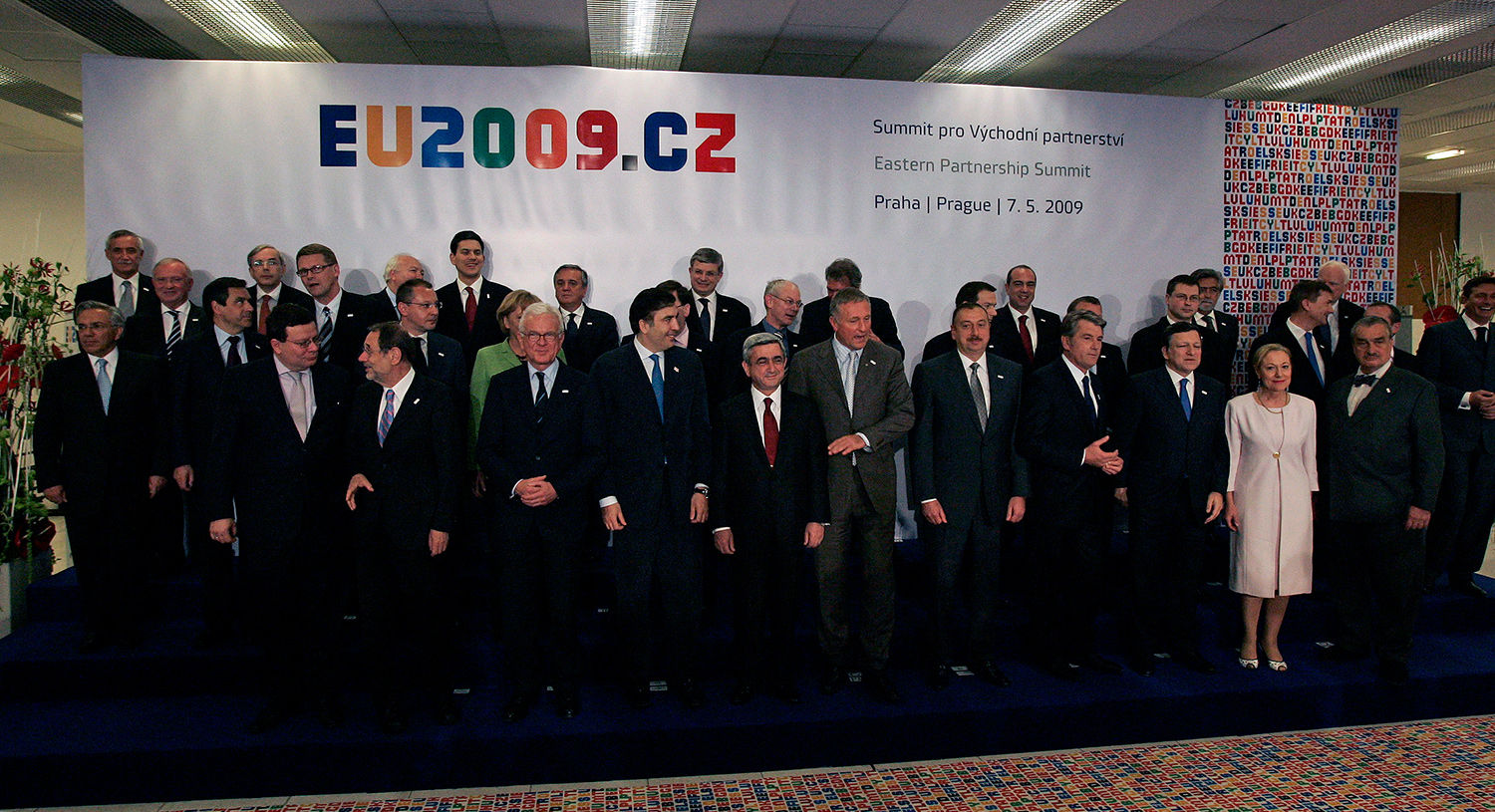
After Russia's invasion of Georgia in the summer of 2008, there was a desire among EU members, including Germany, to act more actively without or even against Russia. In 2009, a summit of the so-called Eastern Partnership was held in Prague with the participation of Azerbaijan, Armenia, Georgia, Moldova, Belarus and Ukraine. Among other things, the countries were proposed to conclude an agreement on the Association with the EU. Most of the countries Putin were able to intimidate the deterioration of relations with Russia and dissuade this idea. Most problems arose with Ukraine. Merkel recalls a conversation with then President Viktor Yanukovych on November 29, 2013 in Vilnius:
“In front of me was a tall, strong man who looked confused. We spoke through the translator. ”
“Give me a little more time,” answered Yanukovych. “I can't do it right now.” After all, you don’t have to solve everything so fast, once I will sign it. ”
What could I say to it? Fear literally oozed from every time of his skin. Probably, he himself understood that he was between all chairs. It was pointless to persuade him to sign something. His request for additional time seemed to me a rhetorical trick. Putin managed to knock out all the determination from him and pull Ukraine to his side. Bye".
My daughter does not understand my speech. She has alalia, a disorder in which it is difficult for a child to speak and understand abstract concepts. For example, what is love? Society 11 min read
After the protests on the Maidan and Yanukovych’s flight to Russia, Putin did not put up with his defeat and tried to make the life of Ukrainians unbearable with the help of violence. The moment when he began to openly lie in personal conversations about the Crimean “green men”, Merkel calls the “change of aggregate state” in German-Russian relations. She does not break off contact with him completely, but limits mutual work to the necessary minimum.
Including, thanks to these contacts, it is possible to first establish a dialogue between Putin and the new President of Ukraine Petro Poroshenko in the framework of the Norman format, and then to achieve the conclusion of the Minsk agreements, which, according to Merkel, were “the only more or less reliable way to stop the further advance of the Russian troops And to serve that Ukraine is able to restore its territorial integrity step by step. ”
In the last chapter, “World Politics in the Shadow of Pandemia”, we return to the sad result of all these efforts - the full -scale invasion of Russia to Ukraine. The pandemic, due to which personal meetings were practically impossible, scored the last nail in the lid of the tomb of the Minsk agreements.
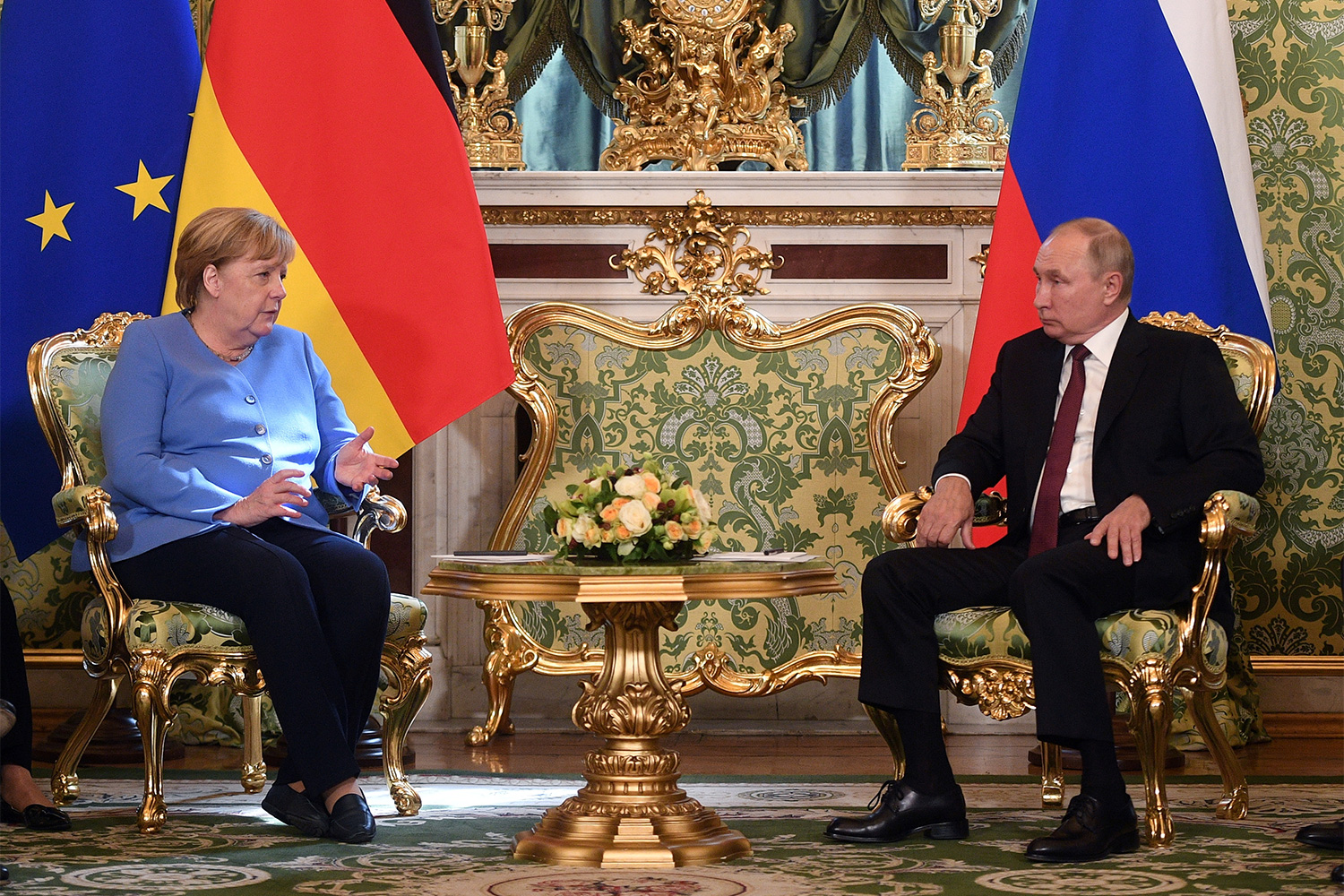
At the time of the farewell visit, Merkel to Moscow at the end of August 2021, Putin demonstrated not only complete apathy in relation to attempts to find a diplomatic path of solving his problem with Ukraine, but in general, his thoughts were already with the new German government and did not want to deeply discuss any topics at all .
“We said goodbye. Behind the back there were two decades of joint meetings - the time for which Putin changed, and with him Russia: from the initial openness to the west, through alienation from us, to complete fierce. Despite all the difficulties, now, looking back, I consider it correct that until the end of my term I attached great importance to maintaining contacts with Russia - for example, through meetings in the framework of the St. Petersburg dialogue, maintaining my personal dialogue with Putin, as well as through trade Relations, which, in addition to mutual economic benefits, contributed to the preservation of ties.
Russia, along with the United States, remains one of the two leading nuclear powers of the world and the geographical neighbor of the European Union. ”
Epilogue
On the night of September 11, 2024, I returned to Dresden from a scientific conference in Munich and was at home for about two hours. At three in the morning, the Karola bridge, built during the GDR in 1971, which I often drove before, missed the last tram with all my strength and fell after a few minutes, only miraculously killing anyone.
Its design was based on a premature reinforced concrete, which so inspired the young Merkel in school lessons of career guidance. A revolutionary idea for its time to create preliminary stress using steel cables made it possible to significantly increase the size of the spans and at the same time reduce the total mass of the structure. What they did not know about at that time is that over the years of operation through concrete, moisture, which, as the results of research has shown, worked from the first days to destroy the cables.
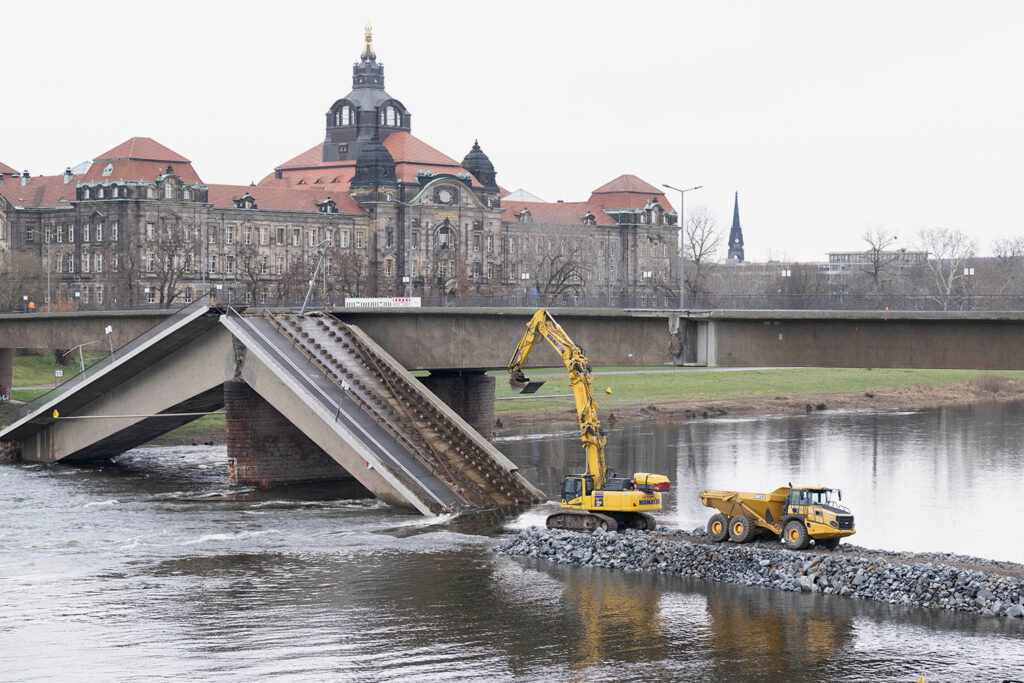
The analysis of several other East German bridges showed that they suffer from the same defect and should be demolished. Now Germany is faced with the need to pay for the mistakes of East German engineers with billions, which are not in the budget, including because of errors, possibly committed by Merkel in its policy in relation to the Putin regime.
Angel Merkel is often called “Brückenbauer Builder” from politics, bearing in mind her ability to find a common language with any of its opponents and build compromises. As in the case of the Carola Bridge, the audience is always very happy when it is possible to find the guilty in some problem, and now photos of concrete blocks installed in the Christmas markets to prevent Islamist and law-stormist terrorist attacks, on which witty gentlemen write, run on the Internet. Ironous "Danke Merkel!" ("Thank you, Merkel!").
But what these gentlemen will not be able to do is to build new bridges in return for the destroyed old ones. This requires politicians who are not afraid to say “wir schaffen das!”.
The author's opinion may not coincide with the opinion of the editors.
In order not to miss the main materials of “Cold”, subscribe to our social networks!


Kholod needs your help to continue working
We continue to work, resisting bans and repression, to preserve independent journalism for the Russia of the future. How do we do this? Thanks to the support of thousands of caring people.
What do we dream about?
About the simple and at the same time complex - the opportunity to work further. Life will change beyond recognition many times, but we, the editors of Kholod, want to stay close to you, our readers.
Support Kholod today so we can continue to do what we do best - be independent media. Thank you!
Author: Maxim Andreev