
Translated material
"Boiler" for the APU
The Russian Armed Forces fail in Kursk, but advance in Donbass. What's happening on the front line?
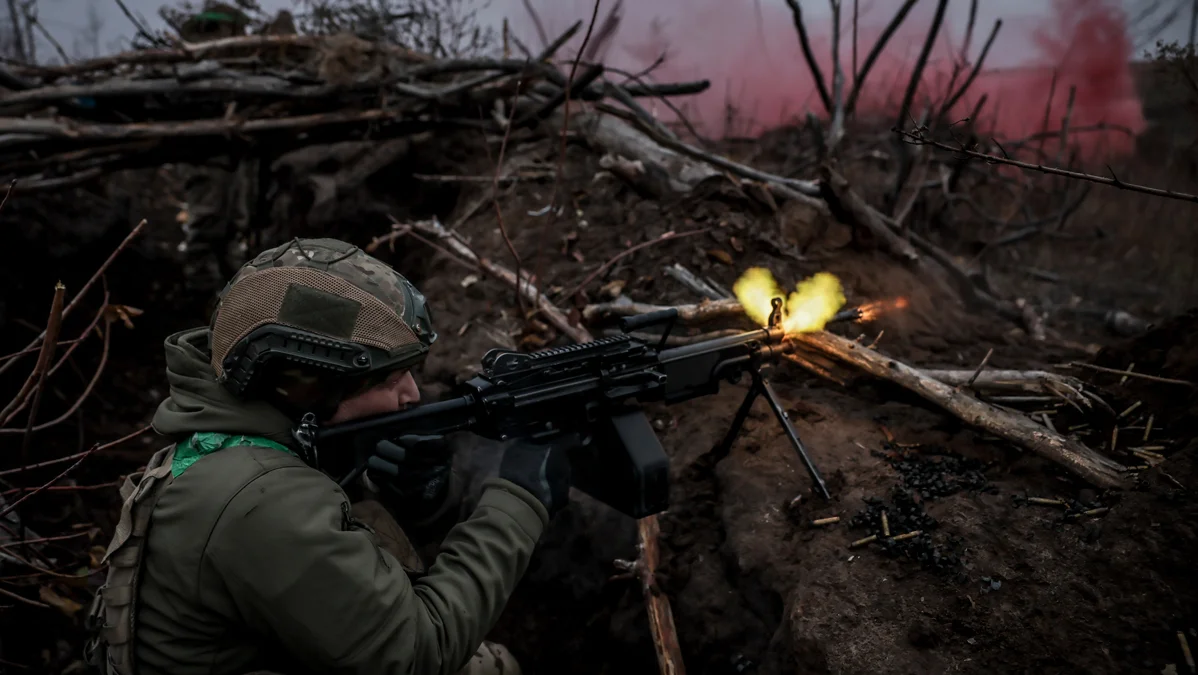
Ukrainian serviceman at a training ground in the Donetsk region, Ukraine, November 29, 2024. Photo: Oleg Petrasiuk / Ukrainian 24th Mechanised Brigade / AP / Scanpix / LETA
The Russian Army cannot liberate the territory of the Kursk region captured by the Ukrainian Armed Forces, but continues offensive operations in the Donbass and is preparing new ones. “New Europe” and experts are considering options for the further course of the war in Ukraine.
Koreans in a meat grinder
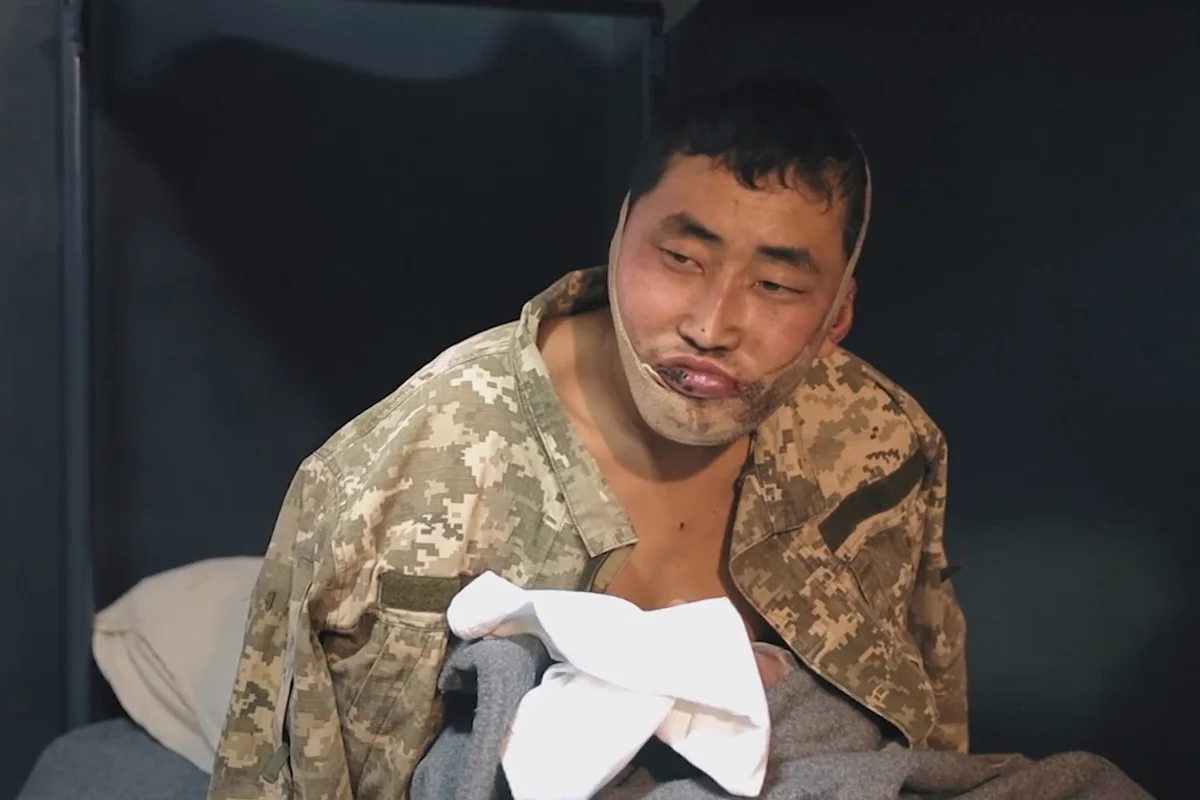
The South Korean intelligence agency confirmed the official statement of the Ukrainian authorities about the capture of two North Korean soldiers. They were captured in the Kursk region. A South Korean intelligence source quoted one of the captured North Koreans as saying that his colleagues were suffering “significant” losses in Russia.
“Conscript soldiers were captured,” military analyst and former SBU employee Ivan Stupak tells Novaya Europe. “They do not possess any important information, although they are considered elite special forces fighters. They talk about big losses in their unit. One of them is waiting for an exchange for Ukrainian soldiers in Russian dungeons, as proposed by President Vladimir Zelensky. Another North Korean wants to stay in Ukraine. Perhaps through him it will be possible to contact other soldiers from the DPRK and convince them to surrender rather than participate in this meat grinder.”
South Korean officials estimate that Pyongyang has sent about 11,000 troops to Russia to help the Kremlin in its war against Ukraine.
The mediareport that, according to the National Intelligence Service of the Republic of Korea, about 300 North Korean military personnel have died in the Kursk region to date. 200 of them died in January. Approximately 2,700 more North Korean soldiers were injured.
Political component
The exact place where the North Koreans were captured is not known, but it can be assumed that this happened during the offensive in the Kursk region, which the Ukrainian Armed Forces launched in the first days of January.
“It is obvious that the Ukrainian military did not make any serious progress during the January offensive,” says Ivan Stupak. — In my opinion, 70 percent of the meaning of this entire operation was in the political component: to show that Putin is weak, that Ukraine can not only defend itself, but also attack. This could cause a new wave of refugees to other regions of Russia from the Kursk region. Well, to please the Ukrainian people. Another 30 percent are military tasks. For example, to confuse the plans and knock the cards out of the hands of the Russian command, which has recently been pressing hard on Sudzha and is threatening to cut off the road to the Sumy region, along which units of the Ukrainian Armed Forces are mainly supplied. Again, the goal remains to divert the forces of the Russian army from other directions, from Donbass, where the assault on Pokrovsk begins.”
“The counterattack of the Armed Forces of Ukraine in the Kursk region, carried out in early January by relatively small forces, still remains incompletely explained,” Israeli military observer David Sharp explains to New Europe.
— Apparently, the Ukrainians planned to take the enemy by surprise and create a local advantage.
Using the tactical surprise of the attack, the Ukrainian Armed Forces tried to advance in the direction of the Berdin village. However, Ukrainian troops failed to capture significant territory and populated areas. I can assume that one of the goals of this local offensive was to divert Russian forces from other areas, for example, from Sudzha and Malaya Loknya, where there was a threat of encirclement of Ukrainian Armed Forces units. Perhaps the Ukrainian command set the goal of defeating a group of Russian troops in this area and disrupting Russian attacks there.”
According to Ivan Stupak, during the offensive the Ukrainian Armed Forces were unable to capture and hold even the Berdin farmstead closest to the front line. It is unlikely that the Ukrainians will suddenly be able to make significant progress in this area in the near future. At the same time, pressure continues to be put on the Kremlin. It is not for nothing that North Korean soldiers were sent to the Kursk region.
David Sharp suggests that all the activity of the Ukrainian Armed Forces in the Kursk region carries political significance. At the proposed negotiations with Donald Trump, the Ukrainian side hopes to use this argument as one of the main ones. That is why Kyiv continues to stubbornly cling to the captured Russian territory, even at the cost of losing its land in the Donbass.
“As of now, I don’t really understand how the Kursk card will be played in the negotiations,” continues Ivan Stupak. “It is difficult to imagine that the occupied territory will be exchanged for a comparable plot of occupied Ukrainian land. At the moment, there are doubts that the Kremlin will even consider five thousand square kilometers of Russian territory a serious argument in the dispute.”
Hottest area
The Ukrainian project DeepState, in the next update of its map of the front line, recorded the advance of the Russians immediately by about a kilometer in the northern microdistricts of the city of Chasov Yar. According to these data, the ruins of the city are almost completely captured by the Russian army. DeepState also noted on the map the advance of the Russians to the northern outskirts of Toretsk. This city, according to project analysts, is also almost entirely either under Russian control or in a gray zone. In addition, DeepState records the advance of Russian units south of Kurakhov, east and southwest of Pokrovsk, and on some other sections of the front.
Ivan Stupak calls Pokrovsk the hottest area on the entire Ukrainian-Russian front. According to a military analyst, there are about 300 clashes a week in the Pokrovsk direction. During the same period, only 10 battles took place in the Zaporozhye direction. If you imagine a triangle between the cities of Pokrovsk, Chasov Yar and Druzhkovka, then, according to the plans of the Russian command, it should become a cauldron for a very significant group of Ukrainian troops. It will also include the rather large city of Konstantinovka, which Russian troops will not storm, but will simply bypass.
The units that find themselves surrounded will be strangled without supplies and forced to surrender. This may be followed by a new boiler near the cities of Kramatorsk and Slavyansk. It is not yet clear whether the Russian Federation has the strength for such a large-scale offensive.
“I don’t yet see a potential threat of encirclement of the Ukrainian Armed Forces in the Pokrovsk-Chasov Yar-Druzhkovka triangle,” notes David Sharp.
“This will require a very deep breakthrough of the Ukrainian defense and cutting off a huge section of territory. Apparently, the Russian army does not have the strength to do this today.
However, in the foreseeable future, Ukrainian forces may end up in a cauldron in Pokrovsk itself, which the Russians are now trying to bypass from different sides. If they succeed in cutting off the city from supply routes, the Pokrovsk garrison will be forced to surrender or be defeated. Until the Armed Forces of Ukraine use their reserves, the negative trend for them will continue. The entire Kramatorsk agglomeration is coming under attack.”
According to David Sharp, Russian troops will continue to press in Toretsk, most of which is already occupied. When this city is completely captured, the next direction of the Russian attack will be aimed at Konstantinovka. After the fall of Ugledar and Kurakhovo, the offensive continued in the direction of Velikaya Novoselka. And the Ukrainian side is not yet able to stop this advance.
Another dangerous direction for the Ukrainian Armed Forces, according to David Sharp, was the Kupyansk direction. There, the Russian army successfully crossed the Oskol River and continues to attempt an offensive. But these attacks have been going on for about a year and have not yet led to significant results.