
Translated material
Sovietoid endgame
On the death of the “black colonel” Viktor Alksnis
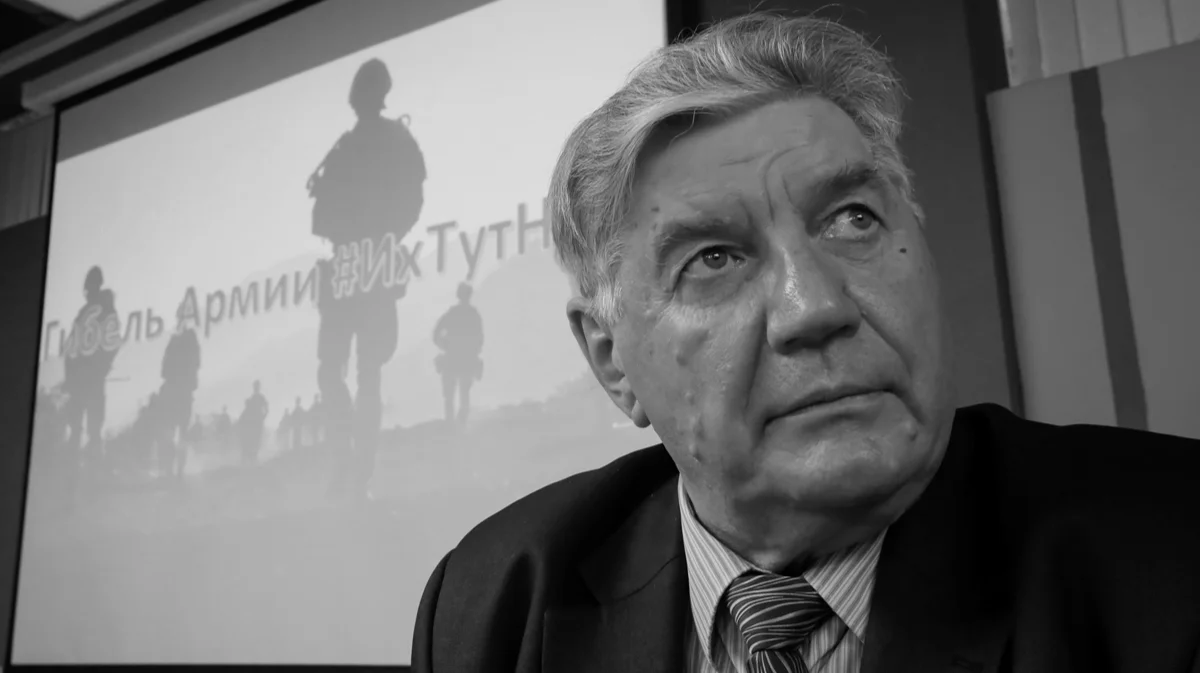
Victor Alksnis. Shamil Zhumatov / Reuters / Scanpix / LETA
FROM THE EDITOR:
At the beginning of January, Viktor Alksnis, one of the most odious representatives of the “national-patriotic” camp in the late USSR and modern Russia, died. A career Soviet military man, Alksnis began his political career in 1988, opposing the Popular Front of Latvia, which sought to secede the country from the Soviet Union. In 1989, Alksnis became a deputy of the Supreme Council and created the “Union” deputy group, which fought for the preservation of the USSR. In 1991, Alksnis supported (with some reservations, which are discussed below) the State Emergency Committee, then in recent years he called for the occupation of Crimea and advocated the invasion of Ukraine. We asked political scientist Alexander Morozov to evaluate the views of Viktor Alksnis, who received the nickname “black colonel.”
For some, “Sovietism” was multiplied by official imperial Orthodoxy, as with Glazyev. For some, it’s nationalism, like Rogozin. Alksnis remained a rare example of pure, distilled Sovietism. 35 years after the disappearance of the USSR and the “Eastern Bloc” from the world map, Alksnis continued to live as if he existed. The “Heavenly USSR” to which he was loyal was, from his point of view, not completely present among all his colleagues on the so-called “national salvation front”. Prokhanov dreamed of a “fifth empire”, Dugin wanted to be the author of a new world ideology, Zyuganov betrayed pure “Sovietism”, multiplying the Communist Party of the Russian Federation in 2003-2004 with Orthodoxy. Putin appropriated all the ideas of post-Soviet “national socialism” and actively used fragments of “Sovietism” in his rhetoric. But none of them remained in the mental state of Nina Andreeva with her “I can’t compromise on principles” from 1988. Only Alksnis.
The ideological biography of Viktor Alksnis is straight as a board. In the last years of the USSR, he did not approve of Gorbachev, as he fought to preserve Latvia within the USSR. Then he broke up with the State Emergency Committee, accusing the committee members of indecisiveness. Alksnis believed that it was necessary to use force, but Yazov did not agree to this. It was necessary to arrange a Russian Tiananmen, and then the USSR would have survived and followed the path of China. Then he completely rejected Yeltsin. So much so that he traveled with General Rokhlin to military units to discuss with the commanders the need to remove Yeltsin from power. Then he did not approve of Putin. And so much so that he went to London to see Berezovsky to discuss the plan for Putin’s defeat in the 2004 elections. In the 2000s, Alksnis was still invited to various “National Socialist” projects because he was very famous. Then he “went into obscurity” - he became a blogger on LiveJournal and a minor municipal boss.
“Sovietism” - as a view of the world - has nothing to do with Marxism or imperialism. It represents a set of beliefs that grew out of the everyday life of the late USSR.
Residents of the USSR acquired the idea of “peoples” from three social practices - universal army service, student detachments and bonus collective trips to the countries of the “eastern bloc” (“fraternal countries”).
In these movements, man discovered “peoples.” They were revealed exclusively through culinary features and some household rituals. At the same time, everyone knew a little Russian and used it as a lingua franca. Any fragments of the own national history of these different peoples were forced out of public use. Because all these peoples arose, like Aphrodite from the foam of the sea, from the October Revolution and its worldwide influence. All the heroic episodes of the period of the Russian Empire are greatly overshadowed by the fact that at that time there was “tsarism”, and the policies of tsarism were always reactionary.
“Peoples” were revealed at the level of everyday jokes: “We had an Armenian in the army, a wonderful person!” “Jews? Our literature teacher was Jewish, she gave us a lot!” The peoples' own identity existed only as fragments of the liberation struggle that led to the emergence of the “Soviet man.” And outside this “brotherhood of nations” there were three evil forces: American imperialism, Israeli militarism and German revanchism. All three of these evil entities supplied weekly ominous news for school and factory political information. This “bourgeois world”, foreign countries, set off “Soviet internationalism”.
The social everyday life of Soviet people presupposed a stylistic unity that rejected bright forms of individualism as “bourgeois.” The basic pedagogical idea was that the Soviet person was formed as an individual through the collective and realizing his collective (“the native plant is buzzing like a beehive”) as a “brotherhood.” Individualism was possible as a legitimate hobby - for example, fishing or collecting stamps. Or, for example, a passion for bookbinding.
Soviet people identified themselves in a vast space after 1991. In a certain sense, the so-called “Congress of Russian Communities” of 1993 was a “Congress of Soviet Communities”,
that is, a form of maintaining contacts between groups that remained loyal to “Sovietism” rather than to the new Russian nationalism.
This “Soviet man,” who moved to the post-Soviet period and lost his historical homeland, was studied in detail by sociologists, primarily Levada, Dubin, Kozlova, and then by cultural anthropologists, who showed the connection between everyday practices and widely accepted models of describing the world. It is obvious that the “Soviet man” fell into severe withdrawal. After all, the world in which four active age cohorts grew up and took place has disappeared, and all the descriptive models that explained the very foundations of the social world have collapsed.
In the nineties, the “Soviet man” was still warm, but in the 2000s and until 2014 it was in the refrigerator. The annexation of Crimea unfrozen him. Putin began not only to “preserve” some remnants of Sovietism, as some tribute to the past, but to return “Sovietism” as the basis of his active ideology. Putin appropriated to himself everything that the “oppositionists” of the Alksnis ecosystem lived by: the concept of “unity of Soviet peoples,” and hatred of oligarchs and liberals, and rejection of the “wild nineties,” and the concept of foreign policy expansion in the Soviet style, starting to put together some kind of analogue “ Eastern bloc" from imaginary allies in Asia and Africa.
Alksnis got nothing from this. He supported the invasion of Ukraine in 2022, but then began to continuously criticize the strategy of the Kremlin and the Ministry of Defense from positions close to Prigozhin and Girkin. Four months before his death, he gave an interview to the “Your News” portal, where he reproached Putin for his inability to use nuclear weapons: “I am talking about tactical nuclear weapons in Ukraine. And not in cities and villages, but exclusively in military and strategic facilities. For example, on bridges across the Dnieper. They are very difficult to destroy with conventional weapons, but easy to destroy with tactical nuclear weapons. And there will be virtually no damage to the environment. The power of tactical nuclear weapons is much less than strategic ones, and there are fewer damaging factors. But our government is not capable of this.”
Not yet capable, Viktor Imantovich. Let's see what happens next. Your generation of Sovietoids is still playing out its game.