
Translated material
Rigid "coexistence"
In the elections in Croatia, Zoran Milanovic, an outspoken critic of Ukraine and NATO, retained the presidency. How does his fight with the country's pro-European prime minister help the Kremlin and hinder Brussels?
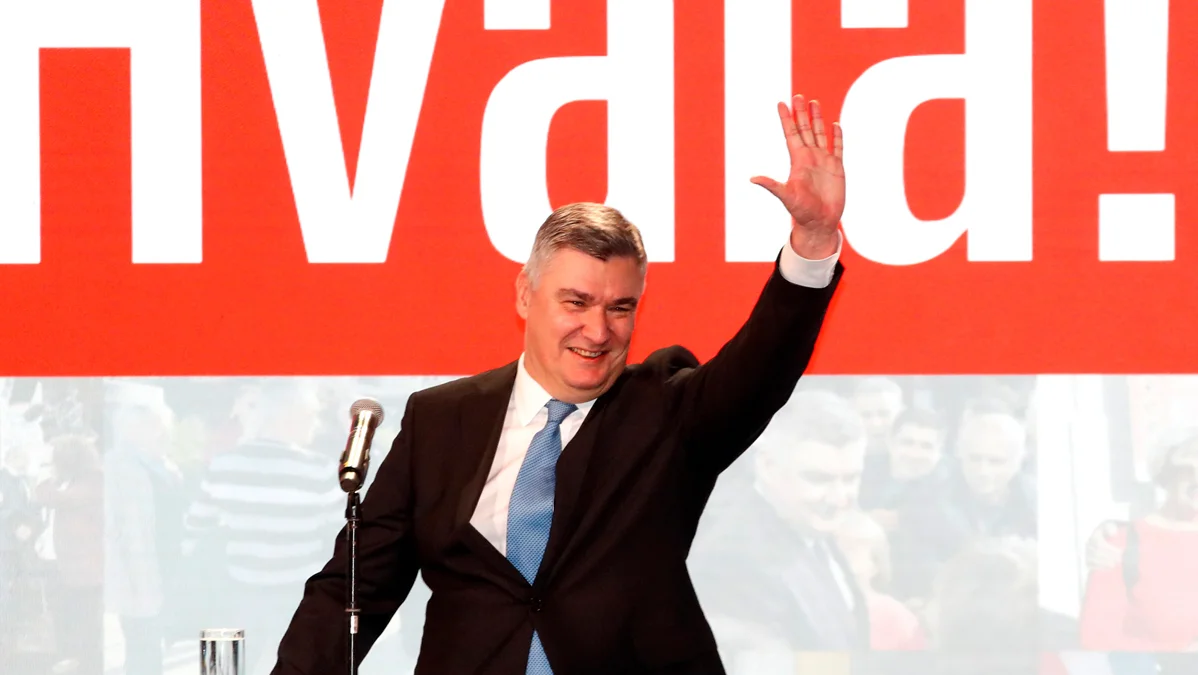
Zoran Milanovic at a post-election rally after the second round of the presidential elections in Zagreb, Croatia, January 12, 2025. Photo: Antonio Bat/EPA
At the moment the last polling station in Croatia closed this Sunday, hardly anyone doubted that the current president of the country, Zoran Milanovic, would become the winner of the election. Having received a result of 75%, the politician guaranteed himself the next five-year term, which, however, would be his last, according to the country’s Constitution.
Milanović is one of the most pro-Russian voices in Croatian and European politics in general. His sympathies for the Kremlin, which he saw as an important historical and cultural partner for Croatia, were known even before 2022. And the full-scale war unleashed by Moscow in Ukraine did not affect Milanovic’s position; on the contrary, it gave him the opportunity to unleash his anti-European and anti-Western rhetoric in full force, criticizing sanctions and accusing NATO and the United States of unleashing bloodshed.
However, the president in Croatia has modest powers compared to the country's prime minister. This position is now occupied by center-right Andrej Plenkovic, who supports European aid to Ukraine and the pro-European course of Zagreb.
The election results guarantee that the three-year bitter confrontation between the president and the prime minister in Croatia will continue. Why voters are satisfied with this situation and how it affects the country’s foreign and domestic policies - political scientist and expert on the Balkan countries Aleksandar Djokic looked into this especially for New Europe.
At the very end of last year, the first round of presidential elections in Croatia took place. No candidate then received an absolute majority of the votes, forcing the candidates into the second round two weeks later.
In both rounds, the undisputed winner was the left-wing populist Zoran Milanovic, who until 2016 led Croatia's influential Social Democratic Party (SDP). Milanovic received 49.09% of the vote in the first round of elections, which predetermined his resounding victory in the second round. He lost to Dragan Primorac, who scored 19% in the first round and 22% in the second round, formally an independent politician, but who received the support of the dominant party in the country - the Croatian Democratic Union (HDZ).
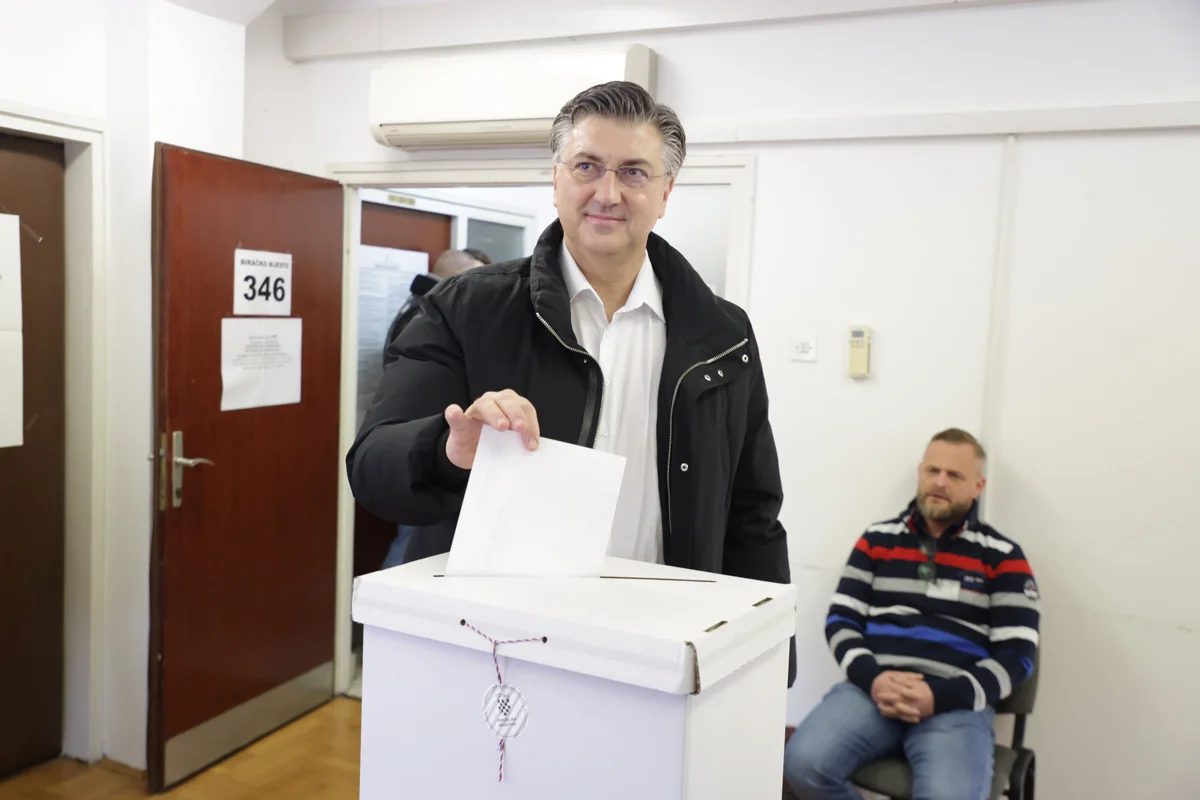
Therefore, even despite the formal absence of a representative of the HDZ party on the second round ballot, for the citizens of Croatia, these elections became a continuation of the confrontation between the Social Democrats represented by President Milanovic and the center-right bloc led by the current Prime Minister of the country Andrej Plenkovic.
Fight for the army
In the Western and Russian press, the confrontation between the president and the prime minister in Croatia is most often heard on the issue of the country’s foreign policy, namely support for Ukraine.
Milanovich's pro-Russian views are so well known that Vladimir Soloviev quotes him in his shows. “Washington and NATO are waging a proxy war against Russia through Ukraine. However, if you don’t have an ultimate goal, if you don’t have a plan, then this will end like Afghanistan,” this quote from the Croatian president was especially loved by the Russian propagandist.
The relationship between the Kremlin and Milanovic can be considered mutual. The Center for Information Resilience (CIR), an NGO that specializes in identifying Russian disinformation in Europe, published a report in early January on Moscow's attempts to influence elections in Croatia.
CIR believes that accounts “containing pro-Russian government images and hashtags” published content praising Milanovic on social media in “two waves”:
after he spoke out in October against the participation of Croatian troops in NATO campaigns in Ukraine, and after the first round of the presidential elections, when Milanović's victory was already obvious.
The proposal to strengthen the presence of NATO trainers in Ukraine with Croatian troops came from Andrej Plenkovic, the leader of the conservative HDZ who heads the country's government. Formally, the President of Croatia is the Commander-in-Chief of its Armed Forces, although operational leadership remains with the government. As in any parliamentary system, the powers of the prime minister in Croatia are much broader and more significant than the functionality of the president, but, nevertheless, the prime minister’s decision cannot be carried out without Milanovic’s consent, which caused Plenkovic to sharply criticize the actions of his colleague.
“It is no longer a question of defense, it is a strategic decision about where Croatia is located. It is with the West - with the EU and NATO - or, according to Milanovic’s logic, the country is a Russian “semi-ally” or a neutral state,” the prime minister said then.
Institutional conflict
In political science, the process of confrontation between the president and the prime minister in parliamentary systems is usually called “cohabitation”. In 2020, when Zoran Milanović became president for the first time, Andrej Plenković said that his opponent would face “tough coexistence.” And in general, this expression well describes the tense relations between Milanovic, the president, and Plenkovic, the prime minister, over the past few years in the republic.
In Croatia, the president has more of a formal than a real managerial role. The country's parliament has significant power in the legislative process, approves the state budget, and oversees the activities of the government. The Cabinet of Ministers, headed by the prime minister, exercises executive power and is accountable to parliament. The head of the country's government is the leader of the party that wins the election or a representative of a coalition of such parties in parliament. The president's influence on the legislative process is indirect, mainly through the right of veto, which can be overridden by an absolute majority in parliament.
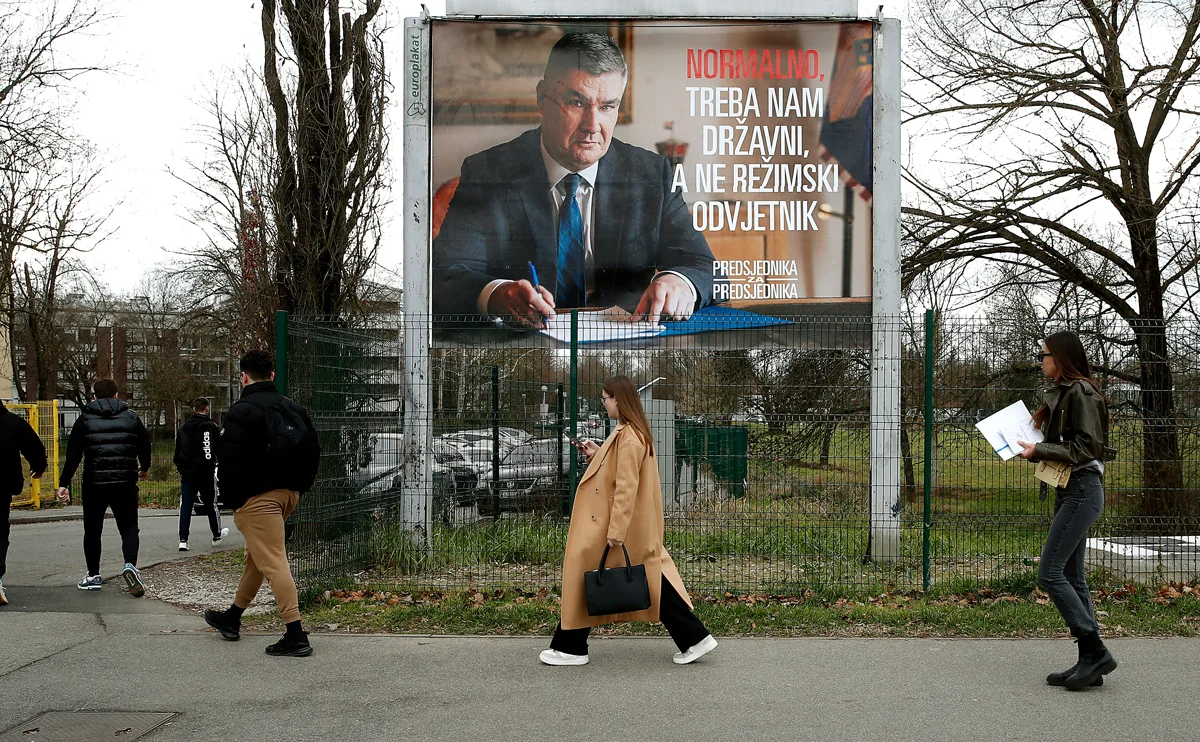
The role of the President in Croatia is important in two aspects.
Firstly, as mentioned above, he formally leads the Armed Forces of the republic. Secondly, the president represents the country on the international stage. Both of these aspects are actively used by Milanovic, including to promote his pro-Russian position.
The Croatian president actively participates in NATO forums and conferences where policy towards Ukraine is discussed. For example, at the alliance summit in Washington in July 2024, Milanovic stated that it is “important for Europe to maintain a dialogue with Moscow.”
The attention of the world media to such speeches by the president allows him to gain political points within Croatia, creating for himself the image of a peacemaker who stands for the national interests of the country.
Irreconcilable opponents
However, the confrontation between the current president and prime minister in Croatia is not limited only to foreign policy.
Zoran Milanović is a left-wing social-democratic politician who often does not shy away from populist attacks against the Croatian establishment. Despite the fact that he criticizes Croatian nationalism within the country, Milanovic himself often flirts with such political forces externally. For example, in 2021, he awarded orders to two units of the Croatian Defense Council that fought in Bosnia.
Even before 2022, Milanović was one of the loudest pro-Russian voices in Croatia, viewing Russia as an important cultural and historical partner. His criticism of Western support for Ukraine and military aid often coincides with Russian rhetoric. He has openly opposed further sanctions against Moscow, arguing that they harm European economies more than Russia.
Milanovic in general often expresses skepticism about international institutions and EU policies. He opposes international intervention and NATO expansion. In 2022, Milanovic gained notoriety when he came up with the idea of vetoing Finland and Sweden's accession to the Alliance until the election law in Bosnia and Herzegovina was changed. So he tried to support the Croat nationalists in Bosnia.
On the other hand, his political rival, Andrej Plenkovic, is Milanovic's polar opposite on a number of issues. The political platform of his HDZ party is based on conservatism, combining market reforms, support for the traditional family and rapprochement with Western institutions to ensure security and economic benefits for Croatia.
At the same time
Plenkovic is trying to balance between pro-Western rhetoric and traditional Croatian nationalism. And although in recent years he has tried to eliminate radical forms of nationalism from the CDU, nevertheless, now many of these politicians are part of the far-right Fatherland Movement
- Plenkovic's coalition partner in parliament.
In addition, Plenkovic strongly supports the further integration of Croatia into the EU, and he also brought the country into the Schengen zone. The prime minister supports Croatia's active participation in NATO, considering it a key issue for national defense, and advocates EU sanctions against Russia.
Balance point
It is likely that by voting for Milanović in the recent presidential elections, the Croatian electorate is providing a political counterbalance to the long-term rule of the HDZ in the country, at least in terms of foreign policy.
At the same time, voters clearly trust Plenkovic himself and his party more than the left forces in matters of the economy, social sphere and other domestic political issues. At least in the parliamentary elections last spring, where Milanovic tried to become the candidate for prime minister from the Social Democrats, his party received only 25.41% of the votes, losing to Plenkovic’s right-wing coalition.
Thus, consciously or forcedly, the Croats voted for the continuation of the “rigid coexistence” between the prime minister and the president, which will reach a new level after Milanovic’s victory and against the backdrop of increasingly active conversations in the West about the need to achieve a ceasefire in Ukraine.