Date
Author
Светлана Виданова, Татьяна Брицкая
Source

Preserved copy
Translated material
Road to the bunker
About a billion a year is spent on the renovation of bomb shelters in Russia. At the same time, 95% of objects are unsuitable for use; their repair will take decades
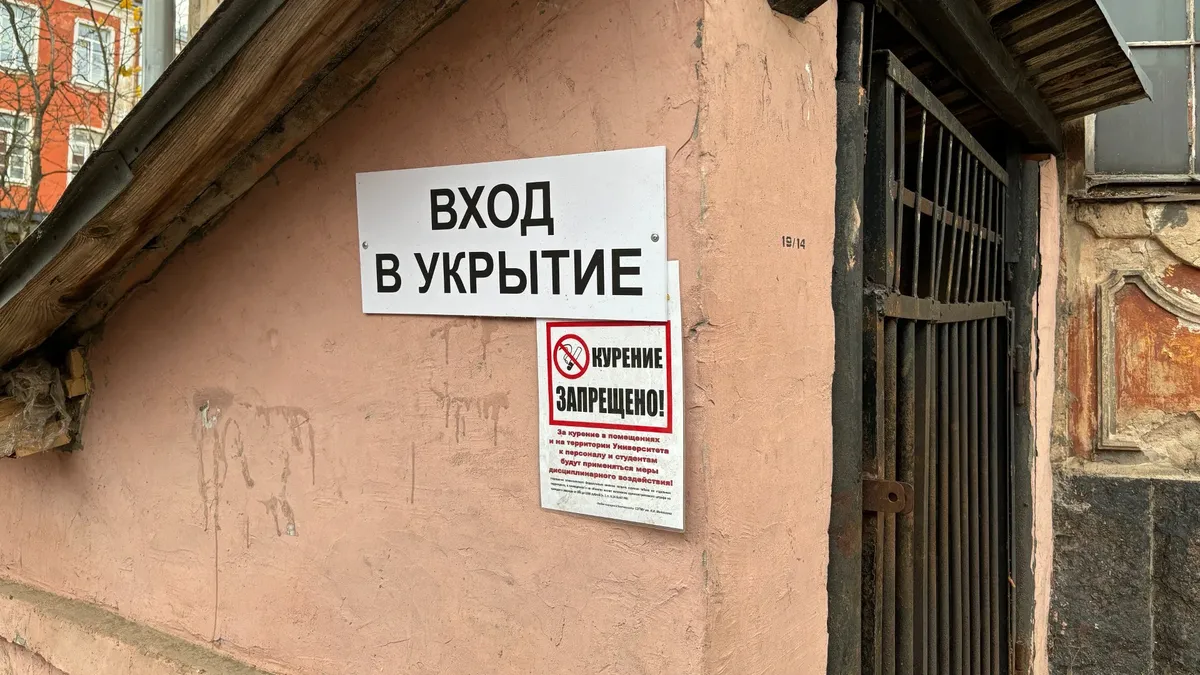
Photo: Alexey Dushutin / Novaya Gazeta
Russia spent at least 1.1 billion rubles on the creation and repair of bomb shelters in 2024. This figure was based on an analysis of government procurement and concluded contracts. And it is minimal, since we took into account in the calculations only those purchases where both the supplier and the final price had already been determined.
Three years ago, bomb shelters preserved from Soviet times were of interest only to stalkers. Their coordinates could be found on stalker forums. And nowhere else - as is known and paradoxically, the location of the bunkers is classified information.
The Pskov governor Vedernikov reminded him in his usual manner in the summer that the way to shelters would be shown, if anything, not to everyone. During his report to the Duma, he was asked about the location of the shelters by Yabloko deputy Gaiduk. Vedernikov refused to answer, saying that he would “never give” information of this kind, and in general, in this party of yours, “foreign agent” is “foreign agent.” If the absence in the law of a ban on “foreign agents” using shelters during shelling is a flaw in the State Duma, Vedernikov clearly outdid Volodin along with Piskarev.
So, where the bunkers are in Russia is unknown, but the number of such structures is no secret. In 2017, the Accounts Chamber counted them, it turned out to be 16,448. However, at the time of the inspection, auditors found very unexpected objects in the list of “protective structures” on the balance sheet of the Federal Property Management Agency. For example, this category included “15/59 shares” of some Nizhny Novgorod apartment.
Here is more data from the report: “The inventory revealed the presence in the treasury of the Russian Federation of 16,271 objects, state funding for the maintenance of which has not been provided for more than 20 years, which negatively affected the readiness of the objects to receive sheltered people.” In other words, most of the shelters simply fell into disrepair. The Federal Property Management Agency itself admitted in the documents submitted to the auditors: “About 95% of the objects are in unsatisfactory condition.”
Shelters are not subject to privatization. A private investor will not invest in them. That is, the treasury must allocate money. But they are not there all the time.
There is a tour of “captured NATO equipment” in 75 cities, as well as patriotic graffiti. In two years, 91 billion were found to instill patriotism in Russians! But there is not enough for shelter.
In the summer of 2022, the Russian government came up with a way to circumvent the ban on the transfer of bunkers to private owners. It developed a draft resolution on the transfer of shelters in peacetime for free use (they say, these same gratuitous users will put the facilities in order at their own expense). The explanatory note states: “The use of protective structures in modern conditions is, for the most part, not possible due to their unsatisfactory condition.”
True, the resolution was never adopted - events developed in such a way that the transfer of protective structures to anyone had to be forgotten - they became in demand for their intended purpose.
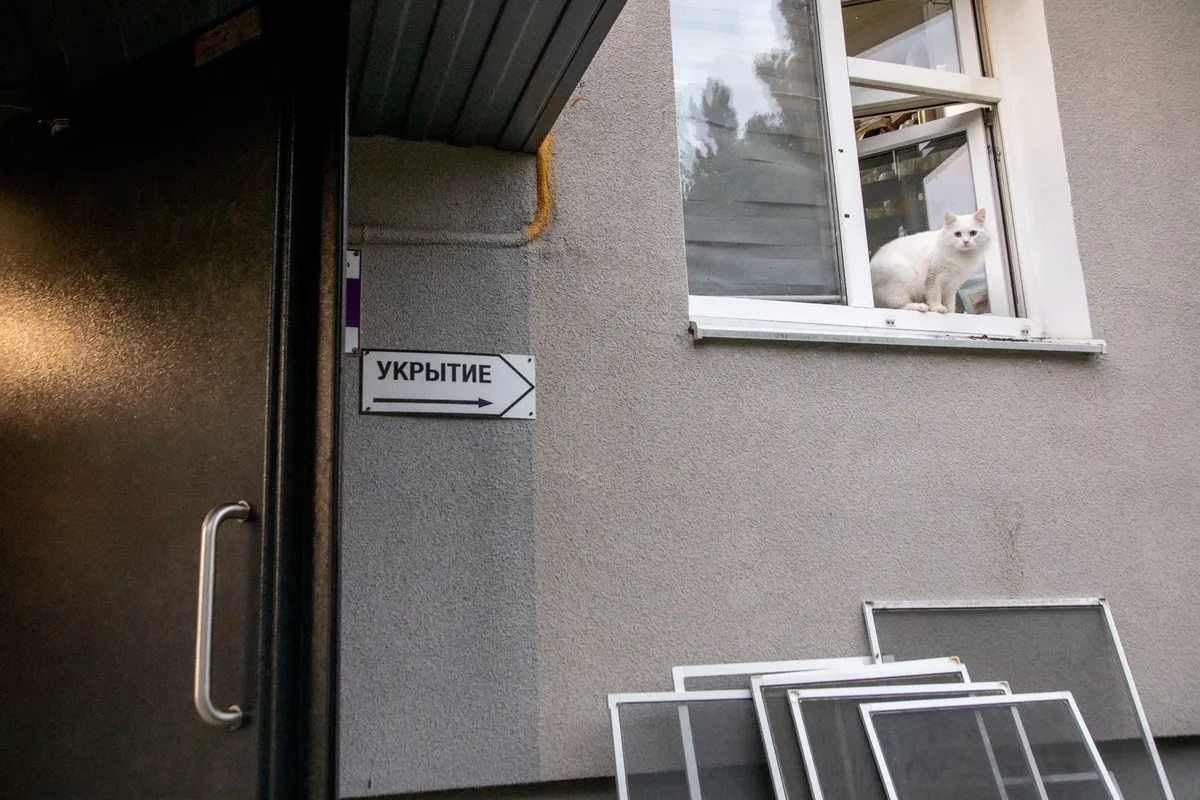
Sometimes local authorities do disclose the addresses of shelters—they are forced to do so. This is exactly what the Zhukovsky administration did after the drone attack, publishing on its website “a list of buildings with buried rooms.” Interactive maps are also publicly available, for example, in Simferopol and Novosibirsk. For comparison, in Ukraine, an up-to-date map of shelters is available directly in the government services application “Diya” (analogous to the Russian “State Services”).
While the state is protecting secrets from citizens, the addresses of bomb shelters that were found by volunteers and stalkers began to be published on private websites. With a note: “We cannot guarantee the condition of all shelters included in these lists.” The condition, however, is known from stalker photos showing oozing water (and sometimes other substances), debris and dirt.
Nevertheless, in 2022, the authorities began to enter into contracts for the renovation of shelters. In 2024, more than 400 such contracts were concluded.
In the 90s, the maintenance of shelters was carried out exclusively by FSUE Ekran. Now this happens on a competitive basis. For example, an inspection of an anti-radiation shelter at 10 sites in Krasnoyarsk is done for 279,202 rubles by the Chelyabinsk Center “Promstroyekspertiza”, and the same work for almost the same amount - 258 thousand rubles, but at only one site, in the Kamensk-Ural Medical College, is carried out by Magnitogorsk LLC "Vector". Well, the renovation of the basement in Suvorov, Tula region, will be done by a local individual entrepreneur for 647,266 rubles.
Air-raid shelters are being repaired, inspected and equipped throughout the country. At the same time, there are few contracts in the regions directly adjacent to the combat zone. Of the four hundred purchases we studied, less than 30 concerned such territories. So, only by February 2024 in the Belgorod region they started thinking about overhauling the bomb shelter of the Valuyskaya Central District Hospital (contract for 7,355,115 rubles). Last year, in Rostov and Novoshakhtinsk, first aid kits were purchased for shelters; in Bryansk, they conducted surveys of existing structures and signed contracts for their repairs. In total, at least 11 shelters in the regional center must be updated, and design and estimate documentation has been ordered for several more. This is a little more than 12 million rubles. A shelter for patients of the Belovskaya Central District Hospital in the Kursk region was to be renovated for 1.2 million; a modular shelter was bought in Shebekino for 175 thousand.
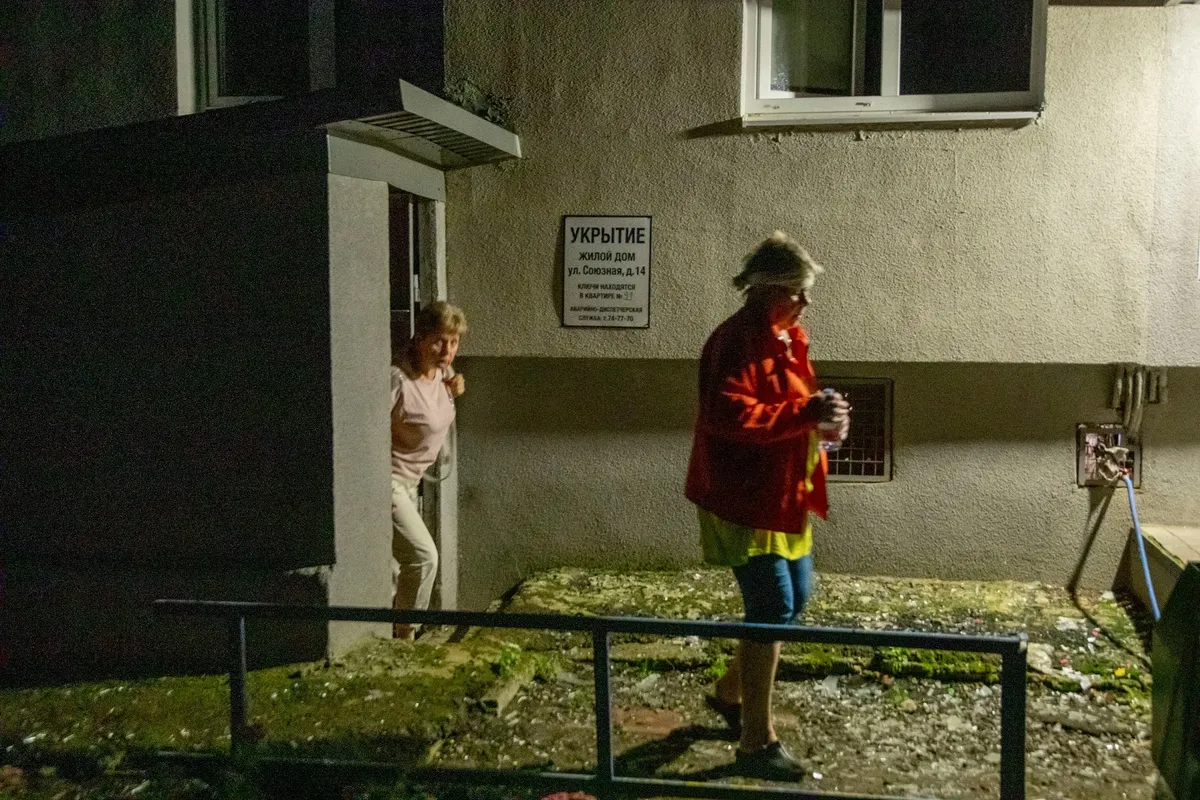
Against this background, contracts for the repair of a shelter in Yuzhno-Sakhalinsk costing the same 1.2 million or ordering design documentation for a shelter in Naryan-Mar for 8 million look unexpectedly. Agree, it is far from the line of military contact. However, everything depends on the region’s treasury - that’s where the money for bunker repairs comes from.
The poorer the region, the fewer suitable shelters its residents will have.
In the Artek children's camp in Crimea, they decided to deregister three shelters; the work to survey them was estimated at 282 thousand rubles. And this is not at all expensive, because the Izvestia publishing house, owned by the presidential administration, paid 9.9 million to deregister its shelter.
Here is another large purchase from the property manager - the Barvikha sanatorium spent 890 thousand rubles on three absorber filters, which should “purify the air from radioactive dust and bacterial aerosols, and from vapors of toxic substances.” In addition to filters, Barvikha bought seven wooden two-tier bunks.
The FSIN also remembered the need to protect prisoners from air raids. To do this, in Tyva, IK-1 purchased paint and nails for a modest 100 thousand to repair a shelter, and in the Novgorod region, the Federal Penitentiary Service of the Federal Penitentiary Service decided to install a door for 56 thousand rubles. In the procurement documents, the place where this door leads is named so that it is clear how it is actually used: “a utility warehouse (bomb shelter).”
Several shelters will appear at airports, which are regular targets for drone attacks. The Kazan airport ordered the renovation of the basement for 7.8 million, the construction of a shelter at the Tyumen airport terminal for 13.2 million, but the Sochi airport is paying 37.5 million just for the design of one.
Only half of the concluded contracts directly involve the repair of protection facilities. Then,
According to the roughest estimates, it turns out that it will take 80 years to bring all substandard (according to the state itself) Russian shelters into working order at this rate.
Russian media, not without irony, repost the news about the Norwegians, who will henceforth oblige developers to design a mandatory in-ground shelter in every new high-rise building. The Kingdom's Minister of Justice and Emergency Situations Emilie Mehl said: “The situation around us is unpredictable. We must take care of the civilian population in case of a worst-case scenario." Mehl is concerned that the country's current shelter capacity is only sufficient for 45% of the population. In Finland, shelters are designed for 90% of the population, in Sweden - for 70%.
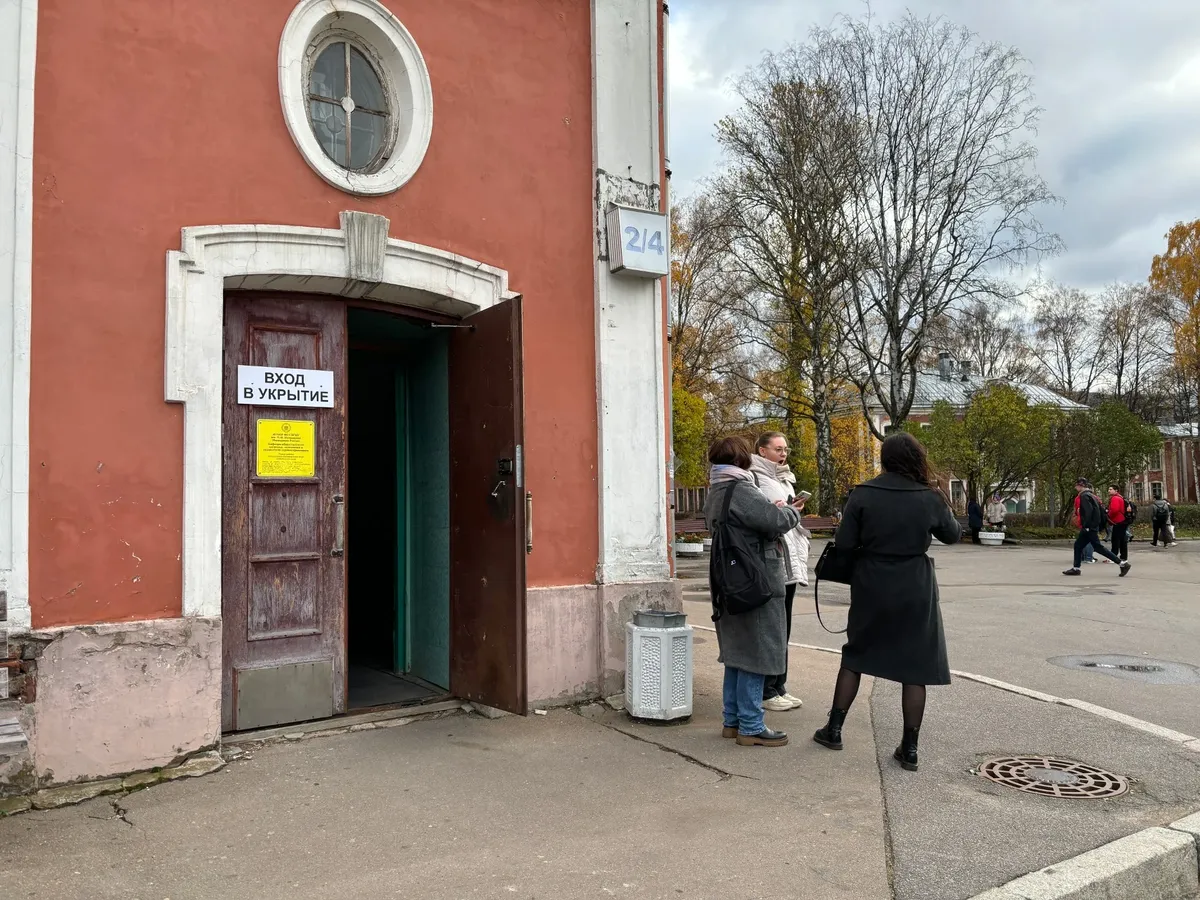
And if 95% of the country’s protective structures, or more than 16 thousand, are unusable, and in the most optimistic scenario only a few hundred are repaired per year, what percentage of Russians will find shelter in the event of a threat?
Demand creates supply. Sign of the times: individual bomb shelters are advertised on the Internet on a turnkey basis; you can order them directly to your site. Ascetic, for four people with one exit - from half a million. For six people with 20 days of autonomy, high ceilings and two exits - from 7.5 million, but paid for it - and in a month you can move in if something happens. “A bomb shelter on your site in just 1 month!” — there is still some kind of absurdity in the optimism of the advertising exclamation. But you can become the owner of a bunker, taking the salvation of your own life into your own hands. True, the duration of this life—the autonomy of this life—is allotted according to the project only 20 days.