
Translated material
Israel and Hamas agree to truce
The terrorists will release the hostages in exchange for Palestinian prisoners. But Hamas will actually retain power in the Gaza Strip
Listen to the audio version of this text on Radio Medusa
 |
An agreement was signed in the Qatari capital Doha on a ceasefire in the Gaza Strip and the release of Israeli hostages taken by Hamas terrorists in exchange for Palestinians in Israeli prisons. However, it is too early to say that the war, which began on October 7, 2023, is over: the deal between Israel and Hamas includes three stages, of which only the first has been agreed upon so far.
Hamas will release 33 hostages. Israel - hundreds of Palestinian prisoners
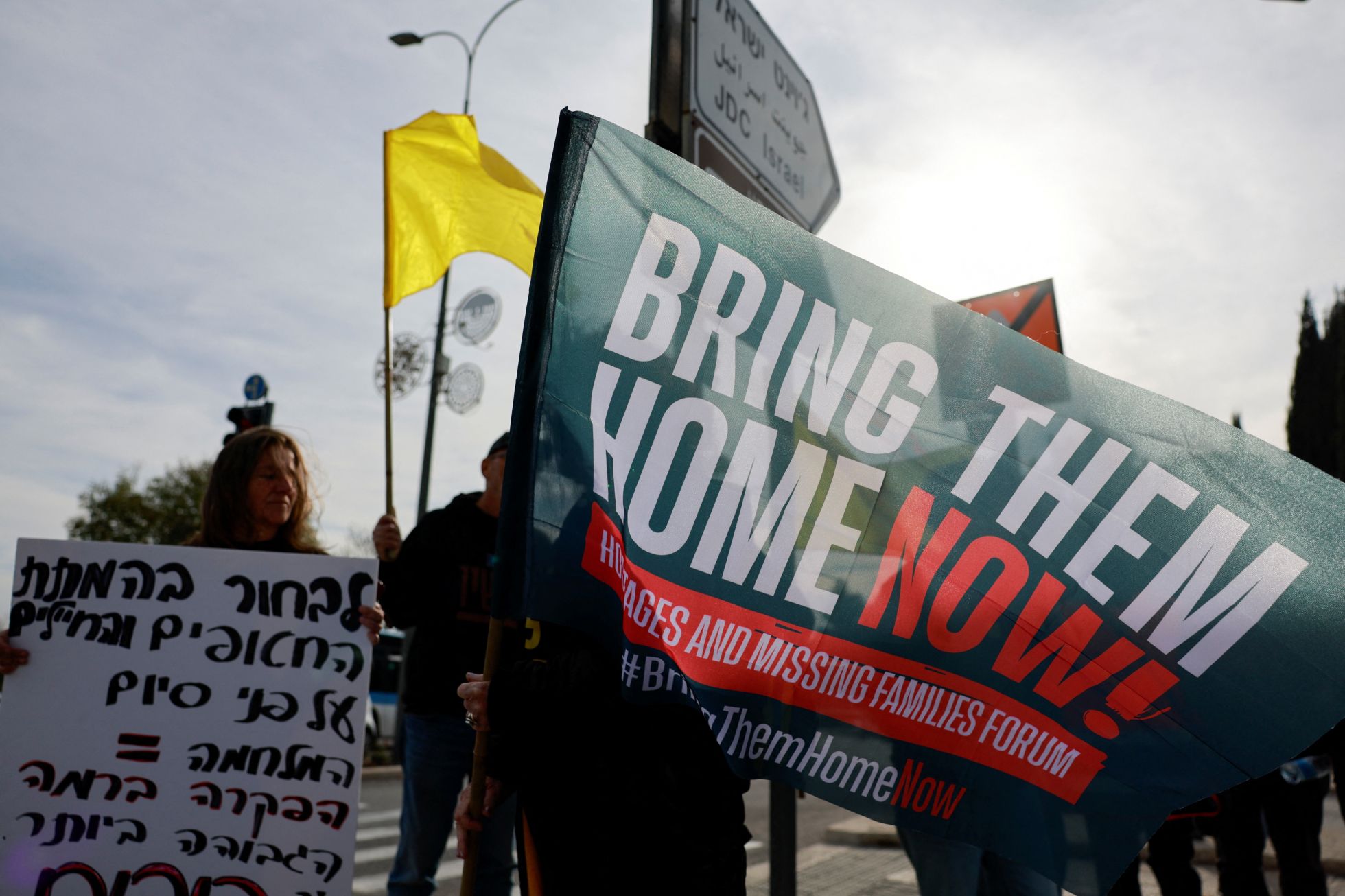
In the first phase, which is expected to last six weeks, a ceasefire will be established and 33 of the 98 Israelis held hostage in the Gaza Strip, primarily women, children and the elderly, will return home. According to Israeli data, most of them are alive - but among these 33 hostages there are also dead, whose bodies remain without burial.
In exchange, Israel will release several hundred Palestinians from prison, primarily women and minors. According to the Dubai TV channel Al-Arabiya, 30 prisoners will be released for each civilian hostage, and 50 for each military personnel. Among the released Palestinians will be those convicted of terrorism.
The first exchange is expected to take place on Sunday, January 19th.
During the first phase of the deal, Israeli troops will gradually withdraw from densely populated areas of the Gaza Strip, including the so-called Netzarim Corridor, a cordon dividing the strip into northern and southern parts. Residents of the north who were evacuated to the south will have the opportunity to return to their homes. Representatives of Qatar and Egypt will check them for weapons. The supply of humanitarian aid should also increase significantly - up to 600 trucks per day.
During this period, Israeli troops will remain in a buffer zone in the Gaza Strip no further than 700 meters from the border. They will also remain in the Philadelphia Corridor, a strip of land along the border between the Gaza Strip and Egypt. The Israeli side has repeatedly stated that control over this territory is fundamentally important for it, since Hamas can smuggle weapons across the border.
Then the war may resume
The second stage of the deal is also expected to last six weeks. Its terms have not yet been agreed upon; negotiations will have to continue during the first stage. The parties did not undertake to maintain the ceasefire at the end of the first stage. The mediators - Egypt, Qatar and the United States - gave only verbal guarantees that they would use their influence on both sides to prevent a resumption of hostilities.
In the second phase, Hamas is expected to release all remaining hostages, including male soldiers. Israel will release several hundred more Palestinians in exchange. The second stage should end with the complete withdrawal of Israeli troops from the Gaza Strip.
Some of the liberated Palestinians will be banned from the West Bank, and some will be deported from Palestine to other countries (presumably mainly Qatar and Turkey).
Among the Palestinians who will be released will not be Marwan Barghouti, one of the leaders of the Fatah movement and the most popular politician in Palestine, who is serving a life sentence in Israel for terrorism. Hamas, as part of the deal, tried to obtain the body of the deceased leader of the movement, Yahya Sinwar, but Israel refused.
Hamas will effectively retain power in the Gaza Strip
In the third stage (approximately three months after the agreement enters into force), the reconstruction of the Gaza Strip should begin. It is expected that Egypt, Qatar, the UN and other states and international organizations will oversee this process within three to five years.
The agreement makes no mention of any political or administrative changes in Gaza. That is, Israel tacitly admitted that for the foreseeable future Hamas remains the de facto power in the sector and it is with it that they have to negotiate on the fate of the hostages, territorial control and humanitarian assistance.
Even before the official publication of the terms of the agreement, this fact caused sharp discontent among some Israeli politicians, including the leaders of the far-right wing of the ruling coalition - Minister of National Security Itamar Ben-Gvir (Jewish Power Party) and Minister of Finance Bezalel Smotrich (Religious Zionism Party). . They and their supporters insist that any agreement with Hamas would mean the effective defeat of Israel and would give the terrorists the opportunity to regain their strength and launch another attack similar to the attack on October 7, 2023.
Prime Minister Benjamin Netanyahu has repeatedly said that one of the goals of the war, along with the release of the hostages, is the complete destruction of Hamas.
Ben-Gvir promised that if the deal is approved, his party is ready to leave the ruling coalition. According to him, in the previous year he had repeatedly managed to disrupt the deal with such threats. His departure would mean the loss of the coalition's majority in the Knesset and the fall of Netanyahu's government. The prime minister had to refuse a truce with Hamas in order to maintain power.
However, by the end of 2024, the Right Statists party joined the coalition, and now it will be able to maintain a majority even if Ben-Gvir leaves. If Smotrich follows Ben-Gvir’s call and also leaves the coalition, the government will most likely have to resign.
For the deal to come into force, it must first be approved by the military-political cabinet (a commission within the government headed by the prime minister), and then by the entire government. Netanyahu secured the necessary majority in these votes in advance.
After this, the list of Palestinian prisoners to be released, prepared by the Israeli Ministry of Justice, will be officially published. Within 48 hours, any Israeli will be able to challenge the release of any of them in the Supreme Court. Such appeals will almost certainly happen - and will almost certainly be rejected by the courts, as has happened more than once in previous exchanges. After this, the parties will be able to begin implementing the transaction.
Donald Trump played a key role in concluding the deal
Since his victory in the US presidential election in November 2024, Trump has made several harsh statements about the situation in the Middle East. Their overall message was that Hamas must release Israeli hostages before its inauguration on January 20, 2025.
Among the hostages remaining in Gaza, seven have American citizenship.
Trump appointed businessman and old friend Steve Witkoff as his special envoy to the Middle East. He participated in the latest round of indirect negotiations between Israel and Hamas, along with official representatives of the mediating states - Egypt, Qatar and the United States.
Presumably, it was Trump's threats that made Hamas more accommodating and helped bring the negotiations out of a deadlock in which they had been stuck for more than a year. As for Israel, Trump was likely able to convince Netanyahu (they have been on friendly terms for about 40 years) to make counter-concessions in order to achieve strategic goals.
One of these goals may be to jointly confront Iran. Another is the normalization of Israel's relations with the Arab world. During Trump’s first presidency (2017–2021), the so-called Abraham Accords were signed with his mediation—they included the normalization of Israel’s relations with the UAE, Bahrain, Morocco and Sudan.
In 2023, before the Hamas attack on October 7, negotiations were underway to normalize relations with Saudi Arabia. With the outbreak of the war in Gaza they were frozen. Subsequently, the crown prince and de facto ruler of Saudi Arabia, Mohammed bin Salman, stated that he considered the creation of a Palestinian state a condition for resuming the normalization process.
It is too early to sum up the results of the war. But here are some of them anyway
The war began with the Hamas attack on Israel on October 7, 2023. About 1,200 Israelis died then, and more than 250 were captured and taken to Gaza.
Israel responded by launching Operation Iron Swords. According to Gaza's health ministry, which is controlled by Hamas, more than 46,000 residents of the strip have been killed during the war. The agency does not differentiate between civilians and militants. According to the Israel Defense Forces, about 17 thousand Hamas terrorists were killed (in total, according to various estimates, from 20 to 40 thousand). Israeli combat losses amounted to about 1,000 people.
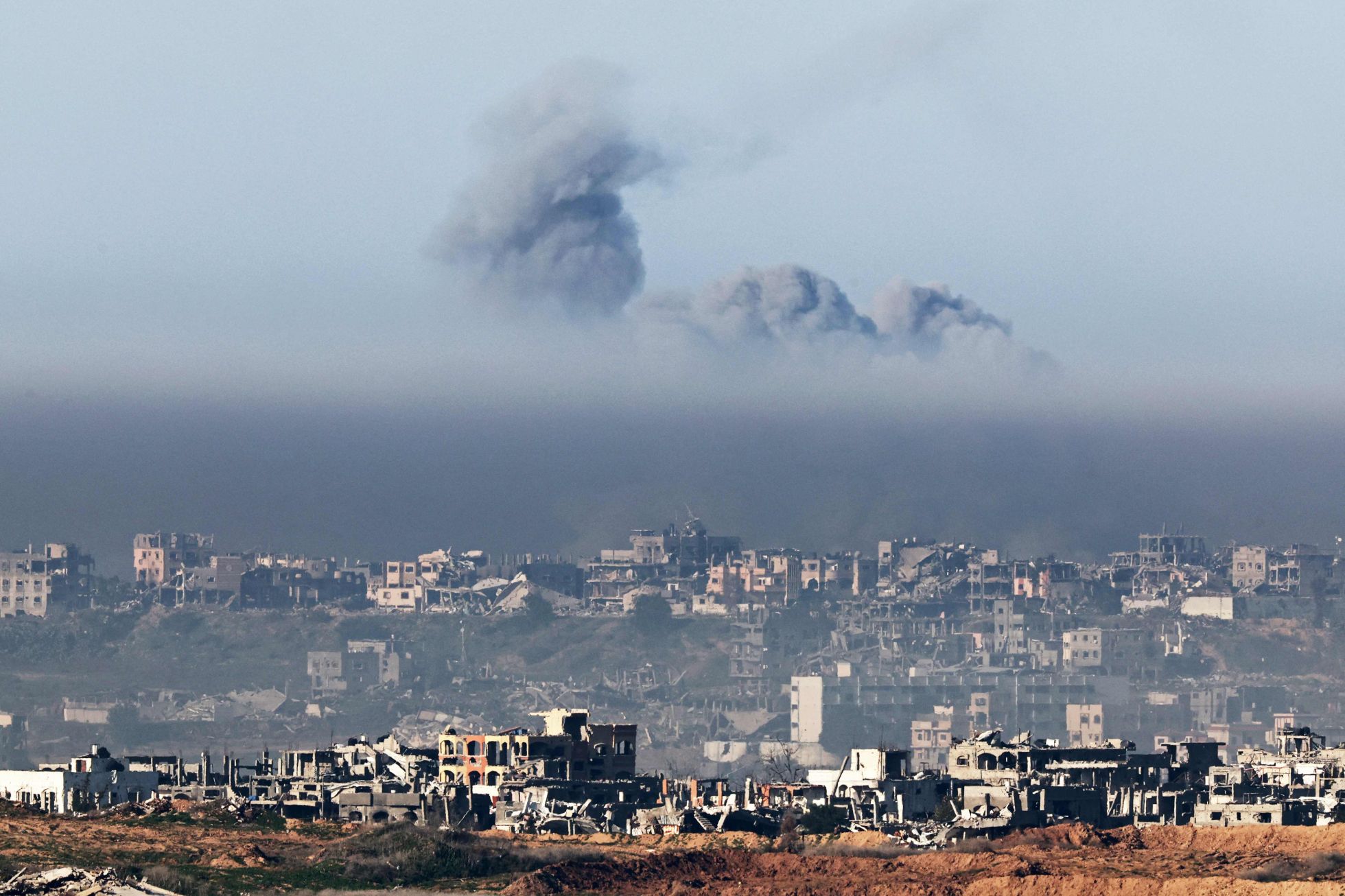
Almost 2 million people - almost the entire population of the Gaza Strip - were forced to leave their homes. Mortality has increased significantly due to lack of clean water, food and access to medical care. More than 60% of buildings in the sector are completely destroyed or significantly damaged.
Back in December 2023, South Africa filed a lawsuit against Israel with the International Court of Justice, accusing it of genocide of Palestinians. The investigation into this case continues. In November 2024, the International Criminal Court issued arrest warrants for Israeli Prime Minister Benjamin Netanyahu and former Defense Minister Yoav Galant on charges of war crimes and crimes against humanity during the war in the Gaza Strip.
Hamas has lost many of its leaders during the war, including Yahya Sinwar, Mohammed Deif and Marwan Issa, who led the October 7 attack, as well as Ismail Haniyeh, the organization's most important political figure.
For Israel, this war has already become the longest in its history: it lasts 15 months. Previously, the longest war of independence was considered to be the war of independence of 1948–1949, which lasted 10 months.
"Jellyfish"