
Translated material
“Tell Me the Movie” by Lone Scherfig – still on screens
Tube adaptation of the nostalgic novel by Chilean writer Hernán Rivera Letelier
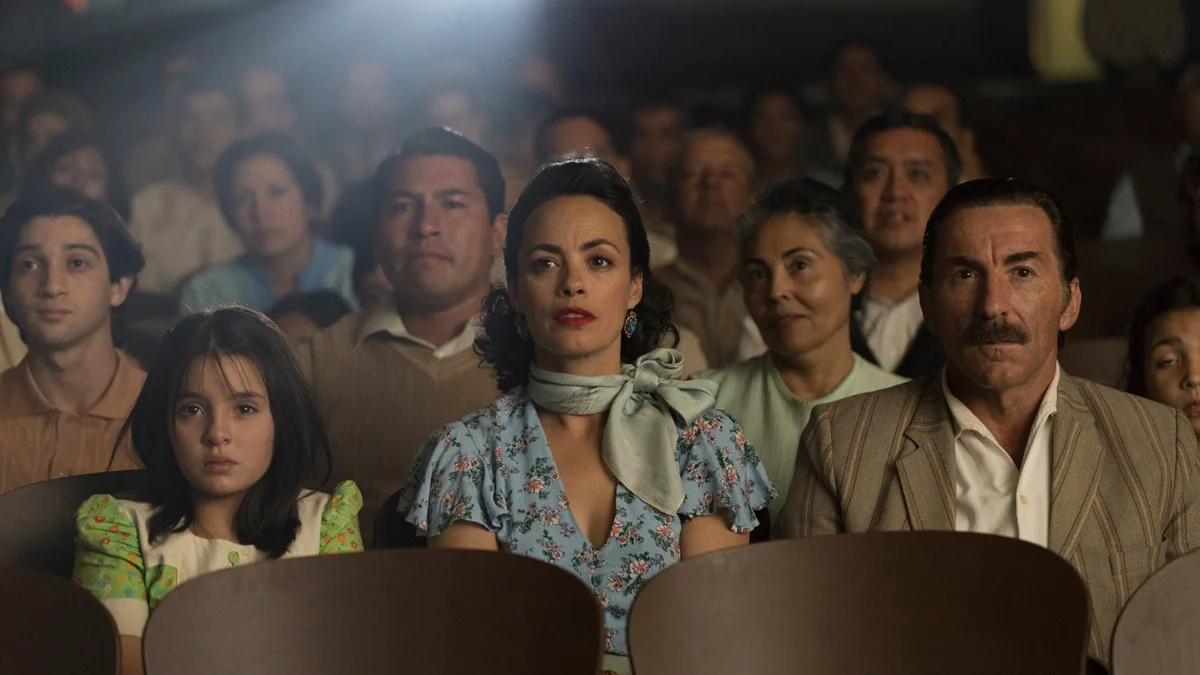
Still from the film “Tell Me the Movie”
Movies about movies are often sentimental and tear-jerking, like Tornatore’s “New Cinema Paradiso.” Lone Scherfig connects the romantic fictional world of the screen with pictures of unsmooth reality.
Maria Margarita's coming-of-age novel takes place at the turn of the 1960s and 1970s in the heart of the Chilean Atacama Desert, where a small mining town has grown up in spite of nature. With a cinema and a brothel - the main entertainment of the residents. While the mine is working, life is glimmering in the city. But the mine also brings many troubles. After one of the accidents, the father of a large family, Papa Medardo (Antonio de la Torre), loses the ability to move. With the help of neighbors, a wheelchair is constructed for him from scrap materials. In lack of money and disappointment (no compensation), cinema is the last outlet.
The whole family loves cinema selflessly and unselfishly: parents, three sons and daughter Maria Margarita (Alondra Valenzuela as a child, Sarah Becker as an adult, both excellent) are diligent viewers. Mama Maria Magnolia (the only star, Berenice Bejo, does not stick out herself, fits neatly into the general Spanish-speaking ensemble of actors) even before the advent of cinema, she adored radio series. Frozen with a knife over the cutting board in the kitchen, she is ready to cry if a certain Juan Pablo does leave Esmeralda, but suddenly changes her mind... She tells her children not fairy tales at night, but the events of the next episode.
And if the brothel is a dark and attractive place of sin, then the opened cinema is almost a temple, and when going there, the Medardo family puts on their best Sunday clothes. In a cinema, the screen is covered with a curtain, the opening of which the audience waits with excitement. They experience the problems of movie characters as if they were their own. There is no longer enough money to go to the cinema with the whole family. And then Maria Margarita discovers a rare gift: retelling and acting out Hollywood films that she saw at the local cinema in front of her loved ones and neighbors. The story is told from the perspective of the main character. Maria Margarita performs entire performances in front of the public with available materials (from a ball to sheets). She sobs over the dying Spartacus, who in the last minutes of his life hears that he is free. She loves - like Shirley MacLaine and Catherine Deneuve.
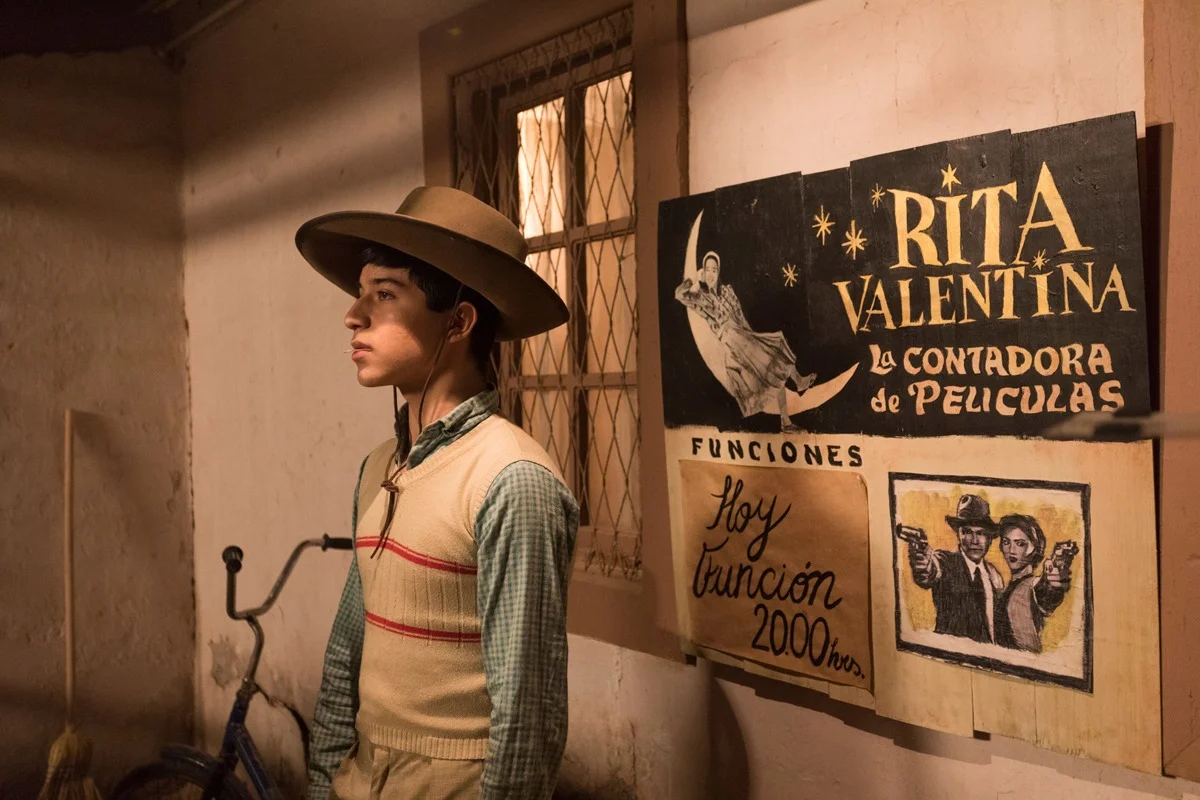
Through her eyes we see legendary Westerns. For example, “The Man Who Shot Liberty Valance” with the idol of generations John Wayne. Or the classic comedy "The Apartment" with Jack Lehman and Shirley MacLaine. Or the adventure dramedy “Marcellino, Bread and Wine.” Musical "The Umbrellas of Cherbourg".
At some point, the neighbors loved her “retellings” so much that they were willing to pay for these “conversation sessions” with the cinema, and the girl became the star of the town. Maria has her own intimate relationship with the screen. Sometimes she speculates, completes films at the behest of her heart. And in the textbook “The Apartment,” instead of the elevator operator Shirley MacLaine, she already sees her mother, who also ran away from home in search of a dream. Maria herself is partly confused between the spaces of the screen and life, like Cecilia from Woody Allen’s “The Purple Rose of Cairo”: she runs away from reality, hides in a dark cinema hall. Misses his chance to have a family.
Scherfig integrates social problems into this semi-fantasy plot, showing not only the harsh working conditions in the mine, but also the country approaching collapse. And even the failure of the revolution, the coming to power of the junta. But all this is just background. Moreover, it is optional.
The best thing in the film is a story about fantasies on the theme of cinema, a story of passion and undivided love for cinema, because Maria’s cinephilia, at least for the duration of film sessions, made her happy.
Daniel Aragno's camera shows us how the Atacama Desert comes to life and how the town with a cinema in the main square is gradually dying, which is also empty and dilapidated.
A movie about our transformations and waking dreams, about escaping from an ugly reality into a parallel world illuminated by the beam of a film projector.
MORE ABOUT CINEMA
Larisa Malyukova runs a telegram channel about cinema and more. Subscribe here .