
Translated material
It depends on what is in your name
Whether religion can be a source of freedom does not depend on the Church. “Positive” and “negative” theology: creativity or duty
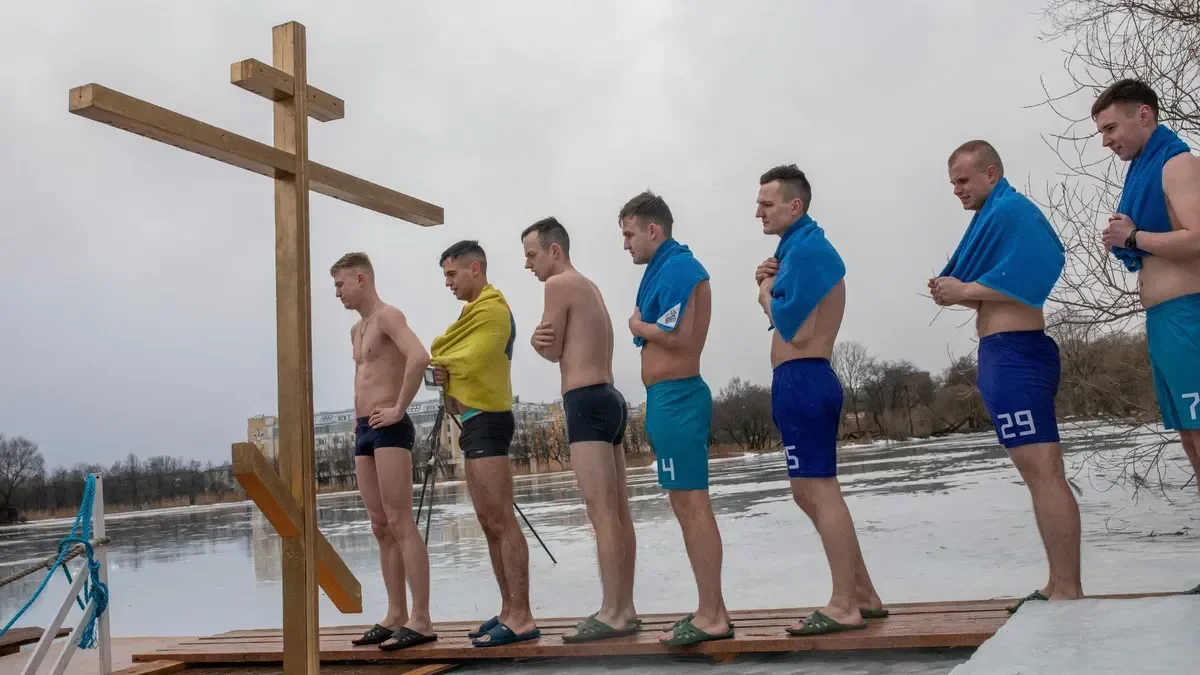
There is renewed talk about the need for a deeper integration of Orthodoxy into social life. The thought immediately arises: how much more? In Russia, a conservative course has been chosen at the state level and is enshrined in the concept of “traditional Russian spiritual and moral values.” And the restoration of the idea of the “third Rome” as the basis of the Russian state has a religious origin.
True, it is worth emphasizing: the conservative “lean” is not a specific feature of Russian society, and it has not only political reasons. The scale of global catastrophes and technological breakthroughs, which radically change ideas about social opportunities, are pushing many to seek support in “traditional” values. Yes, not everyone can accept the prospect of carrying children in an artificial womb and similar innovations.
But what can religion, specifically Orthodoxy, give to a modern Russian?
The Gospel story teaches spiritual heroism in extreme conditions: it tells about the path of Christ to Golgotha and his miraculous resurrection from the dead. However, it does not teach ordinary life in everyday life. The rules of life for a Christian were introduced into use by the fathers of the church and enshrined in the Middle Ages during the period of the merger of secular and ecclesiastical authorities. In collaboration with secular power, the church guarded the interests of the state and its elites. In fact, the regulation of the life of the common people at all levels was subordinated to this goal; the privileged classes lived differently from the common people.
What kind of chastity, for example, can the “right of the first wedding night”, practiced under feudalism, tell us about?
In this regard, the question of whether it is good to live according to the rules invented in the cultural, political, economic, and medical conditions of the Middle Ages sounds meaningless. Of course, the institution of the church would disappear if it were not brought at least “on a cosmetic level” into line with the cultural realities of modern life. In modern Orthodoxy there are no convincing explanations, for example, why women are not allowed to the altar, while the reform of Catholicism after the Second Vatican Council in 1994 abolished this ban.
The epistemological basis of a religious doctrine is its most important foundation. Already at the stage of patristics, cataphatic (positive) and apophatic (negative) theology was formed. The latter goes back to the ideas of Plotinus, who introduced a mystical stream into ancient philosophy, which was based on reason. Plotinus owns the doctrine of the impossibility of knowing the Divine by logical reason. We can only judge what God is not, since he simply does not correspond to logical laws, but we can merge with the reality of his existence in ecstasy. This approach, of course, is not typical for orthodox Christianity and the church, which “educated” the people in the Middle Ages in the absence of any access to information.
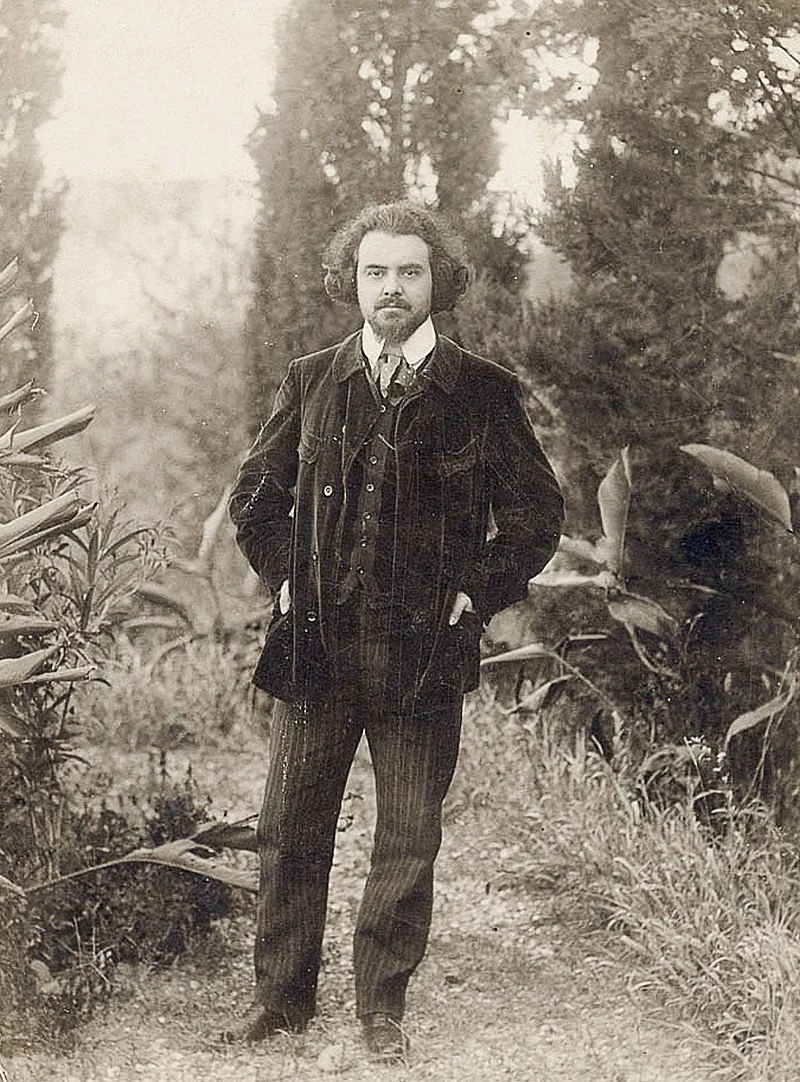
One of the largest European mystics, who had a great influence on the Russian religious philosopher Nikolai Berdyaev, belongs to the negative tradition of interpreting God. Both Meister Eckhart and Berdyaev were condemned by the official church for their ideas. However, the close connection of their ideas with the canonical gospels cannot be canceled. At the center of one of Eckhart's sermons is the Gospel parable of Mary and Martha. Martha embodies service to others, Mary - the impulse from the shackles of the material world. And only in such a state, according to Meister Eckhart, God is revealed to us, we discover the spark of God in our soul - we gain spiritual energy for creativity and love. Christ also favors Martha, but says that Mary’s spiritual fervor is exactly what he expects from a believer above all. To put it simply, fasting and living according to the rules will not make a Christian out of a person. “Whoever loses his life for my sake will find it,” says Christ in the Gospel of Matthew.
Christianity in its ideological core, to put it briefly, is non-sociocentric, and therefore placing earthly service at the center of Christian ethics is doubtful. The ideal of service and the ethics of duty are very archaic and associated with the collectivism of tribal life.
As a teaching, the ethics of duty was already developed in Stoicism. The specifically Christian concept of “sin” does not imply an act contrary to a social norm or public duty: sin is an act contrary to the will of God. The main commandment in Christianity is “love God.” And only then: love your neighbor as yourself. But first - yourself in God. If a person, created in the image and likeness of God, loves God, he also loves the image of God in himself. This is where St. Augustine’s famous revelation “Love and do what you want” arises. The two main attributes of God in Christian theism are inexhaustible love and creative power. The first is associated with the hypostasis of God the Son, the second - with God the Father. The Holy Spirit is the field of communication between them. And only from these two premises - love and creativity - can service come. There is no love and the moral concept of service collapses. Service devastates, and its bearer turns into a proud man with dull eyes and downturned corners of his mouth.
The images of Mary and Martha also presuppose two different pictures of the world. In one they pull the burden or curry favor, in the other they do what God leads a person to; a person is able to grasp this call by listening to his heart. This is the basis of the “Philosophy of the Heart” by the Russian religious thinker P.M. Yurkevich. And this is a very important nuance for Orthodoxy, which is more “intuitive” than Catholicism. We can get a society of superiors and subordinates - and a society of creators. A world that breeds out of a sense of duty, and a world in which the spark of God does not go out if you enter into it with your heart. These are two different social ontologies, and both are presupposed by the same Christianity.
Prominent religious thinkers, of course, understood that moral choice between good and evil is impossible without freedom, no matter how sophisticatedly they linked it with the doctrine of Divine Predestination.
Church Father Augustine the Blessed, humanist Erasmus of Rotterdam, and Russian existentialist Nikolai Berdyaev honed this idea. Altruism, the main Christian ethical value, can only be the result of personal choice in conditions of spiritual freedom.
Society does not stand still and periodically needs to update its foundations. It requires us not only to heroically accept the inevitable, our personal calvary, it requires us to be socially creative. We need the “Spark of God” so that, harmoniously developing ethical, value-based, scientific and pragmatic knowledge, we invent new humane forms of social connections, and not drag ashes into the future under the guise of “tradition”, which will never become fire.