
Translated material
From the museum to the military registration and enlistment office
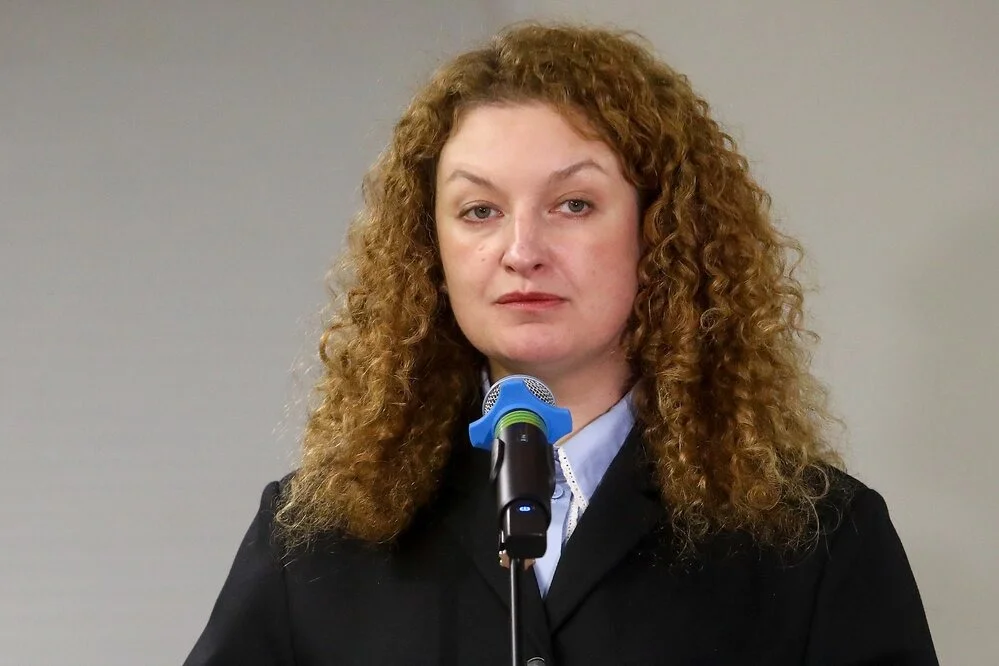
Anna Trapkova - director of the Gulag Museum: how her experience in managing the Museum of Moscow can affect the exhibition and attitude towards historical memory
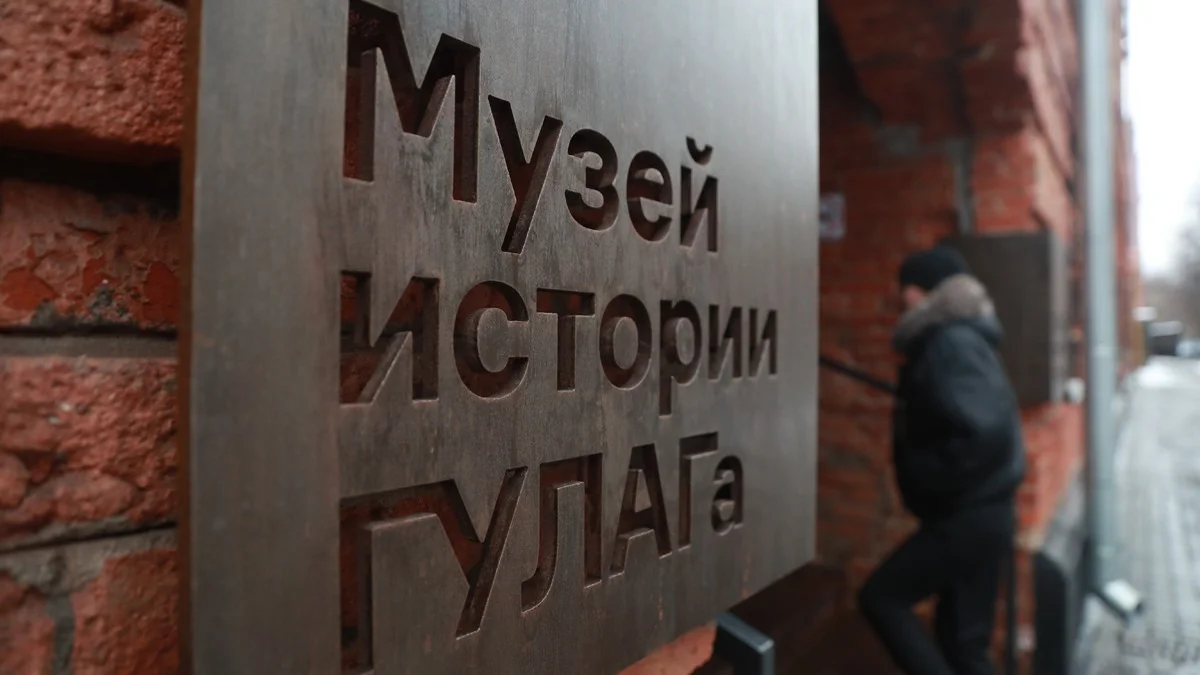
Photo: Sergey Fadeichev / TASS
On January 13, it became known that Anna Trapkova, who has been holding the position of director of the Museum of Moscow since 2019 to this day, has become the new director of the Gulag Museum. At the same time, two months ago the Gulag Museum was temporarily closed under the guise of fire safety violations. In artistic circles they say that Trapkova was made an offer that supposedly could not be refused. This appointment raises questions about the direction in which the Gulag Museum will develop, given its historical and political significance. Whether the reformation of the museum towards a more “safe” and controlled version of history is possible, or whether it will retain its original state - time will tell, but for now it remains to study Trapkova’s biography and build forecasts based on it.
Anna Trapkova began her career in state art institutions from the position of deputy director of the department of state support of art and folk art of the Ministry of Culture of the Russian Federation. In the period from 2012 to 2013, while holding this post, Trapkova supported the idea of national culture: her activities during that period were focused on promoting folk art as a fundamental element of cultural policy. Today, the focus on “folk” art has become not just a priority, but a kind of mandatory norm in the state cultural strategy.
In 2019, Trapkova became director of the Museum of Moscow, which is subordinate to the Department of Culture. This means that any public activity of the museum is under strict control by government agencies.
The program policy of the museum, the choice of exhibitions and events inevitably pass through the filter of official ideology - and Trapkova, as a loyal and corporate employee of a government institution, fulfilled the demands issued from above.
For example, the Museum of Moscow, as one of the state institutions, was ordered to fire employees who signed the pacifist letter of cultural workers that appeared after February 24, 2022. We know of at least one former employee of the Museum of Moscow who was fired.
There are also known cases of artists being tested at the private fair of contemporary young art Blazar, which is held annually at the Museum of Moscow. Fair employees sent messages to artists about the need to undergo an external stage of verification of participants. The names of the artists ended up on some checklists of the Department of Culture, among which, probably, were the signatories of that very letter from cultural workers.
Most of all, the Museum of Moscow under the directorship of Anna Trapkova was remembered for an event that deserves to go down in the history of the institutional system of contemporary art in Russia: the installation of a recruiting station on the territory of the museum.
At that time, military registration and enlistment offices were opened not only there, but also in the Viktyuk Theater and the Museum of Heroes of Russia and the Soviet Union. The Darwin Museum, originally included in the list of “military registration and enlistment museums,” found the strength to refuse the proposal. This happened in September 2022, when partial mobilization was announced. The installation of a military registration and enlistment office in the museum's courtyard is a sign of the overt militarization of public space. This event became the highest point of the involvement of the art institute in support of the repressive state machine - there was nowhere else to go. Against this background, even the propaganda of Russian national art looks relatively harmless. And the Museum of Moscow in artistic circles stuck with the nickname “Museum-military registration and enlistment office”.
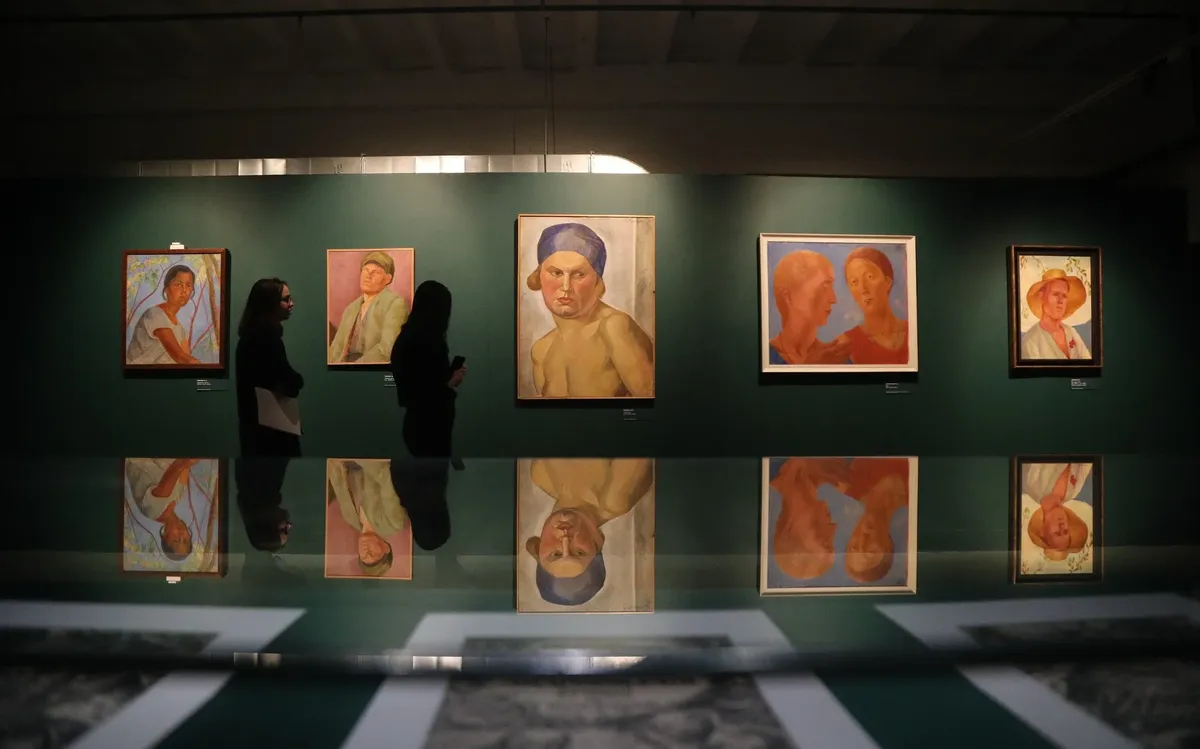
Meanwhile, curator and senior researcher at the Museum of Moscow Alexandra Selivanova shared on social networks the process of working on a new permanent exhibition. The exhibition “The History of Moscow from Ancient Times to the Twentieth Century,” opened in December 2024, judging by the official statement, is focused on the culture of everyday life of a city dweller, the changing life of Muscovites of different eras and classes, as well as on the image of the city formed by the hands and ideas of its inhabitants. Chronologically, the exhibition ends in 1940, and in the future it is planned to open a second part, covering the period up to 2000.
Selivanova included the theme of repression in the project, which became an important transition point between the first and second parts of the exhibition - and for this, employees of the Gulag Museum were involved. The texts of the exhibition were checked by the Department of Culture and the Ministry of Culture, but, as Selivanova reports, a week before the opening there was a request to remove the emphasis on the fact that Moscow was the center of making repressive decisions. As a result, the entire section on repression was completely removed.
The omission of the section on repression is not simply the removal of part of the exposition, but also a symbol of how historical memory can be manipulated if it does not fit the desired political narrative.
The Gulag History Museum in Moscow is a unique institution dedicated to the study and preservation of the memory of repression, mass arrests and the camp system that existed in the Soviet Union during the 1930s and early 1950s. The museum was created on the initiative of the writer, journalist and publicist Anton Antonov-Ovseenko, who spent more than thirteen years in the camps. He was the son of revolutionary Vladimir Antonov-Ovseenko, who was also repressed. They were both later rehabilitated.
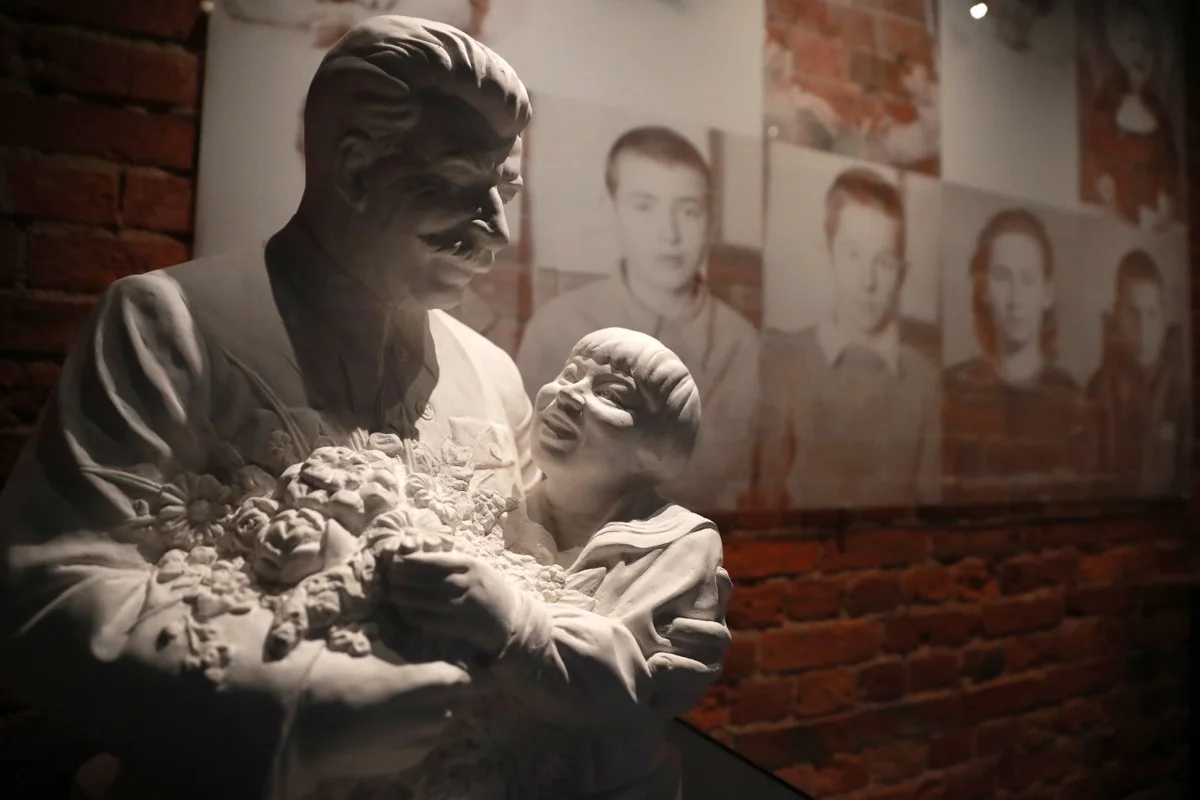
The museum's exposition consisted—or consists, if we are talking about the museum in the past tense—from a collection of photographs, documents, personal belongings of prisoners and memories of survivors. There you could see materials telling about the structure and functioning of the Gulag system, how it affected people's lives, and how prisoners fought for survival. The museum featured personal letters, archival documents, photographs and belongings of people who ended up in the camp, which helped create a more complete picture of the scale of the repression and its consequences. The museum hosted lectures, seminars and excursions for students and schoolchildren - in short, the museum helped to think about the cost of totalitarianism and the importance of preserving historical memory.
In recent years in Russia, many organizations and projects working with the history of political repression have faced difficulties, including threats of closure, inspections and pressure - just remember Memorial, which was closed in 2022*. In such conditions, the closure of the Gulag Museum did not come as a surprise; rather, the pretext chosen for this was a surprise.
Now the museum has a new director - Trapkova. Roman Romanov left. Question: how quickly will the absurd shortcomings of “ensuring fire safety” be eliminated, or will this require dramatic changes in the exhibition of the Gulag History Museum?
Juliet Sargsyan