
Translated material
Extra money. Is it possible to freeze deposits?
Can the authorities freeze citizens' savings? Economics suggests not. But politics says - we need to think
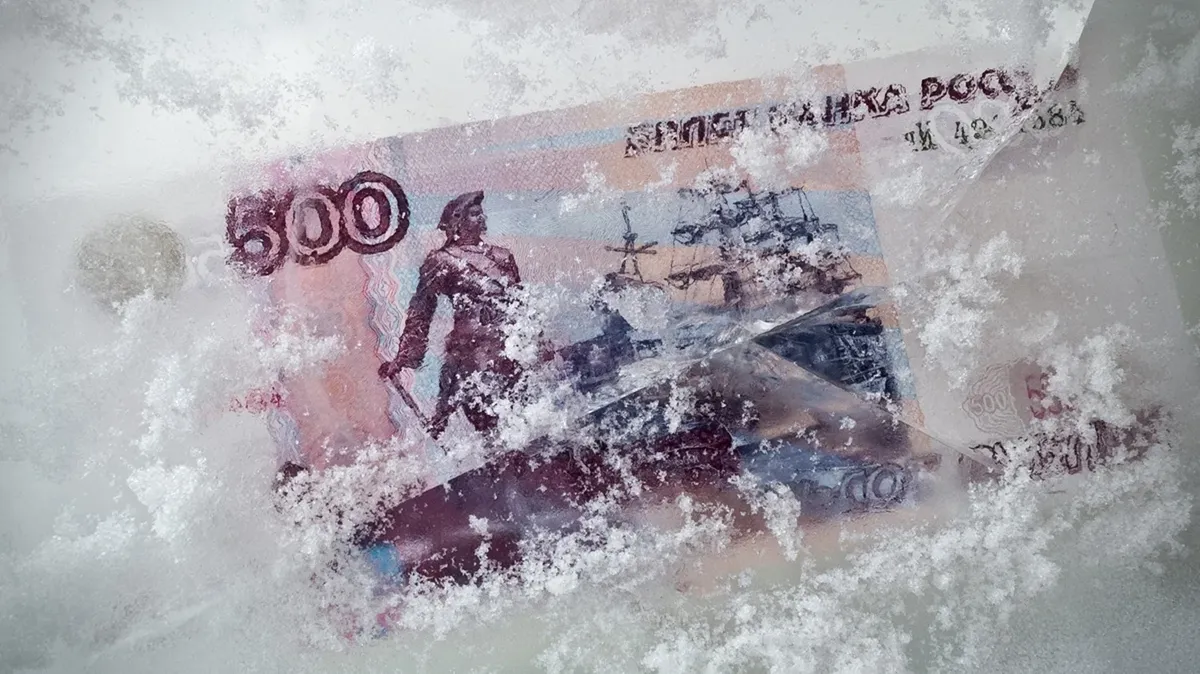
Photo: Evgeny Razumny / Vedomosti / TASS
Freezing deposits?.. First time I hear about it...
Immediately after the end of the New Year holidays (and, it is possible that due to the lack of news reasons), a wave of mentions of a “possible freeze of deposits” rolled across the media and social networks - with reference to the data of the “FOM survey”.
The Public Opinion Foundation actually had such a survey - only it was back in November, and its results were published in mid-December. And the most common answers to sociologists’ questions were:
Do you, your family or not currently keep money in bank deposits, deposits, savings or savings accounts?
- 65% - we don’t store
Recently, you can hear talk that the Russian authorities are going to freeze the bank deposits of the population. Have you or have not encountered such discussions on the Internet, in the media or among friends?
- 79% - have not encountered
Are you personally worried, worried, or not worried, are you not worried about the possible freezing of household deposits?
- 67% - I’m not worried, I’m not worried
Do you think that in reality the Russian authorities are planning or not planning to freeze the bank deposits of the population?
And this question clearly confused the respondents.
49% - found it difficult to answer,
40% said they “don’t plan”
Do you think today <...> freezing household deposits is an acceptable or unacceptable measure?
63% - unacceptable,
26% - difficult to answer
On November 19 [2024], speaking at the State Duma, the head of the Central Bank of Russia, Elvira Nabiullina, denied rumors that the Russian authorities are planning to freeze bank deposits. Do you know about this, have you heard something, or are you hearing it for the first time?
- 79% - hearing it for the first time.
It turns out that, on the one hand, two thirds of respondents do not keep any savings “on deposits” - that would be something to worry about! But, on the other hand, respondents are clearly embarrassed by a direct question about the authorities’ intentions regarding money belonging to people. At the same time, no one has ever heard of any denials from the financial regulator.
Several days passed, during which the discussion about the possibility of freezing deposits did not cease - and, during this discussion, a number of economists expressed the opinion that the authorities do not have rational grounds for such a step, but there are certainly possibilities . And where there are opportunities, anything can happen. Moreover, the authorities have experience of free handling of citizens’ money; just remember:
1947 - confiscatory monetary reform;
1961 - confiscation denomination;
1991 - confiscation exchange of large bills;
1993 - confiscation exchange of the remaining 1961–1992 banknotes in circulation for new banknotes.
True, that was quite a long time ago.
And from the recent one you can remember:
2014 - temporary freeze of the funded part of pensions (which has been going on for the 11th year);
2018 - raising the retirement age (contrary to all promises);
2022 - stock market closes for a month. Closing the ability to withdraw currency from foreign currency accounts.
So there are reasons for citizens to have difficulty answering the intentions of the authorities.
What did the Central Bank want to say?
On Monday, January 13, 2025, the heavy artillery began to speak in the discussion about the possibility of freezing household deposits - the official channel of the financial regulator @centralbank_russia answered a “reader question”: “Can the state take money from deposits to finance the economy in our difficult times?”
Answered verbatim:
“This is nonsense. This money is already working in the economy. From the funds that companies and citizens have deposited, banks finance loans for those who see opportunities to expand their business here and now. As well as mortgage loans, consumer loans, credit cards.”
What, excuse me, will the economist say at this point? Dear colleagues, we understand where this wind blew from and where, but this is not how the modern financial system works.
HELP "NEW"
For those who want to read an explanation of where banks actually get money for loans (they just print, yes), here are links to theoretical texts that explain how this printing happens in the modern world:
Central Bank of the Russian Federation “Management of banking sector liquidity and money market interest rates”
Bank of England “Money creation in the modern economy.”
For those who do not want to read complex text, the thesis explanation will look like this:
In the modern financial system, commercial banks are given the right to create money in exchange for their ability to correctly assess credit risk and comply with regulatory restrictions (standards), and the obligation to accept deposits.
Contrary to popular belief, banks do not need deposits from savers to make loans. Banks themselves create deposits through lending. Each loan issued to borrower A turns into a deposit in account B, to which A gave the money he received in payment for goods and services. Thus, the amount of loans is identical to the amount of deposits.
Banks need deposits to meet regulations [set by financial regulators] and remain profitable. Or, to put it another way: when expanding lending, banks must provide these loans with their own or borrowed funds. Borrowed funds are, by definition, cheaper. So the bank borrows money from savings owners.
This is as short as possible.
So @centralbank_russia probably wanted to say something like, “citizens, let’s disperse, there will be no freezing of deposits, keep your money in a savings bank,” but chose a wording for this that literally hurts the ear of a person even minimally familiar with the basics of operation modern monetary system.

The Prime Minister of the USSR explains...
Where did the story come from that banks lend to borrowers using “deposits”?
And from the Soviet experience.
Explains the same Valentin Pavlov, in 1986–1989. Chairman of the State Committee on Prices, in 1991 - Prime Minister of the USSR, the one who was remembered by the population for exchanging money.
“The fact is that in the USSR, population savings played the role of the main credit resources. Enterprises' own funds provided only their minimum needs, the rest was provided by credit.
The business practice was as follows:
Sberbank took our money at a low interest rate and, through the State Bank of the USSR, loaned it out to someone who lacked funds at a higher interest rate. As a result, the total aggregate need for money in the country was minimized. After all, my temporary excess covered someone else's deficiency.
According to statistics, 55% of the working capital of industry, agriculture and transport was covered by credit, which was backed by household deposits in savings banks and accounts of profitable enterprises. Belonging to specific individuals or legal entities, these deposits served as a source for lending to the national economy...”
“...Under centralized planning, all income and expenses throughout the USSR were strictly linked to each other. But it remains the same - every year! — very great difficulties arose with balancing the income and expenses of the population. Because the economy was skewed towards heavy industry. The accumulation fund reached 36%.
However, numerically controlled machines, missiles or fighter-interceptors <...> could not satisfy the consumer demand of the population. Behind this issue was the most important problem of maintaining the purchasing power of the consumer ruble.
And if prices for certain types of goods sometimes changed, it was not at all in order to replenish the budget, as journalists with little knowledge of financial matters believed.
This money was needed primarily to prevent a decline in the real exchange rate of the consumer ruble..."
(Pavlov V. Is the chance missed? The financial key to the market. M.: Terra, 1995)
The key point in the system that Valentin Pavlov describes was the directive establishment of “fixed “state” prices” - by fixing prices, the Soviet government also took responsibility for the fact that the consumer market would be saturated with goods precisely at these “fixed prices” - and no inflation - however, in practice, “Soviet inflation” did not disappear anywhere, it simply took the form of a shortage of goods sold at “fixed prices.” (At so-called “speculative prices”, i.e. determined by supply and demand, in the USSR it was possible to buy almost all ordinary consumer goods - and without queues - there would be money).
And in this system, the government was forced either to normalize the sales of goods at fixed prices (introduce “cards”, “coupons”, etc.), or in one form or another to confiscate the banknotes that citizens had accumulated, which could not be exchanged for goods. Well, plus centralized “price increases” were a more common practice in the USSR than “price reductions” - since, as Prime Minister Pavlov rightly noted, consumer demand could not be satisfied with the products of Soviet “heavy industry”.
Thus, in an economy with administratively regulated prices, “confiscation of deposits” could make sense:
we take away the money - we reduce the volume of consumer demand - and fulfill the social contract between the government and the workers: we give you “fixed prices” - you give us labor for the “minimum wage”.
Now, in the existing economy of the Russian Federation, it is much easier for citizens’ savings to be “turned into nothing” through inflation.
But this is from an economic point of view. But politics can push the government to less than optimal economic decisions. Because the growth of deposits (and the money supply in general) is a direct consequence of political decisions.
Money as a problem
The fact is that “increased output”, “revival of production” and “GDP growth” do not come out of nowhere, someone pays for it. Contrary to popular belief, this is not so much the budget as the citizens themselves - due to the “inflation tax”. People have to work harder to buy the same goods they bought “yesterday.” And all this wealth grows, increases and is revived due to the expansion of corporate credit. In general, inflation is the easiest way for the government to finance anything.
Over the past three years, the combination of the government’s soft budget policy and the financial regulator’s soft monetary policy (remember the key rate of 7.5% in 2022?), together with preferential lending programs - corporate and mortgage - led to an excessive accumulation of deposits.
These deposits must be paid for. But even with an excess of deposits, banks cannot cut rates on them too much, so as not to lose too many depositors. To remain profitable, banks are forced to increase lending at rates that cover the cost of deposits, operating expenses and the rate of return for shareholders.

The only viable alternative to expanding credit is to buy government bonds. But the government is not interested in a strong expansion of public debt at the current high rates, because... this will inevitably lead to the need for new issues of securities (OFZ) to pay off interest on old issues. And in this situation, the Central Bank cannot lower rates because lending is not cooling. It turns out to be a vicious circle. In order for the wheel of the Russian economy to spin, it needs the injection of more and more money.
As the Central Bank of the Russian Federation reported on January 14,
According to preliminary estimates, as of January 1, 2025, the ruble money supply (M2) amounted to 117.5 trillion rubles, having increased by 5.9% in December. A significant increase in the money supply in the last month of the year is the seasonal norm.
Indeed, in December the money supply always grows extremely due to the specific distribution of budget expenditures and the credit impulse at the end of the year. Between 2013 and 2021, the average December growth rate was 5.8% mom, so 5.9% money supply growth in December 2024 seems normal.
But in “real money” the increase in the money supply amounted to 6.6 trillion rubles per month . To understand the scale, in the “2010s” the increase in the money supply did not exceed 5 million per year . Further, the peak annual growth was 7.8 trillion in the middle of the crisis year of 2020 and 7.7 trillion at the beginning of 2022.
How can there not be an increase in prices when the commodity supply has decreased over three years, and the money supply is growing in a month in a way that it recently did not grow in a year?
And this is where a political collision arises, which was described by the remarkable economist and statistician Igor Birman back in the early 1980s (though he wrote about the Soviet economy) in the book “The Economics of Shortages.”
“Although not the accumulations themselves, but their inevitable economic consequences <...> create insoluble problems for the authorities.
I will repeat this, since this is precisely where the essence of the whole problem lies - to solve social problems, to increase labor productivity, it is necessary to raise the monetary income of the population, but then money will finally lose value.
Can the authorities improve the situation by raising prices? In general, yes, in fact, prices are already rising and will continue to rise. But, in particular, there are at least three “buts” here.
First, prices need to be raised sharply, and for consumer goods. The population more or less calmly accepted the increase in prices for coffee, gasoline, gold, restaurants, even vodka. The common man doesn’t drink coffee, doesn’t go to restaurants, doesn’t have a car, and has replaced vodka with “babbler.” But when prices for sugar and bread, potatoes, milk and meat, metro and smoking rise, the effect will be completely different.
So, the situation is quite serious, there are no visible ways to correct the situation, and it is quite obvious that the only way out for the authorities is to take away their savings from the population...
I can’t speak with confidence about any of this or that option, I also can’t give more or less exact dates, but, I repeat, since the liquidation of savings is absolutely economically necessary, the authorities will definitely do this at the first political opportunity...”
Let me emphasize once again: Birman analyzed the “administrative” economy of the USSR, in which the authorities tried to control prices, taking responsibility for the “stability” of these prices, and therefore for preserving the purchasing power of wages.
The modern economic system of the Russian Federation is much more flexible: prices are rising, but the shelves remain filled with goods,
and for those who “don’t have money,” the authorities say directly: here’s a short number, there’s a man in uniform on the other end, call it, they’ll tell you where to get a lot of money, and quickly.
But the need to “put a lot of consumer goods on the shelf” does not disappear anywhere, and the faster the money supply grows, the more often the authorities will think about some additional mechanisms for balancing consumer demand and supply - in addition to the actual frontal rise in prices.
What should people do?
Igor Birman once explained:
“If my article was intended for Soviet citizens, I would advise them to immediately get rid of all savings, in all their forms, and even try to live in debt...”
Please do not consider this as investment advice. Just evaluate your own capabilities and risks.