
Translated material
“This is not available anywhere, we have it”
About the honesty of the Chairman of the Krasnoyarsk Regional Court Nikolai Fuga, who told why there are no acquittals
18+. THIS MATERIAL (INFORMATION) IS PRODUCED, DISTRIBUTED AND (OR) SENT BY FOREIGN AGENT VISHNEVSKY BORIS LAZAREVICH OR CONCERNES THE ACTIVITIES OF FOREIGN AGENT VISHNEVSKY BORIS LAZAREVICH.
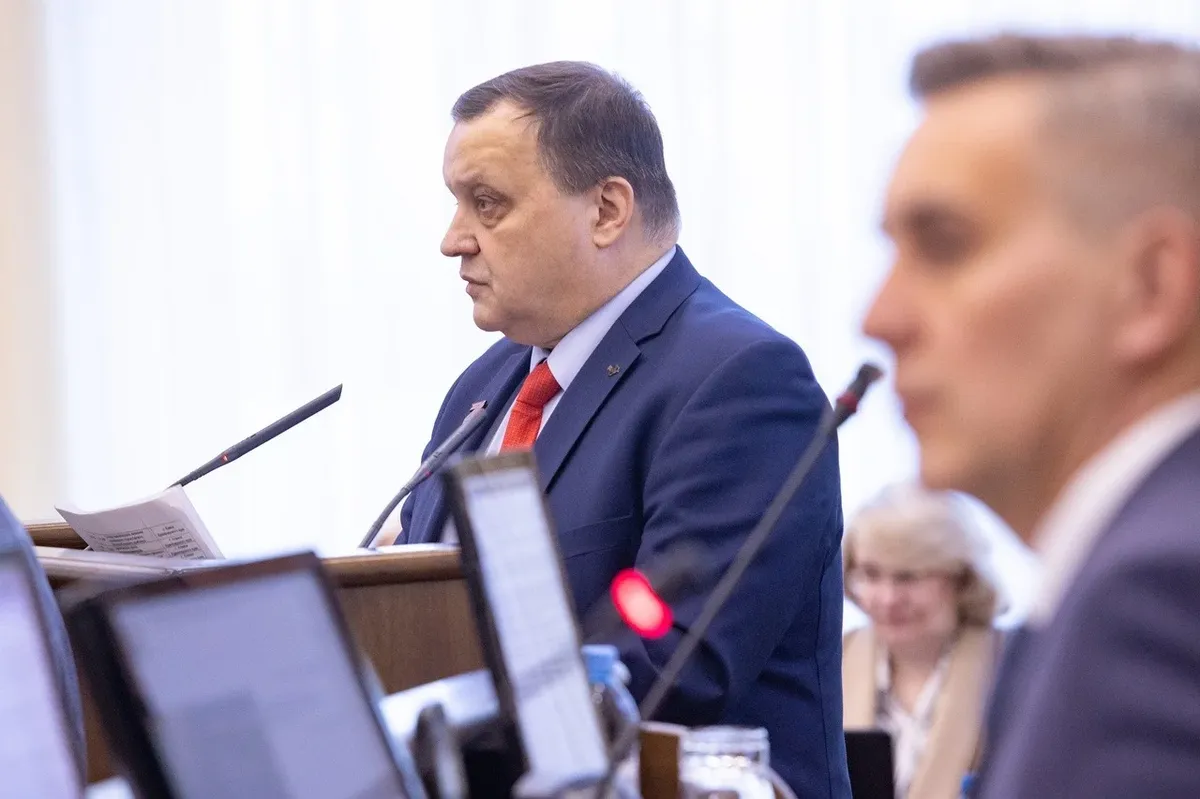
Chairman of the Krasnoyarsk Regional Court Nikolai Fuga said that in Russia there can be no acquittals, since the case of an innocent person simply will not go to trial. Almost classic: “They don’t imprison us in vain!”
However, taking into account the statistics of the work of Russian courts, the Krasnoyarsk judge revealed not a state secret, but an open secret. Having said something that almost everyone knows, but does not say out loud.
You can recall Shvartsev’s “Dragon” - they say that there is no need to be shy, “everyone is our own here.” Or from “The Naked King” - about a princess who is “so innocent that she can say absolutely terrible things” (although the chairmen of Russian courts usually do not look anything like innocent princesses).
...Nikolai Fuga shared the quoted revelations on radio “Krasnoyarsk Main”.
He began by declaring: “I am the chairman of the regional court and, accordingly, the head of all other courts.” Despite the fact that in the Krasnoyarsk Territory there are more than 60 city and district courts, and they have their own chairmen, Nikolai Fuga has no formal or legal grounds to “lead” them.
However, there is some truth in this statement, which is also an open secret: it is well known how it is customary for district and city courts, and not only in Krasnoyarsk, to (let’s say carefully) “consult” with higher courts.
Well, then a woman called on air and asked why there were no acquittals in the courts, and the guilty verdicts, in fact, duplicate the indictments prepared by the investigation and approved by the prosecutor.
It was here that Fuga diverged, saying that we “have a system in which there can be no acquittals at all, since in our justice system the prosecutor and the lawyer do not present evidence to the court, as in the United States, but in ours there is an investigation.” That “if the investigation concludes that a person is innocent, the prosecutor simply will not send the case to trial.” That “this is not available anywhere, we have it.” And that “the acquittals themselves are a sign that the prosecutor looked at the case incorrectly.”
In other words,
We have before us the presumption of the correctness of the investigation, which, if it has already decided that a person is guilty, then the job of the court is simply to rubber-stamp this position.
The option in which the investigation made a mistake, illegally or unlawfully came to the conclusion of guilt and the prosecutor in court defends an unfounded accusation, apparently, is not considered by the head of the regional court: “the authorities do not make mistakes.”
This is very familiar from the old days. And this is very far from the principles of law. To say the least.
Judging by his biography, Nikolai Fuga has a higher legal education and more than 30 years of experience as a judge. And it seems that he is supposed to know the Criminal Procedure Code, including its articles on the presumption of innocence and adversarial parties, and that the court “is not a criminal prosecution body, does not act on the side of the prosecution or the defense, the court creates the necessary conditions for the parties to fulfill their procedural duties and exercise the rights granted to them.”
However, he does not hesitate to say everything quoted on air and, apparently, is sure that there will be no reaction to this. In the worst case, they will call “from above” and bark “What are you talking about?” and will be required to monitor your language in the future.
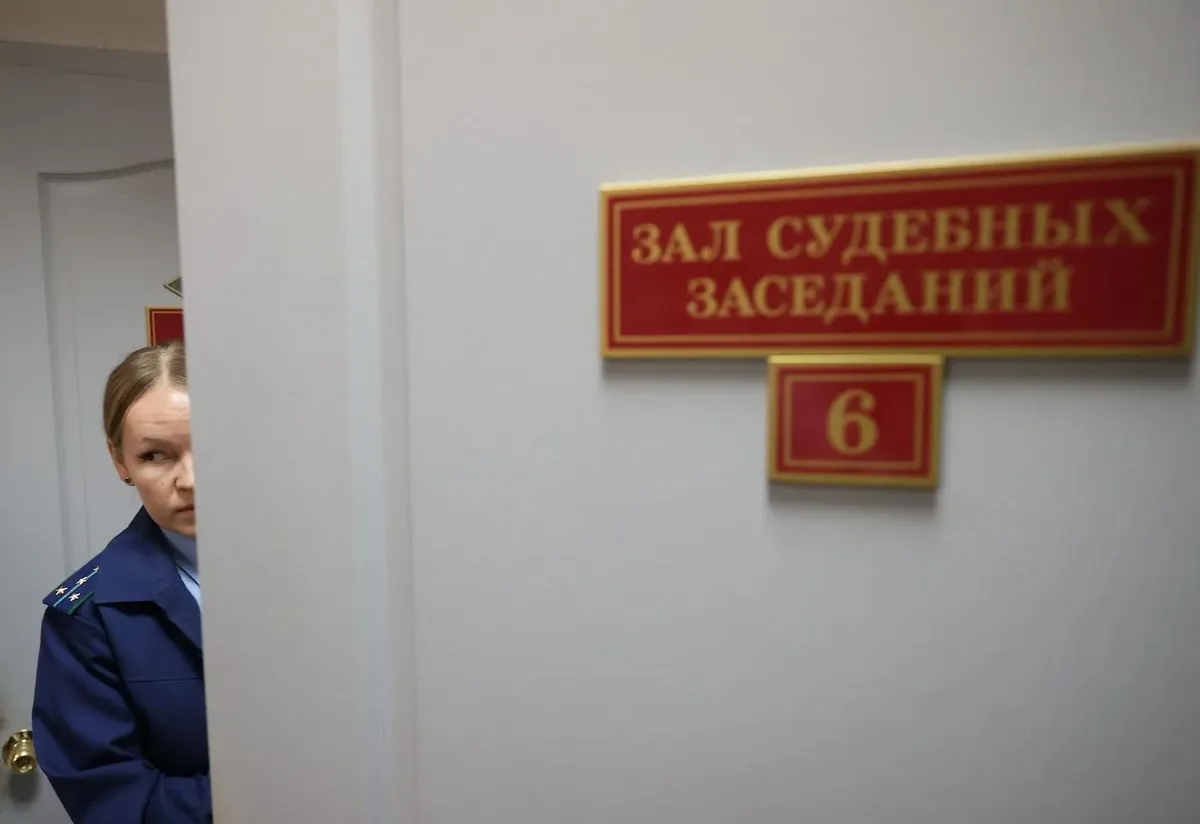
Meanwhile, the statistics will remain depressing: according to the Supreme Court of the Russian Federation, in 2023 there were 555 thousand convictions and 1874 acquittals. The ratio is more than 300 to one. In other words, the accused has a 0.3% chance of being acquitted. And it’s unlikely because the quality of the work of investigators and prosecutors is so high that the court with a 99.7% probability agrees with their position...
- “Triple courts. Enough of this liberal adversarial process and the ungodly presumption of innocence. And ban lawyers altogether,” I read on the Internet.
Or - from Nikolai Travkin:
“Well, it’s clear and intelligible! And then Comrade. Zorkin and Co. are fooling people about some kind of “competitiveness” between the prosecution and defense in our courts.”
“I was thinking about saving budget funds. After all, how much does it cost to maintain ships and their equipment! If everything is decided by the investigation and the prosecutor, then why not leave everything to the prosecutor. Or rather, remember the good experience, create OSO ( special meetings - B.V. ) and troikas in the regions (prosecutor, chief of police or FSB, or Investigative Committee and secretary of the United Russia branch). And the saved funds will be spent on the SVO. Well, or for the construction of schools and hospitals. But the latter is unlikely,” St. Petersburg lawyer Andrei Chertkov, who has repeatedly defended political prisoners, sarcastically comments on the statements of the Krasnoyarsk judge...
And I immediately remember Alexander Solzhenitsyn with his “Archipelago”.
“It’s simply indecent for the state not to have courts at all. Judicial work is a delicate matter, but not without a trial at all!”
“However, our political courts - special boards of regional courts, district military tribunals, and all the Supreme Courts - are unanimously reaching out for the OSO; they, too, are not bogged down in public proceedings and debates between the parties. Their first and main feature is their closeness.”
“Who in our country now remembers that Karakozov, who shot the Tsar, was given a defender? That Zhelyabov and all the Narodnaya Volya members were tried publicly, without any fear “that the Turks would find out”? That Vera Zasulich, who shot, if translated into our terms, at the head of the capital department of the Ministry of Internal Affairs (and just wounded him not fatally, she hit him wrong, and the caliber of the bullet was bearish), not only was not destroyed in the dungeons, not only was she not tried behind closed doors, but in open court she was acquitted by the jury (not three) - and she rode off in a carriage in street triumph?”
“Dostoevsky dreamed of a court where the prosecutor would say everything necessary in defense of the accused.”
“The second main feature of our political courts is certainty in their work. That is, predetermined verdicts. The judge knows in advance - either for your case specifically, or in the form of general instructions - what sentence is desirable (and there is usually a telephone in the judge’s room!). Predetermined verdicts - how much easier it makes the thorny life of a judge.”
“And finally, the third feature of our courts is dialectics (and previously it was roughly called: “the drawbar, where you turn, it goes there”). The Code should not be a frozen stone in the judge’s path.”
“Once the arrested person is deprived of all rights already at the cutting of buttons on the threshold of the State Security Service and cannot escape the term. And legal workers were so accustomed to this that they disgraced themselves in 1958: they published in the newspapers a draft of the new “Fundamentals of Criminal Proceedings of the USSR” and forgot to include a clause about the possible content of an acquittal! The government newspaper (Izvestia, September 10, 1958) gently reprimanded: “One may get the impression that our courts only issue guilty verdicts.”
And lastly, most expressively:
- “Why, exactly, should the court have two outcomes if the general election is made from one candidate? Yes, an acquittal is economic nonsense! After all, this means that the informants, and the operatives, and the investigation, and the prosecutor’s office, and the internal security of the prison, and the convoy - all worked in vain!
Half a century ago, when we read (sometimes handed over only overnight) samizdat copies of The Archipelago, we understood that practically nothing in the country had changed since the times he described.
Then, when Solzhenitsyn went from being a “literary Vlasovite” and a “traitor” to becoming an academician, State Prize laureate and the pride of the nation, “Archipelago” began to be perceived only as a description of a past that has gone forever.
Now - at least in the quoted part - it is perceived as a description of the present.
Yes, and elections, although formally they are not made from one candidate, but in fact they are more and more reminiscent of the previous ones.
And the government system (there is much less reason to call it law enforcement) system considers acquittals to be an illustration of working in vain.