
Translated material
The temptation of extreme positions
Dmitry Bykov's new book about the death of Russian culture and its causes
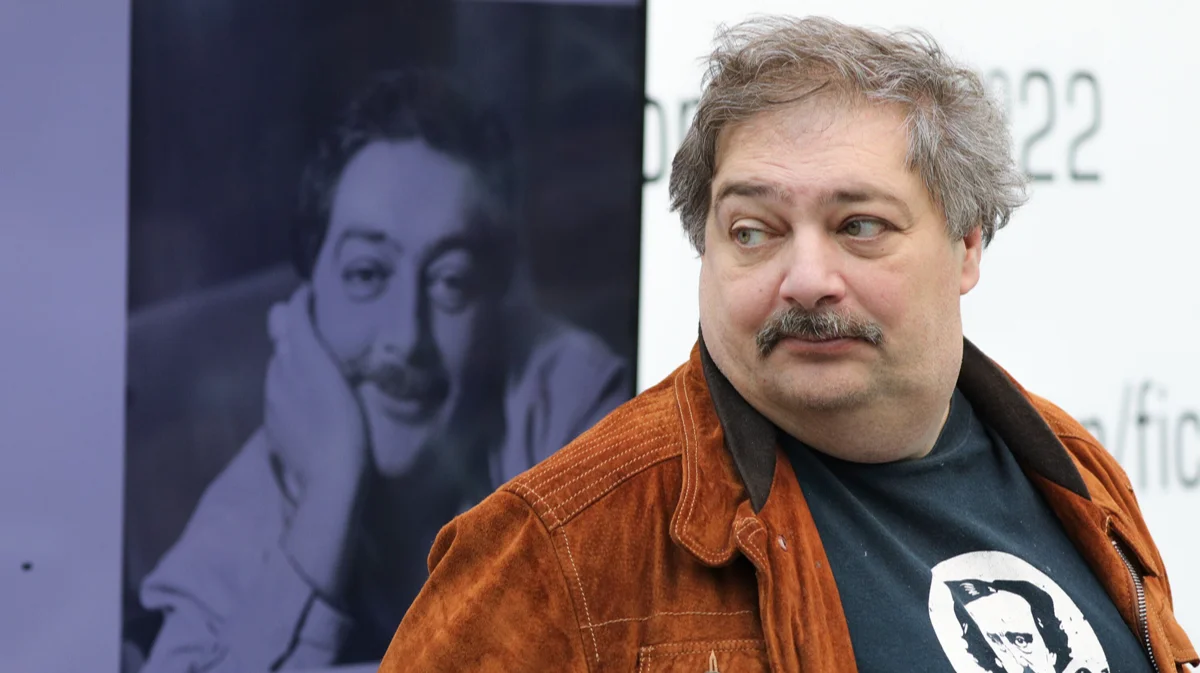
Photo: Kirill Zykov / Moscow Agency
Russian culture is over, argues Dmitry Bykov in “The Defeated Demon,” published at the end of 2024 in Freedom letters. And he performs an autopsy and analyzes the “pre-mortem” twentieth century. What led to the death? How sincerely the author himself believes in his radical thesis is an open question. But the provocation counts. I want to think about “The Demon...”. And argue too. Sorin Brut talks about the successes and miscalculations of the book by one of the most brilliant Russian-speaking writers of our time.
"The Demon Defeated" grew out of a review article for an independent history textbook. Indeed, it contains the features of the author's textbook. The other component is critical reflection from someone who has a passion for the subject matter. Books with such issues are obviously needed, and Bykov is in the vanguard. However, a suspicion arises that he packed two texts into one - as if he wanted to write a book about literature + cinema and reflect on culture as a whole, outlining points for its future reassembly.
A “textbook” about Russian culture of the twentieth century—not about theater or art separately, but about everything at once—is a task of utopian proportions. It is hardly possible to solve such a “disproportionate” problem. There are shortcomings, as well as discoveries: Bykov writes that the “ fatal questions ” of Russian culture “ have no answer precisely because they are formulated erroneously .” With “Demon...” it turns out similar. Paradoxically, this is precisely why it is very difficult to criticize him.
You can disagree with interpretations (for example, Platonov). Doubt the placement of emphasis (almost no attention is paid to the unofficial literature of the second half of the century; the existence of culture after the collapse of the USSR received a “brief mention”). One can cling to strange and harsh formulations (the idea that “ the culture of the Russian diaspora has steadily improved ”, while “ the culture of those remaining has steadily degraded ” seems, at best, far-fetched). To factual errors in areas not relevant to Bykov (in some places Art Nouveau and Art Deco are mixed up). We can finally admit that the “textbook” will not give the reader approximately any idea about fine art. But all this is a consequence of the utopian task. It’s more productive to focus on what Bykov managed to do.
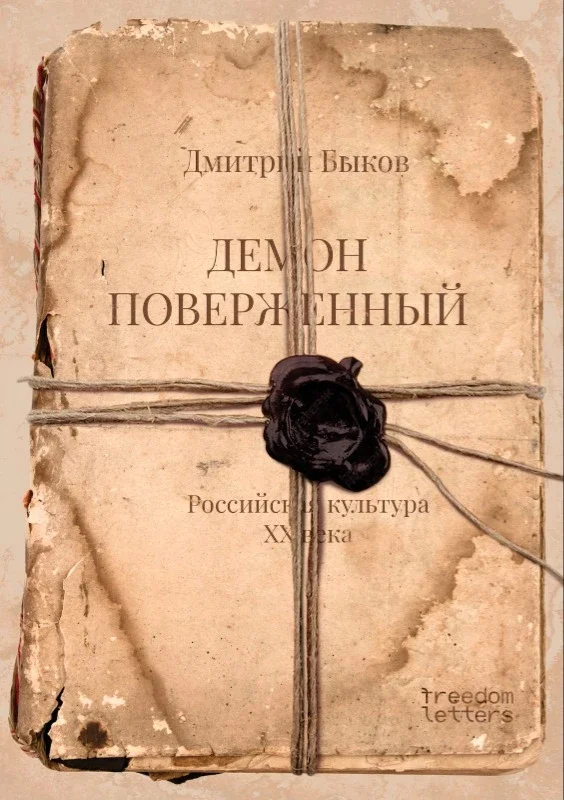
“The Demon Defeated” is a charming and exciting text. Portraits of 20th century masters are painted sketchily, but the angle, as a rule, is chosen effectively. As expected, the reflections on Gorky, Blok, Akhmatova, Brodsky, Okudzhava and the Strugatskys are interesting. Mayakovsky is magnificent in the role of a giant who does not fit into the era, always misunderstood and rejected. Moreover, his image rhymes with “ the Russia of that time - terribly talented and dying on takeoff ” or, in the words of art critic Yevgeny Kovtun, with “the avant-garde stopped in its tracks.” The chapter about how during the Stalin years the poets who began in the Silver Age fell silent or lost their skills turned out to be truly poignant.
Bykov’s frequent technique is to create a spectacular pair or trio, allowing him to show the individuality of each participant through comparison. Thus, Gorky is presented next to Leonid Andreev. Blok is with Bely. Mayakovsky and Yesenin, as well as Brodsky and Vysotsky, continue the seemingly split Nekrasov.
At the same time, Mayakovsky unexpectedly contrasts with Khodasevich. Such comparisons add drama to Bykov’s narrative and humanize those being studied. The book does not allow you to forget that they were once living people. And this feature is what makes it a good textbook. Too often in Russian education, historical figures pass before the student as a series of “celestial beings” in the best traditions of the heroism of Stalin’s times. The influence of this pedagogical approach on the formation of authoritarian psychology is obvious. Sometimes works also form unexpected tandems - this is how the writer notes the similarity of plots in “Quiet Flows the Flow of the Flow”, “Doctor Zhivago” and “Lolita” (Bykov spoke about this before , but the comparison has not faded from repetition).
The writer calls “mystery” the main literary genre of the 20th century, implying the spirituality of the physical world, the combination of the fantastic and realistic, including the presence of mystical entities in a familiar context. He justifies the increased attention to the genre “ by the very scale of historical events of the twentieth century” - the horrors of world wars and mass crimes of totalitarian regimes. The writer classifies many, at first glance, dissimilar texts as mysteries - from Platonov’s “Chevengur” and Akhmatova’s “Poem without a Hero” to Lagin’s “Old Man Hottabych,” Leonov’s “Pyramid” and “The Master and Margarita.”
Bulgakov's work marks the resuscitation of the Faustian novel, also a key genre. What is fundamental here is the appearance of a “master” - a professional person who takes the main role from the trickster from the adventure novels of the 1920s and early 1930s. (“The spirit of literature of the twenties was the spirit of adventurism, but in the thirties everything became hopelessly dry.”) Bykov explains the rotation of “elite” characters in Soviet prose for socio-political reasons: “Craft in Russia is the only way to become indispensable and thus survive, otherwise the state will eat you without choking. The 20th century is the century of professionals... everyone whom the state needs for defense or window dressing.” This idea develops the thesis about the century of “ total disappointment in the very project “man””, shown in the example of Chekhov’s “The Cherry Orchard”: “ They forgot man .”
Bykov’s thoughts on multi-volume epics, science fiction and documentary films in the second half of the century are interesting. However, the central theme of “The Demon...” is the relationship between the authorities, the intelligentsia and the wider society. The sociocultural perspective, which is generally familiar to the writer, fits well into the current field, where Russian culture has been fighting off the guilt imposed on it (whether justified or not is another question) for several years now.
“Demon...” claims that the intelligentsia, as “ the best, enlightened part of the people ” (according to Bykov’s idea, regularly running far ahead of him), is “ interested in the humanization” of the conservative state and strives to bring it closer. But its position resembles the image of a palm tree from Garshin’s fairy tale “Attalea princeps”. The palm tree grows rapidly until it hits the roof of the greenhouse (an archaic social order). Tension rises, then the roof breaks through (revolution).
“ The trouble is that as a result of the destruction of the greenhouse, the palm tree dies first - that is, the cause and engine of all changes is destroyed; the grass likes everything. The intelligentsia prepared the coup of 1917 - and fell as its first victim; the intelligentsia prepared perestroika - and was practically declassed in the nineties, and many then completely buried it. It is the intelligentsia today that expresses stifled dissatisfaction with the military dictatorship and already quite massive repressions - but it is difficult to doubt that none of the current fighters will receive the slightest benefit from the changes.”
“ Modernism (we are talking about progressive avant-garde intellectuals. - Author’s note ) won... due to the collapse of the state, which collapsed under the yoke of its own incompetence. Having barely gained strength, the state slammed it down and went along the same circle of cyclical development - with movement without evolution .” One can also recall the Thaw attempts at change, which were quickly crushed by reaction. Art then split into official and unofficial (read : illegal), and many of those who believed in the “thaw” found themselves in the position of dissidents.
Bykov writes about Russia's painful cycle. The repressive atmosphere of stagnation (1) is followed by revolution (2), then a reaction in the form of a severe freeze (3), then a short-term thaw (4) and new stagnation. The scheme really applies easily to the last two centuries.
The progressive part of society is bound to be crushed by the conservative response. “Russian civilization inexorably led not only to the emergence of wonderful generations of new people, but also to their systematic destruction for the sake of the survival of the system,” writes Bykov
This phrase seems to contain an explanation. The October Revolution and the collapse of the Soviet Union only briefly shook, but did not change the structure of Russian power with its rigid vertical structure and the subordination of the individual to state tasks. The modernist utopia of the early USSR, the conservative great power of the late and essentially nihilistic Putinism are related in the radical devaluation of the individual person. Free-thinking and self-will (in Russian for some reason this word has a negative connotation) in this situation could not be in demand and posed a threat to the political elite. Conformists are attractive to the system precisely because they lease their subjectivity to the state in all areas it needs. Whereas thinking people turn out to be especially dangerous. A powerful quote from Lydia Ginzburg: “We get paid to mind our own business.” “ This is, in essence, the main content of Russian culture, in which there are no superfluous people (and those who are not superfluous are not people, but functions) , ” Bykov continues her words.
Most of the cultural values recognized today in the twentieth century were “forbidden” and reached the reader/viewer very late. Today's image of twentieth-century culture is largely molded by illegal “formalism,” self-publishing and unofficial art. The most famous authors today, if they were not forced out of the country, persecuted or physically destroyed, then existed in a humiliated position. I would like to call the image created by Bykov a culture of “unclaimed subjectivity” - a space where a creative and thinking person constantly faces resistance, works mainly “in spite of” and finds himself rejected from the audience. The popularity of the image of Hamlet in the late USSR is eloquent - “ a strong man in a weak position ”, “ forced to act in conditions of intrigue, lies, meanness, on a field where he is not capable of anything ” and embodying “ a discrepancy with the era in all respects ”.
Modernism, the writer claims, in Russia was primarily a “reaction to reaction” (in part, this can be said about Thaw culture). Conservative revenge is also an example of a reaction to change. Bykov repeatedly talks about the radicalism of modernism, but this also applies to the guardians. “ Russia is a country of continental climate, maximum temperatures, radical and unambiguous decisions: if they are not there, there is no accomplishment . ” The tendency towards extremes makes dialogue between the parties difficult. At the same time, radicals do not take into account the “human dimension” of their own projects - their ends justify the means. The vicious circle of “reaction to reaction” is essentially a life-and-death struggle without the possibility of finding a common language. Moreover, the authorities constantly interfere with the conversation of opponents, creating inequality of positions - giving some the status of true believers, while turning others into enemies.
“Culture, contrary to expectation, does not unite, but only exacerbates this split” (like many social splits), writes Bykov, but this is not surprising due to its craving for extremes and contempt for compromises. In general, the word “compromise” in Russia has a negative connotation (in the spirit of “well, neither you nor me”) and is mistakenly associated with conformism. Although conformism is an integration into the monologue of power, and the possibility of compromise is a key condition for dialogue.
The first necessity for the formation of the “ synthetic view of Russian life ” that the writer talks about is criticism of radicalism and the eternal temptation of extreme positions for Russian culture. However, in “The Demon...” this is not the case. There is, on the contrary, polemical harshness (understandable in wartime, but dangerous in post-war times), sharpening of positions and catchy theses, such as that “ the entire structure of Russian life today is compromised and is subject to radical abolition .” In essence, it is precisely these features of the book that promise: Russian culture is not finished and, after the decisive victory of good over evil, risks going to a new fascinating circle of the cycle - “ with movement without evolution .”