
Translated material
Family ghosts
How do traumatic experiences impact subsequent generations on an individual and collective level? Psychotherapist Olga Movchan - about the phenomenon of “transgenerational transmission”
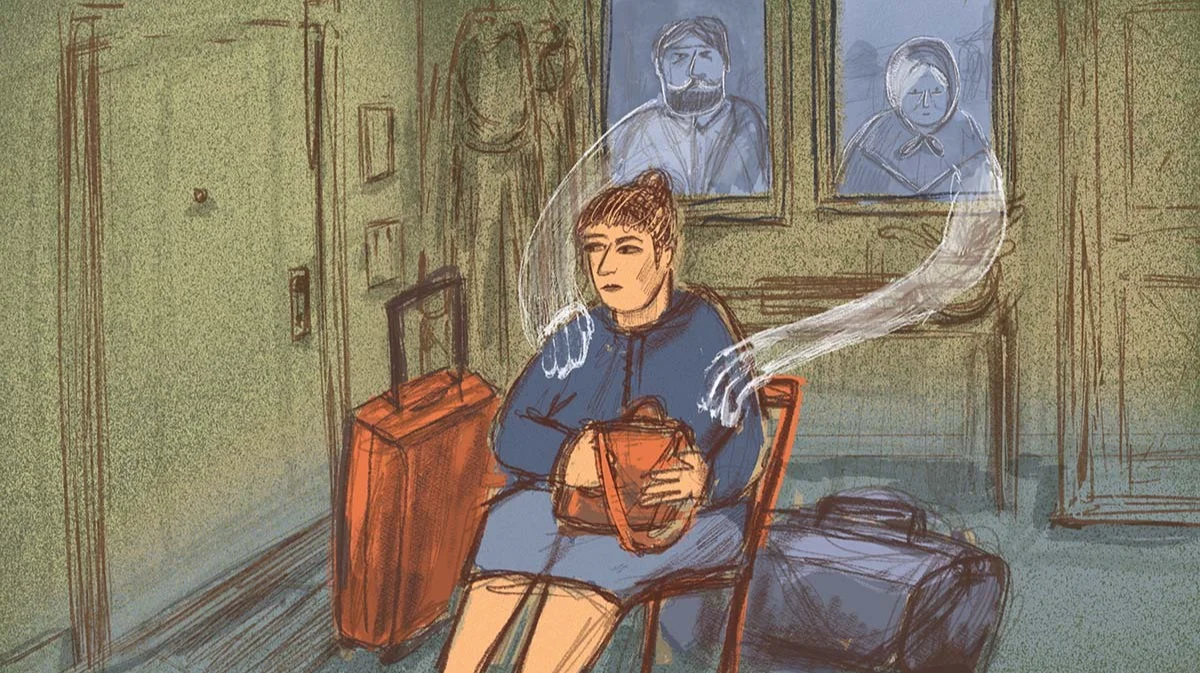
Illustration: Alisa Krasnikova / Novaya Gazeta Europe
We've all heard expressions like "it runs in the family." They often say this when they mean something negative: unhealthy patterns of relationships, communication styles, addictions. As if such things - ways of reacting and behaving - can also be inherited through generations, like a certain set of physical traits.
In psychology there is a concept - “transgenerational transmission”. First explored by Sigmund Freud, it literally means the following: patterns of behavior, reaction, and decision-making can indeed be unconsciously transmitted to descendants through non-verbal forms: gestures, facial expressions, tone, manner of speech. According to the theory, negative, traumatic experiences are often passed on in this way - just as the descendants of people who survived famine sometimes develop eating disorders. Now all Russians are experiencing this to a greater or lesser extent: war, no matter how hard you try to ignore it (or maybe especially if you try), cannot help but leave a mark on the human psyche. Gestalt therapist Olga Movchan understands how transgenerational transmission works and what psychological legacy we will leave to our children and grandchildren.
Was it all in vain?
To be honest, until recently I was skeptical about the idea of transgenerational inheritance - much like astrology or fortune telling. But the phenomena that I have encountered since 2022 were impossible to ignore, and I had to not only acknowledge the reality of transgenerational transmission, but also immerse myself in the topic.
In March 2022, I led another meeting of an international group. The participants were therapists from different European countries. Many members of the group, after the Russian invasion of Ukraine, were gripped by complex and strong feelings (primarily fear and anger), the severity of which became more understandable during the work. “I remember my grandmother’s face when she talked about the invasion of Russian troops in ’68,” said a participant from the Czech Republic. “I remember how my grandfather’s fists clenched when he remembered the Russian occupation in 1939,” said a participant from Lithuania.
There was no direct threat to the lives of these people, but the situation was experienced as threatening due to the sudden actualization of the experience of past generations.
In 2022, I myself also experienced strange feelings several times while working with clients who were making vital decisions at that time.
One of my clients decided to stay in Moscow at the beginning of the war, although she had the opportunity to leave. In the session after which I sought supervision, the client told me about her anti-war stance and her decision to stay. In fact, her request at the session was to find ways to adapt to life in Russia in the current situation.
During our work, which I am talking about with my client’s permission, she mentioned her grandfather: in 1922 he did not leave Russia, although he had tickets on a ship to New York. Six months later, my grandfather was arrested and spent the next 30 years in prison and exile. “If I leave now, it means that everything that happened to my grandfather was in vain,” the client looked at me, as it seemed to me, looking for support in her decision. I felt severe pain in my chest. For a moment we were united by endless sadness. At that moment we were together. But in the next few minutes I felt anger, the strength of which was such that I could not place this experience in a useful way for the client. In response to my question about how she was feeling, she replied that she felt some disappointment because she did not receive support from me in her decision and admiration for her willingness to follow the path of her grandfather.
The client was right. I didn't admire her decision and found it difficult to support her. Only during supervision did I manage to understand the meaning of my own experiences and their connection with the history of my family. My grandfather, like my client’s grandfather, remained in post-revolutionary Russia, was also arrested, but died in a camp. To the client’s rhetorical question: “Is it in vain that my grandfather spent 30 years in prison and exile?” - as well as to his own unasked question: “Is it in vain that my grandfather died in the camp?” - I answered: “In vain, this is wrong, this should not happen, I am against feeding people to this moloch.” Only with the support of my supervisor was I able to see more clearly my client and her need for my respect for her decisions, her love for her grandfather, preserving his memory and the meaning of his actions.
If a dictatorship comes to power...
When they talk about transgenerational trauma, they most often mean the unconscious transmission from ancestors to descendants of a certain set of reactions, behavioral patterns, and methods of decision-making. Usually these are aspects of family history that are embarrassing or dangerous to talk about: repression, mental illness, suicide, drug addiction, and so on.
The transfer of information occurs at the non-verbal level through symbols, images, gestures, intonations, manners of speech, movements, views - that is, through non-genetic methods of inheritance.
The genetic contribution to transgenerational transmission is realized in the form of the ability of genes to manifest or not to manifest under certain conditions under the influence of various factors, including psychological and physical stress.
Imagine a sentence in which different words appear depending on the situation. For example:
If a dictatorship comes to power, you need to save your country ~~and family~~ , not wait for the regime to be overthrown , fight , and not go to other countries.
If a dictatorship comes to power, you need to save your ~~country and~~ family, ~~fight,~~ not wait for the regime to be overthrown , but ~~not~~ go to other countries.
If a dictatorship comes to power, you need to save your ~~country and~~ family, ~~fight, not~~ wait for the regime to be overthrown, and not go to other countries.
Sometimes what we receive through transgenerational transmission affects us throughout our lives, and sometimes it is actualized at critical moments that require instinctive decisions. However, now that the world is so unstable, unconscious patterns do not so much help as they hinder making choices useful for survival and adaptation.
Lack of awareness is the main feature and the main pitfall of transgenerational inheritance.
As a rule, what is transmitted is something that no one intended to convey, something that was hushed up or hidden, something unpleasant or scary, associated with shame, guilt, danger or grief, and also highly emotionally charged.
It is no coincidence that when transgenerational transmission is discussed, the word we most often hear is “trauma.” Subsequent generations inherit a so-called “transgenerational object”, which is associated with fear, anger, shame or a sense of isolation.
Forced emigration
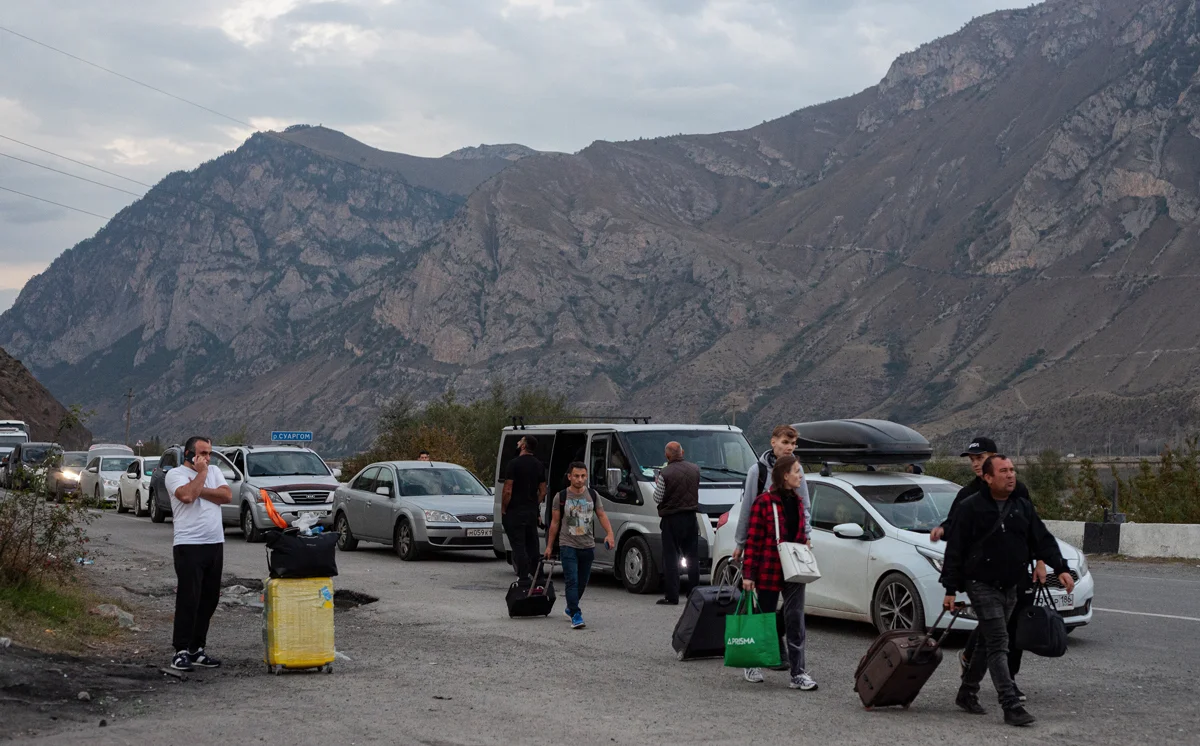
The experience of emigration for people living in the territory of the former Soviet Union certainly carries the burden of a transgenerational object. Apart from the penultimate wave of the 90s, emigration from the Soviet Union was almost always forced. And although any emigration is associated with a whole set of difficult experiences, forced emigration is more difficult because it is a consequence of external events that can be perceived as violence. The emigration of Soviet people was often associated with a threat to life or freedom and with the experience of irretrievable loss.
In the 60–80s, going abroad ceased to be classified as treason, but continued to be condemned by society. Problems began long before departure. Having decided to emigrate, a person often found himself in the status of a “refusenik”, that is, he doomed himself and his family to sit on suitcases for many months waiting for permission to leave - without the opportunity to work (he was fired from his job) and somehow provide for himself. At the same time, such people were often threatened with prosecution for parasitism. The farewell was like a funeral - I remember these departures very well, full of confusion, tears and melancholy.
They left forever, without hope of meeting, without the opportunity to visit their aging parents. The emigrant experienced guilt because, to one degree or another, he exposed those who remained to inconveniences: difficulties in getting a job, contempt from neighbors, or danger. Those who remained often hid the fact of their relative’s emigration, were afraid to contact him and were also tormented by melancholy and guilt. It is not surprising that emigration still carries additional complex connotations for people from the countries of the former Soviet Union.
Thanks to the 90s and 2000s, other emigration experiences emerged. People moved because they found work or went to study. Connections were maintained, and the move did not cause dramatic problems for family members. There was an opportunity to see the families of those who left in the 70s and 80s, many of whom adapted perfectly to their new life.
Of course, the experience of generations is passed on not only unconsciously. Conscious transmission also occurs. But in this case, when it is clear what our ancestors are offering us, we have the opportunity to refuse this gift or accept it, and then we talk about continuing traditions or maintaining family values.
Of all my friends who found themselves in forced emigration, my friend adapted the easiest and fastest. Since childhood, she talked about the adventures of her great-aunt, who, due to numerous twists and turns of fate, at a young age found herself alone far from home and not only survived, but also perfectly organized her life.
A friend recalled how her grandmother, who considered the main ability of a person to be the ability to quickly adapt to different living conditions, said: “Where I put a chair, there is a house.”
The friend's relative knew what she was talking about. Her “track record” included evacuation during the war, exile, forced emigration, and return to her hometown. Along the way, she learned several languages, got a profession, got married, and had children. She knew how to adapt. A friend met her as a teenager and seems to have inherited this ability. Adaptability as a value was deliberately passed on to subsequent generations.
Change pattern
Even when we talk about unconscious transgenerational transmission, we can control some aspects of these inherited properties by changing programmed patterns.
One of my clients came to me about difficulties with her nine-year-old daughter. The girl did not want to go to school, she was afraid that she would be scolded. The client (let's call her Marina) talked with the teachers: her daughter had no reason to be afraid. The girl studied well, her behavior also did not raise questions among teachers. Marina was also very worried because it was similar to her own experience. As a child, she was afraid of punishment and felt guilty for no reason, it seemed to her that her neighbors were looking at her judgmentally, and it was quite painful. Moreover, even as an adult, she often experienced inexplicable guilt and thought that she was somehow bad. Marina had an older brother and a younger sister. During therapy, she began to have intrusive dreams about a man giving her sister a cake and taking her in his arms.
In the course of work, which I will omit here, the client decided to talk to her parents and found out that her younger sister had a different biological father. Mother had a lover. She became pregnant and told her husband (the client's father). The parents decided to keep the family together and not tell the children anything. However, the client’s mother probably never got over the guilt and passed it on to the next generation. The point, of course, is not that a revelation descended on Marina. Most likely, she heard something and repressed it as a child, and also adopted her mother’s pattern of behavior, which she carried throughout her life and passed on to her daughter. After the situation became open (fortunately, all family members agreed to talk about their past, it was not easy, and they had to go to family therapy), relationships in the family became less tense, and the girl for whom the client sought help, significantly relieved.
Fourth generation problems
Sometimes, as in the case above, in family stories it is possible to find out the meaning of the “transgenerational object” because there is someone to ask. But often there is no one to ask and you have to guess or complete the reality.
Researchers of the phenomenon of transgenerational inheritance describe how different generations react to traumatic experiences. The first generation forms a transgenerational object. Things that “cannot be talked about” happen to people of this generation. The traumatic event that happened to them is hidden, and the experiences associated with it are suppressed or repressed. The second generation can guess what happened, picking up signs of an undesirable event, but does not ask questions, because it is clear that it is better not to touch on it. The same thing sometimes happens with the third generation. Representatives of the second and third generations often unconsciously do not allow themselves to begin to deal with the content of the traumatic object. For example, I found out that my grandfather was repressed when I was already over 20. Why I, who was interested in family stories since childhood, never asked my mother about my grandfather, I cannot explain. Perhaps she felt that she did not want to touch on this topic. As a result, only fragments of information reach the third generation, but this generation still has the opportunity to find out something from the direct bearers of experience. Moreover, often the severity and relevance of the trauma experienced and the need to hide what happened by the third generation weakens to a significant extent. The fourth generation often no longer has this opportunity: the bearers of experience, as a rule, have died. The content is repressed into the area of the unconscious. It is in the fourth generation that the symptoms of transgenerational trauma are most pronounced.
One of my clients contacted me about difficulties with her son—let’s call him Artem. The family moved to another country three years ago. Artem, who was eight years old at the time of the move, had difficulties with communication, anxiety, an inexplicable feeling of guilt, and sleep disturbances. It was difficult for my son to make friends in a new place. Moreover, the child stopped communicating with his fourth cousins, friends almost from birth, who also ended up in another country.
At one of the sessions, my client said that even before the move, when she and her husband were just discussing this possibility, she felt extremely uncomfortable. During work, it became clear that the discomfort was associated with an acute feeling of guilt, the addressee of which was completely unclear. A journey into the past revealed some inconsistencies in family myths: they said that my client’s grandfather died in the war, but this was impossible; her grandmother gave birth to a child from him in 1947. At the same time, there was a story in the family that one of the relatives was a “traitor” who “fled abroad” and asked for political asylum. Perhaps this was the client’s grandfather: he was a doctor, the head of the department, and he could have been threatened with arrest in the “doctors’ case.” It turned out that his brother (the great-grandfather of Artem’s fourth cousins) was fired from his job around this time, all his career achievements were completely destroyed, his brother was depressed and soon committed suicide. In fact, two families became victims of the decision to emigrate. Accusations and anger were probably projected onto all those emigrating. It is not surprising that, once in this role, my client and her son could experience difficult experiences.
Breaking out of the vicious circle
The most common symptoms of transgenerational trauma are inexplicable feelings, among which most often are guilt, fear, shame, a feeling of inappropriateness, being born at the wrong time, unexplained somatic symptoms, anxiety, depressive states, feelings of some unfulfilled missions, an incomprehensible desire for something restore or take revenge.
This can happen to individuals, in families, and at the level of social groups and entire countries.
At the core of collective intergenerational trauma, as a rule, there is some real historical event or period: a military invasion, a dictatorial regime, a natural disaster experienced by a certain group of people (ethnic group, state). The event affects each member of the group and becomes part of the cultural identity, intertwined with personal experience, largely determining how that group lives. Since injustice and ethical violations are considered key moments in transgenerational inheritance, the task of society is to survive the trauma, correct the injustice, or at least acknowledge it.
Silence, complete or partial lies, and rewriting of history prevent the recognition of painful reality and support the formation and transmission of a transgenerational object. When this happens at a social level, the impact on members of society is more widespread, leading to the formation of “vicious circles”.
For example, if society has not coped with any experiences, say, guilt or shame, it will form situations in which such an opportunity will appear.
If for one reason or another a collision with these experiences is unbearable, they will be suppressed, compensated by others until the next attempt. A sense of shame, for example, can be tried to compensate for pride in the power, “getting up from the knees” or, conversely, humiliation. Not experienced feelings turn into transgeneration objects and are transmitted to the next generations, the reactions of which, unfortunately, are somewhat programmed, leading to new and new repetitions, until someone dares to meet with these feelings and recognize them. Then justice will be restored and there will be a chance to complete the painful process.
Features of transportation in the fact that the experience is not verbalized, is not named, which means it cannot be experienced. At the same time, there is something shapeless that cannot be discussed and what is impossible to forget about. Something that persistently requires embodiment, otherwise it is impossible to do anything with this-neither argue, nor to survive, nor accept, nor reject.
The only way to fight is to get acquainted with the ghost, pull the skeleton out of the closet and carefully consider, recognize its presence, survive and complete the circle. The transgeneration object should find a name and shape. It must be named and placed in its place in the context of personal history or the history of the community/state.
Preservation of the memory of what happened and the search for the form and name for what happened to us is the main ways to cope with the transportation of trauma. And also - the memory of people who turned out to be persistent or courageous to call a spade a spade.