
Translated material
Museum Night
The sudden change of director of the Pushkin Museum means that simple loyalty is no longer enough. We talk about Elizaveta Likhacheva and Olga Galaktionova
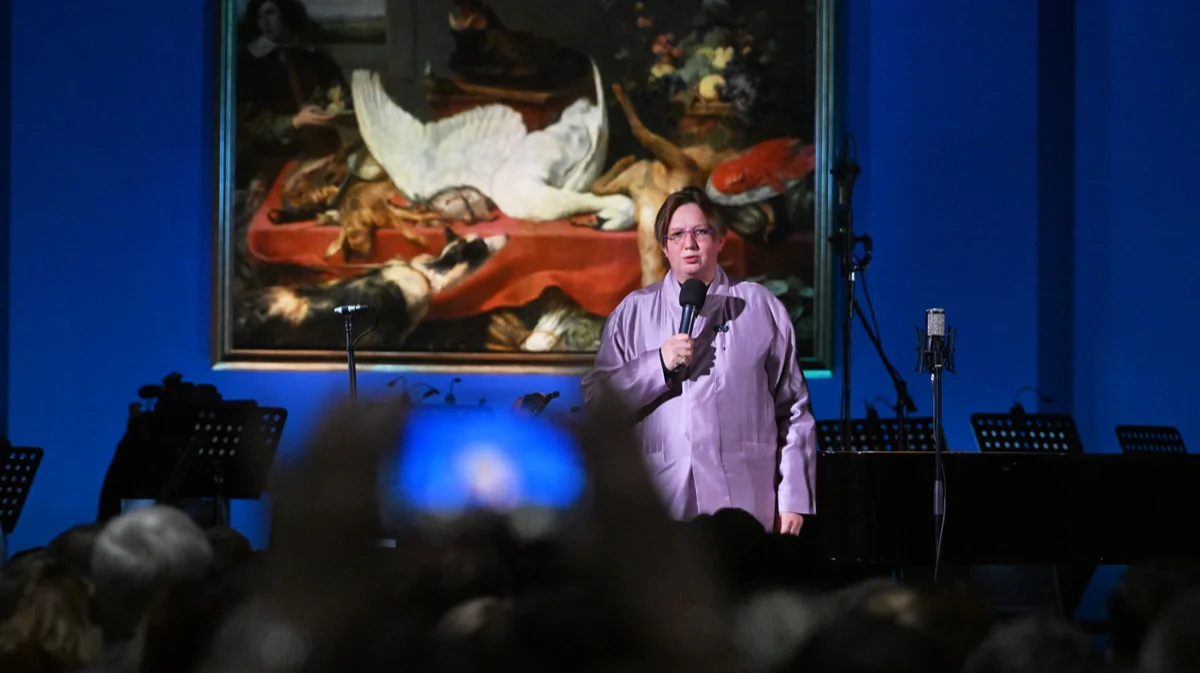
Elizaveta Likhacheva during the closing of the festival “December Evenings of Svyatoslav Richter” in the main building of the Pushkin State Museum of Fine Arts, December 25, 2024. Photo: Sergey Kiselev / AGN “Moscow”
On the evening of January 16, news appeared about the resignation of Elizaveta Likhacheva from the post of director of the Pushkin Museum. Olga Galaktionova, who in recent years has brilliantly headed ROSIZO, was appointed in her place. The replacement was unexpected both for the employees of the institutions and, apparently, for the main characters (at least for Likhacheva herself). The official reasons for the dismissal were not announced, but there is no doubt that they are political. Art critic Sorin Brut believes that in the person of Likhacheva and Galaktionova, two types of cultural leaders collided, one of whom is undesirable for the authorities, and the other, on the contrary, is in great demand. We talk about the figures of two directors of Pushkinsky and understand the reasons for the resignation.
The first portrait. The headstrong museum lady
On Thursday, Likhacheva returned from vacation and at the beginning of the day, according to the observations of the Pushkin Museum staff, she still did not know about the decision of the Ministry of Culture. Forbes , citing a source in the ministry, explained the situation as follows: “ I was little involved in the museum, a lot of trips, provocative speeches on all occasions. Nothing positive happened at the museum ." Art critic Ksenia Korobeynikova, in whose tg channel the news first appeared, wrote: “ 1) under the new director not a single hit exhibition has been made, 2) she is always on business trips; 3) there is no idea and concept of the museum, taking into account the branches and the Museum Town .”
A more convincing version immediately emerged in independent media . They remembered that Likhacheva sharply criticized the closure of the Gulag History Museum, condemned the transfer of Andrei Rublev’s “Trinity” to the Russian Orthodox Church, and at the very beginning of her directorship she compared Stalin with Mickey Mouse (both are “pop culture objects”), adding: “ He died - that’s it, let’s move on.” " Then several deputies of the Communist Party of the Russian Federation wrote a denunciation demanding that a criminal case be opened against her. Another “gesture of defiance” was discussed less frequently. Pro-government activists tore off “Last Address” signs with the names of repressed residents from a building owned by Pushkinsky, and Likhacheva restored them.
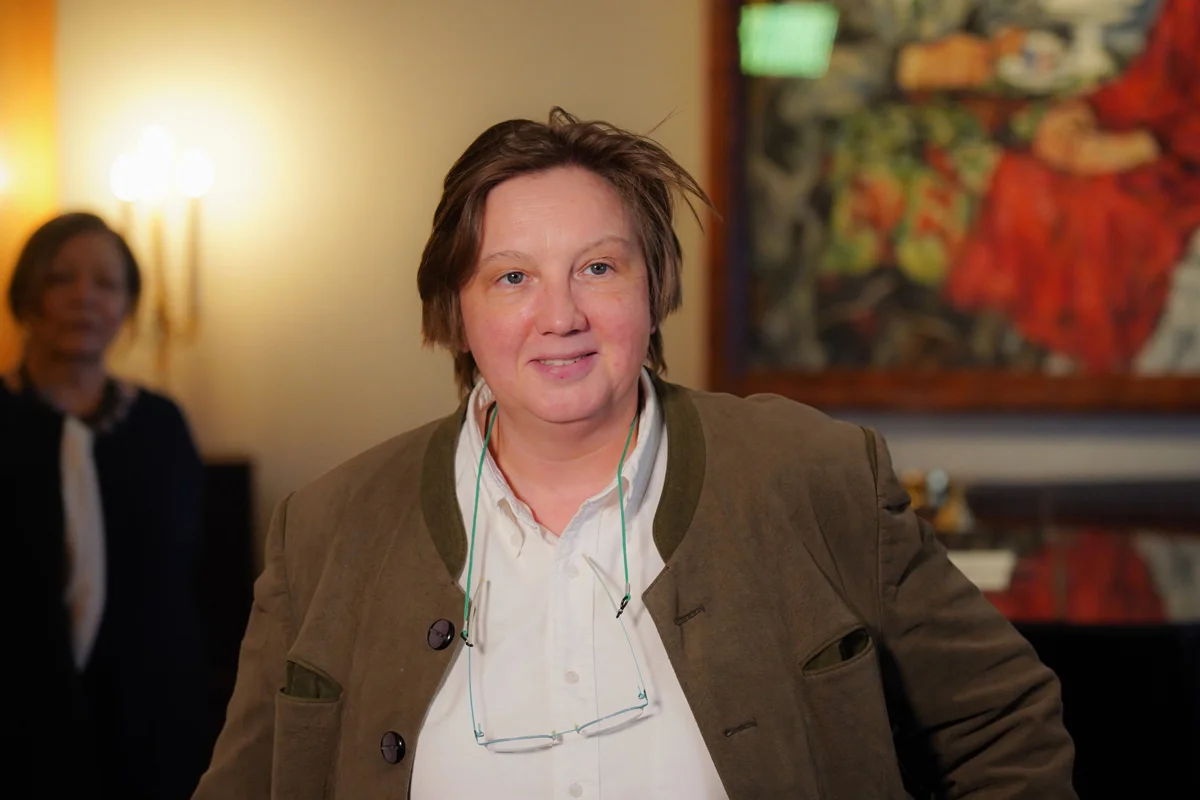
During the short period of her directorship there were indeed many scandals. In addition to those mentioned, there was the appearance of an art critic at the anniversary of “Cafe Pushkin” in a T-shirt “I don’t need sex, the artworld fuck me everyday,” which caused indignation among bigots throughout the RuNet. But in each of these situations, it was Likhacheva who was on the side of adequacy.
Her appointment itself also began with negative information noise, but then it was broadcast by the opposition part of society. The resignations of Marina Loshak from the Pushkin Museum and Tregulova from the Tretyakov Gallery and their replacements by Likhacheva and Elena Pronicheva, respectively, coincided. The situation was perceived as a whole: “Loyalists have replaced internationally oriented specialists.” But to everyone who observed Likhacheva’s activities at the Museum of Architecture (MUAR; since 2006; director in 2017–2023), the stretch of such a comparison was obvious. The Tretyakov Gallery was unlucky, and Likhacheva’s promotion looked like a “happy mistake” in modern times. Likhacheva is a competent specialist and a good manager. She is negotiable, knows how to play by the rules even in very bad political weather, and in some places coincides with the regime (her last interview with RTVI sounded extremely controversial, and in 2022 MUAR opened an exhibition in Lugansk, which Likhacheva interpreted as a “humanitarian action”), but she is not a loyalist you name it.
Unlike other bosses from the cultural sphere of late Putinism, Likhacheva is not an authoritarian or closed leader. The rapid development of the Museum of Architecture during the years of her directorship was due to a fairly young team of employees. Attracting personnel with a fresh perspective was not an end in itself, but Likhacheva found a common language with them and encouraged their initiatives. Her thesis that a museum is not a building, but the people who work in it, was confirmed both in MUAR and in Pushkinsky. She created a team of like-minded people and a system of healthy communication. According to the stories of ex-colleagues, one could easily chat with Likhacheva in the smoking room, share ideas without fear, and initiative was also not punished. At the Pushkin Museum, employees say, she walked around the departments a lot, always said hello, and was the first of the directors to put a cooler and a coffee machine in the guides’ room (how important it is for a guide to have a drink in between long conversations is obvious, but no one thought about this before Likhacheva).
When she left MUAR, many colleagues cried. On the morning of January 17, during the “transfer of powers” from the director of the Pushkin Museum, she was greeted and given a standing ovation. Some of the employees with whom I spoke said something like this: “ For the first time in 50 years, Pushkinsky was lucky with a director .” And this is precisely about teamwork (Irina Antonova was a strong specialist, but a dictatorial manager who practiced psychological violence; Marina Loshak was more distant, closed and less friendly than Likhacheva). The absence of a rigid vertical structure and openness, a team of like-minded people engaged in a common and meaningful business, does not fit well with the image of a budgetary institution in modern Russia.
Likhacheva is essentially democratic, which is evident even in her manner of speaking to visitors through the “Director’s Blog” and in numerous interviews. Her speech is informal, smart and full of 20-year-old slang,
- a living language, for the current leader it is inadmissible to be “familiar” and humane.
Pro-state authors are disingenuous when talking about the ineffectiveness of her work at the Pushkin Museum. Two years is too short for serious changes in such a cumbersome and conservative institution. In one of the interviews recorded in the summer, Likhacheva explained that she observed more during the first year. For the next period, “ a reform related to changes in the organization’s internal business processes ” was planned. The ex-director returned the permanent exhibition of the Pushkin Museum to its previous form, abandoning the experimental version (as a result of the controversial decision of Marina Loshak, many works ended up in storage rooms or were not very successfully “compacted” on the ground floor). The re-exposition of Likhacheva is not a spectacular gesture, but it is useful, especially for training new cultural personnel.
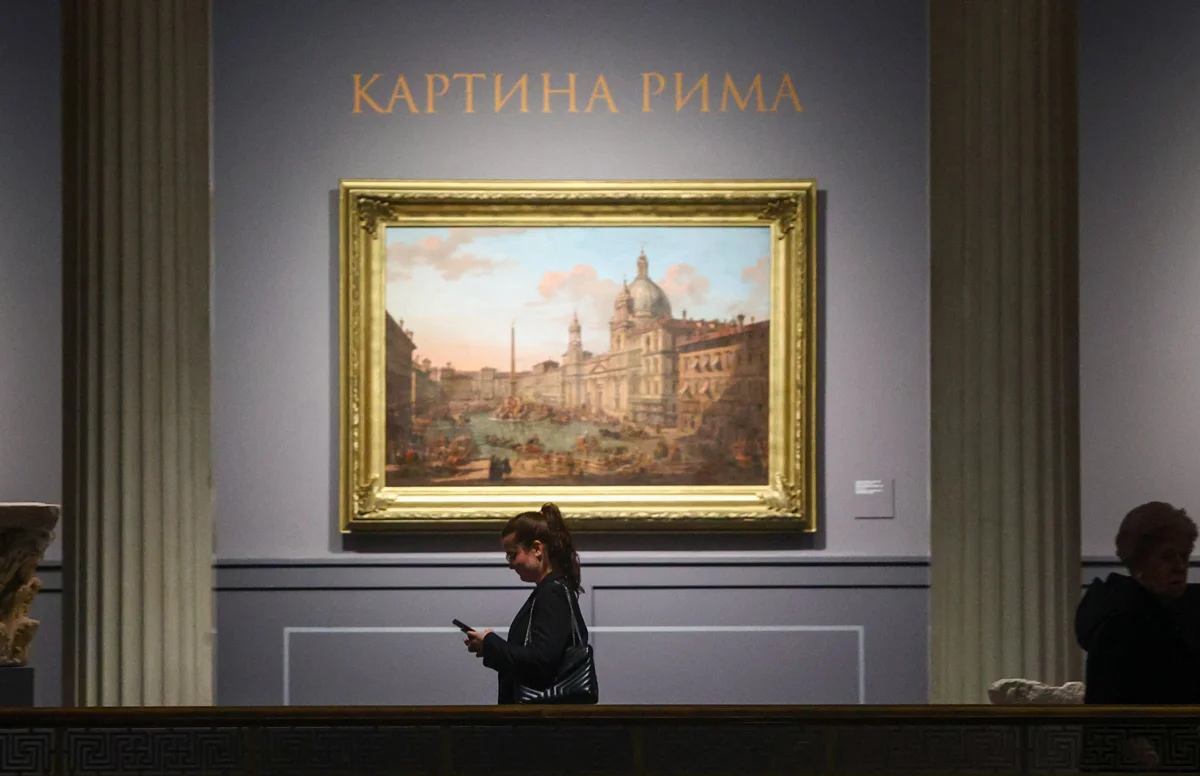
Pushkinsky was rebranded, digitization of the entire collection was launched together with Sber, and work was carried out in the regions. As for exhibitions, there really weren’t any “blockbuster” hits beloved by the Russian authorities. This is largely due to sanctions, which are critical for a museum aimed at working with the West. On the other hand, the fact that “hits” were not the goal for Likhacheva. Moreover, high-quality, completely spectatorial, but not flashy exhibitions at the Pushkin Museum were actively held (for example, “The Three Times of Rome” or “The Kingdom of Urartu”, introducing Armenian antiquities, shows of Russian artists of the 20th century associated with the museum - “Amazons of the avant-garde” to anniversary of Varvara Stepanova and the “nonconformist” Vladimir Weisberg).
It is clear that she was determined to carry out systematic work. What is not visible is serving the desires of the authorities, both direct (like patriotic exhibitions) and formal (like the “hit” exhibitions mentioned above). Likhacheva is a willful person, with her own expressed values, views and style. At the same time, brave enough to hold such a post to object to his superiors, as in the case of “Trinity”, the Gulag Museum and the “Last Address” signs. Although Likhacheva is determined to cooperate with the regime, she finds it difficult to follow the cramped rules of the game. All this is the main reason for her dismissal. The authorities simply corrected the “lucky mistake”, and everything became “as it should be.”
The second portrait. Producer in the service of the Motherland
The lack of blockbuster exhibitions at the Pushkin Museum most likely also influenced the decision of the Ministry of Culture. The best proof is the appointment of Olga Galaktionova. Apparently, they expect bright, large-scale shows from Pushkinsky. The goal is to show that sanctions are not an obstacle, and the museum, whose post-Soviet reputation grew on cooperation with the West, has flourished more than ever and is demonstrating unbridled “cultural growth.” In addition, a high-profile blockbuster exhibition is a standard method of distracting society from problems, and since there are many of them, then we need as many hit shows as possible. Olga Galaktionova is almost ideal for solving these problems.
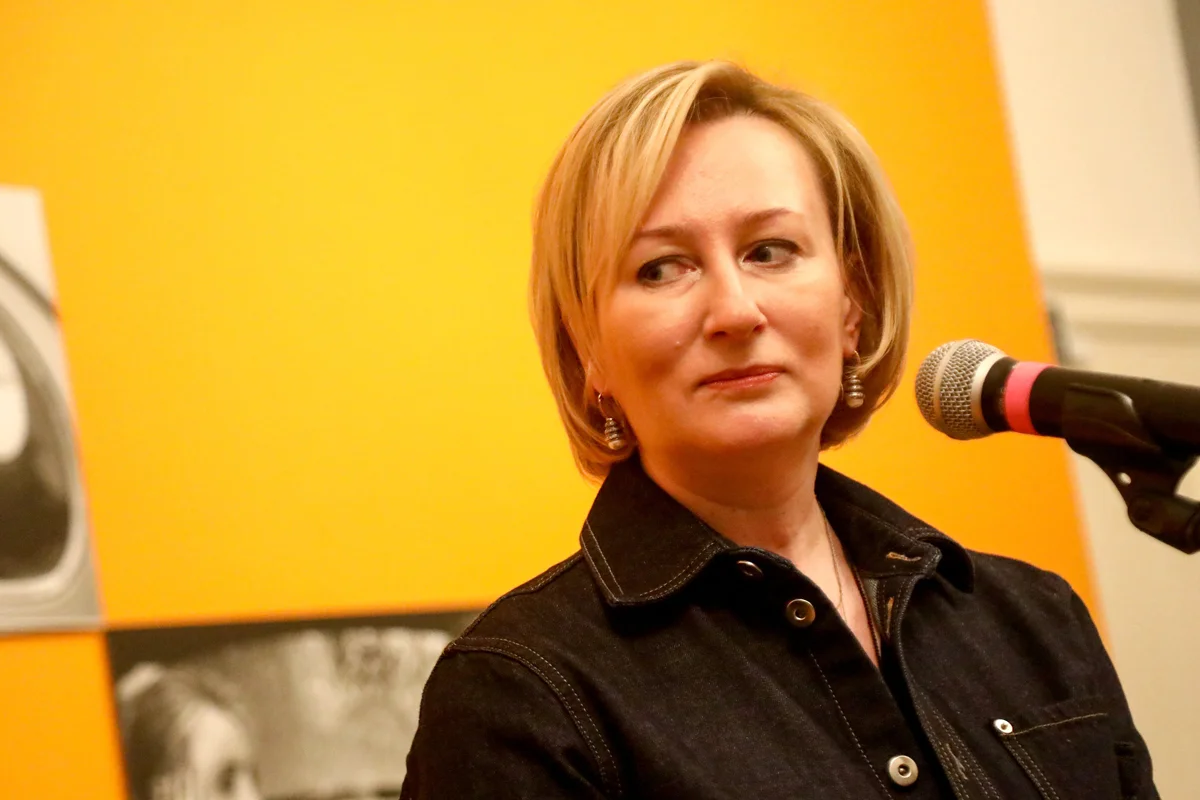
If Likhacheva is an art critic, then Galaktionova is first and foremost a producer. In the 1990s, she studied for a year at the Ilya Glazunov Academy, then moved to GITIS, and her further career was connected mainly with theater, cinema and television. In these areas, Galaktionova usually acted as an organizer and producer (at the end of the 2000s she studied in this specialty in New York). She was an adviser to the chairman of the board at the Kudrin Foundation for the support of civil initiatives, and Meduza connects her with the TG channel “Zakulisk”, which is fighting the “liberal crowd” in the theater environment. “ROSIZO” became the first place for her systematic work with fine art. The institution, which was in deep decline, began to revive under Tregulova and Tatyana Volosatova, but became noticeable during the Galaktionova years - and primarily due to the “blockbusters” (the really strong “DK USSR”, “Viktor Tsoi. The Hero’s Path”, “Pavel Filonov. Artist of the World's Prime", "Kukryniksy", "Leningrad - Hero City", etc.), which for the director were clear priority. ROSIZO also showed more complex, original exhibitions, but the general public rarely learned about them.
The practice of appointing not an art critic, but a successful manager as the director of a large museum is one of the modern approaches. However, the role of a “producer” in a Russian government agency implies, first of all, the skill of interacting with the only real client—the authorities.
The main condition is unconditional loyalty (“the customer is always right”). The “crowd” of spectators in the museum halls is confirmation of the successful solution of the client’s problems. A perverted model arises in which the exhibition is not made for people, but for the Ministry of Culture, and the main exhibit in it is precisely people. Among the viewers of ROSIZO there was an opinion that the institutions’ social networks were promoting not so much the events as Galaktionov personally (a kind of showcase for the authorities).
Her own interviews (for example, with TASS or The Art Newspaper ) are dry and bureaucratic, reminiscent of a collection of bureaucracy and consist mainly of numbers from a report on successes. In all the interviews I know, the phrase “reasonable, good, eternal” appeared, sowing which is the meaning of cultural work. But what exactly is “kind” and “eternal” will be determined by the client, and it’s easy to guess that his “kindness” will be overflowing. Olga Galaktionova told TASS: “When I took the position of head of ROSIZO, I had an absolute understanding that the time had come to “serve the Motherland.”
In the public speeches of the new director of the Pushkin Museum, it is impossible to find even a hint of an idea that will not be accepted by the authorities. Galaktionova looks like an ambitious and career-oriented person. She is quite comfortable in the rigidly twisted order of things. And in the chair of the director of the Pushkin Museum today she will probably sit like a glove.
All this does not mean that the Pushkin Museum will crumble. The external picture, if there is no overkill with propaganda, on the contrary, will turn out to be spectacular. And if Galaktionova, as she used to do, involves talented curators in her “blockbusters”, the exhibitions (sometimes) may also turn out to be smart. But there is no need to talk about the production of meanings and even relatively independent statements. What will happen to areas of the museum that are difficult to put on display (for example, with scientific work not in a quantitative but in a qualitative dimension) is the “mystery of the hole.” At the same time, if the state tightens ideological pressure, then there will almost certainly be no one to protect Pushkinsky’s reputation - after all, the client is always right.
Last week, several high-ranking positions were occupied by graduates of the Higher School of Management in the Field of Culture, created by the Ministry of Culture, the Office of the President of the Russian Federation, etc. The most striking appointment was received by graduate Anna Trapkova - she headed the Museum of the History of the Gulag. “ It is important that cultural authorities at all levels are headed by professionals, real leaders who will not only manage, but also convey the correct meanings and values. Therefore, we pay special attention to the training of management personnel,” said Minister of Culture Olga Lyubimova in this regard. The replacement of Likhacheva with Galaktionova is determined by the same logic. A “willful” person, even if he is able to negotiate, is no longer suitable for the state. It is consistently moving towards becoming the only author of a cultural program in the country. And the author just needs a loyal producer. Everything is logical.