
Translated material
Khaki Easter egg
What is indoctrination? Psychologist talks about what Soviet practices have carried over into our time and how to keep children safe
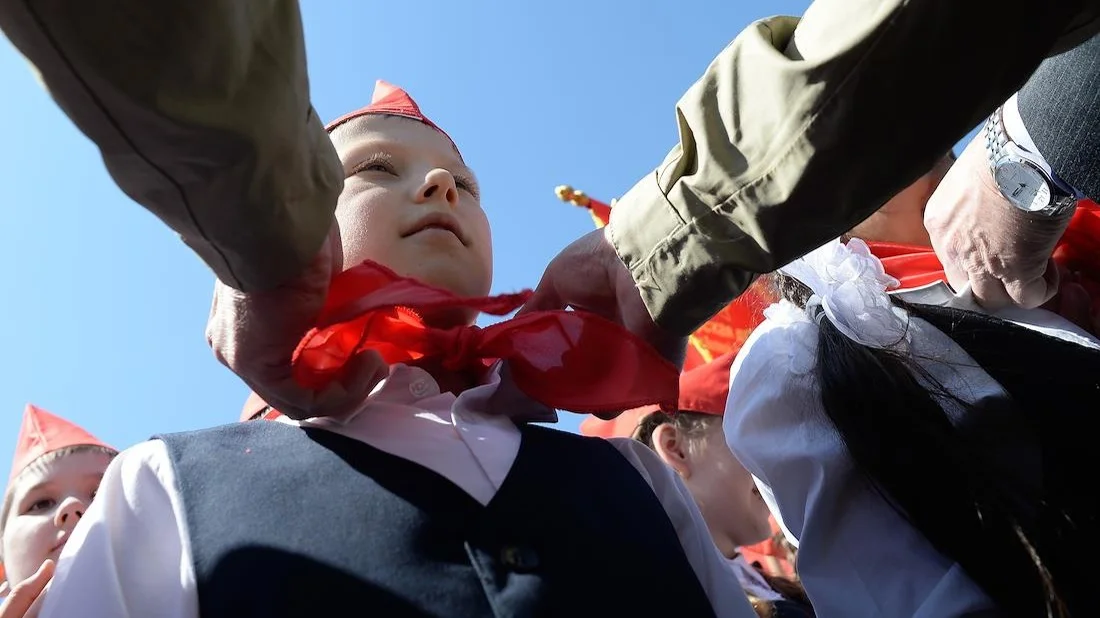
Photo: Kristina Kormilitsyna / Kommersant
Still, it’s not for nothing that people remember the USSR so often. And those who lived in it, and those who only heard about it. After all, much of our modern life began there, in the Soviet Union.
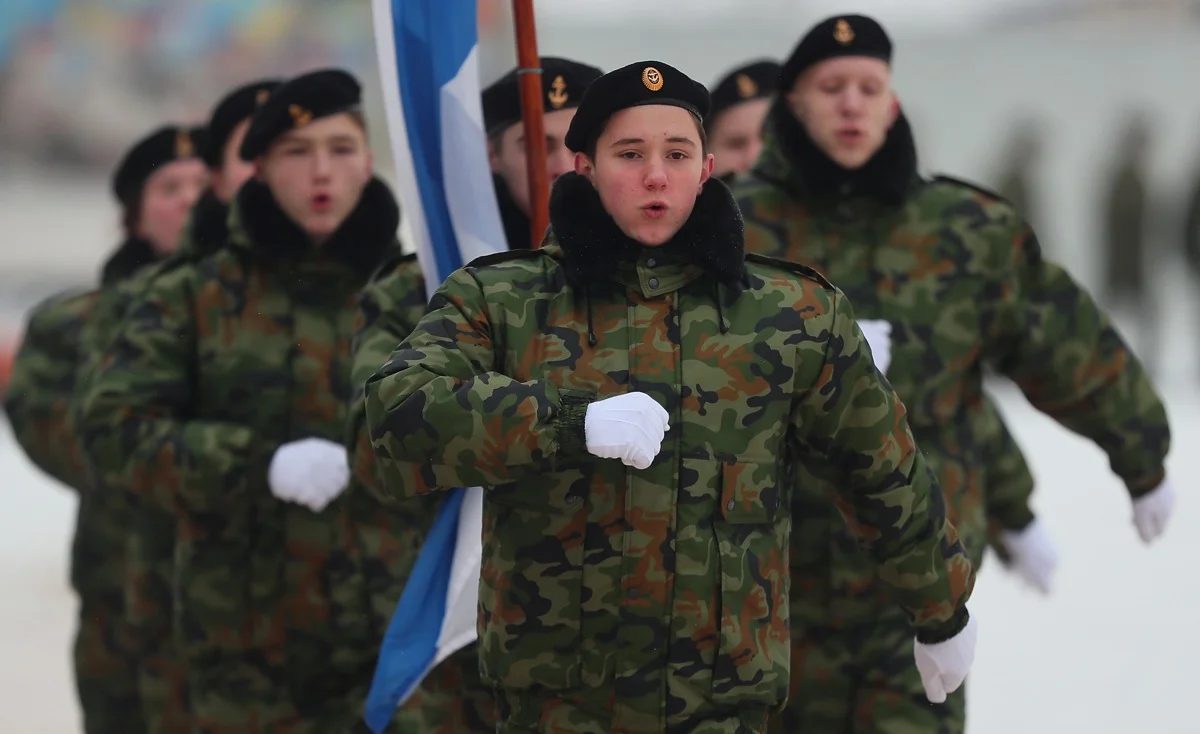
Why do I remember him more and more often when I see groups of small children in military uniform? After all, at their age we didn’t have such a uniform. Moreover: we were all for peace, we sang songs about peace (although these songs often sounded in a militant manner, in the rhythm of a march). But we also marched in formation singing, we also marched in the same (but not military) uniform! Now I remember that there were actually a lot of conversations about the war, events dedicated to the war in our childhood. I grew up in this country, was a child there, then a student. She worked as a teacher when the Soviet Union disappeared. In post-Soviet times, she retrained and became a psychologist, was a university teacher, and in the meantime the Soviet legacy, although it changed, still remained with us. And in many ways, children today remind me of us at their age. Who brought the USSR into their lives? This country, which seemed to no longer exist, stepped into the future with us, taking on new forms. How did we get... to where we got to?
What was it all about?
When the Soviet Union disappeared, I always repeated why I didn’t want it to return. Because I no longer want to live in a country where everyone has to think the same. And now we must all think the same again and always approve of everything. Somehow the Soviet Union made us like this. Somehow now they are making us like this again, largely relying on the solid foundation laid in the Soviet past and the experience gained then.
Of course, to some extent we were allowed to think differently. For example: do you prefer to relax in Sochi or Dombay? (Of course, not in Turkey somewhere; there was no such option.) Do you like Pushkin or Lermontov? (Of course, not Gumilev; there was no such option either.) But there were still key beliefs in the Soviet mass consciousness that had to be shared by everyone, without choice. Under capitalism, workers are unhappy, but under socialism they are happy. The Soviet Union has the best childhood. And so on. In the 70s, people were already laughing, telling jokes, and yet no one remained completely “uninfected.” It seems like a reasonable person is in front of you, and suddenly you hear him say without a hint of joke: “But our law is the most humane in the world!”
I remember that back in the 80s I myself quite sincerely believed that it was scary to live in capitalist countries. At that time I was indifferent to politics; I was reproached both at school and at the institute for political illiteracy. How did this idea form in my head? But the necessary ideas were broadcast to us at every step. And you didn’t have to be interested in politics to know the right answers to key questions. We breathed this air. We watched TV shows. We saw the evil bourgeoisie in the cartoons in the Pravda newspaper. We listened to political information at school. This is how a modern person can easily believe in a terrible political regime in a certain country. After all, they talk about this endlessly on TV. They write on the Internet. Organize events at school.
The introduction of beliefs approved by the authorities into people's heads is called indoctrination . Ideally, a person eventually begins to perceive what he hears without criticism and any unnecessary questions. And as a result, he begins to think the right thoughts on the right topics and does not wonder whether these are his thoughts.
REPEATING THE SAME
Indoctrination can be carried out through direct persuasion, repeating the same thought over and over again. Most often, what is said will be varied by choosing different words or giving different examples. Or it can be carried out more subtly, so that the listeners themselves come to the desired conclusion. For example, with the help of the correct selection of news. This is how they did it in Soviet times, and this is how they do it now. We were brought up with the idea of “good with us - bad with them”, “we are good - they are bad”.
What happened in our preschool childhood
Soviet children marched a lot. I remember being the new girl in kindergarten. Everyone was ordered to walk, everyone went - and I went. And then the teacher stopped everyone and said: “Tanya is very inattentive. Let’s ask what kindergarten she’s from!” I answered: “None of them.” Because before I was left with my grandmother. And they didn’t think of explaining a simple thing to me: with this foot when they say “one”, with this foot when they say “two”. That's all!
Someone will object to me: so what’s wrong with these marches? After all, it was just a game. So, if it didn’t resemble a game, it wouldn’t be attractive to children. And when children march with pleasure, it helps them willingly succumb to Soviet education. After all, keeping up means being as identical, correct, and obedient as possible. <….>
Of course, preschool childhood is not only kindergarten, but also something more interesting. The twins from the neighboring yard were called Zhenya and Seryozha. They either climbed over the fence to us, or came in from the back door and invited me to play war with them. As expected, “ours” and “Germans”: one is with me against the other. It was exciting! I also had a toy gun. I ran with them, “shooting”. “Ours” gathered for reconnaissance and discussed their secret plan. And then either Seryozha or Zhenya said to either Zhenya or Seryozha: “She told me your secret!” Either Zhenya or Seryozha laughed. And I was at a loss.
Another Seryozha invented a father and grandfather for himself, whom he did not have. Men were important to the boy as models; there were none in the family, and he invented them himself. He presented them as military men; For many, the image of a soldier was associated with masculinity.
Of course, we played different games, not just war. In general, do children play it in all countries? I didn't think about it before. Soviet children played war often. Of course, we were raised by people who remembered her. They could have said something about her. When the family got a TV, I saw war films. <…> Of course, the theme of war came into my life when I had not yet thought about it.
About modern children
A six-year-old girl draws Easter eggs and paints them with gouache. One is in khaki color. He says: “It’s military.”
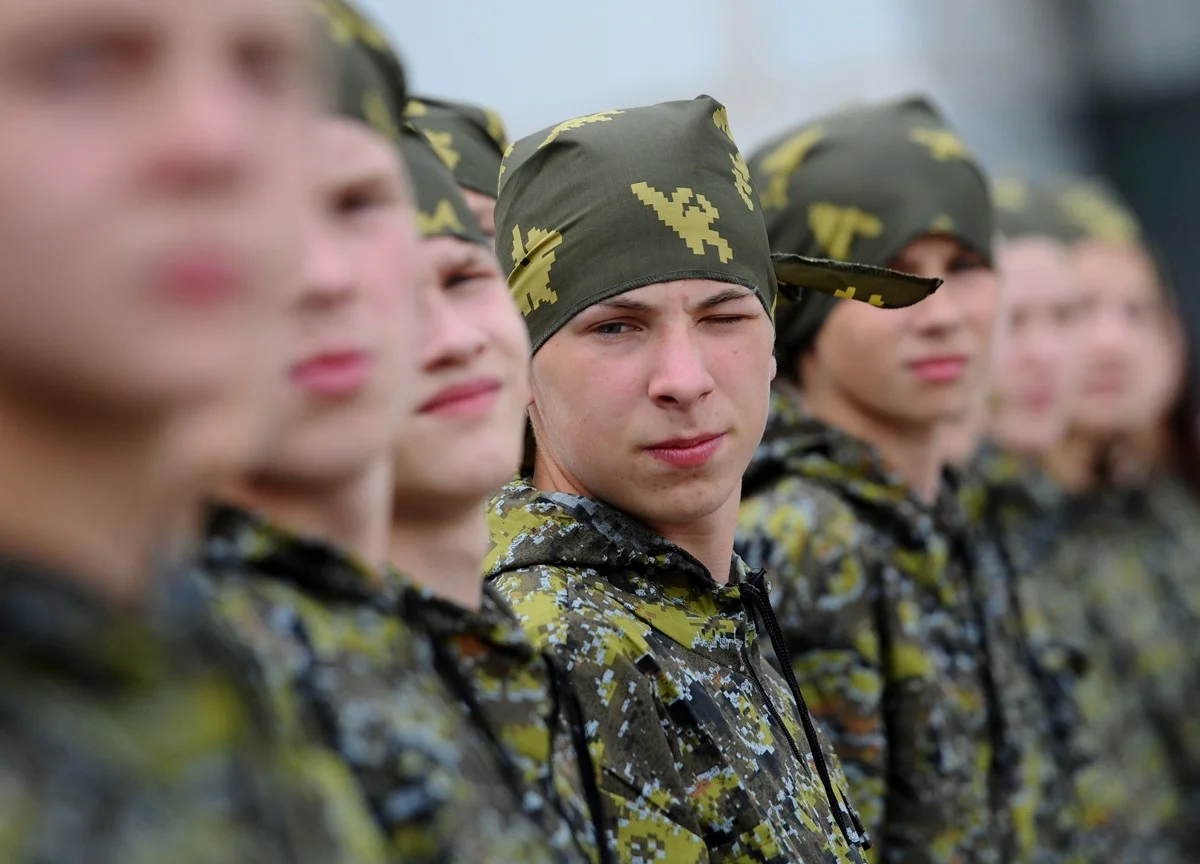
Now they want to introduce “Talks about important things” in kindergartens, like in schools. What happened in Soviet childhood? I’m trying to find something on the Internet about “lessons of courage” in the USSR. Of course, they were at school, and we were told about the exploits of soldiers, but now the Internet only writes about modern events. This means that at school now there are not only “Conversations about important things”, but also “lessons of courage”. But in kindergarten it seems to be neither one nor the other. But by May 9, the kids are dressed in military uniforms, and they march in formation around the city. And the Easter egg is military.
ABOUT THE IRON CURTAIN
A society that actively indoctrinates seeks to protect its people from alternative, “hostile” points of view. At the same time, the influence of unfriendly groups and views continues to be feared. The indoctrinationists suspect that the enemy is not asleep. I remember how, during my Soviet student years, a formidable teacher of the history of the CPSU used to say: “Why didn’t comrade (say, Ivanova) prepare for the seminar? The influence of bourgeois ideology."In reality, bourgeois ideology had very little chance of reaching us. Most Soviet people had a very simple radio at home, and it had only one channel. And a good old black and white TV, which, I remember, had two channels. The first channel was the main one. The second showed the same thing as the first, often after a while, sometimes at the same time. Local television was included on the second channel instead of some of its programs. With local news and concerts based on local requests. That's it.
What does indoctrination have to do with it? And despite the fact that the stronger the “iron curtain,” the more effective it is. And it not only surrounds the country, it is also in people’s minds. In fact, a Soviet person had the opportunity to buy a transistor receiver that picked up foreign radio stations. But most people simply did not try to gain access to alternative (and therefore “enemy”) information. Blocking Internet resources is also surrounding the country with an “iron curtain.” And with alternative information, by and large, the same story. The “Iron Curtain” is in people’s heads: after all, nothing worth finding there, on the unfriendly Internet, is just slander.
What happened in the Soviet school
I remember how, at the age of eight or nine, I was inspired and wrote poetry:
*We remember Lenin’s words,
They freed us from death.
His words came true forever,
And he himself died in the war, believe me!*
I gave it to my parents to read. They were especially amused by “believe me.” But the pathos was correct, Soviet! Written with all my heart. So in my poem Lenin became a war hero.
And his desk neighbor Misha sang to his parents at the concert: “The tanks rumbled across the field, the tankers went into the last battle...” At the end - “and a bunch of dead bodies remained from the fascist detachment.” As I remember now. It was he who suggested such a song, and the teacher included it in the program. <…>
Misha has always been a great patriot. So what can I say? As adults, we found each other on social networks and began to communicate as usual: telling each other how they live now. And 10 years ago, there, on social networks, they quarreled and broke up because they understood love for the homeland differently. In general, the usual story. It's a bit of a shame though. Still, they sat at the same desk.
About modern children
In the dining room, where I sometimes come home from work at lunch, a little boy in line kept bothering his grandmother because he had a question: why the “Kiev” cutlet? Was she born in Kyiv? The grandmother waved him off, and the kind canteen employee responded: what a smart boy he is. “You probably know that Kyiv is Ukraine. What now ***. Ukraine attacked Russia." (sic)
And the boy kept repeating: “Was she born in Kyiv?” I told him: “Yes, she was probably born in Kyiv. Someone probably cooked it there for the first time.” And he beamed because he guessed correctly, and he calmed down. He didn't need anything else.
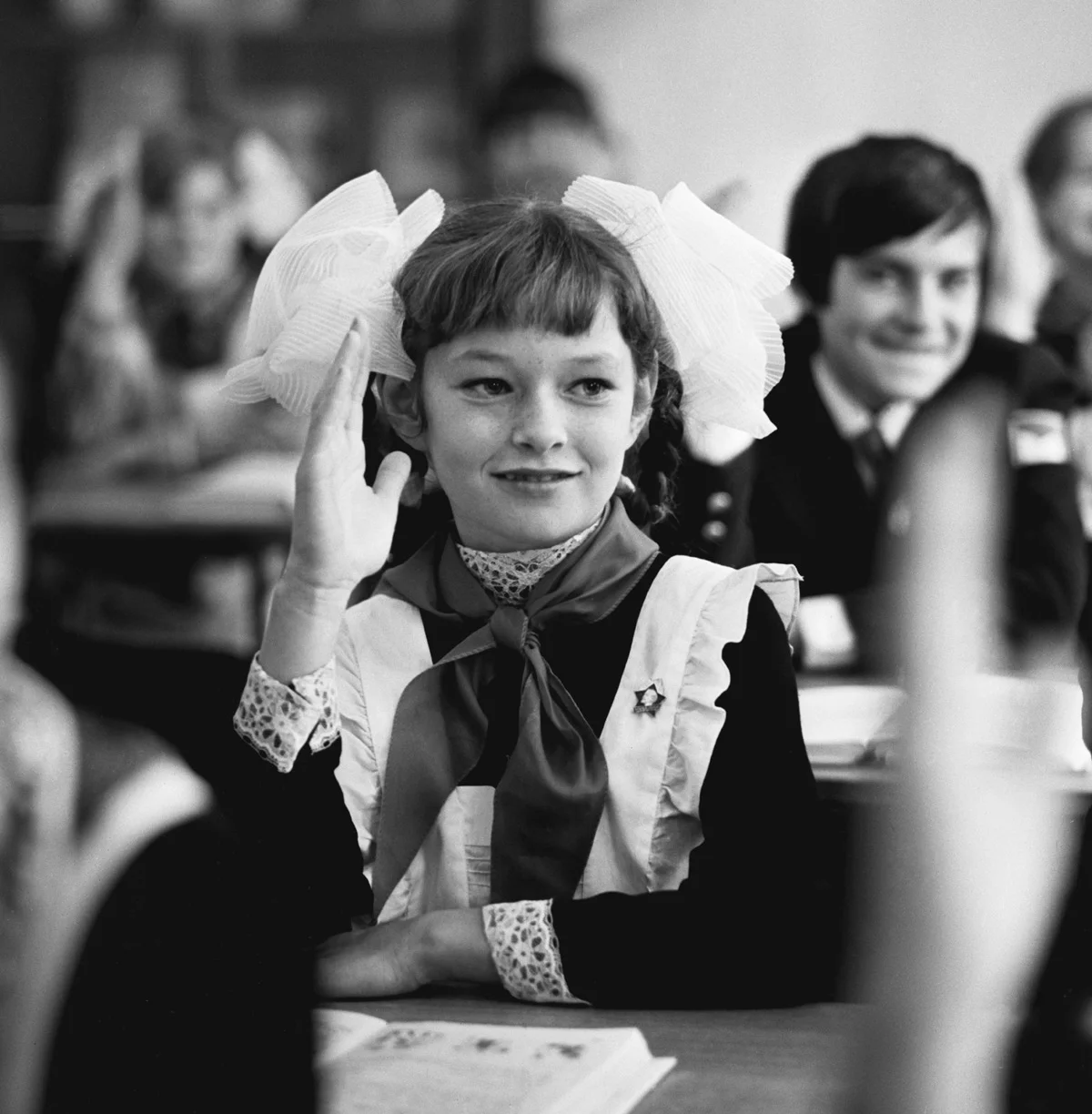
What happened in the Soviet school
And I myself - it seems, in the third grade - decided to plan for myself the best, most worthy life. I don’t remember all the stages of this life. But I remember how I came up with the end for myself: to go to war and die heroically. And I was surprised when my friends laughed. It seemed to me that this was rational. You still have to die someday, so I came up with the best, most worthy death for myself. What was in my head...
But thoughts about the atomic bomb did not inspire any of the Soviet children. They scared us of a nuclear war. I remember how back then, in elementary school, the teacher told me: if you wear a flowered dress, then after the explosion of an atomic bomb, flowers will remain on your body. Just imagine - and then in the evening you can’t sleep.
About modern children
One little boy asked if I knew we didn't come from apes. He told me: we came from our Russian gods, that’s what my mother says. He's a smart boy. He thought about it and apparently remembered that not all people in the world are Russian.
And he added: well, maybe others came from monkeys. Little patriot.
SELECTION OF INFORMATION
Information about different countries and events in the world was selected and presented to us in such a way that this idea was confirmed again and again. For example: Soviet sailors somewhere saved some other, foreign ones, whose ship was wrecked. Well done Soviet sailors! We were told about this in detail in the newspaper and on TV, they noted that these are exactly the Soviet people...After some time, the newspaper and television reported a case where a Soviet person somewhere in a capitalist country ended up in a hospital, and was treated there for money. Do you see the connection? And in our heads, over and over again, a “puzzle” was put together: we save people for nothing, but “they” don’t do anything for nothing and strive to extract their own benefit from the grief of others. By the way, what do you think: have the Soviet media ever told in detail how any foreign sailors saved Soviet ones? If, God forbid, from a capitalist country - either this was not talked about, or the emphasis was not on the fact that the rescuers are great, but on the fact that it is our people who are so persistent.
There was such a section in Soviet newspapers: “Their morals.” About any cases of dishonest or cruel behavior of people in the capitalist world. We knew that these countries were dangerous. That they have a high crime and suicide rate there. They are aggressive and want war. Once upon a time they explained to me as a child that in a socialist society people are kinder. Because we live better. And now “their morals” are about Ukraine, of course. And other “unfriendly countries”.
What happened in the Soviet school
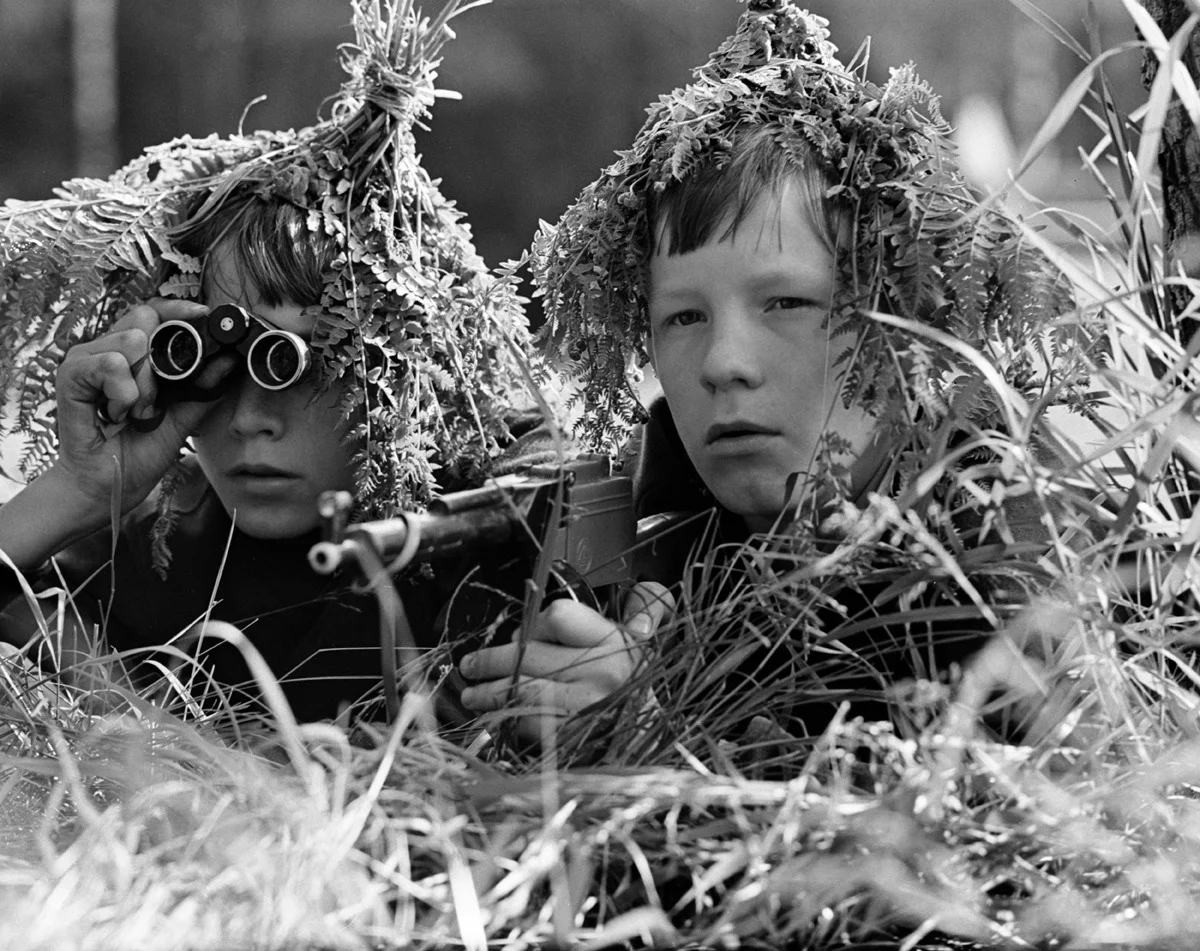
At school age, Soviet children still played war games. We fought with the guys from the neighboring yard. If it worked, they took prisoners and interrogated them. "Tortured." I remember how they tickled the little girl Emma, demanding her password until she cried. Then we realized that we had overdone it, regretted that we had tortured, and the game was over. It seems that then we realized that torture is cruel. <…>
In our childhood as pioneers, we had many events where we lined up, or walked in a column, or chanted something in chorus. Throughout our childhood, we stood on rulers. And of course, they marched until graduation. As we marched, we shouted mottos and chants and sang songs that were good to march to. <…>
Schools held annual formation parades and songs. Everything is the same: motto - chant - song. <…>
I was still pathologically stupid in the ranks and therefore did not participate in the reviews. Together with a couple of others who couldn’t march, I looked at my marching class from the sidelines. Honestly, it was humiliating. And it’s a shame: I liked and wanted to march. Only it didn’t work out.
About modern children
“Are you a psychologist? You look very nice. - What's here, designer? What a big turbine! - This is not a turbine, this is a nuclear missile. War of the rocket with its head. (The rocket hits the Lego man in the head, the man falls backward.) - Now he's a fool. He needs to insert a zipper into his head and fasten it, and then seal it with “Moment” so that it never comes undone, then he will remember something. “There’s also a psychologist at school, but not you.” She has a big Velcro bus. Don't you have a big bus? - If only I had a time machine!.. One! - and I’m back in kindergarten. It's interesting there. Why did I just become an adult? Once! - and I’m already 80 years old. And I already bought a car."
What happened in the Soviet school
My friend Lena enthusiastically told me how she would be an underground worker if enemies came to our city. She asked me if I would help her and was disappointed when I was not enthusiastic about her offer. Not interesting. It turns out that she will be in charge, and I will be just an assistant. But she didn’t seem to understand me: “So you won’t help?”
In the center of my hometown of Pyatigorsk, where there is a monument to Lenin and the Eternal Flame, two pioneers with machine guns (unloaded, of course) always stood guard. They stood motionless. It seems they were only allowed to breathe, swallow and blink. It was called "Post Number One". We recently met at home with another childhood friend (another Lena). We passed by Post number one and remembered how it was. She corrected me: two boys stood motionless with machine guns. And there was another girl who always walked nearby, watching: what if one of them got sick? Lena said that she knew for sure, because she was on duty there herself.
Do you remember that WWII is the Great Patriotic War, VOSR is the Great October Socialist Revolution? We grew up without parting with two historical events. Modern youth do not even realize that the October Revolution was in first place for us, and not the Second World War (which we, as now, called the Great Patriotic War). But in second place in popularity was, of course, this war and the events dedicated to it. Later, when I was studying at a pedagogical institute, I learned that all this is called “military-patriotic education.”
Events dedicated to the Great Patriotic War were held three times a year: on February 23, on May 9 and on the anniversary of the liberation of our city from the Germans. We held special lines. The pioneer squad of our school was named Zoya Kosmodemyanskaya, and therefore on the rulers they read to us word for word the same story about how the Germans tortured Zoya. Endowed with a vivid imagination, I imagined all the events with my own eyes and felt them with my skin. We were told that Zoya shouted: “It’s happiness to die for your people!” (And you will be surprised that I once dreamed of dying heroically as a child? After all, death in war has always been glorified.)
The history teacher often told us how many troubles there are in the world from the Germans. She repeated: “This people are like a phoenix: no matter how much you kill them, they are reborn again. The Germans must be wiped off the face of the earth, then there will be no wars.”
She might have had reasons to hate the Germans so much. They say she was married to a Jew, and Russian Jews always have someone killed by the Germans in their family history. Or maybe not one or two. And this is a huge pain.
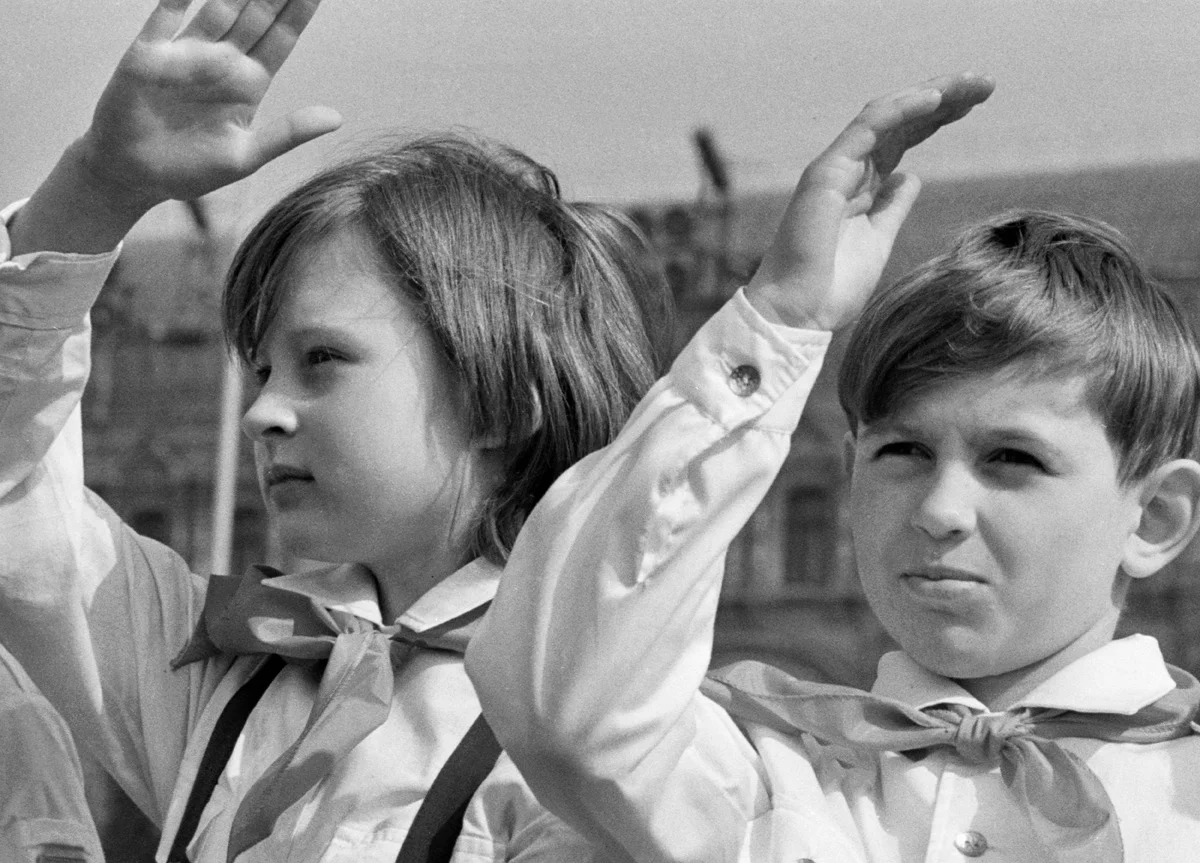
But I had a German great-grandmother, so I kept looking for some argument in defense of this part of my family. Directly above the teacher on the wall hung portraits of the classics of Marxism. When she once again cursed the Germans and said that they had not produced a single good person in their history, I pointed my finger there and asked: “What about Marx?” She answered: “And Marx is a Jew.” I didn’t give up: “And Engels?” - “And Engels is a German, nothing can be done.”
Marx, Engels, Lenin - these three portraits hung in every history classroom. Here and there we remembered not Stalin (can you imagine that today?), but Lenin. We chanted: “Lenin! Party! Komsomol!" In pedagogy, the most encouraged topic of scientific work was education using the example of Lenin. At each stage of our growing up, we had to be at the appropriate age of the All -Union organization: first October, then pioneers, then Komsomol members. We wore the icons of these organizations with a portrait of Lenin. The smallest, October, - with a portrait of Ilyich in childhood.
In high school, we were taught to disassemble and assemble the Kalashnikov assault rifle. This was in the lessons of initial military training (NVP). I was able to disassemble, but it was not possible to collect. <…>
At the NVP we were taught to throw a dummy grenades. We also went to shoot a “dog meadow”, intended actually for walking and training dogs. At this time, there were no dogs with the owners there, no one interfered with us.
But usually the NVP lessons took place at school and began like this. Immediately after the call, the whole class was built in the corridor.
"We wish you health, Comrade Major!" <…>
Like many teachers whom no one is afraid, the military often shouted. "War on the nose, and you do not wear notebooks!" <…>
About modern children
A little girl informs me that the holiday was celebrated in kindergarten on February 23. And my childhood passed in the USSR, and I ask: "Have you congratulated the boys?" She is surprised. It was completely different there. All the children were dressed up in costumes: who was a tank, some of the warship. And she was an airplane, it seems. So it is celebrated now.
Find what to lean on
The theme of the Great Patriotic War, always relevant, again with us and, of course, responded in the souls of our people. She affected all the families, each of us participated in that war. Those of us who lived in the Soviet Union went through military-patriotic education. The unification in one event of the demonstration and the military parade is also people, as they say, “set off”. The Soviet past makes itself felt.
What happened in the Soviet school
And I, by the way, from the generation, which in the school years still saw real veterans of the Great Patriotic War. On the 35th anniversary of Victory, in 1980, all high school students had to go to rewrite them and record their memories. The classmate and I went around our yard (four five -story houses, apartments, probably 250–300) and found veterans ten people. All apartments passed. (This, by the way, is about how much now, in 2024, among us there may be real veterans of that war.)
It was not easy to get military memories. One driver-Armenian, apparently, due to the fact that they often molested veterans, learned the chapter of some kind of textbook. Which he fulfilled us, never having stumbled. "One fine day, our troops broke through the Kursk arc ..."
The only person who shared his memories was a doctor. He said: “Girls, let me tell you how we transported the wounded. They were folded with stacks. At the bottom of the truck - lightly wounded. On them across - heavier. And on them (again across) - those that are heavier than all. " This is because there were a lot of wounded, but there were not enough cars.
Larisa and I were noted that we found the most veterans and even brought their memories. And they instructed one of these veterans to invite to school to meet. Nobody wanted to go to school. One old man, softer, we persuaded for a long time, and he told us: “Come on, girls. I definitely do not promise. If I don’t get drunk, I’ll come. ”
And someone came completely different-peppy, with a bay mustache. Of course, the school knew well how difficult it was to bring the veteran, and we were insured, calling a reliable person. Real veterans usually did not like to remember and tell about it at all about it and they wanted, it seems, only a calm life. No "we can repeat."
How was it at the institute
<...> Of course, we were obedient and participated in voluntary and compulsory events. <...> In Soviet life there were many all kinds of events and rituals. Demonstration on November 7 (anniversary of the 1917 revolution), demonstration on May 1 ("Day of International Solidarity of Workers"). I grew up in a provincial city, and all working adults and all students of all educational institutions were supposed to go to the demonstration. And working adults took children with them. As a child, we would just be offended if they had not taken us.
People gathered in the city center, and all organizations walked in columns along the Central Prospekt. They carried posters, banners, portraits of members of the Politburo of the CPSU Central Committee and balloons. Our path ended when we passed the stand. Local party leaders stood on the rostrum. Someone shouted into the loudspeaker of the slogan from there: “Long live the Great October Socialist Revolution!”, “Long live the Communist Party of the Soviet Union!” After each cry, I Long live this man exclaimed in the loudspeaker: “Hurray, comrades!” And we all shouted loudly in response: "Hurray!" This is "Hurray!" shook, the sounds of the orchestra pierced through. At the end of the journey, we scattered and for some time walked still stunned, still in a trance.
Why are those who found demonstrations now often yearning for them and generally for all sorts of Soviet mass events? It seems stupid, but it was suitable not just like that and really acted on people. Demonstrations gave people a happy experience of cohesion and strength. We felt that one and that our country was good. In addition, the popular approval of the party and the government confirmed to us that those on whom we are dependent are very good. And this, you see, is comfortable. And we did not get used to walking together. After all, a kindergarten and I went on a system. And people massively used to go where they were driven.
About modern students
The group discusses the upcoming congratulation of veterans in the city center on May 9. One guy runs the risk of saying that veterans, like all of us, are just people, different. "And we will idealize them all because they are veterans."
Of course, veterans are different people. And to congratulate the veteran on May 9, they are just worth it because they had to go through the war. But only ...
Which of these students thinks that they will not be veterans? Do many of the last remaining veterans have the strength to come to a rally or parade? Who will be there? Well, maybe 80-year-old children of the war. And among them-someone else who was born after the war. Rallies with the participation of real veterans of the Great Patriotic War long ago in the past. <…>
Emotional pressure
In Soviet times, it is a common thing. "Why don't you want to listen to the majority?" A “collectivist” was considered a good person.“And you will stay the collected by the scrap metal,” they say to Pioneer. "Why am I?" - "The pioneer should think:" Who, if not me? "
Emotional pressure on those who think the wrong thoughts is a good old way, repeatedly verified. Such a person is made to understand that he is bad.
"Well, we realized what kind of Naziks you are!"
How it worked at school
The war in Afghanistan began when I was a schoolgirl, and continued when I myself already worked at school. I remember how our students sang:
Afghanistan, the boy just started to live,
Afghanistan, how dared to kill him?
When I worked on distribution in the village, there was one good boy, the son of a teacher, he dreamed of fighting in Afghanistan. I read books about him. “There is such heroism! ..” <...> A good boy from the army, of course, could not. Then he talked about his Gorky disappointment: “They put them on a train, drove somewhere. We thought: suddenly in Afghan? " But they did not leave the USSR. Mom-teacher breathed a sigh of relief. The guy abroad did not visit the only time in his life. But he returned alive and well, worked as a tractor driver. Boredom. And no heroism.
I was lucky to work at school during the democratization of society and the departure of pedagogy from totalitarianism, from the late 80s to the end of the 90s. (Often I think how lucky I was not to work there now.) <...>
Once I go to work in the morning, and some dad leads my son to the kindergarten towards. They pass by me, and dad asks in puzzled: “Lenin? Who told you about Lenin? " And I realized that times are changing. And in the courtyard of the school there was a slab with a bas -relief - the profile of Ilyich. Once at a break, the Zero Kirilych, everyone was in sight, took off Lenin and took it away! There were elderly colleagues, whom this upset or outraged. Especially what was shot in front of the children. One of the elders lamented: “What morality is now talking with children, if we have taken ideology from us?!”
At school concerts, flirty girls began to go on stage, the pop songs sounded, and we glanced and spoke to each other that if the Communists came to power, they would again sing from the stage “We will pass through the storm and smoke”. <…>
For the first time in my life I wanted to listen to radio programs before May 9. Because the living and sincere memories of veterans began. And I realized that they can be listened to with interest! Those memories really touched. I remember that one told with pain: "I see, Lies by the Pargorov road." I still remember the Pargorovs.
When the 90s are scolded now (and often there is anything), I recall that in those years there was still something to breathe. So not for long ... Materially, of course, it was difficult. The salaries were delayed <...>. I was young. It seemed to me the main thing - we will now live with democracy. And temporary difficulties with money can be experienced.
Refugees from Chechnya began to appear. They did not say anything. And we did not ask them. Why? Maybe someone asked, but I did not guess? I remember that we argued at work: who for this war, who are against. I was against it. It was possible to argue without fear, no one was looking for enemies of the people then. But this dispute seemed more intellectual. It seemed that everything was so far away ... But the neighboring region!
How is self -doubt
Many people easily begin to doubt their innocence, if everyone or almost everyone around begins to speak differently. Who remembers the old science-popular film "Me and others"? Before the young people, students sitting in a circle, put two pyramids on the table: black and white. "What color of the pyramid?" In fact, only one of them does not know that everyone else conspired, and is surprisingly listening to how they say one by one: "Both are white." When the turn reaches him, he repeats in confusion: "Both white." The guy is asked why he said so, and he explains: he thought that everyone around is very smart and understand something that he does not understand. But he is a stupid person, a university student.So imagine now: there is something obvious (for example, who attacked anyone), but they explain to you that not everyone is so clear, and insist that you understand the opposite. If you are a good person. And now you are waiting for when they explain what is the matter.
A little more school
"So are you physical?" - “That's what! I am also the military. I am a physical and dash - military instruction. " Courageous, however. So he called himself. And I always repeated with my snobbery: "This is not a dash, this is a hyphen."
Yes, there were still military men. Then there was no NVP in schools and a new subject arose - OBZh.
I was 26 years old when the USSR ordered to live long. Then it seemed that it was forever. That the Soviet Union turned out to be more alive than all living things would not be clear immediately. It will not immediately become clear that we are taking the first steps back to totalitarianism. The youth already seemed much more free than in Soviet times. At the beginning of the 2000s, when I already taught at the university, students of the Faculty of Foreign Languages every year on April 22 arranged a fun party where they sang: “Happy Birthday!” It was already possible to joke about Lenin. Stalin has not yet become popular. The English -speaking countries have not yet been considered "unfriendly."
About modern students
... I: “Well, we love America, we don’t love ...” A student (harsh): “When did we love her?” My God! Why, just recently ... This is recently for me. I am many years old. <…>
Once upon a time I, still very young, dad told me how he served in the army. They were explained about some machine gun there that it was "intended to destroy the enemy’s manpower with fire, bayonet and butt." This is, he says, in the human language, it means that a person can be shot, or pierced with a bayonet, or a butt to break his head.
And now we have annual parades ... In 2012, I posted a photo from the parade and wrote in social networks: "Something like previous demonstrations." Indeed, now we have an event-hybrid of the Soviet demonstration of workers and military parade every year.
At such a parade in Stavropol, where I now live, was once. I remember how we, workers, stood and waited for our column, as it was in Soviet times at demonstrations. We waited, talked, took pictures. We have not yet seen military equipment passing through the square, but heard how its characteristics are announced in a loudspeaker: "It is intended to destroy the enemy’s manpower ..."
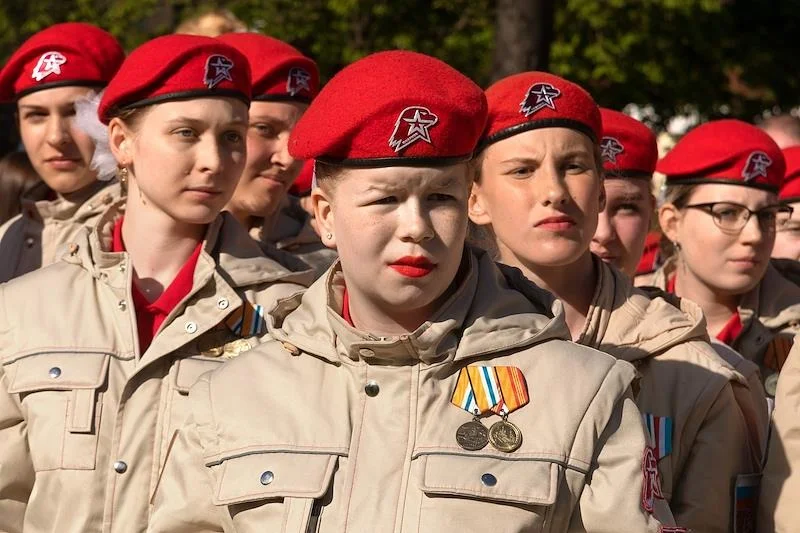
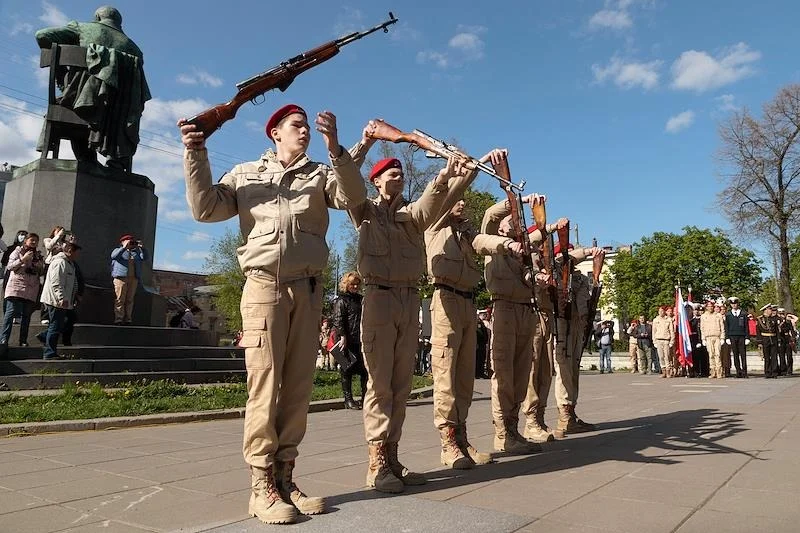
The event was strange. Something then began-I did not understand what. Then you would not have seen a kindergarten group of babies dressed in military suits in the square. But soon children in military uniforms will become an obligatory part of such events, and now this will not surprise anyone. <…>
I remember how I shared a post that it is undesirable to dress children in military uniform. Comments began to appear under it instantly:
This is a personal matter for everyone! Everyone has their own perception and their view of the events of the past. (And it would never have occurred to me that the kindergarten in military uniforms is about the events of the past and our story.)
“Military uniform is clothing for death” - this phrase one thing is worth it! I have never met more than a good! They go to war with the aim of winning. For example, I perceive this form like this: the clothes of a fighter, a defender, a strong, courageous and courageous person.
It is better to wear children in a military uniform than to rewrite history!
I can find a bunch of arguments in order, on the contrary, to prove that children should be dressed in military uniform!
Surely will find arguments. After all, this is again "military-patriotic education." The country again raises children who are ready to support military operations and participate in them. The country creates the "Unarmia" and "the movement of the first."
But the most patriotic microdistrict of our city. Residential complexes: Russian, Kerch, Sevastopol, Yalta. The promising is our largest “humanity”. Once the blogger Ilya Varlamov (now the “foreign agent”) was filmed by urban areas in which it is impossible to live. I learned about the promising one, went to Stavropol, and here he was twice doused with green. For the first time - at the airport, for the second time - already in the promising, where he came. Apparently, realizing that the jokes are bad with Yugstroyinvest, Ilya posted in YouTube only a story about how he was attacked here.
Cultural life in a promising hit with a key. At the entrance is the Patriot Park, Vladimir Square and, as it is now supposed, the Museum of Russia is my story. “Patriot” is an exhibition of military equipment in the open air. In the spring, as soon as it becomes warm, kindergartens and schoolchildren in military uniform are brought here. Just think: if I were asked for some about fifteen years ago whether I would have replied a patriot that yes. But we have such patriotism now. Severe. Frost on the skin.
On the square - a monument to Prince Vladimir, who baptized Rus'. The Governor of the Stavropol Territory is called Vladimir Vladimirovich Vladimirov. By the way, local journalists who visited Vladimir Vladimirovich Vladimirov report that he has a modest bust of Stalin on the table.
And here is the museum. <...> Further - the square of the heroes. In public transport, sometimes you suddenly meet friends. Called out.
- Ah, the rich you will not recognize!
- It's good. (Laugh.)
- How sweet it became here! (Outside the window is the same square with tanks.)
- I dream of a time when there will be no tanks on our streets.
“But these are exhibits.” (With a dreamy tone.) This is a historical memory.
-Tanks, it seems, is modern ...
- Anyway, this is a story. Great Patriotic War. (We are going past the museum “Russia is my story”.) Have you been to this museum?
I change the topic of the conversation, the tanks are left behind.
History ... about "Memorial"*-then you know? (Question silently.)
And in the trolleybuses of the city two years ago, audio recordings sounded without a break. Once I drove to the Nine from Lenin to the north-west-and all the way I had to listen to the liberation of Stavropol from the occupation. She went out at her stop and near the relaxation supermarket was photographed with an animator of a fir. I love animators as a child, they are so funny! (Something has not been visible recently. Maybe they have disappeared because they are similar to quadroers?)
And in the head - the fact that during the trip a fifteen times sounded: “The Nazis killed ... Our army freed ...” In short, the trolleybus fulfilled his mission, and just that it should spin in it that it should spin in it now. But someone in a trolleybus rides every day ... Hitler Nazis are criminals, of course. But this propaganda, in many ways in the Soviet spirit, is that there are ours and strangers in the war. And that ours in the war have always been and will be liberators.
About modern children
Two kids go along the street towards me, in appearance of eleven to twelve years. And one says to the other: “And Dad, unfortunately, died. He is a paratrooper. Some glasses remained. I put them on ... ”Both laughs, as if it were a game of war again. As if everything is not real.
And the tragedy is real. And now I know that the paratroopers have glasses. All that remains of Bati.
How the silent environment acts
This is called the "spiral of silence." You think that you understand what is happening, but you do not notice that someone else thinks so. In fact, thinking like you can be a lot, but everyone is silent and, as you, thinks that he is one. Если ваше мнение официально осуждается, тем вернее начнет действовать спираль молчания, а если такое мнение карается законом, спираль молчания будет еще неумолимее. И вам, конечно, будет очень некомфортно в одиночестве.
Поэтому ясно, в чем выгода того, кто индоктринорован и искренне во все верит.
Прежде всего это безопасность. Будешь думать как все — не наживешь на свою голову осуждения, а то и неприятностей похуже. А если угораздило думать по-другому, то хотя бы притворись, что думаешь как все. <…>
Другой выигрыш — принятие, принадлежность. У человека есть и близкие люди, и более широкий круг общения. Нам важно, чтобы кто-то нас любил, чтобы кто-то понимал, чтобы кому-то можно было доверять. Если инакомыслящих отвергают, все больше людей начинает подтягиваться к правильно мыслящим. Здесь и принятие, и поддержка, и безопасность.
А если у вас растет ребенок и вы против тотальной индоктринации? Вы хотите, чтобы он был добрым. Хотите помочь ему вырасти самостоятельным и здравомыслящим человеком…
Кто ему в этом поможет? Прежде всего, разумеется, вы сами. Думающие дети вырастают у думающих взрослых. И конечно, на этом пути вы столкнетесь с трудностями. Дети подвергаются индоктринации в детском саду, в школе. Может, взрослые члены семьи не смотрят телевизор, но дети приходят домой — и родители, даже ни о чем не спрашивая, сталкиваются с тем, что теперь в их головах. Как я увидела девочку, раскрасившую пасхальное яйцо в цвет хаки и назвавшую его военным.
И противостоять индоктринации нелегко не только потому, что в школе другие авторитетные взрослые учат детей чему-то, чему не стали бы учить их вы. Понятно, что учить ребенка не поддаваться индоктринации приходится с оглядкой. Если он поверит вам, может начать говорить то, что говорить запрещено. Но вам важно беречь и его, и самих себя (не в последнюю очередь, ведь вы ему нужны). А то ребенок, наслушавшись дома «неправильных» вещей, нарисует пасхальное яйцо не цвета хаки, а, чего доброго, желто-синее или радужное… Но мы не при демократии живем.
Отсюда задачи :
- Во-первых, учить ребенка задумываться о происходящем. Просто иногда, в разговорах. Если у вас с ребенком хороший контакт, ваши слова для него значимы. Не читать лекцию, от этого любой ребенок заскучает. Хоть маленький, хоть взрослый. И конечно, надо учитывать возраст. С детьми постарше (и тем более со взрослыми) можно обсуждать серьезные темы. Иногда услышанные от старших важные слова заставляют задуматься. Так я на всю жизнь запомнила услышанное в юности от папы объяснение, что «уничтожать живую силу противника» — значит убивать людей.
Ваши дети привыкнут думать, если будут видеть, что вы сами умеете думать и рассуждать, бываете с чем-то согласны, а с чем-то — нет. Если готовы обсуждать с ним разные вопросы, если можете спросить: «Как ты думаешь?»
А с маленьким ребенком? Можно просто не сосредоточиваться на принесенной ребенком теме, привнести в разговор другую тему. Ну например: девочка раскрашивает яйцо в цвет хаки. «Оно военное». — «Оно военное? Яйца на Пасху бывают военные?» — «Не бывают». — «А какие бывают? Какие ты видела?»
Можно вспомнить, в какие цвета красит яйца бабушка. Поиграть, нарисовать и раскрасить пасхальные яйца, если ребенок захочет. Даже если малышу понравилась идея раскрасить яйцо по-военному, можно нарисовать еще много других. "Wow! Военное? А это — как солнышко. А это — как море. А это — как мамина сумка!» Кстати, развитие в ребенке его игровой, творческой стороны тоже помогает ему расти человеком, которого трудно индоктринировать.
- Во-вторых, нужно ребенка учить себя беречь. Конечно, детям (и особенно подросткам) важно знать, какие темы небезопасны. Вы можете объяснить, что об этом можно говорить с вами. Обозначить, в какое общение не надо вступать в чатах с незнакомыми людьми (конечно, это касается не только политики). Детям и подросткам для их развития важно общаться, и они будут общаться. И при этом дело родителей — беречь их.
Татьяна ЛИТВИНОВА, психолог