
Translated material
"Cancelled" dead
Karelia authorities refused to protect Finnish and German graves
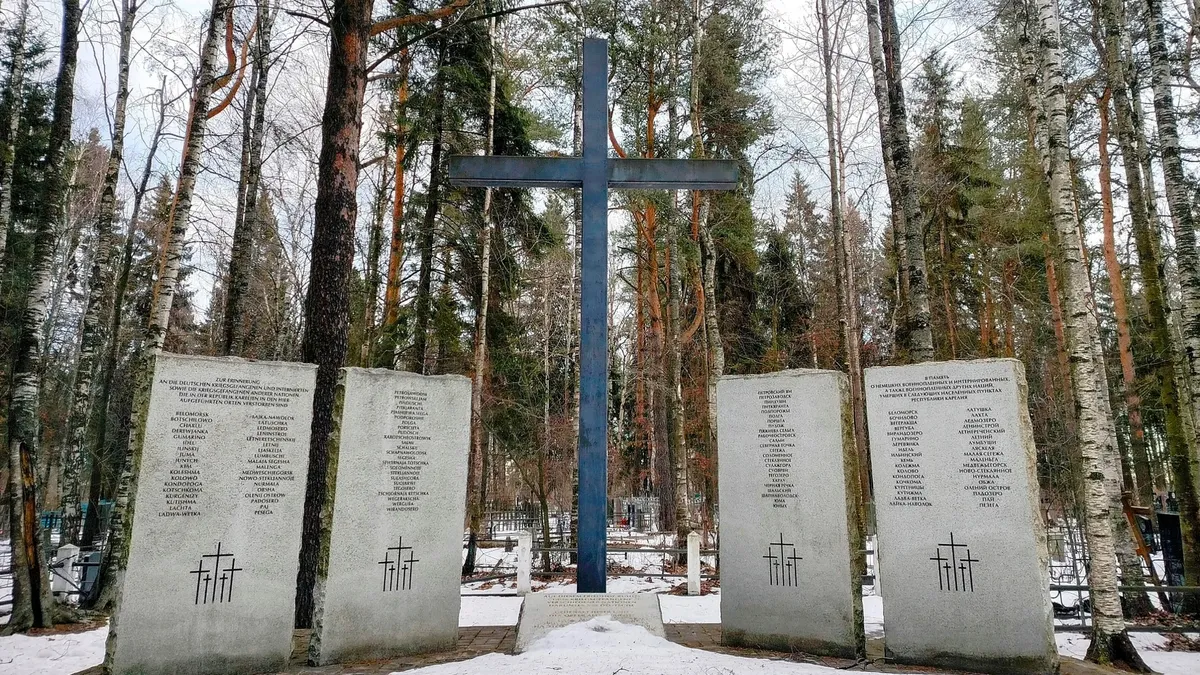
Cemetery of German prisoners of war in Piski. Photo: Valery Potashov
The Directorate for the Protection of Cultural Heritage Sites of Karelia began the year by depriving Finnish and German cemeteries of the status of identified monuments.
Such an order, signed by the head of the department, Victoria Gurtova, was published on the portal of legal acts, but the Karelian officials themselves chose not to advertise the document.
It talks about the cemetery of Finnish citizens of 1939–1944 in the village of Suistamo, which, following the Second World War, was transferred from Finland to the Soviet Union, the cemetery of German prisoners of war of 1944–1948 in the town of Peski in Petrozavodsk, and the cemetery of interned German citizens of 1945 in the village of Padozero and the graves of German soldiers 1941 year near Lake Kollasjärvi. All of them were denied inclusion in the Unified State Register of Objects of Cultural Heritage of the Peoples of the Russian Federation.

Moreover, Mrs. Gurtova, by her order, deprived the Finnish and German burials in Suistamo, Padozero and Lake Kollasjärvi of the status of “newly identified objects of historical, scientific, artistic or other cultural value”, which they received in 2000 and 2007. This status protected them from destruction or dismantling of memorial signs, but now the republican authorities have withdrawn their obligations to protect Finnish and German cemeteries.
The most famous cultural heritage site of Karelia, mentioned in Gurtova’s order, is the cemetery of German prisoners of war in Peski. It is considered in the republic a central memorial site for all foreign citizens who died in captivity during the Second World War and in the post-war years.
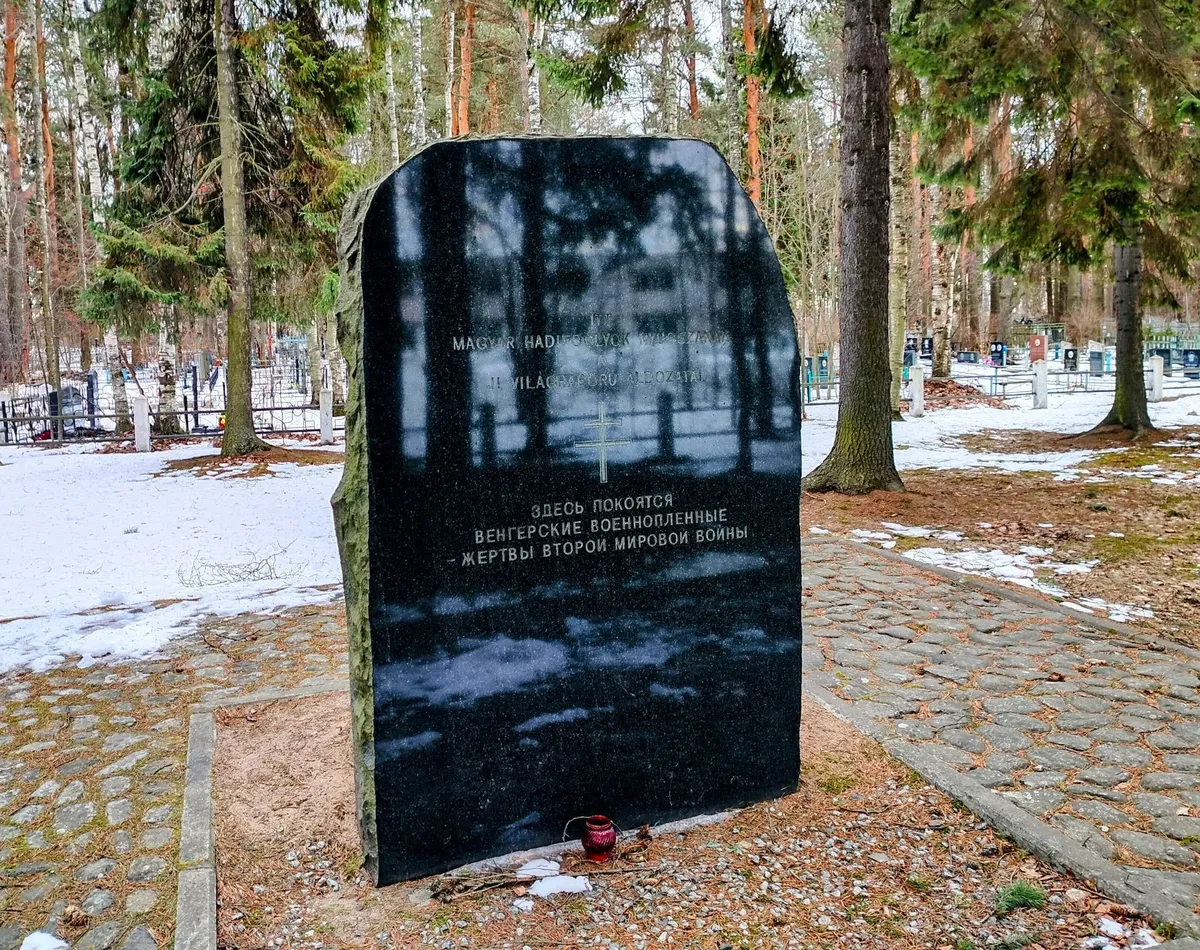
As noted on the website of the Republican Center for State Protection of Cultural Heritage Objects, since the end of 1944, five camps were organized in Karelia to hold captive soldiers and officers of the German army, as well as the armies of its allied countries: Hungary, Romania and Finland.
“The largest of them, camp No. 120, was located in Petrozavodsk and its suburbs. By the winter of 1945, there were 17 thousand prisoners of war, some of whom were later sent to economic work in the regions of the republic. In Petrozavodsk, prisoners worked on the construction of the Severnaya hotel, the Pobeda cinema, a number of houses that form part of the architectural ensemble in the city center, and restored the House of Communications. In December 1947, the sending of prisoners from the Petrozavodsk camp to their homeland began. During the existence of the camp, 997 people died from front-line wounds, disease, hard work, inadequate nutrition and the harsh northern climate. The cemetery where they are buried is located along the western fence of the civil cemetery “Sands” and has an independent entrance,” reports the State Center website, where the cemetery of German prisoners of war is still listed as a cultural heritage site of Petrozavodsk associated with the Great Patriotic War.
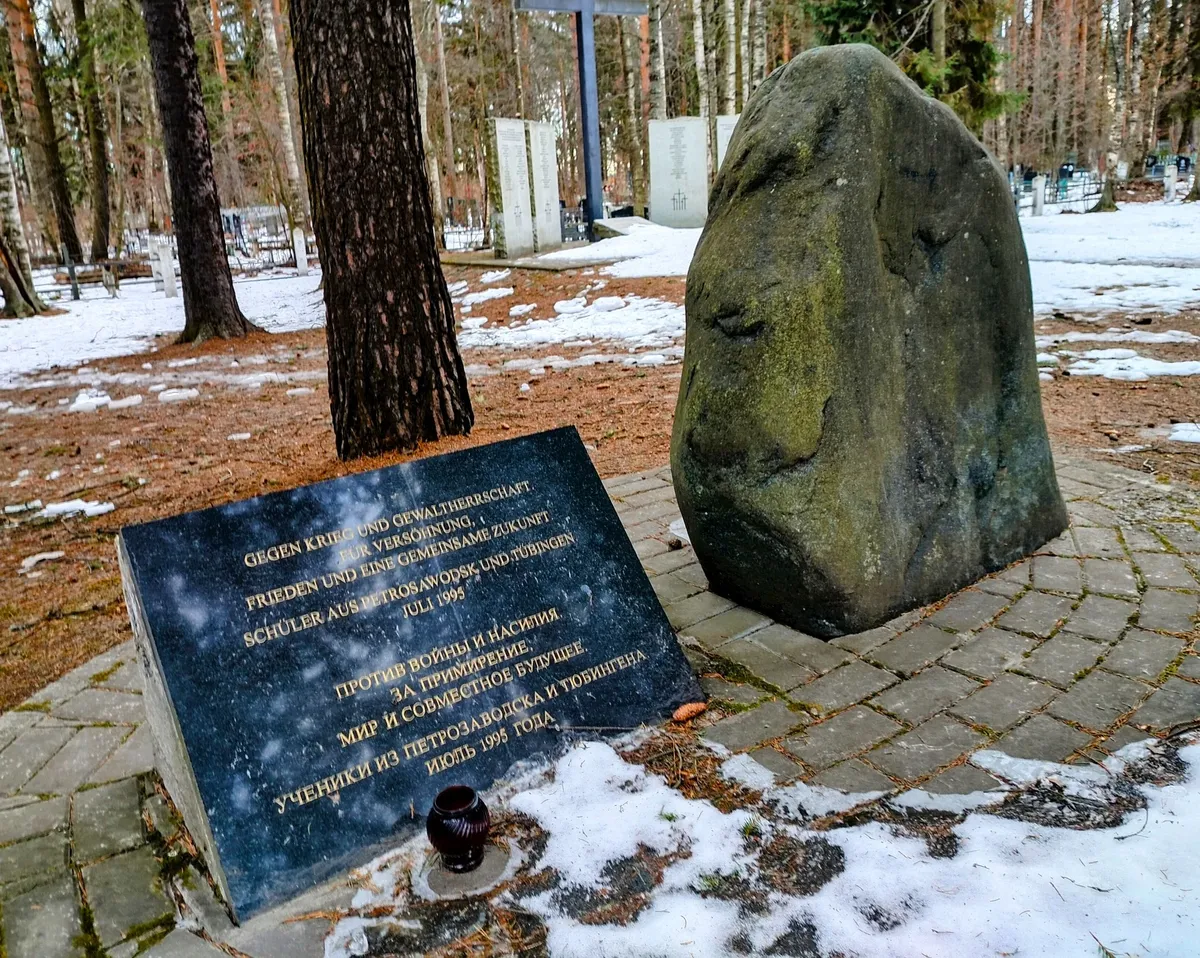
Work to improve the burials of prisoners of war in Sands was carried out on the initiative of the People's Union of Germany in the mid-90s of the last century and in 2007. Along with the monuments to the fallen Germans, a memorial stele to prisoners of war from Hungary was also installed in the cemetery. And at the very entrance to the memorial territory, a huge boulder rises, next to which there is a slab of black gabbro-diabase, where the words are carved: “Against war and violence. For reconciliation, peace and a shared future. Students from Petrozavodsk and Tübingen, July 1995."
“In my opinion, this is one of the episodes of the modern stage of memory politics in Russia,” says Karelian historian Ilya Solomeshch, who now works in Lithuania. — Since the 1990s, Russia, on the basis of bilateral agreements with a number of countries, has actively participated in putting military graves in order on its territory. This also affected Karelia.
True, by that time most of these burials were actually lost.
Old-timers, meanwhile, remember that not only in the cemetery in Peski, but also in the area of Antonov Street, on the site of modern residential buildings, traces of burials could be seen. In recent years, we have seen a gradual, but, unfortunately, consistent destruction of that humanitarian heritage in the field of preserving the memory of deceased former opponents.”
“Will the exclusion of newly identified cultural heritage sites of Karelia from the list be followed by the dismantling of memorial signs, for example, at the Finnish cemetery in Suistamo?” — a Novaya Gazeta journalist asked the historian.
“It’s quite possible,” answered Ilya Solomeshch. “This happened on the Karelian Isthmus last year.” However
Memorial burials of not only prisoners of war are under threat in Karelia. Last summer, at the Krasny Bor memorial cemetery in the vicinity of Petrozavodsk, several memorial signs on the graves of victims of Stalin's repressions were destroyed.
This act of vandalism was discovered by civil activists who came to visit the site of Soviet-era mass executions on the Day of Remembrance for the Victims of the Great Terror.
One of the destroyed memorial signs was a cross to the executed Poles, which was located on a pine tree. And all that remains of the columns in memory of the dead Ukrainians are depressions in the ground.
According to eyewitnesses, traces of vandalism were fresh. The attackers visited the memorial cemetery shortly before Memorial Day.
Meanwhile, at another memorial cemetery, Sandarmokh, near the Karelian city of Medvezhyegorsk, a memorial stele was unveiled last year indicating the victims of the Finnish occupation, although only those who were shot by the NKVD are buried in this cemetery. It is noteworthy that the installation of this stele was supervised by the same head of the republican department for the protection of cultural heritage sites, Victoria Gurtova. The fight against inconvenient historical memory has obviously become part of state policy in Karelia.