
Translated material
Kill Einstein
A hundred years ago, an attempt was made on Einstein’s life by a woman whom few people remember, but who appeared in the biographies of many “greats.”
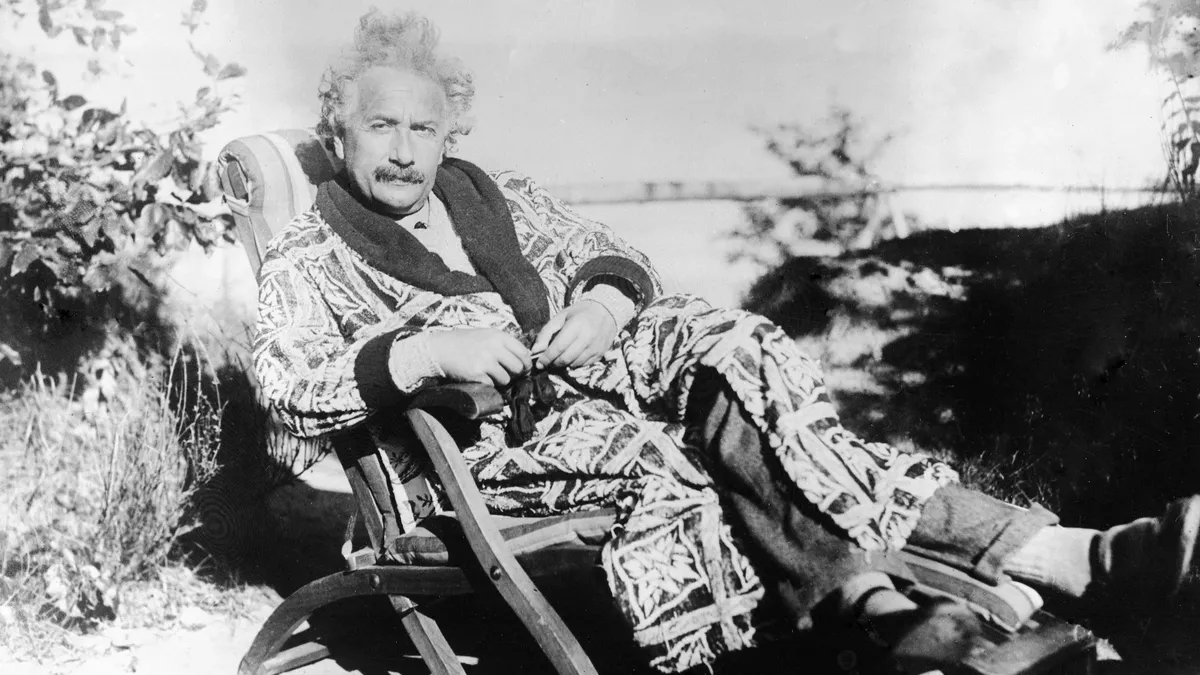
Albert Einstein, 1928. Photo: ASSOCIATED PRESS
The woman discussed in this article lived an amazing life. Arkady Averchenko and Ilya Ilf, Mikhail Bulgakov and Archbishop Nikolai (Kasatkin) wrote about her. She interviewed Pyotr Stolypin, made scandals with Pavel Miliukov and came to see Lenin in the Kremlin. Grand Duke Nikolai Konstantinovich greeted her; Anatoly Lunacharsky unsuccessfully tried to hide from her in his office. She dedicated poems to Vasily Rozanov and Avel Enukidze, attempted to assassinate Leonid Krasin and Albert Einstein, and to this day baffles Azef’s biographers. She changed many names and published a dozen books under different names (two collections of poems, several plays, novels), one of which became a perestroika bestseller. Until now, in the catalogs of major libraries, Maria Goryachkovskaya, Eleanor Dixon and Maria Evgenieva, not to mention Marie Vinitzine, are presented as three different writers. Essentially, this is the Russian version of Forrest Gump - a strange little man goes his own way, and along the way he comes across all sorts of great people from history and literature textbooks. On the 100th anniversary of her main “feat,” cultural historian Mikhail Edelshtein tells readers of Novaya Gazeta about the tragic and mysterious fate of this woman.
Exactly 100 years ago, a correspondent for the emigrant newspaper Latest News reported from a Paris courtroom about an unusual trial: “Excited and smiling, with swollen, watery eyes, Ms. Evgenieva rises and in a long, confused speech, in bad French, declares that she “Einstein’s abandoned wife,” and Einstein is none other than Azef, who went into hiding at one time. Having fled Russia and settled in Germany, he “invented the theory of relativity.” Experiments were needed to confirm the theory. Einstein-Azef entered into negotiations with the French Freemasons (Grand Orian) for this purpose. “Grand Orian” was placed at the disposal of Einstein by Lenin, and Lenin in Russia, on the instructions and under the leadership of Einstein, carried out “a grandiose experiment in the theory of relativity.”
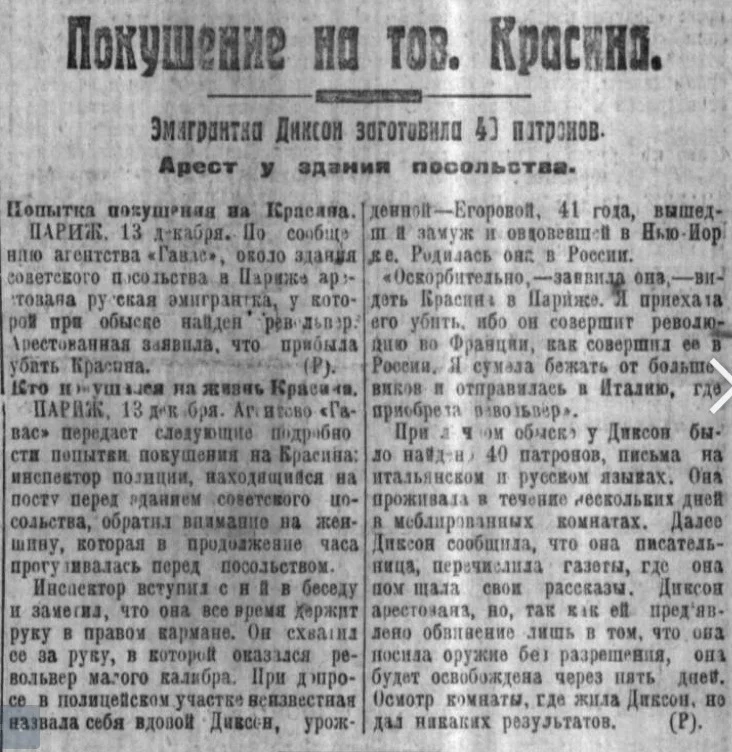
The heroine of this report was arrested a few days earlier, in December 1924, in front of the embassy mansion on the Parisian street Grenelle, where the first Soviet plenipotentiary in France, Leonid Krasin, had just solemnly entered. The woman standing in front of the building for a long time seemed suspicious to the police inspector, and he detained her. During a search, a revolver and several dozen rounds of ammunition were found on her. She did not hide the fact that she wanted to kill Krasin, who, according to her, was responsible for the atrocities of the Bolsheviks.
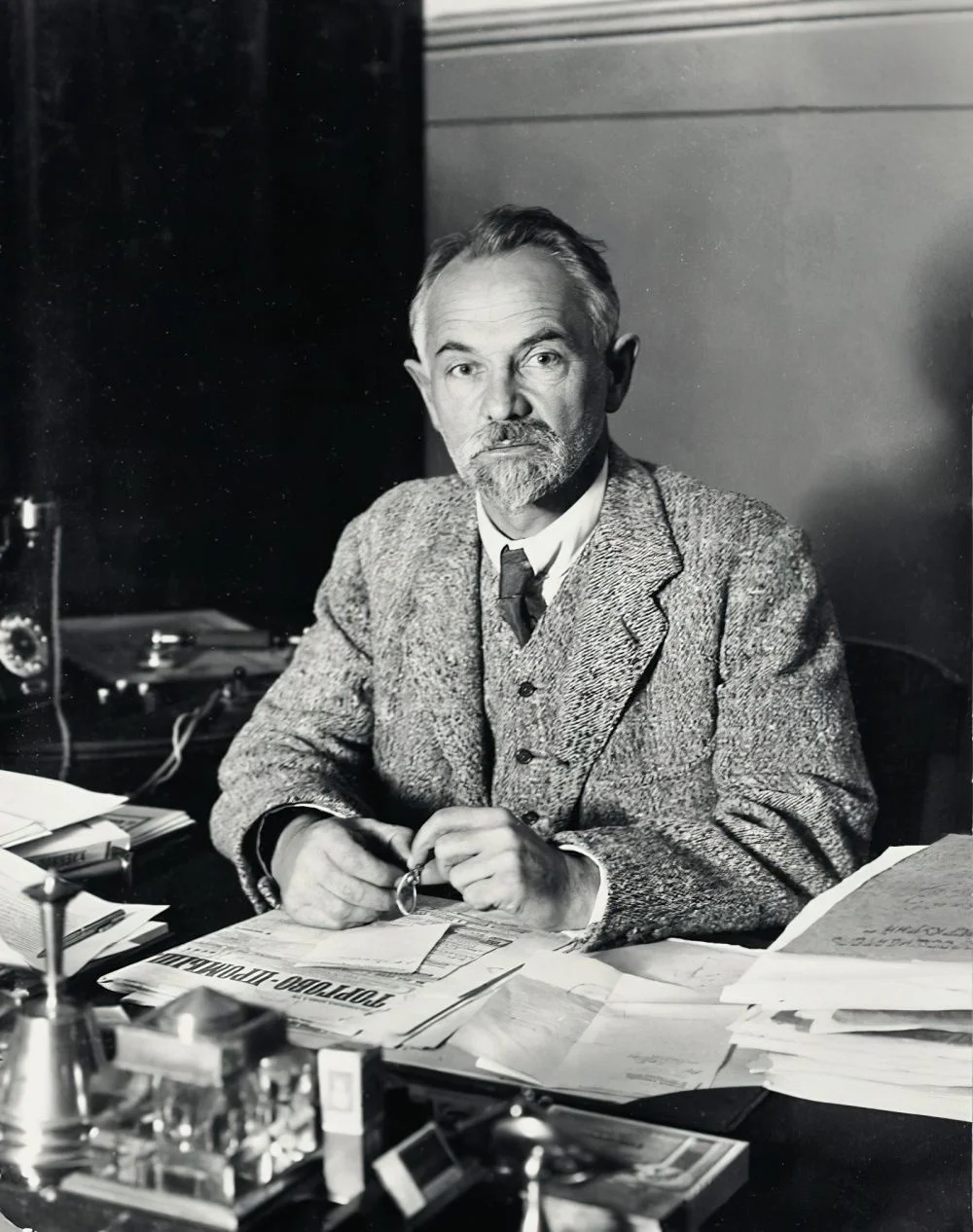
During interrogation, she introduced herself as a native of Riga, Maria Evgenieva, born in 1883, the widow of an American named Dixon. It was not the first time for her to invent a new name for herself and compose a fictitious biography.
In fact, she was born in 1876 in Vinnitsa into the family of a Jewish doctor, Alexander Isaac Osipovich Shafir. The house was not religious, but Amalia (that was the name she was given at birth) became interested in Christianity early, was baptized with the name Maria, and at the age of 18, imagining herself as Liza Kalitina from Turgenev’s “The Noble Nest,” she entered a monastery. However, she quickly got tired of it there, and she left for Kyiv, where she married military doctor Alexei Goryachkovsky, taking his last name.
Maria Goryachkovskaya soon separated from her husband and in 1905 she ended up in Geneva, where she plunged headlong into the life of the Russian emigrant colony. In letters from this time, she enthusiastically describes the disputes between the Bolsheviks, Mensheviks and Socialist Revolutionaries, and mentions Lenin and Plekhanov. At the same time, her first book was published in Paris - the play “The Last Day of the Bloody Tsar,” which describes the execution of Nicholas II by the rebel proletariat.
But the desire to change places did not leave Goryachkovskaya. She left for America, where she gave birth to a son and abruptly changed her political views.
Her correspondence, exposing the horrors of American life, cadets, Jews and the Italian mafia, began to be published in the Russian right-wing press - first in smaller publications, and then in one of the most widely circulated and influential newspapers of the early 20th century, Novoye Vremya. The peak of Goryachkovskaya’s fame was 1907–1908. At this time, her name is well known, and her articles are widely read. As a “star” of the right-wing press and a symbol of “modern times”, she is mentioned in one of Averchenko’s feuilletons.
Upon returning to Russia, Goryachkovskaya takes a resonant interview with Stolypin, and then travels as a correspondent to Japan. There she managed to provoke several more newspaper scandals and terrorize almost all the few “Japanese Russians” - from the ambassador to Russian intelligence agents and employees of the Orthodox mission. She begs for money, does not repay debts, quarrels, accuses, intrigues and starts squabbles. Archbishop Nikolai (Kasatkin), after meeting with Goryachkovskaya, called her “a person of very vivid imagination” who “switches from question to question without listening to the answer to a single one.” However, a little later in the diary of the insightful bishop another characteristic appears: “suffers from persecution mania.”
Goryachkovskaya did not stay in Japan either, transiting through Russia and heading to Germany. But at this time her mental state deteriorated so much that she could no longer write for newspapers. It seems to her that the world is entangled in a network of human traders, that kidnapped children and girls are sent to Egyptian harems and to the slave markets of Constantinople, that everyone is involved in the conspiracy - revolutionaries, Black Hundreds, Jews, and Italians.
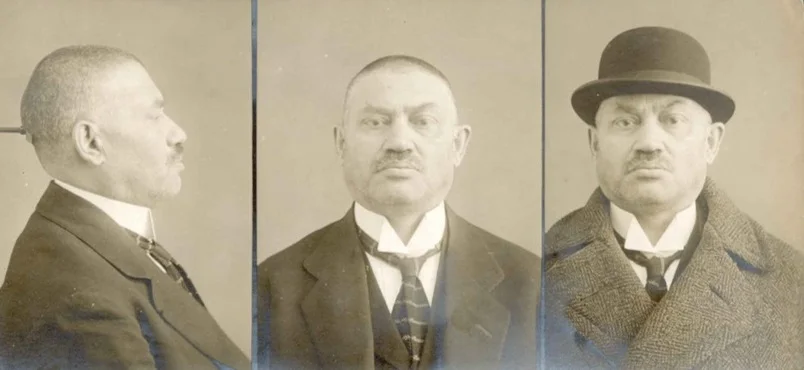
Apparently, the “trigger” for the deterioration of her condition was the exposure of Yevno (Evgeniy) Azef as a police provocateur. In Goryachkovskaya’s sick imagination, his figure grows to grandiose proportions; he appears to her as the arbiter of the destinies of the world. Goryachkovskaya imagines that she knew Azef in Paris, that they had a whirlwind romance, that he is the father of her child.
She moves to the Balkans, but while traveling through Romania, she begins to think that the entire carriage is filled with Jews who are going to kidnap her son to sell to rich Turkish boy lovers, and send her to a brothel. She tries to jump off the train while it is moving, but at the last moment she is held back by some Romanian officer. After listening to Goryachkovskaya’s story, he and the conductor rush to detain the insidious Jews, but the carriage turns out to be empty. After this, for the first time she ends up in a psychiatric hospital in Chisinau.
After spending several months in St. Petersburg, Goryachkovskaya again rushes to Europe: Sweden, Norway, England. In the summer of 1910, she was detained on a London street with signs of obvious insanity and sent to an insane asylum, but a few weeks later she was released and put on a ship bound for Russia.
There she meets her three-year-old son - and “discovers” that during her stay in the hospital he was allegedly raped and emasculated. It turns out that English doctors are also participating in a worldwide pedophile conspiracy! And, in order to save the child from further suffering, Goryachkovskaya smothers him with a pillow.
This time, upon arrival in Russia, she is sent to a hospital for five whole years. But in 1915, she manages to escape in the turmoil caused by the German advance and the preparation of the Vilna hospital for an urgent evacuation.
She corrects her documents in the name of the Polish bourgeois Eleonora Dykus and goes to Central Asia. There she decides to become the noblewoman Eleanor Dixon - she succeeds in this too. For some period, she becomes the confidant of Grand Duke Nikolai Konstantinovich, a half-crazed erotomaniac and polygamist who lived in Tashkent and was once expelled from St. Petersburg for stealing family jewelry. Goryachkovskaya-Dixon carries out his instructions and returns to literary activity - she is published in the largest local newspaper, publishes two books of poetry, and is preparing a play for publication. But a year later she was expelled from Tashkent at the request of either the Grand Duke himself, who was tired of her excessive helpfulness, or his entourage.
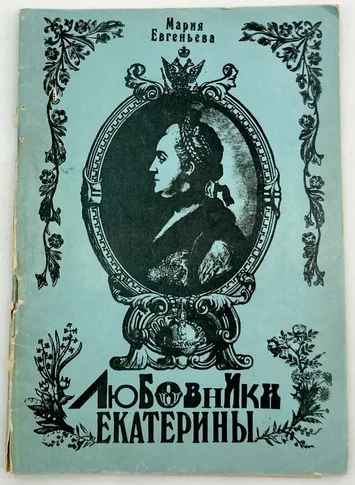
Luckily for her, the February Revolution occurs, which finds Dixon in Moscow. For several months between February and October, she composes and publishes, under the pseudonym Maria Evgenieva (taken, of course, in honor of Azef), political brochures and “revelatory” pulp novels “The Clergy. Lovers in cassocks", "Romance of the Tsarevich", "Catherine's Lovers". The last of them, in the wake of perestroika interest in historical novels at the turn of the 1980s–1990s, was reprinted many times throughout the country, from Barnaul to Baku, with a total circulation of over one million copies.
In the summer of 1917, Dixon sent Azef, who was placed for the duration of the war as a Russian subject in the Berlin Moabit prison, “3 boxes of sweets from Eliseev, ½ pound of good Russian tea, ½ pound of Einem cocoa, a box of biscuits, 3 lemons and a bouquet of completely dried flowers.”
The premise, as Azef’s biographer Boris Nikolaevsky writes, leaves the prisoner bewildered. He eats sweets and biscuits with pleasure, but cannot understand who sent them to him.
Then she enters into correspondence with Azef and writes to him for several months in a row, sometimes more than one letter a day. It seems to her that Azef is answering her, but we don’t know whether this is so, but we know that Dixon continued to write to him in Moabit after his release, and even after his death in April 1918. She calls herself his “reverent Magdalene,” “obedient slave,” and thanks God for allowing her to recognize the “wonderful, great soul” of the addressee. Sometimes her letters resemble prose poems: “My love for You is a religious ecstasy, a sacred impulse, a wondrous song from heaven. Come to me, dear, tired, lonely!” However, from time to time she notices that the late Azef does not answer her, switches to “you” in his letters, begins to blame him for all her misfortunes and promises to expose his provocative activities.
Dixon's Soviet career is going well: she serves as a forensic investigator (!!!) in Saratov, then works in the Workers' and Peasants' Inspectorate, and in 1921 gets a job as a distributor of theater tickets for the Comintern. In addition to performing her main duties, she said, as someone who knows foreign languages, she is trusted to take the wives of French communists who come to Moscow to museums. She even comes to see Lenin and gives him a letter from the writer Artsybashev asking him to be released from Soviet Russia. Meanwhile, her mental state is not improving, she continually ends up in the hospital, runs away from there, is caught and sent back...
In the intervals between serving in the Comintern and staying in mental hospitals, Dixon visits the People's Commissariat of Education and talks about his troubles to Lunacharsky. He, tired of her constant “visits and raids,” asks People’s Commissar of Health Semashko for help.
Semashko sends a doctor to her home for an examination, but times are still relatively vegetarian, so Dixon simply sends the psychiatrist down the stairs.
Then Lunacharsky sends her out of sight to some southern resort, but soon he himself goes to Borjomi for treatment and on the street in Tiflis he immediately meets an old acquaintance.
Finally exhausted by her visits and requests, the People's Commissar of Education helps her obtain a foreign passport. Dixon leaves for Italy, from there he moves to Paris and, having learned from the newspapers about Krasin’s arrival, goes with a revolver to Grenelle Street...
The failed assassination attempt was rather beneficial for Krasin, strengthening his position in the People's Commissariat for Foreign Affairs. But Lunacharsky, who became the unwitting “culprit” of the incident, was forced to justify himself in detail on the pages of Izvestia. The Dixon case is covered in detail by the French, Soviet and émigré press. Ilf writes a feuilleton “White Comedians” about her. Mikhail Bulgakov makes a diary entry dedicated to her, where he recalls his meeting with her.
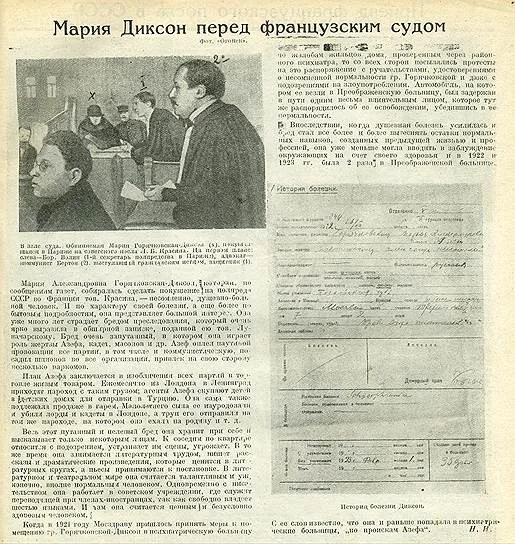
The court found Dixon guilty of illegal possession of a faulty revolver and sentenced her to several weeks in prison and deportation from France. Immediately after her release, Dixon traveled to Belgium and from there to Berlin. At the very beginning of February 1925, she was detained at the door of Einstein’s house, whom she was going to kill. The details of this incident are presented differently in different sources.
Goryachkovskaya was armed either with a revolver or with a poisoned hatpin, and from the apartment the physicist went either to prison or to an insane asylum.
We can only say for sure that because of the assassination attempt, Einstein was late for a lecture in a neighboring city. And his wife Elsa long recalled with indignation how the policeman, to whom Dixon told about her late son from Einstein-Azef, advised her to pay off the woman offended by the great scientist, and to all her objections he only smiled meaningfully and said: “Oh, honorable Frau, Rarely does a wife know all the adventures of her husband’s youth.” However, according to one version, Einstein visited Dixon in prison, and she was forced to admit that he was not Azef, since he had a much narrower nose.
From Germany, Dixon returned to France. Despite being busy with travel and assassination attempts, she managed, under the pseudonym Maria Vinitsyna (in honor of her hometown), to publish a novel in French about the atrocities of the Cheka, which received good reviews and was even translated into Italian. But after some time she ended up in a hospital near Amiens, from where she never left. Maria Goryachkovskaya, aka Eleanor Dixon, aka Maria Evgenieva, died, apparently in the first half of the 1930s.
Meanwhile, in Berlin, Lunacharsky met with Einstein and, following their many-hour conversation, wrote the essay “Near the Great.” Three-quarters of the essay is devoted to Dixon and her role in the lives of both interlocutors. Well, really, what else could the two main intellectuals of Europe discuss? Not physics or the world revolution, after all.