
Translated material
Alina Kabaeva opened a gymnastics school (which participates in tournaments as a separate state) - and quarreled with her former coach Irina Viner
The BBC Russian Service spoke about their conflict
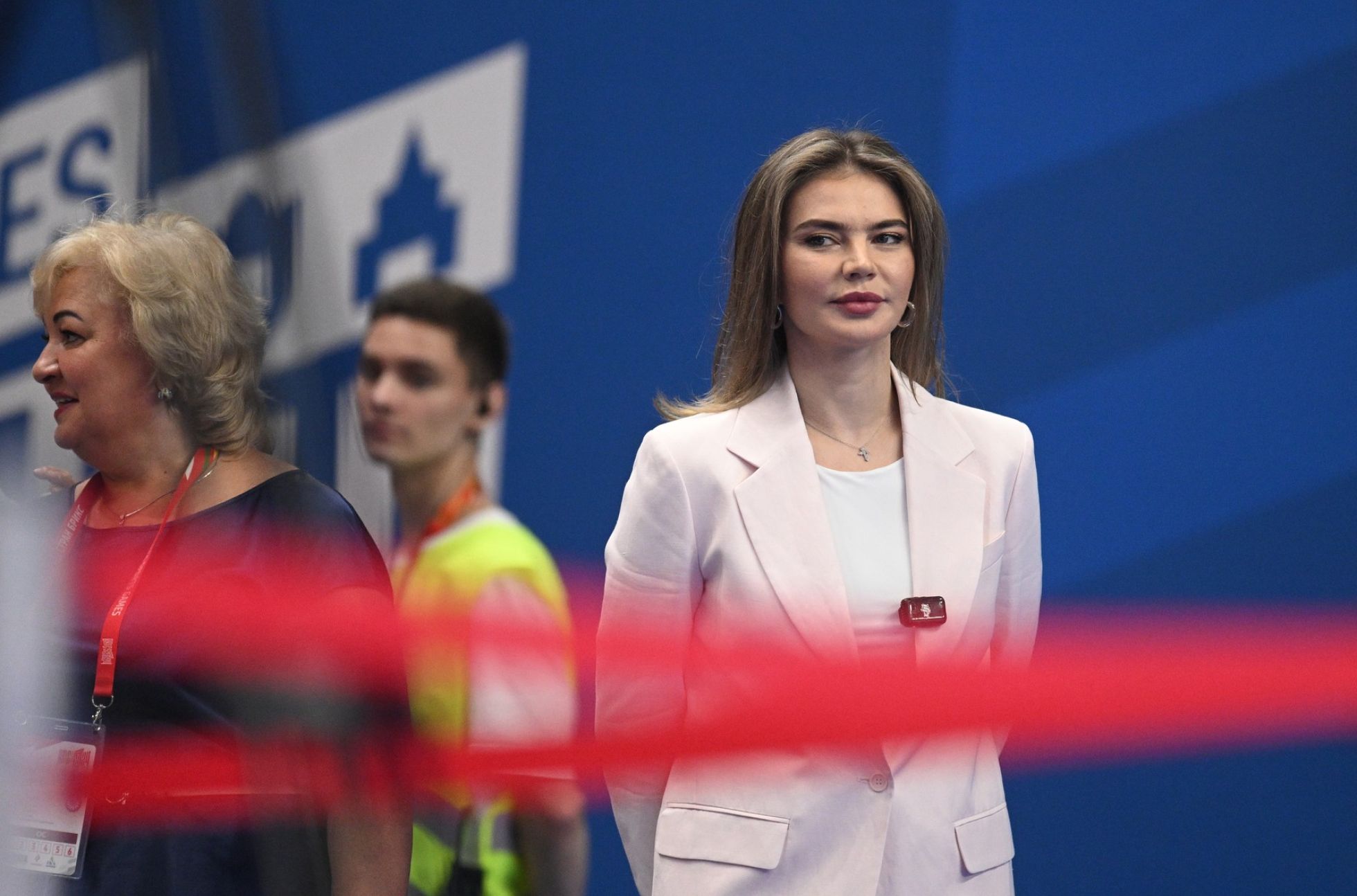
Alina Kabaeva is one of the most famous Russian gymnasts, she won bronze at the 2000 Olympics and gold at the 2004 Olympics. But after the end of her sports career, Kabaeva became known primarily in the context of her relationship with Vladimir Putin. Rumors about their wedding circulated back in 2008, although Putin was officially married at that time. Kabaeva was called the mother of the Russian president's youngest children; According to media reports , their sons were born in 2015 and 2019. Neither Putin nor Kabaeva have ever confirmed their close relationship.
Kabaeva became a State Duma deputy in 2007, and in 2014 headed the board of directors of the National Media Group, which was the operator of Netflix in Russia before the Russian-Ukrainian war. Despite these posts, the athlete remained in the shadows. She spoke with the media rarely and mainly in connection with her rhythmic gymnastics festival “Alina”. The situation began to change in 2022, when Kabaeva announced the creation of the international association of rhythmic gymnastics clubs “Heavenly Grace” and opened a school of the same name. Before this, she practically did not act as a coach.
The school has two interesting features.
Firstly, with her appearance, Kabaeva became a much more public figure. The school regularly posts videos from training sessions in which Kabaeva gives advice to students. They were taken as if by chance, but a sports journalist, who worked a lot at events with the participation of the gymnast, told the BBC Russian Service that Kabaeva controls any of her appearances in the frame: “Not a single photo or video where Alina Kabaeva is, will not appear on the Internet without her knowledge and permission. <…> Alina coordinates everything, right down to the angle at which she is being filmed, whether the light is set correctly, and whether her makeup needs to be corrected.”
Secondly, “Heavenly Grace” received powers that no other sports school in the country has. She is allowed to approve her own competition calendar, hold tournaments according to her own rules (and not those established for rhythmic gymnastics in Russia and the world), and also, at her own discretion, award students and coaches with sports titles. For some time, there was even a requirement that any changes to the rules of rhythmic gymnastics in Russia be coordinated with “Heavenly Grace,” but then it was removed, leaving only the opportunity for the school to participate in the development of the rules.
“Heavenly Grace is, in fact, like a separate sport. It has its own rules - the complexity of the programs is higher. There are tournaments that are held according to these rules. Sports titles are awarded for this “sport”. That is, Kabaeva has achieved that, in addition to rhythmic gymnastics, this sport she invented exists in parallel in all documents,” explained a sports journalist writing about gymnastics.
And that's not all. In the summer of 2024, at the sports games of the BRICS countries, students of “Heavenly Grace” performed on par with gymnasts from national teams of different countries, including Russia. That is, in fact, Kabaeva’s academy participated in the competition with the status of a separate state. It was at the BRICS Games that Kabaeva apparently had a conflict with Irina Viner, her former coach, who led the athlete to Olympic medals.
Wiener is known not only for the victories of her players, but also for her tough attitude towards them. In the 2000s, she headed first the national team and then the rhythmic gymnastics federation. For many years, Wiener controlled everything that happens in this sport in Russia. And she was part of the elite: she was married to billionaire Alisher Usmanov for 30 years, acted several times as Putin’s confidant in elections, supported his decision to invade Ukraine and condemned athletes who competed in a neutral status after the start of the war. Wiener praised Kabaeva, as did her school.
At the BRICS Games, the main fight in the individual tournament was between two gymnasts from Russia - 19-year-old Lala Kramarenko and 17-year-old Maria Borisova. They both trained under the supervision of Wiener since childhood, but a few months before the Games, Borisova switched to Kabaeva (who, judging by the video on her school’s Telegram channel, treats athletes more gently than Wiener). In the end, Kramarenko won, Borisova took second place.
Later, Sport Express, which is part of the National Media Group headed by Kabaeva, reprinted a post from an anonymous telegram channel that the chief judge of the gymnastics tournament at the BRICS Games complained about Wiener. She stated that the judges delegated by the Wiener Federation overestimated the scores of the athletes on her team and underestimated the others. And during one of the disputes over grades, Wiener, according to the complaint, told the main judge: “Girl, just because Heavenly Grace invited you, that doesn’t mean you have to do everything for them.” Moreover, an anonymous spectator of the tournament said that Wiener allegedly had a fight with Kabaeva over the grades of their athletes.
After the BRICS Games, Wiener’s position in Russian sports weakened. In the fall of 2024, the Ministry of Sports abolished the All-Russian Federation of Rhythmic Gymnastics, which she headed for more than 15 years. Instead of federations for individual gymnastic disciplines, a united Russian Gymnastics Federation was created. Rhythmic gymnastics is represented on its presidium not by Irina Viner, but by her former student Olga Kapranova. In addition, Putin expelled Wiener from the Council for the Development of Physical Culture and Sports (but included there the executive director of “Heavenly Grace” Marina Specht).
Wiener retains only the position of head coach of the Russian rhythmic gymnastics team. But according to a sports journalist writing about gymnastics, for her this is “a defeat on all fronts”: “What is just some coach for a person of this status? Moreover, in rhythmic gymnastics this is a so-so role. There, each girl has her own personal trainer. The head coach is the kind of manager who says, “Well, let’s all come to training at 7 in the morning.” That is, in essence there is no work.”
“Kabaeva outplayed her [Winer] in all respects,” adds the source of the BBC Russian Service.