
Translated material
Mac Miller releases second posthumous album, Balloonerism
So do labels make money from leftover demos? Or is it a key piece of work that helps understand the rapper? More likely the latter
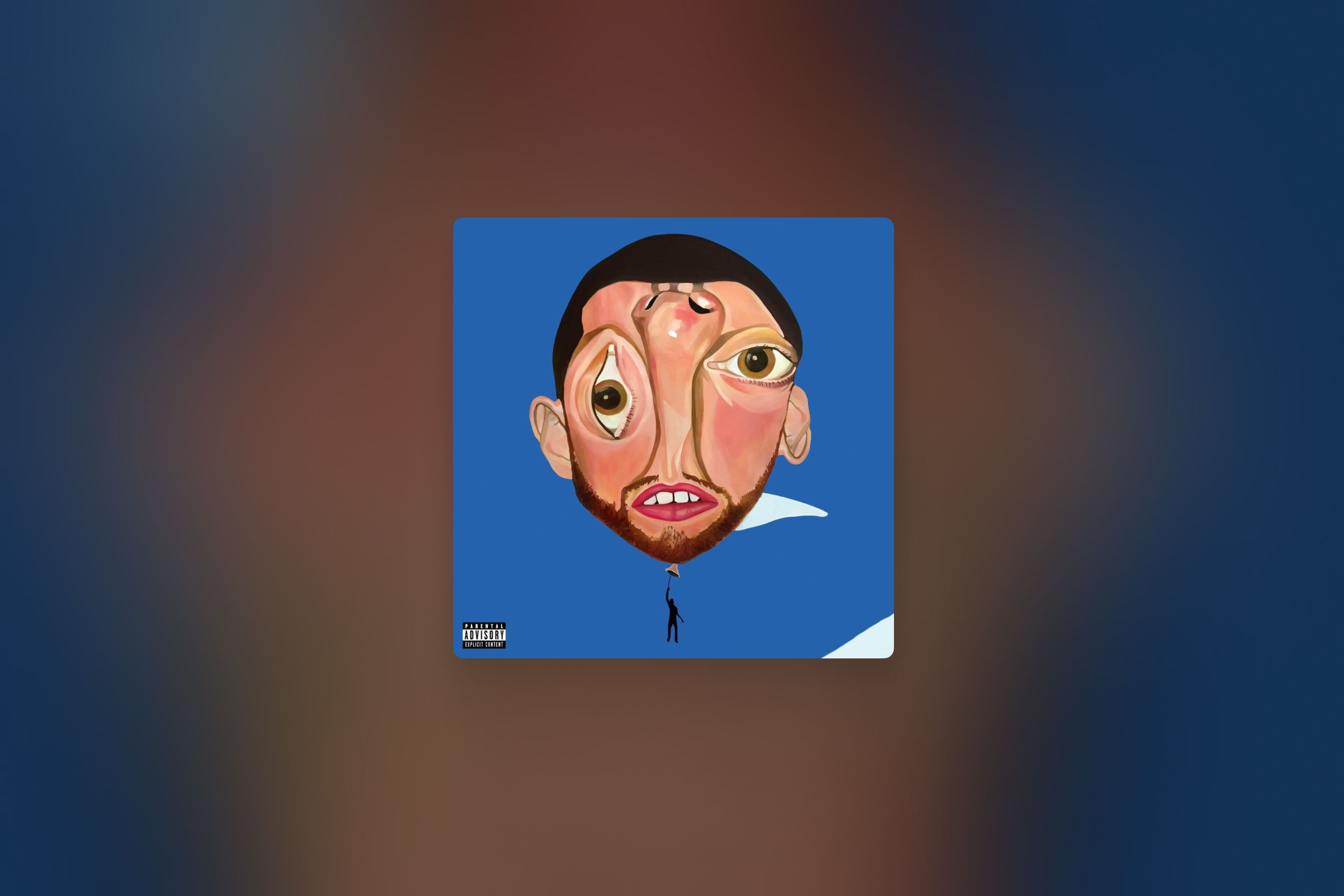
On January 17, the album “Balloonerism” by American rapper Mac Miller (real name Malcolm James McCormick) was released. This is the second posthumous album by the artist, who died in 2018 after an overdose. Fans were alarmed after the release, suspecting the Warner Records label of commercializing the death of the author. Rough versions of the tracks from this record were recorded ten years ago - and as it now turns out, their experimental nature allowed Miller to move away from the mainstream rap sound towards inventive arrangements and soulful lyrics. “Medusa” talks about the discussion around the album and how, already on this record, Miller guessed the main musical trends of the 2020s.
In the history of modern music, there have not been many artists who confidently aimed at the “club 27”. One of them was Mac Miller, who more often than others spoke in his tracks about self-destruction and read about his own death.
At first it sounded like youthful bravado: the 18-year-old Pittsburgh rapper's track "Nikes on My Feet," from his breakout mixtape KIDS (2010), began with the sound of a cigarette puff. Five years later, on the track “Brand Name,” he continued to chuckle: “To everyone who sells me drugs: don’t mix them with any bullshit.”
Then irony was replaced by difficult thoughts about addiction, isolation and loneliness. In May 2018, in the track “Small Worlds,” Miller hinted that he was already close to an overdose, and in the “Self Care” video of the same year, he climbed out of the coffin, having previously scratched the words “Memento mori” with a knife from the inside.
On September 7, 2018, Mac Miller was found dead in his Los Angeles home. The heart stopped after an overdose - at the 27th year of life.
The investigation established that, under the guise of one substance, the rapper was sold a mixture of dubious composition; the dealers eventually received prison sentences. The rapper's fans blamed his ex-girlfriend, singer Ariana Grande, for Mac's death, who in 2018, after breaking up with Mac, almost immediately became engaged to comedian Pete Davidson. She stated , even before his death, that she broke off the relationship because of his addiction.
First posthumous
Miller's last lifetime album, Swimming, was released in August 2018. Surprisingly elegant - there is no less soul and R&B in it than rap - but without surprises in terms of lyrics: the hero of Miller's lyrics on this record still wanders through the labyrinths of his own thoughts. This recording was a big step for Mac on the path of musical transformation: before “Swimming,” he separated his own rap creativity and musical experiments in other genres (the latter he released under the pseudonym Larry Fisherman ). Here he combined colors more boldly, offering connoisseurs of his hip-hop more funk and soul.
But the talent of the producer and melodist was not destined to reveal itself. The realization of this fact made fans, left alone with Mac’s old tracks, grieve even more (one of their connoisseurs suddenly turned out to be Armenian Prime Minister Nikol Pashinyan, who published a video of himself listening to Miller and drinking coffee, calling it “a break for good music”).
And suddenly, at the beginning of January 2020, Miller’s relatives announced the release of the posthumous album “Circles” (2020). Mac recorded it at the same time as “Swimming,” but sound producer Jon Brion finalized the record before its release. “Circles” suddenly turned out to be the perfect soundtrack for, say, a leisurely morning awakening: there is only one rap track, in the rest of the songs Mac appears almost as an indie folk artist.
The opening track “Circles” is immediately dissonant. A soft instrumental, calmness in every word (Miller’s voice is slightly hoarse, as if he himself had just woken up) - and at the same time, sad reflections on his repeated mistakes. Then the listener, together with Miller, step by step gets out of the vicious circle: in “Complicated” with a cheerful keyboard part, the rapper decides not to complicate his life - and not to plan beyond one day; in “Blue World,” he promises through the echoes that he will concentrate on the music.
You can’t just forget yourself, the author comes to the conclusion. In the folky “That's on Me,” Mac Miller talks about his guilt, but the melodic guitar strumming makes it clear that this is not self-flagellation, but acceptance. Solving the puzzle, exiting the maze. This record could have given hope to fans if it had not been released after his death.
And then the second
It seems that the posthumous “Circles” put an end to Mac’s creative history. But almost five years later, in November 2024, the relatives announced that they would release another album, collected from the surviving demos, “Balloonerism”.
Now fans are concerned not only with the ethical side of this event (is a posthumous album a tribute to memory or pure commerce?), but also with the question of artistic value. Is a crude demo recording considered the work of an author who did not have time to bring it to fruition? So what if he never intended to finish this draft at all? Will such a release console fans or disappoint with its understatement?
It is believed that the era of long-plays ended in the 2000s: having gone from vinyl to CD, this musical unit weakened with the widespread spread of the Internet, the advent of the mp3 format, and then streaming. But albums, despite everything, remain important to the musicians themselves - they are still the main way to speak clearly or sum up personal creative results. This is exactly what record labels have been trying to sell for decades when it comes to the creative heritage of world celebrities.
Some examples
Jimi Hendrix, who died in 1970 at the age of 27, recorded three albums during his lifetime. But after his death, dozens of records were released - from studio recordings to live ones.
Another virtuoso guitarist, Prince, created a repository for his unreleased songs during his lifetime. They began to be made public after the artist’s death in 2016 - whether he wanted it is unknown.
However, some posthumous albums did have a significant impact on modern culture. For example, without the album “Closer” (1980), released by Joy Division two months after the suicide of its frontman Ian Curtis, it is difficult to imagine the current post-punk.
Perhaps this is why some musicians, during their lifetime, ask that their drafts never be touched. Anderson Park even got a tattoo on his arm with the text:
Please, when I die, do not release any posthumous albums or songs under my name. These are all just demos, not intended for public listening.
So after the release of “Circles”, “Balloonerism” naturally seems like something that should not exist: unnecessary and a thoroughly commercial project. But it seems so until you start listening to this work.
A chance to start over
"Balloonerism" is a compelling addition to Miller's portrait, and through this work we get to know him even more as a performer and producer. The output contains two of his incarnations, rapper Mac Miller and experimental musician Larry Fisherman, his alter ego. Other collaborators include sound producer Taylor Graves and musician friend Thundercat (Stefan Bruner), whose Grammy-winning album “It Is What It Is” (2020) was dedicated to Miller.
The rapper worked on these recordings in 2013-2014, while simultaneously working on other projects. According to relatives, "Balloonerism" was of great importance to Mac (he personally approved the cover with a flying ball head created by artist Aleem Smith). Miller's family says the LP "showcases the breadth of Mac Miller's musical talent and fearlessness as an artist," so they decided to release the "official version" of the record, demos of which had been floating around the internet for years.
Lyrically, “Balloonerism” is the same reflection of the author about his own vices and death - organically fits between the rapper’s releases of those years. “Watching Movies with the Sound Off” (2013) and “GO:OD AM” (2015) are rap records where the lines about drugs seemed nothing more than show-off . Yes, at the same time he read a little more seriously about addiction on the mixtape “Faces” (2014), beloved by music lovers, but at the same time he publicly made fun of himself: he recorded himself sniffling after using it, and casually talked about his possible overdose. “Balloonerism” argues with all this, adding reflection. He was scared even then, but we only found out about it now.
Moreover, for Miller’s entire discography, “Balloonerism” turns out to be decisive precisely in terms of sound. Here he develops ideas that he will later partially embody in “Faces”: for example, he abandons jazzy samples in favor of full-fledged live instrumental parts, as in old-fashioned soul and psychedelic rock. The arrangements are as important here as the recitative.
The album begins atypically for a rapper of the mid-2010s - with an intro where Mac Miller plays the tambourine for 30 seconds. The next track, “DJʼs Chord Organ,” could have confused fans in those years: Mac plays the chord organ, and Thundercat and SZA sing here. In "Stoned" and "Do You Have a Destination?" Multi-instrumentalist Miller, who plays drums and rhythm guitar, bass and keys, adapts the techniques of 1970s psychedelic rock, and in “5 Dollar Pony Rides” he delivers classic soul and funk.
All this for the mid-2010s is a rare experiment in the genre. Few rappers then equated the sound of rap with rock: only by the 2020s, Miller’s colleagues began to rethink the genre classics. In 2023, Lil Yati and Travis Scott did this in their albums. The trend was introduced into Russian-speaking culture by Scriptonite , and then Saluki .
In a track about the unpredictability of life, “Funny Papers,” with an old-fashioned arrangement, Mac - again - seems to be prophesying his death. Track “Mrs. Deborah Downer”, due to its unkempt sound and references to his previous lyrics, is more reminiscent of improvisation. In "Transformations" a lighter clicks, in "Stoned" someone knocks on the door (behind which the heroine of the song is probably doing drugs).
“Shangri-La” is about Mac’s meeting at the studio of the same name with sound producer Rick Rubin, but in 2025 fans will be more likely to be hooked by the line in which the author seems to wink from the other world: “If I die young, promise to smile at my funeral "(If I die young, promise to smile at my funeral.") The album closes with the 12-minute “Tomorrow Will Never Know,” in which Mac discusses the afterlife, while screams from the playground burst into the psychedelic guitar part. You need to give yourself a chance to start over, the author reads. And then it falls silent: the nervous tapping of the drum cymbals is replaced by telephone beeps. No one will pick up the phone.
Obviously, it was the work on this record that allowed Miller to come to multi-genre creativity in the subsequent albums “The Divine Feminine” (2016), as well as “Swimming” and “Circles”, recorded in 2018. And also - to performances with the group in front of the general public: the live for NPR Music was one of the last lifetime recordings of the artist, and it is magnificent.
Miller would have turned 33 on February 19, 2025. But even in death, he continues to amaze—and who knows where else this album cover balloon will take him.
Alexander Shakirov