
Translated material
The founder of the darknet store Silk Road, Ross Ulbricht, has been released after more than 10 years in prison - although he was supposed to spend his entire life in prison.
We tell the story of the site and its creator
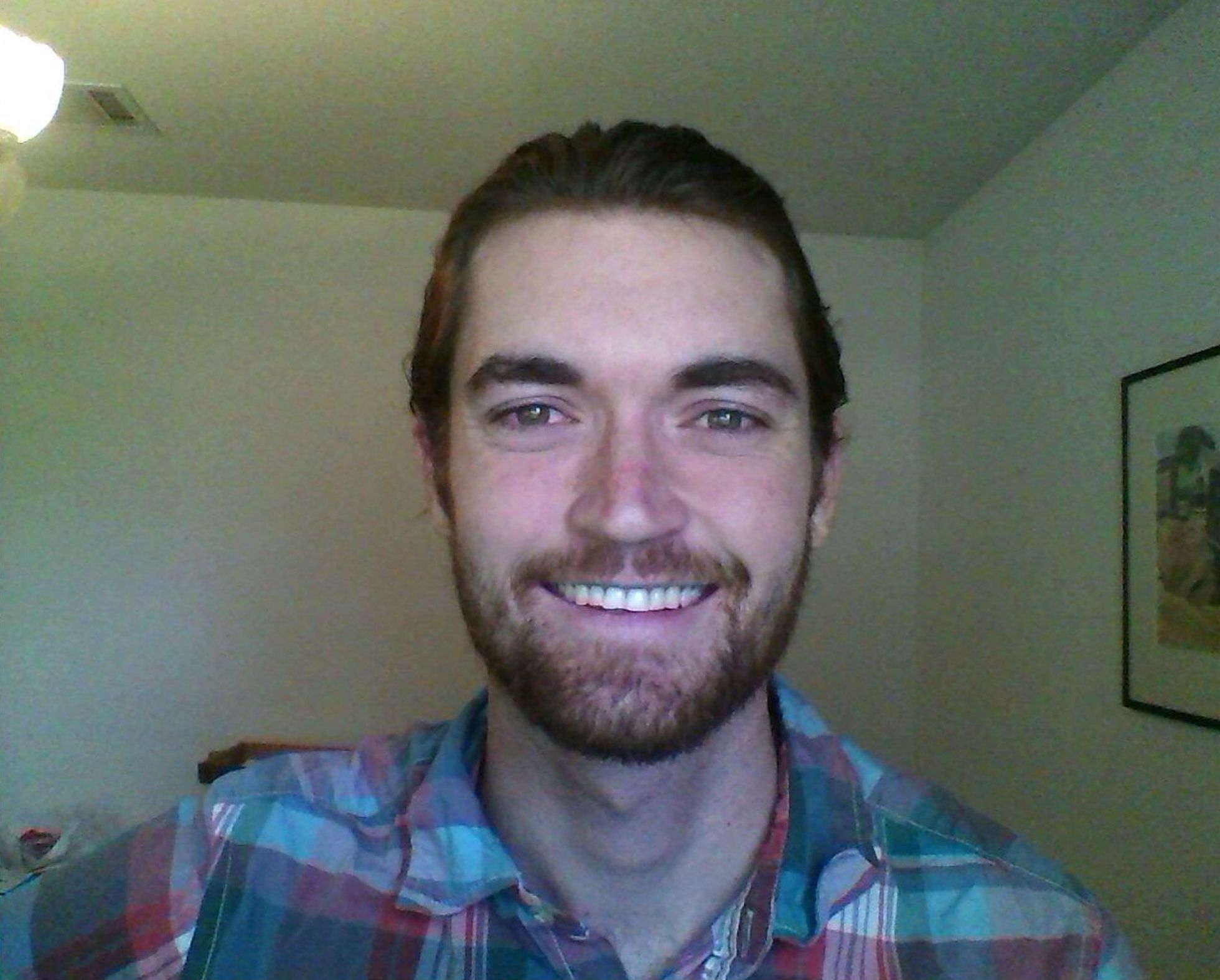
On January 21, 2025, the 47th President of the United States, Donald Trump, announced that he had signed a "full and unconditional pardon" for Ross William Ulbricht. In 2015, he received two life sentences and 40 years in the case of creating the darknet site Silk Road, where, among other things, illegal drugs and weapons were traded. The marketplace was launched in January 2011 and operated until October 2013, when FBI agents detained Ulbricht in a San Francisco library and closed Silk Road. According to the FBI, about 100 thousand people managed to use the site.
Promising Scientist
Ulbricht graduated from the University of Texas at Dallas in 2006 with a bachelor's degree in physics. In 2009, he became a master of physics at the University of Pennsylvania, but quickly lost interest in science: he did not like working in the laboratory, and he left , in his own words, “a promising career as a scientist.”
Ulbricht tried to trade stocks and founded a video game company - but was not successful in these areas. He eventually went into the used book business, selling books through Amazon. In December 2010, Ulbricht managed to earn $10,000, but in January 2011 he closed the business because all the shelves in the warehouse with books collapsed like dominoes. And because he already came up with Silk Road.
By that time, Ulbricht had become fascinated by the ideas of libertarianism and, through his trading experience, learned about Bitcoin. He wanted to create a site "where people could buy anything anonymously, without any trace leading back to them." Ulbricht promised himself that Silk Road would become a phenomenon, and that at least one person would tell him about the site, unaware that he created it.
At the start, Silk Road sold psilocybin mushrooms that Ulbricht grew himself. Later, the range expanded noticeably: cocaine, heroin, MDMA and LSD, as well as prescription drugs such as Xanax, appeared on the site. Other sellers were already trading them, the goods were sold for bitcoins, and Ulbricht received a commission from the transactions. Silk Road has its own guide for sellers, explaining how to package drugs so that they are not detected by electronic sensors or sniffer dogs - packages are often sent by regular mail. Some of them were nevertheless intercepted by security forces.
Silk Road's popularity grew. By June 2013, almost a million users had registered on the site, which operated on the anonymous Tor network. Before the site was closed in October of the same year, as reported in the FBI report, more than one and a half million transactions worth almost 10 million bitcoins (at that time - $213 million) were made on it. The commission amounted to about 642 thousand bitcoins ($13.17 million).
"Dread Pirate Roberts"
At first, Silk Road users knew that the site had an anonymous system administrator who monitored the purity of his “libertarian experiment.” Some users believed that if heroin can be traded on the site, then it is quite possible to sell “howitzers and human hearts” - however, Ulbricht strongly opposed this. As well as against the trade in child porn and fake diplomas.
Ulbricht soon decided that he needed a name, and in February 2012 he renamed himself "Dread Pirate Roberts" after the character in the book "The Princess Bride" by American writer William Goldman. In the story, this hero wore a mask, and the title was passed from one pirate to another.
US authorities became interested in Ulbricht even before he became the Dread Pirate Roberts. In June 2011, Senator Chuck Schumer called for Silk Road to be closed. Ulbricht called the US government "his main enemy" and said that it wants to "destroy" him. Agents from the FBI, the Drug Enforcement Administration, the Internal Revenue Service, the Department of Homeland Security, and even the US Secret Service had to locate and arrest Ulbricht.
This happened largely by accident. One of the Reddit users reported the leak of Silk Road's IP address and warned the site's founder about it, but he believed that he was in no danger. FBI agents found out that the server and mirror of the site were located in Reykjavik and received a hard drive with a mirror from the Icelandic authorities on July 21, 2013. During this day, as agents learned, “Pirate Roberts” carried out more than three thousand transactions and earned almost $20,000 (however, he spent about $50,000 a week on protecting the site from hacker attacks).
IRS agent Gary Alford suggested that the creator of Silk Road should have talked about his site on similar resources for its initial promotion. Alford learned that in January 2011, a few days after Silk Road launched, a shroomery.org forum user named Altoid talked about a new site where you could “buy and sell anything anonymously.”
Alford found a question from a user with the same nickname on the programming forum Stack Overflow. His email address was rossulbricht@gmail.com . The FBI figured out that Ross Ulbricht lived in San Francisco near the cafe from whose IP address “Pirate Roberts” accessed Silk Road. Ulbricht was put under surveillance and it was discovered that the activity of the Silk Road founder coincided with Ulbricht's activity.
On October 1, 2013, Ross Ulbricht walked into the Glen Park Library with his laptop to do some work. Two FBI agents diverted his attention by posing as a couple arguing. As the man grabbed the woman and raised his hand to strike him, Ulbricht turned away from the screen and a third FBI agent took his laptop before he could lock it. Ulbricht was detained. On the seized computer, he was logged in as a Silk Road administrator.
Trial, verdict and campaign in support
During the trial, Ulbricht admitted that he only created Silk Road, and other people were engaged in trading on the platform. He said he “wanted to give people the ability to make choices in their lives, enjoy privacy and anonymity.” He was charged with charges related to drug trafficking on the Internet, money laundering and hacking. Prosecutors say at least six people who bought drugs on the site died from overdoses. In February 2015, the court found 31-year-old Ross Ulbricht guilty of seven counts, and on May 29, 2015, sentenced him to five terms: one 20 years, one 15 years, one five-year and two life sentences. He was denied parole.
Two people who were involved in the Ulbricht case were sentenced to real terms for stealing bitcoins. Former DEA employee Carl Mark Force received six and a half years, former US Secret Service agent Sean Bridges - almost eight years .
After the verdict, Lyn Ulbricht, Ross's mother, organized a campaign in his support. More than 600 thousand people signed a petition demanding the release of the Silk Road creator. Activists called Ulbricht's sentence unfair, especially since people convicted of drug trafficking through the Silk Road received significantly shorter sentences, ranging from three to seven years. Ulbricht's support group also cited the US Federal Bureau of Prisons calling him a "model" prisoner. He served his sentence without any disciplinary violations, taught math and science in prison, and taught yoga and meditation classes.
Libertarians and crypto enthusiasts stood up for Ulbricht. Member of the US House of Representatives Thomas Massie called for a pardon for the founder of Silk Road. In May 2024, Donald Trump, speaking at the US Libertarian Party convention, promised to commute Ulbricht's sentence on the first day of his presidency.
As a result, Trump pardoned Ulbricht the day after taking office - and informed his mother, who had been seeking her son's release for more than a decade. 4,130 days have passed since his arrest in October 2013. The US President said he made the decision in honor of Lean Ulbricht and the libertarian movement that supported him. He added that the "scum" who condemned Ulbricht are the same "crazies" who tried to weaponize the US government against Trump.
Ulbricht's pardon was welcomed by Elon Musk , the creator of the Ethereum cryptocurrency Vitalik Buterin and the US Libertarian Party .