Translated material
Collectors of sanctioned exports. How St. Petersburg companies transported prohibited bitumen to Europe
Sub-sanctioned petroleum products were supplied to the European Union bypassing through Georgia, Chronicles.Media found out. This was done by entrepreneurs from St. Petersburg, whose European companies were part of the partner network of Gazprom’s subsidiary .
Businessman from St. Petersburg Pavel Ishkov published a series of photographs on VKontakte in 2012. They depict several men, including Ishkov himself, dressed in naval uniforms with stripes of the St. Petersburg State Maritime Academy named after Admiral Makarov (now the State University of the Sea and River Fleet). They are having fun next to street musicians in the center of Riga on Kalku Street in the Old Town.

In 2016, Ishkov became one of the co-owners of the logistics company Keystone Logistics LLC. She is one of the Russian legal entities that in 2023, through an intermediary in Georgia, imported prohibited bitumen (a material that is used, in particular, when building roads) to Latvia.
In February 2023, the European Union agreed on a tenth package of sanctions against Russian goods and, among other things, banned the import of bitumen and asphalt. The introduced restrictions did not apply to contracts that were concluded before February 26. These deliveries could be completed until May 27, 2023.
The enterprises that will be discussed are connected through the owners - these are St. Petersburg Keystone Logistics LLC, Cargotechservice LLC (KTS) and North-West Bitumen Terminal LLC (NZBT).
St. Petersburg collector
These companies belong to a group of entrepreneurs, among whom is businessman Vadim Fridman, well-known in St. Petersburg social circles. Here he is with his wife Anastasia Fridman (Sorokina) at the gala evening of the St. Petersburg International Economic Forum in 2016, and here they are posing in a photograph at a charity reception in the Hermitage in 2022.

On the website of the all-Russian competition for projects by young artists, Nova Art, whose trustees include Friedman and Sorokina, the couple are called “collectors.”
In 2019, the couple was going to settle on Martynov embankment on Krestovsky Island - this is the most elite area in St. Petersburg. The couple wanted to buy an apartment with a terrace worth 131.5 million rubles. However, they later abandoned this idea and through the court demanded that the real estate company return the advance of 2 million rubles.
Friedman's main business, which allows him to look at expensive housing in St. Petersburg, is not related to art. The entrepreneur earns money from software development, sand and clay mining, and transportation. His companies imported bitumen to the EU.
As Chronicles.Media calculated using the Sinoimex customs database (compiled by the Chinese company Dalian Infobank), in total, at least 29.5 thousand tons of bitumen worth $7.8 million were sent from Russia to Latvia in 2023. Of this, $3.4 million (about 287.7 million rubles at the average 2023 dollar exchange rate) falls on the companies of Friedman and his partners.
Route through the Tbilisi Free Zone
In 2023, Fridman and partners sold bitumen to Latvia not directly, but through the intermediary company Syntex, Chronicles.Media found out. The customs declaration, which the editors have, indicates the Georgian address of the recipient in the so-called “Tbilisi Free Zone” . It was created to attract foreign investment. Companies located here enjoy tax benefits: for example, the goods imported by these enterprises are free from import customs tax.
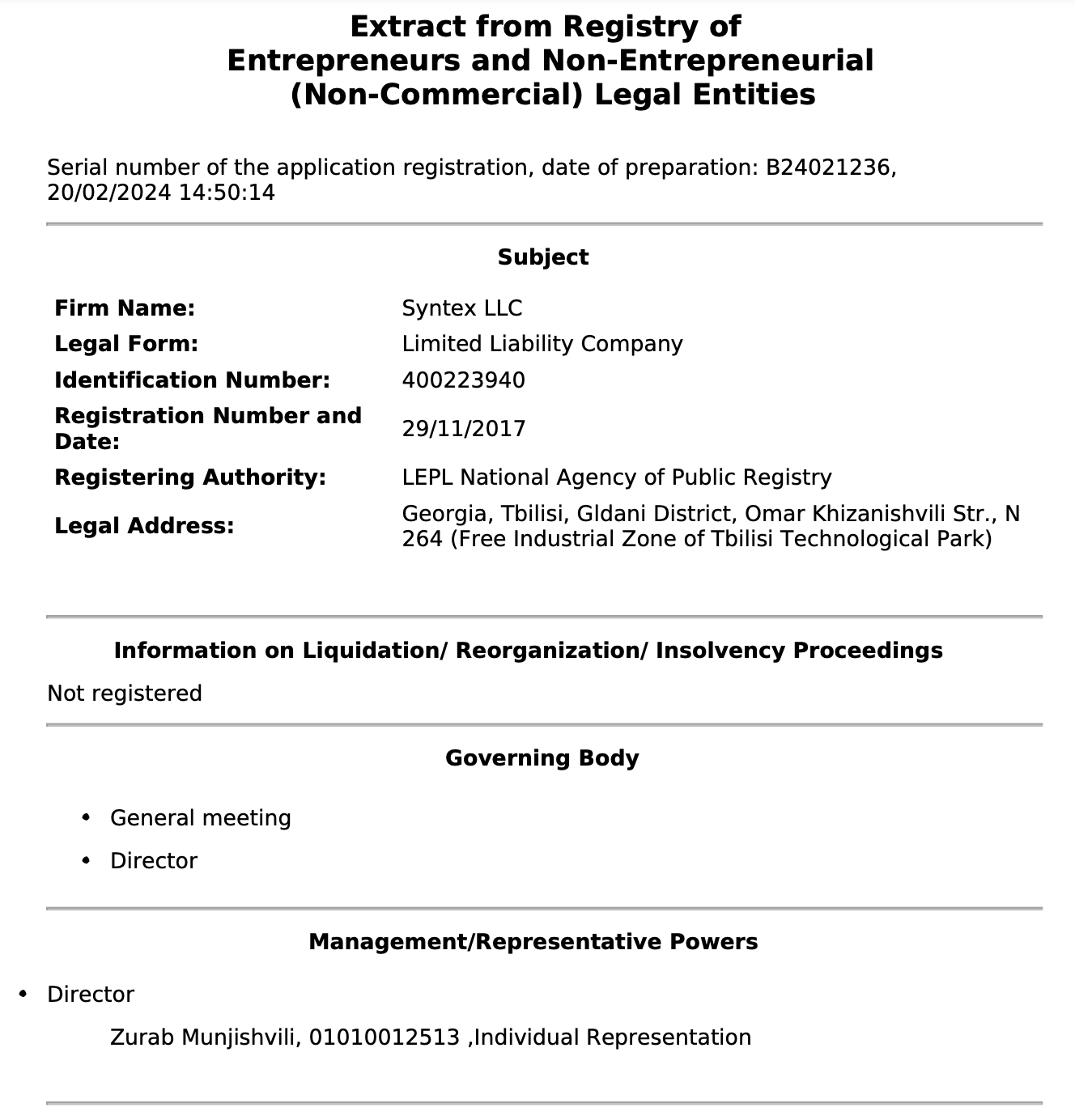
The company Syntex is indeed registered at the Tbilisi address. According to the Georgian business register, it belongs to 59-year-old local businessman Zurab Munjishvili , Chronicles was convinced. In 2024, the company was renamed Agrobiotech .
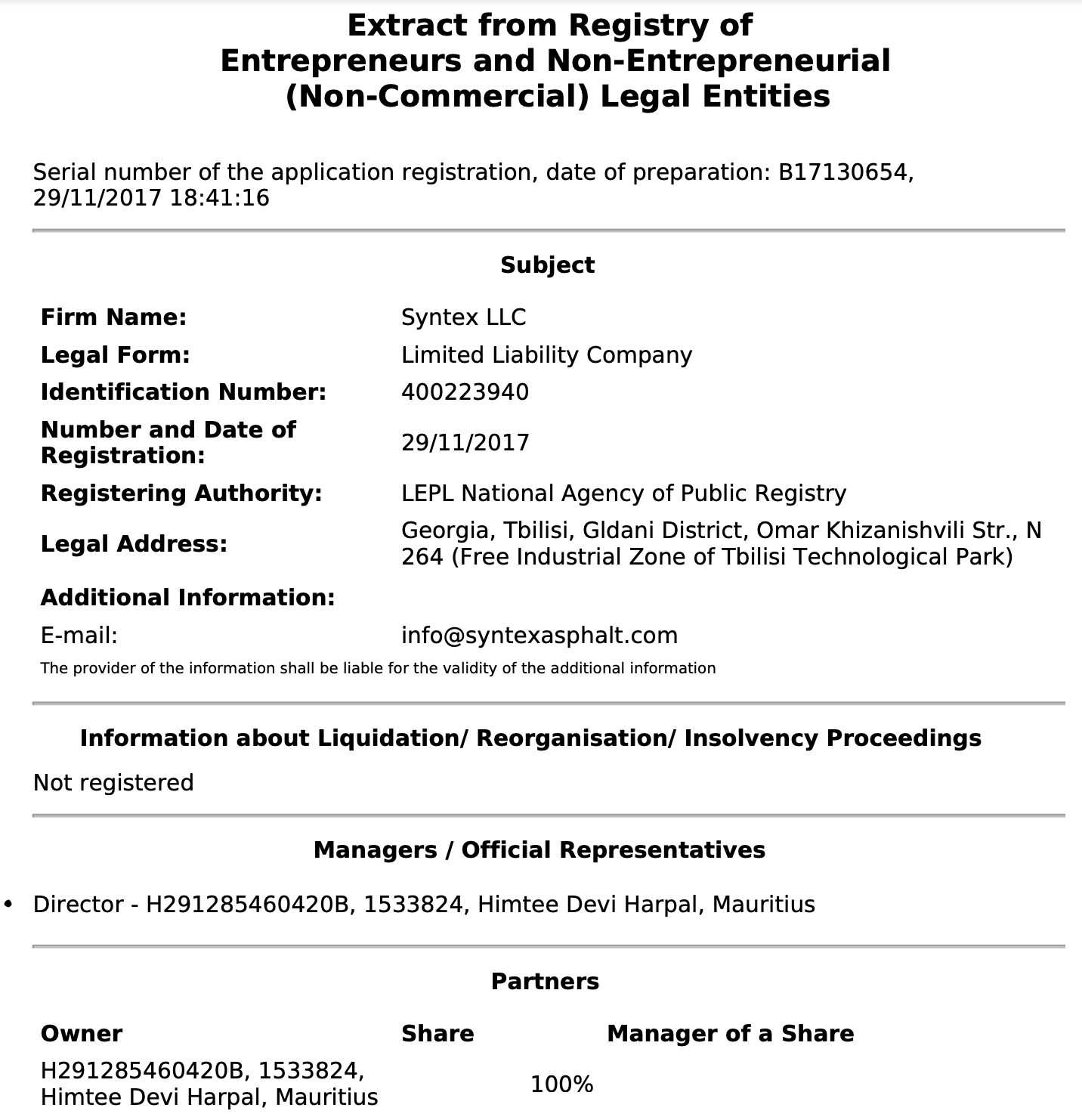
Initially, this legal entity was owned by Mauritian citizen Himtee Devi Harpal, but the email indicated in the documents is associated with the international group of companies Syntex , which will be discussed below.
The registration address of the Georgian "Sintex" ("Agrobiotech") in the "Tbilisi Free Zone" is needed only in order to receive tax benefits. On the company’s website there is a completely different address - Giorgi Leonidze Street, 2. This is in the very center of Tbilisi, next to the city parliament. In the same building as the Norwegian Embassy.
Judging by the transactions of one of Friedman’s companies, SZBT, which the Chronicle has at its disposal, it began paying for supplies of goods to Sintex towards the end of 2023. For example, on November 22, an advance payment of 149.9 million rubles was transferred from the company’s account. for the supply of goods under the contract concluded on November 2. In total, in 2023, NWBT transferred 175.5 million rubles to Sintex. In 2024, the number of such transactions increased significantly: NWBT transferred 1.1 billion rubles to Sintex, and then to Agrobiotech. These transactions may indicate that by the end of 2023, when European companies could no longer buy Russian oil products, NWBT found a way to circumvent sanctions by exporting goods through an intermediary in Georgia.
In total, Fridman’s companies transferred 2.3 billion rubles to Sintex/Agrobiotech for supplies in 2023-2024. And Georgia probably simply serves as a transshipment point for goods banned in the EU.
Apparently, Georgian Syntex is a branch of foreign companies associated with Friedman’s partners that found Chronicles.Media. We are talking about a Latin American company of the same name, founded in Bolivia and with branches in Latin America and Germany. It specializes in the production of bitumen, and also imported this product to Latvia in 2023.
The German Syntex is based in Hamburg. The choice of this city for business is most likely due to the fact that the local port is one of the largest in Europe. Among the company's managers, whose contact is listed on the website , is 34-year-old St. Petersburg resident Rashid Urusov, Chronicles found out.
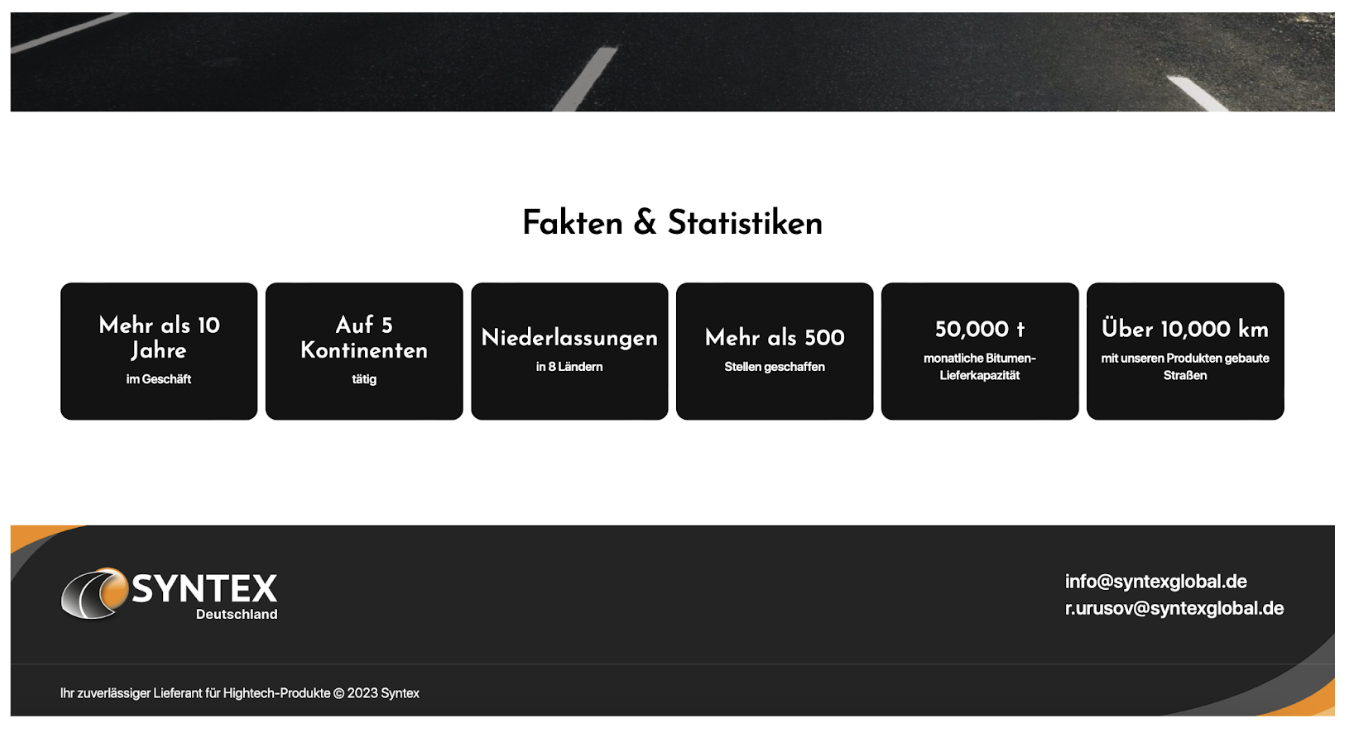
Urusov is Friedman’s partner and co-owner of several St. Petersburg companies, including SZBT, which supplied bitumen to Latvia.
In 2023, the German Syntex brought bitumen not only to Latvia: petroleum products from St. Petersburg were also exported to the American city of Baltimore. The company sent there pallets of polymer-modified bitumen weighing a thousand tons.
Gazprom partners
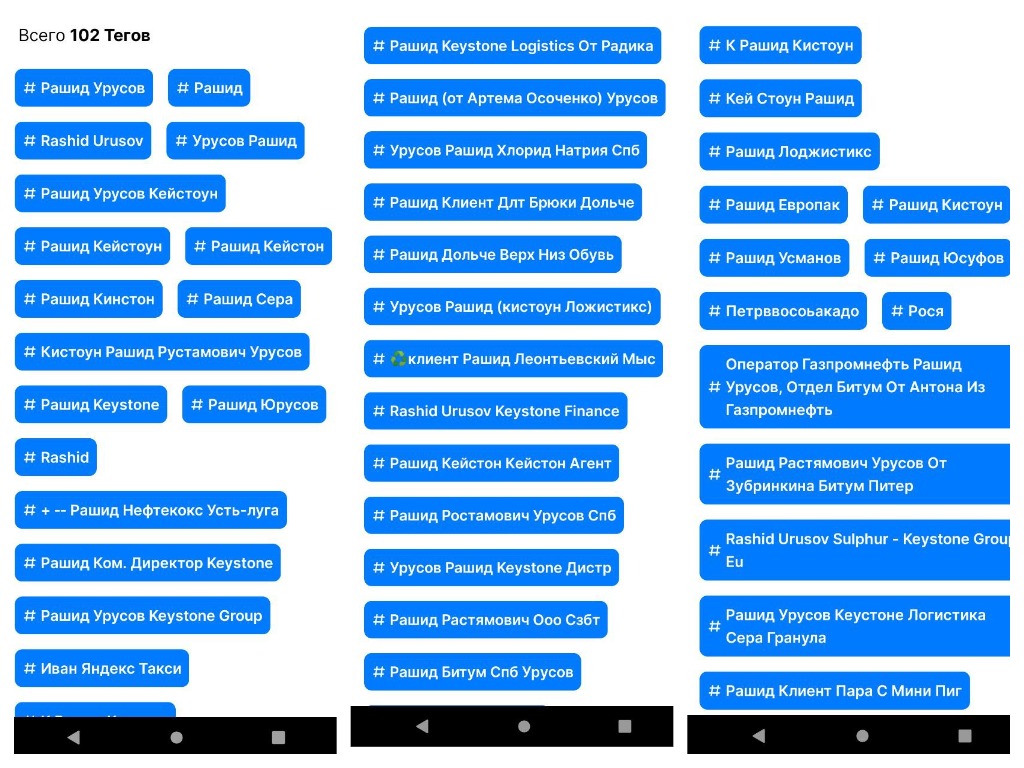
Rashid Urusov also represents the Keystone Group. This assumption can be made based on data from the GetContact service, which shows how its users call each other in their phone notebooks. Urusov was recorded as “Rashid Keystone Group Urusov” and “Rashid Keystone”.
In 2023, Keystone Group, according to Sinoimex , transported bitumen mixtures mainly from Kazakhstan to Mexico, as well as containers with sulfur from Latvia to Brazil.
We are most likely talking about an Estonian company that is part of the distribution network of Gazprom’s subsidiary, the Gazpromneft Bitumen Materials company. This cooperation is described on the company's website. Urusov is named there as a representative of the Estonian Keystone Shipping, and the Keystone Group website is indicated in the contacts. On January 10, 2025, the United States added Gazprom Neft - Bitumen Materials to the sanctions list.
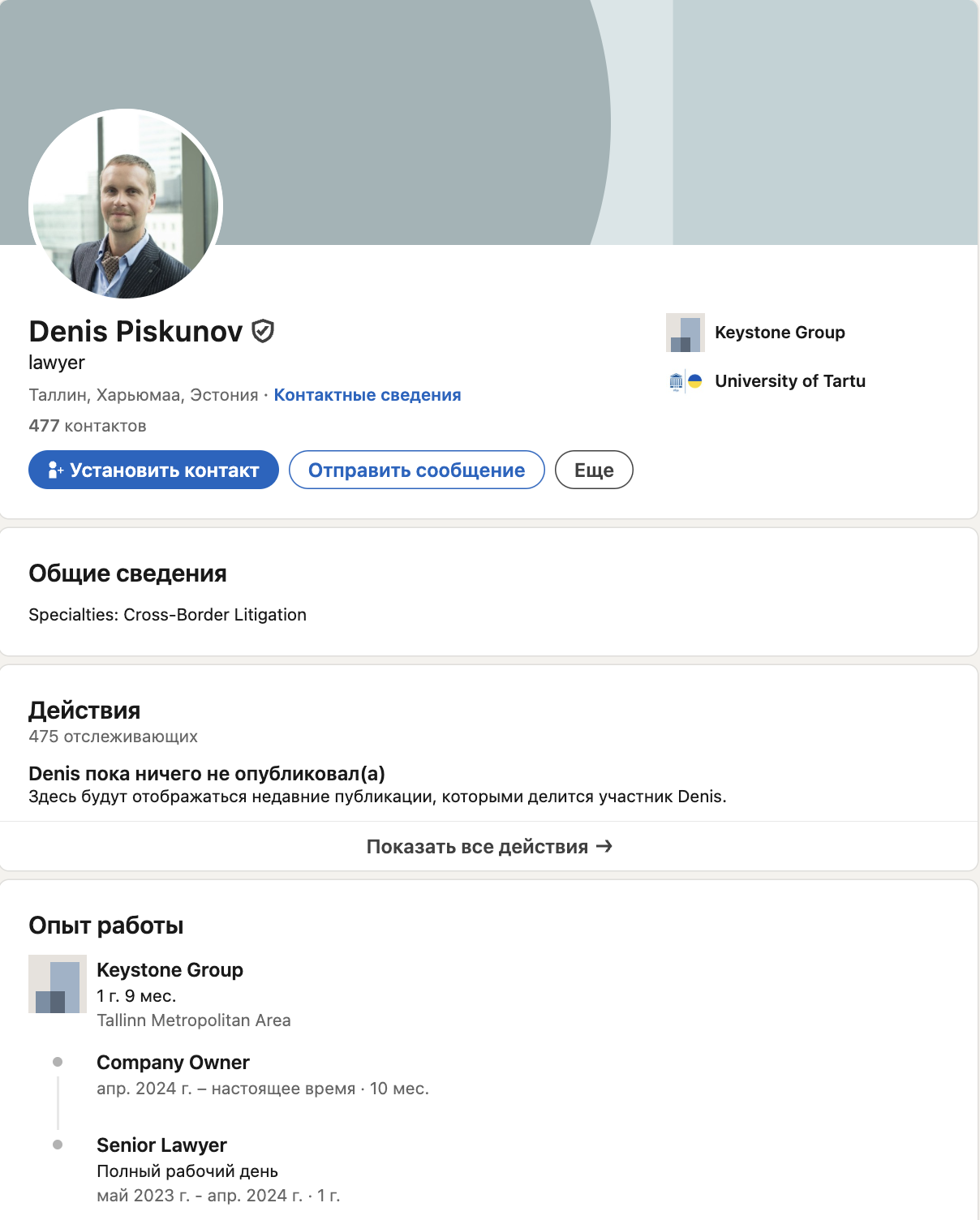
Keystone Shipping's revenue in 2023 was €226.4 million. The beneficiaries of Keystone Shipping and Keystone Group are certain Andrei Kolesnikov and Denis Piskunov, as follows from the Estonian business register. Piskunov indicated on his LinkedIn page that he is the owner and lawyer of Keystone Group. As a lawyer, he also deals with issues of cross-border fraud.
But Andrei Kolesnikov is an old acquaintance of Friedman’s partner in the St. Petersburg business, Pavel Ishkov. Kolesnikov is also captured in the same photograph with men in naval uniform, taken in the center of Riga. On his VKontakte page, the entrepreneur indicated that he studied at a Tallinn school and graduated from the Makarov Academy in 2003. Future business partners could meet there.
The names of these companies echo the enterprise of Friedman and Ishkov, which supplied bitumen to Latvia - Keystone Logistics. It is interesting that the shares of all co-owners in this business are pledged to Expobank JSC, which has been under US sanctions since the end of 2023.
It is also known that Keystone Logistics helped to circumvent sanctions for a Belarusian fertilizer exporter: the company entered into an agreement with Belaruskali, which was subject to EU and US sanctions, for the transshipment of 2 million tons of potassium through the terminals of the Big Port of St. Petersburg.
In 2023, Keystone Logistics' revenue amounted to 15.1 billion rubles, and net profit - 139 million rubles.
The total revenue of exporting companies, of which Fridman is a co-owner, amounted to 16.7 billion rubles in 2023.
Who else imported Russian bitumen to Latvia?
Bitumen was supplied from Russia to Latvia without intermediaries such as Syntex. The list of importers includes large Latvian enterprises.
For example, in 2023, Igate brought from Russia 2.3 thousand tons of bitumen worth almost 746 thousand dollars, Delfi.lv found out. Igate is a well-known company in Latvia. She specializes in road construction. In 2023 and 2024, according to the Latvian Procurement Supervision Bureau, it won several dozen municipal competitions and also built a fence on the border with Russia. In 2023, Igate's turnover, according to the Latvian company Lursoft , amounted to 35.5 million euros.
As Jurgis Puchka, executive director and member of the board of Igate, told Delfi.lv, until recently almost all the bitumen for Latvian roads came from Russia. It was of high quality and much cheaper than competitors could offer,
Byakko Cargo company representative Marks Jaunzems claims that after the adoption of the tenth package of EU sanctions and its entry into force, no one is importing bitumen from Russia.
According to Jurgis Puchka, Igate no longer works with Russian merchants and carefully checks subcontractors and partners. It is alleged that the company purchases all raw materials to produce bitumen from the Lithuanian company Orlen. In a written comment, Igate representatives told Delfi.lv that in accordance with the agreements concluded in 2023, the company actually bought Russian bitumen, but its “supply and import were ensured by other legal entities registered in the European Union.” At the same time, according to Igate, the goods arrived in Latvia before the established sanctions date. The company refused to provide additional information, citing trade secrets.
However, all three deliveries of bitumen to Igate recorded in the Russian customs database date back to June 2023 (one cargo on June 26, two more on June 27).
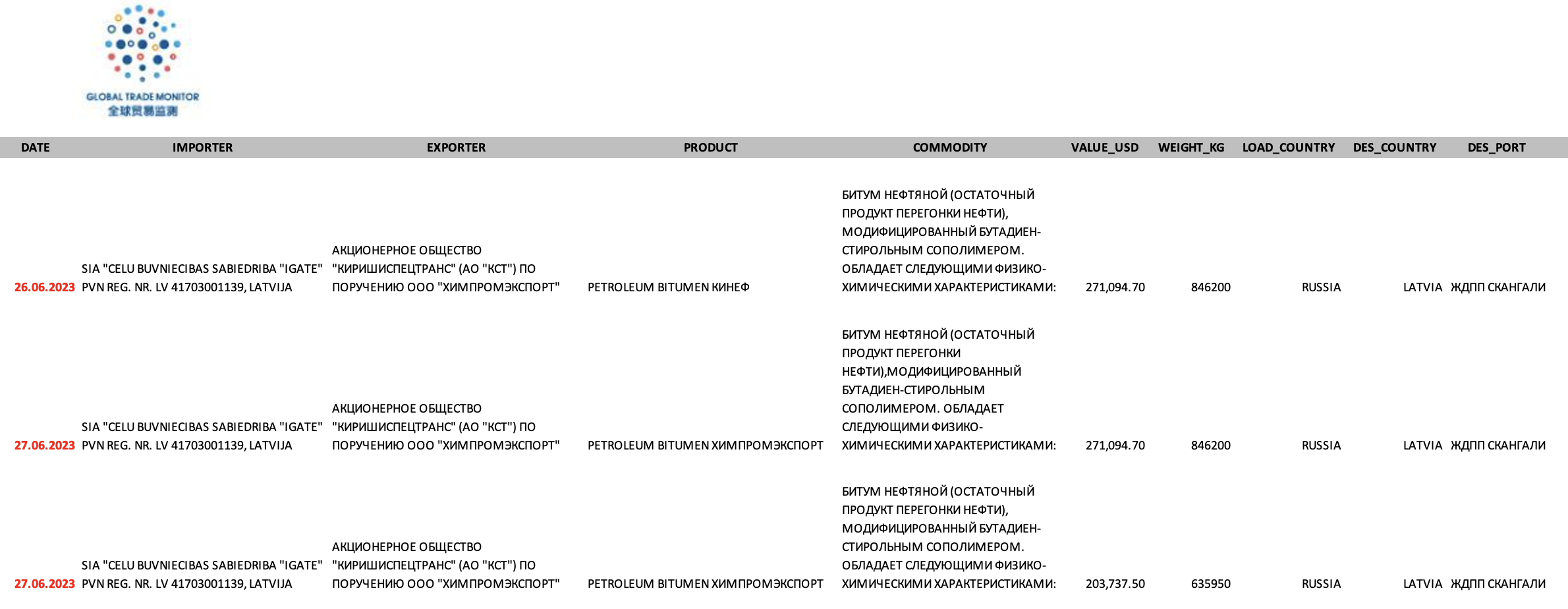
The Delfi.lv interlocutor explained this by some problems with the train and promised to send documents proving this. Delfi.lv also requested a comment from the Latvian customs. Chronicles.Media sent a request to the local Financial Intelligence Service.
If Latvian entrepreneurs can prove that they did not know about the origin of the bitumen, then they are clean before the law, co-founder of the international NGO State Capture , lawyer Alex Prezanti, explained to the Chronicle.
— The main question here is, did Latvian companies know that the bitumen purchased in Georgia was produced in Russia? If the answer is “yes, it is,” then provided that the contract was concluded after February 25, 2023 and the shipment was not subject to exceptions to sanctions or was carried out under a license, this violated EU law. If this is not the case or you cannot prove it, then there is probably no violation. If a company fails to carry out basic due diligence checks, it may receive a fine.
If you have evidence of direct import after the relevant date, it will likely be a violation. The only exception is if a Latvian company has received a license or is subject to an exception,” Prezanti explained.
***
At the end of May 2023, the volume of petroleum and bitumen oils and similar products imported into Latvia from Russia had indeed fallen sharply - almost to zero. This is evidenced by data from the Central Statistical Office of Latvia. But in the second half of 2023, it began to grow again and at the end of six months reached an amount of 17 million euros.
Imports have almost stopped in 2024: by the end of the year, Russia will not even be in the top ten in terms of volume in this product category. Before the sanctions, the annual volume of imports of these goods into the EU, according to the European Commission, was about 1.3 billion euros.
Sergey Kagermazov, Svetlana Martova, editors of “Chronicles.Media” with the participation of Ingrida Drazdovskaya and Anatoly Golubov, Delfi.lv
Material created with the support of Journalismfund Europe