
Translated material
The inaction of commanders led to the death of Russian conscripts
At the end of December 2024, two conscripts died in military units near Moscow: 19-year-old Yuri Ubonov and Vladislav Belonogov. Both fell ill almost as soon as they arrived at the unit: probably both had meningococcal infection. Despite the cough and high temperature, they were not allowed to go to the hospital, and medical assistance was provided only after the soldiers lost consciousness. “Kholod” talked to the relatives of the deceased and tells their stories.
For several weeks they were denied medical care to bring them to the oath. They didn't even last a month
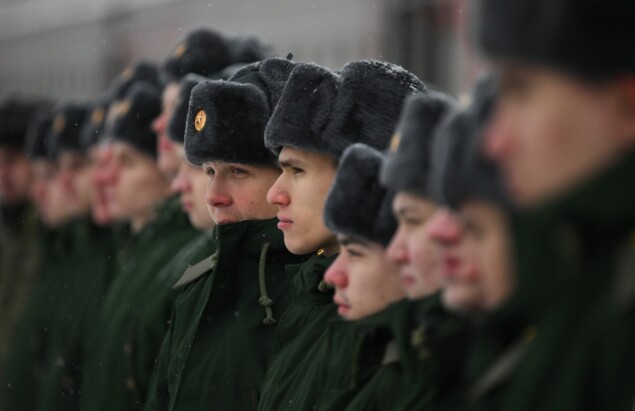
“They didn’t have time to wipe up his blood”
19-year-old Yuri Ubonov from the Irkutsk region joined the army immediately after graduating from a construction college. He trained as a welder and was going to work, but received a summons. His mother Anna Khakhalova says that the eldest son was too modest to try to cut down.
“It’s not easy to do [cut down] now. Of course, he had no desire to go there. Everyone hears what happens to conscripts, how they get hit by shells, as happened in the Kursk [region]. Nobody wishes this for their children. But we hoped that it would work out,” Khakhalova told Kholod. “Yura was so shy and modest. Even when I was studying at a technical school in Irkutsk, I didn’t go out much. He didn't have a girlfriend. Like the weekend - go home by train. Helped around the house, with the younger ones. He graduated from nine classes and immediately entered the working profession. Fight? He never had such a desire.”
In November 2024, Yuri was taken to the military registration and enlistment office of the city of Shelekhov in the Irkutsk region, and in December he was sent to serve in military unit No. 61899 in the village of the Mosrentgen plant in New Moscow. On December 28, he died in hospital, where he was taken only two weeks after he fell ill.
What Putin knows about war The answer to this question determines the fate of possible peace negotiations Politics 4 minute read
“He complained that he had a bad cold almost immediately when he arrived at the unit. It’s terribly cold in the barracks, the uniforms are thin, from autumn. Despite his cough and fever, he was sent to the front lines. On December 16, the cough became stronger, the temperature was below 40. On December 18, he was finally sent to the infirmary. But there, according to the son’s stories, there was no treatment, they just lowered the temperature, and that’s it: they didn’t do an X-ray, they didn’t take blood for analysis,” says Khakhalova.
According to her, three days later Yuri was discharged from the hospital, although he did not feel better.
“On December 21, we took a sick man to the shooting range in the cold,” she says. - I ask: “Why?” He writes: “Tomorrow there is shooting.” At the training ground, they still wore thin uniforms, with a metal helmet on top, directly on their bare heads. He has a big head, he complained that the hat didn’t even cover his ears. Instead of being given a normal one, they simply forced him to put on an ice helmet and spend several hours at the training ground with a temperature of 40.”
Already at the shooting range, according to his mother, Yuri was coughing up blood. The command did not pay attention to the complaints of the soldier and his colleagues.
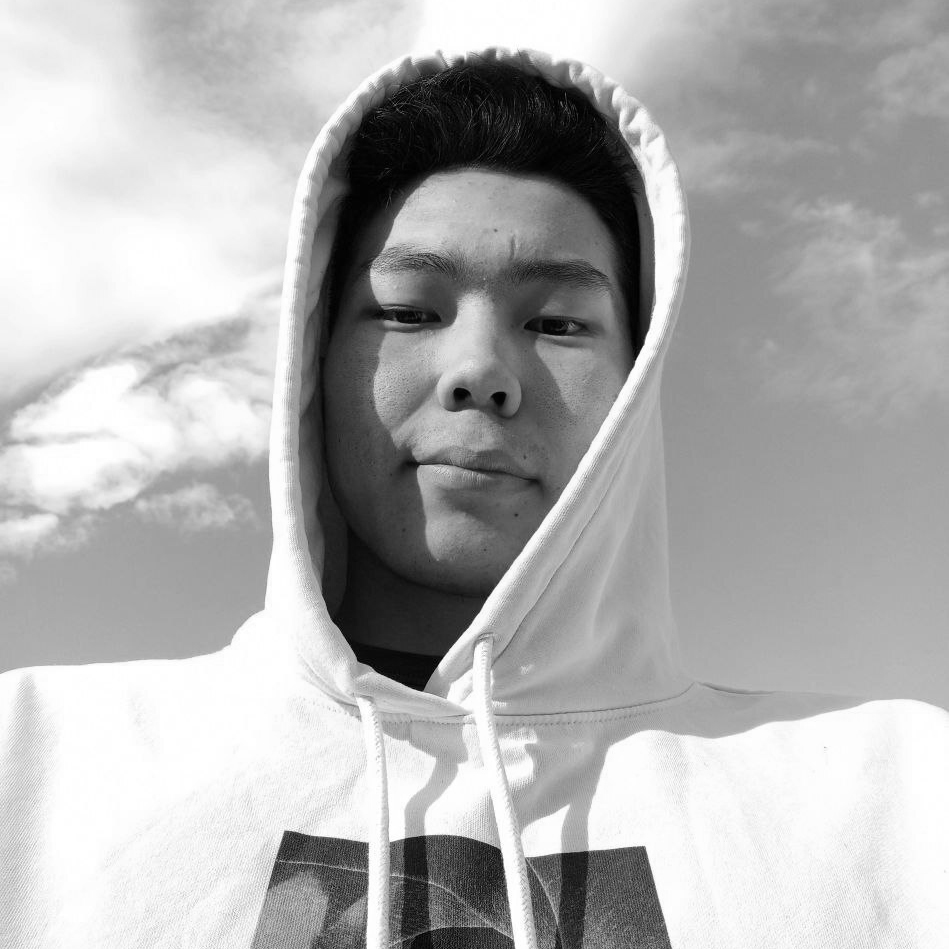
“His colleagues did not have time to wipe up the blood behind him. The command simply didn't give a damn. Although the commanders could not go without seeing this for 10 days, they entered the unit,” says the uncle of the deceased, Pavel Ubonov. “He couldn’t get dressed himself.” Other soldiers dressed him and took him out. Before I lost consciousness, they didn’t take me to the hospital!”
Parents are outraged that they were allegedly afraid to take the soldier out of the unit before he took the oath.
“Almost 10 days of bloody cough! This is a direct indication for x-ray. But no - it was more important for them that everyone take the oath. They waited until December 30th and only then did they tell us about their son’s death. And he died on December 28! - says Yuri's mother. “I don’t know why they were so afraid.” Maybe they're running away from there. Maybe the parents were afraid of panic. But all the parents are already panicking.”
According to Yuri Ubonov’s parents, the unit’s command has already transferred the soldiers who were in the hospital with Yuri to other companies.
“Colleagues who saw Yura’s condition wiped up his blood, dragged him to the training ground and back, and are intimidated,” says Anna Khakhalova. “This place is simply deadly: I gave them a healthy child, less than a month later, they brought me in a zinc coffin!” Yura still has his younger brothers, and I am holding my two-year-old daughter. In three years they’ll want to take the middle one into the army - I’ll lie across the road, I won’t give up my second son!”
Help Kholod tell human stories
We put people at the center of our journalism and talk about people who face injustice, but do not lose spirit and continue to fight for their rights and freedoms. To continue covering people's stories, we need the support of readers - thanks to your donations, we continue to work, despite government pressure.
- Foreign card
- Map of the Russian Federation ↘︎
- Patreon ↘︎
- Translation
- Crypt
Monthly
One-time
5 €
- 10 €
- 20 €
30 €
5 €
- 10 €
- 20 €
- Other
- Bank of the Russian Federation
- Foreign bank
Card number:
5536 9138 6472 8742
Copied!
Recipient:
Taisiya Bekbulatova
Copied!
Recipient:
Projektas Šaltis
Copied!
Account number:
LT613500010016198323
Copied!
SWIFT BIC:
EVIULT2VXXX
Copied!
Bank:
Lietuvos Bankas (Bank of Lithuania)
Copied!
Comment - purpose of payment:
Parama įstatymų numatytais tikslais (be konkretaus tikslo)
Copied!
We ask you to provide a comment so that we can accurately determine the receipt of funds. The phrase is translated as follows: “Support for statutory purposes (without a specific purpose).”
Amount: €
Donate
By making a donation, you accept the privacy policy
The mother and father of the deceased collected screenshots of their son’s messages and reported to the military prosecutor’s office and the Investigative Committee about the failure to provide medical assistance that led to death.
“On December 29, when I was informed about my son’s death, the doctor confirmed to me that Yura would have been saved if he had been brought to the Podolsk hospital at least half a day earlier. But they took him away already half-dead. He had already developed viral myocarditis - a meningococcal infection caused complications on the heart (the conscript’s mother did not record this conversation with the doctor; the editors do not have confirmation of the diagnosis. - Note from “Cold”) . At the same time, the death certificate contains “pneumonia without a specified pathogen” and “pulmonary heart failure.” Without specifying! They already know about meningococcus!” - the mother of the deceased soldier is indignant.
After she posted about her son’s death in a local public page, the mother of another conscript, Yulia Belonogova from Krasnoyarsk, wrote to her.
“The second boy died literally a day after mine. Also 19 years old. And part is nearby! - says Anna Khakhalova. - And he also has meningococcal infection! It appears to have already developed before the epidemic. But the military cannot cope and instead of sounding the alarm, they hide it!”
“Give me the body to bury!”
Commanders did not allow 19-year-old conscript Vladislav Belonogov from Krasnoyarsk to be hospitalized for half a month. He died in unit No. 58198 on the night of December 29-30, 2024. He was forced to sign the oath right on his bed in the medical unit on December 29. They refuse to give the body to the parents.
“The relatives ask: “Give me the body to bury!” They first referred to the “New Year holidays,” then to the “check,” says the aunt of the deceased, Olga Vasilyeva.
Vladislav’s mother refuses to talk to journalists - she still hasn’t come to her senses, relatives say.
“You can understand, this is her only son. If she starts to remember, the hysterics will start again. But no one relieved her of work,” explains the soldier’s aunt.
According to her, on December 8, Vladislav left the Krasnoyarsk transit point and four days later arrived at unit No. 58198 near the village of Kalininets in the Moscow region.
I went to fight for Ukraine as a volunteer. I am almost 60, and I am from Russia. I couldn’t do otherwise, but I couldn’t cope with the constant fear and quit Society 14 min read
“He caught a cold almost immediately and started coughing. Less than a week later, on December 16, the cough was so severe that he went to the infirmary. But he was refused hospitalization and was not treated all this time! He was simply kept in the unit until December 29 without tests, without x-rays. He said that the temperature lasted for 13 days, but they didn’t even take his blood,” Vasilyeva recalls.
Vladislav’s father Andrei Belonogov says that he communicated with his son almost every day, despite the divorce from his mother. All 13 days while the conscript had a cough and fever - from December 16 to December 29 - he spent in the barracks, without medical care.
“He came to the medical unit twice and complained of a severe cough and fever. He was told that if he came in for the third time, he would be “put in a guardhouse” (a special security room in the army where military personnel are kept under arrest . - Note from Kholod) . The third time he didn’t go. Although the medical unit immediately diagnosed “suspicion of pneumonia,” they did not treat him. They promised to do all the X-rays at the hospital, but they never took me there,” says Belonogov.
The conscript’s aunt claims that Vladislav also told his mother and grandmother about “suspicion of pneumonia.”
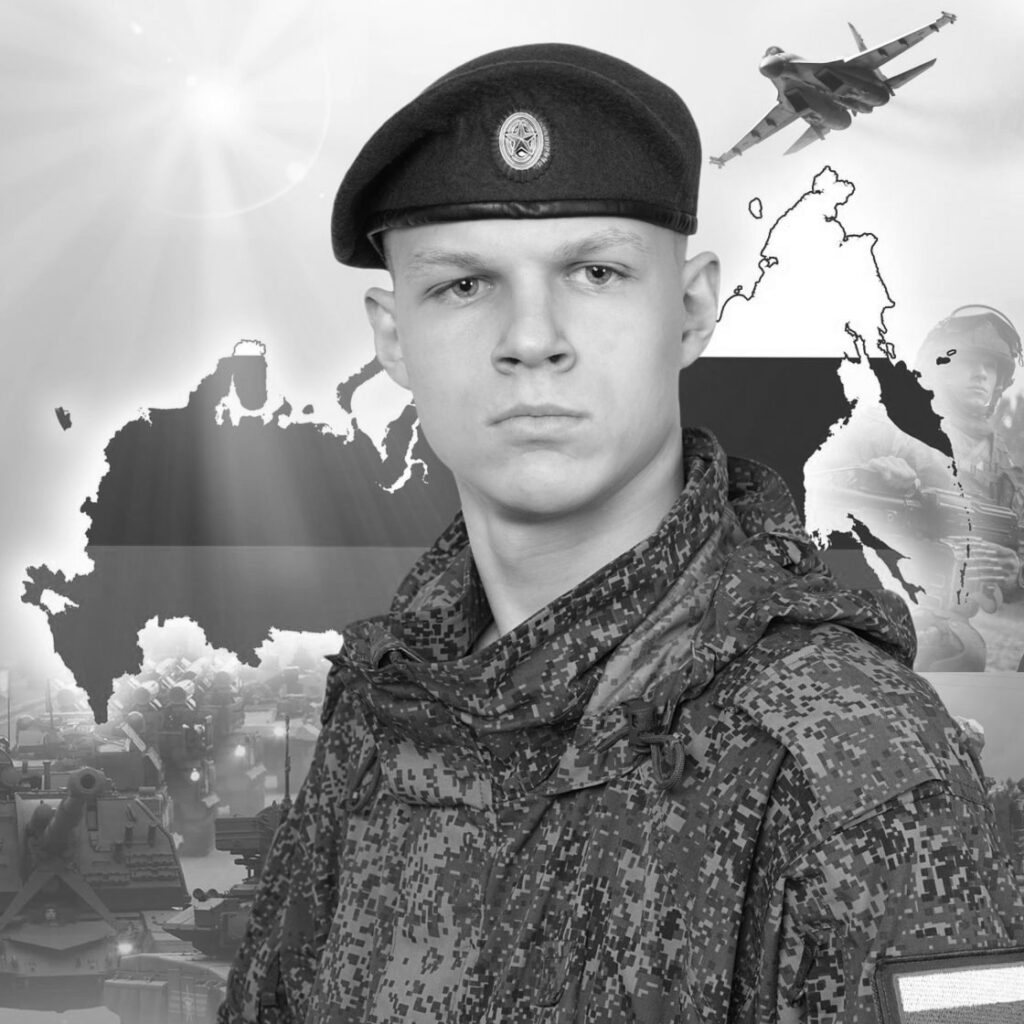
“On December 18, he sent his mother an audio message that he suspected pneumonia. On December 19, he called his grandmother and repeated this, clarifying that they promised to take him to the hospital for an x-ray. Another 10 days passed, but until his death he was not taken anywhere,” says Vasilyeva.
On December 29, the day of the oath, Vladislav Belonogov left the barracks for formation and lost consciousness. Then the commander took him to the medical unit.
“He was literally shaking from the high temperature. The commander brought him to the medical unit, but they only gave him an antipyretic, one pill - and that’s it! If the paramedic had done his job properly, examined him, and seen that a rash had already appeared on his body, Vlad would have been alive. These are direct indications for hospitalization! As a result, he lost consciousness, but an ambulance was not called for him. Although if they had called her then, in the morning, her nephew could have been saved,” says Vasilyeva. “Instead, they gave him an oath to sign. According to colleagues, straight to the medical unit! The ambulance was called only closer to night, but it was already too late - Vladik died on December 29-30. Three weeks, and the guy was ruined! Yes, this is a real murder: they watched him die before their eyes for half a month and did nothing.”
According to Andrei Belonogov, the only time the relatives of the deceased heard something about the diagnosis was during a conversation between Aunt Vladislav and the head of the morgue.
I taught first graders in a private school. War destroys even them For a year and a half I watched how “we will bomb them” and “for ours” break through in conversations about Greek myths Society 12 minute read
“He did the autopsy and told Olga on the phone that it was meningitis: the guy died due to meningococcal infection,” says the father of the deceased soldier. “She called already in January. And we learned about Vlad’s death only two days after what happened, and only because his colleague called us himself. I personally never received a call from the military. On December 30, I myself found the company commander’s phone number and called him. He confirmed his son's death. - Well, what can I say, they ruined the guy. My only son. He was such a lively person: positive, sociable, the life of the party. I can't even believe it. He was healthy, 183 centimeters tall. I didn't miss out on the army. Then I wanted to go to work in the police or the Ministry of Emergency Situations. He was a member of the Patriot sports club and went to the mountains. In the summer, before the army, I jumped with a parachute for the first time.”
According to father Vladislav, after about a week of complaints, the relatives were given a death certificate, where the causes of death were listed as cerebral edema, acute meningococcemia and Waterhouse-Friderichsen syndrome (acute adrenal insufficiency, which develops with bilateral hemorrhage in the adrenal glands). Earlier in the morgue, the pathologist verbally informed the soldier’s aunt about meningococcal infection and named the cause of death as meningitis.
The Belonogovs are confident that the military unit intends to hide the circumstances of Vladislav’s death: after December 30, unknown persons erased all messages from the soldier’s correspondence with his mother and father.
“Of course, we suspect the commanders [of trying to hide the details of the death]. The phone remained with them, in the unit,” says Vasilyeva. - Only they could clear all the chats. We don’t know exactly when, but after we learned about what happened. Yulia [Vladislav’s mother] went to WhatsApp, wanted to listen to the voicemails, hear her son’s voice again, and there: “Contact “Son” deleted all messages.” They erased all the messages where Vlad talked about the refusal of medical care, where he complained of a cough and fever. I don’t know why it was important for them to hold out until the oath. But the fact is: he was not released, he was not hospitalized, and his parents were not allowed in. Relatives from Moscow tried to find out if it was possible to attend the oath, but they were told that “the event is closed.”
“You’re not planning a murder, are you?” The student was preparing for a crime in criminology classes. He learned how to cover his tracks, but he didn't learn all the lessons
Crime 7 minute read
The father of the deceased conscript says that his correspondence with his son was also deleted.
“On January 3, everything was cleared. First from Yulia, the mother. Then with me. Well, of course it's suspicious. How is it that they deleted our chats, where he described everything,” says Belonogov. - Well, they lie at every step. The commander told me that Vlad allegedly died in an ambulance, and then the head of the morgue told Olga that this was not so, he died in the Naro-Fominsk hospital, where the morgue is located. That is, he was never taken to the military hospital. They took me to a civilian hospital. I don’t know, are there any doctors in the military hospital?”
Lawyer Evgeny Ilchenko, who defends Russian soldiers in court, explains the delay in providing medical care by the fact that after taking the oath, the soldier’s status changes.
“Let’s put it this way: the status of a soldier under oath is much less valuable. He is already serving and much can be attributed to the “hardships of military service.” The soldier is more or less protected until he takes the oath, and in the event of death, the commanders will be hit a little harder,” says Ilchenko. - Stronger, but not that much. The judicial system is still on the side of the Ministry of Defense. Winning a case in court will be very difficult, almost impossible. Courts are not currently going against government agencies, especially the military.”
By telephone, both military units refused to comment on the causes of death of the conscripts.
In order not to miss the main materials of “Cold”, subscribe to our social networks!


Kholod needs your help to continue working
We continue to work, resisting bans and repression, to preserve independent journalism for the Russia of the future. How do we do this? Thanks to the support of thousands of caring people.
What do we dream about?
About the simple and at the same time complex - the opportunity to work further. Life will change beyond recognition many times, but we, the editors of Kholod, want to stay close to you, our readers.
Support Kholod today so we can continue to do what we do best - be independent media. Thank you!
Author: Saniya Yusupova Cover photo Alexander Kryazhev / Sputnik / Profimedia