
Translated material
Obedkov knows for sure
The prosecutor's office found 20 “fascist collaborators” among the 9,000 rehabilitated Primorye residents. And continues to study cases
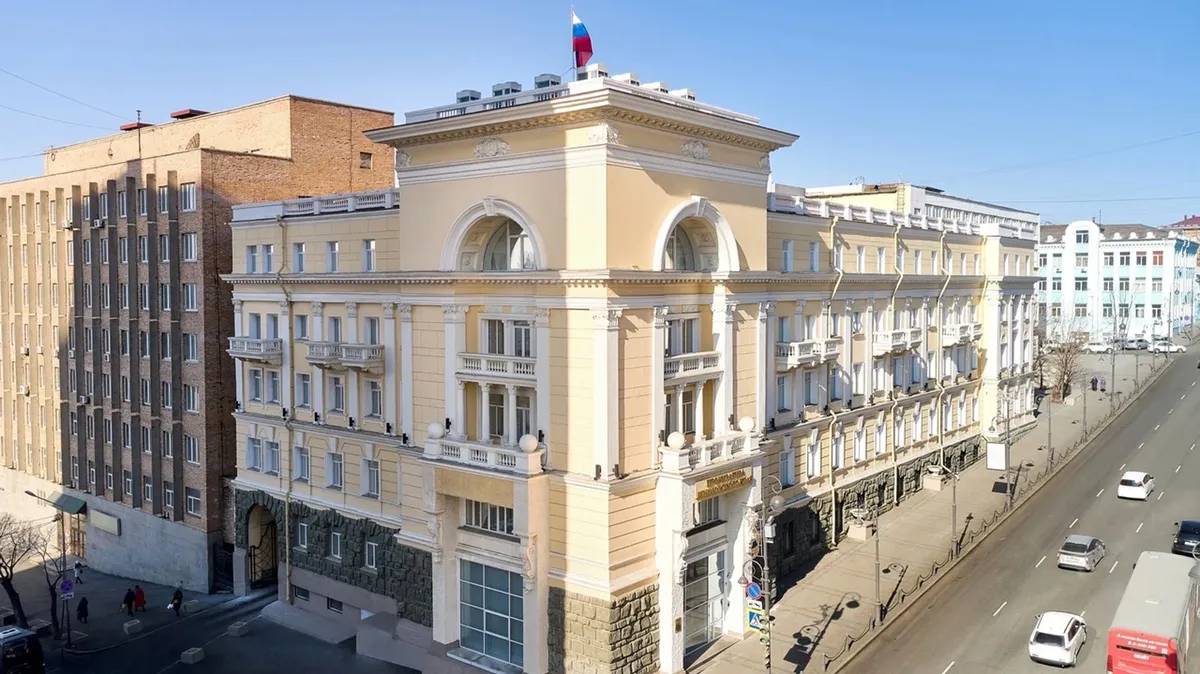
Prosecutor's Office of the Primorsky Territory. Photo: social networks
In the Primorsky Territory, the prosecutor's office is studying cases of the 90s on the rehabilitation of victims of political repression and canceling some decisions that were made “insufficiently balanced.” Such work, on behalf of Prosecutor General Igor Krasnov, has been taking place since 2022. Now there are only 20 people among the illegally rehabilitated Primorye residents, but, obviously, there will be more: the prosecutor’s office continues to work with documents. On eight out of twenty, the regional prosecutor Sergei Stolyarov has already made a final decision, another 12 petitions have been sent to the Prosecutor General's Office.
The dead have nothing to answer, so in television stories they can be called whatever you like. For example, “traitors to the Motherland” and “fascist collaborators.” Even before a decision is made. The Primorye prosecutor's office is considering their cases because rehabilitation work took place in the 90s, when these people already lived in the region.
“Taking into account our modern information capabilities, it was revealed that 20 people were rehabilitated unreasonably, decisions were made insufficiently balanced, without taking into account all the circumstances that we have established to date,” commented the head of the criminal justice department of the Primorye Prosecutor’s Office, Dmitry Obyedkov, in the story of Vesti Primorye. .
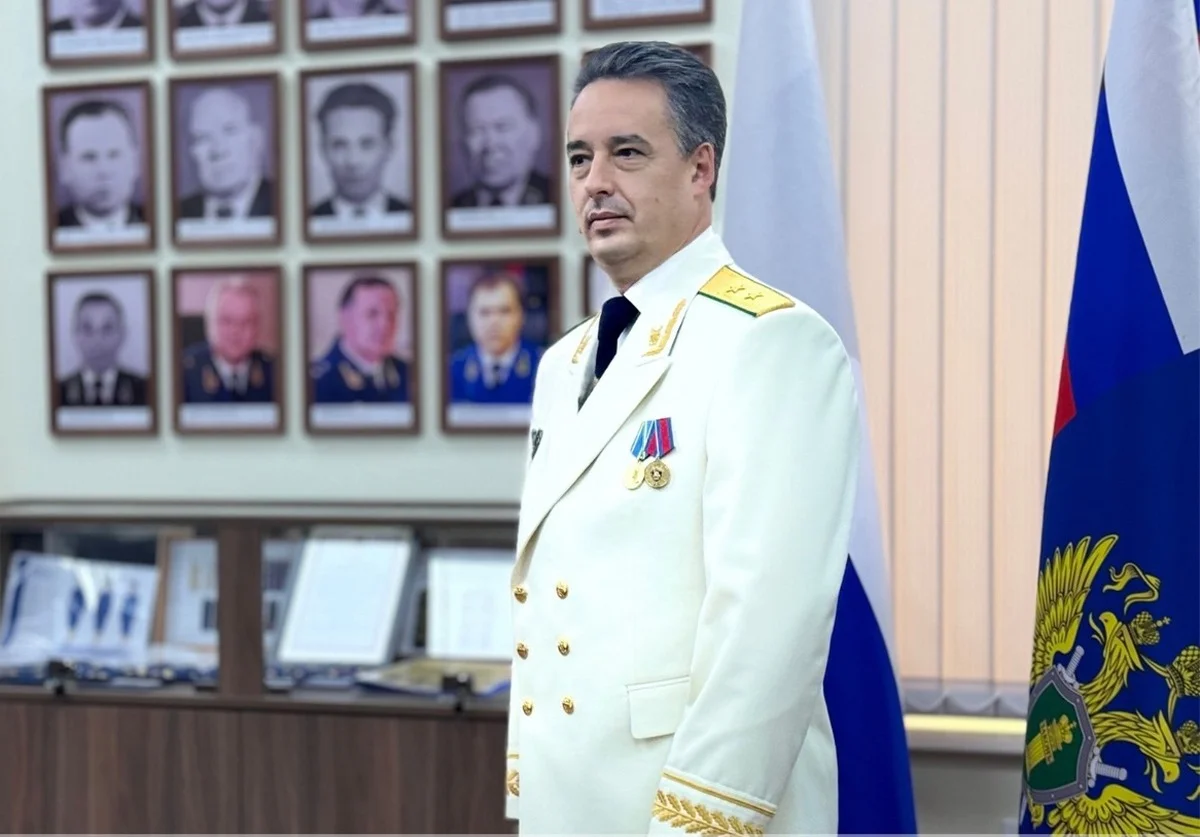
The prosecutor’s office employee did not specify what “modern information capabilities” are in the context of studying such documents. But he said that persons who were convicted during the war or post-war years were unreasonably rehabilitated - and called the process of their de-rehabilitation a restoration of historical justice and a tribute to the memory of those who died defending the Motherland. Some of these 20 people served in the German army, that is, they fought against the Red Army with arms in their hands or delivered ammunition to the German army, like one of the men who worked as a loader in the port, and during the war in the territory of the occupied Sumy region of Ukraine swore allegiance to loyalty to the Wehrmacht, fought as part of a service company and was even captured in 1945. After the war, he was freed from captivity, came to Vladivostok and was already arrested here. Some were police officers or simply running errands. And here there are almost no questions - except perhaps: how in 2024 to distinguish policemen from those who were unfairly accused, who fell under the rink of repression due to false denunciations?
But there were those who “went over to the side of the invaders.” Among the latter, for example, was a simple teacher...
“This all happened on the territory of the occupied Kharkov region. A fairly young woman remained. She taught children, Soviet children, German. According to the case materials, she used violence against those children who refused [to learn the language], says Irina Kolbanova, senior prosecutor of the cassation department of the criminal justice department of the Primorye prosecutor’s office.
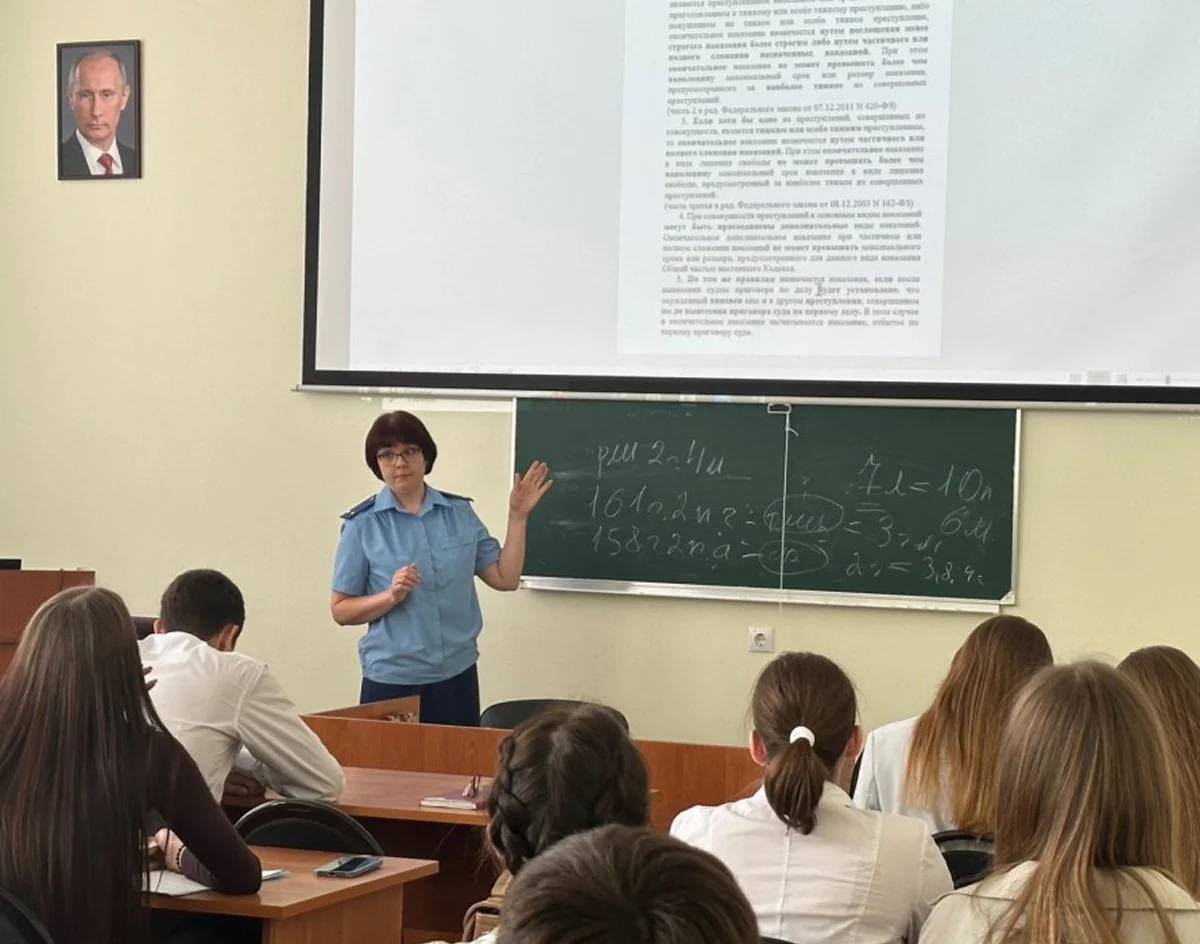
At the same time, the German language was then a standard subject in the Soviet school curriculum.
But even this process of identifying those illegally rehabilitated is an extra argument against those who for some reason do not believe in Stalinist repressions. Indeed, even according to official data, over the course of two years, the criminal justice department of the regional prosecutor’s office studied as many as 9,000 decisions on the rehabilitation of victims. And only 20 “errors” were found. The department cannot say how many such cases will have to be studied - separate records were not kept.
In the comments on local public pages, Primorye residents evaluate such work with skepticism, call it “legal ping-pong,” remind them of the many false denunciations and lack of evidence, and wonder why they are digging this up, since people have been in the next world for a long time. They doubt that the goal is to restore historical justice for each person. And they note that the percentage of identified “incorrect rehabilitations” is negligible, and if the goal was “to show that it was not in vain that the authorities thrashed the people without trial or investigation,” then the effect was the opposite.
“It’s logical about the guy working for the Wehrmacht, but I feel sorry for the teacher. She didn’t abandon her children, and she didn’t really have a choice in disciplines,” writes Evgenia.
“We reviewed 9,000 cases and found 20 questionable ones (0.22%). These people died and were buried long ago. Excellent exhaust. One of these days I will be sending an appeal to the prosecutor’s office about how the rights of a living family with small children are being violated, we’ll see how quickly they figure it out and respond. Otherwise, I guess there’s no time, we have to sort out the remaining 11,000 cases. And I’m not even talking about the fact that, it turns out, 8,980 people were convicted for absolutely nothing. They then gave a handout in the form of penny benefits to those who survived,” says Yana.
“You don’t have to take everything to absolutes. Were there any repressions? Yes. Is there a monument to the victims? Yes. Do we know and remember? Yes. Is it necessary to double-check cases for the hundredth time and clarify the circumstances? In '56, yes. In '91, yes. But by 2025, that will be enough. Do we have a book of memory for the victims? I think not. Website? No. The cases were declassified only at the request of relatives (you also have to prove that this is your grandfather). So this is not a question of history (those who want, remember; those who don’t want, don’t). There is a question of effective use of state resources. While there were only two investigators left at the Pervorechensky District Department of Internal Affairs, a team of lawyers sat and read cases from long-ago cases for two years. I didn’t even read, but re-read, what was already accepted in the 90s. And in another 30 years I’ll recheck these too?” - Vladimir asks a question.
Primorye
Comment
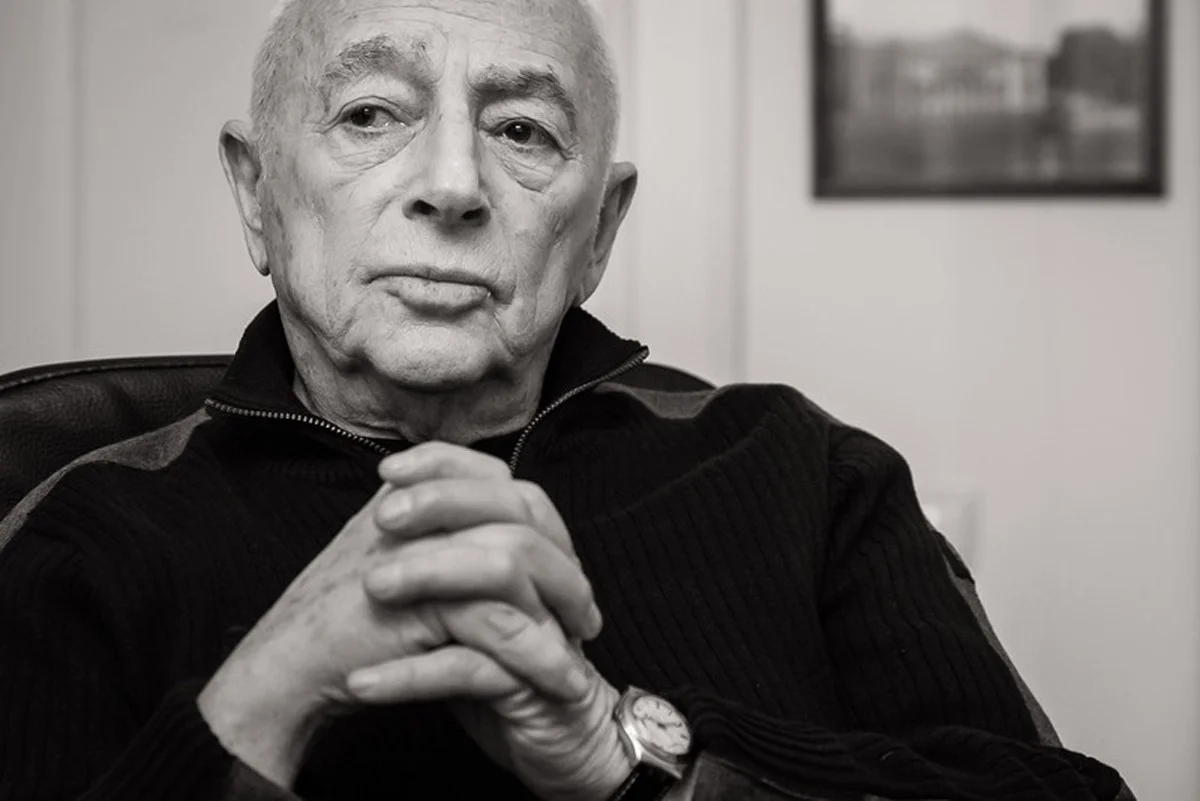
Alexander Moiseevich Gorodnitsky:
“Apparently, this woman could teach German simply because there was nothing to eat.” After all, somehow it was necessary to survive in the occupied territory. Teaching German cannot be regarded as working for Nazi Germany. After all, in Soviet schools at the same time throughout the USSR, German was taught more than any other language.
I remember very well that we children did not just learn German at school during the blockade. After all, we were then getting acquainted with the entire culture of Germany, which attacked us. The Philharmonic played Bach, Beethoven and other German composers and broadcast these concerts on the radio throughout Leningrad.
Imagine, I have a book coming out in Germany soon, translated into German, called “German Lessons.” I myself love this poem very much. Although it refers more to attempts to assign the entire culture of a country the guilt of individual citizens of that country. This, by the way, applies to all times. Including the demolition of the monument to the outstanding poet Volodya Vysotsky, and attempts to hold Pushkin responsible for today's events and demolish his monument, protected by UNESCO. It's simply indecent.
PS Alexander Gorodnitsky wrote the poem “German Lessons” in 1996, half a century after the end of the war.
German lessons
Under the velvet blanket there is a pillow,
Earthenware mug with a cast lid,
I remember in the evenings
Antique silver pince-nez,
Agata Yulievna, a neat old lady,
She taught me German words.
Then all this was called a “group”.
Now, of course, it’s stupid to remember
Children's performances, colorful stuff.
Then the war, snow-covered corpses,
Chowder made from paste instead of soup,
There is an impenetrable snowstorm on Nevsky.
Ah, songs about sunny trout,
We sang them out of tune in German.
In the window the spire glowed over the Neva.
...The smokehouse is a flame that barely smolders,
The neighboring square, dangerous from shelling,
Night siren twilight howl.
I don’t know where her grave is now,
In the steppes of Karaganda, on the dull Kolyma,
At the Piskarevsky stone fences.
Agata Yulievna - let's leave everything as it was,
Agata Yulievna, the language is not to blame.
Thanks for the lesson. Let him come back again
German clear syllable, rumbling word,
From childhood, from distant lands,
Where are the voices of the boys' choir,
Saxon porcelain figurines
And Schubert's crystal drops.