
Translated material
Sledgehammer against gamers
Who decided to ban Russians from playing and what?

Photo: DPA / TASS
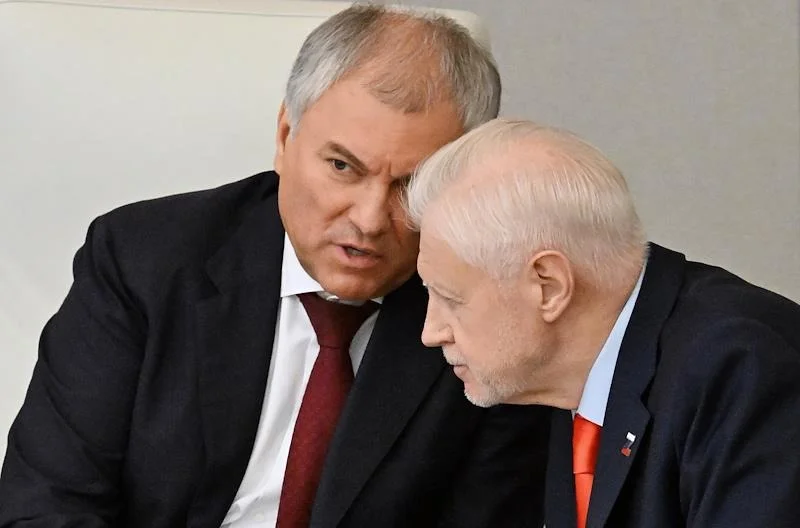
On January 9, State Duma Chairman Vyacheslav Volodin published a post on his Telegram channel:
“We are receiving appeals: there are many stories in video games that contain aggression and violence, propaganda of values that are alien to us. In January we plan to make a decision on protecting citizens, primarily children, from destructive content. Do you support?
By “decision” he means the federal law “On the protection of children from information harmful to their health and development”, which is being considered by the Duma. The explanatory note to the bill states that it is “aimed at protecting young people, in particular children, from the spread of destructive ideology that denies or insults traditional values.”
The project is a party one: its authors are entirely Fair Russians, led by Sergei Mironov (he, apparently, has already buried the famous sledgehammer and switched to children). In addition to the autograph of the leader of the Socialist Revolutionaries, the project bears the signatures of the tireless Yana Lantratova, as well as Oleg Nilov, Dmitry Gusev, Andrei Kuznetsov, Nikolai Novichkov, Sergei Kabyshev and Alexander Aksenenko. It must be said that the “fair” party has long been targeting gaming content. Lantratova has already demanded that games be provided with rental certificates, accused them of promoting alien values, and called for the creation of “national” games (apparently, like “The Troubles”). She even called for censoring content when issuing certificates - cutting out scenes of cruelty from games. Mironov even found LGBT* propaganda in games.
However, the Fair Russians are not the only guardians of sovereign gaming. On the State Duma website you can find completely serious, albeit meaningless news with the headline: “Video game developers will protect the foundations of the constitutional system of Russia.” True, the text underneath tells us that there are still not enough such developers.
In general, the bill on censorship of video games did not come as a surprise. According to its authors,
The West allegedly unleashed an information war against Russia, the purpose of which is the destruction of traditional values, and the targets are children and adolescents, since they “are at the stage of forming their worldview and personality.”
The note mentions that “traditional values include
life,
dignity,
human rights and freedoms,
patriotism,
citizenship,
service to the Fatherland and responsibility for its fate,
high moral ideals,
strong family,
mercy,
justice,
collectivism,
mutual assistance and mutual respect,
historical memory and continuity of generations,
unity of the peoples of Russia."
Everything is as in the corresponding presidential decree.
Let's return to the text of the note. “Denial and discredit” of these values is a “destructive ideology”, the spread of which entails
risks of self-destruction of society,
strengthening “sociocultural stratification”,
causing harm to “moral health”,
introduction of “antisocial stereotypes of behavior” (including the spread of violence and alcohol),
neglect of “spiritual and moral values”,
distortions of historical truth,
denial of “Russian identity”,
discrediting the idea of serving the Fatherland.
Finally, at least someone has deciphered the mysterious concept of “destructive ideology” that politicians, propagandists and informers love so much. So, whoever does not like the listed values is the bearer of destructiveness. And also who doubts their traditionality -
for example, in the primordial charity of Russians or their high moral ideals, as well as in the value of a strong family in a country where, according to official statistics, in 2024 there were about eight divorces for every 10 new marriages.
What does this have to do with games? And it's not just about them. The bill proposes to generally prohibit the dissemination among children (that is, through any content) of information that “offends or denies traditional Russian spiritual and moral values.” I wonder whether information about the Civil War, uprisings and riots, or, for example, about two Chechen wars will be considered a denial of the “unity of the peoples of Russia.” However, if we are talking only about children, then the issue is resolved by the “18+” label, and this cannot lead to any ban on video games announced by Volodin. But his post clearly announces the ban on certain game content. In the poll attached to the post, as many as 113.6 thousand people voted, 80,900 (71%) of whom approved the proposed blocking.
In his next post, on January 12, Volodin clarified that the decision would be “balanced.” According to him, “we are talking specifically about protecting children from destructive content on the Internet and video games, from the propaganda there of information prohibited in our country - committing crimes, gender reassignment, drug use and LGBT people. Everything that has an extremely negative impact on the fragile psyche of the younger generation.”
The wording here is very strange. First, it talks about promoting certain information, and then it lists actions, not information.
In addition, frankly, if you have such sensitive children that their psyche breaks down at the slightest hint of the above, then it is very stupid to think that any prohibitions will help them.
The speaker also notes that “in recent years, there have been a number of cases of attacks by students on students and teachers in schools. The actions were prompted by their participation in video games. Children and teenagers, when committing such acts, often think that they continue to be in the virtual world, since the line between it and reality is blurred.” Question: where does this information come from? What kind of confidence? Was there really any research done by professionals? If so, which ones? If video games provoke violence, then why don't all gamers attack people? And why did such attacks occur long before the first video games were created? There’s nothing to say about blurring the line between worlds—it’s not for nothing that Volodin is a politician and not a psychiatrist.
Only a person in deep psychosis can fail to distinguish between the real and the fictional world, and this certainly has nothing to do with what kind of art he consumes.
What's the point of banning games to “protect” children if developers already put age ratings on them? Of course, she never stopped anyone, but how could the law be more effective? And by what criterion were officials going to determine what is “propaganda” and what is not? Given their level of understanding of such subtle things as psychology, I would not raise expectations too high. Why then, for convenience, not immediately ban films, TV series, books, and especially news, because all these things contain violence and other terrible things? What if some child accidentally sees!
But what do Volodin’s subscribers themselves think about this? After all, despite the approving vote, there are already 85.5 thousand sad reactions under the post, and only 51.5 thousand likes.
Judging by the comments, citizens are concerned about more important issues. Every third user writes about migrants. “Do you want to ban something? Ban the Wahhabis’ passports, which you are handing out to them left and right!” “Solve the problem with propaganda in social networks of successful success, a wonderful idealized life, “oriental fairy tales”, the problem with foreign diasporas.”
There are even more creative proposals: “We are receiving requests, we need to consider them, well done!” But a question came up to me: have there been any requests about lowering the retirement age?”, “We demand to stop the digitalization of all spheres of life, primarily education! And close the border with Pakistan to protect Russian children”, “And ban electric scooters in 2025”, “Remove numbers from school, remove metal detector frames and give teachers creative freedom. This is the best care for children."
And completely unexpected: “Remove Pushkin’s map, please! Otherwise, at school they force it on everyone, but some people don’t need it at all!”
And, of course: “Good wishes! To all Orthodox Christians! Go to Church! Read the prayers! Wear an Orthodox cross! Keep God's commandments! Love everyone! Peace! Good!”
It’s interesting that those comments whose authors are in favor of blocking games have thousands of dislikes. Why are the reactions on the post and in the comments clearly negative, but in the survey itself 71% voted for blocking? Was the Speaker of the State Duma really attacked by bots?
By the way, the State Duma announced another bill that will oblige citizens to log in through “State Services”, using biometrics or using a phone number; If you refuse such registration, platforms may be blocked. The technical success of such a solution is questionable, as is the fact that mass blocking of popular games will become a barrier for their fans or will force someone to get carried away with the virtual adventures of Yuri Miloslavsky. The bans in this area look quite comical - gamers will obviously still find their way to their favorite games. It will just become a little more difficult.