
Translated material
Debris of a past life
Palestinians displaced inside the Gaza Strip by the war have begun returning to their homes. Nothing remains of many buildings
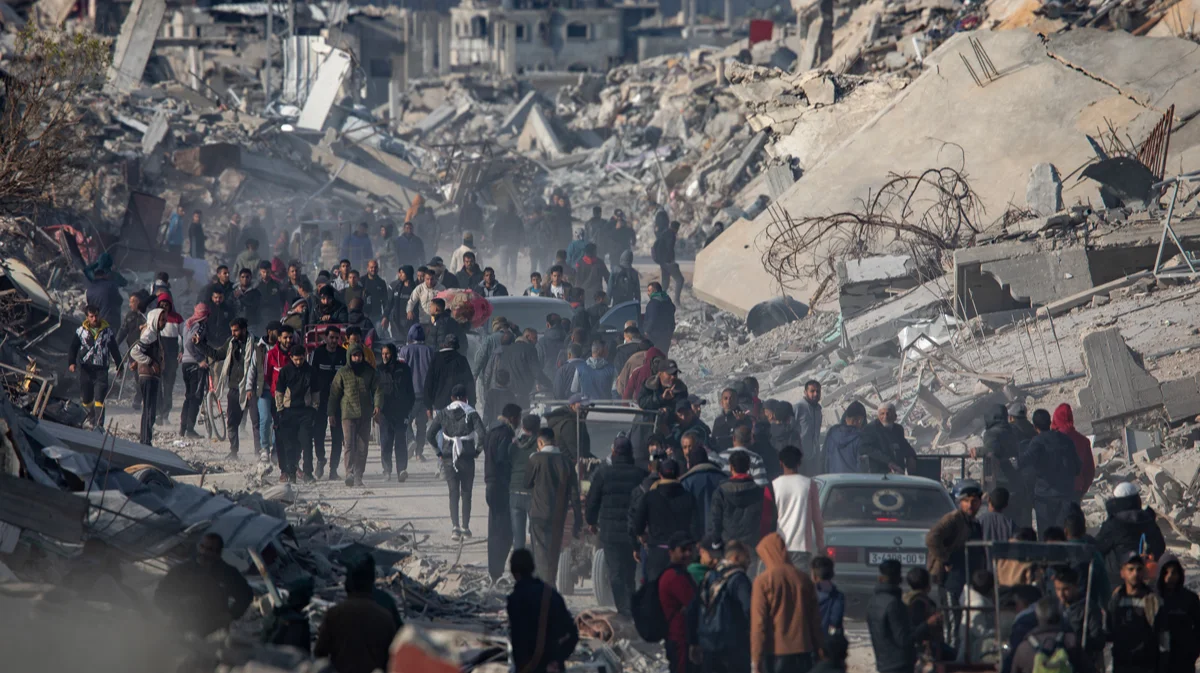
Palestinians walk along the road leading to Rafah, southern Gaza Strip. January 19, 2025. Photo: Haitham Imad/EPA
In the Gaza Strip, thousands of Palestinians displaced during the war between Israel and Hamas have begun to return home. On Sunday, January 19, a temporary ceasefire came into force as part of the hostage exchange deal.
But practically nothing remains of many of the buildings and streets that local residents hoped to see. “Novaya Gazeta Europe” retells media materials whose authors were able to talk with Palestinians about the destruction and the search for missing loved ones.
Returning to a home that is not there
Martin Griffiths, the UN emergency relief coordinator who left office in June 2024, reported a year ago that 85% of Gaza's total population - 1.9 million civilians - had been forced to flee their homes due to the war.
Reuters wrote on January 21, 2025, a few days after the ceasefire deal in the region came into force, how Palestinians began to return to their former places of residence on foot or in carts. According to journalists, some residents could not even recognize their homes and chose to return to the tents where they had been sheltering for the past few months. Others began clearing away the rubble.
One of the agency’s interlocutors, Walaa El-Err, shared that she did not sleep all night from January 18 to the 19th, waiting for the truce to come into force. Speaking to a journalist, she showed off her bombed-out home in Nuseirat, a refugee camp in central Gaza built decades ago.
“When I came to the camp, I shed tears, because before he was not at all like this, he was the best. When we left, all the towers and houses were still intact, and none of the neighbors had been killed,” she said.
Israeli troops did not clear the entire territory of Nuseirat, but entered there during the operation to free four hostages, including Russian Andrei Kozlov. They were kept in the houses of local residents. In late December, the IDF also reported an airstrike against an Islamic Jihad cell in the camp.
Abla, a mother of three, told Reuters via messenger that the seven-story house she lived in in a Gaza suburb in the north of the enclave was leveled and "crushed like a piece of biscuit."
“I heard that the area was badly damaged and the house could be destroyed, but I doubted and hoped that it could still be saved. At the site of the house, I discovered a box of memories where I raised my children, celebrated their birthdays, cooked them food and taught them their first words and movements,”
- she said.
The Associated Press reports that Palestinians began making their way through the rubble to their destroyed homes even before the deal between Israel and Hamas took effect.
“They are returning to pick up their loved ones from the rubble,” said Mohamed Mahdi, a displaced Palestinian and father of two. Several months ago, he was forced to leave his three-story home in the southeastern Zaytoun neighborhood of Gaza City.
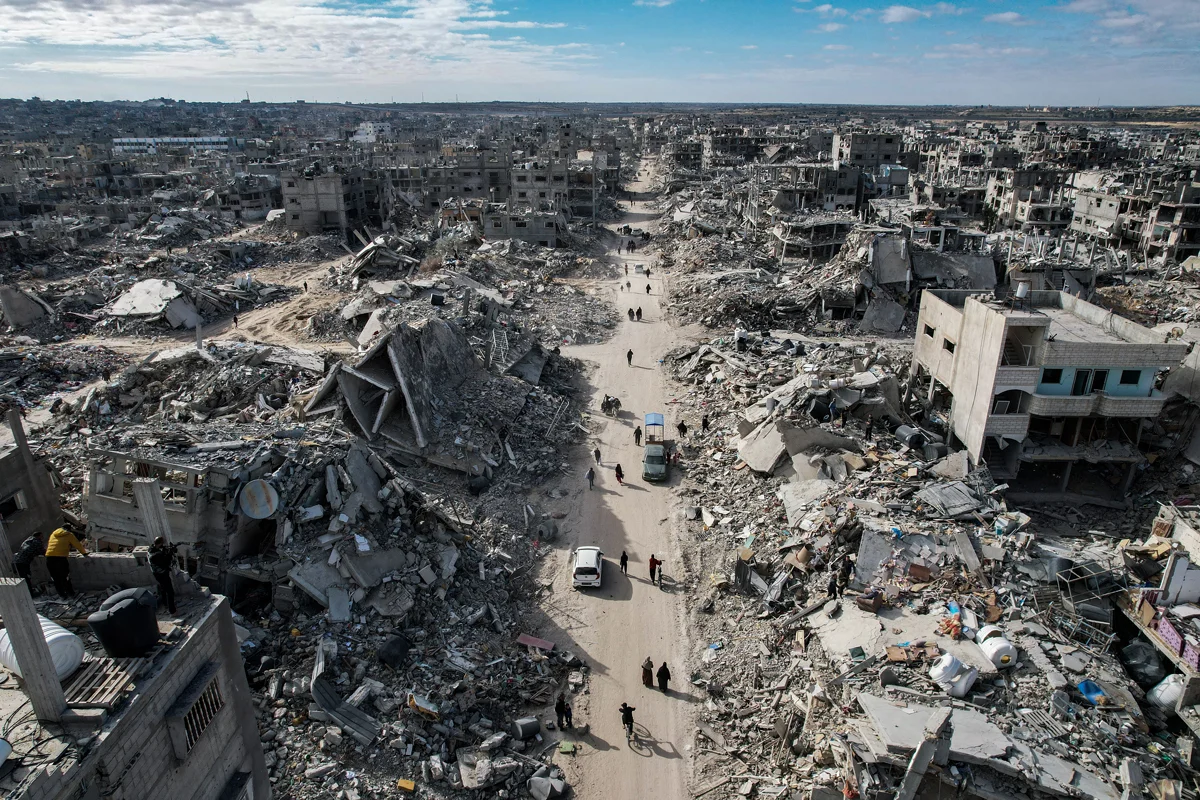
Mahdi was able to reach his home on Sunday. On the way, he said, he saw Hamas-led police deployed on the streets of Gaza City to help people return to their homes.
The man noted that, despite the enormous scale of destruction, people were happy: “They began to clear the streets and dismantle the rubble of their houses. This is the moment they've been waiting for 15 months."
A 48-year-old woman, who asked not to be named for safety reasons, told reporters by phone that on the way home, her family discovered the bodies of the murdered people on the street. When they reached their hometown of Beit Lahiya (the border with Israel), they found their home and much of the surrounding area in ruins.
Residents of Rafah, a southern city on the border with Egypt, also found destruction at the site of their homes. “This is an indescribable scene. Like in a Hollywood horror movie. Destroyed houses, human remains, skulls and other body parts on the street and among the rubble,” Mohamed Abu Taha, a Rafah resident, told The Associated Press, showing footage of the wreckage.
Reuters images from the Gaza Strip show how parts of the enclave have been reduced to dust during 15 months of war.
Restoring buildings and searching for bodies of the dead
Dismantling the more than 50 million tons of debris left behind by Israeli airstrikes could take 21 years and cost $1.2 billion, according to a damage assessment released this month by the United Nations.
The UN, citing satellite data, says that in total 69% of buildings in the sector are damaged or destroyed. The report notes that this is a preliminary analysis and has not yet been confirmed in the field. With more than 100 full-time trucks, it is estimated that it will take more than 15 years to clear the rubble. As of the end of January 2024, damage to the enclave’s infrastructure is estimated at $18.5 billion, Reuters notes , citing a UN and World Bank report.
The agency writes that Palestinian Civil Emergency Services and medical officials have recovered about 200 bodies since the ceasefire began. According to the head of the service, Mahmoud Basal, the bodies of about 10 thousand Palestinians killed in the war have not yet been found or buried.
The UN notes that the north of the Gaza Strip and the city of Rafah in the south were hit the hardest. In the north of the enclave is the Jebaliya refugee camp, established decades ago.
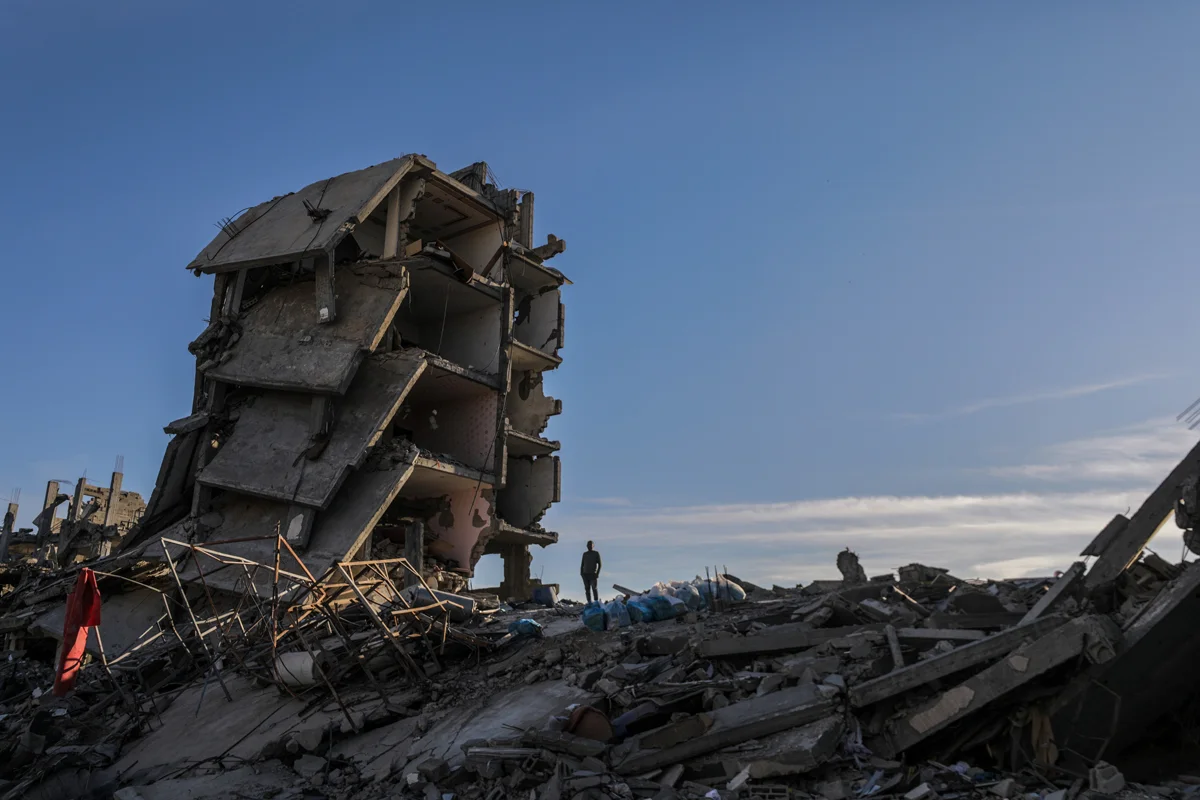
The other day there was a film crew from American NBC News there. “As you can see, everything is destroyed. There’s nothing left,” Asma Kaud, 32, told them, sitting in front of a collapsed building surrounded by rubble. She also said that she found her brother's body upon returning to the refugee camp.
Representatives of Israel and Hamas signed an agreement on a temporary ceasefire and the release of hostages on January 17 in Doha. The deal came into force on January 19, at 11:15 local time (12:15 Moscow time). On the first day, the militants released three Israeli hostages from the sector; they are now safe with their families. In exchange, Israel released 90 Palestinian prisoners from prison (under the deal, Israel releases 30 Palestinian prisoners for every civilian hostage and 50 Palestinian prisoners (including those serving life sentences) for every Israeli female soldier released by Hamas.
In total, as part of the first stage of the deal, which will last 42 days, the terrorists will release 33 Israeli hostages out of the 94 remaining. On October 7, 2023, Hamas entered Israel in the early morning, attacking border villages and a music festival. The militants killed 1,200 Israelis and also captured 250 people, including citizens of Russia, the USA, Great Britain, Thailand and other countries. In response, Israel launched large-scale military operations in the Gaza Strip. According to the Ministry of Health of the Gaza Strip, controlled by Hamas, about 47 thousand people were killed as a result of the war in the enclave. The agency does not distinguish between civilians and militants in its reports, and it is not possible to confirm the information disseminated by the parties to the conflict.
As part of the truce, evacuated residents of the Gaza Strip can return to their homes, and Israeli troops must partially leave the enclave. Humanitarian aid has begun to flow into the sector, with numerous food trucks crossing the border through Israeli checkpoints, the UN agency reported on the first day of the truce.
The parties are expected to begin discussing the second stage of the deal on the 16th day.