
Translated material
Where did “family values” come from?
On February 8, 2024, DOXA was added to the register of “undesirable organizations.”
If you are in Russia or planning to return to it, you cannot repost our materials on social networks, link to them or publish quotes.
Read more about what is and is not possible in the cards .
“Russia is truly a huge family, one might say, a family of families. […] And any goals can be achieved when we are all together. When wonderful children like ours grow up in a large family with many children, where they will always help and support,” with these words Vladimir Putin opened the “Year of the Family” in January 2024. In the same speech, the president told his compatriots about his father’s parting words, his mother’s all-consuming love, and how family values become moral guidelines in the life of an adult, consolidating society. By the beginning of the “Year of the Family,” surrogacy for foreigners and the “extremist LGBT movement” had already been banned in Russia; in a number of regions, private clinics voluntarily removed abortion from the list of services. The year 2024 ended with a triumphant ban on “childfree propaganda”—the conscious choice not to have children.
Why does the officially divorced president of a country in which eight out of ten marriages fail like to publicly talk about the importance of family? How is the public rhetoric of family values related to the reproduction of patriarchy, the infringement of women's reproductive rights, the suppression of alternative lifestyles and the reduction of the social obligations of the state? And why today are politicians all over the world, from Turkey to the United States, increasingly aggressive in protecting the family?

Editor
Editor
Armen AramyanIllustrator
Illustrator
Vitya ErshovPublication
January 23, 2025
From maternal capital to the ark of family values
The first significant measure to support families in post-Soviet Russia was maternity capital, introduced in 2007. Then, in the eighth year of continuous growth in energy prices, Putin for the first time paid attention to demography and proclaimed a course to increase the birth rate, although only a point following “effective migration policy.” In the text of his federal message from 2006, it is women, and not the family, that are at the center of any support measures: they need to ensure that they retain at least 40% of their earnings during maternity leave and compensate for the costs of kindergartens so that they can return “to normal work” after maternity leave The key measure was called maternal capital for a reason: only the woman could manage the money allocated after the birth of a child, choosing whether to spend it on housing, children’s education, or the funded part of her own pension. In this way, the state helped mothers insure themselves against forced loss of jobs and qualifications and, in Putin’s words, not fall into a “dependent and sometimes humiliating position” in the family. In the first year of maternity capital, the amount of payment for each (second or more) child was 250 thousand rubles or almost $9,500 - almost 27 median monthly salaries in the country.

Our editorial team does not have maternity capital. Therefore, we have to rely only on your support. Donate us any amount.
Putin’s “conservative turn” is usually dated back to 2007, when he made his famous speech about “Russia’s special path” at an international security conference in Munich. However, a truly active defense of “traditional values” will unfold only in the mid-1990s: in 2013, the State Duma will adopt laws on the “ban of gay propaganda” and “insulting the feelings of believers,” and in 2014, on the ban on profanity in the media and art. At the same time, “traditional values” will be permanently written into the president’s speeches (and national security strategy) as a counterbalance to the moral decline of Western countries with family as a key tag. Thus, the domestic political issue of improving demographics will merge with the Kremlin’s new foreign policy identity. Starting with Putin himself, Kremlin officials and experts today prefer to talk about family values as nothing more than an instrument of “soft power,” defending the image of Russia as the “flagship” or “ark” of the traditional family.
With the outbreak of the war in Ukraine, the Kremlin's conservative policies went on steroids. In November 2022, Putin signed a decree on “approving the fundamentals of the policy for preserving and strengthening traditional Russian spiritual and moral values,” designed to combat “destructive ideological influence,” including on Russia’s demography. Before this, it was mainly representatives of the Russian Orthodox Church or figures specializing in this topic, such as senator Elena Mizulina and children's ombudsman Pavel Astakhov, who allowed themselves to publicly attack women's right to abortion. In the summer of 2023, the Minister of Health Mikhail Murashko called the reduction of abortions a “key task” of the department and supported limiting the sale of drugs for abortion, and at the same time agreed to think about banning abortions in private clinics.
After this, private medical centers in Crimea, Tatarstan, Kursk, Lipetsk and Chelyabinsk regions suddenly voluntarily excluded abortion from the list of services. In other regions - Mordovia, Kaliningrad, Tver and Novgorod regions - administrative liability was introduced for “inducement to abortion.” And already in December, the chairman of the Federation Council, Valentina Matvienko, had to publicly refute rumors about an upcoming ban on abortion at the federal level, fueled by the corresponding bill . True, Matvienko did this with an unexpected caveat: “We will definitely ensure that abortions will be performed only in cases of violence against women or for medical reasons.”

In November 2023, the Supreme Court of the Russian Federation banned the “international LGBT social movement” declared extremist. According to the court, this movement, “operating on the territory of the Russian Federation since 1984,” originated in the United States as “part of a birth control policy” that proposed encouraging “non-traditional family relationships.” A few months earlier, Putin signed a law banning transgender transition. Commenting on the unanimous adoption of the law by the State Duma, its chairman Vyacheslav Volodin explained that the measure will help protect the family and traditional values. And already at the end of 2024, the State Duma immediately, in the second and third readings, adopted the “law banning childfree propaganda.” In the explanatory note, the authors of the law refer to the policy approved by Putin to protect traditional values and the need to “create an effective mechanism” to protect the family. Administratively punishable propaganda means “creating the attractiveness of refusal to bear children or a distorted idea of the social equivalence of having children and refusing to bear children.”
By the end of the year, they started talking about a “tax on the childless” - however, here the proposal of State Duma deputy, General Andrei Gurulev had to be publicly criticized by the chairman of the Duma Committee on Family Protection, Issues of Fatherhood, Maternity and Childhood, Nina Ostanina. She called the initiative “immoral” and reminded the general that before introducing such measures it would be nice to solve the housing problems of young Russians: ok. But already on the initiative of Ostanina herself, from this academic year, future young Russians - schoolchildren from grades 5 to 11 - will be able to better prepare for traditional gender roles in family studies lessons, the course of which is designed for 34 hours. For now, the subject is taught outside of class: the Ministry of Education intends to analyze the interest on the part of schoolchildren before introducing it into the mandatory schedule.
How the fight against childless publics on VK, the arrests of the organizers of queer parties and the restriction of the right to abortion will affect the desire of Russians to create strong families and improve demographic statistics, we will see only years later. But so far, the very attempt to portray Russia as a bastion of traditional family values seems somewhat strained: the country is not very different from the countries of Western Europe in terms of statistics on marriages, divorces and children. Russian women are indeed still getting married and having their first child several years earlier : in 2022, the average age for both indicators was 26 years For comparison: German women enter into their first marriage at an average age of 31, and citizens of Catholic Spain at almost 35. A French woman is most likely to give birth to her first child at 29, as is a resident of Hungary, whose government was much earlier than the Russian one concerned with family values . . At the same time, the average marriage rate The number of marriages per 1000 people in the Russian Federation, after a sharp jump against the backdrop of the end of quarantine measures and mobilization in 2021-2022, fell to 5 last year - this is lower than in the “dashing” 1990s and only one percentage point higher than the national average To the European Union. And the norm of the fertility rate necessary for the reproduction of the population level - 2.1 children per family - is met by only two of the 85 constituent entities of the Russian Federation: Tyva and the Chechen Republic. The national average is 1.46 children, approximately the same as Switzerland, Canada or Norway.
Finally, the divorce rate Calculated by dividing the number of divorces by the number of marriages and multiplying the quotient by 1000. in Russia in recent years it was about 4.7 - twice as high as in the United States, and three times as high as in the Netherlands. Ironically, divorce statistics are directly related to measures of financial support for families, for the sake of which Russians sometimes enter into fictitious marriages.
Over the course of twenty years, the Russian state has shifted from financial support for women giving birth to civilizational rhetoric, restrictions on the right to abortion, and attacks on the rights of anyone who does not fit into the new Kremlin idea of “family values.” If in 2006 Putin called for protecting women from a humiliating and powerless position in the family and providing them with a springboard for a speedy return to the labor market, then in 2024 he, still in the restrained manner of the “chief European”, reflected on how the craving for higher education affects the reproductive age of potential mothers: “That’s why the first child appears around 30. [...] There is no strength or strength for the second one. time. […] And in order to ensure population growth, at a minimum it is necessary for a family to have three children.”
The bad news is that this dynamic does not reflect a specific Kremlin conservative turn or even its radicalization during the war, in which, according to independent media estimates , almost one hundred thousand Russians (mostly of reproductive age) have already died. The transition from targeted measures to support newlyweds and mothers to aggressive pronatalism is occurring in many countries.
How they stimulate the birth rate and attack women’s rights in other countries
As religious scholar Dmitry Uzlaner rightly notes , the defense of “family values” is not Russian know-how, but an ideologeme of international scale. Moreover, it has long spilled out beyond the boundaries of the conservative camp. As with the anti-migrant discourse, left-of-centre forces are also getting into this game. For example, in 2021, the current Prime Minister of Great Britain, representative of the Labor Party, Keir Starmer, mentioned the word “family” twenty-one times in his election essay , although his predecessor in the party, Jeremy Corbyn, advocated the abandonment of tax privileges for officially registered spouses. And some left-wing intellectuals—for example, sociologist Wolfgang Streick— see the strong nuclear family of the 1950s as a necessary deterrent to capitalism, the weakening of which is directly related to the loss of workers' former rights and guarantees. It’s just that, unlike the left, right-wing populist leaders do not hesitate to move from the rhetoric of support to the rhetoric of coercion. In the words of Antonina Lewandowski from the Polish Federation for Women and Family Planning, “forced pronatalism is not necessarily just a manifestation of patriarchy or misogyny. It may also be a product of political and economic forces that are indifferent to women.”
Behind the indifference towards women is most often political economic anxiety about the aging of the population, which inevitably follows a decline in fertility. An aging population means greater strain on the pension system: fewer new workers have to support more retirees. At the extreme, such dynamics may require a radical revision of the economic model itself, or at least of the employer's obligations. But we still live in a world where private business profits and economic growth are untouchable, so governments have to raise the retirement age and require women to be more active in giving birth to new workers. Although 50 years ago developing countries, on the contrary, focused on birth control: it was believed Proponents of the economic feasibility of birth control were, in particular, Nobel laureates Simon Kuznets and Gunnar Myrdal , that this would allow families to invest more in the education of their offspring, and states to spend less on developing the urban and social infrastructure necessary for a growing population.
According to the UN, by 2015, almost a third of all states in the world were using some kind of pronatalist - that is, aimed at increasing the birth rate - measures. In 1976, there were only 10% of them. Report entitled “Welcome to Gilead” by the British NGO Population Matter The organization was founded in 1991 and advocates for voluntary birth control to combat human influence on the climate. s records the implementation of such measures even in those states that not so long ago were more concerned with birth control.
For example, Iran, after eight years of economically devastating war with Iraq, subsidized the distribution of free oral contraceptives, which, even with an abortion ban in place, caused the average number of children per woman to fall from almost seven per woman in the 1970s to less than two today. Having achieved their goals for economic growth, the country's authorities began to increase childbearing again: in 2014, Supreme Ayatollah Khamenei outlined the goal of doubling the country's population by the middle of the 21st century. To do this, Iranian women, who already make up the majority of students at local universities, will have to abandon “Western clichés” like careers.
In China, where for almost forty years the birth of children was limited from above by the “one family, one child” policy, concerns about the aging of the population result not only in racist calls for the Han majority to give birth as actively as the “Uyghur baby-making machines”, but also in the complication of ( so far at regional levels) termination of pregnancy or vasectomy for men. And state propaganda ridicules childless professionals, appealing to their sense of duty to the Motherland. Single men are encouraged to import wives from neighboring Myanmar.
Turkish President Recep Tayyip Erdogan even calls abortion (still not officially banned, but limited locally) a conspiracy to “wipe the Turkish people off the face of the earth,” and the birth of “only” two children as “bankruptcy.” Although in the 1960s the Turkish government deliberately promoted family planning to ensure economic growth, as did China and Iran.
A frequent example of positive pronatalist policies is Hungary, whose government under Viktor Orbán spares no expense (by some estimates, almost 5% of GDP) to stimulate the birth rate. For example, through free prenatal care and loans of several tens of thousands of euros to new families, written off entirely in the event of the birth of three children. However, in the event of a divorce, the spouses have to pay the entire amount of the debt within four months. The initiative to legally ban abortion failed with scandal, but the wording that life begins at the moment of conception was even introduced as an amendment to the text of the country's Constitution.
But in neighboring Poland, whose government until recently also generously supported families with children with money, abortion is still prohibited. However, emergency contraception can only be purchased with a prescription. In a local school course on “Preparing for Family Life,” the word “sex” appears only a few times, but family is mentioned 170 times. In 2021, the governments of Poland, Hungary, Slovenia and the Czech Republic signed a declaration on the need to “have more European children” to keep Europe Christian culture.
The family has become the center of the conservative agenda in the United States, where thrice-married Donald Trump begins his new presidential term. During his last presidency, the Supreme Court struck down the federal right to abortion, and today 13 out of 50 states ban abortion at all stages, with another four banning abortion after six weeks of pregnancy. For decades, a representative has been used for decades for decades: the nits of both American parties in their agitation, but ideologists are made on him: not a “new conservative movement” from Trump’s entourage, for which even the Republicans are not right enough.
In his manifesto, the head of Heritage Foundation The "brain center" of American conservatism, opened in the 1970s with money of large business. Kevin Roberts literally proposes to replace the old conservative program-traditionalism, a free market, anti-communism-a new one, in the center of which will be a struggle for a family with a suicide man and a housewife woman. In his opinion, it is the moral crisis of the family who is in the foundation of all the troubles of modern America, and it is possible to solve it with the financial support of giving birth to spouses, a return to the model of a single -entertaining family and, of course, limiting the availability of abortion and eco for women. The preface to the work of Roberts was written by the newly-made vice-president of the United States Jay Di Wans, for whom Trump who had chosen him even had to make excuses at the election performances: “Well, this guy just loves families!”
Family in the service of capitalism
In 2020, The Atlantic published an essay of the political observer David Brooks under the provocative heading "Nuclear family was a mistake." In it, the author traces the dynamics of changing the composition of the American city family: in the 19th century, it totaled several generations under one roof, and in the nuclear cell “two parents+two children”, only by the middle of the twentieth century, when the rapid development of the economy, it required mobile labor .
The new form turned out to be much more vulnerable than the previous one: in it the older generation could no longer catch the tasks of raising grandchildren daily, and the sudden loss of work was no longer insured by the presence of working brothers or sisters. The key to the survival of such a family really served as a relatively high salary for a man, provided with continuous economic growth and the pressure of trade unions to the employer: the ACC, and the active assistance of the state providing medical services, free educational infrastructure, unemployment benefits and payments to single mothers. Of course, the material base for the existence of a nuclear family was supplemented by reproductive pressure, discrimination of women in the labor market and, in most countries of the global north, direct prohibitions of termination of pregnancy. As well as the protection of men from liability for domestic violence.
Already in the 1970s, the shaky foundation of the nuclear family was at risk. The advanced economies of the West fell into stagflation Until then, a combination of prices and unemployment at the same time considered almost impossible. After three decades of continuous economic growth. Against this background, neoliberal recipes for restarting the economy have gained rapid popularity, based mainly on the business deregulation and the reduction of the social obligations of the state - strategies that are not compatible with ensuring almost complete employment, high salaries for ordinary workers: c and generous benefits for everyone else.
It is at this moment that the rhetoric of “family values” penetrates the political mainstream: new management modes are as interested in unloading the costs of raising children and leaving the elderly back to families, the value of which is becoming less and less obvious to ordinary citizens: approx. So there is a need for a set of moral, political and economic theses that substantiate the sacred importance of the family.
Of course, of course, they indicated a connection between the reproduction of the family’s familiar image and the capitalist system of production long before turning to the “family values” of the late 1970s. Karl Marx repeatedly paid attention to the biopolitical ambitions of capital, interested in stable production and overproduction of new workers: c. His closest associate Friedrich Engels, relying on ethnographic studies, associated the transition of mankind from group marriages to pair of monogamy with the emergence of private property, the transfer of which inherits at least legal confidence in the origin of their own children. The Marxist psychoanalyst Wilhelm Reich considered the suppression of sexuality subordinate to “marriage as a bond, family as a duty”, an integral part of the ideological hegemony of capitalism.
In the wake of the democratization of the 1960s, this similar criticism of familiarism-the ideology of family values-has become a common place in the feminist and activist environment, the representatives: whose TS began to experiment with alternative methods of the hostel-from Quir-livelihoods to communes. However, since 1972, the number of marriages began to decline steadily, regardless of these experiments, both in the USA and in European countries or Japan.
For economist Milton Friedman, the family was a necessary element in the Free Market game
In the USSR, which was not injured, but rather even benefited from the economic crisis of the 1970s, avoiding the reduction of social expenses, the peak of marriage shifted to 1979. In demography, this dynamics is called the “second transition”. It is interpreted primarily as the final gap between the childbearing and the sexual life of individuals. Exactly the first “crisis” of the family was problematized by the conservatives of the 1970s-as a change in habits, the redesign of the moral framework. Which can and should be rolled back.
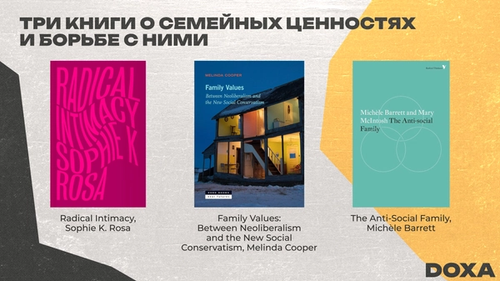
“In the Western world, the family has changed radically or was even completely destroyed by the events of the last three decades,” wrote Gary Backer, a representative of the Chicago School of Economics, whose work formed an economic argument in favor of the family. The American economist calls the introduction of social support programs: pensions, payments for women, and even male single parents, unemployment benefits that reduced the individual's need for a solid marriage. And they increased the further need for state support (and, therefore, the load on the budget), which did not match at all with a neoliberal vision of minimal social expenses. For Backer, as well as, for example, for another famous neoliberal economist (and also the Nobel Prize laureate) Milton Friedman, the family was a necessary structural element in the Free Market game. It is for the sake of the family, its safety, comfort and the future that the individual is actively involved in making money, and it is the family that restrains him from the destructive types of market behavior, for example, from gambling, too risky investments or unbridled consumption. And the programs of state support “weaken the family, reduce incentives for working, save and invent something new; reduce capital accumulation and limit our freedom, ”Friedman wrote in the book“ Freedom to choose ”jointly with his wife Rose.
The functional rate of neoliberals for the family coincided with the program of American neoconservatives, for which the question of morality was in the first place. Thus, the sociologist Daniel Bell in 1976 pointed out how the generous support of the state deprives citizens: ok fear for his future, and hence the famous Protestant moderation - first in personal consumption, and then, about horror, in sexual desires. And this, in turn, in addition to all other evils, also provokes inflation, because the fewer family associations, the more individuals will have to be financially maintained at the expense of the budget. Inflation, however, makes sense of savings for all respectable citizens: OK, finally violating public order.
An equally influential conductor of this idea was the author of the “clash of civilizations” by Samuel Huntington, who believed that it was social expenses, and not trillions of dollars spent by the US government on the arms race and the invasion of Vietnam during the Cold War, provoked the inflation crisis of 1970- X. Neo -conservatives did not see anything good in the political imagination that was revealed to the masses behind the reliable screen of virtuous family life. The family never stood at the stake: after several decades of situational victories over racism, censorship and arbitrariness of the left corporations in the United States and Europe, for example, the idea of working self -government and the abolition of private ownership of production were selected. The “democratic impulse of the 1960s,” wrote Huntington in the report of the trilatter commission, “challenged the fundamental challenge to the existing systems of power, public and private.” From the desire to answer this challenge and suppress a rebellion, factories and streets to suppress and, at first glance, the unexpected alliance of neoconservatives and neoliberals in defense of the family grew, as the sociology Melind Cooper convincingly traces in their work.
The bizarre mixture of the arguments of moralists and economists first entered the speech of American (and British) political leaders: K, and then into the logic of state reforms aimed at reducing social obligations and at the same time weakening of all non -resident forms of solidarity, with the exception of such a convenient family cell. The rhetoric of demographic anxiety and xenophobic conspiracyology, most often accompanying “family values” today, were attached to them at the official level not immediately. But homophobia, racial subtext and general rejection of any alternative lifestyles of life sounded with might and main from the lips of the first persons (for example, Reagan and Thatcher ) already in the 1980s. At the same time, according to evil irony, even the arguments in favor of gay brothers were often formulated in the language of name, because the same-sex family is still better. “I support gay brothers, not contrary to my conservatism, but because of it,” the British Prime Minister David Cameron will say in 2011.
Export product of Western ideology
After almost 15 years, such a logically frank sequence of the British elitary sounds eccentrically: a populist turn of the right relys on more intuitive constructions like the theory of racial substitution, duty to society or civilizational confrontation. In Russia and Eastern Europe, the rhetoric of family protection is often borrowed not so much from the dictionary economically: to or geopolitical experts: to, how many religious ones are intensified: K (again from the USA), which actively “exchanged experience” with their outside: Tsami after the collapse of the USSR.
As in the 1990s, Russia again turns out to be an advanced training ground for anti-democratic political technologies
An example of such an exchange is the “World Congress of Family”, founded in 1995 by American historian Allan Carlson and a professor of sociology of families from Moscow State University Anatoly Antonov. At the time of the founding of this Russian-American NPO, Karlson was the president of the Rockford Institute, a research center opened in 1976 for an ideological struggle against democratic social movements. Over time, the World Congress of the families received financial support for the Orthodox oligarch Konstantin Malofeev, established cooperation with the Russian Orthodox Church and acquired such speakers as Viktor Orban, Igor Dodon and Matteo Salvini.
It is hardly the World Congress of families or any other separate activist organization can attribute the merit of the Kremlin turn to “traditional values”. For measures of institutional and financial support of registered families in Russia, they took up later than in Poland or Hungary, and a more active attack on LGBT+ or Childfri-human rights occurred already against the backdrop of the final destruction of public policy. Simply, as in the case of the economic reforms of the administration of Yegor Gaidar in the early 1990s, Russia again turns out to be an advanced landfill for anti-democratic political technologies. Although this time the scale of historical irony turned out to be even more noticeable: it was hardly American anti -communists from neoliberal and neoconservative camps that their beloved ideologems were used in a foreign policy with the West by immigrants from Soviet special services.
There is no contradiction here, if we remember about the structural role of the family in the reproduction of private property relations, the bodies of the new work: c and the ideology of the border - between home comfort and the harsh outside world, their own and strangers, the national state and its “civilizational” enemies.
The sociologist and historian Michel Foucault did not get tired of reminding that any political elite is primarily interested in the effective management of the population and the territory. In the 1970s, he looked optimistic at the neoliberal model, which promised to limit the intervention in the life of the individual a system of economic incentives. But he admitted that the state could always return to the more direct effect on the bodies of its citizens. So it happened - by the end of the twentieth century, the general desire of neoliberals and conservatives to reduce state support of individuals and stop their growing claims to the established order took shape that the aging population (and not an avalanche outflow of capital in offshore and financial speculation) threatens the economy. Attempts to solve the problem formulated in this way through attracting cheap labor from poor countries led to a populist reaction with its “racial substitution” conspiracy. Having approved the topic of demographic anxiety, today the right -wing populists around the world are increasingly trying to “return” their citizens: ok to the disciplined family reproduction in the form in which it has historically existed for no more than a hundred years.
How to maintain warmth, intimacy and support, which many (but not all) of us are used to getting in families outside the imposed ideal of a nuclear cell with 2.2 children? The answer to this question does not even need to be sought particularly. In reality, there are already many types of joint residence, love and mutual support, which the state for some reason refuses to label as a full-fledged family. And this is not necessarily a polyamor cell or anarcho-commune. These are couples living together without registering an official marriage, and single mothers raising a child together with other relatives, and friends who have for years renting a tie. For example, Cuban law has recently been interpreting the family as "a union of people united by affective, psychological and sentimental connections and decided to live together and support each other." Even seems to be a radical formulation of the “abolition of the family” in the texts of the communist M.E. O'Brian actually does not suggest destruction, but the emancipation of "sincere love and care gained by the proletarians in the midst of everyday hardships: the joy and pleasure of eroticism, the intimacy of parenthood and romantic connection." Such family values are not a sin to write down in the national security strategy.