
Translated material
Authorities are remaking the Gulag Museum
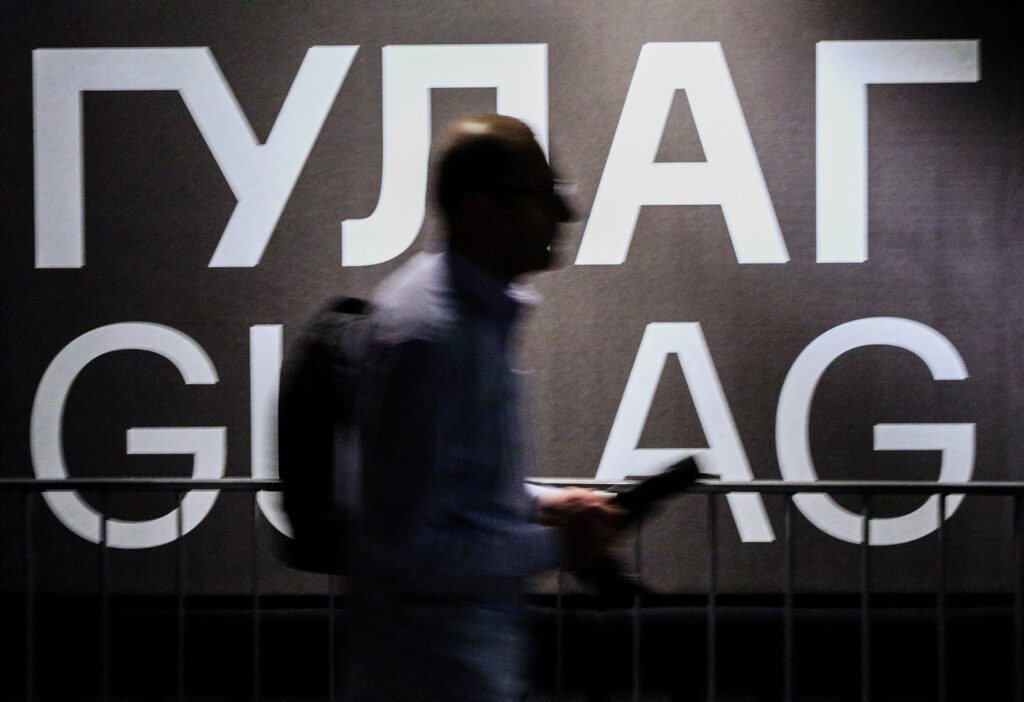
In mid-January, the Moscow authorities fired the director of the Gulag Museum, Roman Romanov, and appointed the head of the Museum of Moscow, Anna Trapkova, in his place. In the context of what is happening - the liquidation of Memorial, the ban on commemorative events and the demolition of monuments - these actions look like an attempt to destroy the museum in its current form. Researcher of the culture of memory, author of the book “An Inconvenient Past” Nikolai Epple tells the history of the museum - from tacky mannequins of investigators to prestigious European awards.
They want to control the memory of repression. But they are unlikely to be able to destroy everything
Notice of possible conflict of interest: the author collaborated with the Gulag History Museum and the Memory Foundation for many years, with their participation the book “An Inconvenient Past” was published.
On January 13, 2025, it became known about the dismissal of Roman Romanov from the post of director of the State Museum of Gulag History. Anna Trapkova was appointed in his place, who at the same time remains director of the Museum of Moscow. The Museum’s activities were “paused” back in November, allegedly due to violations of fire safety rules.
These steps are a completely logical development of state policy regarding the memory of Soviet state terror. In 2024, the Concept of State Policy for the Perpetuation of Victims of Political Repression, adopted in 2015 and looking quite progressive, was radically changed. Mentions of the massive scale of repressions disappeared from it, the statement that without perpetuating the memory of millions of victims, Russia will not be able to become a rule-of-law state, the indication of the inadmissibility of “attempts to justify repressions by the peculiarities of the time or even deny them as a fact of our history” was replaced by words about “the inadmissibility of rehabilitation and justification » those guilty of serious crimes. Instead of indicating that the rehabilitation process is not complete, the text now says that the 1955 amnesty led “to the rehabilitation according to formal criteria and the whitewashing of Nazi collaborators and traitors to the Motherland.”
By that time, the prosecutor's office was already reviewing rehabilitation cases, sending a signal that the conversation about state crimes was now, as in Soviet times, completely subordinate to the state and subject to wartime logic. The museum, which was in many ways a creation of the previous concept, had no place in the new reality. Its closure or radical reformatting was a matter of time.
No matter how the change of leadership of the Moscow Museum of Gulag History is interpreted, this event in any case draws a line under its almost quarter-century history.
Throughout the history of its existence, the museum has been criticized - and from two opposite sides. Some accused Romanov and his team of “denigrating history,” discrediting the country’s Soviet leaders and glorious pages of the past. Others are that the museum serves as a showcase for the successful study of the past in a country in which it remains unreflected and uncondemned, and repression continues. In this picture of the world, the museum “intercepts the agenda” of independent social movements involved in Soviet terror, primarily the Memorial society.
The first position today has actually merged with the state one - and the dismissal of Romanov is evidence that it was recognized as correct. The best way to answer the second is to briefly trace the history of the Museum's development.
Its discovery in 2001 was not an element of building a “state policy of memory” - then the state had not yet gotten around to it - but the result of the breakthrough activity of Anton Antonov-Ovseenko (1920–2013). The son of a revolutionary who led the storming of the Winter Palace and was shot in 1938, who served 10 years in Vorkuta, Ovseyenko was a conflicted, extravagant and independent figure. He did have a difficult relationship with Memorial, but this was a consequence of free competition among opponents of Stalinism in the 1980s and 1990s, and not Antonov-Ovseyenko’s solidarity with the state (and the process of rapprochement between the two organizations in the 2010s was the result efforts of Romanov and his team). The museum fully reflected the spirit of the late 1990s with its anti-communist free spirits.
Why are you crying, Ninochka? Nina Gnevkovskaya was Beria’s girlfriend, and then she was imprisoned. The worst thing began when she was released Crime 10 minute read
The first exhibition, which existed from 2004 to 2012 in the premises of former communal apartments on Petrovka, was reminiscent of European museums of medieval torture: the lurid surroundings with towers and barbed wire at the entrance and mannequins depicting an investigator and a bloody interrogator were much more memorable than the information stands and documents.
In 2012, when the “difficult past” was still considered a relatively harmless topic and was covered by the department of culture, and not the presidential administration, culture in Moscow was headed by Sergei Kapkov, and through his efforts the Museum, by this time already headed by Romanov, was provided with a new, much larger premises and resources. This was, again, in the spirit of the times: the state needed to formulate its position regarding Soviet terror in a safe way (in 2015, the result was the Concept of State Policy to Perpetuate the Memory of Victims of Political Repression). And in the spirit of the cultural policy implemented by Kapkov: in Moscow, as Kapkov saw it, there should be a memory museum of European level.
The second exhibition, the opening of which coincided with the adoption of the Concept, was exactly “on the level”: high-quality, but overall quite schematic.
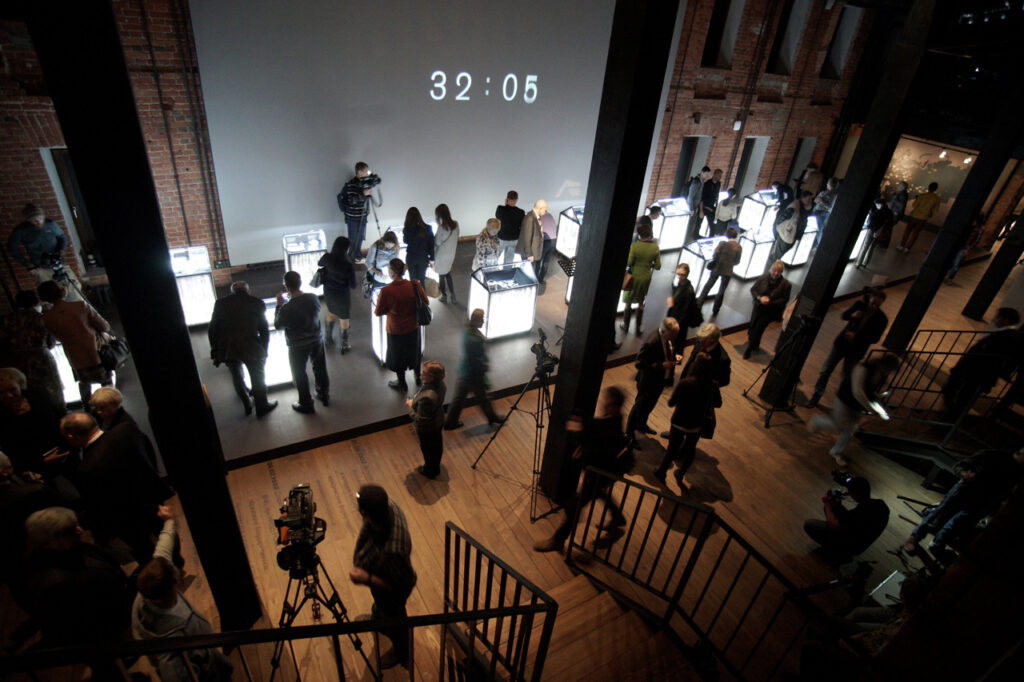
The third exhibition, which opened in 2018, became a full-fledged and thoughtful statement about the history of Soviet state terror and the questions posed by this history. It was the result of thoughtful consultations with a wide range of experts, and the involvement of professional museum workers and screenwriters. The exhibition, called “The Gulag in the Fates of People and the History of the Country,” showed Soviet state terror not as an autonomous episode in the history of the country, but as an integral part of this history. And also - and, according to reviews, this turned out to be more important - it showed this story through the private stories of individual people, allowing the visitor to try on the past for themselves.
In 2021, the Museum received the Council of Europe Museum Prize, recognition of compliance with both museum industry standards and criteria for upholding human rights values.
But perhaps even more important than the new exhibition itself is that the Museum team tried (and largely succeeded) to unite the living forces of society in a conversation about Russia’s difficult past. The exhibition was created in constant consultation with experts - and as one of them, I can testify that the recommendations were not only carefully listened to, but also put into practice. In this sense, the museum team enjoyed sufficient autonomy in relation to the leadership of the culture department.
My daughter is growing up without gadgets and has never seen cartoons. This is difficult to organize, but it helps me build close relationships with her Society 10 minute read
The best Russian actors were involved in voicing the interactive part, for whom this work was also an expression of a personal position - among them Chulpan Khamatova, Liya Akhedzhakova, Maxim Vitorgan, Yulia Peresild, Ingeborga Dapkunaite and Evgeniy Mironov. A circle of friends and sympathizers has formed around the Museum, including high-ranking officials, public figures, and big businesses.
In fact, Romanov’s team began to do something without which, as international experience shows, effective processing of the difficult past is impossible - to involve the state in this work. Let us note that Memorial clearly understood the need to interact with the state from the first days of its existence, for which dissidents and old-school political prisoners considered its members opportunists, or even KGB agents.
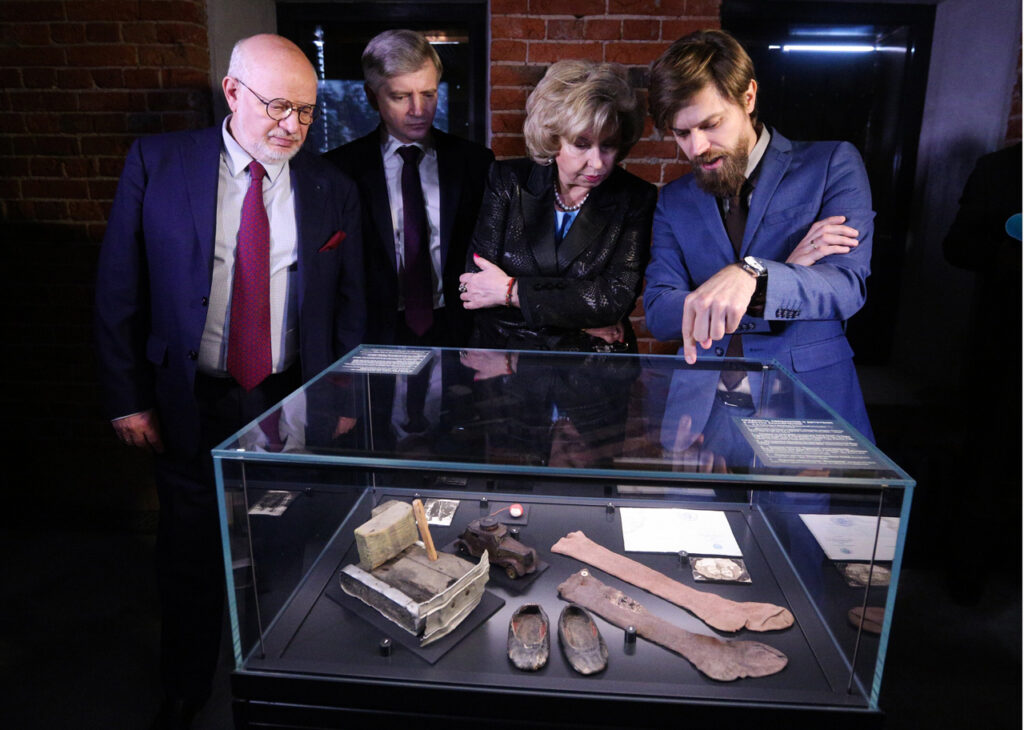
It seems the best answer to the comments about the showcase museum and the spoiler museum is the activities of the museum and what it has become by the early 2020s. And it became a collection of people for whom the topic of repression became the theme of life, approaching it informally. It was this approach that forced the Museum to go beyond its walls and beyond the boundaries of museum activity itself.
What Putin knows about war The answer to this question determines the fate of possible peace negotiations Politics 4 minute read
The Gulag History Museum of the 2020s, in addition to the exhibition itself, includes:
- a platform for talking about Soviet state terror in a variety of genres - conferences, discussions, meetings with cultural figures;
- a platform for film screenings and theatrical performances, including those created specifically for the Museum (“And the day lasts longer than a century” by Anton Kalipanov and Olga Shaidullina based on the novel by Aitmatov (2017, the play received the Golden Mask), the opera “Your father is alive, only about there is no need to say this” by Daniil Posazhennikov and Anna Kostrikova based on the biography of Georgy Demidov (2022 year);
- A Documentation Center that helps find information about repressed relatives and popularizes archival searches of this kind (the Center published the book “From My Words It’s Recorded True: Personal Experience in Searching for Repressed Relatives” and regularly held educational seminars);
- the “My Gulag” project is a large archive of interviews with people who went through the camps;
- an extensive publishing program, within the framework of which, in addition to the usual catalogs and specialized literature for museums, several serious publishing projects have been undertaken, for example, the complete works of Georgy Demidov, an almost unknown author of camp prose to the general public, comparable to Varlam Shalamov and Evgenia Ginzburg;
- a social volunteer center focused on supporting victims of repression or their relatives;
- an educational center that develops school lessons about the history of Soviet terror;
- preservation of burials and places of memory of victims of terror: with the participation of the Museum team, the “NKVD Investigation Prison” museum in Tomsk was expanded and reconstructed, an information center was created on the territory of the NKVD Special Object “Kommunarka”, concepts were developed for the “Dneprovsky Mine” Memory Park in Kolyma, and a memorial complex “12th kilometer of the Moscow Highway” near Yekaterinburg, the exhibition has been reconstructed museum "House on the Embankment";
an association of memory museums dedicated to supporting the many small private museums dedicated to the history of Soviet terror.
Doesn't really sound like a showcase and spoiler activity, does it?
A complaint that has often been made about the museum's exhibition is that it only talks about the past, without touching on the present, in which state terror is becoming an increasingly clear reality.
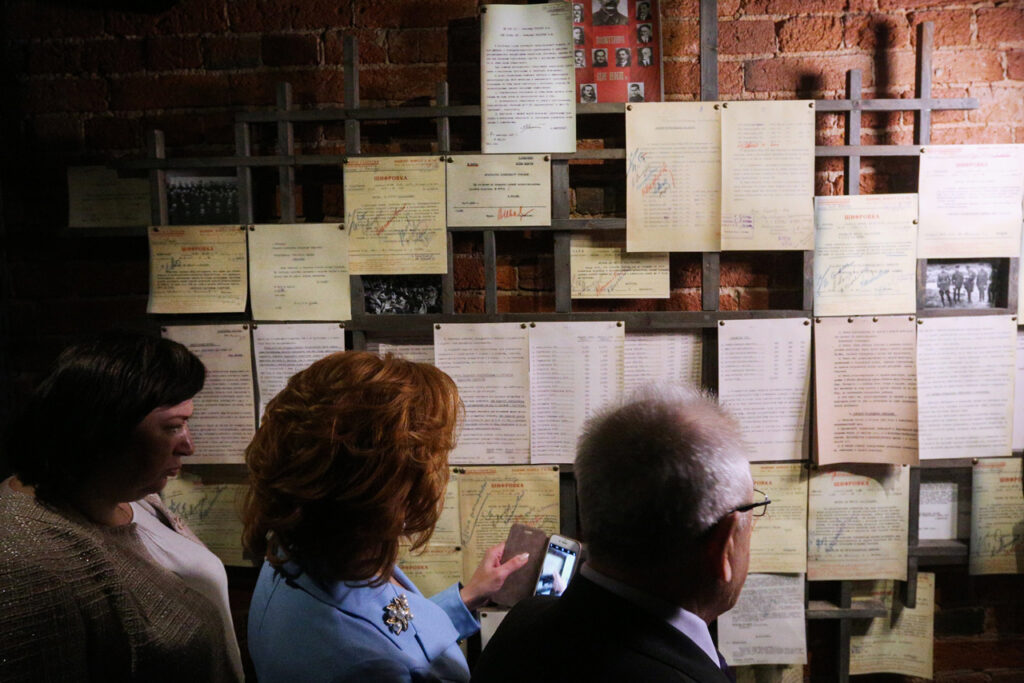
This is true, and a state museum cannot act against the state. But the fact is that an honest and lively conversation about the past cannot but be directed to the present. The best evidence that this works and is perfectly read by visitors is the increased number of museum visitors after February 2022. People understand perfectly well what kind of mechanisms are waking up before their eyes, and in search of understanding the laws of their work they turn to the memory of the Gulag.
Once, one of the founders of Memorial, Arseny Roginsky, in response to a question whether he was afraid that the state would seize the topic of memory of Soviet terror, answered me that they, of course, want to seize it, but this is such a topic that it would be She didn’t capture them herself, so let them try.
In a sense, the history of the Gulag Museum is just such an example. The museum, which was initially needed by the state only “for show” and as a decorative showcase, once in the hands of people open to the topic of memory, became not just a living entity, but an accumulator and multiplier of the efforts of many caring people and institutions. This is also an important example of how much society can do when the state agrees to perform its very important function - not to interfere.
Unfortunately, the time of stolen freedom of action is over and the Soviet past, in its dying dash, is trying to destroy everything in which it sees a danger to itself. And, of course, the Museum poses such a danger.
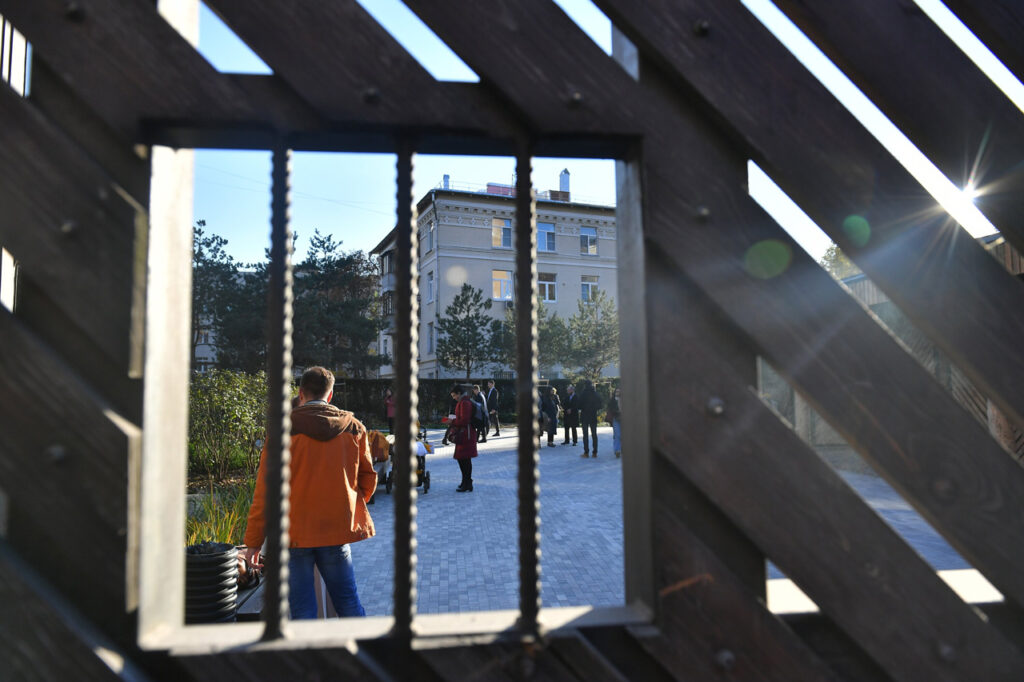
Is it possible to destroy what the Museum team has done over the past years? Only partly. Most likely, most of the “extra-museum” activities of the Museum will be curtailed - in some form this is already happening. It is possible to redo the exhibition by seriously changing the emphasis - as was done, for example, after the Perm-36 museum was subordinated to the state in 2013. But the experience of people who, thanks to the Museum and its friends, became familiar with the topic of memory, the difficult past of families and the country, cannot be canceled.
Deus conservat omnia, “God preserves everything” - this motto, taken by Anna Akhmatova as the epigraph to “Poem without a Hero,” the most important text on memory in Russian literature, is a good answer to this question: what is truly important cannot be destroyed.
The author's opinion may not coincide with the opinion of the editors.
In order not to miss the main materials of “Cold”, subscribe to our social networks!


Kholod needs your help to continue working
We continue to work, resisting bans and repression, to preserve independent journalism for the Russia of the future. How do we do this? Thanks to the support of thousands of caring people.
What do we dream about?
About the simple and at the same time complex - the opportunity to work further. Life will change beyond recognition many times, but we, the editors of Kholod, want to stay close to you, our readers.
Support Kholod today so we can continue to do what we do best - be independent media. Thank you!
Author: Nikolay Epple