
Translated material
Tip - renew
Hungary and Slovakia are increasingly criticizing sanctions against Russia, but still do not block them at the EU level. What are they trying to achieve such blackmail?
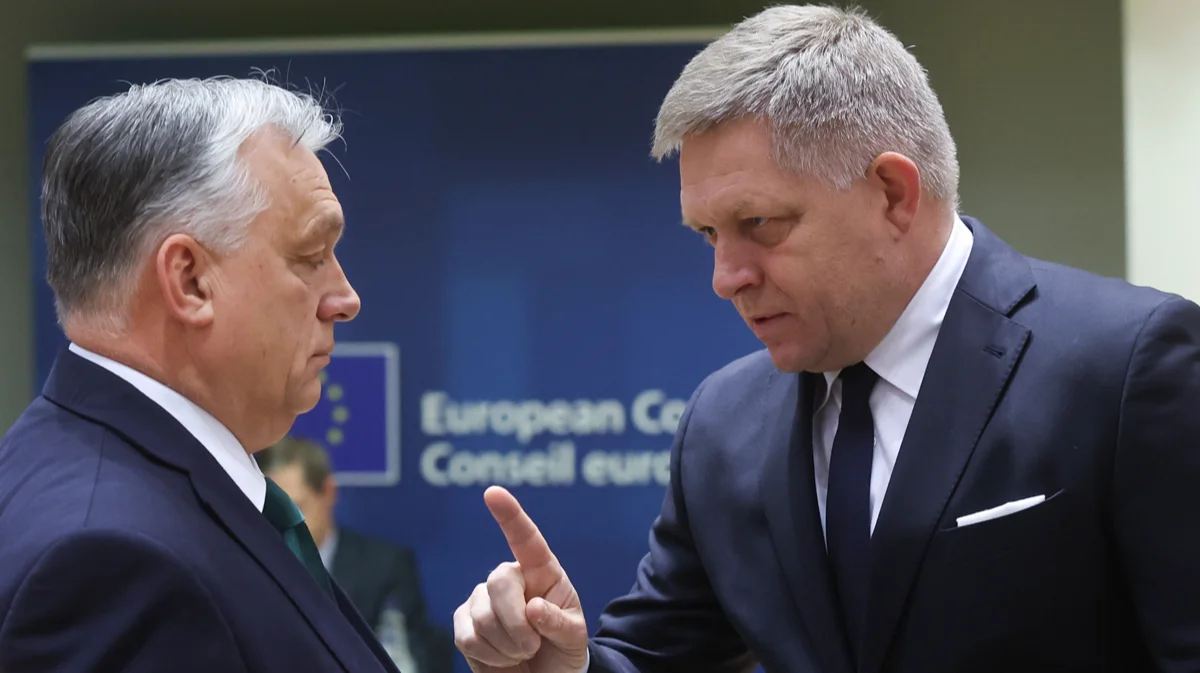
Hungarian Prime Minister Viktor Orban and Prime Minister of Slovakia Robert Fitzo at the opening of a meeting of the European Council, Brussels, Belgium, February 1, 2024. Photo: Olivier Hoslet / EPA
The EU Council for another six months extended sanctions against the Russian Federation, which began to be introduced after the annexation of Crimea in 2014. By January 2025, this procedure finally ceased to be formal. The intrigue about the decision, which should be made by the consensus of 27 EU countries, create two of them - Hungary and Slovakia. Prime Ministers Viktor Orban and Robert Fitzo claim that anti-Russian restrictive measures are damaged by citizens of their countries, as well as all Europeans.
The victory in the US elections Donald Trump gave two leaders with a special position additional confidence: his statements about intention to achieve the completion of the Russian-Ukrainian war as soon as possible caused hope for the imminent end of the sanction confrontation. However, the first statements of the Republican as the head of the White House, threatening Moscow with rigid additional sanctions and record high duties, showed Budapest and Bratislava: time to move from rhetoric to specific steps to relieve sanctions yet.
Two versus 25
The validity period requiring regular extension of European sanctions against the Russian Federation should have expired on January 31. On the eve of this date, the head of the EU leadership was clarified by the head of European diplomacy, Kai Callas: “Vladimir Putin did not change his goals, and nothing has changed on the ground,” so there are no grounds for the abolition of restrictive measures. She called the sanctions a “instrument of pressure”, which “it would be strange” to abandon.
The leaders of the vast majority of EU countries could subscribe to these words. Moreover, in their opinion, there is still a space to enhance pressure. In mid -January, ten European states immediately advocated the ban on imports of Russian pipeline and liquefied natural gas (LNGs) into the EU countries. However, it has not yet been possible to include this measure in the new sanctions package.
Each time, even the extension of already acting sanctions is increasingly smooth. The reason is the special position of the prime ministers of Hungary and Slovakia Viktor Orban and Robert Fitzo. So, the Hungarian leader in mid -January called for "throwing sanctions out the window and build with Russia the lack of a demonstration order of relations." The Slovak Prime Minister also claimed that the sanctions were meaningless, as they did not force Russia to change its behavior.
The overall position of Orban and Fitz is that as a result of sanctions, not the Russian leadership suffers, but ordinary Europeans. The Hungarian prime minister calculated that his country has lost about 19 billion euros, so Budapest was now “pressed a hand brake” and asks the EU to think over the advisability of further extension of sanctions.
The intrigue persisted until the last moment. Before Monday, a meeting of the EU foreign ministers on Monday, the Foreign Minister of Hungary Peter Siyyarto streamlinedly made it clear : the outcome of the voting was not clear. A few hours later, it was still possible to come to the compromise. “Europe copes: EU foreign ministers have just agreed to extend the sanctions against Russia again,” the X Kai Callas wrote on the social network, emphasizing: “This step will continue to deprive Moscow of income to finance its wars.”
The problem is in transit
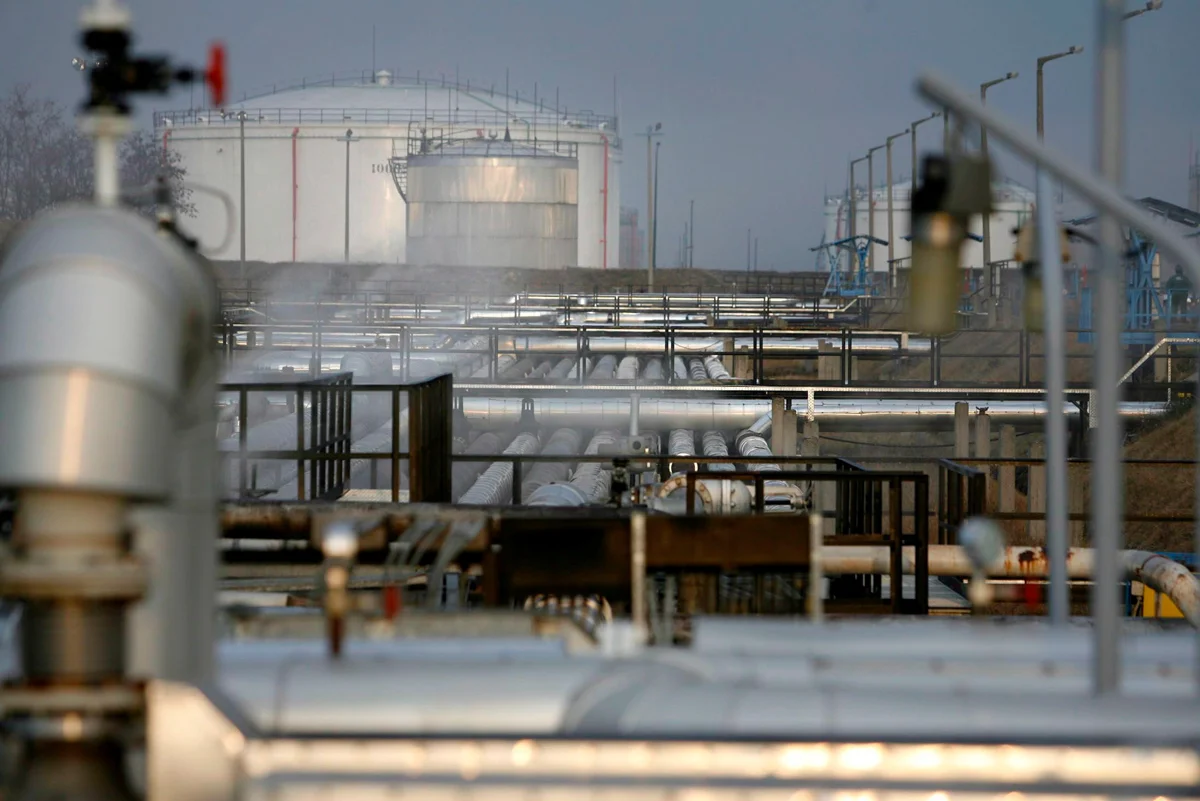
In the center of the intra -European conflict - the question of the consequences of the decision of Ukraine not to renew after January 1 of this year of the transit of Russian gas. Energo resources from the Russian Federation have always been the cheapest option for Budapest, and now, according to Orban, an energy crisis has arisen due to the fault of Kiev. There are three main requirements of Budapest: Ukraine should again allow gas transit, stop attacks on the Turkish stream and stop threatening oil transit from Russia through its territory
The European Commission, meanwhile, assures that allegations of the energy crisis are a serious exaggeration: gas markets in the EU were fully adapted to the cessation of transit through Ukraine.
Slovakia, in turn, calculated that the losses of the EU countries as a result of the decision of Ukraine not to extend gas contact with Russia in 2025–2026 to 120 billion euros. Only Slovakia, through which transit also went, will receive a profit of about 500 million euros. Bratislav demanded this amount from the European Commission as compensation. If the requirements are not satisfied, then, as Robert Fitzo said , Slovakia will stop providing humanitarian aid to Kiev, interrupt the emergency supplies of electricity and will continue to impose a veto on the EU solutions regarding the support of Ukraine.
In early January, an agreement was reached on the creation of a working group, which will discuss what political and technical support of Slovakia on this issue the EU can provide. And on Monday, following the results of the ministerial meeting, it became clear that the Hungarian blackmail worked. Peter Siyyarto, without going into the details, said that "Hungary received guarantees of the energy security that she requested." According to him, the European Commission expressed “commitment to the protection of gas and oil pipelines going to the EU member countries”, and is also ready from Ukraine guarantees for the preservation of oil supplies to the European Union.
Dubler The gun
Earlier, Novyevropa wrote in detail that blackmail for Brussels has long become familiar practice for Hungary. Meanwhile, Brussels also has tools for influencing Budapest and Bratislava. A year ago, the Financial Times reported about the plan of pressure on Orban, which was worked out in the EU: the leaders of the association countries will have to publicly promise to block financial flows from pan -European funds and, as a result, create a panic in the Hungarian market, as well as provoke a sharp increase in the cost of borrowing and withdrawal of the frauds to other countries.
Experts explained FT, the essence of the plan is that with the help of such actions, Europe could tell Victor Orban: “Enough. It's time to become a common row. Maybe you have a gun, but we have a bazuka. ” But then it did not come to its application.
New Europe has already described the tools for Hungary, which European leaders have: these are not only financial pressure, but also political concessions, and informal ties, and even the deprivation of Hungary of the rights of voting in the European Council. However, the problem of each of these approaches is that it does not work as a strategic solution: in every difficult case, you will have to again and again look for approaches to the leaders that are knocked out of the general row.
Before January 24, such ideas were not seriously discussed by the ministerial meeting. Moreover, European officials on the terms of anonymity were recognized by the media that they have no “plan B” on the issue of extending anti -Russian sanctions.
Game with the electorate
The willingness of Orban and Fito to play exacerbation is associated not only with economic reasons. In both countries, the positions of the authorities in recent months have noticeably staggered. Against the backdrop of ongoing mass protests, the Slovak opposition achieves voting on the vote of mistrust to the Government Fitzo. Now opponents of the authorities have 71 out of 150 mandates, that is, five votes are not enough for the success of the initiative. But the oppositions do not despair, believing that in the ruling coalition there will be dissatisfied with the state of affairs.
Political scientists explain to Robert Fitzo to Moscow December visit to Moscow. It was not worth waiting for the specific results from that meeting with Putin, but the voters could like the activity of the Prime Minister, who acted as a defender of the national interests of Slovakia.
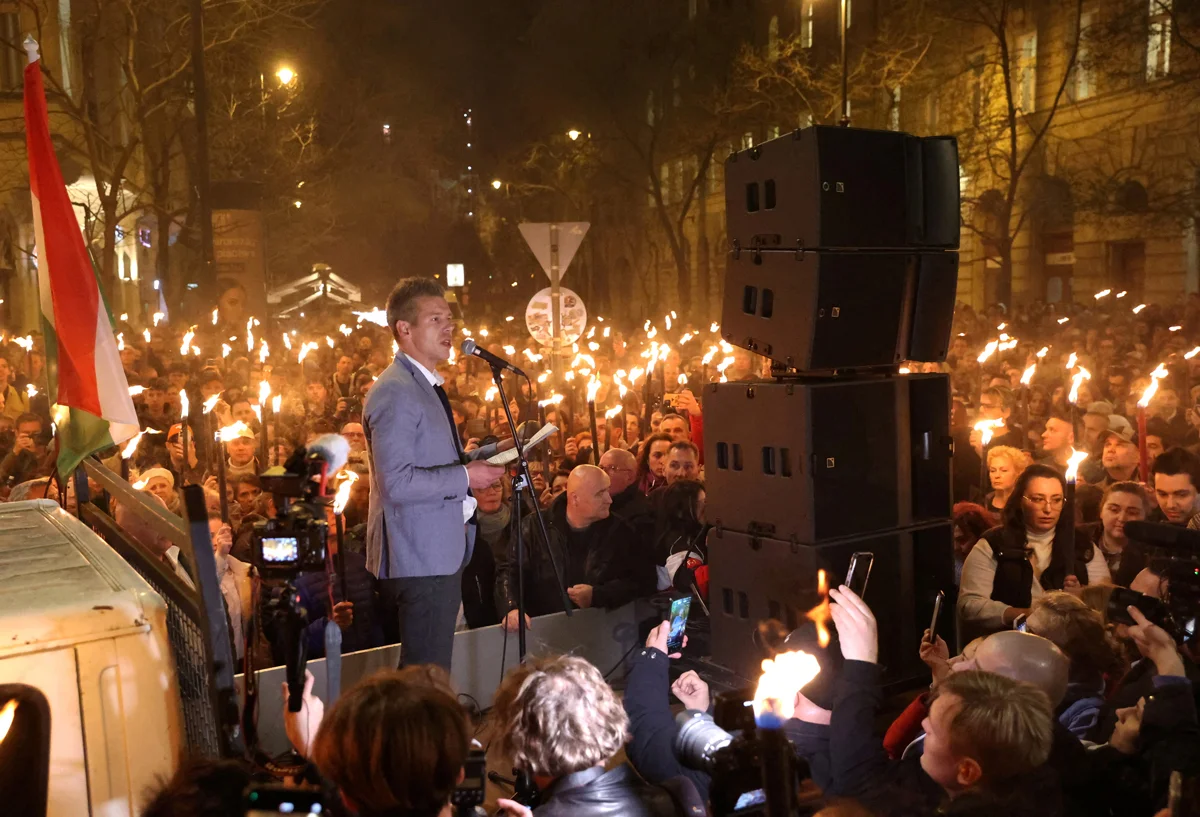
Meanwhile, the chief opponent of Viktor Orban, oppositionist Peter Magyar, also calls for “returning the people the right to decide their fate,” that is, to hold early elections as soon as possible. Criticism of sanctions and support of closer relations with Moscow (the Hungarian prime minister visited Moscow in July 2024) help Orban to strengthen his base among conservative and nationalist voters.
In a conversation with Novo-Europe, the Hungarian journalist and political scientist Gabor Stir said that Orban was “mostly rights”: “sanctions did not reach its goal”, “Russia did not weaken to the extent as it was represented in Brussels”, but “ The competitiveness of Europe suffers much more than the developers of the sanctions regime expected. ”
The historian, teacher of the University of Corvina (Budapest) Zoltan Biro assures that blackmail Brussels Orban covers the failures of his economic policy. Mentioning losses as a result of the EU sanctions policy, the Prime Minister, as the expert noted in a conversation with the New Evrope, “does not say a word about why Hungary has the highest inflation since the beginning of the war, although the rest of the EU countries have encountered those The same difficulties as Budapest [but inflation in them is much lower]. ”
“Orban cannot abandon the mantra about the war and sanctions, since then he will have to admit his mistakes in the economy policy,” says Biro. At the same time, he is sure that the Hungarian citizens themselves do not benefit anything from such blackmail Brussels and the fact that Orban "wants to feel more influential than he really is."
Trump factor
By the end of 2024, the confidence of Orban increased. The reason is the victory of Donald Trump, with whom the Hungarian prime minister is close like none of European leaders.
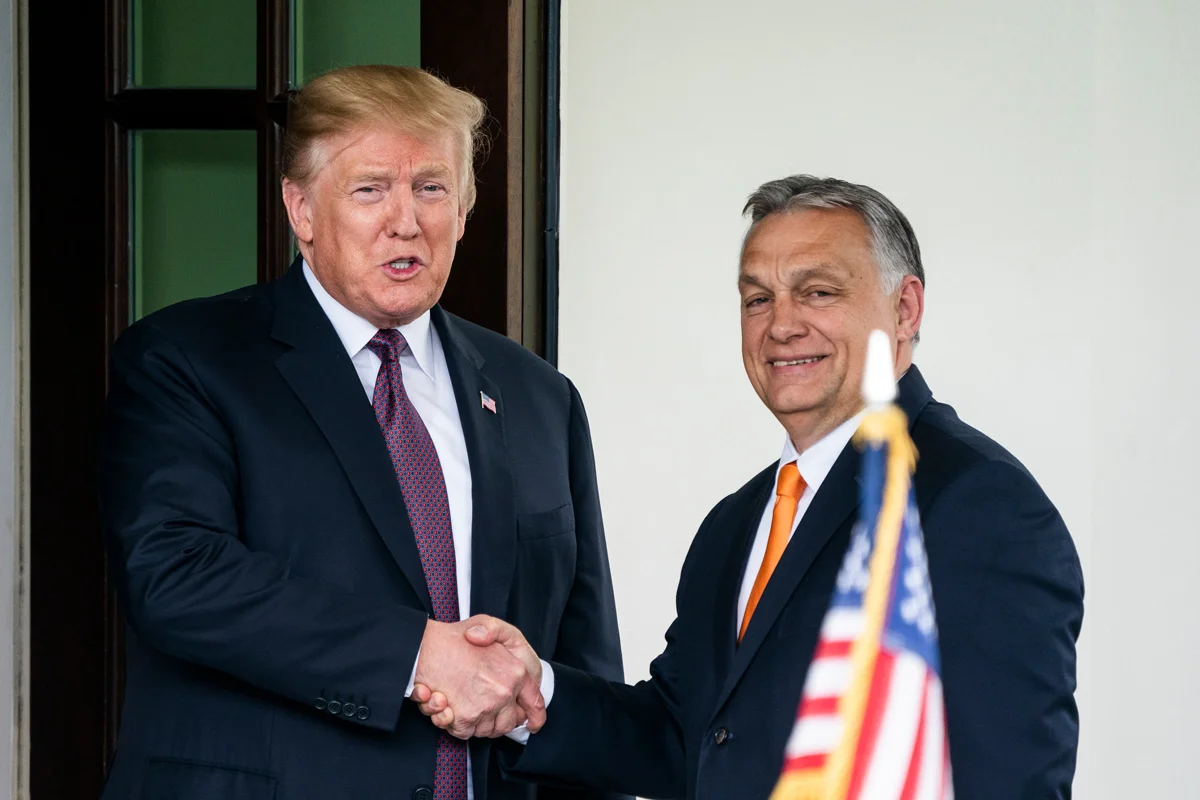
After the November elections in the United States, Viktor Orban called not to rush with the extension of sanctions, but at first to wait for the inauguration of the 47th president, which took place on January 20. But, as Zoltan Biro notes,
As a result, "the US president began to threaten Moscow with new sanctions and duties, which Orban and his environment did not expect to hear from him."
Gabor Shtir does not see anything unusual in this: in his opinion, “in the issue of sanctions, especially with regard to the energy sector, the interests of the European mainstream and Trump coincide.” “Budapest should not wait for great help from Trump in this area. Residents of Central Europe are left to their own devices, ”the interlocutor of Novo-Europe is sure.
One way or another, at the end of last week, the Foreign Minister of the Poland, the EU chairman, at these six months-Radoslav Sikorsky expressed the hope that the Hungarian government "heard the Epistle of the President of the United States."
In the same statement, Sikorsky emphasized that ahead is “another package” of EU sanctions. New measures can affect , in particular, Russian LNG, aluminum, banks and the “shadow fleet”, on which Russian oil is illegally transported.
In the EU countries they want to agree on new sanctions on the third anniversary of the full -scale invasion of the Russian Federation in Ukraine on February 24. However, by this moment Trump’s position in relation to the Kremlin under the influence of his attempts to arrange real negotiations may change. In this case, the space for blackmailing Slovakia and Hungary inside the EU will expand again, and Brussels will have to reckon with this.