
Translated material
How to adapt memory
About how Gossmi celebrated the 80th anniversary of the liberation of the Aushwitz death camp and what does modern politics have to do with it
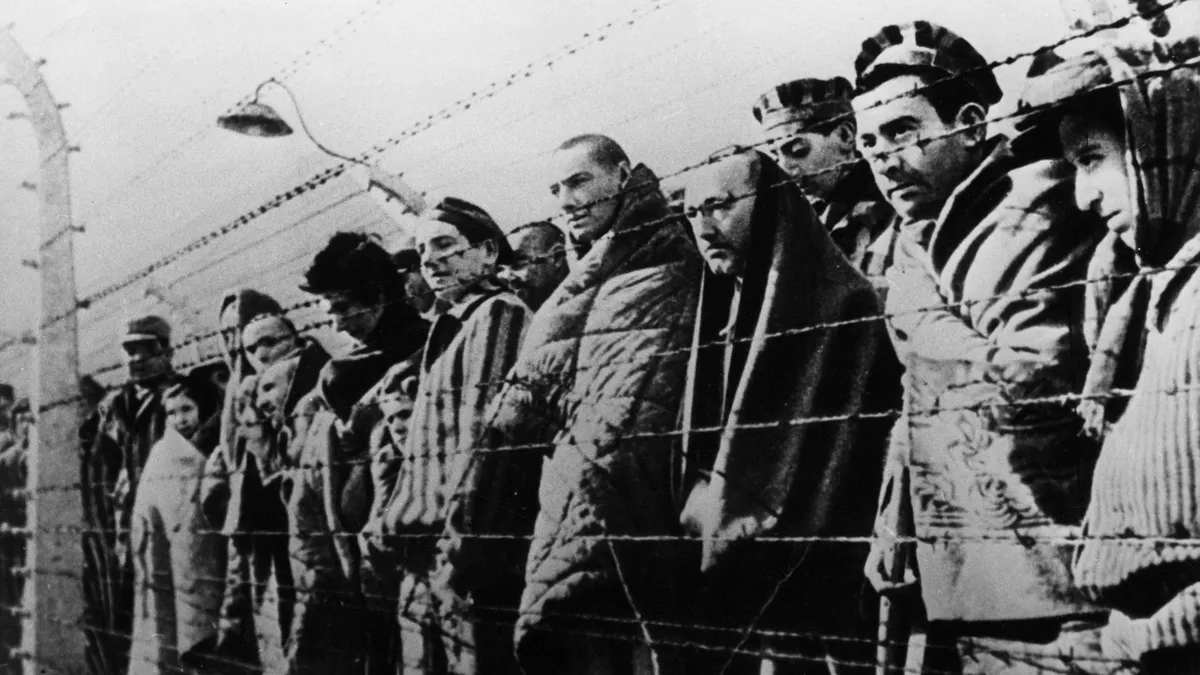
The surviving prisoners of Auschwitz, 1945. Photo: Imago Stock & PEOPLE / TASS
There is a tradition: every year on January 27, on the day of the liberation of Aushwitz, Russian television, news agencies and even state departments talk about 4 million dead in this camp. So this year, Russia Today and other television channels reported that "according to the FSB, in total, at least 4 million people became victims of Nazi executioners and their accomplices." In fact, this number was almost four times overstated - according to the assessment adopted by the historical community, from 1 to 1.1 million people were killed in Aushwitz. Which, of course, is no less monstrous and does not affect the assessment of the atrocities of the Nazis.
Where did the figure of 4 million come from and what does the FSB have to do with it?
This story began 15 years ago, in 2010. Then, on the 65th anniversary of the liberation of the camp, a researcher at the FSB archive Vladimir Makarov gave an interview to Interfax. In this interview, among other things, he spoke about the reports stored in the archive of the Extraordinary State Commission (ChGK) to establish and investigate the atrocities of the German-fascist invaders and their accomplices from 1945, where these same 4 million victims appeared.
To begin with, the originals of all materials from the CCC are located in the State Archive of the Russian Federation (GARF), they are open to researchers, documents from the relevant fund are constantly published. There are copies in the FSB archive, they are also available. That is, these documents are not secret, which Makarov spoke about.
But to refer to the data of the ChGK without an additional verification by 2010 for a long time there was a "non -comme il faut". Historians are well aware that
In the reports of the commission, there is often a “tendency to overestimation”, any data on the number of victims gathered from there need to be corrected. And this, as a rule, is not even an ideology, but rather a methodology.
Employees of the ChGK went along the virgin lands, worked in extreme conditions. The data collected by them is extremely valuable and retain the value of the source. But they did not have the case of the materials and the technical capabilities that we have, there was no time to recall the information received.
And the rechecking is always necessary, especially when it comes to the testimony of witnesses. The horror experienced by prisoners of the camps often forced them to exaggerate the number of dead many times. Say, Alexander Pechersky, the head of the legendary uprising in another destruction camp - Sobibor, in his first, wartime, appeals to official instances, he spoke about 500 thousand killed in a year and a half of the camp, even about 2 million. At the same time, Pechersky, who had been in the camp for three weeks, referred to the information received from the "old camps". Meanwhile, in Sobibor, according to the assessed assessment, about 180 thousand people died.
In the case of Auschwitz, it turned out completely ridiculous. The fact is that as of 2010, information about 4 million victims was not new, but, on the contrary, old, more precisely, outdated data. The materials of the CHC investigation by Aushwitz were never a secret, some reports were published in the Soviet press immediately upon their appearance, in 1945. The source base and the calculation methodology are visible there. Employees of the Soviet-Polish Expert Technical Commission, the conclusion of which refers to the ChGC, interviewed former prisoners and captured SS men, investigated the throughput of crematoriums and gas chambers. According to the totality of data, they deduced this figure - 4 million.
And then this amount has appeared in research literature for decades, including all publications of the Auschwitz memorial. It was finally revised in the direction of reducing it already in the 1990s, and new data was adopted by the scientific community.
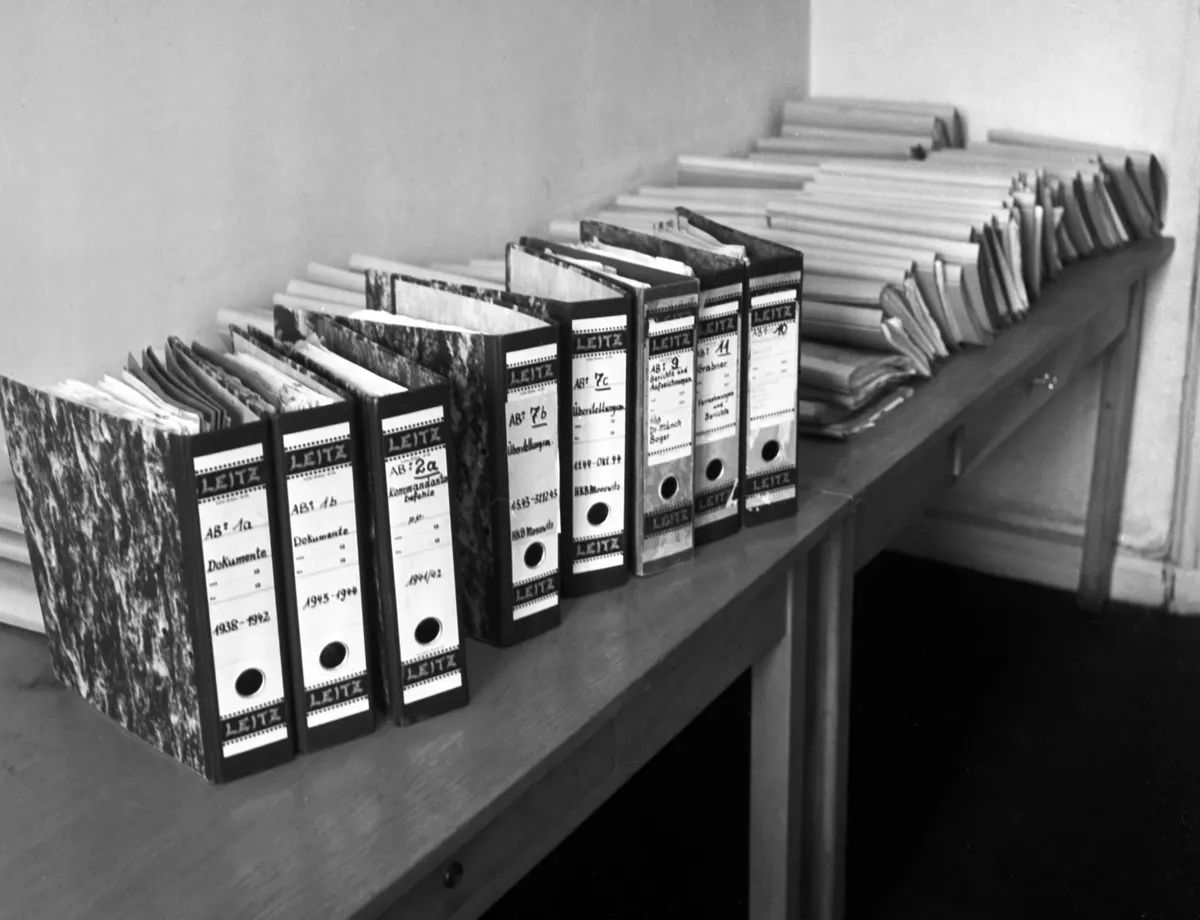
And in 2010, what happened happened. Either a single employee had to urgently prepare a selection of archival materials by the date, and he, not being a specialist on the topic, did not figure out what was happening, or his superiors needed to report on the “opening”-one way or another, This “sensation” emerged from the bowels of the FSB, which was well known already 65 years before. And the Russian media, fascinated by the words "FSB" and "Archives", replicated information from an interview with Makarov. So it went. It is amazing that so far no one has been disavowed and indicated an obvious mistake, but modern Russian state bodies and media are so arranged.
Except for the traditional confusion with the number of victims, this year the anniversary of the liberation of Aushwitz in the Russian media celebrated without excesses. Unless the usual accusations of “all of Europe” in cooperation with the Nazis added a relatively new leitmotif - “these are all the Poles.”
Thus, the FSB in the next documents published by the date of the Date spoke in detail about the Juzef stove - the Polish soldier, the prisoner of Aushwitz, who got to the camp for evasion of the German army and became the Caposa (as they called intra -camp police from among the prisoners). However, the value of his testimony slightly reduces the posted (apparently, in the edification of all the current and future collaborators): “During the investigation, Yu. The stove was ill with schizophrenia and was aimed at treatment at a psychiatric hospital.” This did not prevent the leading Russian media from retelling the materials of interrogation of the stove, where he describes how Kapo mocked other prisoners.
Oleg Matveev, the former head of the Center for Public Relations of the FSB, was salted at RIA Novosti, who told about the same stove and two other Poles-Kapo, and at the same time denounced the Ukrainians who “massively cooperated” with the Nazis and at the same time “Memorial”*.
Unfortunately, the president of the Russian Federation of the Jewish communities of Russia Alexander Borod, who gave a large interview with Russia 24, also joined this special service choir. Rav beard said that “in most concentration camps on the territory of Poland, the Germans were only a leadership, and the local population performed all the black work,” and this was not so: no one even allowed the local population to the camps. If we talk about the “black work”, then in many camps it was performed by the so -called Wahmanns - guards, mainly from among prisoners of war who went to cooperate with the Nazis. At the same time, for some reason, the beard added Treblink to the list of camps liberated by the Red Army of the camps for some reason. All in all,
The instrumentalization of the memory of the war and the Nazi camps is in full swing. True, we must admit that Russia here is among the leaders, it is by no means alone.
History in many countries remains a hostage to politics, and it would be unjustified by optimism to believe that in the near future the situation will change.