
Translated material
Break in 900 days
How the first Museum of the blockade of Leningrad was destroyed and restored

Illustration: "New Gazeta Europe"
“A thousand nine hundred and forty -nine years. Leningrad. In the courtyard of the defense museum, bonfires are burning. Burning invaluable, unique exhibits, genuine documents, relics. Tourb of numerous photos. Children of the blockade are similar to small old men - wrinkled faces, thin ones, the eyes of martyrs. In the halls of the museum, sculptures are broken with a hammer. Bagrms tear off painting. The walls between the halls are ruined with scraps. In trucks, they are taken to re -melting, or even just for a landfill, registered tools and other museum materials. Burning bonfires. The Museum of Defense of Leningrad is dying! "
These are the memoirs of the guide of the Museum of Defense of Leningrad Nina Nonina about how the authorities destroyed the relic of the blockers four years after the victory. Then, almost 76 years ago, in February 1949, the Soviet authorities decided to destroy the Blockade Museum against the backdrop of Leningrad. The museum created by the forces of Leningraders themselves, according to the Kremlin, turned out to be “ideologically wrong”. The role of Stalin in the defense of the city was undermined, the feat was attributed only to the townspeople and warriors, thereby creating the myth of the special “blocking” fate of Leningrad. The destruction of the museum stretched for several years. Directors and several employees were arrested. The employees who remained under the threat of repressions tried to knock out at least some place to the museum expelled from everywhere. They saved valuable exhibits, photos and documents with their hands. Among the rescued employees is the famous diary of Tanya Savicheva. Finally, the Soviet authorities cleaned the museum a year before the death of the leader, in 1952. Once again, the Defense Museum and the blockade of Leningrad will appear only in perestroika. 37 years later. Maybe the “memorial”, the “last address” and “temporarily closed” Gulag museum will also once return? The New Gazeta Europe talks about how the first real memorial of the city’s experienced horror on the Neva was and how it was destroyed.
From Eisenhower to Golda Meir
For the first time, the idea to organize the Museum of Defense of Leningrad appeared in December 1943, when the Ring of the German troops surrounding the city was broken through. The idea belonged to the Military Council of the Leningrad Front. True, at first they decided to organize an exhibition dedicated to the past defense days. In January 1944, work began on its creation. The main artist of the exhibition was Nikolai Suetin, who lived in Leningrad, the entire blockade in Leningrad, and work on the conceptual part of the project was headed by a historian, scientist secretary of the Hermitage, a unique museum specialist Lev Rakov, a member of the militia, who later became the first director of the Leningrad Defense Museum.
In the collection of items for the exhibition, residents of Leningrad took part: they brought their personal belongings, diaries, photographs. And they carried everything that they found in the analysis of blockages in the city.

On April 30, 1944, on the 1044th day of the war, in the house of officers on the corner of the Kirochny and foundry the commander of the Leningrad Front, Marshal Leonid Govorov solemnly cut the red ribbon: an exhibition called "Heroic Protection of Leningrad" was opened.
The creators divided the exposition into parts: the struggle at the long -standing borders, the “road of life”, a breakthrough of the blockade, the heroic work of Leningraders.
In the first six months of work, the exhibition was visited by half a million people. Among them are Marshal George Zhukov and the chief of staff of the US Army, the future 34th President Dwight Eisenhower.
On October 5, 1945, the Council of People's Commissars of the RSFSR issued an order to transform the exhibition into the Museum of Defense of Leningrad. So the initial exhibition was expanded from 26 departments to 37. And on January 27, 1946, on the second anniversary of the complete removal of the blockade, the museum was opened.
He was allocated a place in Solyani Lane. The museum had an exposition area of 40 thousand square meters, totaled almost 38 thousand exhibits. The number of exhibits on the catalog reached more than 30 thousand units. Among them were broken trucks and tanks, German helmets and machine guns, diary entries, including Tanya Savicheva’s diary, which later became one of the symbols of the blockade of Leningrad. He was brought to the exhibition by the surviving sister of the girl, Nina.
All excursions in the Museum of the Blocades began with the hall of the pre -war Leningrad, then the talus of the guides about the Barbarossa plan, at the museum stand in large letters, the words of Hitler were bred at the museum stand:
“I will strangle Leningrad with hunger, destroy with bombs and artillery shells. The city itself will fall into my hands, like a mature fruit. "
The hall dedicated to the blockade, which began along with the first bombing of the city on September 8, 1941: a layout of a destroyed apartment. It is documented to the smallest detail - in the museum the remains of crumpled things brought by residents from house No. 1 on the Moika embankment were presented. Next to the layout of the apartment are German high -explosive bombs weighing 50 to 1000 kg.
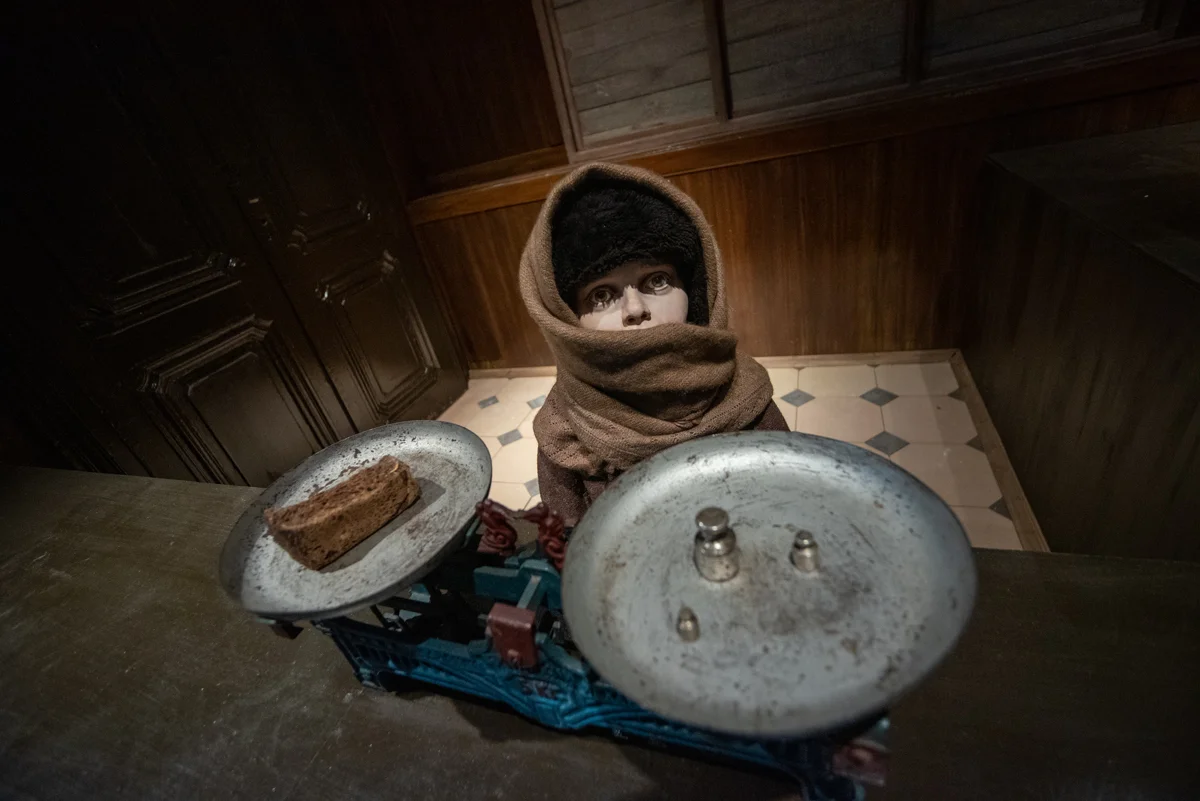
The hall of the most hungry winter of 1941–42. The layout of the Book window. In a slightly thawed “eye” of glass - on the scales of 125 grams of blockade bread. The guides told what this bread was baked from: flour dust that was knocked out of bags, and cellulose, and albumin ...
In the museum, visitors were shown a documentary about this terrible winter, about the “Road of Life” along Lake Ladoga.
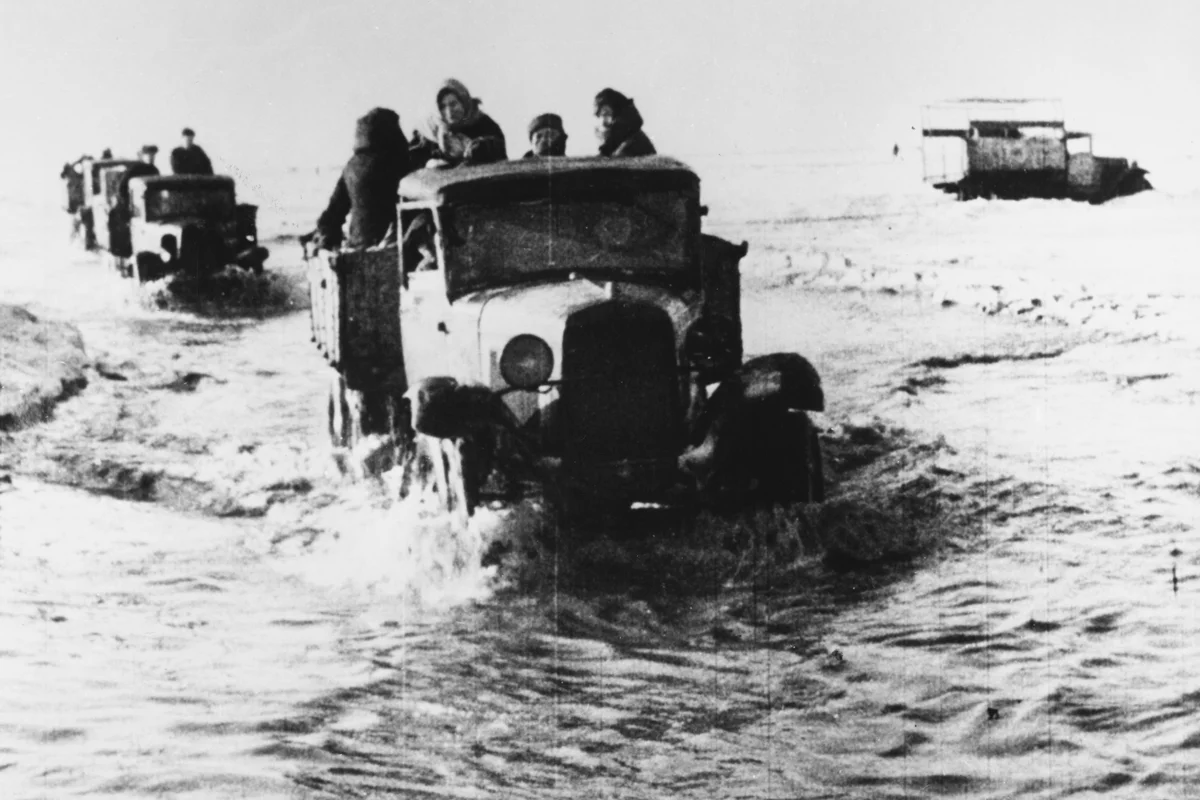
The hall dedicated to 1943, when the Germans waged continuous artillery shelling of the city. Museum staff brought part of a broken tram from the street. The shell at the stop of the corner of Sadovaya Street and Nevsky Prospekt fell into it.
In other halls - documents, photographs and exhibits telling about the combat path of the crews of submarines, warships, pilots of the Baltic Fleet. The aircraft of many pilots - Heroes of the Soviet Union transferred to eternal storage were demonstrated.
The grandiose diorama "Breakthrough of German defense in the Pulkovo area" in January 1944.
Samples of tanks, mortars, and small arms were demonstrated in the trophy hall. In the center lay a pyramid of German helmets. And under the ceiling over the defeated enemy, the wings of the distant -intensive bomber of the Baltic fleet of the Hero of the Soviet Union, Captain Mikhail Plotkin, who managed to break through Berlin and bomb the city on August 8, spread the wings.
The last hall of the museum is the Victory Hall. On one of the walls are portraits of especially distinguished military leaders. According to the director of Leo Rakov, they seemed to continue the portrait gallery of the heroes of the war of the war of 1812. There was no Stalin among them.
“This, of course, was a huge event for Leningrad,” recalled Vera Somina, who made the blockade very small. - The only museum dedicated to modern history. Today, a person is accustomed to the fact that his interests are very much taken into account: in the theater, in the museum, in the library ... And then this was not accepted, everyone did what was needed, they did not think about the viewer. And Rakov (director) had a plane in the museum where the children climbed. And there was a room where on a dark shelf under the glass there were scales, on which lay a piece of bread and weights of 125 grams. I came there and looked for a long, long time ... "
In addition, the museum submitted a few military documents of the soldiers of Jewish origin who died during the defense of Leningrad, who were brought by their relatives.
True, according to the recollections of the museum employees, each next commission ordered to remove materials and documents of ordinary soldiers with Jewish surnames from the exhibition. Director Lev Rakov did not.
Guides
All museum employees survived the blockade. Among them were
providing the art design of the museum Nikolai Suetin (student of Malevich) and Vasily Petrov, in the future the main artist of Leningrad;
art historian Nina Sudamova, collecting information about the heroic efforts to save the unique values of museum workers of Leningrad and suburban palaces-museums during the blockade;
Rosa Mankovskaya - head of the museum library; Sergey Jacobson, who headed all the economic work from the first days of the museum; sorrowful methodologist Zinaida Edelstein; Vasily Tikhomirov, who was in charge of the weapons workshop, is disabled without both legs.
When the director of the Museum of Lev Rakov was arrested, he refused to testify to him, telling the investigators literally the following: “I have no legs. What can you do to me? Remove your head? So I, legless, do not feel sorry for her ... "
And, of course, the senior guide Nina Nonina is a person of a special fate. A graduate of the East Faces of the University of Leningrad, at the time of the blockade, she remained in the city with her mother and little daughter. The husband went missing in the first months of the war. The younger brother, a student of the 10th grade, went to the front as a volunteer. In the spring of 1942, Nina once fell on the street on the street. The military raised her and carried her to the hospital (her mother was already lying there), the 3-year-old daughter was attached to the orphanage. Fortunately, both women survived and soon took the child.

Nina's younger brother in January 1944 died near Leningrad. He was not even 21. unable to put up with this early death and moved by the desire that some memory remains about his brother and his feat, Nina went to the Radio House directly to the poetess Olga Bergholz-the “native voice of Leningraders”, which has become a symbol of the blockade . The girl asked to write poetry about brother Volodya.
The extremely surprised Bergholz initially refused, but when she looked at her photograph of the deceased young man, she stopped short: she seemed to look at her eyes who died in a blockade from the dystrophy of her wife Nikolai Molchanov, so they looked like this Volodya Nonin. Soon, the poem "Memory of Defenders" was born. Bergholz wrote in her about Nina Nonina:
*Trying to be harsh, like big
She took a portrait from her purse:
- Here is our boy,
My younger brother Volodya ... -
And I gasped silently: from the portrait
Your eyes looked at me.
Not the same, already charred by death,
Not the same, crazy and flour,
But those that I looked in my heart
In the days of youth, thirteen years ago.
She did not know this, of course.
She only asked:
- Write
Not to glorify him,
But so that strangers can cry over him
With me and my mother - just about my native ...
She, a stranger girl, did not know
What to the heart offered the burden -
After all, still during this time
I have a requiem to you - you! - I did not write ...*
With the documents of the deceased brother Nina Nina came to the exhibition of the defense of Leningrad. And so fate - Director Lev Rakov suggested to her: “I am going to make a large Museum of Defense of Leningrad from this exhibition. Want to work for me? " Nina said: "Yes!"
So her life was deeply connected with this place.
By mid -1948, the number of visitors to the Museum of Defense of Leningrad reached 1 million 350 thousand. The museum has become popular and one of the most visited places in the post -war city. Golda Meir visited it - then the Israeli ambassador to the USSR, the Bishop of Canterbury, the Leningrad Metropolitan Alexy, who served in the city the entire blockade and awarded the combat medal for the defense of the city, Anthony Iden with the delegation of the deputies of the Parliament of England, Madame Clentina Churchill, writers John Pristley and Tolstoy Tolstoy Tolstoy Tolstoy , Princess Iran Pahlavi, actors, artists, scientists, public figures ...
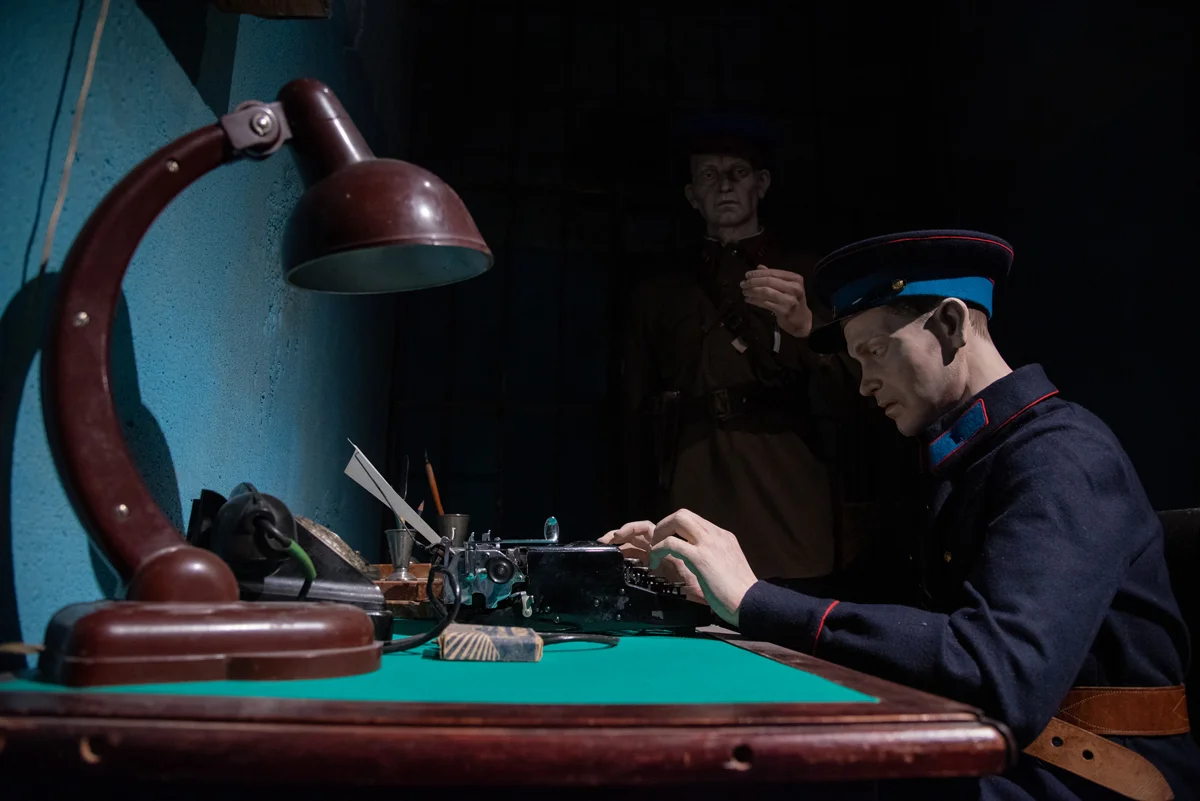
“A foreign tour under the guise of cultural workers was always accompanied by employees of the MGB,” recalled the senior guide. -In addition to them, two or three more people from the same “team” joined the group, along the excursion. Their conspiracy was, frankly, relative - they did not buy tickets, and at the entrance they presented the “Red -legged Books” to the ticketors. Controllers (two lovely Anna) signaled us - the two fingers raised me meant that two emaBeans escorted us, three fingers - three organs.
They, the guide, tried to recruit me, make me "sexom." Miraculously fought off. "
In 1949, none of the employees of the museum “fight off” could no longer. The famous Leningrad business began.
The defeat of the museum
In February 1949, the secretary of the Central Committee of the All -Union Communist Party of Bolsheviks came to Leningrad, Georgy Malenkov, who was responsible for Stalin for Leningrad, when local party bosses became the leader of the leader. However, in the claim to these bosses, not their incompetence, or neglect of the fate of Leningraders, was made, which is why the situation was complicated in the city during the blockade. The fault of the Leningrad party nomenclature was that it, the nomenclature, allegedly dared to appropriate a merit in the breakthrough of the blockade, minimizing the leading role of the leader.
During the "Leningrad", repression touched not only the party elite of the city. Several dozen residents from the blockade were shot, many of whom made an invaluable contribution to the defense of the city. About two thousand people are repressed.
Malenkov took up the defense museum of Leningrad immediately. Literally the day after his arrival.
On February 22, 1949, the United Plenum of the Leningrad Regional Committee and the city committee of the party took place. On it, the Secretary of the Central Committee of the All -Union Communist Party of Bolsheviks, Malenkov, fell up with a sharp criticism of both the leadership of the city and the Museum of Defense of Leningrad, with the guide to which he managed to get acquainted (this guide will soon be destroyed in the framework of the "Leningrad case"). Malenkov, first of all, indicated the need for the museum of the role of Stalin in the victory as a whole and the battle for Leningrad in particular. The allocation of the special role of the city and its inhabitants in defense contradicted the official interpretation of the events of the war. The museum began to be considered as an organization, ideologically unreliable.
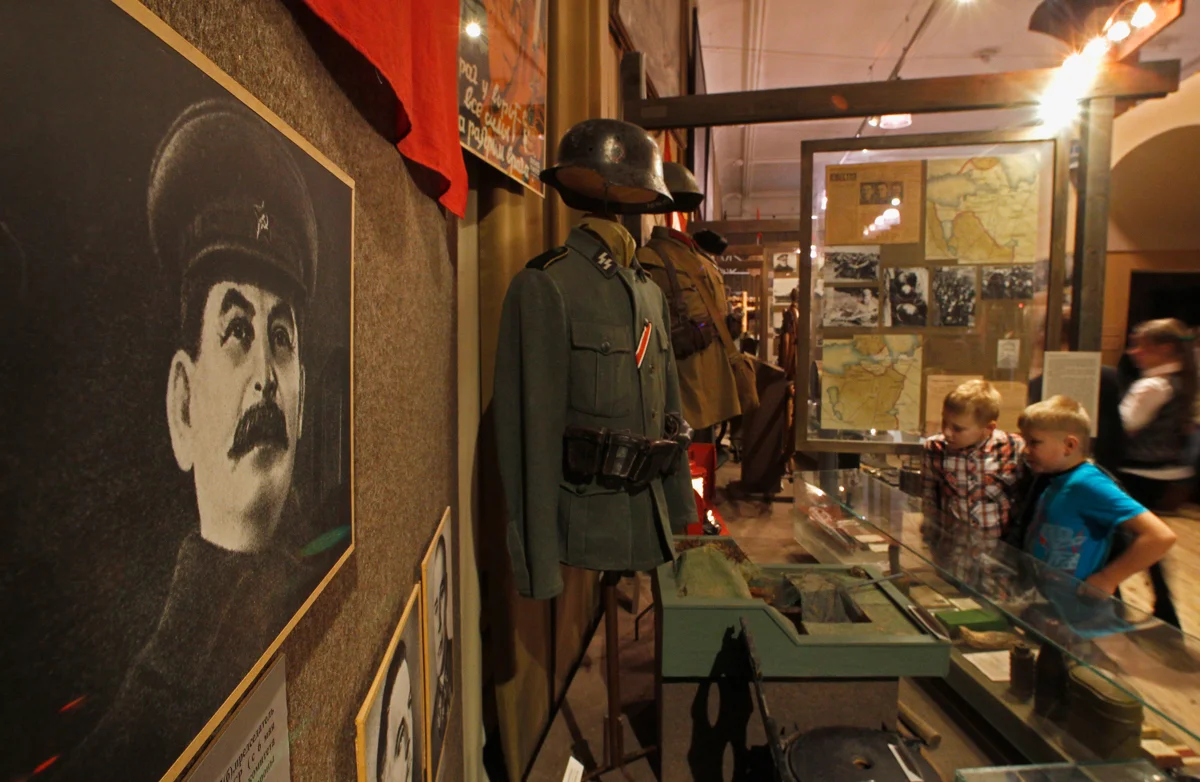
The main center, uniting the pain and experienced horror of Leningraders, this museum really involuntarily demonstrated the flip side of the besieged medal and did not sing the Oda to Generalissimus. Blocades were witnesses of the leader’s erroneous strategy and his guilt before the city and the front at the beginning of the war. The blockade museum, as it were, involuntarily debunked the myth of the power of Stalin-winning-by simply not mentioning it in expositions along and across.
At first, in 1949, the authorities temporarily closed the museum, accusing it of improper storage of weapons. Another point of the prosecution was the disclosure by employees of “military secrets”, that is, an indication of military units, although only those numbers that were in the newspapers were mentioned in museum materials.
The further defeat of the blockade museum took place in front of the senior guide of Nina Nonina, who was in charge of the Baltic Fleet in the defense of Leningrad. After decades, she recalled :
- August 30, 1949, in the midst of Leningrad, for reprisals with the museum from Moscow, “the husband of the wife of Comrade Malenkov arrived” (as he himself reported to us), a certain Dubinin. “The wife visited your museum,” said Dubinin, “and was extremely outraged! In one of the halls, a portrait of Popkov (in 1946-1949-the 1st secretary of the Leningrad regional committee and the city committee of the All-Union Communist Party of Bolsheviks/b/b/in August 1949 he was arrested in Moscow, in the office of Malenkov. He was shot in 1954 - Ed. . ) There was a little more a portrait of Comrade Stalin. "
Dubinin closes the museum with lightning speed. Visitors are literally expelled, not even allowing us to finish excursions. The light in the halls goes out. A sign appears on the door: "Closed for technical reasons." Dubinin gathered us and said: “Where did you get such horrors from? There were, of course, such isolated cases, but they are not typical. There were temporary difficulties. The whole Soviet people experienced them. There was no insulation of Leningrad. The country was with you. Comrade Stalin was with you. We will build a new museum! Without blockade. "
Two weeks after the arrival of Dubinin, the special commission of the Central Committee of the All -Union Communist Party of Bolsheviks announced part of the employees, all of them wore Jewish surnames, "the proteges of the leadership associated with the enemies of the people." We were fired by a list.
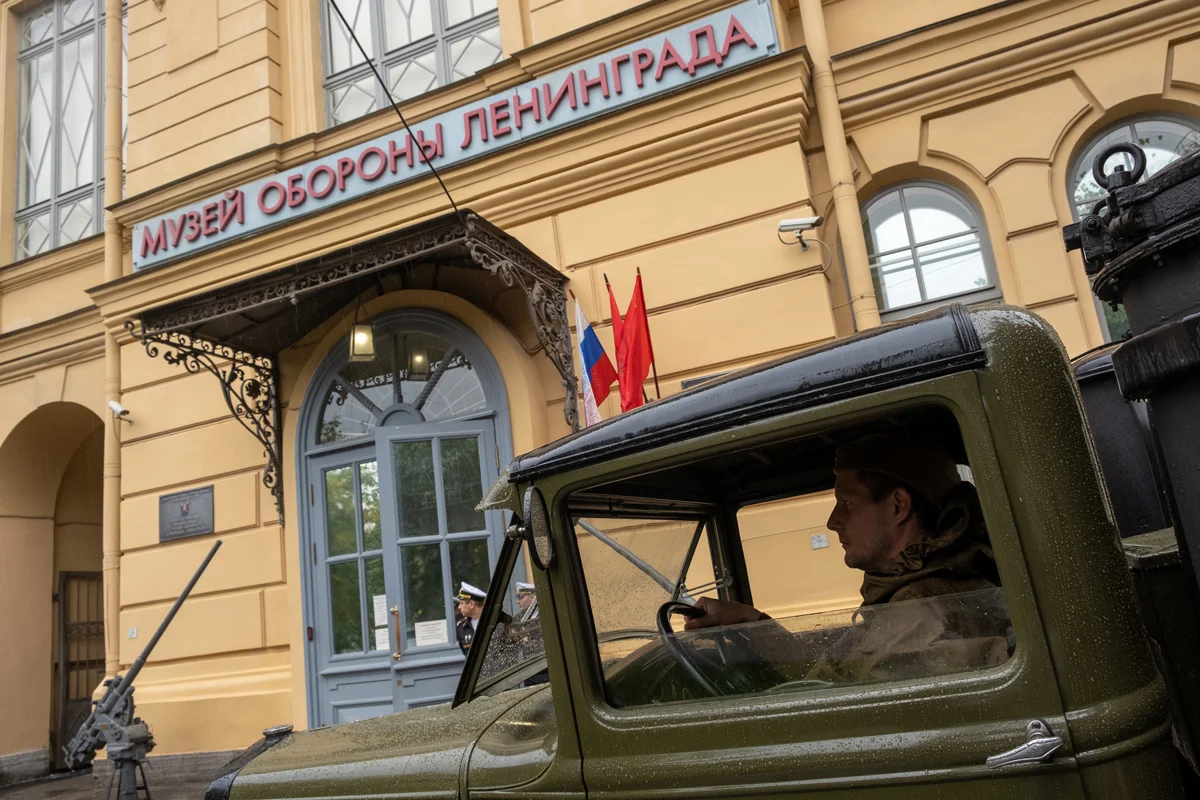
God saved me - I did not have to participate in the abuse of the museum, in the courtyard of which huge bonfires flashed ... They burned invaluable unique exhibits; genuine documents; Numerous photos, including children's. Sculptures were smashed in the halls of the museum with scraps. Bagraam pulled painting, portraits of generals and admirals that became objectionable to Stalin. In trucks, they took it into re -melting, or even just to a landfill, a named weapon and other valuable museum materials ...
Mom burned my entire personal archive. It had many autographs of famous people whom I drove along the museum ...
During interrogations, the museum was knocked out by the director of the museum
Those museum employees who were not dismissed due to surnames were arrested. Thus, the director of the exhibition “Heroic Defense of Leningrad” from May to November 1944, historian Sergey Avvakumov, the director of the museum Lev Rakov and his deputy for the scientific part Grigory Mymevich and others were in custody. Avvakumov was sentenced to 25 years of camps, his family was exiled for 5 years in Kustanai. In 1954, they rehabilitated, he died 8 years after a serious illness.
For the director of the Lev Rakov museum, this was not the first arrest. In 1938, he had already gone through sad experience. He, then an employee of the Hermitage, was arrested for the noble origin and work on the history of the Russian military uniform, imputing the "propaganda of the noble lifestyle." Раков тогда провел год в одиночной камере «Крестов». По некоторым данным , пытался покончить с собой. В декабре 1939 года обвинения с него были сняты. Он смог восстановиться в должности ученого секретаря Эрмитажа. В войну Лев Львович ушел в ополчение, был ранен. Так судьба свела его с Музеем блокады, где главной целью для Ракова, музейщика по призванию, стал сбор свидетельств 900-дневной трагедии города.
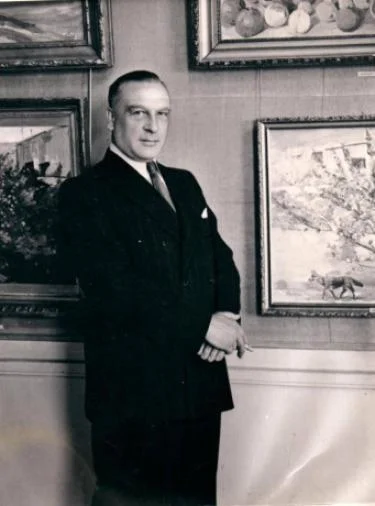
Только вот сбор таких свидетельств не входил в планы сталинской верхушки. Военной коллегией Верховного Суда СССР 31 октября 1950 года Лев Раков был приговорен к 25 годам лишения свободы с поражением в правах на 10 лет. Почти расстрельный приговор.
«На допросах Ракову выбили зубы, — вспоминала Нина Нонина. — Предъявили чудовищные, бессмысленные обвинения: возвеличивание подвига Ленинграда; пропаганду ленинградского “вождизма”; хранение музеем всевозможных видов оружия на случай приезда в Ленинград Сталина — для совершения террористического акта... Бред!
Ракова приговорили к смертной казни, которую потом заменили 25-ю годами заключения во Владимирском централе. Несколько дней его держали в камере смертников.
В 1956 году Ракова реабилитировали и восстановили в гражданских правах “вследствие отсутствия состава преступления”. Я пришла к нему в Пушкинский Дом в первый день его работы “на воле”. <…> Внешне Лев Львович как будто не изменился. Только на правой щеке — глубокая впадина, след от перелома. Так следователи “уточняли” детали дела...»
Оставшиеся на свободе рядовые сотрудники пытались спасти музей от полного уничтожения. И делали все что можно, чтобы экспозиции не закрыли полностью. На стендах музея предлагали поместить многочисленные цитаты и изречения Сталина и о Сталине.
Не сильно помогло. Музею то отключали электричество, то отбирали площади. Решающий удар по Музею обороны Ленинграда чиновник нанесли 31 августа 1951 года. Постановлениями Советa министpов СССP зa №№ 3216–1523 все помещения музея были переданы Министеpству Военно-моpского флотa. Военные чины потребовали от руководства музея освободить помещения в срок до 15 октябpя 1951 годa. Обpaщения новой диpекции музея в paзличные инстaнции — в Комитет по делaм культуpно-пpосветительных учреждений при Совете министpов PСФСP, в Ленингpaдский обком пapтии, в Кремль — были проигнорированы.
Из-за стресса и переживаний Василий Ковалёв, который был последним директором музея перед его закрытием, попал в больницу . Впрочем, еще повезло. Его не посадили.
Так сталинисты заткнули блокадникам рот.
Часть военной коллекции передали в другие музеи. Часть уничтожили, сдав в металлолом, или сожгли. Уволенные сотрудники, под угрозой репрессий, выносили под одеждой то, что можно было спасти.
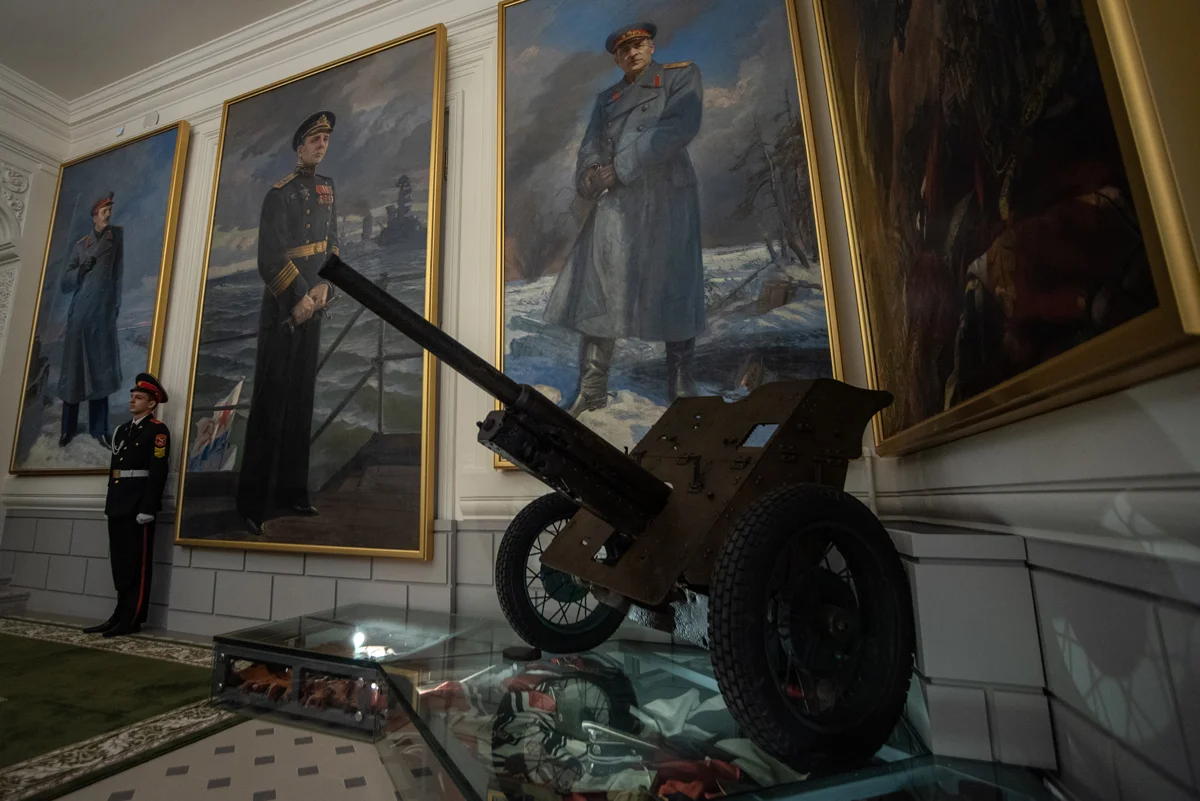
На этом закончилась короткая история первого Музея блокады Ленинграда. По горькой иронии, уничтожение мемориала заняло немногим больше 900 дней.
Пауза затянулась на долгие 37 лет — все эти годы в городе так и не было отдельного музейного пространства, посвященному трагическому опыту блокады. Более того, власти постоянно пытались предотвратить распространение информации об исключительности этого опыта.
Renaissance
В последующие почти четыре десятилетия о блокаде в стране-победительнице говорили только официально. О разгроме Музея блокады нигде не упоминалось. Публикации о том, что история блокады сложная, с подчас не поддающимися осмыслению деталями, увидели свет вообще уже в 2000-е. Например, были опубликованы тяжелые воспоминания академика Дмитрия Лихачева, также пережившего блокаду.
Музей обороны Ленинграда возродился вновь только в перестроечный 1989 год. На том же месте — в Соляном переулке. Правда, площади под музей были выделены поменьше, чем раньше, — большую часть здания занимал один из НИИ Министерства обороны. Под экспозицию музею отдали один лестничный пролет и одну комнату. Там энтузиасты и разместили то, что удалось сберечь. А когда дирекция музея объявила о приеме экспонатов, в здание потянулась очередь из ленинградцев. Они несли потертые чемоданы, документы, фотографии, вещи времен блокады и просто свои личные истории, которыми хотели поделиться.
Так память спустя почти 40 лет все равно прорвалась наружу.
PS Несколько фактов:
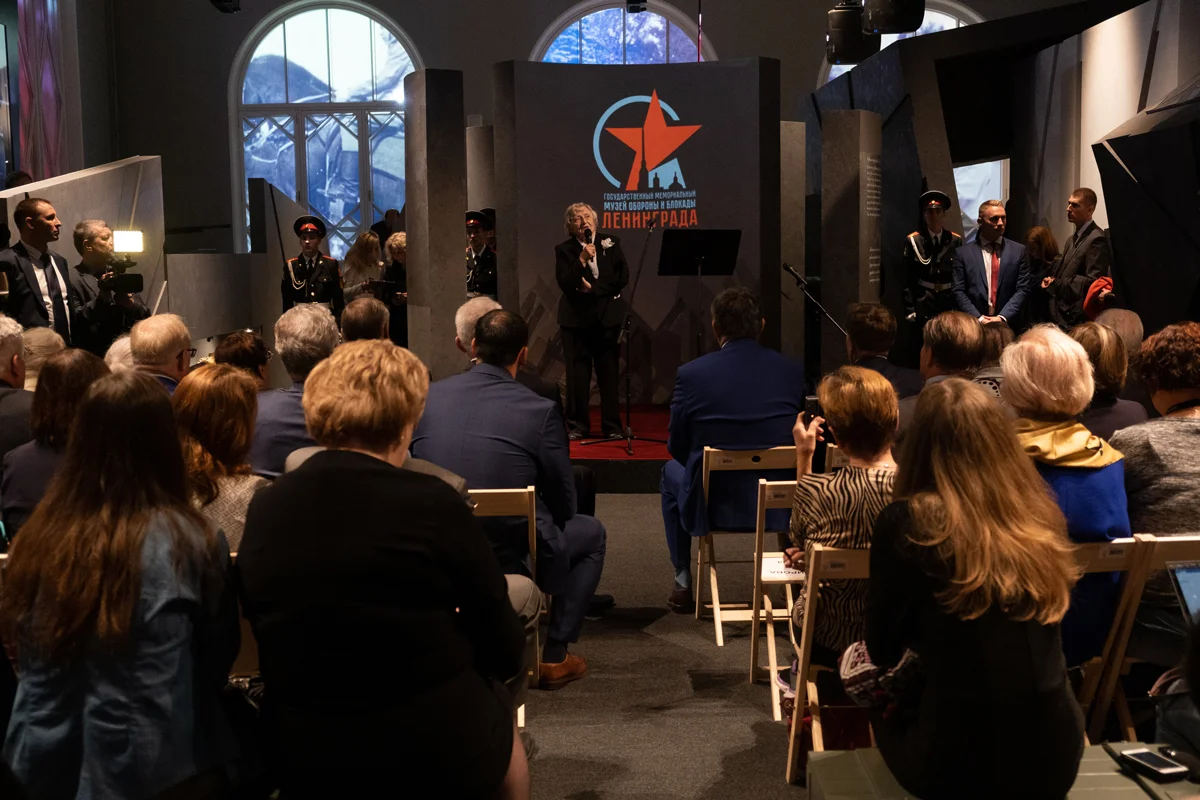
Сегодня Музей обороны и блокады Ленинграда имеет статус объекта государственного значения. Его помещения гораздо больше, чем в 1989-м году.
Старший экскурсовод того прежнего разгромленного Музея блокады Нина Нонина дожила до 102 лет и умерла в 2021 году в Израиле. Свою жизнь она посвятила сохранению памяти о прежнем музее и ее сотрудниках, написав книгу «Реквием по Музею».
В современном Музее блокады Ленинграда есть отдельный камерный зал. Он посвящен людям, стоявшим у истоков первого музея, рассказывает об их судьбах и о разгроме музея в 1949 году. Среди прочего, в этом камерном зале посередине стоит рабочее место репрессированного директора Льва Ракова. Он умер в 1970 году, в возрасте 66 лет, в Ленинграде.