
Translated material
Surprises of parallel import
The owners of cars imported into Russia may come an unexpected account for a surcharge from customs. Who should worry?
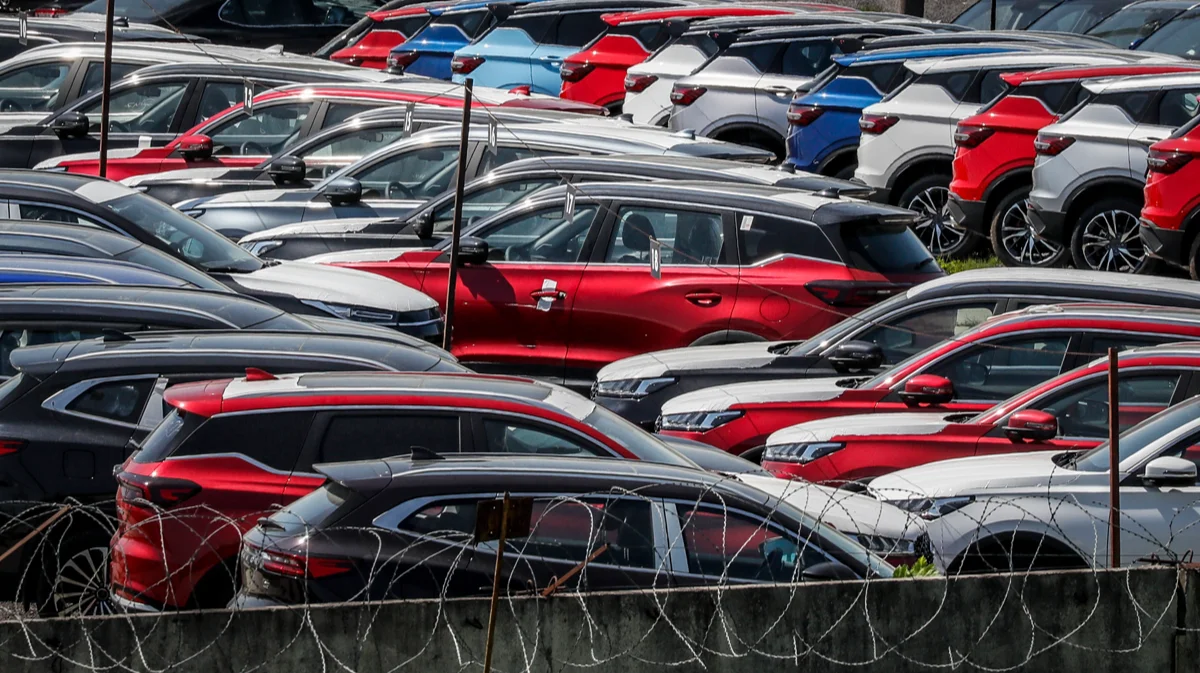
Photo: Yuri Kochetkov
The Federal Customs Service (FCS) began to massively demand from owners of cars imported into Russia according to the “parallel import” scheme, surcharges of hundreds of thousands of rubles, reported by Autonews.ru. According to the auto -criminalist Maxim Shelkov, the problem affected those who indicated the artificially low cost of the machine in the invoice. This made it possible to reduce customs payments and a recycling fee.
The FCS has the right to check the correctness of the submitted documents within three years from the date of admission of the car to operate in Russia. Silkov told Autonews that the average amount of the surcharge is 300-400 thousand rubles. The buyer of a car imported according to such a scheme cannot check which documents and invoices were submitted, the specialist noted. He also clarified that if the car owner does not contribute to the required surcharge, the electronic passport of the vehicle (EPTS) can be canceled. The New Gazeta Europe, together with a specialized expert (we are forced to publish his comment anonymously for security reasons) understands how large the problem is, and tells whether other owners of cars imported by parallel imports should be worried.
What is the essence of the problem?
According to our interlocutor, although the media drew attention to this only now, the customs made such checks from the very first day of the introduction of “parallel import”.
The expert explained that it is possible to underestimate the price by “agreeing” with the customs officer from Kyrgyzstan, Kazakhstan or Armenia: in this case, he will ignore the obvious inconsistency between the data in the invoice and in the auto -dealer catalog. It is easier to do this precisely on these boundaries, since the technical equipment is inferior to the Russian one.
- Customs officers are checking with their catalogs, and no one has a decree. And by the way, we must pay tribute, their catalogs are often updated. In those areas where the state needs to spend more money from its citizens, they are all right with technical equipment, ”the expert notes.
Back in March, the newspaper Izvestia wrote that about 5-7 thousand Russians collided with a demand for an additional payment of 300–840 thousand rubles of utilization fee for cars imported by parallel imports.
Who is responsible?
According to the expert, the current actions of customs are more like a violation than a crime. They, like other similar cases, can be tried to challenge.
For example, he says, in January 2023, the Russian authorities suddenly began to demand to issue imported cars for a buyer, and not for an intermediary through which they were resold without registration. Then the amendments were introduced: if the one who entered the car decides to bring another one, he is obliged to pay for the utilization fee at a commercial, and not at the civilian rate.
- Then those who brought dozens of cars, hoping that they would slip with a conventional utilsbor, suddenly a few weeks or months later received a surcharge. Why? Because they either drove more than one car, or did not register the already imported, and this became a signal for the regulatory authorities that the machine was intended not for personal use. But even then there was a law enforcement practice of contesting these requirements, ”recalls the interlocutor of Novy-Europe.
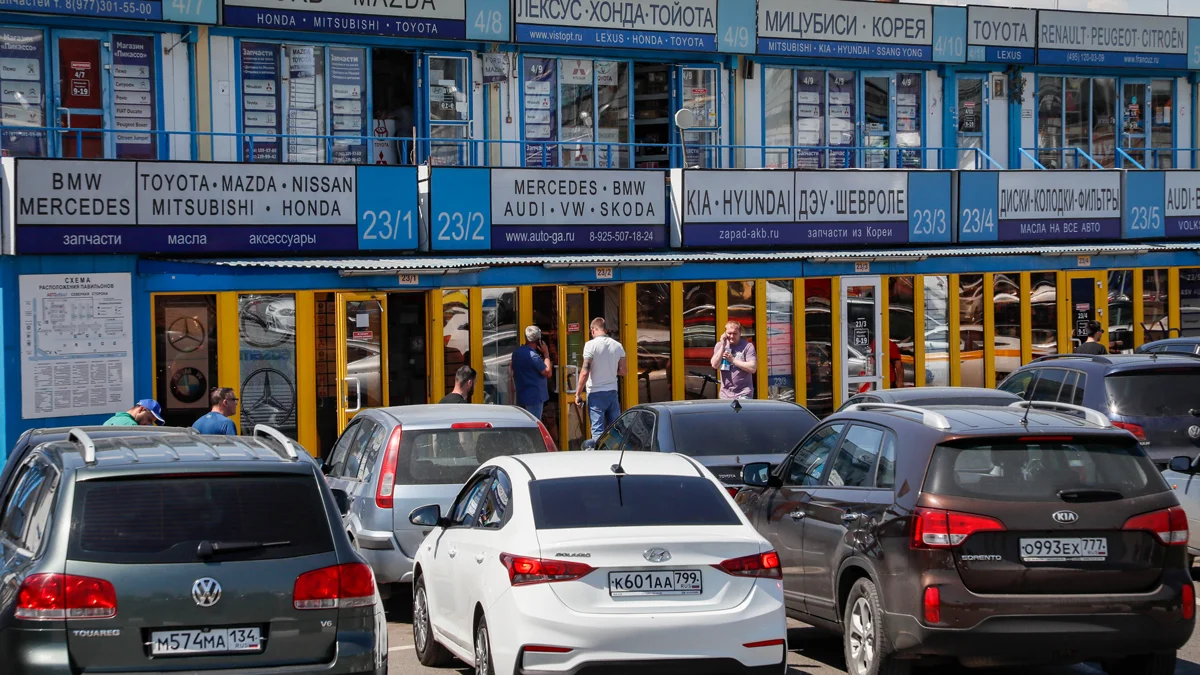
He emphasizes that the problem of responsibility is complicated, this is a matter of the adversarial process.
- Sometimes the buyer personally drove abroad, imported the car and agreed on a low price. Then the responsibility, of course, is on it. But if the car has passed through several intermediaries, then the identification of the perpetrators is complicated. You can verbally agree on anything at all. You can pay one amount, and enter any amount into the contract, regardless of how much you really paid. This is how almost all cars in the secondary market in Russia are sold. Almost never a real value is written in the purchase and sale agreement, because a person will “get” on taxes. The minimum amount is always indicated, up to 250 thousand rubles, because it is not taxable.
How to avoid problems when buying a car?
The expert advises to carefully check the documents before buying a car. If the machine is ordered from abroad, it can be assumed that the seller will not deceive the client, since the low price in the invoice will not bring him additional benefits, but there will be a risk of further conflict with the buyer who will encounter problems due to documents.
- But if the so -called schematosis is in advance in the chain, it must be identified not at the purchase stage, but at the stage of the contract with the one who will be engaged in execution. You always need to negotiate and clarify this before the first transaction, ”the expert recalls.
The scheme for underestimating the cost in the invoice is not the only "loophole" in the automotive business. For example, one of the common schemes is the use of Belarusian benefits. In this country, disabled people of groups I or II, war veterans, veterans of the Great Patriotic War and pensioners pay only 50% of customs duties.
Formally, the scheme is legal: the car is bought for a beneficiary, and then resold. However, due to the frequent abuse of the authorities, the authorities began to revise such transactions, although the legislation itself did not change. As a result, the owners began to pay payments after a while - just as it is now happening with cars imported by low invoices.
- And this is a rather shaky field of law, where actually the right of strong works, and not strictly the law. If the law worked strictly, everyone would use these schematheses, because they, in general, are legal and do not violate anything.
They go along a thin line, but go abroad very rarely, ” says the interlocutor of the publication.
The Ministry of Industry and Trade explained : you can issue benefits for a resident of Belarus, but after the import of the car to Russia, checks are arranged, and "additional regulatory decisions can be initiated if necessary." As the checks pass and what solutions can be, the regulator did not specify.
Since February 24, 2022, the Russian automobile market has changed: new rules of parallel imports, relief for certification were introduced. However, amendments to the technical regulations were not made, but simply allowed it to temporarily not execute it, the expert notes in a conversation with the New-Europe. Nevertheless, regular warnings about the risks are not new, and the advice is to carefully check the transactions fair at any time.
What do the authorities answer?
After the publication of the Autonews material, the Russian Ministry of Internal Affairs stated that information on mass cancellation of registration of cars imported by parallel imports is not true.
The department emphasized that issues related to non -payment of utilization fees should be resolved according to the rules of customs and civil law, including the use of laws that regulate the enforcement of FCS payments.
In turn, representatives of the FCS said “Moscow 24” that cases of underestimation of the customs value of cars are not massive. According to the agency, for the period from 2022 to 2025, about 815 thousand vehicles were imported into Russia, and the duties were uttered only in relation to 2510 vehicles (0.3%).
In response to experts warning about the cancellation of an electronic passport when non -payment of a FTS collection, it said that when checking the cost of a car of customs, such a mechanism is not provided.