
Translated material
Mask, Bezos, Tsuckerberg and other IT billionaires were often called “broliargs”. What does this term mean - and why does business willingly swear Trump?
We study the "right turn" of Silicon Valley
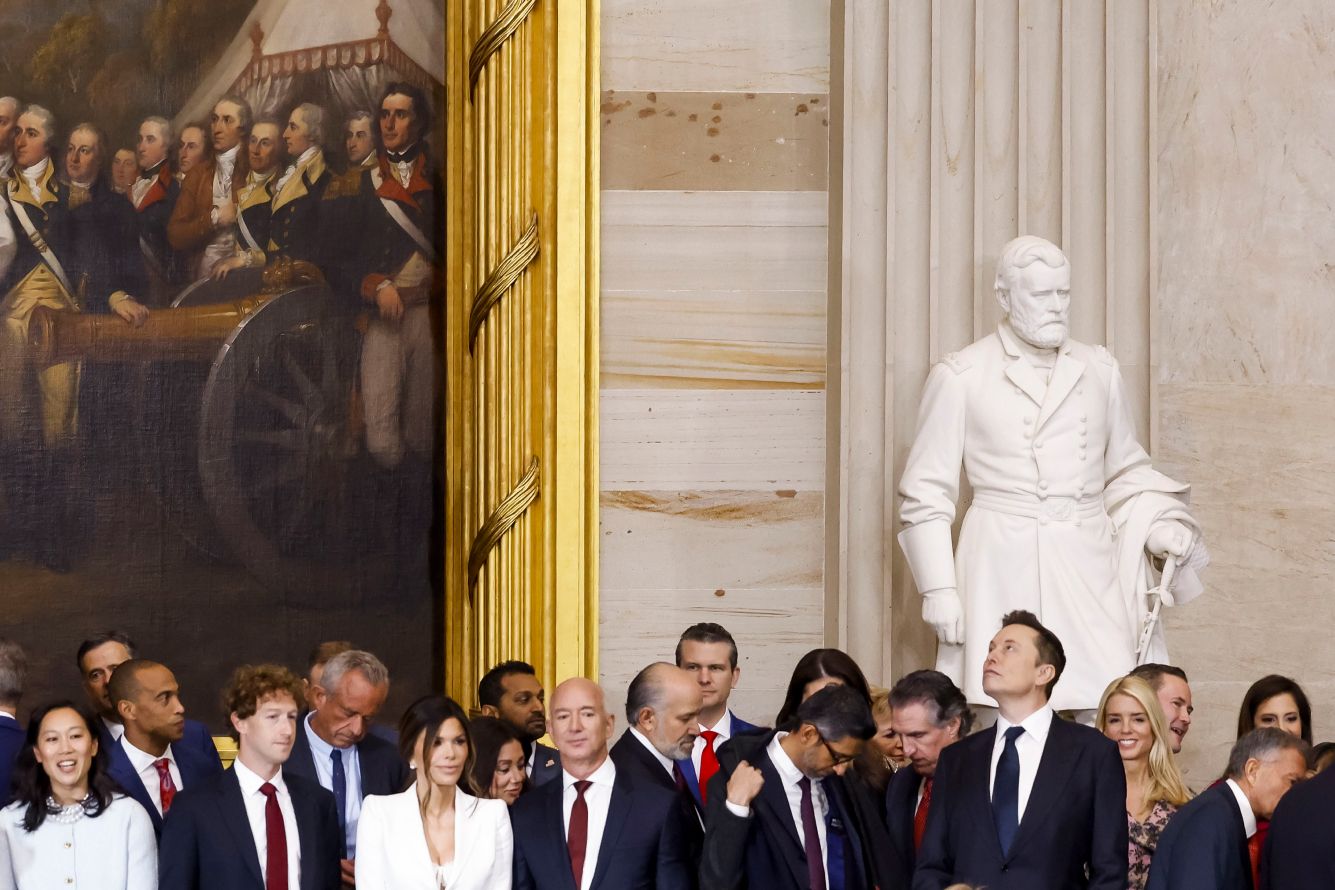
The Silicon Valley until recently was considered a stronghold of liberalism and progressive. But at least since the summer of 2024, supporters of the same views from American media and scientific circles are in alarm: the founders of the largest technological companies are right. Ilon Musk, Mark Zuckerberg, Jeff Bezos and other industrial titans, one after another, swear allegiance to Donald Trump. They have an increasing impact not only on the minds of citizens, but also on state policy-and want to turn the United States either into a conservative-Liberian utopia, or into a technophashist dictatorship. To describe the new status of the heroes of the Valley, scientists have already come up with a special term - “broliarg”.
Who are the broliargs
The author of the term is usually called sociologist Brook Harrington . But it is rather a popularizer: the word began to spread in the English press after her article in The Atlantic magazine under the heading “What the Brokeligarchs want from Trump”, which was released on November 24, 2024. And the term appeared a few months earlier - in the column of Carol Ceduold in The Observer.
“Bro” in the “Brokeligarch” comes from Tech-Bro, which means approximately “Technochuvak”. According to the Cambridge Dictionary, this is “a man (usually a man) who works in the field of digital technology, especially in the USA; According to some, he lacks social skills, and he is overly confident in his own abilities. ”
The origin of the second root of the word "broliarch" is more obvious. Joe Biden, in a farewell appeal to the American people, said that an oligarchy was formed in the United States, and warned against excessive growth in the influence of the “high -tech industrial complex” - social networks and artificial intelligence.
Bayden drawn a parallel between the current state of affairs in the United States and the situation of more than a hundred years ago, when the American authorities fought with the “robbers-robbers”-monopolists like the steel tycoon Andrew Carnegie, the oil magnate John Rockefeller and the banker John Morgan. Baiden did not name the names, but it was not difficult to guess who he meant by new “barons-robbers”: Ilona Mask (X, Tesla, SpaceX), Jeff Bezos (Amazon), Mark Zuckerberg (Facebook, Instagram), Tima Cook (Apple), Tima Cook. Sundara Pichai (Google), Sam Altman (Openai) and other influential entrepreneurs and managers of Silicon Valley. Those very broliargs.
Musk, the richest man in the world - during the 2024 election campaign became the most active supporter of Trump: he spent $ 277 million, and after the victory of the Republican headed the new department of state efficiency .
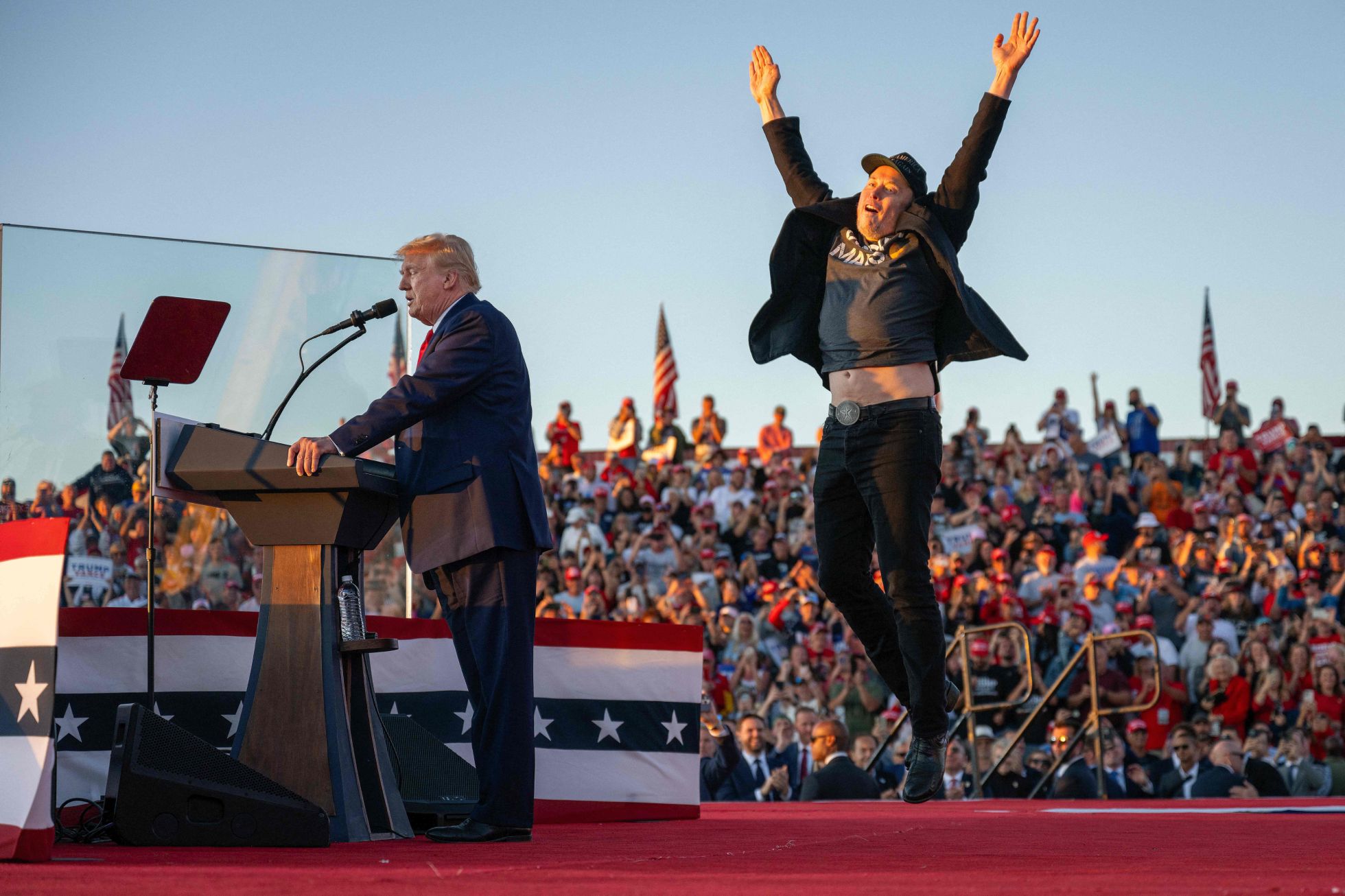
Tsuckerberg, Bezos and Pichai (and Bill Gates, who had already retired for a long time) after Trump’s victory, one after another, visited his residence of Mar-A-Lela in Florida. Everyone was expecting a long lunch or dinner with the politician himself and the head of his administration Susie Wiles.
Tsuckerberg after a time after his visit canceled the pessimization of political content on Facebook and Instagram - and at the same time a fact room. That is, in fact, he introduced the same moderation system as the mask in X: the platform does not mean either the reliability of the published information, or for political correctness, or for the mental peace of users. American experts are almost unanimous : Tsuckerberg is trying to please Trump, because the Republican and his supporters, in their opinion , were regularly censored in social networks, controlled by the founder of Facebook.
META Tsuckerberg (maternal company Facebook and Instagram) and Amazon Bezos, along with many other companies, cancel the Dei ( one , two ) programs, within which people of different racial, national and gender identities were purposefully taken to work. In this they also follow Trump's policy. One of the first decrees that abolished such programs in federal authorities as “discriminatory”.
The broliargs raided the money in the Trump's inauguration fund, and at the very ceremony of the president’s entry, they became the most discussed guests. Especially, of course, Musk, which for no reason showed the same gesture . But in addition to this, many observers noted that the leaders of the IT industry with their presence overshadowed politicians and stars ( once , two , three , four , five , six , seven ).
So what happened to Silicon Valley? Many explanations of journalists and experts can be reduced to three main theories. We’ll make a reservation right away: they are not mutually exclusive, but rather, on the contrary, complementary.
The first theory
The broliargs read neo -reactionaries
In January 2025, several American liberal publications ( The New York Times , Vox , Newsweek , Politico ) issued articles with a similar message: a certain ideology is behind the “right turn” of Silicon Valley. And moreover, one specific ideologist. His name is Curtis Yarvin, he is 51 years old, he is a former programmer, a political blogger and one of the founders of the so -called neo -reaction movement (it is also “dark education”).
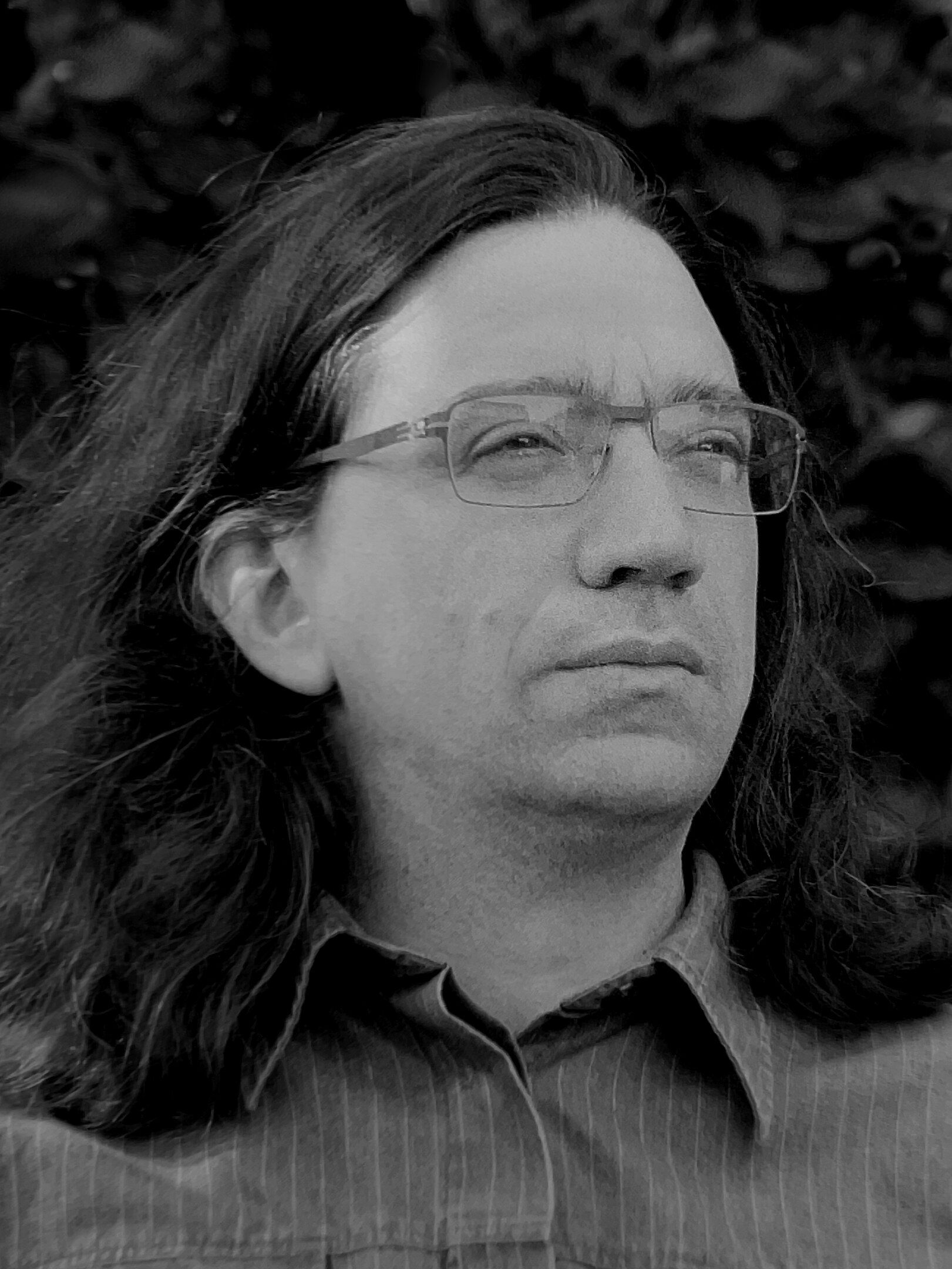
Each author considered it necessary to emphasize: Yarvin is little known to the general public, more recently he was a marginal. That is how the IT business publications like TechCrunch wrote about him more than 10 years ago. But his ideas influenced both the broliargs and some key members of the Trump team, primarily on Vice President Jay Di Wans. On January 18, 2025, The New York Times published a long interview with Yarvin-and thereby legalized it in the mainstream.
The search for a "gray cardinal" is a popular genre. In 2022, the Western press also tried to discover the “ideologist of Putin” - and found it in Alexander Dugin. People who are familiar with the construction of the Russian political machine, for the most part, treated this theory with skepticism: Dugin was clearly not able to influence Putin with the power that journalists attributed to him.
With Yarvin, everything is somewhat more complicated. In the pluralistic American political system, the ideologist-outsider may well acquire a significant impact. Another thing is that Yarvin’s main ideas are still too radical so that the same Wence is publicly solidarized with them. For example, the idea that democracy should be abandoned as a failed experiment.
As an alternative, Yarvin offers the monarchy. But not traditional - with a crowned special head - but corporate. An effective leader with a clear vision of the future and with unlimited powers should manage this regime. For an example, Yarvin offers just to take the Boasting Empire: Tesla, Apple and other corporations. It is they, according to the theoretician, are the most effective American institutions. And it is according to their model that the whole state should be built, Yarvin is convinced.
Yarvin himself admits that the time has not yet come for the realization of his vision, and emphasizes that he is only part of a large and heterogeneous coalition. “[Right] is not united by some positive faith, but by the absence of faith,” he explained in that very interview with The New York Times. - We do not revere the same gods [as progressists]. We do not consider The New York Times or Harvard to something gods and do not believe that the rules by which they function always allow you to achieve truth and wisdom. <...> This is a disappointment in faith in old systems. And the fact that this disappointment should change is <...> Simple openness to new ideas. ”
In other words, of two key questions for any ideology: "What is wrong with the world?" And "How to fix it?" - Neorealians have an answer only to the first. The main problem, in their opinion, is a false belief in the ideals of universal equality and democracy. This faith has already degenerated into orthodoxy. And to maintain it, an analogue of the Church grew - the Union of Mainstream Media and Academic Institutions, which are actively fighting dissent (Yarvin calls them “The Cathedral”, that is, “Council”). The democratic “regime” cultivates mediocrity, suppresses a person’s natural craving for self -development, self -realization and self -expression - it is simply incompatible with freedom, and neo -reactionaries conclude.
Regarding what to do with all this, there is no consensus among them: either an aristocratic dictatorship is needed, or anarcho-capitalism, or a return to the models of the era to the French revolution, or an appeal to the origins like the "politician" of Aristotle. This is actually not an ideology, but a criticism of a modern socio-political and economic structure. And she obviously responds in the hearts of many broliargs.
Theory is second
The broliarchus read Cyberpan
In the biographies of almost all the broliarchs there is a common line: in childhood and adolescence, they were geeks. They played Dungeons & Dragons, adored comics about superheroes, read fantasy and science fiction, whether John Tolkien, Isaac Azimov, Robert Heinline or William Gibson. And they retained this passion, becoming adults. Say, Peter Tilya’s companies are called the words from the world of Tolkien: Palantir (“Seeing Stone” in the “Lord of the Rings”), Valar (something like angels in the “Silmarillion”), Mithril (wonderful metal in the writer's universe).
At the end of the zero, the mass culture was largely reoriented to geeks. In 2007, they became the heroes of the superpopular sitcom “The Big Bang Theory”. In 2008, the heyday of the superhero film franchizes began with the first “Iron Man”.
All this is specific non -romantism. Heroes - almost always in one sense or another, super -enemy and as a result of this outcast. The vulgar world of “normal people” does not understand them, does not accept them - and is terribly envious of them. The scriptwriter of the Iron Man Mark Fergus directlysaid that when developing the image of Tony Stark, it was inspired primarily by Ilon Mask.
To this it is worth adding the most important topic of classical fantasy, and especially Cyberpan , - transgumanism, the idea of conscious management of the evolution of mankind and overcoming biological restrictions (immortality, increasing physical and mental abilities and the like). Biographer Mask Walter Aiseksson insists that his hero, having gathered some of his views in science fiction, works quite seriously on them in real life. The artificial intelligence promised by Trump for half a billion of dollars here is the same - even if in the end they are spent without a mask, which criticized the project in its current form.
Already there are almost no specialists who consider transgumanist dreams technically impracticable. Doubts are more likely in the philosophical plane: whether people will remain people, whether there will be a place for personality in technological singularity (examples: one , two , three ).
This is the essence of many complaints to the culture of the technical specifications: they consider any problem as a purely technical one and try to solve it in the same way as they are used to eliminating bugs in programs or constructive defects in rockets. And social and ethical problems cannot have purely technical solutions.
Finally, there is one more to the culture of neo -romantism - perhaps the most important - a claim. All this is the opposition of heroes and crowds, visionary, chosenness and the cult of will - the ideological material from which authoritarianism is made. Fascism was also by origin of a romantic ideology.
The third theory
It's just a business
Consider the broliargs with a monolithic group - to put it mildly, a great simplification. Each of them can find their own special motives to be friends with Trump and right - or pretend that it is right.
With Peter Tilel, the easiest way: he has been a conservative libertarian since student times, wrote the relevant books and essays . In 2016 and 2020, he was the only prominent representative of Silicon Valley who publicly supported Trump in a word and a dollar.
Mark Zuckerberg is more difficult. Trump was still in his first presidency that Facebook "has always been against him." In 2020, his supporters accused the social network of playing along with the rival of the Republican Joe Biden, blocking the references to the investigation of his son Hunter. Subsequently, Zuckerberg admitted that these links in the issuance were really reduced - because they were afraid of "Russian misinformation." Already in the 2024th Trump, recalling the role of Facebook in that campaign, threatened the founder of the social network "Prison until the end of his life."
Finally, in 2021, Tsuckerberg personallyblocked Trump's accounts on Facebook and Instagram with the wording “For the use of our platform for incitement to a violent uprising against a democratically elected government” (it was after the assault on the Capitol ). Then, at the hearing in Congress, the head of Facebook said that "the former president must be responsible for his words."
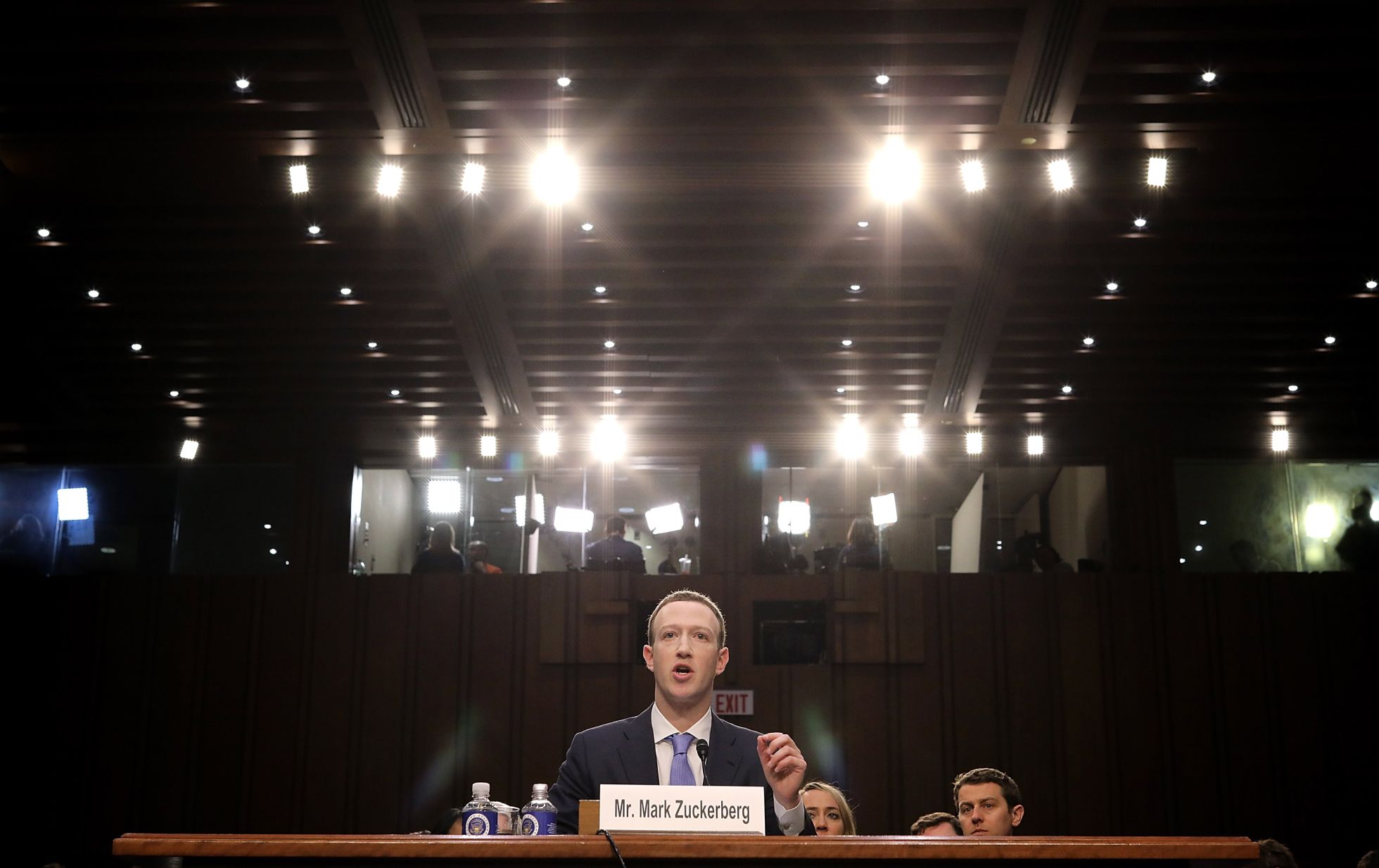
And on January 30, 2025, Meta agreed to pay Trump $ 25 million in the framework of the pre-trial settlement of the lawsuit about that blocking.
In the eyes of the supporters of Trump Zuckerberg, a live symbol of censorship has long been a living symbol and everything that is wrong with social networks and IT corporations. The rest is easy to blame him for inconsistency and opportunism: it is ranting about freedom of speech and political neutrality of the platform, then it rushes to help the Biden administration to fight the “Russian misinformation”, then “twists the nuts with moderation, then“ unscrews ”them back.
A simple explanation begs: in fact, he does not care about the reliability and political balance - he is only interested in the fact that Facebook and Instagram continue to work and bring money. If it is necessary to introduce censorship so that the Biden administration and the Congressmen-Democrats are lagging behind it-he will introduce; If you need to bow to Trump, so that the Republicans are behind, it will go. Nothing personal, just a business.
Or Jeff Bezos. In 2019, Amazon filed a lawsuit against the Trump administration, claiming that the president, considering the Bezos by the political opponent (in particular, was dissatisfied with the fact that the newspaper The Washington Post, which also belongs to Bezos), pressed the Pentagon and deprived the company 10 billion dollars. And in 2024, Bezos prohibited The Washington Post to publish an editorial statement about the support of the candidate in the presidential election-in violation of the 36-year tradition. The editors were going to support Trump's rival Kamalu Harris.
Your interests in Washington: state contracts, tax and regulatory benefits and much more - Google, Apple, and other largest high -tech companies have. In the first presidency of Trump, the Boleshigarchs learned that the direct and demonstrative flattery acts on him much better than the sophisticated backstage lobbying. And as soon as Trump was defeated, they began to flatter him.
Silicon Valley is not only a broliarch. But the rest can not do anything
Board, the famous venture investor Mark Andrissen in a recent interview with The New York Times told (the quote is slightly edited and reduced, the meaning is completely preserved):
In 2006, the average young employee from Harvard was obsessed with his career, all the conversations with him were about when he received an increase, how much he was paid when he will lead the company. By 2013, the average young employee from Harvard said this: “Yes, it all went! The system must be burned to the ground. You are evil. White is evil. Men are evil. Capitalism is evil. It is evil. "
They, in their own view, are primarily professional activists. And it turns out that the best way to engage in professional activism is to destroy companies from the inside. The general meetings became very tense: “Why are we a commercial company? Do you know what terrible consequences this technology cause? We need to spend as much money as you like to end the emission of carbon ” - a complete set of fashionable radical left ideas. And they spend a huge part of working time to do it.
There were 20 such, maybe 30%. Most of the company are people who want to get along with everyone who consider themselves supporters of the Democratic Party and want to be in trend. And suddenly the general director discovers that 80% of its employees are politically radicalized. It is impossible to dismiss 80% of the team. It is impossible to hire new youth just from college instead - these will be the same activists. The companies were captured.
There is probably some exaggeration in this story. But there are many real examples of political activism of employees of IT companies. In 2018, several Google employees with a scandal resigned in protest against the cooperation of the company with the Pentagon. In 2020, Facebook employees publicly criticized Tsuckerberg for refusing to censor Trump's bloodthirsty statements about protests against the murder of George Floyd . Many young ITSHNIVES participated in these protests . The founder of Google Sergey Brin in 2017 joined his employees at a rally against Trump anti-immigration policy. And this is not to mention loud labor protests in Amazon ( another example , more ), Google and many other corporations.
It would seem strange: the broliarchs, right, ignore the mood of most of their employees and generally go against the progressive spirit of the industry. But this is understandable: over the past few years, the image of Silicon Valley as a freemen and an eternal holiday of disobedience has faded.
В десятые годы был такой мем: «Научись кодить!» Этим советом айтишники подшучивали над представителями других профессий, когда те жаловались на тяжелые условия труда, низкие зарплаты и сокращения. Программисты востребованы, их уважают, им хорошо платят — а ты занимаешься чем-то не тем.
Однако с 2022-го по крупнейшим IT-компаниям прокатилось несколько волн массовых сокращений. Кроме того, очень многие люди последовали совету «научиться кодить» — и найти сотрудников стало гораздо проще. Работники оказались в более конкурентных условиях и научились держаться за свои места.
Нельзя сказать, что последние политические маневры бролигархов вовсе не вызвали протестов со стороны подчиненных. Но этобыли не забастовки и митинги, а непочтительные шутки и тихий саботаж — характерные примеры того, что в политологии называют «оружием слабых».
Тамид Айеф