
Translated material
Turn off the path of jihad
The new Syrian president Ahmad Ash Sharaa put world politicians before a difficult choice: for the sake of peace in the Middle East, they will have to talk with a terrorist
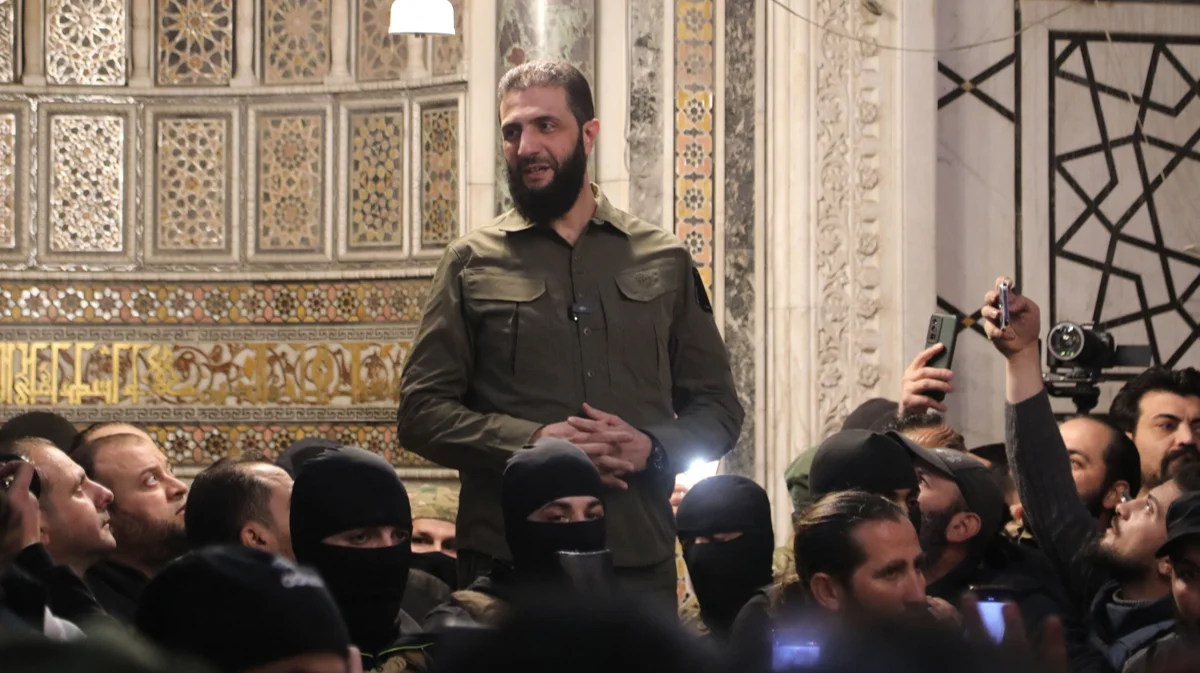
Ahmed al-Sharaa performs in the Omayyadov mosque of overthrow of Bashar al-Assad, Damascus, December 8, 2024. Photo: Abdulaziz Ketaz / AFP / Scanpix / Leta
Ahmad Hussein al-Sharaa, until recently, better known, nicknamed Abu Muhammad al-Jolani, is one of the most interesting and contradictory figures in the history of modern conflicts in the Middle East. The “President of Syria of the Transition” last week, this field commander continues to hit observers with honed diplomatic formulations in his interviews, but along with the civilized world community, the question arises more and more clearly: how much can be forgiven the bloody criminal, who managed quickly and, in, in, in, in the same In general, to gracefully resolve the Syrian conflict-this puzzle, over which many countries fought for one and a half decades? And who is this al-Jolani in general?
The New Gazeta Europe has collected the details of his life path in Arabic -speaking sources.
A boy from a rich quarter
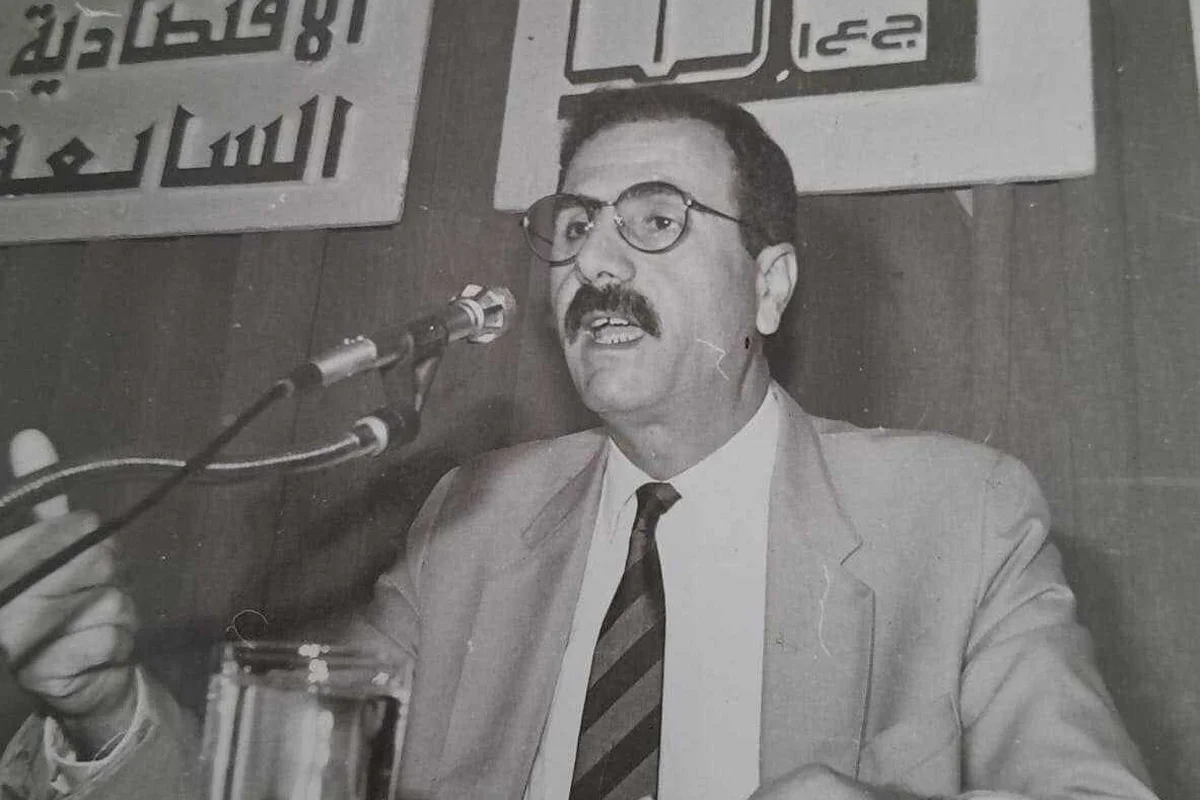
Al-Jolani was born in 1982 in Riyadh, Saudi Arabia, in a family that could rightfully be attributed to a typical Middle class. His father, Hussein al-Sharaa, a native of the Golan Heights, which belonged to Syria, was an educated person:
In the 1960s, he studied the economy at the University of Baghdad, and in the early 1970s, when Hafez Assad came to power in Syria, the father of the now overthrown Bashar, Hussein al-Sharaa returned to his homeland.
An educated young man quickly found himself. Hussein al-Sharaa worked in the Ministry of Oil and was a member of the Provincial Council of Kuneytra from 1972 to 1976. And then he emigrated to Saudi Arabia, where he continued to work in the oil industry and published several books on economics, including the well -known “oil and comprehensive development in the Arab world” (1983).
In 1989, the family returned to Syria, the son of Hussein Akhmad was already seven years old. These were rather difficult times for the country: the Hafuz Assad regime desperately pressed the opposition, including Islamic groups. But contrary to the proper judgment that Ahmad al-Sharaa became a victim of radicalization precisely as a result of political pressure or repression by the state, his childhood and youth were quite prosperous. The family settled in the prestigious Mesze area in Damascus, the young Ahmad did not know what poverty was. From childhood, he showed interest in Islamic movements, but neither the risk of persecution or arrest hung over him or over his family members. Ahmad graduated from school in Damascus, then entered the University of Damascus at the Faculty of Journalism, but did not graduate. Lead of his youthful hobby, in 2003 he joined the terrorist Al-Qaeda and left the country.
Guy from the Golan Heights
The jihadist path of Abu Muhammad al-Jolani-from that moment it will correctly call him that way-begins in Iraq, in the early years of the American invasion. Why, in fact, al-Jolani? Let us recall the origin of his father: Golan heights (occupied by that time Israel). Thus, al-Jolani is literally “from the Golan Heights”. Emphasizing the origin of his father, the future head of Syria seemed to indicate a special reason for his own participation in Jihad.
As part of the terrorist Al-Qaeda, he went through intensive military training and entered the near circle of such famous jihadist leaders, such as Abu Musab Az-Zarkavi. They say that it was al-Jolani who entrusted the entire logistics of al-Qaeda operations in Iraq, as well as work on recruiting new militants. It was probably not difficult: the former security forces, thrown out on the side of life after the overthrow of the regime and execution of Saddam Hussein, were quite quickly imbued with radical ideas, composing, as a result, the backbone of Iraqi al-Qaeda.
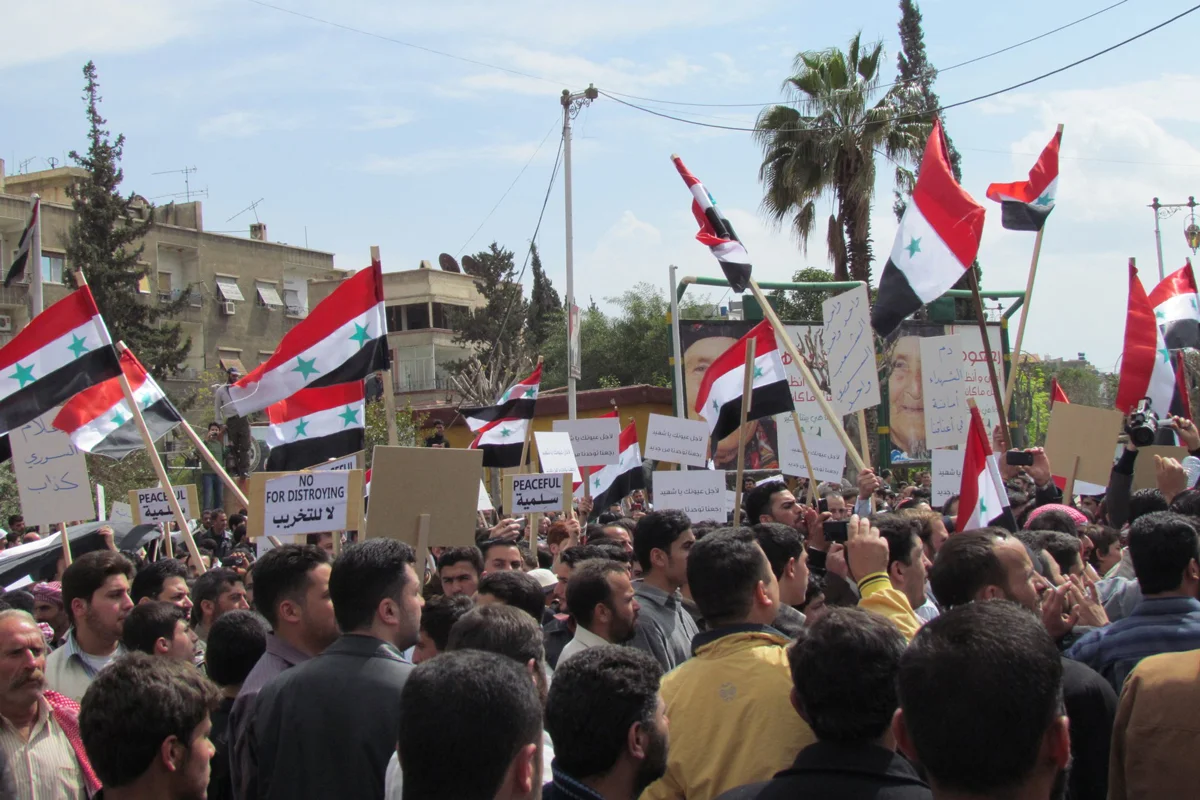
And soon the ideology of global jihad struck Syria. In 2011, mass protests began there against the Assad regime (already Bashar, who actually inherited the presidential chair from his father). These protests quickly grew into a cruel civil war, which created a favorable environment for the appearance of armed groups. One of the leading jihadist leaders of that time was Abu Muhammad al-Jolani, who headed the Syrian branch of al-Qaeda-Jabhat al-Nusra, literally: “Support Front”.
"Jabhat al-Nusra" and ISIS: friendship and enmity
In order to exhaustively imagine what kind of person is now considered the interim president of Syria, it is worth saying that, despite the existing opinion that Jabhat al-Nusra in Syria opposed the Islamic State (ISIS), this is not entirely true. At first, they successfully collaborated, and only in 2013 serious disagreements arose between groups. Leader ISIS Abu Bakr al-Baghdadi said that Nusra should be part of his “caliphate”, but al-Jolani refused, confirming his fidelity to the al-Qaeda leader Aiman Az-Zavakhiri. This led to a real war between the two largest jihadist forces in the region.
Over the next years, until 2015, the groups fought for influence and resources. As a result, ISIS supplanted Nusru from the eastern regions of Syria, but she was able to gain a foothold in the province of Idlib and expanding her influence in the north-west of the country.
In the controlled territories, "Jabhat al-Nusra" established Sharia laws that suggested the obligatory wearing of a hijab or Nikab for women and the ban on the "Western" style of clothing for men; The ban on music, alcohol, the creation of a “religious police” and the introduction of Sharia ships to regulate public life. However, the group tried to avoid demonstrative acts of violence, as ISIS did.
There was also something that distinguished the Nusra management style from ISIS: al-Jolani always sought to search for support among local residents. For him, it was important, for example, the supply of food, medical care and security. He also established contacts with the leaders of tribes and local groups. All this shows him as a more pragmatic policy than the same ISIS leaders who tried to lean their power over the masses at fear.
Nevertheless, despite the desire of al-Jolani to distance his power from ISIS methods remained authoritarian, and the repressions against the disagreements were tough.
How to talk with terrorists?
In 2016, al-Jolani announced a break with Al-Qaeda and changed the name of his organization to Jaish al-Fath (approximate translation-“Army of Conquerors”). This decision was determined by several factors at once. Firstly, international pressure on al-Qaeda and an attempt to avoid military attacks from the United States and its allies. Let’s not forget, back in 2013, the US State Department brought al-Jolani as one of its leaders in the list of terrorists and offered a monetary reward of $ 10 million for information leading to its capture.
In addition, the growing popularity among the local population played a role - the new image was to attract even more supporters in Syria. Well, then al-Jolani, apparently, was just tired of playing someone else's game. He strove for more autonomy in decision -making.
This step really allowed him to strengthen his position in Idlib and attract new allies among the Syrian rebels.
In 2017, al-Jolani united several Islamic groups in Hayyat Tahrir al-Sham, and translated-the “Committee for the Liberation of Syria”. The KhTS became the dominant force in Northwest Syria, in Idlib. So Idlib turned into the largest resistance zone of Assad. The geographical proximity to Turkey ensured local militants the opportunity to receive funding, weapons and diplomatic support. Well, al-Jolani, against the backdrop of successful resistance, was able to eliminate other groups and concentrate power in his hands.
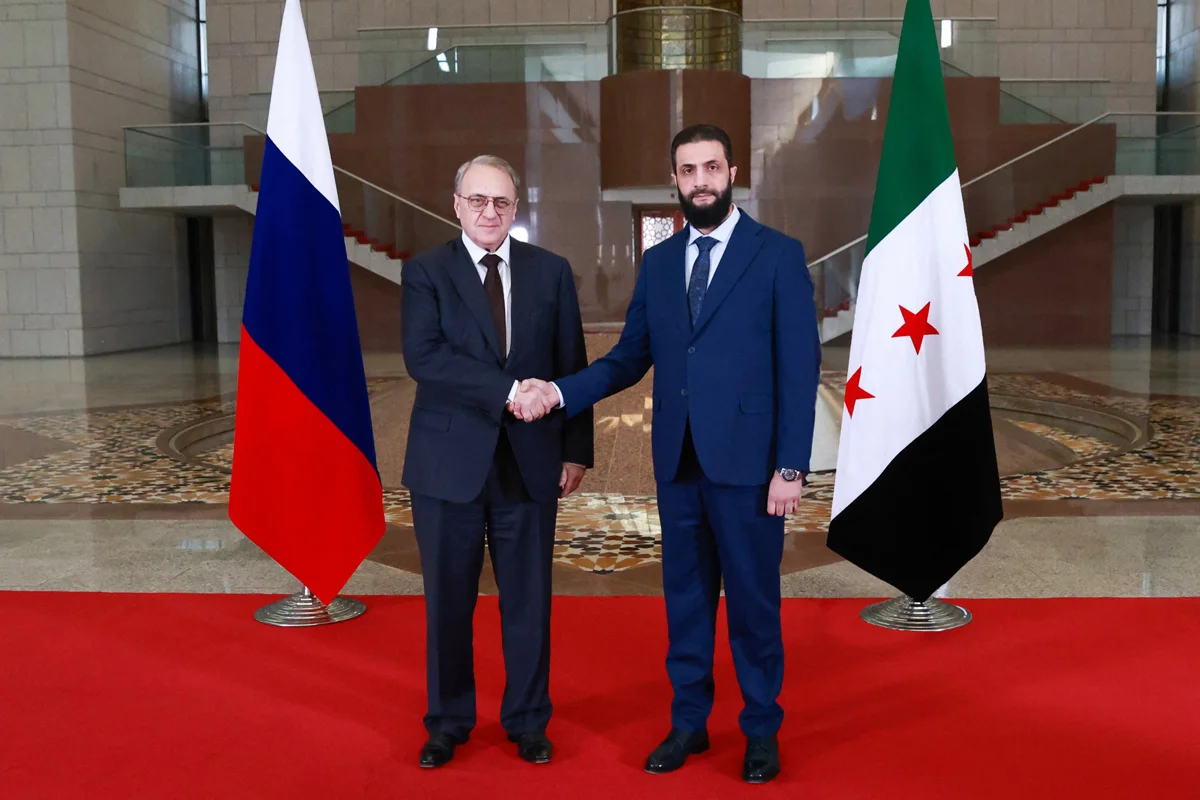
Over time, the KhTSH began to pursue an increasingly moderate policy in the occupied territory, trying to change its own image and position itself as a “national liberation movement”. An indicative example: even then, in Idlib, before the overthrow of Assad, al-Jolani began to wear secular business suits. Of course, then no one paid attention to this: you never know what the leader of one of the jihadist groups does there? But if you look from the day of today, all these steps, of course, do not look random and inconsistent. Last week, al-Jolani was appointed "President of Syria of the Transition period." By this moment, he did not just learn to look organically in a European suit - he got used to the field of neat diplomatic formulations. But the main thing: he did, if not everything, then a lot in order to whitewash his image.
Now it was with him, the former leader of the jihadists, for whose reward was appointed, were forced to conduct a dialogue of the world powers, including Russia. Its military bases are put on the map-and in general the presence in the region, and al-Jolani in return for continuing cooperation requires Assad. I wonder how Vladimir Putin, who, as you know, does not negotiate with terrorists, will now leave the situation?