
Translated material
The third sunset of Europe
What threatens the strict regulation of artificial intelligence from Euroborcrates
Illustration: "New Gazeta Europe"
January 29, 2025 Popular among supporters of decentralized technologies and Libertarianism of the Media Person and EuroSrkeptic Michael Aroue Zavirusil Zadorny Twit
( In the screenshot, excerpt from the “ Law on Artificial Intelligence ”: “The first legal base in history in history, designed to control the risks of AI and bring Europe to a leading role in the world .” )
“Europe legislatively regulates artificial intelligence, but it does not have its own AI companies.
Europe legislatively regulates cryptoeconomics, but it does not have its cryptoeconomics.
Europe is taken to censor social networks, but it does not have its own social networks.
When, finally, the Euroburcrates will pay attention to this pattern? "
And that is true. Everyone is known to LLM from American Openai, Google, Meta, Anthropic. Now here has appeared the outrage of the calm from China Deepseek, and somewhere from under the baseboard even a Sber with Yandex peeps out from under the baseboard. However, no one has their own legislative framework. But in the EU there. There are no famous acting LLM, but there is a legislative framework for them. It is not surprising that memes are born from such a paradox.
Our current column is devoted to such “features” of the European technological and economic pathway. I would venture to get a conversation from a primitive meme-carnival, while designating a real threat hanging over old Europe.
The ghost "Sunset of Europe" regularly returns to the world information space. The last surge of a critical narrative attracted my attention in the far now 2016, when the idea of the “dying” Europe has captured the weak minds of not only Russia, but also the EU countries itself.
“In Russia, the idea of degeneration and the death of the Old World has become almost part of the state ideology ... However, in Europe itself, the motive of the next“ sunset ”serves as a starting point for uniting nationalist and conservative movements in almost all EU countries: from Greece (“ golden dawn ”) before Hungary (“Yobbik”), Italy (“New Power”), France (“National Front”), Germany (“Alternative for Germany”), Spain (“Spanish Alternative”), etc.
If it were only in criticizing the “European civilization” by the conservatives, I would not dare to condemn the colors to the new version of the “sunset of Europe”. The problem, however, is much deeper. Purely visually, the achievements of modern Europe look faded, especially in comparison with the main civilizational competitors - new light (USA, Canada, Australia) and “Asian tigers” (Japan, Korea, China, Malaysia, Singapore). ”
The reader will find details of the thorough study in 2016 in the article “Sunset of Europe 2.0” published in the “Business Journal” . Now I will limit myself only to key conclusions.
Firstly, the “technological lag” of the European Union, especially, “sunset” is only an optical illusion. There was no lag in 2016:
In the first ten countries, six EU countries occupied in the level of investment in R&D (for comparison: Russia was in 22nd place, China in 26th, Brazil on the 31st);
In the first ten countries, five EU countries occupied in the number of patents per capita;
In the first ten countries, eight EU countries occupied eight in the level of development of the “creative class”.
The second key conclusion is associated with the identification of the reason creating the optical illusion of the “technological lag” and “sunset” of Europe: “Global reorientation of the local economy with the B2C model (Business-to-Client) on the B2B model (Business Business was a direct consequence of the restrained reasons -To-business). In a modern European Union, negligently few final consumption goods are produced, the demand for which is satisfied by 99% of Asian production products. ”
At the level of metaphors available to the "culture of memes":
Europe not only generates an impressive volume of intellectual value, but also produces the lion's share of industrial equipment, on which China and other fabric countries subsequently stamp the services and products that are already addressed directly to the final consumer.
It is enough to dig a little deeper, as we will open inexhaustible deposits of emeralds, skillfully hidden from outsiders (consumer) eyes.
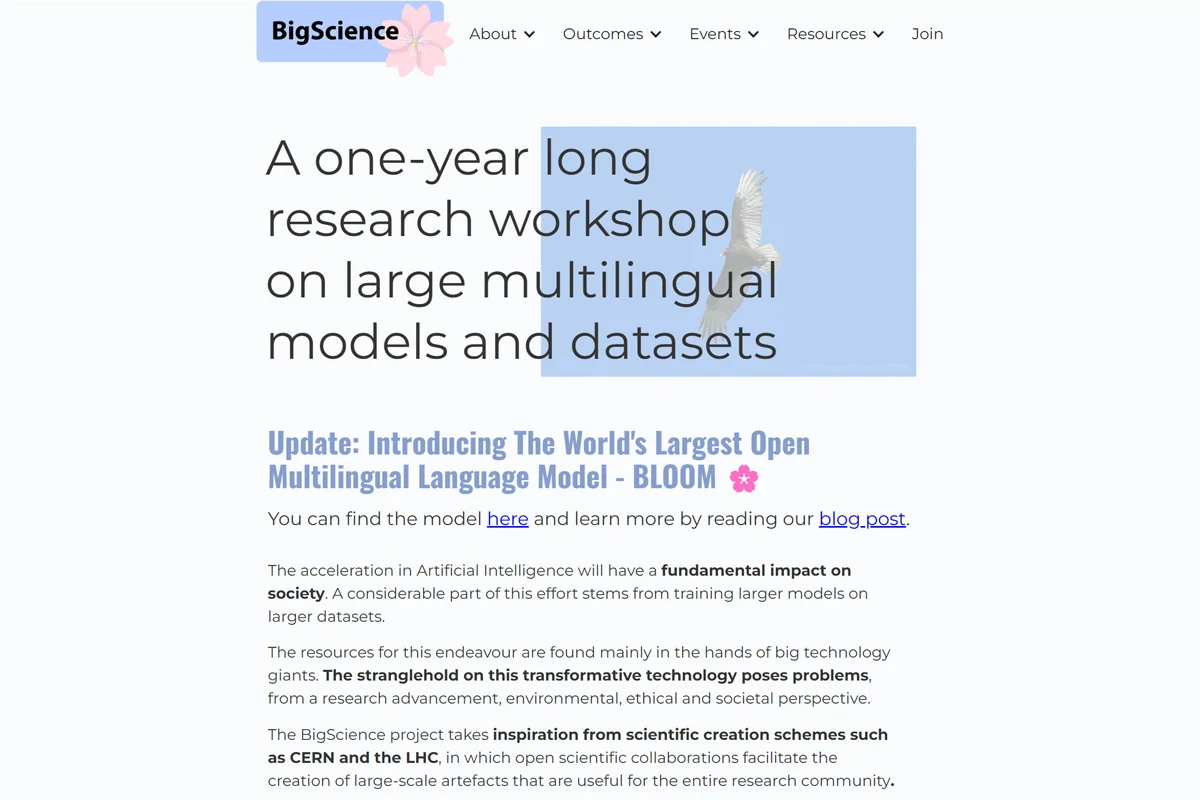
Here are just a few impressive language models (LLM), which are developed in the EU:
Bloom : a model from 176 billion parameters, developed by an international researchers team led by the French company Huging Face;
Mistral 7B : a model with 7 billion parameters created by the French startup Mistral AI;
Luminous : Seria models developed by the German company Aleph Alpha, including Luminous Base and Luminous Supreme.
The above development is only the top of the icebergs. For this Link , readers can make an idea of dozens and even hundreds of specialized European AI projects that are used in different fields of science: from medicine to seismographic visualization.
The said at least makes memories about how in the EU "there is no artificial intelligence." However, I would not want the reader to have an erroneous idea of the author’s one -sided apologetics.
The point is not that “there is no meme without fire”, but that the European Union really has difficulties associated with the dynamics of technological development and progress. And not only in the field of artificial intelligence, but in almost all areas.
In my opinion, the indicated difficulties are connected, firstly, with the traditional conceptual rejection of consumerism for Europe .
However, an aggressive rejection of the idea of decentralization remains an equally important factor in slowdown - both at global and local levels.
Difficulties with dynamics in the field of AI in October last year were reliefly described by McKinsey & Company:
In terms of social adaptation of AI technologies, European organizations lag behind the American by 45–70%;
Contrary to the parity in the training of personnel (it must be said, unexpected: 120 thousand professionals in the European Union versus 112 thousand in the USA!) There is a very high leak of personnel: 22% of leading researchers in the field of AI are prepared and studied in the EU, but only 14 % remain to work "at home";
Private investments in AI in the European Union are almost catastrophically behind the United States: 10 billion euros against 61 billion;
The notorious “lawmaking” certified by the memes provides the European Union not “a leading position in the world” (as bureaucrats write in preamble to their opuses), but an anathema for the professional community: 70% of the companies surveyed evaluated the created regulation at best as confusing (creating confusion).
Having stepped on the throat of boredom, we carefully study the “unique” AI ACT, born of the genius of the European bureaucracy. It is impossible to pass by the global ideological vector , present in absolutely all legal initiatives of Brussels, which relate to information technology, modern forms of digital social interaction and, of course, cryptoeconomics. This global ideological vector: the rate on the centralization and regulation of everything that can only be concentrated and thrown with the hands of statebulation .
World Picture, According to Brussels:
everywhere, chaos, lawlessness and lawlessness reign, which are united by the gloomy-ardent word “ risks ” (you will read about them in the preamblers of all laws that regulate modern technologies in the EU);
risks arise from inequality , and then themselves lead to even more inequality, which is fraught with a violation of public order and stability of the state;
Risks can be eliminated only through state regulation ;
It is possible to eliminate inequality through a divine panacea named state (trans) distribution of goods (read: the same regulation).
It is obvious that, except for the centralized struggle with “risks and inequality” in the European Union, no other approach is impossible, because the designated picture of the world is predetermined and stems directly from the very structure of the organization of life on the old continent: within the framework of the centralized union of non -destructive republics of the Schengen. Zhupel of “risks and inequality” can only be eliminated by dissolving the USSR 2.0 itself, which most citizens of European countries, sort of, still do not want.
Everything would be wonderful, but there is a small inconsistency: it’s not that the rate on centralization gives it to historical naphthalin, but too clearly contradicts the obvious vector of all the development of modern society.
Trend of the XXI century. unconditionally related to decentralization, which is already manifested in all directions: in new communication systems (Web3), in new systems of moving cash flows (blockchain and the Ripple model), in new forms of production and transport logistics (blockchain and Vechain model), in new formats Financial relations (Defi), in the new theory of economic value, finally, in a new high -quality round, which the large language model of Deepseek brought the development of artificial intelligence.
All the past week, I carefully monitored the development of events related to the expansion of Chinese Amalgama of a private initiative that regulates the role of the Communist Party and the university intellectual “folding”. However, I did not understand why the mainstream press persistently delayed public attention in the network of political prejudices, ignoring the only thing that is only worthy of attention: DeepSeek's technological importance for the release of artificial intelligence to a new qualitative level.
The mainstream discourse around Deepseek is metaphorically to one word - Sputnik ! In the sense that another “gift” from the Bolsheviks of the East fell on the head of a relaxed Western civilization. The only difference is that on October 4, 1957 Soviet Russia was abused over the “free world”, and on January 10, 2025, hospitalistic China.
It was because of the Chinese Sputnika that the recently, the capitalization of the American NASDAQ video cards manufacturer, the NASDAQ index collapsed, and the State Provisors of the European Union and the United States began to pile up the use of Deepseek in their structures. Of course, from fears of leakage of priceless data into the clutches of the Chinese Bolsheviks.
Meanwhile, Deepseek is never Sputnik, but the most Google ! The Chinese company demonstrated the world the only natural and fast route to the qualitative acceleration of the development of AI - through the decentralization of calculations and infrastructure (not only at the training stage, but also Inference, the practical application of the already trained model to perform tasks).
In 2004, Google registered the documentation (T.N. S-1) in the securities and exchanges (SECs) commissions, which is necessary to bring her shares to public appeal. From this documentation, the secret of the amazing efficiency of the Google search engine was revealed: a huge cluster of standard computers, which, using the original power distribution algorithm, went to the level of supercomputers, while maintaining a unique ratio of performance and price.
As a result of Google, not only brought the market share of competitors in the search business to statistical error, but also implicitly buried overprinds of manufacturers of large mainframes, on which technological companies had previously built their work.
In a similar simplified (but visual!) Form, the DeepSeek revolution is a transition from the monopoly dictatorship of the NVIDIA expensive maps and closed LLM models along the Openai model to cheap video cards, supplemented by distribution algorithms with open code and decentralized architecture for all stages of interaction with LLM.
It is difficult not to notice that the described DeepSeek revolution goes hand in hand with an avalanche-like decentralization process of Jeadens, which today massively unfold functionality, reinforced by their own independent cryptoeconomics.
Why am I in such detail about Deepseek? Yes, all to the same illustrations of the painful centralized anachronism, in which Brussel’s bureaucratic machine is trying to drive all living things. Of course, not from evil, but solely for the sake of protection against "risks" and "inequality."
Ironically, in the code of the column, you have to return to the Michael Arue meme, which was in its prelude. Dear bureau friends! Look around, for the sake of God: it is ridiculous to multiply the Sisyphus’s work with “unique” laws that fight the “risks” of artificial intelligence in the world, where the decentralized paradigm of Google / Deepseek rules the ball.