Translated material
How we would do good
Sociologists have found out what categories of citizens more are extended by sympathy: children and military

Photo: Agency "Moscow"
18+. This material (information) was produced, distributed and (or) sent by the Levada Center foreign agent or applies to the activities of the Levada Center foreign agent.
*And sympathy is given to us,
How do we give grace ...*
F. Tyutchev
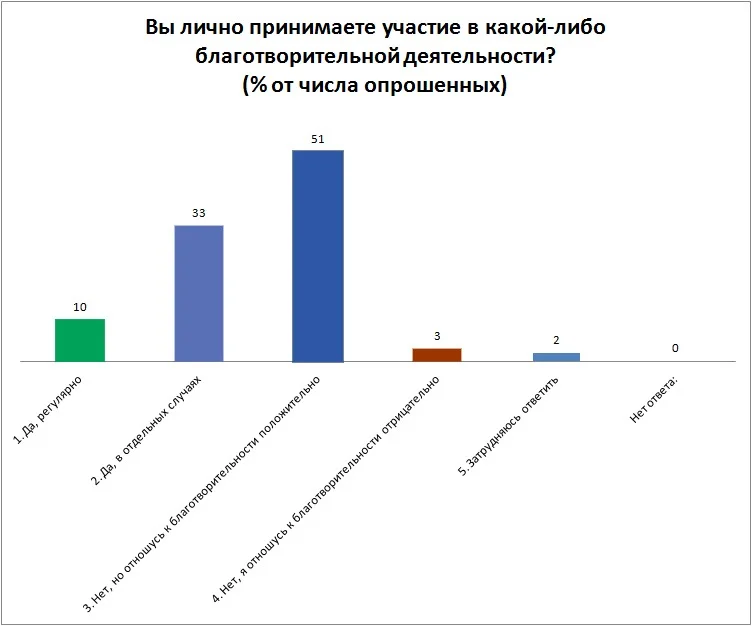
The laboratory of the future Novaya Gazeta and Levada-Center* asked the Russians about their attitude to charity. The negative attitude towards her decided to say less than three out of a hundred. Ten of each hundred participate in it regularly (among entrepreneurs - a quarter out of hundreds, among the heads of the fifth). A third (on average) is charity from case to case, while the rich - more often, the poor less often, units admit that charity is negative, and there are no such people who say that charity in Russia is not needed.
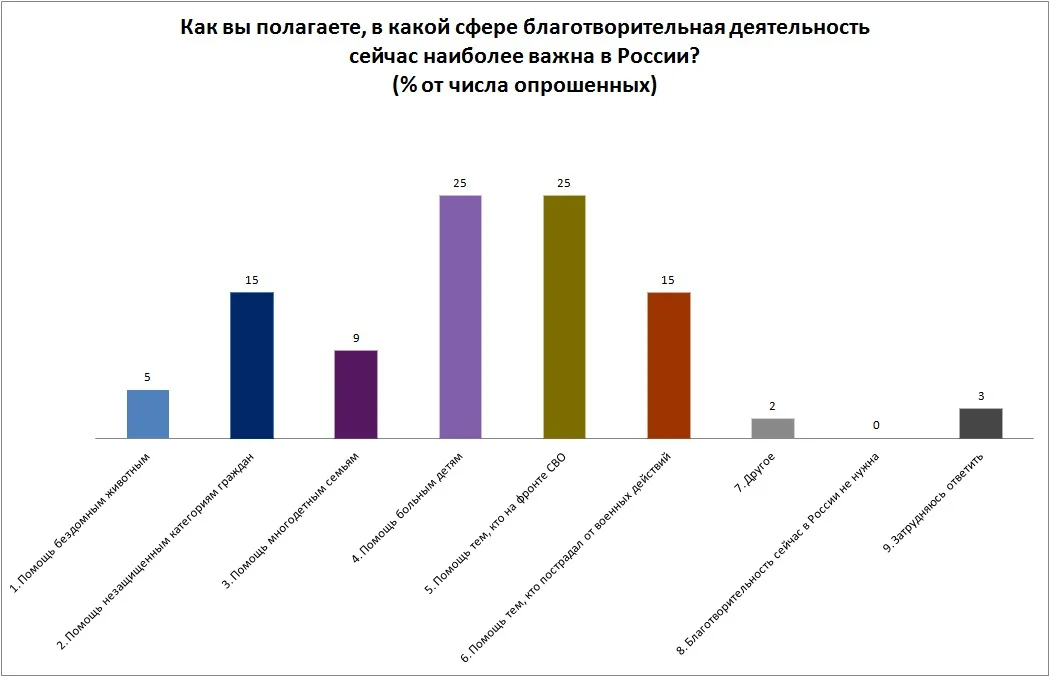
But who needs to help first? Six possible addressees of charitable assistance were offered to choose from: sick children and large families, homeless animals and unprotected categories of citizens, those who are at the front of them, and those who suffered from hostilities. It is unlikely that many are capable of making a rational choice between these addressees. In such situations, the decisions of most people are guided by other considerations - value. Why people make this or that value choice, our study cannot say, but how exactly these value preferences were distributed in our society, it showed.
We’ll say right away: the hierarchy of values in different public layers differs only in privacy, in the nuances. But maybe it is in the nuances that something important lies.
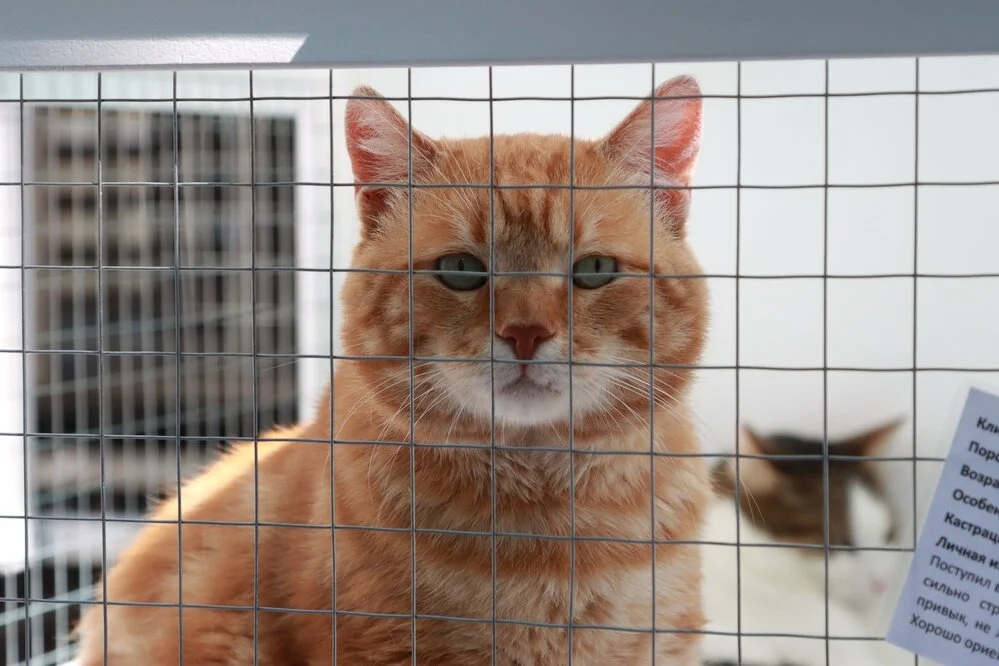
So, helping homeless animals in most cases stands in the last place (on average 5%are remembered). But among housewives, sympathy of homeless animal and homeless people is the same. And the ethics of the youngest in general is such that they put the care of homeless animals higher than the help of unprotected categories of citizens.
The survey shows: the willingness to help homeless animals is generally the higher, the younger our respondents and the larger the city. It turns out that our survey confirms the numerous observations that indicate that the meaning of pets, the need for concern for them is growing in our society, and this towers come from the capitals.
Is this a manifestation of growing humanism in society is doubtful, since it is readily helped by the unprotected categories of citizens in different age groups that is the opposite - the old ones attach this three times more often young people.
Not the same attitude to how large families need help. Respondents with a university diploma three times less often think about them than a low -educated audience, leading workers - two and a half times less often than housewives.
Three years lasts his. Of the six offered answers, two concerned this topic, and they attracted 40% of all answers. “Help to those who at the front” is in the first place, but this topic shares this place with the problem of “helping sick children”, and this option is from a “peaceful” life. That is, it turns out that the Russian audience pays the greatest attention to two categories: to sick children and those who are at the front of his (25% of the answers in both cases).
It should be noted that for people in active age (from 25 to 54 years), sick children seem more need for help than those who are at the front. And for those who entered the age of 55+, it becomes more important to help the warriors than children. It is noteworthy that people are more victorious more for their help for children, and people are richer - for the help of those who are on his.
In second place are two other categories: victims of military operations and unprotected citizens (15%each). It is noteworthy that the men who are considered to be more embarrassed than women are more likely to sympathize with the second, and women are the first.
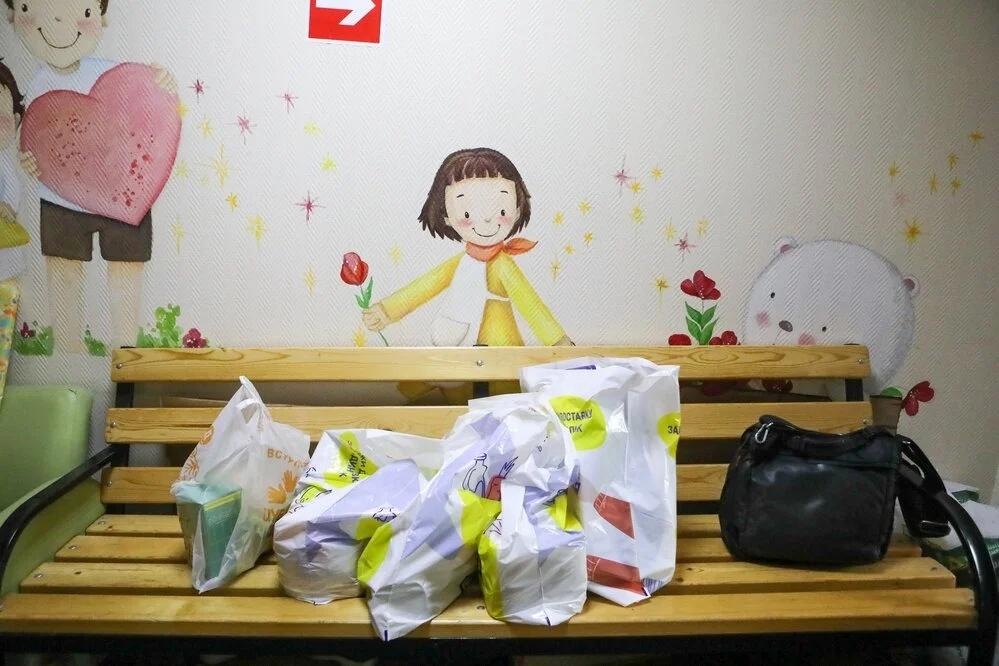
Large families as a possible addressee of charity in general in the penultimate place - before homeless animals. Perhaps the fact that most of our respondents are from low -deck families plays a role, and they themselves have more than a lot of children. Many people consider migrants from Central Asia, gypsies - and these people in the public do not use many children to be honored in the public as you know.
In the eyes of youth, victims of hostilities deserve support to the same extent as large families, but in other cases there are no symmetry.
Women to the victims sympathize with twice as much as large children, highly educated - three and a half times.
The survey showed not how it was distributed or could distribute charitable help, grace. It shows how our sympathy is distributed.