
Translated material
Help in camouflage
A survey about charity in Russia allows you to understand: how many people support their own and what are the values of citizens
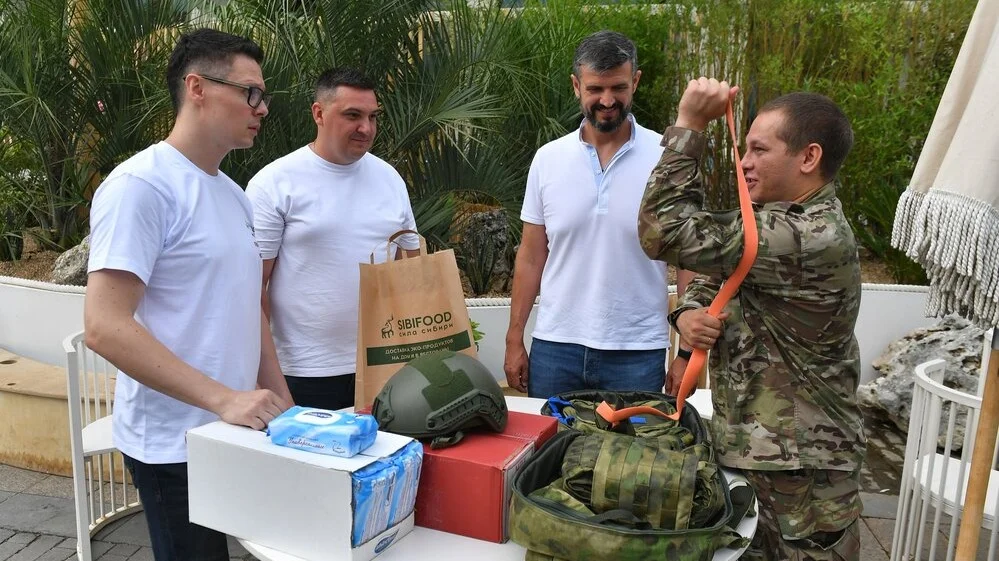
Photo: Agency "Moscow"
In the last couple of years, it was necessary to regularly hear from the numerous acquaintances that remained after February the twenty-fourth year in Russia, which among the fact that allowed me to somehow not give up under the weight of the surrounding darkness, the work thickened in the triangle-house-News, almost a little Help took the first place, help in its most diverse types of its most diverse recipients. Someone began to spend more time, means and effort in the already familiar areas of charity, someone rushed to answer new challenges, helping refugees, someone found a new interest in the help of those whom he did not notice yesterday, someone I came up with the auction to help the tailed and feathered. All this gave and gives some intelligible meaning to the weekdays, and a sense of community with like-minded people, and at least some sense of involvement in humanity.
In parallel, charity also unfolded, but of a different kind. Fees for armor protection, cars, drones, walkie -talkies, medicines and grocery sets for the front, weaving networks and collective writing letters to the warriors,
The creation and maintenance of countless channels on social networks, accumulating current daily mighty river requests for a diverse, acute from participants in hostilities. Judging by the messages flashing in such channels, significant amounts are collected, convoys with cargo are formed regularly. Law enforcement officers even became interested in such a volunteer and public initiatives, and it was not at all strange that they became interested in, because in the vast majority of cases the fees go to private banking cards, which cannot but cause questions regarding the transparency and indispensable targeted of the charity funds collected.
But it was precisely the transparency of activity and trust in charitable organizations that have become one of the main factors of the paper of participation in certain types of assistance among Russians in recent decades.
At the turn of 2021–2022, more than half of those surveyed by various services and organizations said that either regularly, at least once during the year, provided anyone or another charitable assistance-either participation, or by means, or in some other way , as, for example, by attracting their colleagues or entire groups to such activities. Charity has become not just fashion, but the norm, a concept like a recurrent payment has entered the language of many inhabitants of large and small cities-a sign that a person is consciously ready to help someone on a regular basis.
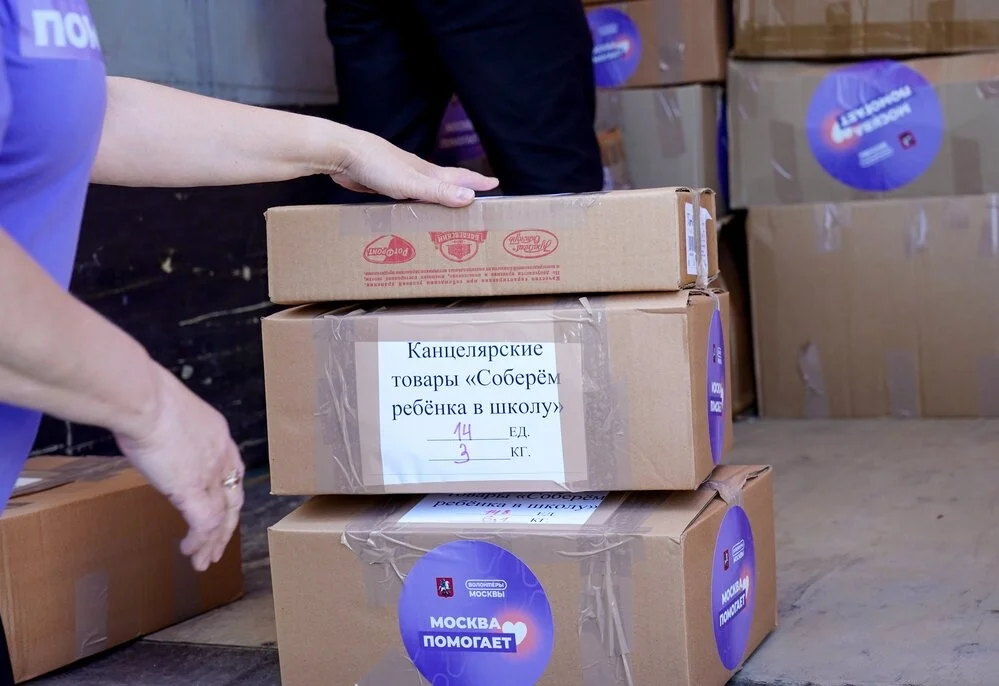
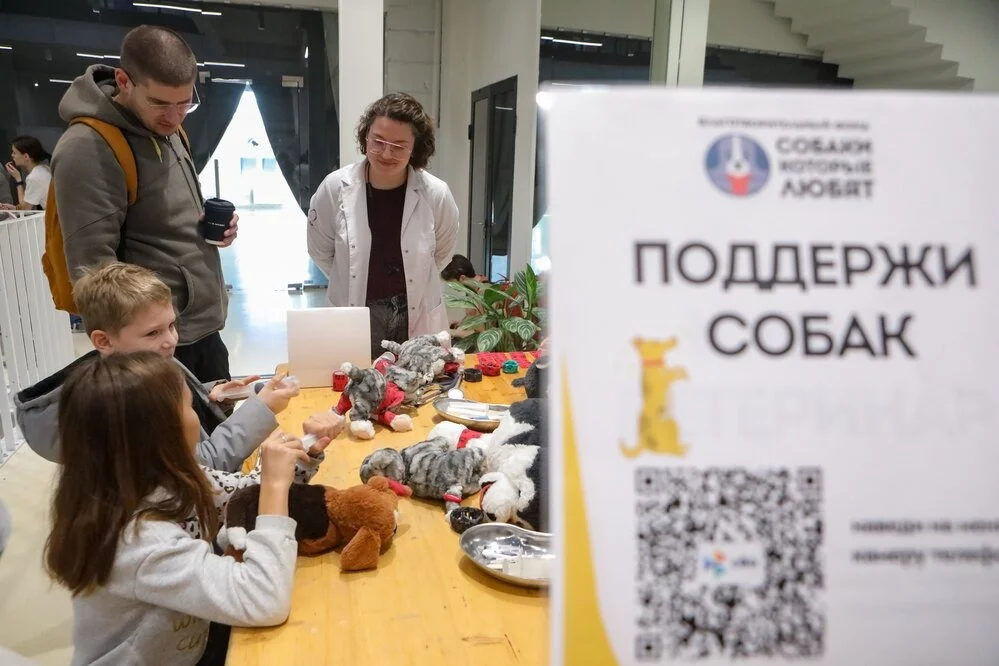
Not only large and small charitable foundations that have learned to do this on a regular basis, but also individual recipients of assistance became increasingly and more often, more accurately and carefully publish reports on the use of the received funds. If you look at the addressees of charitable assistance, then from year to year their list looked approximately the same, where in the first place for many years: help for children with certain diseases or disabilities, then in a different order from year to year - low -income people, children, children -It, animals, large families and families in difficult life situations.
As the most relevant, accurate and accessible numbers are told to us, then, according to the agency of social information, in 2023, the share of donors among Russians was 53%, of which 11% made donations often or regularly, 36% more than once and 6% turned out to be single philanthropists during the year.
Most often, this assistance was provided (it was possible to choose several response options) to sick children (42%), elderly people (27%), animals (23%), orphans (19%) and ... their military personnel (18%).
It was in 2023 that a new category appeared in various reports on domestic charity - the category of prosperity in uniform. And immediately took a place on flush with a group of children left without a family traditionally popular among philanthropists.
It is curious, but, in the data of the same agency, the subcategory “military personnel” in statistics for help in the “adults” category for 2022 gained only 3% and did not link directly with her. The trend of obvious changes is evident, and I would like to understand its scale, as well as how charity, no matter how much it seemed to many humanistic outlet, remains popular in reality today, now, in early 2025, when the economic situation does not turn over at all, prices are growing , the tension in the geopolitical air can be cut with a knife, and in terms of personal sensations from the future - and even more so.
Since various official statistics about the situation with domestic charity work last year to wait a long time, and to understand how deeply the current context is imprinted in the sphere of assistance, for many reasons I want as quickly as possible, our laboratory of the future “Novaya Gazeta” together with the “Levada Center” * I asked the Russians about how often they help someone along the charitable line and to whom today it is most important to help in Russia.
In general, the willingness to help has not changed much about the data on the past years, showing a decrease by nine percent: all the same 11% of those who answered are regularly involved in charity, and 33% do this from time to time, that is, they are involved in one or another volume in Charity activities of 44% of Russians.
More than half of the survey participants (51%) themselves do not participate in anything, but they are quite positive to charity: it can be assumed that the same nine percent that had previously participated in this number and, maybe they would like to participate but they can no longer do this for one reason or another.
Three percent of the survey participants said they did not participate in anything, since they are negative about charity. This category has always been and is at all times in all societies, and I must say that in other years it was noticeably more.
Nevertheless, the norm to participate in helping others in society is completely held, which cannot but rejoice.
But with how the answers were distributed to the question about the most important spheres of the application of charitable activity, a completely different picture. At first it seemed that there was, there was good news in the data obtained - it was not necessary that charity assistance in Russia was not needed today. Although, on the other hand, in such a good news there is a different shade: it turns out that Russians see that there are so many needing categories in the country that they are definitely necessary for people, because other forms of support, for example, on behalf of the state, are clearly not enough.
And then the picture looks as follows: 2% did not find in the options that we proposed, having answered that other categories of recipients need help, and I want to believe that at least they meant human rights projects, 5% spoke out for the help of homeless animals (note that Which, according to statistics from past years, it was one of the most popular categories of assistance). 9% of respondents are ready to help large families, 15% support the help of unprotected categories of citizens and the same 15% - affected by hostilities.
The first place, having half of all the votes and sharing them exactly in half, received assistance to sick children (25%) and the help of those who at the front of them (25%).
What these figures can tell us about. Minimum about three things. Firstly, not only the national budget and the entire Russian economy are spent on military operations in Ukraine, as it is now and what it will be in the future. And, it would seem, the state spends and spends on this business, but this is clearly not enough, and people, a quarter from all Russians, send their personal funds to the same fire and heart to the same fireplace, giving up at least a quarter of the pools Means that used to go to other completely humanistic goals, thereby under the do not give children, the elderly, and tail, and sick, as well as other one or another in need, which obviously did not become in the country suddenly less.
Whatever significant funds raised by the charitable way over the past year would then show the official statistics of the Assistance sphere, we must clearly understand that, on the fact of them that have gone to other charitable, social assistance, it became twenty -five percent less. And if you add here 15% of the help that people send to the victims of military operations, then for all forty.
Secondly, as always, these or another details of the survey will tell us a lot, clearly indicating that the world of charity is not at all homogeneous. So, young people are ready to help animals twice as often (10% versus 5%), and by the way, this is noticeable in real life. Low -income people are more ready to help sick children than Eswaists, and the rich are exactly the opposite. Expective.
The smallest number of those striving to help the front - among middle -aged people with higher education and among residents of Moscow, large cities of the South of Russia and the Far East. And most of all those who seek to assist the victims from hostilities - in Central Russia and in the same Moscow.
In various categories of the activity, the front of the front are managers of different levels, employees, housewives and students, and least of all - managers and specialists.
It is quite predictable to the most large number of people with the point of view that it is very important to help the front-among readers of telegram channels and minimal-among YouTube users. And, perhaps, the most amazing thing: among those who believe that our country is moving along the wrong path, there are still 21% of those who consider helping participants their important sphere of application of charitable efforts. It would seem that an inexplicable paradox, and perhaps the signal that propaganda is fully practiced by his bread, and that the thesis that worshiping in the masses has recently “got involved, so now” is a little more popular than it, and it seems to us, and it seems to us and that the inclusion of this type of recipients of assistance in priority in the survey can be a natural protective reaction, which also speaks more than a lot.
And thirdly, the data obtained turned out to be not only and not so much about charity as such. They may show just the figure that experts and analysts, journalists and sociologists, political scientists and other interpreters of the current moment are actively displaying so much and actively. Perhaps this quarter is the same share of Russian society, which sincerely and fully supports military operations in Ukraine.
After all, if the problem was that it was scary to answer today during the survey, then it was always possible to choose in this survey that is also quite supporting, but much more vegetarian version - help to victims of military operations: this could well be given the opportunity and loyalty, and from humanistic from humanistic The inclinations do not renounce. But no, apparently, really, a quarter of the population not only supports the actions of the authorities, but also believes that society should also support them with its labor ruble. Isn't that real support?
Against this background, three percent, spoke, in spite of everything, for any propaganda and fears for the help of cats and dogs, look brave Voltairens. And certainly, at the same time, those who stubbornly consider it important and necessary assistance to all other groups and categories of those in need ...