
Translated material
"Companion" Drew Hankok: Fantastic black comedy about murder and relationship
Remember the name of this director director-you will hear him yet
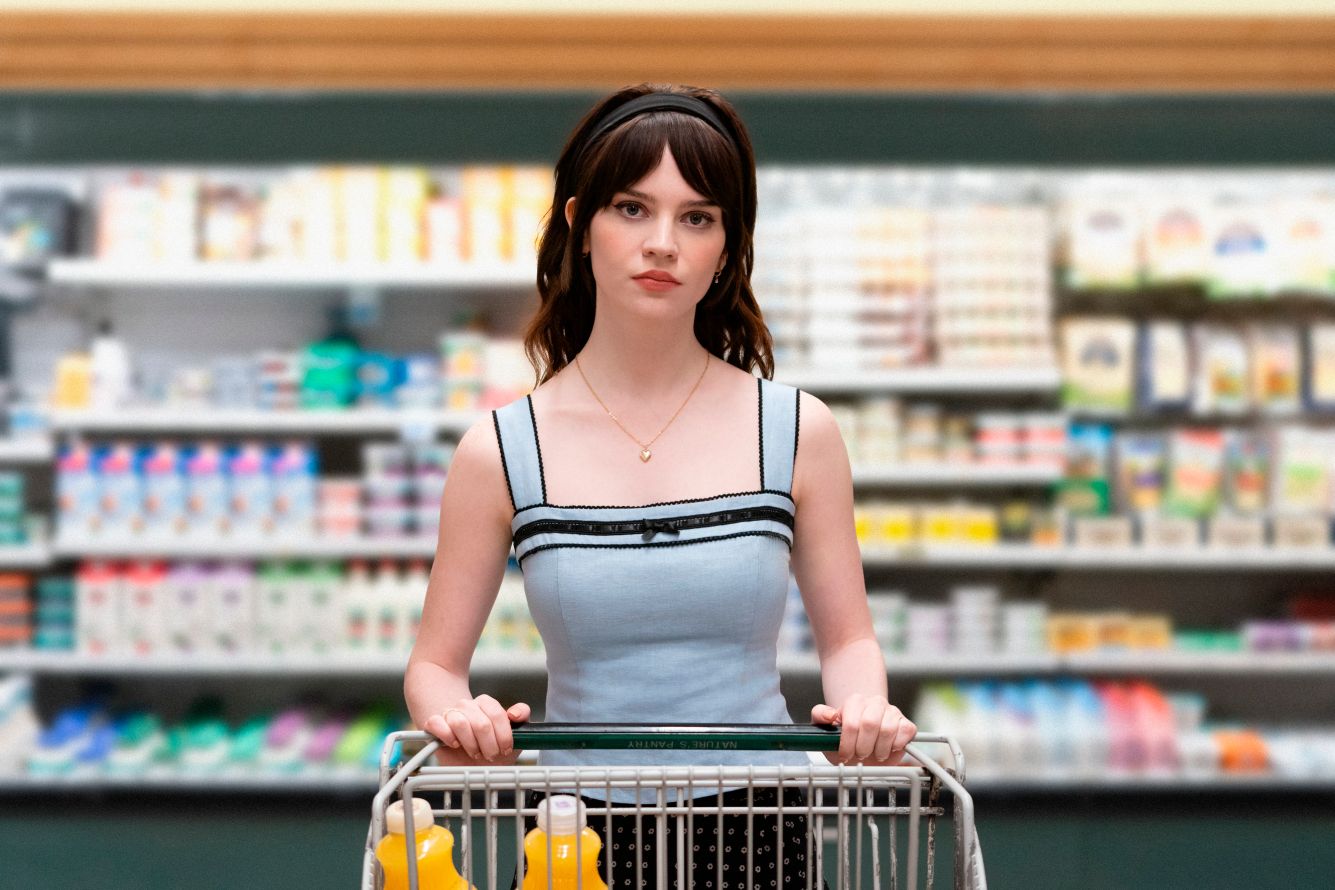
At the world box office-"Companion", the low-budget black comedy of the director-departant Drew Hankok, shot according to his own scenario. At the beginning of the film, three young couples gather at a party in a country house. Then the picture changes the genre several times and surprises the viewer with plot turns; It is almost impossible to describe it without spoilers. Kinocritic Anton Dolin is sure: we will still hear about Drew Hankok.
The low -budget debut of "Companion" Drew Hankok - this name will have to be remembered - pulls on a small sensation. He goes well at the world box office and collects an enthusiastic press, although, it would seem, based on the reproduction of genre conventions. And all because this witty (not to be confused with the “funny”), and at other moments, just a very smart film is made easily, without inflated cheeks and thoughtful phrases.
The only significant minus is that it’s almost impossible to talk about a “companion” without spoilers. So, if you want to survive all the surprises yourself, it is better not to know anything about this picture in advance, except for basic facts: the dialogues are brilliant, the actors are magnificent as possible in a funny black comedy, and the intrigue that surprises more than once brings a philosophical charge.
The main character and storyteller “Companion” is Iris, a pretty, but alarming brunette (actress Sophie Tatcher from the recent “heretics” , apparently, is waiting for a great future). In the first, extremely touching scene of the film, she recalls acquaintance with Josh, her caring boyfriend (Jack Couide, son Meg Ryan and Dennis Caide, is best known for the series "The Stasians" ), in the supermarket: he was so fascinated by its beauty that he fell off Stand with oranges.
Now Iris and Josh are going to visit friends gathering a party in a country house - by the lake, in the forest. Iris is nervous, afraid not to please the rest, Josh calms her. The party, by the way, is modest, just six: in addition to our heroes, the owner named Sergey is a hazardous businessman of a dangerous look (Briton Rupert Frend almost without an accent drops “Dobro Utro” and “Vypiem Za Liubov” ””) - invited his bitchy girlfriend Kat (Megan Suri) and a charming gay para-Ilai and Patrick (Harvey Guilien and Lucas Gage).
Attention. Next are spoilers. If you want to avoid them, return to the text after watching the film.
The evening takes place without incident, albeit with abundant libations. Iris is not without difficulty, but finds a common language with the company. And the next morning happens terrible: a hangover idyll violates the crime, blood shed. The comedy about relations instantly turns into a Hitchcokovsky thriller . However, this is not the last transformation of the film.
“Companion” (in fact, of course, “companion”) combines genres, creating a cocktail of the original property. From the first frames, this is something like a romkom that explores the dynamics of power in a pair - such unions, each of which at the time of the crisis discovers its fragility, we see three on the screen. But the detective component is by no means decorative. Murder is a reaction to an attempt to rape, and the issue of moral responsibility instantly turns into a bearing structure of the film. The heroine, whose demonstrative weakness turns out to be camouflage, transfers the "Companion" to the register of more and more fashionable films about changes in gender roles.
It turns out that Iris is not a person at all, but a company "Companion". Her hair, eyes, voice timbre - the result of manual settings, like intelligence, temperament, level of aggression (although in basic settings - the inability of a mechanical woman to lie and cause pain or harm people). Iris herself, alas, is not guessed about her nature. The science fiction component is the same spice that makes the "companion" unique. Without removing the designated “too human” problems, she makes them sharper and insoluble, and the author’s mocking look at the inhabitants of the 21st century spoiled by privileges is more merciless.
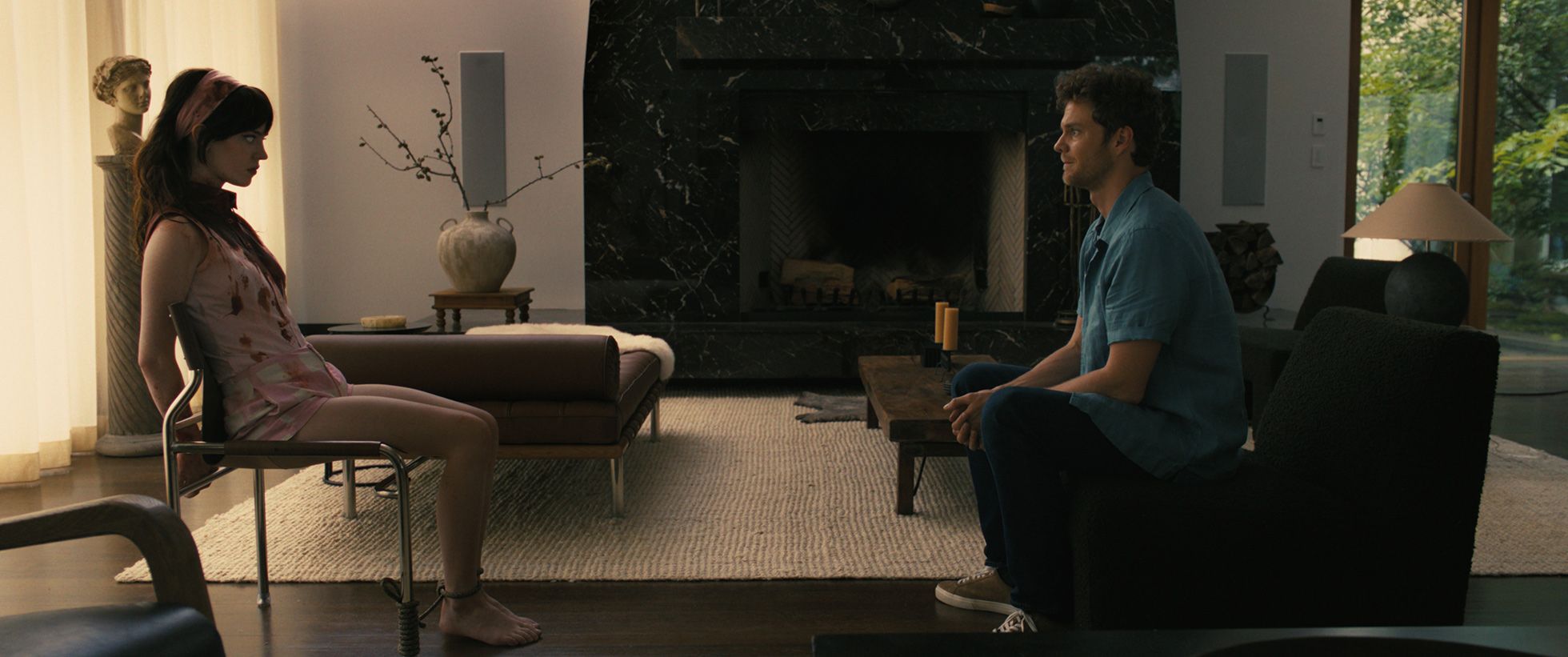
Behind the "companion" is drawn by a fair train of cultural forerunners, which determined the canon of the film about an artificial man. From the very ancient classics - the “metropolis” of Fritz Lang (in the first great film, on the robot declared by the topic, there was also a woman!), From the satirical predecessors, you certainly need to recall the “Stepford wives” of Brian Forbes, and then Ridley Scott Ridley, “Running along the blade,” The Robot-Police ”Paul Verkhoven and especially the“ Terminator ”by James Cameron, directly quoted in the brilliant final scene. From a very recent mind, “she” Spike Jones and “from the car” of Alex Garland will come to mind. But this does not prevent Iris from maintaining his individuality, despite the fact that in the plot it is a serial, typical model.
Drew Hankoku has nothing to say on the hot theme of artificial intelligence and his role in a changing world. But he knows: artificial copies created or invented by a person are only reflection of our own properties, phobias, desires and hopes. In the “companion”, the viewer’s empathy is inevitably moved from greedy, recent and cruel people to the robot, even when it takes an exceptionally built -in instinct (can the machines have instincts? They can.) Self -preservation. It turns out that the car taught by man is able to love more than its inconsistent mentor of flesh and blood. And since the mechanism is built into the female body, the film becomes at the same time something like a feminist manifesto-sometimes ironic, but not quite.
Last season was marked by two outstanding paintings about the emancipation of a woman choosing an independent trajectory in the patriarchal world-these were Barbie Greta Gervig and the “poor-nasading” Yorgos Lantimos. The company's more modest in all indicators will not win the international festival and will not become the most box office of the year, but could well have a trilogy with them.
We launched the “raft” -a telegram channel, where they talk about culture in the era of bad news. Every day, the editors of Medusa Sofya Vorobyova and Anton Khitrov talk about cinema, series, music, literature and contemporary art. Subscribe: we will be saved together in a storm.
Anton Dolin