
Translated material
The consequence of the war in Ukraine can be an environmental disaster. Will forests, water, animals and clean air remain in the country (and next to it)?
According to the latest estimates, environmental damage from hostilities in Ukraine over the past three years has amounted to at least 72 billion euros. This figure is called by researchers from the European University of Viadrin in Frankfurt-on-Oder, citing both his own research and the data of the Ukrainian authorities. In November last year, the Minister of Protection of the Environment and Natural Resources of Ukraine Svetlana Grinchuk estimated the environmental consequences of the war at 71 billion.
These figures are comparable to the total volumes of military assistance to Ukraine from Western countries; According to President Vladimir Zelensky, starting in February 2022, the United States allocated weapons and equipment to Kiev in the amount of $ 77 billion. But they hardly fully reflect the tragedy of the situation.
The war causes not only direct damage in the form of burned forests or harmful emissions into the atmosphere. Its long -term environmental consequences are difficult to calculate, and their elimination, obviously, will require decades and much more cost than those that scientists or officials voiced today. At the same time, you can’t compensate for the part of the harm done.
Death Fields and Gardens of the Devil
The restoration of the territory of Ukraine from the consequences of the war can be delayed-which, by the way, has not even ended-we can judge by how long the world-second countries got rid of pollution with mines and unexploded ammunition. Now Ukraine is the most mined country on the planet. According to some reports , about 160 thousand square kilometers of its constitutional square are potentially dangerous.
In other words, this is an approximate territory of one Greece or two Czech Republics.
In England, where after the war there were about 350 thousand minutes after the war in the Earth, clearance work was delayed until 1949. During the disposal of ammunition, 155 English specialists were killed, as well as an unknown number of German prisoners of war involved in the work. In France, cleansing was completed by the end of 1946, but several thousand captured Germans were killed.
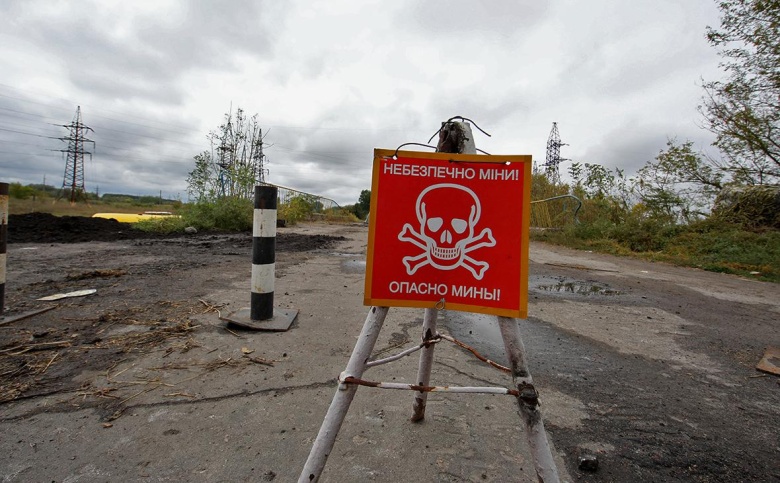
At the entrance to one of many minefields in Ukraine, summer 2023
Photo: Vyacheslav Madievsky / Keystone Press Agency / Global Look Press
In the Netherlands, where prisoners of war were also attracted to mine clearance, more than a million mines were neutralized, in Poland - about 14-15 million min. In the Soviet Union, the army was engaged in mine clearance; The prisoners were not attracted to these works-not from humanism, but because of a fear that ammunition will fall into the hands of former enemy soldiers. In total, almost 59 million mines in the USSR in the first two years after the war. In general, by the end of the 1940s, the mine threat of Europe was lifted, although unexploded artillery shells, aviation bombs and sea mines also posed a danger in the next decades. However, the former theaters of the Second World War of one Europe were not exhausted.
For example, in Libya-once one of the fields of the African campaign-and in 1980 more than a third of the territory suitable for agriculture was not available to use due to mines. Every year, up to 3,000 cattle died from explosives in this country. An even more depressing situation has developed in the west of Egypt, where the most fierce battles were going on between Germans and the British.
During the battle of El Alalamin in 1942, on a plot of 2500 square kilometers, which is comparable to the area of Moscow, the opponents installed three million minutes. The German Field Marshal Erwin Rommel nicknamed these minefields “Gardens of the Devil”. It was because of them that Egypt until February 2022 was considered the most mined country in the world. For 80 years that have passed since the battle of El Alamine, in these "gardens", only according to official figures, more than 6,000 people died or received injuries. Even by 2016, the Egyptian army cleaned only 40% of minefields.
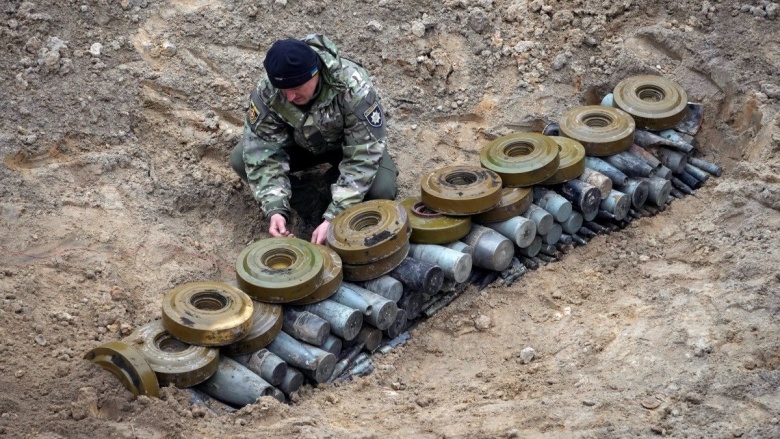
Ukrainian sappher prepares the destruction of the found mines and shells, 2023
Photo: Efrem Lukatsky / AP
In Ukraine, by the end of last year, almost a million ammunition managed to neutralize . However, today there are still hundreds of thousands of minutes and unexploded shells. The World Bank earlier said that the full cost of explosive removal from the Ukrainian territory will be about 34 billion euros, and to perform these works, according to Kiev estimates , from 10 to 30 years. Meanwhile, since the beginning of the war, more than 1000 civilians have already been blown up on mines, of which more than a hundred were children.
Subscribe to read the whole
Make a subscription Redefine.media to read Republic
Subscribe [you can pay for a Russian or foreign card. The subscription is extended automatically. You can unsubscribe at any time.]
Where are the money subscribers going