
Translated material
"There should not be super -rich"
On February 8, 2024, DOXA was included in the register of "undesirable organizations."
If you are in Russia or plan to return to it, you can not replace our materials on social networks, refer to them and publish quotes.
Read more about what is possible and impossible, read in the cards .
The weakening of democracy, the growth of inequality and the climatic crisis are directly related to the concentration of capital in the hands of the upper 1% of the population of the planet. In his book “Limitarism”, the philosophine Ingrid Robeyns offers a decision: she believes that in democratic countries, individual wealth should be limited in the region of several million euros.
Political scientist Fedor Agapov talks about why Robans believes that excessive wealth is incompatible with democracy, and how she proposes to calculate the maximum wealth.

Editor
Editor
Armen AramanIllustrator
Illustrator
Vitya ErshovPublication
February 10, 2025
The ceremony of Donald Trump's entry of the US President, held on January twentieth, caused an unprecedented resonance around the world. Some observers even called this inauguration of the strangest in the history of the States, and their reasons: starting with the fact that Trump did not put his hand on the Bible during the oath, and ending with the speech of Ilon Mask, during which he performed a gesture most similar to Nazi greeting. At the same time, not only the billionaire himself attracted the attention of the public, but also the fact that, among the super -rich he was far from the only one.
With the inauguration of Trump, a prominent place in the room occupied a number of businessmen, whose combined state exceeds the trillion dollars. Such a “support group” from Jeff Bezos, Mark Zuckerberg and others instantly summoned discussions in the press about the influence of billionaires on American politics and how compatible with democracy. The actual question, given that Musk alone spent at least $ 277 million on the support of Trump and other republican politicians in 2024. This, by the way, allowed him to receive the post of head of the newly formed “Department of Government Efficiency”, due to which the head of Tesla will now be able to influence the domestic policy of the United States from a completely official position.
However, the negative impact of super -rich on the world is not limited to one electoral policy in the States. If we take Russia, then only at the time of 2020 in the hands of the richest one percent of the population was concentrated 57% of the total financial well -being of the whole society. Such a consolidation of wealth, among other things, allows Putin to stay in power, protecting the interests of oligarchs and large businesses.
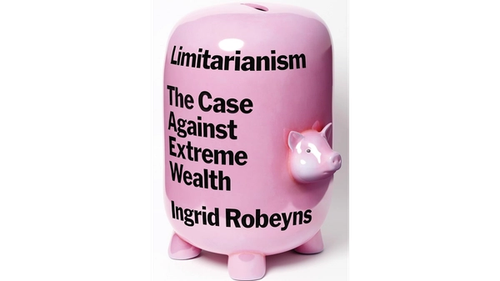
The more relevant is the book by Ingrid Robane “Limitarism: arguments against extreme wealth”, published last year. In it, the Netherlands philosophine is looking for a solution for problems associated with increasing the influence of super -rich. The abstracts of Robeins are perfectly falling on the post -Soviet soil: the same Russia, for example, is mentioned in the book quite often.
So what is limitarism and what does it offer us?
The limit of wealth
The idea of Robane is that the concentration of a large number of resources in the hands of a few sooner or later will lead us all to disaster. In this regard, she proposes "to create a world in which no one will be super -rich by setting the limit of funds that one person can possess." She calls this idea limitarism.
The concept is based on its basis, however, as you get acquainted with it, questions arise. For example, about the concentration of an excessive amount of money in one hand. Too much - how much? And is it possible to establish a certain limit of funds that would be enough for everyone, given that all people are different?
Robans claims that it is possible. Moreover, she even calls the approximate figures of what can be considered acceptable wealth in current developed countries: this amount lies between one and ten million euros per person. In order to justify her position, she speaks of three approaches to the definition of the most acceptable wealth: a line of wealth (by analogy with the poverty line), a political limit and an ethical limit. Let's get acquainted with them in order.
A lot and too much - big difference
A line of wealth is a level after which money can no longer significantly increase your quality of life. Robans believes that this value can be calculated, although inaccurate. To do this, it relies on a number of surveys, among which studies conducted in London and Utrecht are distinguished.
In both cases, the authors of the work asked the respondents how they perceive the levels of wealth and the differences between the social classes. The results showed that people have a similar intuitive understanding of the limit, after which additional wealth will cease to influence their standard of living. In addition, in a Utrecht study, almost 100% of respondents converged in the opinion of where the border between simply rich and super -rich.
In this study, the respondents cited the example of different families and asked to evaluate their standard of living: rich, if the family “more than necessary for a good life”, and super -rich, if “no one needs so much wealth and luxury”. So, about half of the respondents believed that a family of four, who could afford a chic villa, a second house, two luxurious cars, three vacations per year and 200 thousand euros of savings, no longer just rich, but excessively rich. If the number of vacations increased to five per year, and savings - to a million euros, then two -thirds of the respondents considered such a super -rich family. If savings and assets increased to 10 million, 94% of respondents attributed the family to this category.
For Robans, the question remains open why such a family is additional funds in excess of the line of wealth. However, the point is not only in the lifestyle and what seems sufficient to us - the philosopher sees an occasion for the introduction of the ceiling on property also on moral grounds.
Money and conscience
The ethical limit is the maximum level of wealth that a person can own based on moral principles. It means a point after which the accumulation of any additional funds ceases to be justified and begins to harm society.
The first and most simply explanation is that many conditions are to one degree or another associated with “dirty money”. Do not forget that billionaires come not only from business. For example, corrupt politicians and dictators become super -rich, for example. Managing money earned dishonestly, they continue this vicious circle. As an example, Robeyns gives an increase in the popularity of European right -wing parties, often accused of receiving money from Russian elites.
Even if someone's wealth was earned absolutely legal, the consumption that is connected with it still harms others. Big houses belong to rich people, they travel more, use public transport less, and also invest in the industries polluting the environment with the aim of further earnings, which contributes to climate change. The rich are responsible for the release of greenhouse gases into the atmosphere, but do not compensate for this damage to the environment, which also allows them to maintain conditions. At the same time, the negative consequences of the deterioration of ecology are most acutely felt by those who least consume, namely the poor.
Another problem is that these funds can be used to satisfy the urgent needs of those who are much less lucky in life, and in general to assist the common good. For example, to combat poverty, development of science, as well as support from key public infrastructure, including hospitals and schools.
Robane concludes that the ethical limit of wealth in developed countries with good social security is approximately one million euros per person. Over this amount, the life of a conditional Dutchman is not better, and his accumulations turn into excess and ballast for society. However, not everyone is ready to voluntarily recognize the ethical limit and sacrifice surplus of their own funds for the sake of the common good. In such cases, the need for state intervention arises, and Robans justifies it, referring to the political consequences of the super -rich.
Rich against democracy
Here the concept of the political limit comes into the game. This is the maximum level of individual wealth that society should adhere to in order to avoid the excessive influence of super -rich on politics. The state should not allow the accumulation of states beyond this level, since super -rich often intervenes in political processes inside and outside their countries and thus undermine democratic institutions.
This happens in several ways. Firstly, of course, super-rich can make major donations for political campaigns and parties. As in the case of Musk and Trump, cash injection make politicians obligated by their donors, who in this way can affect politics. Such a financing system leads to the fact that the state implements politics in the interests of the rich, and the costs of its implementation are assigned to everyone else. It also determines the political agenda, since candidates supporting the interests of the rich are more likely to fall into ballots.
In addition, super -rich can buy the media and use them to control the spread of information and public discussion. This leads to the biased coverage of events and the promotion of politics, profitable to the rich. As an example, we can cite the Murdok Rupert, who used his media imperial to spread misinformation and conspiracy theories. In Russia, super -rich also seriously affect the media: many publications belong to oligarchs, loyal to the current regime, which allows the state to freely disseminate information in the vein, beneficial for the dictatorship. Such manipulation of media can significantly undermine citizens' trust in journalism and, as a result, lower the level of awareness of the company about important political and social issues. As a result, the “quality” of democratic processes falls, since people make a choice based on distorted information.
These factors taken together lead to a violation of the fundamental democratic principle of “one person - one voice”. The interests of the rich elite become priority, while the voices and needs of ordinary citizens are ignored and exhibited by something marginal. As a result, democratic institutions that should represent the interests of all citizens lose their effectiveness, and confidence in the democracy itself falls.
In order to resist this influence, Robeins proposes to establish a politically reasonable limit of wealth, equal to ten million euros. According to “limitarism”, this amount is a certain compromise: it is high enough to allow people to live comfortably and even in luxury, but at the same time complicates the purchase of political influence. True, the introduction of such a limit will require not only political regulation, but also a revision of the role of business in society, since it is it that contributes to the concentration of wealth. What should the business look like, according to Robans?
Social responsibility business
It would be a mistake to believe that limitaristic philosophy is close to socialism. Although the wealth of individuals, exceeding a certain level, goes to redistribution, private ownership of the means of production remains and, as before, continues to play a very large role in society. Because of this, people have incentives to earn more money, albeit within the conditional ten million euros. It is important to consider that the upper bar is installed on the enrichment of specific personalities, and not on the momentum of companies, so large firms will continue to exist. However, in conditions of limitarism, the corporation will be forced to more fairly distribute profit between all interested parties, including workers, and not just between owners and shareholders.
Such a distribution of funds will lead to the fact that workers will be able to lead a more worthy life. This is an important consequence of the restriction of individual wealth, because, as the philosophine writes, “the extremely low salaries of workers and the wealth of billionaires are closely interconnected. A significant increase in the well -being of people is possible if shareholders or owners of companies are content with reasonable, and not unlimited profit. ”
In addition, the practice of limitarism, Robans believes, will help in the fight against monopolies. The restriction of the upper level of wealth for top managers and shareholders should reduce unfair competition from large companies that dominate all areas and have resources that do not allow new players to enter the market. However, the philosophine understands that ceteris paribus will still be too strong and the property ceiling alone may not be enough to prevent monopolys. For this reason, it offers additional measures of state intervention on the type of forced division of overly powerful companies into smaller independent firms to restore healthy competition.
Such a restriction on corporate profit and their general weakening will positively affect local and small businesses, which, in turn, can contribute to the economic development of now depressed regions. As a result, according to Robans, enterprises will engage in not only profit, but also fulfilling a certain social role: creating jobs, maintaining local communities and participating in solving their problems. This idea of the connection between wealth and responsibility is perhaps one of the main Robanees in the entire book and goes through a red thread through each of its chapter.
Limitarism is a relatively young idea both in the academic environment and in public discourse, but it is not surprising that she was able to find a response from a large number of readers. In his book, Robeyns managed to find an interesting balance between the moral responsibility that the rich should carry to society, and the preservation of incentives for the further functioning of enterprises within the framework of capitalism.
This idea is a realistic way of redistributing resources, which does not imply a complete change in public mechanisms familiar to us, such as the market. Despite their moderation, it is difficult to imagine that these ideas will be embodied, but even their partial implementation will create a more fair world in which wealth and prosperity will serve everything, and not just a narrow circle of the elect.