
Translated material
WSJ: The FSIN after the start of the war was instructed to torture Ukrainian prisoners
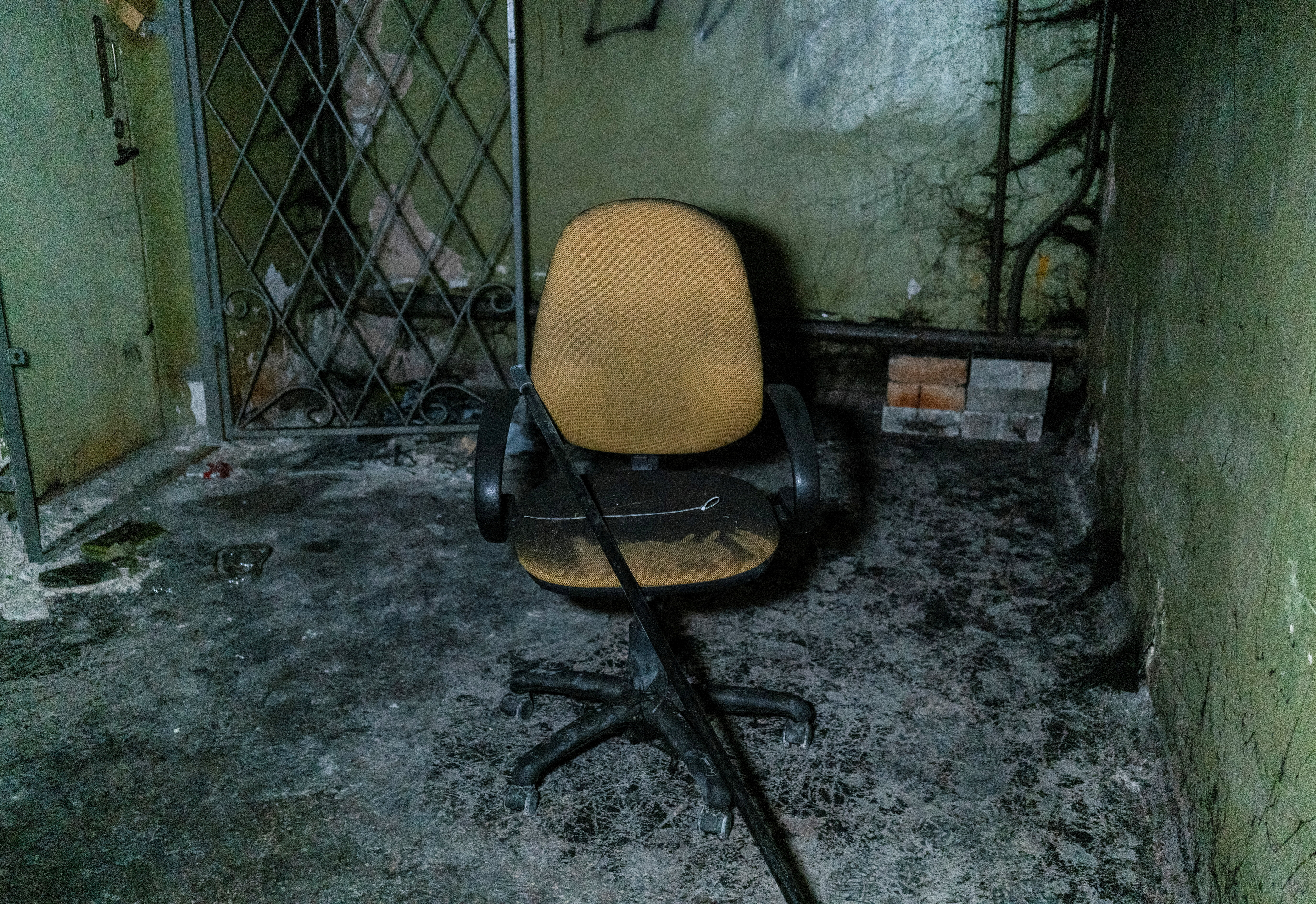
After Russia's invasion of Ukraine, the employees of the Federal Penitentiary Service of Russia were instructed to be cruel to Ukrainian prisoners and apply violence towards them, the investigation of The Wall Street Journal says . The use of torture to the Ukrainian military confirmed the UN.
According to The Wall Street Journal, the head of the Federal Penitentiary Service of Russia in St. Petersburg and the Leningrad Region Igor Potapenko ordered the employees of the elite divisions of the department (probably the FSIN special forces) be cruel with arriving prisoners. He noted that violence would not be limited, and the undergoing cameras that could fix the torture will be removed.
Later, the same instructions were received by employees of the sentence service in other regions, including in Pskov, Moscow, Buryatia. Among the employees who followed the prisoners, rotation took place - they were not in the same colony for more than a month.
Where does WSJ get this information
The publication refers to three former FSIN employees, two of which were part of special units, and one was a medic. They fell into the system of protecting witnesses after they testified to investigators of the International Criminal Court. Their stories were backed up by documents, an interview with Ukrainian prisoners and a man who helped Russian prison officials to escape.
Who is Igor Potapenko
Igor Potapenko is a native of Ukraine, he was born in the Sumy region, he is 53 years old. He received a military education - he first graduated from the Suvorov School, and then continued his studies at the Oryol Higher Military Command School of Communications of the KGB of the USSR. After its end, he served in the government of government.
In 1992, Potapenko came to work in a penal system - he became an employee of the FSIN special forces in the Voronezh region. As part of the special detachment, Potapenko participated in two Chechen wars, in particular, he was a member of the assault on the village of Komsomolskoye in 2000.
In the Voronezh region, Potapenko continued to build his career in the FSIN. At first he became the head of the colony of maximum security, and in 2009 he headed the regional department of the department. A year later, he was transferred to Petersburg, he headed the FSIN Office in St. Petersburg and the Leningrad Region.
In this position, he worked for 14 years. During the time that Potapenko was led by the Federal Penitentiary Service for St. Petersburg and the Leningrad region, the media and human rights activists reported several cases of torture in insulators and colonies of the region.
In 2018, the New Gazeta published a material that stated that the entrepreneur Valery Pshenichnik, who was arrested in the case of embezzlement in the Ministry of Defense, was tortured in jail. The FSIN and the Investigative Committee claimed that Pshenichny committed suicide. At the same time, the examination showed that traces of electric shock, numerous wounds, as well as fracture of the spine were found on the wheat body. According to doctors, the businessman was strangled with a lace from his hood. Violence against wheat personally denied Potapenko.
In 2019, human rights activists with reference to video recordings and photos reported that there is a “press-khat” in the investigative of the “Cross-2” detention center, where the prisoners are knocked out. According to human rights activists, the prisoners close to the administration did this.
Gulagu.net claimed that the Press Chats worked at the direction of the deputy chief of the pre-trial detention center for the operational work of Nikita Ilyin and the chief of the isolator Vladimir Ivlev. According to the Gulagu.net source, Igor Potapenko knew about this, did not approve of the appearance of a press khat, but "was forced to turn a blind eye by order of the authorities."
The FSIN eventually recognized the facts of violations, three employees were fired, 20 people were brought to disciplinary liability.
In 2024, Igor Potapenko became a civil official. He was appointed vice-governor of St. Petersburg on security and migration policy.
UN statements about torture prisoners in Russia
In November 2024, the independent International Investigation Commission in Ukraine published a report in which it argued that the Russian authorities and the military repeatedly applied and continue to apply the torture of Ukrainian military and civilians in all regions of Ukraine, which are or have been under Russian control.
The report contains evidence of former prisoners who described the same methods aimed at intimidating, suppressing, humiliation, coercion and punishment. The commission cited information that in the torture to which prisoners were subjected to the places of their maintenance, the FSB and the Federal Penitentiary Service were involved and that they acted coordinated with a clear distribution of duties during torture.
Numerous evidence of torture of prisoners also cited the media. BBC talked about torture in Taganrog prison, where at least three prisoners died.
The Prosecutor General’s Office of Ukraine opened 872 criminal cases of torture. The charges have already been brought out to 125 citizens of Russia.
The Russian authorities reject accusations of torture. The UN could not find evidence of the criminal prosecution of the Russian military or security forces guilty of torture or inhuman handling of prisoners.
- The Geneva Conventions oblige the warring parties to ensure the normal maintenance of prisoners, prohibit abuse, oblige to provide contact with relatives and the possibility of applying for international humanitarian organizations.