
Translated material
"Women in the dark, men in the light of day"
Kiev playwright Irina Serebryakova writes about the war, mobilization in Ukraine and the female resistance of Russian aggression. We talked with her
"Contextual echoes of civil stability." Photo by Alexandra Kononchenko
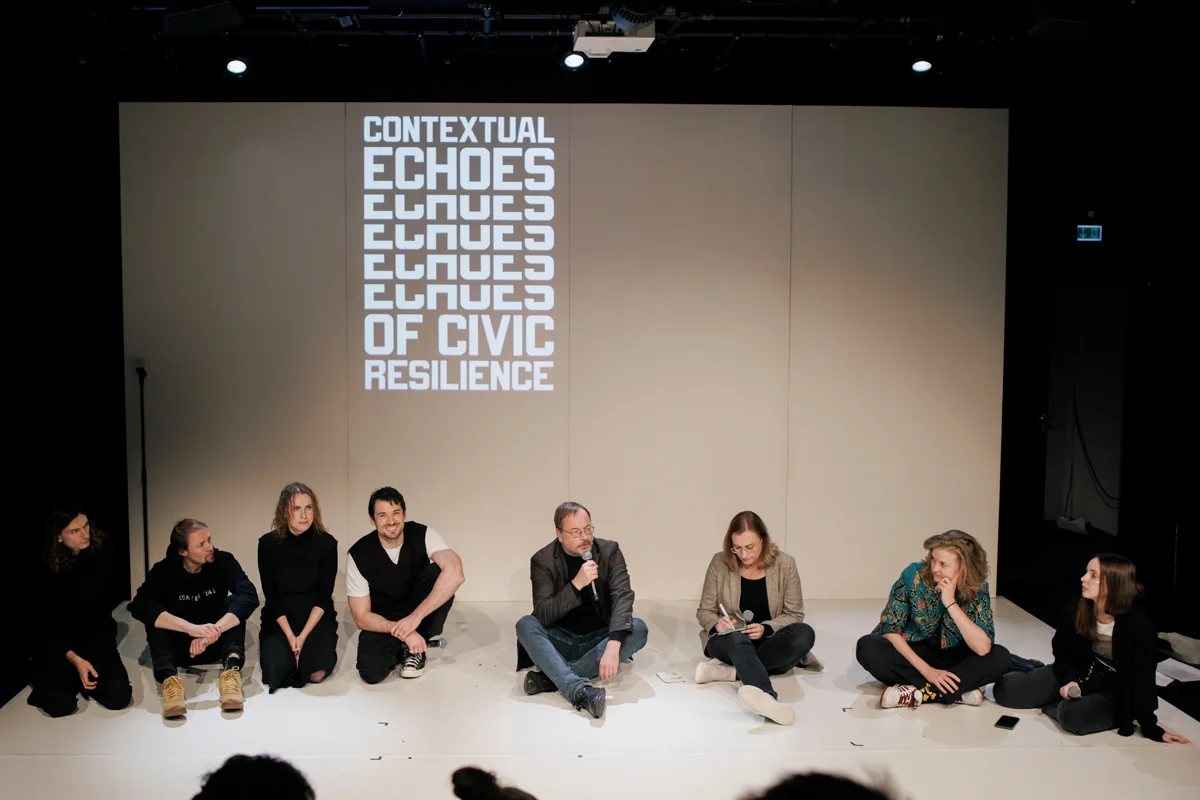
In December 2024 in the Berlin Theater. Maxim Gorky (in the past - the main theater of the GDR, which was opened in 1952), the event “Contextual echoes of civil stability” was held, within the framework of which playwrights from Ukraine, Belarus and Russia presented players about activists from their countries on the same stage. On the female movement of non -violent resistance "Evil Mavka" operating in the occupied territories of Ukraine, about Belarusian cyber partisans and the disunity of the Russian opposition.
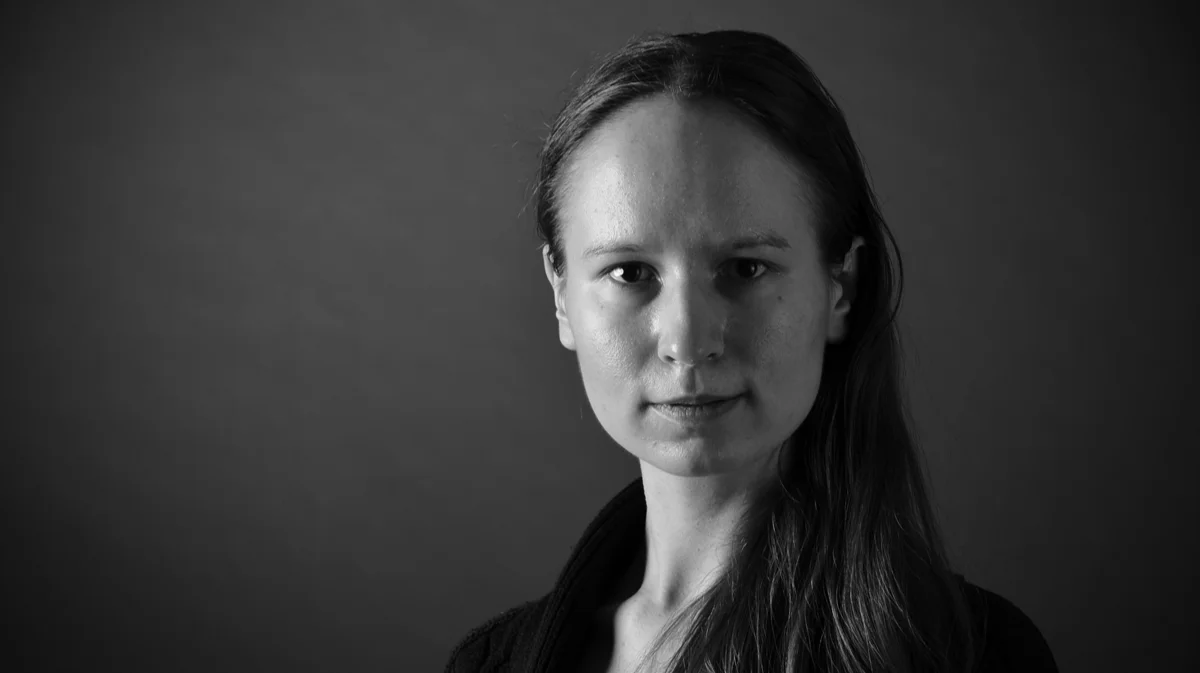
Ukraine was represented by the work of Irina Serebryakova, a playwright from Kyiv, who from the beginning of the war reflects in his plays about the influence of the war on people's lives. Including in Russian: it published Serebryakova's texts about mobilization in Ukraine, about the life of Kievans in the city covered by the war (included in the collection of Freedom Letters) and an Iranian student living in the Ukrainian capital. Now these plays are successfully staged in Europe. Journalist Andrei Sapozhnikov talked with Serebryakova about why Kyiv theaters are now closed for the most difficult topics and what future awaits her country, which has been reflecting a full -scale Russian aggression for almost three years.
- Four projects from three countries - Belarus, Ukraine and Russia - on the same stage in the German theater. It sounds revolutionary. The organizers said that the first days of preparation were in contradictions between Russian and Ukrainian participants. How did these conflicts resolved and how was such a project in principle turned out to be possible?
- It was an attempt to show in plays what activism can be and what difficulties the people involved in it face. And another task was to show society, because activism always responds to its pain and challenges. For me [participation in such a project] it was not only possible, but even natural, because our societies are now faced with very similar challenges. In no case are the same, but we are neighbors, and it is important for me to know how my colleagues perceive their contexts and how they see Ukrainian context, and it was an honor to set their play with them on the same stage. And the mentioned conflict was as follows.
The project was carried out in two stages: the final, in fact, were cheats on the stage [in December], and back in July, the participants were acquainted when we talked with activists, listened to lectures and discussed their ideas, which each of the teams presented, presented, presented, presented, Including the lecturers and the activists themselves. And the last it seemed that the play of one of the teams should not sound. I was very painful for this situation, it seems very dishonest to me. Because at that moment we were discussing even even written play, and your idea is already bad - simply in the fact that its author you are.
- When the Russian spectator from the hall began to share impressions of your play, she was interrupted by a spectator from Ukraine, saying that the opinion of Russians here is not interested in anyone. You can look at this as a strong difference in these very contexts: you made a play about the movement of the female resistance “Evil Mavka” in the occupied territories, the Russian team at the same time in an ironic manner beat the disunity of the liberal opposition. How to achieve mutual understanding with such a contextual discrepancy?
- In my opinion, my play was just lacking in lightness and the ability to laugh, which Russian colleagues had, which caused me great respect and admiration. Before the start of the war, I always wrote comedies, and in this play I also tried to find ridiculous details, because the activists with whom I talked when working on the play became joking a lot. But as a result, the text still came out quite heavy.
Colleagues were trapped. If they describe the opposition with the help of jokes, it causes some people tough remarks: how can you joke about this? But if they described everything in more serious, dark colors, they would object to them: what is the worst of all? How dare you complain?
That is, how do they even say what they see and feel, in what tone and language? We are all looking for him.
And I saw the same task for myself, because I really did not want us and me and women activists to look miserable and unhappy. If you regret yourself and so manipulate the public, it is unworthy.
- This is a difficult ethical question in the context of the war, but in Russia in my opinion, in my opinion, a very ironic attitude has normalized to many conditionally “serious” spheres like the same protest and opposition. In a much more dramatic and tragic situation in Ukraine, how much similar ironic self -criticism takes place in your context, is such a tone appropriate?
- It seems to me that this is part of our identity - the ability to laugh. Part of ours, no matter how pathos it sounds, is a national myth, it is really very important to us. And I am trying to write comedies even after the start of the war, although, as the experience of their productions shows, not all of them consider them to be such. But for me, these are, of course, comedy texts. “Women in the Dark”, for example, about the disconnection of light in Kyiv.
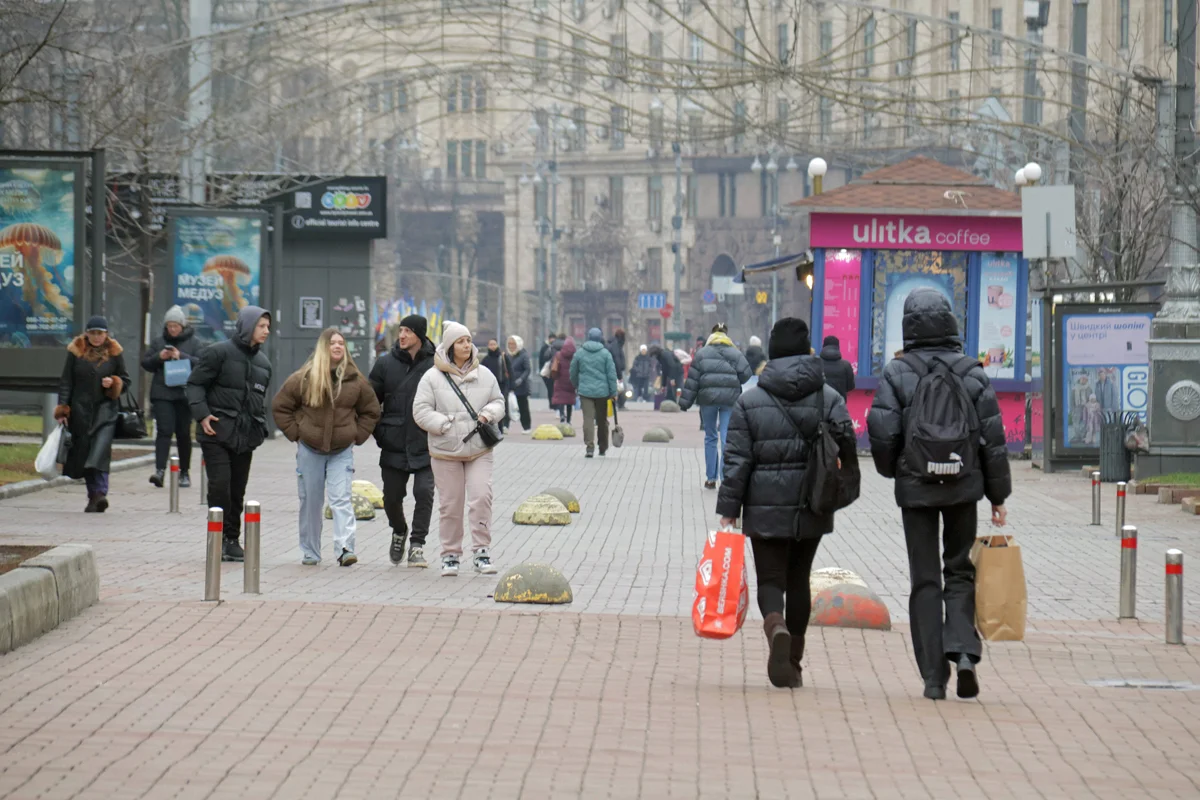
- I re -read the “women in the dark” in the morning, and I would definitely not call this play this play. If humor is episodically there, then as a protective reaction to sad reality, which is why everything seems even more tragic.
-Yes, this is a way to somehow answer reality and survive in it. “Women” is a documentary play based on the testimonies of the Kievans living in a situation of constant power outages, and they themselves joke a lot. These are real voices of real people, which again was valuable for me so that we did not look miserable. Laughter frees us and makes us stronger.
- And you, as I understand it from the site with your portfolio, also continue to live in Kiev?
-Not quite, I stayed there somewhere in two months after the start of a full-scale war, but then I went to work in the Czech residence for almost three months. Then she returned to Kyiv again, from where she then left for Sweden for six months, and from that moment she constantly went back and forth, returning to Kyiv for two weeks or a month. However, the last time I was there more than a year ago.
- In Russian emigration, the question is acutely about how legitimate the voices of cultural figures and journalists are trying to reflect what is happening within Russia, having left from there in the first months of the war. As a playwright, whose plays are based on observations of the inhabitants of Ukraine, their experiences and the internal situation as a whole, do you feel that you do not have enough physical presence? How much the emigration distorts optics?
“I thought about it, and my plays are really based on observations - and for those whom I personally know or with whom I communicated.” But it seems to me that even if you are physically in Kyiv or Moscow, you haven’t left anywhere and live there all your life, you still conditionally write documentary plays about those you know. And this is one, two, five, ten, twenty - even two hundred people. But this is exclusively someone you know.
- A specific bubble?
- Certainly. Do you know, let's say how a homeless person lives in your Moscow or in your Kyiv? What is it like to sleep on the street, can you write a play about this? Or about your 90-year-old neighbor, who never leaves the house, and no one realizes, what her name is at least. Even if you write, for example, about students in Kyiv, if you yourself are not a student and you don’t communicate with them, you have a very limited performance about them. And, living somewhere physically, you are still aware of only your context, and this context is narrow.
I think that in Moscow there is the same phenomenon as in Kyiv: there is a cafe where people with laptops are sitting, where you communicate with colleagues, and then you get on the bus-and somewhere in an hour, leaving the capital, you get. To another universe.
- As in your play “Men in the Light of the Day” it is described that Ukrainians now, like the rest of the world, will learn about their country from news reports. “There were Kyiv, Odessa, Lviv, Kharkov,” and the cities where you never visited their borders began.
- This is absolutely like that. And do you know your national context if you don’t even suspect, what do people live in an hour from your house? I am to the fact that you can spend all my life in Kyiv or Moscow and know only what is available to you.
- Can you highlight the differences between your internal Ukrainian audience on Kyiv reading and the diaspora, which now attends your productions in Europe and America?
- It is difficult for me to give an assessment, because what was placed in Kyiv before the war is not what is being put now. And what is put now is not put in Kyiv. And I, perhaps, do not have such a case of setting the play at the same time in Kyiv and conditionally in Sweden so that I can distinguish differences.
- Why are your current plays not put in Kyiv?
- It seems to me, for example, “Men in the Light of the Day” - a play about mobilization - could not be staged in Kyiv, but for me this topic is important. I think that it would still hardly have reached the setting, even if someone agreed to take up it.
This is a very painful topic for our society, and I simply would not want to substitute people.
- How in such conditions does the dramatic agenda in Kyiv look like now?
- I would say that we now have a boom of productions. Literally the situation when people stand on the street in lines in an attempt to get a ticket when they fly away from sites in a matter of minutes. This is the production of Ukrainian classics, the production of plays written now, a year, two years ago. A very rich, full of life context. And this boom is heated, of course, also the hunger of people in live communication.
- When I got acquainted with your five plays, their content and mood were greatly cut with your quote from a conversation with Radio Liberty. That for you war is powerlessness, it is when a person loses its ability to fully dispose of his life and becomes a hostage to the situation as a whole, the state in particular. Especially when it comes to men and mobilization. How, in your opinion, is this state of powerlessness reflected in Ukrainians - does it atomize or, on the contrary, creates a request for the association?
- Still, this is an atomization. And this is a very great pain for me, because for about a month, maybe two, according to my feelings, after the start of a large war, our society was very united. But further experience that separates people inevitably arises. What do I mean? These are those who have left. These are those who live in the occupation, and who do not. This is male experience and female experience. Those who are fighting, and those who are in the rear. The experience of wives and children, fathers and husbands, and so on, and so on. Until the fact that one of the reasons for bullying in schools was that your dad is not fighting, and mine is fighting.
There are a lot of reasons for conflicts on the basis of war. And, unfortunately, the longer we are in this situation, the more these conflicts, and the more difficult it is for us to find a common language. The distance is increasing every year of life outside of Ukraine, with every new Swedish, Italian or German word. And the emigration itself shares families: there is a woman who left and took out small children, and her husband at that time at the front. And the parents of these people do not want to leave, and after a year or two of such a life their grandchildren know Polish or Spanish better than Ukrainian. Grandmother and grandfather do not recognize and do not understand them, and their mother does not recognize her husband, whom the war laid on a strong imprint.
And mutual accusations arise. How could you leave and leave us all? What should I do? Why didn't you go with me? Because we could not leave our house, and I could not leave my children. And you left and left us completely alone. Live somewhere on benefits, on everything ready. But they also do not understand what it is - life in a foreign society on benefits with young children.
And she does not understand what to live when drones fly outside the window. And I do not see a way out of this growing fault of contexts, which destroys the family.
- Even if there is a ceasefire? Suppose that if the hot phase of the war suddenly ends, some of the occupied territories are released, and some of the refugees are returning. Are there any factors in such conditions that can unite a person who lived under shelling and the occupation administration, and the one who has received benefits all this time and studied Portuguese?
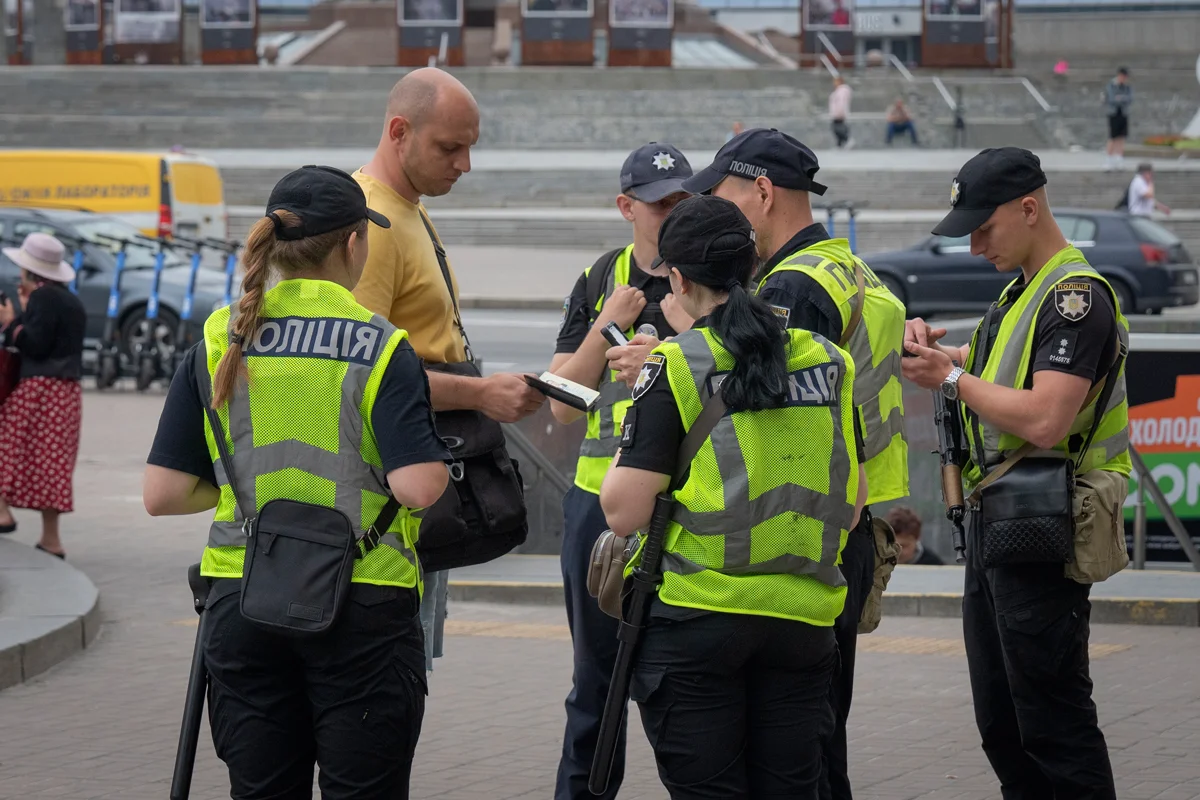
- Judging by the individual situations that I saw, there is little hope of unification. Even if the war ends today, we had a very painful and long experience of violence. And no one knows what to do with it. Violence not only in the sense of hostilities and occupation, but also in the sense of violence of compatriots over compatriots, I mean force mobilization. How even after the end of the war to walk along the streets and not be afraid of the police or the military?
- In “Men in the Light of the Day” there is a character named Matvey - homosexual, who in one of the episodes says that before the start of the war he tried not to leave Kyiv, and now he is scared to go out to the street that it is simply dangerous for man its orientation. Is this really a problem at the household level?
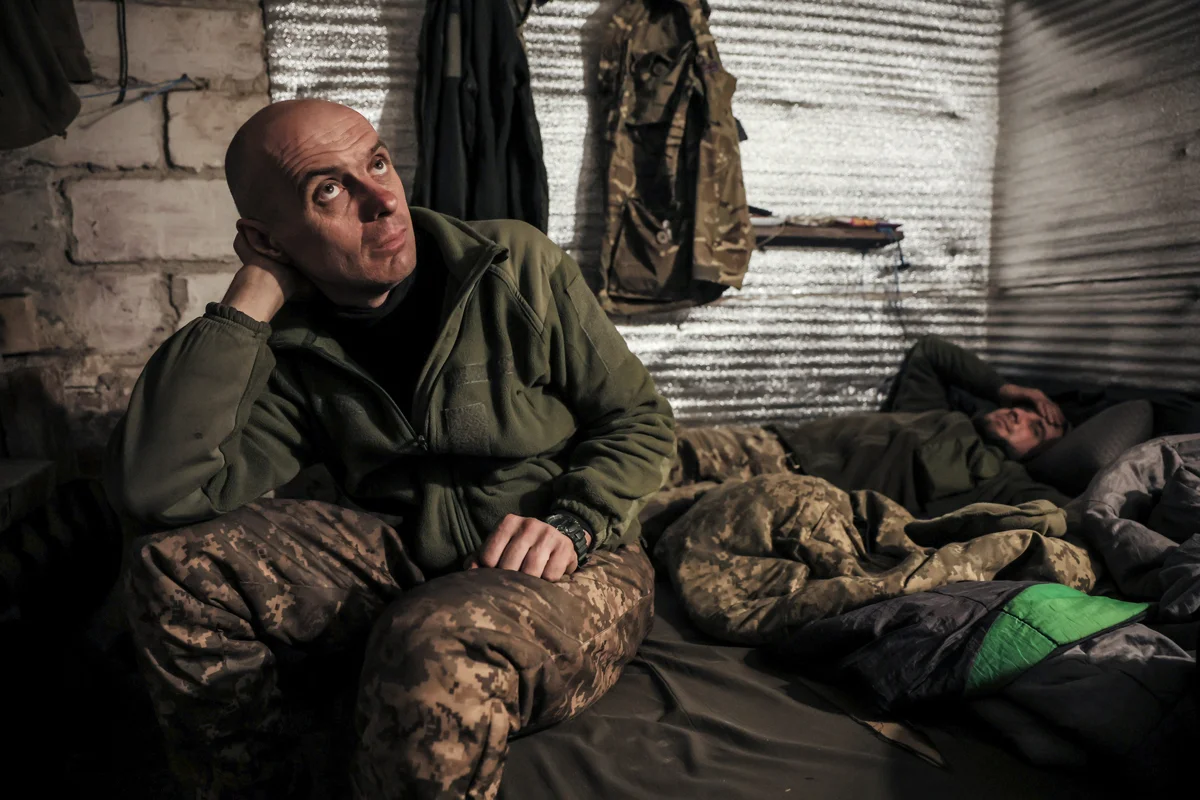
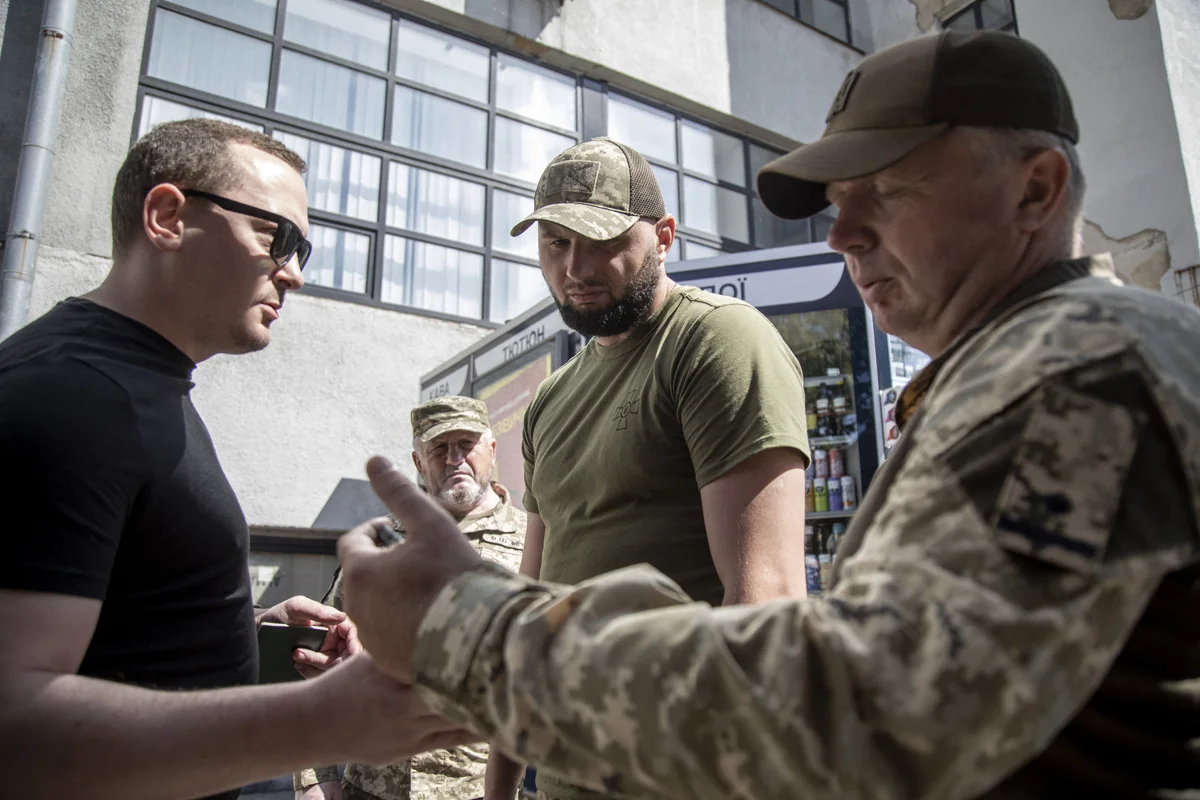
- It is difficult to judge this, and he describes his subjective situation, but as for violence in general, he, of course, has become more. Everyone knows, and everyone saw these videos “Busification”, power mobilization with human beating. These videos are hundreds - and how to live with this further, if they do their own with their own? How can we live after that? Walking the streets and not to be afraid? I don't know how to answer it. And yes, indeed, many men do not go outside for months, for years-for a year or two.
- There is a scene in the “men” when the hero discovers a box with dry shoes on the left leg of the same size in the garbage tank in Kyiv, obviously left there a man who lost his feet in the war. Trauma, physical and moral, which the war has inflicted on society, how much does it give rise to the skepticism in Ukraine in relation to mobilization and the power method of resolving the conflict as a whole? Is there a public discussion on this issue?
- This discussion is constantly being conducted in the media - but the discussion proceeds separately, and the video with “beaching” appears separately. These are two isolated reality, which, in my opinion, are in no way connected. Somewhere in the studios, experts are sitting and discussing all this, and somewhere on the street people carry their faces on the asphalt.
At the very beginning of a full -scale war, people really signed up for the front of their own free will. There were more than necessary, and they were refused, because everything was equipped. Now, of course, the situation has changed. And “Busification” for me is not only a monstrous disrespect for ordinary people, but also disrespect for the army as a whole. If in peaceful life we need, for example, a bus driver, we will not go outside and grab a random person who will try to explain to us that he does not even know how to drive a bus or even a car. And we will not answer him that in a week we will train him, after which we will continue to beat him until he agrees to become a driver. Nobody needs such bus drivers.
Then why do we need the military caught and “trained” in this way? This is not only ineffective, it is just disrespect for military specialties.
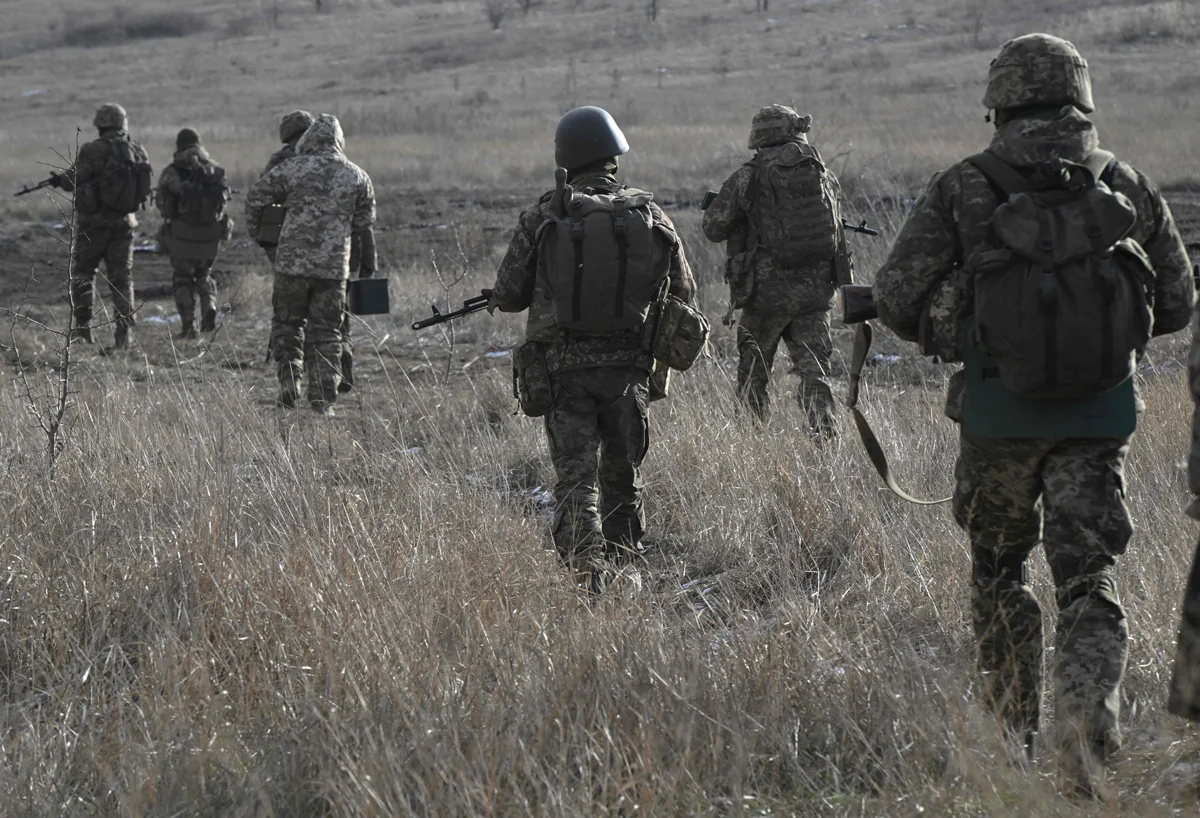
Those who do not want to serve, who do not agree with all this cannot publicly write about it on Facebook. There is, of course, disagreement and indignation, but it is dangerous to openly declare it. Therefore, the unwillingness to participate in mobilization manifests itself differently: through a trip, fields or forests, somewhere in a safer place or to leave your house through the refusal for years. Such voting with legs, including unauthorized abandonment of parts. These are tens of thousands of people, according to official figures .
- That is, it is precisely the constructive verbal discussion in Ukraine that does not exist on this topic at the moment? What, as you say, people prefer their feet?
“I think yes, including that’s why I wrote“ men in the light of day ”. Because none of my interlocutors could openly go out in the current situation and say without serious risk for his own security that he was afraid to go to war or disagree with how to mobilize, and I became their voice. But the discussion is manifested, for example, in the fact that the military themselves sometimes declare the delivery of these people caught on the street with severe diagnoses, with the lack of motivation, with the inability to perform tasks, because these are people with dependencies, with disabilities. What to do with them?
- In the play “My Best Iranian Friend”, you talk about a student from Iran, who came to study in Kyiv. The action, as I understand it, unfolds shortly before a full -scale invasion. It struck me with what bestial xenophobia this person faces, how hard it is for him and how unconditionally he refuses to accept society.
The same in “women in the dark” with police officers who smoke in a public place and “trample their own laws”, about the scene in “men in the light of day”, where the waitress so in advance indicates that “guests are noisily resting”, Or about the grandmother from the play "Daenerys", who complains that the country was captured by the Chinese and Indians. Для меня такая «советскость» оказалась откровением, потому что за последние годы образ Украины был изрядно мифологизирован: с одной стороны, неадекватная демонизация со стороны российских пропагандистов, с другой — идеализированный образ страны — борца за независимость.
Так игнорируются многие внутренние противоречия. Будто бы именно на них вы и указываете, что в глубине, вопреки проевропейскому курсу и противопоставлению себя путинской России, всё еще живо такое архаичное мировосприятие.
— Я бы сказала так: войну сейчас часто называют «войной для бедных». Если у тебя нет денег откупиться, ты идешь воевать, и наоборот. И это огромный социальный конфликт.
— Что несколько напоминает Россию, где мобилизацияударила преимущественно по бедным регионам.
— И вот война в целом обнажает то, насколько мы не были к ней готовы. Потому что мое поколение, и особенно те, кто младше меня, воспитывались с такими установками, что ты можешь всё — ты можешь быть кем угодно. Хочешь начать свой бизнес? Great. Хочешь куда-то поехать учиться? Amazing! Хочешь снимать кино — ну почему нет?
Даже если стать дауншифтером и поехать в лес заниматься там своей пасекой, прекрасно! Ты можешь выглядеть как угодно, ты свободный человек, и никто не может указывать тебе, что делать. Главное, чтобы ты был счастлив, живи свою, а не чужую жизнь.
— Такой радикальный индивидуализм.
- Yes, sure. На тебя никто не может повышать голос, тебя не могут не то что бить, это просто дикость, тебя даже касаться не могут без твоего согласия. Индивидуализм как абсолютная ценность — частично это был миф, частично мы действительно так жили и многого добивались. Так нас воспитывали, и так мы и хотим продолжать жить: если представитель моего поколения, например, не видит в себе минометчика, но видит в себе айтишника и хочет связать с этим свою жизнь, его очень трудно заставить отказаться от своего выбора. Или же если он не хочет жить в Украине и мечтает переехать в Италию, для него неприемлемо, что кто-то его этой возможности лишает.
А сейчас таких людей избивают и к чему-то принуждают, что выглядит особенно дико.
Нас никогда не воспитывали в стиле «давайте отдадим жизнь за что-нибудь». Напротив, нас воспитывали с тем, что жизнь человека — это величайшая ценность.
Его жизнь, его ошибки, его слабости. Нас воспитывали с тем, что, если мужчина плачет, это окей и ни в коем случае не постыдно, в отличие от того как воспитывали, допустим, наших дедушек или даже наших отцов.
— Они как раз росли в этой советской парадигме, где родина и государство превыше всего. И такой образ мышления как бы по умолчанию вернулся из-за военного положения, трудно совместимого с индивидуализмом?
— Да, а мы к этому абсолютно не готовы. Потому что от мужчин, для которых еще недавно плакать и в целом проявлять слабости считалось чем-то совершенно не постыдным, сейчас хотят, чтобы они воевали и отдавали свои жизни. Никто не был к этому готов.
— Как вы считаете, возможно ли будет впоследствии эту травму проработать и вернуть индивидуалистскую ментальность?
— Мне сложно сказать, но сейчас, судя по дискуссиям в публичном поле, активно обсуждается тема того, что мы не были готовы к войне. Из чего делается следующий вывод: к войне всё же нужно быть готовым, а это означает, что соответствующие ценности нужно внушать с самого детства. Нормализовать гипотетическую возможность, что когда-то, возможно, ты пойдешь воевать, и это окей. Что, конечно, вызывает у меня опасения.
— Как будто эта перманентная готовность к войне с нормализованной мобилизацией и родиной как сверхценностью, за которую можно отдать жизнь, противоречит устремлениям к Европе и западной либеральной демократии.
— Конечно, это конфликт ценностей.
— Получается, что неразрешимый?
— Из того, что я видела, я пока не нахожу, как на это ответить. У меня нет ответа.
— Ваша работа так или иначе же направлена на поиск ответа? На исследование социальных противоречий, которые возникают во время войны?
— Есть задача поиска ответов, а есть задача начать дискуссию и показать, что вообще есть те люди, кому я хотела бы дать голос. Это две отдельные задачи. А ответов у меня нет: у меня, например, нет ответа о том, какой должна была бы быть идеальная мобилизация. Но явно не такой. В нынешнем виде она чудовищна. И для меня задача дать голос людям, которые из-за нее страдают, чтобы их услышали. А ответов я не знаю.
— В качестве заключительного вопроса я хочу сослаться на вашего персонажа Алису из «Женщин в темноте». В одной из сцен она фантазирует о собственной секте, из которой людей бы исключали за то, что они считают демократию важнее гуманизма. Мне эта фраза показалась очень любопытной, и я бы хотел вас спросить, что вы вкладываете в эту дихотомию «демократия — гуманизм»?
— Это цитата действительно существующего человека и ее позиция, ее фантазии. Мне же в целом сложно сказать, что важнее для меня, потому что, на мой взгляд, в нашей нынешней ситуации, в нашем обществе нет ни того, ни другого.
— Гуманизма, кажется, точно нет в свете всего того, о чем мы говорили…
— Я его не вижу.
— И надежд на демократию в этих условиях также не остается?
— Ее я тоже не вижу.
— И никаких предпосылок для появления?
— Из того, что я видела и вижу, выводы о нашем будущем как общества у меня неутешительные. И дело даже не в войне или населенных пунктах, которых мы лишились, что находится в оккупации, а что — нет… Дело в том, какие последствия это для нас имеет. И последствия очень тяжелые. Гуманизм всё еще прослеживается в повседневном общении, и надежды я возлагаю именно на индивидуальные связи. А в целом в смысле общества… Я не знаю, что с нами будет. Я этого боюсь, и мне больно об этом думать.
— Отличался ли ваш взгляд на будущее украинского общества в декабре 2022-го, на излете первого года полномасштабной войны? Не был ли он менее пессимистичен?
— Я бы не сказала, что это пессимизм. Это наша действительность, и ее тяжело игнорировать, даже если ты очень хочешь ее не замечать и думать, что мы побеждаем в войне, что наше общество сплочено, у нас царит всеобщая любовь, взаимопомощь и так далее. Тяжело так думать, каким бы оптимистом ты ни был, потому что это означает игнорирование фактов.
Война — это очень большая боль и очень много подводных камней, которые становятся видны постепенно, когда наружу поднимаются все эти конфликты и наши принципиальные различия, которые всё сильнее нас друг от друга отдаляют. Думала ли я так в самом начале войны? Да, как-то так я и думала. И, к сожалению, то, что я вижу, только укрепляет это ощущение.